
Since this post is very lengthy (over 250,000 words), I made it into an e-book for easier reading (it contains a Table of Contents). If you want an e-book version of this post, Muhammad: the Demon Possessed False Prophet of Islam, you can purchase it at just about any online distributor of e-books (e.g., Amazon, Barnes & Noble, Apple Books, and Google Play). If you can’t afford it, just contact me, and I’ll gift it to you. It’s a great resource for those involved in apologetics and polemics.
“For we wrestle not against flesh and blood, but against principalities, against powers, against the rulers of the darkness of this world, against spiritual wickedness in high places.” – Ephesians 6:12
“Beloved, believe not every spirit, but try the spirits whether they are of God: because many false prophets are gone out into the world.” – 1 John 4:1
“Prove all things; hold fast that which is good.” – 1 Thess. 5:21
Preface
With all sincerity, this is not an attack on Muslims. Most layman Muslims are unaware of the unsavory and disturbing content in their Islamic literature about Muhammad committing, prescribing, and sanctioning some of the most heinous and detestable acts. The goal is to inform readers and encourage them to examine the evidence for themselves to uncover the truth.
If you are a Muslim, please don’t readily dismiss the main thesis here without reading the quotations for yourself. At least half of the texts here are direct quotations from the most trusted Islamic sources. There should be no fear or any hesitation in reading your own religious texts. Despite how uncomfortable it may be, I hope you will allow your beliefs to be challenged by reading through at least the 1,000 Islamic quotations presented here. May the truth set you free!
A Background of Muhammad

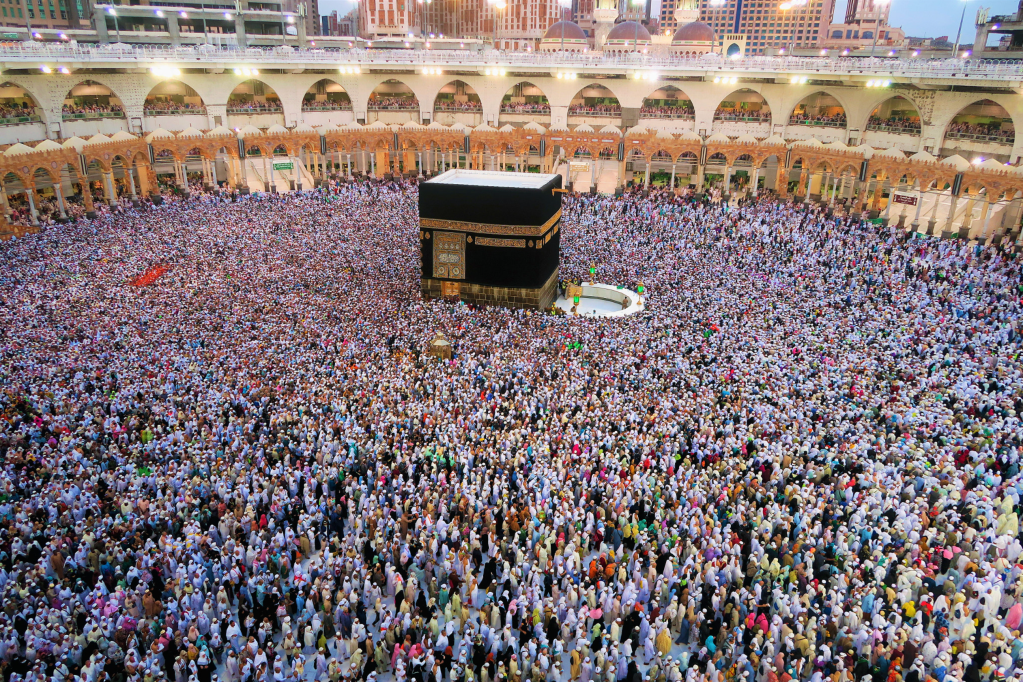
According to Britannica, Muhammad (or Mohammed), the founder of the religion Islam (the word islam means “surrender” or “total submission”), is traditionally said to have been born in 570 in Mecca and to have died in 632 in Medina (both in Saudi Arabia), where he had been forced to emigrate to with his followers in 622.
Muhammad is by far the most important human figure for the over 2 billion Muslims worldwide. To convert to Islam, one only has to say the shahada, where one proclaims there is no god but Allah, and Muhammad is his prophet or messenger. Muslims believe he was the mouthpiece of Allah and was in line with the Biblical prophets (Baha’is also believe he was a prophet of God). They view him as the final prophet sent by their deity to proclaim the truth and to provide guidance to everyone. They view his message as surpassing and suppressing earlier revelations of other prophets, and that he restored the “true” religion of Islam to a world that had corrupted it.
Despite his importance, the majority of Muslims have only a shallow knowledge of the historical Muhammad. They falsely claim that he was sinless (Quran 40:55; 48:1-2; 47:19 says otherwise), and they even address him in prayer despite being dead and buried in Medina. He is believed to have actually split the Moon in half by the power of his god, even though the Quran says he didn’t perform any miracles (29:50-51; 13:7; 10:20). To many Muslims, he is the perfect example for all humankind, largely based on the fact Islamic tradition knows no limits in projecting him as such. Indeed, many Muslims attach a mythical, deified status to Muhammad, perhaps because most Muslims haven’t read their texts about him extensively.
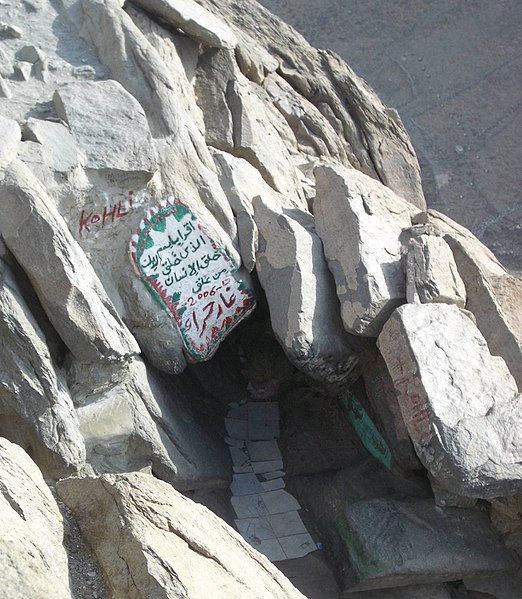
His supposed prophetic calling began when he was roughly 40 years old after he “heard unseen voices and calls” (Mishkat al-Masabih IV, p. 354). Searching for clarity, he sometimes meditated at Mount Hira, near Mecca. On one of these occasions, the alleged Archangel Gabriel (Jibra’il or Jibril in Arabic) appeared to him and instructed him to recite “in the name of [your] lord,” even though he was illiterate. This was the first of many revelations that became the basis of the Quran. Despite the absence of a single witness to his supposed encounters with the Angel Gabriel, many lay Muslims believe these encounters indeed occurred.
The Muslim Texts

According to the standard Islamic narrative, the Quran (Koran) is a revelation from Allah to Muhammad through the supposed Angel Gabriel for some 23 years. Muslims believe it is the uncreated, divine, and verbatim word of Allah with no corruption, and all its contents should be applied universally. It is also regarded as a miracle and proof of Muhammad’s prophethood.
There are also companion texts called the hadiths, a collection of traditions containing sayings transmitted through chains of narrators about Muhammad that account for his daily practice and sayings (the Sunnah). It constitutes the major source of guidance for Muslims apart from the Quran. The hadiths provide the image of Muhammad, the ultimate role model for Muslims everywhere. In other words, the hadiths are attributed reports about what he said and did. Together, the Quran and the hadiths provide the textual foundations for the vast body of Islamic jurisprudence known as Sharia law, or “divine law.” Despite the Quran’s claim that it is a detailed explanation of everything (12:111; 16:89), it is insufficient for the majority of Muslims since they believe there is a necessity for the hadiths to practice their religion properly. However, there seems to be a growing number of Muslims who have resorted to becoming Quranists (Quran-only), presumably because of Muhammad’s glaring moral flaws and embarrassing claims that are found in the traditions.
The sīra (biography) is the third cornerstone of Islamic texts, referring to the body of literature devoted to Muhammad’s life. Apart from the Quran and authentic hadiths, most historical information about his life and the early period of Islam is derived from the sīra.
Was Muhammad Demon-Possessed?
Since this is a blog that specializes in demonology, it would be natural to delve into Muhammad’s symptoms of purported demonization or demonic influence. As someone who has been in deliverance ministry for many years and has firsthand experience with casting out demons (by the name and authority of Jesus), I have gained a lot of insight regarding the signs and manifestations of demonization. Many of the symptoms of demonization I have witnessed in some demonized people, such as twitching, foaming at the mouth, and convulsing, were symptoms he exhibited when he received his “divine inspirations.” There is an abundance of other compelling evidence that further indicates he was truly demonized and/or demonically influenced. As I will delve into more deeply later, Muhammad believed himself to be possessed but was persuaded otherwise.
If we expect to discern the spirit of Islam accurately, we must begin at the foundation and scrutinize the seed. If satan’s kingdom was moving behind Muhammad, then satan’s kingdom was behind Islam, which would be a clever means of blinding multitudes from the light of the eternal Gospel and hindering many from receiving the gift of salvation. All the problematic moral and incriminating issues found in Islamic texts should raise some serious questions about the validity of Muhammad’s prophethood.
The veracity of Islam is predicated on Muhammad’s reliability. That is, if there are valid reasons to conclude that he was a reliable messenger of God, we can reasonably suppose that Islam is true. However, if there are compelling reasons to believe he was untrustworthy, we can rationally suppose Islam is false.
[Note: most of the text quoted here comes from the Quran, the authentic (sahih) hadiths, the sīra literature, and Tafsirs (explication or commentary of the Quran). Most hadiths quoted here are accepted by the Sunni sect of Islam, which accounts for roughly 90% of the Muslim population. In most cases, I deliberately refrained from capitalizing the word “satan.” All bold and emphasis are mine.]
Signs and Symptoms of Muhammad’s Demonization

According to the Quran, “inspiration” was sent down to Muhammad from the divine:
Nor does he say (aught) of (his own) Desire. It is no less than inspiration sent down to him:
(Quran 53:3-4, Yusuf Ali)
It reads something similar in the hadiths (also note that Muhammad denied he was given miracles):
Narrated Abu Huraira:
The Prophet (ﷺ) said, “Every Prophet was given miracles because of which people believed, but what I have been given, is Divine Inspiration which Allah has revealed to me. So I hope that my followers will outnumber the followers of the other Prophets on the Day of Resurrection.”
(Sahih al-Bukhari 4981)
Narrated Ibn `Abbas:
Allah’s Messenger (ﷺ) was inspired Divinely at the age of forty. Then he stayed in Mecca for thirteen years, and then was ordered to migrate, and he migrated to Medina and stayed there for ten years and then died.
It may be that Muhammad, in certain instances, really received messages while in a state of “inspiration” (though some of his “revelations” were suspiciously convenient for him), but it was the very bizarre physical manifestations that accompanied it that are concerning. Muhammad’s “inspiration” and religious experiences were remarkably similar to those in some forms of mysticism and spiritism. Shamanism, for example, is known for fostering periods of mental disruption as well as spirit possession. Muhammad experienced shaman-like experiences and phenomena. Moreover, the content of his revelations doesn’t align with the character of the righteous God. This should raise red flags.
Muhammad Had Headaches When Receiving His Revelation
Why would anyone who is receiving an alleged divine revelation get a headache?
Abu Nu‘aym related, from a tradition of Qutayba that ‘Ali b. Ghurab related to him, from al-Ahwas b. Hakim, from Abu ‘Awana, from Sa‘id b. al-Musayyib, from Abu Hurayra, who said,
When revelation came down to the Messenger of God, he would get a headache and would cover his head with the henna plant.
(Ibn Kathir, The Life of the Prophet Muhammad (Al-Sira al-Nabawiyya), Vol. I, p. 308)
Experienced “Coming to Himself”
It seemed like Muhammad often fell into a trance or an altered state of consciousness, much like a medium or a channeler would sometimes do:
Chapter: The Prophet (SAW) Sweated When It Was Cold, And When The Revelation Came To Him
‘Ubida b. Samit reported that when wahi [revelation] descended upon Allah’s Apostle, he lowered his head and so lowered his Companions their heads, and when (this state) was over, he raised his head.”
(Sahih Muslim 2335)
In the Bible, some prophets fell into a trance or deep sleep; however, their behavior did not reflect that of a madman under the influence of demonic possession. Muhammad experienced an occult form of trance, as I will further substantiate.
Muhammad’s Face Turned Red, And He Breathed Heavily When He Received His Revelation
Not only did his face change, turning red, but he also exhibited heavy breathing and eerily stared without saying anything when, or about to be, in the state of receiving “revelation,” and afterward felt relief. Why would he have felt relief after receiving messages from the divine as if it were taxing or burdensome?
Safwan b. Ya’la b. Umayya reported that Ya’la used to say to ‘Umar b. Khattab (Allah be pleased with him):
Would that I see revelation descending upon the Messenger of Allah (ﷺ). (Once) when the Messenger of Allah (ﷺ) was in Ji’rana and there was a cloth which provided shade over him, and there were his Companions with him. ‘Umar being one of them, there came a person with a cloak of wool on him daubed with perfume and he said: Messenger of Allah, what about the person who entered upon the state of Ihram with a cloak after daubing it with perfume? The Apostle of Allah (ﷺ) looked at him for a short while, and then became quiet, and revelation began descending upon him, and ‘Umar gestured (with his hand) to Ya’la b. Umayya to come. Ya’la came and he entered his head (beneath the cloth and saw) the Messenger of Allah (ﷺ) with his face red, and breathing heavily. Then he felt relieved (of that burden) and he said: Where is the man who was just asking me about Umra? The man was searched for and he was brought, and the Messenger of Allah (ﷺ) said: So far as the perfume is concerned, wash it three times, and remove the cloak too (as it was sewn) and do in ‘Umra as you do in Hajj.
(Sahih al-Bukhari 4985)
‘Ubada b. as-Samit reported that whenever Allah’s Apostle (ﷺ) received revelation, he felt its rigour and the complexion of his face changed. One day revelation descended upon him, he felt the same rigour. When it was over and he felt relief, he said:
Take from me. Verily Allah has ordained a way for them (the women who commit fornication),: (When) a married man (commits adultery) with a married woman, and an unmarried male with an unmarried woman, then in case of married (persons) there is (a punishment) of one hundred lashes and then stoning (to death). And in case of unmarried persons, (the punishment) is one hundred lashes and exile for one year.
(Sahih Muslim 1690c)
Chapter: The Prophet (SAW) Sweated When It Was Cold, And When The Revelation Came To Him
‘Ubida b. Samit reported that when wahi (inspiration) descended upon Allah’s Messenger (ﷺ), he felt a burden on that account and the colour of his face underwent a change.
Muhammad Would Twitch When Receiving His Inspiration
Anyone in deliverance ministry can attest that twitching is a not-so-uncommon physical manifestation of those who are demonized. But this is what Muhammad experienced!
“Then Allah’s apostle returned with the Inspiration, his neck muscles twitching WITH TERROR till he entered upon Khadija and said, ‘Cover me! Cover me!’ They covered him till his fear was over and then he said, ‘O Khadija, what is wrong with me?’ Then he told her everything that had happened and said, ‘I fear that something may happen to me.’…
(Sahih al-Bukhari 6982)
…And your Lord is the Most Generous. Who has taught (the writing) by the pen, has taught man that which he knew not.” (96.1-5). Then Allah’s Messenger (ﷺ) returned with that experience; and the muscles between his neck and shoulders were trembling till he came upon Khadija (his wife) and said, “Cover me!” They covered him, and when the state of fear was over, he said to Khadija, “O Khadija! What is wrong with me? I was afraid that something bad might happen to me.”…
Ibn Sa’d related that A’ishah said: “Whenever the Prophet received Inspiration (al-wahy), HIS HEAD WOULD TWITCH, HE WOULD FOAM AT THE SIDES OF HIS MOUTH, he would feel cold in his incisors, and he would break into a sweat until it flowed down like pearls.”
(Imam Jalal-al-Din ‘Abd al-Rahman al-Suyuti, The Perfect Guide to the Sciences of the Qur’an: Al-Itqan fi ‘Ulum Al-Qur’an (Great Books of Islamic Civilization), Vol. 1, p. 104)
It really doesn’t take much discernment to conclude that something is not quite right when one sees someone’s head and neck twitch and foam at the sides of their mouth while claiming they are receiving a message from the “divine. ” In fact, the average person would be extremely startled or frightened.
Muhammad Would Peep and Mutter — That Was Very Hard For Him
Muslims claim that Muhammad received his “inspiration” through the Angel Gabriel. Rather, more likely he was like a medium or channeler, where the evil spirit(s) communicated their message via his mouth. According to the following testimony, when the “revelation” came down from “Gabriel,” Muhammad would move his lips, indicating that he was in a state of “inspiration.” It doesn’t seem that “Gabriel” would visibly manifest with the “revelation” in these instances, nor was the “inspiration” given in a manner that others could hear audibly. Instead, Muhammad “heard” the “revelation” internally in his own mind. Even pagans knew this was a symptom of possession. This means that, at least in part, the Quran is demonic channeled literature! Today, multitudes of mediums, spiritists, and “channelers” also enter trance states to receive revelations from alleged angels and spirits.
The Bible condemns the following after such people:
“… And when they shall say unto you, Seek unto them that have familiar spirits, and unto wizards that peep, and that mutter: should not a people seek unto their God?…” (Isaiah 8:19).
A hadith reads:
Narrated Ibn `Abbas:
(as regards) Allah’s Statement: “Move not your tongue concerning (the Qur’an) to make haste therewith.” (75.16) When Gabriel revealed the Divine Inspiration in Allah’s Messenger (ﷺ) , he (Allah’s Messenger (ﷺ)) moved his tongue and lips, and that state used to be very hard for him, and that movement indicated that revelation was taking place. So Allah revealed in Surat Al-Qiyama which begins: ‘I do swear by the Day of Resurrection…’ (75) the Verses:– ‘Move not your tongue concerning (the Qur’an) to make haste therewith. It is for Us to collect it (Qur’an) in your mind, and give you the ability to recite it by heart. (75.16-17) Ibn `Abbas added: It is for Us to collect it (Qur’an) (in your mind), and give you the ability to recite it by heart means, “When We reveal it, listen. Then it is for Us to explain it,” means, ‘It is for us to explain it through your tongue.’ So whenever Gabriel came to Allah’s Messenger (ﷺ) ‘ he would keep quiet (and listen), and when the Angel left, the Prophet (ﷺ) would recite that revelation as Allah promised him.
(Sahih al-Bukhari 4929)
Why did his Allah continue to send “revelations” throughout his prophetic career, causing him such hardship?
Muhammad Would Sweat Profusely When He Received His Revelations
This is another peculiar physical manifestation where perspiration would pour down his face when he received “inspiration” from his supposed pure deity:
… By Allah I never thought that Allah would reveal Divine Inspiration in my case, as I considered myself too inferior to be talked of in the Holy Qur’an. I had hoped that Allah’s Apostle might have a dream in which Allah would prove my innocence. By Allah, Allah’s Apostle had not got up and nobody had left the house before the Divine Inspiration came to Allah’s Apostle. So, there overtook him the same state which used to overtake him, (when he used to have, on being inspired divinely). He was sweating so much so that the drops of the sweat were dropping like pearls though it was a (cold) wintry day. When that state of Allah’s Apostle was over, he was smiling and the first word he said, ‘Aisha! Thank Allah, for Allah has declared your innocence.’ …
(Sahih al-Bukhari 2661)
Narrated Abu Said Al-Khudri:
(Sahih al-Bukhari 1465)
Once the Prophet sat on a pulpit and we sat around him. Then he said, “The things I am afraid of most for your sake (concerning what will befall you after me) is the pleasures and splendors of the world and its beauties which will be disclosed to you.” Somebody said, “O Allah’s Apostle! Can the good bring forth evil?” The Prophet remained silent for a while. It was said to that person, “What is wrong with you? You are talking to the Prophet (p.b.u.h.) while he is not talking to you.” Then we NOTICED that he was being inspired divinely. Then the Prophet wiped off his sweat and said, “Where is the questioner?” It seemed as if the Prophet liked his question…
Muhammad’s experiences of receiving “revelation” were so strenuous that he would break out in heavy sweat, despite it being a cold, wintry day. How can this be coming from the pure God? It seems more characteristic of what would come from satan’s kingdom.
Muhammad Would Salivate, Foam at the Mouth, Moan, and Roar or Snort Like a Camel 🐫 When He Received His Inspiration
Why would someone have such horrific, disturbing manifestations when being used by a deity who is supposed to be the “Giver of Peace”?
(then he Istawa (rose).) this refers to the angel Jibril, according to Al-Hasan, Mujahid, Qatadah and Ar-Rabi` bin Anas…
(While he was in the highest part of the horizon.) meaning, Jibril rose to the highest part of the horizon, according to `Ikrimah and several others; `Ikrimah said, “The highest horizon where the morning comes from.” Mujahid said, “It is (the place of) sunrise.” Qatadah said, “That from which the day comes.” Ibn Zayd and several others said similarly. Imam Ahmad recorded that Abdullah bin Mas`ud said, “The Messenger of Allah saw Jibril in his original shape having six hundred wings, each wing filling the side of the horizon, with a colorful array, and pearls and rubies falling from each wing as much as only Allah knows.” Only Imam Ahmad collected this Hadith. Imam Ahmad recorded that `Abdullah bin `Abbas said, “The Prophet asked Jibril to appear himself to him in his original shape and Jibril said to him, `Invoke your Lord.’ The Prophet invoked his Lord the Exalted and Most Honored, and a great huge figure appeared to him from the east and kept rising and spreading. When the Prophet saw Jibril in his original shape, HE WAS KNOCKED UNCONSCIOUS. Jibril came down and revived the Prophet AND WIPED THE SALIVA OFF OF HIS CHEEKS.” Only Ahmad collected this Hadith.
(Tafsir of Ibn Kathir on Quran 53:5-18)
This was not unlike what happened to a demonized boy written about in the Bible (more on this later).
We can also read that Muhammad emitted a noise that sounded like a camel when he was in a state of “inspiration.” This is disturbing!
There was a trace of yellowness on it. He said (to the Holy Prophet): What do you command me to do during my Umra? (It was at this juncture) that the revelation came to the Messenger of Allah (ﷺ) and he was covered with a cloth, and Ya’la said: Would that I see revelation coming to the Messenger of Allah (ﷺ). He (Hadrat ‘Umar) said: Would it please you to see the Messenger of Allah (ﷺ) receiving the revelations ‘Umar lifted a corner of the cloth and I looked at him and he was emitting a sound of snorting. He (the narrator) said: I thought it was the sound of a camel. When he was relieved of this he said: Where is he who asked about Umra? When the person came, the Prophet (ﷺ) said: Wash out the trace of yellowness, or he said: the trace of perfume and put off the cloak and do in your ‘Umra what you do in your Hajj.
(Sahih Muslim 1180a)
“‘Umar said to me, ‘Would you like to look at the Messenger of God while revelation is coming to him?’ He raised the edge of his robe from his face while he was receiving revelation at al-Ji‘rana, and he was all flushed. And he would moan like a newborn calf.”
…
Abn Dāwūd al-Tayālisī stated that ‘Abbad b. Mansūr related to him, quoting ‘Ikrima, from Ibn ‘Abbas, who said, “When revelation came down, the body and face of the Messenger of God would become pale; he would ignore those with him, and none of them would address him.”
(Ibn Kathir, The Life of the Prophet Muhammad (Al-Sira al-Nabawiyya), Vol. 1, p. 307)
“Ibn Ishaq says that, before the Revelation first began to descend upon him, Mohammed’s friends feared that he was suffering from the evil eye: and that, when it came upon him, almost the same illness attacked him again…’Ali Halabi, in his Turkish work entitled Insanu’l Uyun, informs us that many people declared that Aminah, Muhammad’s mother, used a spell in order to recover him from the influence of the evil eye. On the authority of ‘Amr ibn Sharhabil it is stated that Muhammad said to Khadijah, “When I was alone I heard a cry: ‘O Muhammad, O Muhammad.”‘ In tradition (رواية) it is stated that he said, “I fear lest I should become a magician, lest one should proclaim me a follower of the Jinn”; and again: “I fear lest there should be madness” (or demoniac possession جنون) “in me”. After an accession of shivering and shutting his eyes, there used to come over him what resembled a swoon, his face would foam, and he would roar like a young camel.”
(Pfander, Mizanu’l Haqq, p. 345)
There is no account of the prophets of the Bible snorting or moaning like a camel while receiving a divine message. What Muhammad experienced was very odd and unsettling indeed.
Muhammad Would Fall Unconscious to the Ground
Muhammad is reported to have had what many have interpreted to be mysterious epileptic seizures:
Narrated Jabir bin ‘Abdullah: When the Ka’ba was rebuilt, the Prophet and ‘Abbas went to carry stones. ‘Abbas said to the Prophet “(Take off and) put your waist sheet over your neck so that the stones may not hurt you.” (But as soon as he took off his waist sheet) he fell unconscious on the ground with both his eyes towards the sky. WHEN HE CAME TO HIS SENSES, he said, “My waist sheet! My waist sheet!” Then he tied his waist sheet (round his waist).
(Sahih al-Bukhari 3829)
Jabir b. ‘Abdullah reported: When the Ka’ba was constructed the Apostle of Allah (may peace be upon him) and Abbas went and lifted stones. Abbas said to the Messenger of Allah (may peace be upon him): Place your lower garment on your shoulder (so that you may protect yourself from the roughness and hardness of stones). He (the Holy Prophet) did this, but fell down upon the ground in a state of unconsciousness and his eyes were turned towards the sky. He then stood up and said: My lower garment, my lower garment; and this wrapper was tied around him. In the hadith transmitted by Ibn Rafi’, there is the word: “On his neck” and he did not say: “Upon his shoulder.”
(Sahih Muslim 340a)
It is narrated on the authority of Jabir b. Abdullah that he heard the Messenger of Allah say: The wahi [revelation] was intermitted for me for a small span of time and while I was walking, and then the hadith like the one narrated by Yunus was transmitted but with the exception of these words: I was terror-stricken till I fell on the ground. Abu Salama said: Defilement means idols. After this the revelation was speeded up and followed rapidly.
( Sahih Muslim 161b)
There is an account in the Bible of a boy with epileptic-like seizures recorded in three of the four Gospels (Matt. 17:14–18; Mark 9:14–29; Luke 9:38–42). The Greek word used in the text, “seléniazomai” (moonstruck), can be translated as “lunatic” or “epileptic.” Though not all cases of epileptic seizures may be attributed to the demonic, Jesus attributed the boy’s condition to a demon (or devil), and He expelled it from him. To summarize some of what occurs with the boy in terms of the symptoms: convulsions, foaming at the mouth, lack of speech, and falling or being slammed to the ground. Indeed, these are symptoms Muhammad manifested! Even in Islamic writings, true demonic or jinn possession can cause a person to have seizures.
Muhammad Was Under a Magic Spell

Genuine magic is the art of bringing about results beyond human power through the enlistment of supernatural agencies — what makes genuine magic work are demons, whether the practitioner knows it or not. Muhammad was apparently disordered in the mind, as he was under the satanic influence of bewitchment or witchcraft, whereby he would imagine that he had done sexual things that he had not actually done. Since this was done to Muhammad, one has to wonder what else he imagined and what other untruths he believed during his “prophetic” career. We can read about this embarrassing account in Sahih al-Bukhari, the most authentic and revered hadith collection:
Narrated Aisha:
Magic was worked on Allah’s Messenger (ﷺ) so that he used to think that he had sexual relations with his wives while he actually had not (Sufyan said: That is the hardest kind of magic as it has such an effect). Then one day he said, “O `Aisha do you know that Allah has instructed me concerning the matter I asked Him about? Two men came to me and one of them sat near my head and the other sat near my feet. The one near my head asked the other. What is wrong with this man?’ The latter replied the is under the effect of magic The first one asked, Who has worked magic on him?’ The other replied Labid bin Al-A’sam, a man from Bani Zuraiq who was an ally of the Jews and was a hypocrite.’ The first one asked, What material did he use)?’ The other replied, ‘A comb and the hair stuck to it.’ The first one asked, ‘Where (is that)?’ The other replied. ‘In a skin of pollen of a male date palm tree kept under a stone in the well of Dharwan’ ” So the Prophet (ﷺ) went to that well and took out those things and said “That was the well which was shown to me (in a dream) Its water looked like the infusion of Henna leaves and its date-palm trees looked like the heads of devils.” The Prophet (ﷺ) added, “Then that thing was taken out’ I said (to the Prophet (ﷺ) ) “Why do you not treat yourself with Nashra?” He said, “Allah has cured me; I dislike to let evil spread among my people.”
(Sahih Al-Bukhari 5765)
Narrated ‘Aisha:
A man called Labid bin al-A’sam from the tribe of Bani Zaraiq worked magic on Allah’s Apostle till Allah’s Apostle started imagining that he had done a thing that he had not really done. One day or one night he was with us, he invoked Allah and invoked for a long period…
(Sahih Al-Bukhari 5763)
Narrated ‘Aisha:
that Allah’s Apostle was affected by magic, so much that he used to think that he had done something which in fact, he did not do, and he invoked his Lord (for a remedy). Then (one day) he said, “O ‘Aisha! Do you know that Allah has advised me as to the problem I consulted Him about?” ‘Aisha said, “O Allah’s Apostle! What’s that?” He said, “Two men came to me and one of them sat at my head and the other at my feet, and one of them asked his companion, ‘What is wrong with this man?’ The latter replied, ‘He is under the effect of magic.’…
(Sahih Al-Bukhari 6391)
Narrated ‘Aisha:
Magic was worked on Allah’s Apostle so that he began to imagine that he had done something although he had not. One day while he was with me, he invoked Allah and invoked for a long period and then said, “O ‘Aisha! Do you know that Allah has instructed me regarding the matter I asked Him about?” I asked, “What is that, O Allah’s Apostle?” He said, “Two men came to me; one of them sat near my head and the other sat near my feet. One of them asked his companion, ‘What is the disease of this man?’ The other replied, ‘He is under the effect of magic.”
(Sahih Al-Bukhari 5766)
Magic was worked on the Prophet so that he began to fancy that he was doing a thing which he was not actually doing. One day he invoked (Allah) for a long period and then said, “I feel that Allah has inspired me as how to cure myself. Two persons came to me (in my dream) and sat, one by my head and the other by my feet. One of them asked the other, “What is the ailment of this man?” The other replied, ‘He has been bewitched” The first asked, ‘Who has bewitched him?’”
(Sahih al-Bukhari 3268)
A’isha reported:
that a Jew from among the Jews of Banu Zuraiq who was called Labid b. al-A’sam cast spell upon Allah’s Messenger (may peace be upon him) with the result that he (under the influence of the spell) felt that he had been doing something whereas in fact he had not been doing that. (This state of affairs lasted) until one day or during one night Allah’s Messenger (may peace be upon him) made supplication (to dispel its effects)…
(Sahih Muslim 2189a)
From B. Zurayq: Labld b. A’sam who bewitched the apostle of God so that he could not come at his wives.
(Ibn Ishaq, The Life of Muhammad, p. 240. The footnote states that according to a Muslim scholar, “the spell lasted for a year.”)
Ibn Sa’d (784/785 – 845), who was a scholar and Arabian biographer who provided one of the earliest biographical details of the early Muslims, wrote:
Al-Fadl Ibn, Dukayn informed us ; (he said): Talhah tbn ‘Amr informed us on the authority of ‘Ata; he said: Verily, the amulet with which Gabriel protected the Prophet, may Allah bless him, when the Jews bewitched him, was: In the name of Allah I chant on you. In the name of Allah Who will cure you from every illnes that troubles you, take it, it will give you joy from the evil of envier when he envies.
(Ibn Sa’d, Kitab Al Tabaqat Al Kabir Vol. 2, Part I,II, p. 266)
The following text by Imam Al-Wāḥidī (d. 1076), who is considered to be one of the leading Quranic exegetes and literary critics of the medieval Islamic world, reads that Muhammad was so overwhelmed by black magic that his hair fell off, and he was withering away!
(Say: I seek refuge in the Lord of mankind…) [114:1-6]. The commentators of the Qur’an said: “The Messenger of Allah had a Jewish servant boy. The Jews approached him and kept after him until he gave them some fallen hair from the Prophet as well as a few teeth from his comb. The Jews used these to cast a spell of black magic on him. The person who was behind this was the Jew Labid ibn al-A‘sam. He then put the hair in a well belonging to Banu Zurayq called Dharwan. The Messenger of Allah fell ill for a period of six months, during which the hair of his head fell off; he imagined that he slept with his wives when he did not, and was withering away without knowing the reason. As he was one day sleeping, he saw two angels coming to him. One of them sat at his head and the other at his feet. The angel who sat at his head asked: ‘What is wrong with the man?’ The second angel responded: ‘A spell of black magic was cast on him’. The first one asked: ‘And who is responsible for this sorcery?’ The second angel answered: ‘It is Labid ibn al-A‘sam, the Jew’. The first angel asked again: ‘What did he use to cast black magic on him?’ The second angel said: ‘He used a comb and fallen hair’. The first angel asked: ‘Where is it now?’ The second angel said: ‘It is inside the spadix of a palm tree beneath the stepping stone which is inside the well of Dharwan’, at which point the Messenger of Allah woke up. He said: ‘O ‘A’ishah, do you not think that this is from Allah to inform me of the cause of my illness?’ He then sent ‘Ali [ibn Abi Talib], al-Zubayr [ibn al-‘Awwam] and ‘Ammar [ibn Yasir] who drained the water of that well as one would drain the dust of henna. They lifted the stone and got the spadix out and found therein some of the hair of the Messenger of Allah as well a few teeth from his comb.
(‘Ali ibn Ahmad al-Wahidi, Asbab al-Nuzul, Q. 113-114)
882– The scholars said that a Jewish lad was serving the Prophet when the Jews came to him, took the Prophet’s comb, and cast a spell on him. The one who executed the witchcraft was the Jew, Labeed Ibn A’sam. He put it in the well called Thorwan of the tribe of Zureik. Consequently, the Prophet fell ill. His hair began to fall out, and he imagined that he had HAD SEXUAL INTERCOURSE WITH HIS WOMEN EVEN THOUGH HE HAD NOT. He would taste something and not recognize it.
One day while he was sleeping, two angels came to him and one sat by his feet and the other by his head. One asked the other, “What is the matter with this man?” The other angel said, “HE IS BEWITCHED.” One asked, “Who has done it to him?” and the other replied, “Labeed Ibn A’sam, the Jewish man.” The first angel asked, “How did he do it?” The second replied, “With his comb and it is in the well in a leaf of palm tree wrapped around a stone in the bottom of a well.”
(Imam Al-Wahidi An-Naisaburi, Reasons and Occasions of Revelation of the Holy Quran: English-Arabic Text, p. 606)
This is disturbing. If Muhammad thought he was having sexual intercourse with his wives when he was not, what was the physical act he was doing? Perhaps it is better not to know. 😲
As silly as it sounds, Muhammad believed that if you ate dates, you would not be affected by magic and poison. But how come that didn’t work for him (and we will read later that he still succumbed to poison)?
The Prophet (ﷺ) said, “If somebody takes some `Ajwa dates every morning, he will not be affected by poison or magic on that day till night.” (Another narrator said seven dates).
(Sahih al-Bukhari 5768)
Narrated Sa`d:
Allah’s Messenger (ﷺ) said, “He who eats seven ‘Ajwa dates every morning, will not be affected by poison or magic on the day he eats them.”
(Sahih al-Bukhari 5445)
By the way, there is no scientific evidence that eating seven ‘Ajwa dates every morning will protect anyone from being impacted by poison. This is just one of many examples of the scientific errors from the “prophet.”
On top of being bewitched, Muhammad used to carry a talisman (which itself can be a channel for demonic powers) to supposedly ward off the so-called evil eye, which also afflicted him:
…Ibn Ishaq related that the Messenger of Allah used to have a talisman against the evil eye before the revelation descended on him. After the Qur’an had descended on him and he was afflicted with something of the evil eye, Khadija asked him, “Shall I send someone to you to make a talisman for you?” He replied, “No, not now.”
(Qadi ‘Iyad Musa al-Yahsubi, Muhammad Messenger of Allah (Ash-Shifa of Qadi ‘Iyad), Ch. 1, Section 1. Ibn Taymiyya wrote in The Book of Collected Fatwas that Ibn Abbas said having certain talismans or amulets are permissible.)
How can Muhammad, the supposed “Seal of the Prophets” (Quran 33:40), fall victim to black magic when the Quran testifies that satan (shaytan) has no authority or power over any of Allah’s slaves?
[Iblis (Satan)] said: “O my Lord! Because you misled me, I shall indeed adorn the path of error for them (mankind) on the earth, and I shall mislead them all. “Except Your chosen, (guided) slaves among them.” (Allah) said: “This is the Way which will lead straight to Me.” “Certainly, you shall have no authority over My slaves, except those who follow you of the Ghawin (Mushrikun and those who go astray, criminals, polytheists, and evil-doers, etc.).
(Quran 15:39-42, Muhsin Khan)
So when you want to recite the Quran, seek refuge with Allah from Shaitan (Satan), the outcast (the cursed one). Verily! He has no power over those who believe and put their trust only in their Lord (Allah). His power is only over those who obey and follow him (Satan), and those who join partners with Him (Allah) [i.e. those who are Mushrikun – polytheists – see Verse 6:121].
(Quran 16:98-100, Muhsin Khan)
This raises serious questions: if Muhammad could be deceived and manipulated by satan to imagine fantastical things, then how can any Muslim be assured that his entire prophetic experience was nothing more than a delusion of satan?
Since Muhammad was under the subjection of satanic powers, does this prove that Muhammad actually belonged to satan, even according to the teachings of the Quran? Or does this prove that the Quran is wrong in its promised protection of Muhammad? Note that either option demonstrates Islam to be false.
This extraordinary, strange part of Muhammad’s life should give pause to anyone who might consider him to be a genuine prophet of God — never mind the greatest of all prophets, as Muslims adamantly assert. It is the rational conclusion that Muhammad, who had fallen into such a delusional state, was either literally demon-possessed or significantly mentally unstable, or both!
Concerning the demonic witchcraft or magic that Muhammad was subjected to, it’s interesting that, in contrast, the Apostle Paul (c. 5 – c. 64/65 AD) was able to hinder a magician named Elymas with the power of Jesus Christ. Elymas did a similar type of magic and witchcraft. Muhammad was incapable of being protected from magic, let alone stopping the magician from working magic on him, unlike the Apostle Paul (Acts 13:8-11).
True prophets before Muhammad were not bewitched by those using black magic or afflicted by the evil eye. The Bible reads, “But the Lord is faithful, who shall stablish you, and keep you from evil” (2 Thess. 3:3).
Also, the Bible reads, “Surely there is no enchantment against Jacob, neither is there any divination against Israel: according to this time it shall be said of Jacob and of Israel, What hath God wrought!” (Numbers 23:23)
Curses being ineffective against Christians is even attested by an Ex-witch, Doreen Irvine:
I tried to put curses on the preacher, but they did not work. There was a barrier between my power and the preacher, who was a man of great faith and courage. I was puzzled. My powers had never before failed. I had no idea that far greater power than of Satan was protecting this man – the mighty power of the Lord Jesus Christ.
(Irvine, Freed from Witchcraft, p. 98)
Muhammad Was Suicidal

Muhammad was so distraught, depressed, and terrorized from his encounter with this nefarious spiritual entity, supposedly the angel Gabriel, that it led him to want to end his own life! In the Bible, there is not a single example of a true prophet or apostle who went through such terror with a spiritual entity that it led to suicidal tendencies, wanting to violently jump off a cliff like Muhammad. This ordeal was unique to him.
In the following Muslim literature, we find the account of Muhammad being suicidal after his horrible experience with “Gabriel” in the cave of Hira:
Narrated ‘Aisha: But after a few days Waraqa died and the Divine Inspiration was also paused for a while and the prophet became so sad as we have heard that he intended SEVERAL TIMES TO THROW HIMSELF FROM THE TOPS OF HIGH MOUNTAINS and every time he went up the top of a mountain in order to throw himself down, Gabriel would appear before him and say, ‘O Muhammad! You are indeed Allah’s Apostle in truth,’ whereupon his heart would become quiet and he would calm down and would return home. And whenever the period of the coming of the inspiration used to become long, he would do as before, but when he used to reach the top of a mountain, Gabriel would appear before him and say to him what he had said before. (Ibn ‘Abbas said regarding the meaning of: ‘He it is that Cleaves the daybreak (from the darkness)’ (6.96) that Al-Asbah means the light of the sun during the day and the light of the moon at night).”
(Sahih al-Bukhari 6982)
Al-Bukhari stated in his account given above, “then the revelation waned, so that the Messenger of God was so depressed, as we have been told, that he would often feel like throwing himself down from the summits of high mountains. Whenever he reached the top of a mountain to throw himself down, Gabriel would appear to him and say, ‘O Muhammad, you are in truth the Messenger of God.’ This would relieve his distress and he would return down. And if the revelation was again long in coming, he would feel and do the same. When he would reach the mountain summit, Gabriel would appear and speak to him as before.
(Ibn Kathir, The Life of the Prophet Muhammad (Al-Sira al-Nabawiyya), Vol. I, pp. 298-299)
So I [Muhammad] read it, and he [Gabriel] departed from me. And I awoke from my sleep, and it was though these words were written on my heart. (T. Now none of God’s creatures was more hateful to me than an (ecstatic) poet or a man possessed: I could not even look at them. I thought, Woe is me poet or possessed – Never shall Quraysh say this of me! I will go to the top of the mountain and throw myself down that I may kill myself and gain rest. So I went forth to do so and then) when I was midway on the mountain, I heard a voice from heaven saying “O Muhammad! thou are the apostle of God and I am Gabriel.“
(Ibn Ishaq’s “Sirat Rasul Allah,” The Life of Muhammad, p. 106)
He (Muhammad) said: I had been thinking of hurling myself down from a mountain crag, but he appeared to me, as I was thinking about this, and said, “Muhammad, I am Gabriel and you are the Messenger of God.” Then he said, “Recite!” I said, “What shall I recite?” He took me and pressed me three times tightly until I was nearly stifled and was utterly exhausted; then he said, “Recite in the name of your Lord who created,” and I recited it. Then I went to Khadijah and said, “I have been in fear for my life.” When I told her what happened she said, “Rejoice, for God will never put you to shame, for you treat your kinsfolk well, tell the truth, deliver what is entrusted to you, endure fatigue, offer hospitality to the guest, and aid people in misfortunate.”
…
… I recited it, and then he desisted and departed I woke up, and it was as though these words had been written on my heart. There was no one of God’s creation more hateful to me than a poet or a madman; I could not bear to look at either of them. I said to myself, ‘Your humble servant (meaning himself) is either a poet or a madman, but Quraysh shall never say this of me. I shall take myself to a mountain crag, hurl myself down from it, kill myself, and find relief in that way.’”
…
Muhammad b. ‘Abd al-A’la-Ibn Thawr — Ma’mar — al-Zuhri: The inspiration ceased to come to the Messenger of God for a while, and he was deeply grieved. He began to go to the tops of mountain crags, in order to fling himself from them; but every time he reached the summit of a mountain, Gabriel appeared to him and said to him, ‘You are the Prophet of God.’ Thereupon his anxiety would subside and he would come back to himself.
(Abu Ja’far Muhammad b. Jarir al-Tabari, The History of al-Tabari – Muhammad at Mecca, Vol. VI, pp. 68, 71, 76. In The History of Al-Tabari Book = The History of the Messengers and Kings, and the link to the History of Al-Tabari, the complete chain of narration of Muhammad being suicidal going back to Aisha is given.)
The following text from an authoritative book on the life of Muhammad, highly popular in the Muslim world, reads:
Interruption of Revelation:
Ibn Sa‘d reported on the authority of Ibn ‘Abbas that the Revelation paused for a few days.[2] After careful study, this seems to be the most possible. To say that it lasted for three and a half years, as some scholars allege, is not correct, but here there is no room to go into more details.
Meanwhile, the Prophet… was caught in a sort of depression coupled with astonishment and perplexity.
In the Book of Dreams, Al-Bukhari reported that the Divine inspiration paused for a while and the Prophet… became so sad, as we have heard, that he intended several times to throw himself from the tops of high mountains.
Every time he went up the top of a mountain in order to throw himself down, Gabriel would appear before him and say: “O Muhammad! You are indeed Allah’s Messenger in truth,” whereupon his heart would become quiet and he would calm down and return home.
Whenever the period of the coming of the Revelation used to become long, he would do as before, but Gabriel would appear again before him and say to him what he had said before.[3]
(Saif-ur-Rahman al-Mubarakpuri, Ar-Raheeq Al-Makhtum (The Sealed Nectar) Biography of the Noble Prophet, p. 70)
Renowned Sunni Muslim scholar, writer, and professor, Ramadan al-Buti (1929–2013), who was a leading figure of Islamic neo-traditionalism that adhered to the four schools of thought in Sunni Islam, wrote:
“As for the subsequent discontinuation of the revelation for a period oftime and the Prophet’s (pbuh) having to wait for six months or more before receiving any further revelations, this in itself constitutes a miracle, since it provides the most eloquent possible response to those who wish to view the prophetic revelation as nothing but a kind of inward illumination deriving from prolonged contemplation, that is, a subjective occurrence which simply arose from within him. It was decreed by the divine wisdom that the angel who had once appeared to him in the Cave of Hira* should be withheld from him for a long time, and that he should suffer intense anxiety on this account. His anxiety was so great, in fact, that he began to fear that God Almighty had abandoned him due to some evil he had committed. He suffered such torment over this that whenever he found himself on a mountain top, he was tempted to throw himself down from it.”
(Shaykh Ramadan Al Buti رحمه الله, The Jurisprudence Of The Prophetic Biography, p. 127)
A biographer wrote of Muhammad’s first encounter with the spirit that mentally and emotionally abused him:
“… and at the moment Muhammad was overcome with terror. What had just happened? Was he mad? He hurried down the rocky slope towards the lit houses of Mecca. What would his tribe say if he told them of this? Surely he was insane or possessed. He considered throwing himself off the mountain, but suddenly the figure appeared again to him in the form of a man who stood astride the horizon. ‘O Muhammad, you are the messenger of God, and I am the archangel Gabriel’, it proclaimed.
“Muhammad struggled back to Khadija and told her ‘Indeed I hear a voice and see a light, and I fear that I am mad.’ She comforted him, saying ‘God would never afflict you with this, since you are known for your truthfulness, character and kindness.’ Khadija took Muhammad to see her cousin, Waraqa, a Christian who was well versed in the scriptures.”
(William Brown, Muhammad: A Very Short Introduction, pp. 12-13)
William Montgomery Watt, who was a historian and academic, wrote:
He (Muhammad) said, I had been meditating throwing myself from a mountain crag, but while I was so meditating, he appeared to me and said, “O Muhammad, I am Gabriel, and thou are the Messenger of God…
Az-Zuhri said: There was a gap for a time in the revelation to the Messenger of God, and he was very sorrowful. He started going early to the tops of the mountains to throw himself down from them. But whenever he reached the summit of a mountain, Gabriel would appear to him and say, Thou art the Prophet of God. At that his restlessness would cease and his self would return to him.
(William Montgomery Watt, Muhammad at Mecca, pp. 40-41)
Can demons compel corporeal creatures to commit suicide? In the Bible, there is an account where Jesus cast demons out of a demoniac who had many demons and permitted the demons to enter a herd of swine on the mountain. Subsequently, the herd of swine ran violently down the steep place into the lake and drowned (Luke 8:26-37). This is reminiscent of Muhammad, who intended to fling himself off a mountain!
If this entity were evil, then why did it stop Muhammad from committing suicide? Apparently, to use him as a vessel to create a religion that would deceive multitudes, blinding them from the eternal Gospel for salvation. Satan had won his prize. As Muhammad went through the rest of his life, the more power he gained, the more dominion and conquest he sought, which resulted in more blood he shed.
Muhammad’s Contemporaries Thought He Was Demon-Possessed
In many Muslim texts, we can read what many thought about Muhammad. Those who knew him called him a madman, a mad poet, a diviner, a sorcerer, a magician, bewitched, and possessed! He was viewed as a poet under some spell. Let’s read several Quranic verses to prove the point:
Is it a matter of wonderment to men that We have sent Our inspiration to a man from among themselves? – That he should warn mankind (of their danger), and give the good news to the Believers that they have before their Lord the lofty rank of truth. (But) say the Unbelievers: “This is indeed an evident sorcerer!”
(Quran 10:2, Yusuf Ali)
“And they say: O thou unto whom the Reminder is revealed, lo! Thou art indeed a madman!”
(Quran 15:6, Pickthall)
We are fully aware of what they wish to hear when they listen to you; and what they say when they converse in private; and when the wrongdoers say, You are only following a man who is bewitched! See to what they liken you to!
(Quran 17:47-48, W. Khan)
And the evildoers say, ‘The man you follow is simply under a spell.’
(Quran 25:8, A. Haleem)
For when it was said unto them, There is no god save Allah, they were scornful and said: Shall we forsake our gods for a mad poet?
(Quran 37:35-36, Pickthall)
And they wonder that there has come to them a warner from among themselves. And the disbelievers say, “This is a magician and a liar.
(Quran 38:4, Sahih International)
Yet they turn away from him and say: “Tutored by others, a man possessed!”
(Quran 44:14, Yusuf Ali)
Or do they say, “He is possessed“? Nay, he has brought them the Truth, but most of them hate the Truth.
(Quran 23:70, Yusuf Ali)
With all the disturbing manifestations Muhammad exhibited, is it surprising that many thought he was a madman or possessed?
Muhammad (or Allah) had to reassure his companions and critics that he wasn’t possessed:
And (O people!) your companion is not one possessed; And without doubt he saw him in the clear horizon. Neither doth he withhold grudgingly a knowledge of the Unseen. Nor is it the word of an evil spirit accursed.
(Quran 81:22-25, Yusuf Ali)
It [the Quran] is not poet’s speech – little is it that ye believe! Nor diviner’s speech – little is it that ye remember!
(Quran 69:41-42, Pickthall)
It’s apparent that Muhammad’s contemporaries suspected he was inspired by an evil spirit, and thus he spoke these words in the Quran in self-defense.
What’s perhaps more disturbing is the fact that Allah had to reassure Muhammad that he was not mad or possessed. There must have been something seriously wrong for Muhammad to be comforted in this manner:
Therefore, proclaim thou the praises (of thy Lord): for by the Grace of thy Lord, thou art no (vulgar) soothsayer, nor art thou one possessed. Or do they say: – “A Poet! We await for him some calamity (hatched) by Time!” (Yusuf Ali)
(Quran 52:29-30; Yusuf Ali)
Thou art not, by the Grace of thy Lord, mad or possessed.
(Quran 68:2; Yusuf Ali)
A woman told Muhammad that his satan had left him:
Narrated Jundub bin Sufyan:
Once Allah’s Apostle became sick and could not offer his night prayer (Tahajjud) for two or three nights. Then a lady (the wife of Abu Lahab) came and said, “O Muhammad! I think that your Satan has forsaken you, for I have not seen him with you for two or three nights!” On that Allah revealed: ‘By the fore-noon, and by the night when it darkens, your Lord (O Muhammad) has neither forsaken you, nor hated you.’ (93.1-3)
(Sahih Al-Bukhari 4950)
One of the Meccan Chiefs acknowledged Muhammad had a familiar spirit, which is really a demonic spirit (more about this later):
… ‘I will make some suggestions, and perhaps you will be able to accept one of them.’ The apostle agreed, and he went on, ‘If what you want is money, we will gather for you of our property so that you may be the richest of us; if want honour, we will make you our chief so that no one can decide anything apart from you; if you want sovereignty, we will make you king, and if this ghost which comes to you, which you see, is such that you cannot get rid of him, we will find a physician for you, and exhaust our means in getting you cured, for OFTEN a familiar spirit gets possession of a man until he can be cured of it,’ or words to that effect…
… No Arab had ever treated his tribe as Muhammad had treated them, and they repeated the charges which have been mentioned on several occasions, If it was money he wanted, they would make him the richest of them all; if it was honour, he should be their prince; if it was sovereignty, they would make him king; if it was a spirit which had got possession of him (they used to call the familiar spirit of the jinn ra’iy), they would exhaust their means in finding medicine to cure him. The Apostle replied he had no such intention…
(Ibn Ishaq, The Life of Muhammad, pp. 132, 133-134)
Muslim apologists may retort that only Muhammad’s enemies accused him of being possessed as an attack on him. But even Muhammad’s foster mother, Halimah, thought Muhammad was demon-possessed when he was young, after two beings threw him to the ground:
The following story connected with Muhammad’s stay with Halimah is related by Abu ‘l-Fida’ (p. 64). When some time passed, Muhammad and his foster-brother went out to a distance from the house, when Halimah’s son came to his mother and said. “Two men clothed in white raiments have taken hold of the Quraish boy, and have thrown him down and have ripped open his belly.” So Halimah and her husband went to the place where the child was, but found him standing on his feet. And they said, “What has happened to thee child?” And he answered and said, “Two men came to me, and threw me down and ripped up my belly.” Then Halimah’s husband said to her, “I greatly fear that this boy has got the epilepsy.” So they took him to his mother Aminah. And Halimah said to Aminah, “I am afraid he is possessed of a devil.” But Aminah said, “What in the world can Satan have to do with my son that he should be his enemy?”
(T. P. Hughes, Dictionary of Islam, p. 368)
Perhaps the earliest Muslim biographer, Ibn Ishaq (c. 704–767), reported the story told by Muhammad’s foster mother:
. . .he and his brother were with our lambs behind the tents when his brother came running and said to us, “Two men clothed in white have seized that Qurayshi brother of mine and thrown him down and opened up his belly, and are stirring him up.” We ran towards him and found him standing up with a livid face. We took hold of him and asked him what was the matter. He said, “Two men with white raiment came and threw me down and opened up my belly and searched therein for I know not what,” so we took him back to our tent. His father said to me, “I am afraid that this child has had a stroke, so take him back to his family before the result appears.” So we picked him up and took him to his mother who asked why we had brought him when I had been anxious for his welfare and desirous of keeping him with me. . . When she asked if I feared a demon possessed him, I replied that I DID…
(Ibn Ishaq, The Life of Muhammad, pp. 71-72)
The fact that these beings threw Muhammad to the ground is consistent with what the Bible says demons do to some people (cf. Luke 9:42).
The following narration, often called the “Night of the Jinn,” doesn’t necessarily indicate demon-possession, but it was still a bizarre, terrifying, hellish occurrence. Like some sort of occultist or warlock, Muhammad commanded his companion to sit within the confines of a line (seemingly a circle) he drew, implying he would be harmed if he left it. Muhammad walked away and was then seriously maltreated and violated (implied sexually) all night long by naked, tall, slim humanoid figures that seemed to have been evil spirits! It was so bad that he returned to his companion tired or in pain:
Abdullah [ibn Mas’ud] related: The Messenger of Allah (SAW) sent for me, so we set out until I reached such-and-such a place, and He traced a line for me and told me: Stay between the two edges of this – don’t go outside of it; if you go outside of it, it’s over for you. Abdullah said: And so I stayed there. Then the Messenger of Allah (SAW) went off a stone’s throw away or a little farther (or something like that). Then he [Abdullah] mentioned a group of male members [haneen, i.e. men] who looked like Zutt people. ‘Affan narrated (or something like what ‘Affan said, Allah willing): They didn’t have any clothes on, and I didn’t see their genitals, and they were tall and scrawny. He [Abdullah] said: And they came and started to ride [yarkaboun] the Messenger of Allah (SAW), and the Prophet of Allah (SAW) began to recite to them. And they started to move closer and lean around me, and get in my way, and I became intensely terrified of them, so I sat down (or something like that). And when the morning light broke, they began to go away (or something like that). Then the Messenger of Allah (SAW) came back exhausted and in pain, or practically in pain, from how they had ridden him; He said: Indeed I am exhausted (or something like that). Then the Messenger of Allah (SAW) put his head in my lap (or something like that). And the men came with tall white garments on, but the Messenger of Allah (SAW) had fallen asleep. And I became more intensely terrified of them than I was the first time.
‘Arim said in his hadith: Then some of them said to the others: This man has been given good things (or something like that) – indeed his eyes sleep – or they said: His eye (or something like that) – but his heart is awake. ‘Arim and ‘Affan narrated: Some of them said to the others: Come, let us make a riddle about him (or something like that). And some of them said to the others: Make a riddle about him, and we will solve it – or: We will make a riddle, and you all can solve it. Then some of them said to the others: He is like a master, who built a well-fortified building, then sent out food to people (or something like that) and whoever does not take his food – or he said: Whoever does not follow him – He punishes him severely (or something like that). And the others replied: Indeed the master is the Lord of the Worlds, and indeed the building is Islam, and the food is Jannah, and this is he who bids people to come; and whoever follows after him will be in Jannah. ‘Arim said in his hadith (or something like it) – and whoever does not follow after him will be punished (or something like that). Then the Messenger of Allah (SAW) woke up and said: What did you see, oh Ibn Umm ‘Abd? And Abdullah said: I saw this and that. And the Prophet of Allah (SAW) said: Nothing of what they said has been hidden from me? The Prophet of Allah (SAW) said: They were a group of angels – or He said: They were angels. (Or whatever Allah wills.)
(Sound chain of narration)
(Musnad Ahmad, Section: Narrations from Abdullah ibn Mas’ud. In English Translation of Musnad Imam Ahmad bin Hanbal, Vol. 3, Hadith 3788, pp. 365-367, it reads the isnad (chain) is da’eef (weak), but the original Arabic text reads it is graded sahih (authentic). It can be read at Musnad Ahmad, Hadith 3788, Vol. 4, Pages: 33-35, by Ahmad ibn Hanbal. In Takhrij Al-Musnad it also has an authentic grade. Ibn Kathir wrote about the incident in Jami’ al-Masaneed wa al-Sunan on pages 16781-16783 of the PDF. Al-Daraqutni also wrote about the incident in Aẓraf al-Gharā’ib wa al-Afrād, Vol. 4, on page 100 of the PDF. Can such entities copulate with people? According to Ibn Tamiyya’s The Collection of Fatwas of Ibn Taymiyyah, “possession of humans may be due to lust, desire, or infatuation, just as it happens between humans. Humans and jinn may even marry and have children.”)
What a harrowing experience. Why did Allah allow his slave, Muhammad, to go through such torment from purported evil spirits throughout the night? This is another example of many of how evil spirits negatively affected and oppressed him.
Can such entities copulate with people? According to Ibn Taymiyyah, they can [translated from Arabic using Gemini]:
Their possession of humans may be due to lust, desire, or infatuation, just as it happens between humans. Humans and jinn may even marry and have children, and this is a well-known and common occurrence. Scholars have mentioned this and discussed it, and most scholars have disapproved of marrying jinn.
Even Muhammad Believed He Was Demon-Possessed or Demonically Influenced
If you don’t believe what others believed about Muhammad being demon-possessed and/or having an evil spirit, would you believe what Muhammad said about himself?
Verily, the Prophet, may Allah bless him, said: O Khadijah I hear sounds and see light and I fear I am mad.
(Ibn Sa’d, Kitab Al-Tabaqat, Vol. 1, Part I & II, p. 225)
Then he went to Khadijah and said, “Khadijah, I think that I have gone mad.” “No, by God,” she said, “Your Lord would never do that to you. You have never committed a wicked act.” Khadijah went to Waraqa b. Nawful and told him what had happened. He said, “If what you say is true, your husband is a prophet. He will meet adversity from his people. If I live long enough, I shall believe in him.”
After this, Gabriel did not come to him for a while, and Khadijah said to him, “I think that your Lord MUST HAVE COME TO HATE YOU.”…
…
… I said to myself, “Your humble servant (meaning himself) is either a POET or a madman, but Quraysh shall never say this of me. I shall take myself to a mountain crag, hurl myself down from it, kill myself, and find relief in that way”
(Al-Tabari, The History of al-Tabari: Muhammad at Mecca, Vol. 6, pp. 70-71)
…Now none of God’s creatures was more hateful to me than an (ecstatic) poet or a man possessed: I could not even look at them. I thought, Woe is me poet or possessed…
(Ibn Ishaq, The Life of Muhammad, p. 106)
The following Islamic text is translated from Arabic to English using Gemini:
And Abū Kāmil and Ḥasan said in their Ḥadīth: that the Prophet (may peace and blessings be upon him) said to Khadījah: “I see a light, and I hear a sound, and I fear that I may have been afflicted with madness/jinn-possession.
On a side note, we have read many Islamic sources that suggest that many people, including Muhammad himself, believed he may have been a poet inspired by demons. That’s interesting because in pre-Islamic Arabia, it was thought that a poet was influenced by a demon to be able to produce good poetry. The following Islamic source reads:
The pre-Islamic Arabs believed in the demon of poetry, and they thought that a great poet was directly inspired by demons.
(Al-Tabari, The History of Al-Tabari: The Last Years of the Prophet, Vol. IX, p. 167, note 1151)
The following source reads that Muhammad’s poet, Hassān ibn Thabit, had a demon:
The effort required of the poet to achieve all this at once is supreme; hence the belief in the Daemon of Poetry, or inspiration, as we would now term it. It was thought that the great bards of the Jahiliyya were directly inspired by demons. Hassān, before he became a Muslim, boasted that he was helped by a companion of the children of Satan: “One moment I speak, another he does”. According to al-Asha, his demon was called Jihinnam or Jahannam (Hell). Suwayd b. Abi Kahil describes his companion as “[devilish] quick”.
(Alfred Felix Landon Beeston, Arabic literature to the End of the Umayyad Period, pp. 40-41)
Interestingly, even outside of Arabia, before the time of Muhammad, it was believed that poets were associated with demons. Tertullian (c. 155-250), a Christian theologian from North Africa, wrote:
The philosophers acknowledge there are demons; Socrates himself waiting on a demon’s will. Why not? Since it is said an evil spirit attached itself specially to him even from his childhood — turning his mind no doubt from what was good. The poets are all acquainted with demons too; even the ignorant common people make frequent use of them in cursing.
(Tertullian, Apology, Ch. 22)
The following biography reaffirms that Muhammad feared being possessed:
Naturally he was scared, and intimated to his wife, Khadija, the fear that he might even be possessed by an evil spirit . . . Stricken with panic, Muhammad arose and asked himself, “What did I see? Did possession of the devil which I feared all along come to pass?” . . . When he calmed down, he cast toward his wife the glance of a man in need of rescue and said, “O Khadijah, what has happened to me?” He told her of his experience and intimated to her his fear that his mind had finally betrayed him, and that he was becoming a seer or a man possessed.
(Muḥammad Ḥusayn Haykal, The Life of Muhammad, pp. 81-82)
That he was possessed by a Jinni – for him, with his beliefs, an evil spirit – was his first thought, and only gradually did he come to the conviction that this was divine inspiration, and not diabolical obsession.
(MACDONALD, The Religious Attitude And Life In Islam, p. 33)
“The mental excitement of the Prophet was much increased during the fatrah, and like the ardent scholar in one of Schiller’s poems, who dared to lift the veil of truth, he was nearly annihilated by the light which broke in upon him. He usually wandered about in the hills near Makkah, and was so long absent, that on one occasion, his wife being afraid that he was lost, sent men in search of him. He suffered from hallucinations of his senses, and, to finish his sufferings, he several times contemplated suicide by throwing himself down from a precipice. His friends were alarmed at his state of mind. Some considered it as the eccentricities of a poetical genius; others thought that he was a kohin, or soothsayer but the majority took a less charitable view (see Surah lxix. 40, xx. 5), and declared that he was insane; and as madness and melancholy are ascribed to supernatural influence in the east, they said that he was in the power of Satan and his agents, the jinn. They called in exorcists and he himself doubted the soundness of his mind. ‘I hear a sound’ he said to his wife, ‘and see a light. I am afraid that there are jinn in me.’ And other occasions he said ‘I am afraid I am a kahin.’ ‘God will never allow that such should befall thee,’ said Khadyjah; – ‘for thou keepest thy engagements, and assistest thy relations.’ According to some accounts, she added, ‘Thou will be the prophet of thy nation.’ And, in order to remove every doubt, she took him to her cousin Waraqah and he said to her, ‘I see thou (i.e. thy explanation) art correct; the cause of the excitement of thy husband is the coming to him of the great nomos, law, which is like the nomos of Moses. If I should be alive when he receives his mission, I would assist him; for I believe in him. After this Khadyjah went to the monk, ‘Addas, and he confirmed what Waraqah had said. Waraqah died soon after, before Mohammed entered on his mission.
(T. P. Hughes, Dictionary of Islam, p. 393)
Not only did Muhammad ask his god to have his sins forgiven, which indicates that he was a sinner contrary to the belief of many Muslims, but he also asked to have his devil be driven away:
Narrated AbulAzhar al-Anmari:
When the Messenger of Allah (ﷺ) went to his bed at night, he would say: in the name of Allah, I have laid down my side for Allah. O Allah! forgive me my sin, drive away my devil, free me from my responsibility, and place me in the highest assembly…
(Sunan Abi Dawud 5054. In Sahih Muslim 483, Muhammad asked his “Lord” to forgive him of all of his sins, small and great. In Sahih al-Bukhari 6307, he asked forgiveness from Allah and turned to him in repentance more than seventy times a day. In Sahih al-Bukhari 744, he asked for his sins to be washed off. In Sahih al-Bukhari 4476, the Muslim Jesus (who is called Allah’s Word and a Spirit coming from Him) said that Muhammad’s past and future sins were forgiven which enables him to intercede for people to enter paradise on the Day of Resurrection.)
Muhammad admitted a devil was attached to him:
A’isha the wife of Allah’s Apostle (ﷺ), reported that one day Allah’s Messenger (ﷺ) came out of her (apartment) during the night and she felt jealous. Then he came and he saw me (in what agitated state of mind) I was. He said:
A’isha, what has happened to you? Do you feel jealous? Thereupon she said: How can it be (that a woman like me) should not feel jealous in regard to a husband like you. Thereupon Allah’s Messenger (ﷺ) said: It was your devil who had come to you, and she said: Allah’s Messenger, is there along with me a devil? He said: Yes. I said: Is a devil attached to everyone? He said: Yes. I (Aisha) again said: Allah’s Messenger, is it with you also? He said: YES, but my Lord has helped me against him and as such I am absolutely safe from his mischief.
Muhammad admitted he had a Shaitan:
It was narrated from ‘Ubadah bin Al-Walid bin ‘Ubadah bin As-Samit that ‘Aishah said:
“I looked for the Messenger of Allah and I put my hand on his hair.” He said: “Your Shaitan has come to you.” I said: “Don’t you have a Shaitan?” He said: “Yes, but Allah helped me with him, so he submitted.”
The following hadith reads that Muhammad claimed that a devil attached to him commanded him to do good! This is appalling! Why would anyone trust someone who claimed a devil told him to do good?
Chapter: The Mischief Of The Shaitan And How He Sends His Troops To Tempt People, And With Every Person There Is A Qarin (Companion From Among The Jinn)
Abdullah b. Mas’ud reported that Allah’s Messenger (ﷺ) said:
There is none amongst you with whom is not an attache from amongst the jinn (devil). They (the Companions) said: Allah’s Messenger, with you too? Thereupon he said: Yes, but Allah helps me against him and so I am safe from his hand and he does not command me but for good.
This is contrary to the teachings of the Bible, which reads that devils confuse, deceive, tempt, accuse, condemn, defile, pressure, resist, oppose, steal, control, harass, afflict, kill, and destroy people. Nowhere in the Bible does it read that they command people for good.
Muhammad admitted satan FLOWED through him:
Jabir narrated that The Prophet said:
“Do not enter upon Al-Mughibar (the women whose husband are absent), for indeed the Shaitan flows through one of you as the blood flows.” We said: “And you?” He said: “AND ME, but Allah helped me over him, so I am safe.”
His admission that satan flowed through him shouldn’t be taken with a grain of salt. Who would know better if satan flows through a person but the person himself? Muhammad was obviously mistaken that Allah helped him over satan, as satan used him for his agenda.
Muslim literature shows that many people were convinced that Muhammad was indeed bewitched, mad, and even possessed! Even Muhammad thought so. However, the Bible reads about those who are Christian:
“For God hath not given us the spirit of fear; but of power, and of love, and of a sound mind” (2 Timothy 1:7).
The Bible also records instances where the Lord Jesus (Muslims call Him Isa) had the authority to cast out evil spirits. Jesus was always victorious over them, and they even feared Him, knowing He had the authority to torment them, for example:
“And when he was come to the other side into the country of the Gergesenes, there met him two possessed with devils, coming out of the tombs, exceeding fierce, so that no man might pass by that way. And, behold, they cried out, saying, What have we to do with thee, Jesus, thou Son of God? art thou come hither to torment us before the time? And there was a good way off from them an herd of many swine feeding. So the devils besought him, saying, If thou cast us out, suffer us to go away into the herd of swine. And he said unto them, Go. And when they were come out, they went into the herd of swine: and, behold, the whole herd of swine ran violently down a steep place into the sea, and perished in the waters.” (Matthew 8:28-32)
Jesus asserted that satan had nothing in Him:
“Hereafter I will not talk much with you: for the prince of this world cometh, and hath nothing in me.” (John 14:30)
The Lord Jesus had even given His followers authority over evil spirits:
“And the seventy returned again with joy, saying, Lord, even the devils are subject unto us through thy name. And he said unto them, I beheld Satan as lightning fall from heaven. Behold, I give unto you power to tread on serpents and scorpions, and over all the power of the enemy: and nothing shall by any means hurt you. Notwithstanding in this rejoice not, that the spirits are subject unto you; but rather rejoice, because your names are written in heaven.” (Luke 10:17-20)
If Muhammad was the greatest prophet, how come his god allowed him to be possessed or demonically influenced in such a way? Why didn’t he have the power or authority to deliver himself from the evil spirits?
As the sources plainly indicate, Muhammad wasn’t the only one possessed by an evil spirit or satan. Abu Bakr, one of Muhammad’s close companions, the first caliph (the chief Muslim civil and religious ruler), and the one who gave up his daughter (Aisha) at 6 years old to marry Muhammad, warned the Muslims to avoid him whenever his satan would come to possess him:
The Apostle of God died with no one of this community having a claim against him concerning anything wrongfully taken [for which the punishment would be] one lash of the whip or [even] less. I have a Satan who takes possession of me; so when he comes to me, avoid me so that I may have no [evil] effect [even] on your hair and your skins.
(Al-Tabari, The History of Al-Tabari: The Conquest of Arabia, Vol. X, pp. 11-12)
Muhammad Would Hear the Ringing of Bells, Buzzing Bees Heard Around His Face, and He Became Heavier
Muhammad had other symptoms that were bizarre, alarming, and suspect. The following hadiths read that he would hear the ringing of a bell when he was under “inspiration,” and it was the hardest of all:
Narrated ‘Aisha: (the mother of the faithful believers): Al-Harith bin Hisham asked Allah’s Apostle, ‘O Allah’s Apostle! How is the Divine Inspiration revealed to you?’ Allah’s Apostle replied, ‘Sometimes it is (revealed) like the ringing of a bell, this form of Inspiration is the hardest of all and then this state passes off after I have grasped what is inspired. Sometimes the Angel comes in the form of a man and talks to me and I grasp whatever he says.’ ‘Aisha added: Verily I saw the Prophet being inspired Divinely on a very cold day and noticed the sweat dropping from his forehead (as the Inspiration was over).
(Sahih al-Bukhari 2)
Narrated Aisha:
Al Harith bin Hisham asked the Prophet, “How does the divine inspiration come to you?” He replied, “In all these ways: The Angel sometimes comes to me with a voice which resembles the sound of a ringing bell, and when this state abandons me, I remember what the Angel has said, and this type of Divine Inspiration is the hardest on me; and sometimes the Angel comes to me in the shape of a man and talks to me, and I understand and remember what he says.”
(Sahih al-Bukhari 3215)
But according to Muhammad, the bell is associated with the devil:
Abu Huraira reported Allah’s Messenger as saying: The bell is the musical instrument of the Satan.
(Sahih Muslim 2114)
Very strangely, we read that the buzzing of bees could be heard around his face when he received his “revelations”:
Narrated ‘Umar bin Al-Khattab [may Allah be pleased with him]:
“When revelation came to the Messenger of Allah (ﷺ), one could hear what sounded like the drone of bees before his face. One day revelation was coming to him, he faced the Qiblah, raised his hands and said: ‘O Allah! Increase us, do not diminish us. Favor us, do not withhold from us, make us pleased and be pleased with us.’ He (ﷺ) said: ‘Ten Ayah were revealed to me, whoever abides by them shall enter Paradise (and they are): ‘Successful indeed are the believers…’ until the completion of ten Ayat (23:1-10).”
(Another route) from AzZuhri with this chain.
‘Umar b. al-Khattab said:
When the inspiration was sent down to the Prophet, a low sound was heard near his face like the humming of bees. One day when inspiration was sent down to him and we had waited for a time, it left him, then facing the qibla and raising his hands, he said, “O God, give us more and do not give us less; honour us and do not humiliate us; give us and do not withhold from us; choose us and do not prefer others to us; please us and be pleased with us.” He then said, “I have had sent down to me ten verses which will provide entrance to paradise for those who recite them.” He then recited, “The believers have been successful” and continued till he had completed ten verses, 1 1. Qur’an, xxiii, 1-10. Ahmad and Tirmidhi transmitted it.
“Imam Ahmad stated that ‘Abd al-Razzaq related to him, quoting Yunus b. Salim, who said that Yunus b. Yazid dictated to him, from Ibn Shihab, from ‘Urwa b. ‘Abd al-Rahman b. ‘Abd al-Qart who said, ‘I heard ‘Umar b. al-Khattab say, “When revelation came down to the Messenger of God, it would be heard like the buzzing of a bee near his face.”’”
(Ibn Kathir, The Life of Muhammad, Vol. 1, p. 306)
These are similar symptoms some people have when they have a so-called “kundalini awakening,” which is really the result of demonic possession. The kundalini is commonly described as a serpent force having intelligence that resides in the body. Interestingly, the Bible reveals that satan and his demons are referenced as serpents (Revelation 12:9; Luke 10:19).
Having a kundalini awakening experience is not so uncommon in mystical, New Age, and occult religions. One New-Age book reveals what one might experience during a kundalini episode or a classical kundalini experience:
Perception of an inner sound: often likened to the rushing of wind, the distant roar of a waterfall, the rushing of wings. May also be humming, ringing of bells, the buzzing of bees, the chirping of crickets, rumbling of a motor, or “music of the spheres.”
(Kason, M.D., Farther Shores, p. 50)
A New-Age website gives the same potential symptoms of a kundalini awakening:
Hearing an inner sound or sounds, classically described as flute, drum, waterfall, birds singing, bees buzzing but which may also sound like roaring, whooshing or thunderous noise or like ringing in the ears.
(Source)
Note that aside from hearing bees buzzing, another possible symptom of kundalini demonic possession is also hearing the ringing of bells, something Muhammad claimed is of satan!
Another strange manifestation when he received his “inspiration” is that he became heavy — literally. To be fair, I am familiar with a sign of demonization of having a feeling of heaviness, as in feeling depressed or oppressed, but not literally becoming heavier:
“….So Allah sent down revelation to His Apostle while his thigh was on mine and it became so heavy for me that I feared that my thigh would be broken. Then that state of the Prophet (ﷺ) was over after Allah revealed “…except those who are disabled (by injury or are blind or lame etc.) (4.95)”
(Sahih al-Bukhari 2832)
… on the authority of Abu Arwà al-Dawsi; he said: I witnessed the revelation coming to the Prophet, may Allah bless him, while he was riding his beast, it screamed and contracted its fore-legs, and I thought they would break. Sometimes it sat and sometimes it stood up straightening its fore-legs till the burden of the revelation was gone and the (Prophet) got down from it like a string of pearl.
(Ibn Sa’d, Kitab Al-Tabaqat, Vol. 1, Part I & 2, p. 228)
“Once his leg fell upon mine, and, by Allah, there is no such heavy leg as was that of the Apostle of Allah….As often as the Prophet received inspiration, it seemed as if his soul was being taken from him, for he had always a kind of swoon and looked like one intoxicated.”
(Insanu’l Uyun as quoted in Mizanu’l Haqq, p. 346)
Interesting that he seemed to have exerted incredible physical force while receiving “revelations.” That incredible strength is somewhat similar to what a shaman would sometimes have when possessed.
Britannica reads:
The shaman may fulfill his obligations either by communicating with the spirits at will or through trance… the possessed gets into an intense mental state and shows superhuman strength and knowledge: he quivers, rages, struggles, and finally falls into a condition similar to unconsciousness. After accepting the spirit, the shaman regains a degree of consciousness and becomes its mouthpiece—“he becomes him who entered him.”
(Source)
There is no account in the Bible of the sounds of bees or bells around any of the prophets when the divine interacted with them, nor are there any accounts of them miraculously becoming heavier. These manifestations were distinctive to Muhammad as a supposed prophet.
The following text sums up some of the manifestations that accompanied Muhammad, likening him to a seer or a kuhhān (a diviner, soothsayer, prognosticator, fortuneteller, augur, or forecaster):
Like other seers, Muhammad had visions, heard voices and other uncanny sounds, experienced iatromantic visions, fell into convulsions and confusion, broke into cold perspiration, and covered his face. The Qur’àn calls him al-muddaththir, the Enshrouded One. Like the kuhhān, he fell into ecstatic states, and pronounced what he had to say with appropriate diction…
(Aziz Al-Azmeh, The Emergence of Islam in Late Antiquity: Allah and His People, p. 241)
The characteristics of these manifestations are more consistent with those found in the demonic pagan, occult world than with prophets from the Bible.
Muhammad and the Satanic Verses
Yet there is more evidence that Muhammad was demonically influenced or inspired. At least at one point in time, satan put words in Muhammad’s mouth to compromise with idol worship. Muhammad later retracted, and the Quranic recital was changed. Here is the quote from The Life of Muhammad by the most ancient Muslim historian, Ibn Ishaq:
T. Now the apostle was anxious for the welfare of his people, wishing to attract them as far as he could. It has been mentioned that he longed for a way to attract them and the method he adopted is ….. “When the apostle saw that his people turned their backs on him and he was pained by their estrangement from what he brought them from God he longed that there should come to him from God a message that would reconcile his people to him. Because of his love for his people and his anxiety over them it would delight him if the obstacle that made his task to difficult could be removed; so that he meditated on the project and longed for it and it was dear to him. The God sent down, “By the star when it sets your comrade errs not and is not deceived, he speaks not from his own desire, ” and when he reached His words, “Have you thought of al-Lat and al-Uzza and Manat the third, the other”, Satan, when he was meditating upon it, and desiring to bring it (reconciliation) to his people put upon his tongue, “these are the exalted Gharaniq whose intercession is approved.” [Gharaniq is a bird that flies very high].
When Quraysh heard that they were delighted and greatly pleased at how he spoke of their gods and they listened to him; while the believers held that what their prophet brought them from their Lord was true, not suspecting a mistake or a vain desire or a slip, and when he reached the prostration and the end of the Sura in which he prostrated himself the Muslims prostrated themselves when their prophet prostrated confirming what he brought and obeying his command, and the polytheists of Quraysh and other who were in the mosque prostrated when they heard the mention of their gods, so that everyone in the mosque believer and unbeliever prostrated…. Then the people dispersed and Quraysh went out, delighted at what had been said about their gods, saying “Muhammad has spoken of our gods in splendid fashion. He alleged in what he read that they are the exalted Gharaniq who’s intercession is approved.”
…Then Gabriel came to the apostle and said, “What have you done, Muhammad? You have read to these people something I did not bring you from God and you have said what He did not say to you. The apostle was bitterly grieved and was greatly in fear of God. So God sent down (a revelation), for He was merciful to him, comforting him and making light of the affair and telling him that every prophet and apostle before him desired as he desired and wanted what he wanted and Satan interjected something into his desires as he had on his tongue.
(Ibn Ishaq, The Life of Muhammad: A Translation of Ibn Ishaq’s Sirat Rasul Allah, pp. 165-167; also referenced in Al-Tabari’s The History of al-Tabari, translated and annotated by W. Montgomery Watt and M.V. McDonald, Vol. 6, pp. 107-112; and Ibn Sa’d’s, Kitab Al-Tabaqat Al-Kabir, Vol. 1, parts I & II, pp. 236-239).
The Quran reports about the incident. The following verse was believed to be “sent down” in response to Muhammad’s lapse into polytheism:
Never did We send a Messenger or a Prophet before you, but; when he did recite the revelation or narrated or spoke, Shaitan (Satan) threw (some falsehood) in it. But Allah abolishes that which Shaitan (Satan) throws in. Then Allah establishes His Revelations. And Allah is All-Knower, All-Wise:
(Quran 22:52, Mohsin Khan)
A Tafsir states:
And We did not send before you any messenger (rasul) — this is a prophet who has been commanded to deliver a Message — or prophet (nabi) — one who has not been commanded to deliver anything — but that when he recited [the scripture] Satan cast into his recitation, what is not from the Qur’an, but which those to whom he [the prophet] had been sent would find pleasing. The Prophet (s) had, during an assembly of the [men of] Quraysh, after reciting the [following verses from] surat al-Najm, Have you considered Lat and ‘Uzza? And Manat, the third one? [53:19-20] added, as a result of Satan casting them ONTO HIS TONGUE without his [the Prophet’s] being aware of it, [the following words]: ‘those are the high-flying cranes (al-gharaniq al-‘ula) and indeed their intercession is to be hoped for’, and so they [the men of Quraysh] were thereby delighted. Gabriel, however, later informed him [the Prophet] of this that Satan had cast ONTO HIS TONGUE and he was grieved by it; but was [subsequently] comforted with this following verse that he might be reassured [of God’s pleasure]: thereat God abrogates, nullifies, whatever Satan had cast, then God confirms His revelations. And God is Knower, of Satan’s casting of that which has been mentioned, Wise, in His enabling him [Satan] to do such things, for He does whatever He will.
And:
That He may make what Satan has cast a trial, a test, for those in whose hearts is a sickness, dissension and hypocrisy, and those whose hearts are hardened, namely, the idolaters, [hardened] against acceptance of the truth. For truly the evildoers, the disbelievers, are [steeped] in extreme defiance, [in] a protracted feud with the Prophet (s) and the believers, for his tongue uttered mention of their gods in a way that pleased them, and yet this was later nullified.
According to one Muslim historian, Muhammad took full responsibility for reciting satan’s verses:
That evening Gabriel came to him and reviewed the surah with him, and when he reached the two phrases which Satan had cast upon his tongue he said, “I did not bring you these two.” Then the Messenger of God said, “I have fabricated things against God and have imputed to him words which He has not spoken.”
(Al-Tabari, The History of al-Tabari: Muhammad at Mecca, Vol. VI, p. 111)
The following Islamic text from Muslim scholar Imam al-Wāḥidī reads:
(Never sent We a messenger or a prophet before thee…) [22:52]. The commentators of the Qur’an said: “When the Messenger of Allah saw that his people were shunning him, he was aggrieved by their rejection of the message he brought them and he secretly wished that Allah, exalted is He, reveals something to him which would bring him and his people closer to each other, keen as he was to see them accept faith. One day, he sat in one of the congregations of Quraysh which attracted a huge number of its members, and he wished that Allah, exalted is He, does not reveal to him on that day anything that might repel them from him. Allah, exalted is He, revealed to him then Surah al-Najm (By the star when it stetteth…) [Surah 53]. The Messenger of Allah recited it but when he reached (Have ye thought upon al-Lat and al-‘Uzza, and Manat, the third, the other) [53:19-20], the devil put on his tongue WHAT HE HAD SECRETLY WISHED AND HOPED FOR and said: ‘These are the mighty cranes (gharaniq) and their intercession is hoped for’. When the Quraysh heard this, they were very pleased. The Messenger of Allah carried on reciting until the end of the Surah and then prostrated. All the Muslims followed suit and prostrated, and all the idolaters who were present prostrated too. All those who were present, whether Muslim or disbeliever, prostrated except al-Walid ibn al-Mughirah and Abu Uhyahah Sa’id ibn al-‘As who were too advanced in age and could not prostrate, but they both grabbed a handful of dust and put their foreheads on it. The Quraysh then dispersed, happy with what they heard. They said: ‘Muhammad has mentioned our idols with complimentary terms. We know that Allah gives life and takes it away, He creates and provides sustenance, but these idols of ours will intercede for us with Him. Now that Muhammad HAS ASSOCIATED THEM, we are all with him‘. That evening, Gabriel went to the Messenger of Allah and said: ‘What have you done? You recited to people that which I did not bring from Allah, glorified is He, and you said what I did not say to you’.)
The Messenger of Allah, Allah bless him and give him peace, felt very saddened and was greatly scared of Allah. And so Allah, exalted is He, revealed this verse, upon which the Quraysh said: ‘Muhammad has regretted what he has mentioned regarding the status of our idols vis-à-vis Allah’. And they became even more antagonistic than before”. Abu Bakr al-Harithi informed us> Abu Bakr Muhammad ibn Hayyan> Abu Yahya al-Razi> Sahl al-‘Askari> Yahya> ‘Uthman ibn al-Aswad> Sa’id ibn Jubayr who said: “The Messenger of Allah, Allah bless him and give him peace, recited (Have ye thought upon al-Lat and al-‘Uzza, and Manat, the third, the other) upon which the devil projected on his tongue: ‘These are the mighty cranes and their intercession is hoped for’. The idolaters were pleased. They said: ‘He has mentioned our idols’. Then Gabriel, peace be upon him, came to the Messenger of Allah, Allah bless him and give him peace, and said: ‘Read back to me the speech of Allah’. When he read it to him, Gabriel said: ‘As for this I did not bring; this is from the devil’. And so Allah, exalted is He, revealed (Never sent We a messenger or a prophet before thee but when He recited (the message) Satan proposed (opposition) in respect of that which he recited thereof. But Allah abolisheth that which Satan proposeth. Then Allah establisheth His revelations…)”.
(Ibid.)
Nur al-Din al-Haythami (1334/1335-1404/1405), who was a Shafi’i and an eminent Hadith expert who wrote lengthy works on hadith sciences, wrote [translated from Arabic using Google Translate]:
11376 – On the authority of Ibn Abbas – according to what Saeed ibn Jubayr considers – “The Prophet – may God bless him and grant him peace – was in Mecca and recited Surat al-Najm until he reached {Have you considered al-Lat and al-Uzza and Manat, the third, the other?} [al-Najm: 19] , and he uttered the following: These are the exalted cranes; intercession from them is hoped for.” He said: “ The polytheists of Mecca heard about this and were pleased with it. This angered the Messenger of God, may God bless him and grant him peace. Then God, the Blessed and Exalted, revealed: ‘And We did not send before you any messenger or prophet except that when he made a wish, Satan cast into his wish. Then God abrogates what Satan casts into it . Then God confirms His verses.’” (Al-Hajj: 52 )
It was narrated by [al-Bazzar] and al-Tabarani, who added to his statement (the torment of a barren day) the Day of Badr. Their chains of narrators are the chains of narrators of the Sahih…
Jalal Al-Din al-Suyuti (1445–1505), who was honored with one of the most prestigious and rarest titles, Shaykh al-Islām, wrote:
It is narrated on the authority of Muhammad Ibn Ka’b Al-Qurathi that the Messenger of Allah recited Surat An-Najm to Allah’s saying (what means): {So have you considered al-Lat and al-‘Uzza? And Manat, the third – the other one?} [An-Najm, verse 19-20] THEN SATAN INSPIRED HIM TO SAY: “Those are the high goddesses whose intercession is expected”. Then Allah revealed what means: {Verily, they were about to tempt you away from that which We revealed to you to fabricate something other than it against Us, and (had you done so) then they would surely have taken you an intimate friend! And if We had not strengthened you, you would have almost inclined to them a little}. [Al-Isra’, verse 73-74] The Messenger of Allah then kept distressed till Allah revealed (what means): {And We did not send before you any messenger or prophet except that when he spoke (or recited), Satan threw into it (his recitation some misunderstanding). But Allah abolishes that which Satan throws in; then Allah makes precise His verses. And Allah is Knowing and Wise}. [Al-Hajj, verse 52] [Abu Ash-Shaykh]
(Jalal Al-Din Al-Suyuti, Reasons and Occasions of Revelation of the Holy Qur’an (Lubab An-Nuqul Fi Asbab An-Nuzul), translated by Dr. Muhammad Mahdi Al-Sharif, pp. 235-236)
It is narrated on the authority of Sa’id Ibn Jubayr that The Messenger of Allah recited Surat An-Najm to Allah’s saying (what means): {So have you considered al-Lat and al-‘Uzza? And Manat, the third – the other one?} [An-Najm, verse 19-20] THEN SATAN INSPIRED HIM TO SAY: “Those are the high goddesses whose intercession is expected”. The polytheists said: “He (Muhammad) has never mentioned our gods with good before this day”. Then he prostrated AND THEY PROSTRATED WITH HIM. On that occasion, Allah revealed this Qur’anic Verse. [Ibn Abu Hatim; Ibn Jarir and Ibn Al-Mundhir]
(Ibid., p. 260)
In the following Tafsir by al-Suyuti, he recorded varying narrations of the “Satanic Verses” based on authentic chains. The following are two examples [translated from Arabic using Google Translate]:
Al-Bazzar, Al-Tabarani, Ibn Mardawayh and Al-Dhiya’ in Al-Mukhtara narrated with a chain of transmission whose men are trustworthy on the authority of Saeed bin Jubair, on the authority of Ibn Abbas, who said: The Messenger of Allah, may Allah bless him and grant him peace, recited: {Have you considered Al-Lat and Al-Uzza and Manat, the third, the other?} Those are the exalted cranes, and their intercession is to be hoped for. The polytheists rejoiced at that and said: He has mentioned our gods. Then Gabriel came to him and said: Recite to me what I have brought you. So he recited: {Have you considered Al-Lat and Al-Uzza and Manat, the third, the other?} Those are the exalted cranes, and their intercession is to be hoped for. He said: I did not bring you this! This is from Satan…
…
Ibn Jarir, Ibn al-Mundhir, Ibn Abi Hatim and Ibn Mardawayh narrated with a sound chain of transmission on the authority of Said ibn Jubayr who said: The Messenger of Allah, may Allah bless him and grant him peace, recited Surat al-Najm in Mecca. When he reached this point, “Have you considered al-Lat and al-Uzza and Manat, the third, the other?” Satan put on his tongue…
The incident is briefly mentioned in Sahih Bukhari, offering a shorter version further substantiating its occurrence:
Chapter: The prostrattion of Muslims along with Al-Mushrikun; and a Mushrik is Najasun (impure) and does not perform ablution;
Narrated Ibn `Abbas:
The Prophet (ﷺ) I prostrated while reciting An-Najm and with him prostrated the Muslims, the pagans, the jinns, and all human beings.
Why else would the pagans prostrate alongside Muhammad and the Muslims if such an incident did not occur?
The following is also found in Sahih Bukhari, but they suspiciously failed to translate it [translated from Arabic using Gemini]:
Ibn Abbas said: In his desire (Umniyyatihi) means that when he (the Prophet) spoke, Satan would cast something into his speech, but Allah would invalidate what Satan cast and would affirm His verses.
(The Translation of the Meanings of Sahih Al-Bukhari, Vol. 6, 65 – The Book of Commentary, p. 220. Also found under the heading Surat al-Hajj (The Pilgrimage) on Sunnah.com.)
Of course, many fundamentalist Muslims today deny that the Satanic Verses event ever occurred, as it would be embarrassing and shameful for a prophet that they follow was used by satan to speak satan’s words. But is there any valid reason to doubt the event?
One of the greatest Islamic scholars who wrote a Tafsir was al-Zamakhshari (1074 –1143). He commented on this event as well. The following is his writing, quoted from the book The Quran and its Exegesis by Helmut Gätje:
7. The faithful rendering of the revelation
Zamakhshari on Sura 22:52/51
We have never sent any messenger of prophet before thee, but that Satan cast into his fancy, when he was fancying; but God annuls what Satan casts, then God confirms His signs – surely God is All-knowing, All-wise.
… The occasion of the sending down of the present verse is the following: As the members of the tribe of the messenger of God turned away from him and took their stand against him and his relatives also opposed him and refused to be guided by what he brought to them, then, as a result of the extreme exasperation concerning their estrangement and as a result of the eager desire and longing that they be converted to Islam, the messenger of God sheltered the wish that nothing would come down to him that could make them shy away. Perhaps he should have been able to use that for the purpose of converting them and causing them to be dissuaded from their error and obstinacy. Now this wish continued in him until the sura called “The Star” (that is, Sura 53) came down. At that time he found himself with this wish in his heart regarding the members of his tribe. Then he began to recite, and when he came to God’s words “and Manat, the third, the other” (Sura 53:20), Satan substituted something in accordance with the wish which the messenger of God had sheltered, that is, he whispered something to him which would enable the messenger to announce his wish. In an inadvertent and misleading manner, his tongue hurried on ahead of him, so that he said: “These (goddesses are the) exalted cranes. Their intercession (with God) is to be hoped for.”… Yet, the messenger of God was not clear at this point until the protection (of God) (`isma) reached him and he then became attentive again.
Some say that Gabriel drew his attention to it, or that Satan himself spoke those words and brought them to the people’s hearing. As soon as the messenger of God prostrated (for prayer) as the end of the sura, all who were present did it with him and felt pleased (that is, the unbelievers felt pleased that their goddesses had been accepted as intercessors with God).
(Helmut Gätje, The Qurʼān And Its Exegesis: Selected Texts With Classical And Modern Muslim Interpretations, pp. 53-54)
Imam Ibn Taymiyya (1263–1328) was a jurist and theologian who emerged as one of the most influential medieval scholars in late modern Sunni Islam, who believed in the event’s historicity. The late Shahab Ahmed, an Islamic studies scholar at Harvard University, who has done the most research into this subject, wrote:
Ibn Taymiyyah, against the majoritarian opinion of the scholars of his day, accepted the historicity of the Satanic verses as something wholly consonant with Muhammad’s status and mission as the Messenger of God. He asserted that belief in the incident was the position of the early Muslims, the salaf, and thus the original and authentic truth. In so doing, he attempted to provide an interpretation for the incident which would explain the contents of the historical memory of the 2nd/8th century Muslim community in terms of the intellectual and doctrinal framework of the 8th/14th century Muslim community. He accepted the reliability of the riwayahs narrating the incident through the application of his own Hadith methodology in which he took a particularly accomodating view of historical and exegetical mursal reports.
(Shahab Ahmed, Ibn Taymiyyah and the Satanic Verses, Studia Islamica, No. 87 (1998), pp.122-123)
The renowned Islamic professor and Muslim convert Dr. Jonathan A.C. Brown admitted that Ibn Taymiyya defended the historicity of Muhammad reciting the Satanic Verses:
The episode that has come to be known as the ‘Satanic Verses’ deserves special treatment. Made infamous in Salman Rushdie’s 1988 novel of the same title, the Satanic Verses refer to an incident in the life of the Prophet in which he supposedly announced verses of the Quran which affirmed polytheistic beliefs and then retracted them…
According to this story, soon afterwards Gabriel informed Muhammad that the last verse had not been revealed by God. Rather, Satan had FOOLED the Prophet into thinking it was divine revelation. The verse was removed from the Quran and replaced by the verse that follows verse 53:20 in the Quran we know today: ‘These [supposed goddesses] are nothing but empty names you have invented, you and your forefathers, for which God has bestowed no warrant from on high’ (53:21-3). God then comforted Muhammad by revealing that ‘We never sent a messenger or prophet before you without Satan intervening in his desires. But God abrogates what Satan interposes’ (Quran 22:52).
The story of the Satanic Verses appears in the Sira of Ibn Ishaq as well as most early works of Quranic commentary (tafsir). Western historians have accepted it as true based on the HCM principle that reports that seem to contradict orthodoxy must be true (who would make them up?). As Watt notes, the Satanic Verses story is ‘so strange that it must be true in its essentials’.
Indeed, the story seems to undermine the central pillars of Muhammad’s claim to prophecy: his status as an infallible channel of revelation and the complete reliability of the Quran. From a Muslim point of view, if Satan could interfere in the revelation of the holy book, how do we know that other verses were not also tampered with?? From the point of view of a non-Muslim evaluating Muhammad’s claims to prophethood, his ‘error’ in the revelation makes him seem like a mere mortal who first politicked to earn Meccan support and then tried to cover up a mistake.
We must be careful, however, in relying too heavily on the principles of the Historical Critical Method. Just because we think that a story makes an orthodox tradition look bad does not mean that the participants in that tradition viewed it in the same way. The great historian of the Prophet’s campaigns, al-Waqidi (d. 822), reports that when Muhammad sent Khalid bin al-Walid to destroy the idol of ‘Uzza, it came alive in the form of a naked black woman with long, wild hair. This also seems to contradict the orthodox vision of Islam. The Quran repeatedly states that idols cannot speak or defend themselves (see, for example, Quran 21:58-67).
We must consider the possibility that early Muslims saw the story of the Satanic Verses, as well as those of live idols, as totally consistent with their religion. Certainly, most Muslim scholars later rejected the story of the Satanic Verses as heresy. The Spanish Muslim scholar Qadi Iyad (d. 1149) argued that the story could not have been true because none of the critics of Muhammad from the Quraysh ever took advantage of the episode to undermine his claims of prophecy. But other Muslim scholars accepted the Satanic Verses as fact. Some, like Ibn Taymiyya (d. 1328), explained them by saying that the Prophet was still entirely trustworthy as a medium of revelation because God would have corrected him whenever the Devil confused him. In the late antique world in which God constantly intervened in the lives of His prophets, the Satanic Verses would not seem out of place.
(Jonathan A.C. Brown, Muhammad: A Very Short Introduction, pp. 97-99)
The following is a quotation directly from Ibn Taymiyya, stating that the incident was well-known among the early Muslims [translated from Arabic using Google Translate]:
And what happened in Surat An-Najm , when He said: “Those are the exalted cranes, and indeed their intercession is hoped for,” according to what is well-known among the early and later generations, that this happened on his tongue, then God abrogated it…
Ibn Taymiyya also wrote [translated from Arabic using Google Translate]:
But does something occur that God can bring about, abrogate what Satan suggests, and God can perfect His verses? There are two opinions on this. The tradition from the early Muslims agrees with the Qur’an in this regard… As for those who affirmed what was transmitted from the Salaf, they said that this was transmitted with an established transmission that cannot be criticized, and the Qur’an indicates this…
The prominent scholar Ibn Hajar al-Asqallani (1372–1449), who is known by the honorific epithets Shaykh al-Islam (“Shaykh of Islam”) and Amir al-Mu’minin fi al-Hadith (“Leader of the Believers in Hadith)” accepted the veracity of the Satanic Verses incident [translated from Arabic using Gemini]:
Regarding the verse on Satan’s interference in prophetic desire:
Ibn Abbas explained that “when a prophet desired (to recite), Satan would interject into his recitation; when he spoke, Satan would interject into his speech. But Allah nullifies what Satan interjects and establishes His verses.” Al-Tabari connected this narration from Ali ibn Abi Talhah, though in fragmented form.
Another interpretation for “his desire” is “his recitation.” The phrase “except desires (amani): they recite but do not write” refers to oral traditions, not divine scripture. Al-Farra states that “al-tamanni” (desiring) means recitation. He clarified that “they do not know the Book except for desires” means they fabricated stories, hearing them from their elders, not from Allah’s Book. He cited a poet’s verse: “He recited the Book of Allah the first night, like David recited the Psalms gently.” Al-Farra also noted that “al-tamanni” can signify self-talk.
Abu Ja’far al-Nahhas, in his “Ma’ani al-Qur’an,” lauded Ali ibn Abi Talhah’s narration from Ibn Abbas as among the finest interpretations of this verse. He further cited Ahmad ibn Hanbal, who considered a specific interpretive scroll from Ali ibn Abi Talhah in Egypt so valuable that traveling there solely for it wouldn’t be excessive. This scroll was held by Abu Salih, Al-Layth’s scribe, narrated from Mu’awiyah ibn Salih, from Ali ibn Abi Talhah, from Ibn Abbas. Al-Bukhari extensively relied on it in his Sahih, and it’s also found in Al-Tabari, Ibn Abi Hatim, and Ibn al-Mundhir through various intermediaries.
Ibn Abbas’s interpretation lends context to the narration from Sa’id ibn Jubayr. Ibn Abi Hatim, Al-Tabari, and Ibn al-Mundhir all narrated through Shu’bah from Abu Bishr, from Sa’id ibn Jubayr, who stated: “The Messenger of Allah (peace be upon him) recited Surah Al-Najm in Mecca. When he reached ‘Have you then considered Al-Lat and Al-Uzza, and Manat, the third, the other?’, Satan cast onto his tongue: ‘Those are the exalted Gharaniq, and indeed, their intercession is hoped for.’ The polytheists exclaimed, ‘He hasn’t mentioned our gods favorably before today,’ and then prostrated, as did they. Subsequently, this verse was revealed.” Al-Bazzar and Ibn Mardawayh also narrated it via Umayya ibn Khalid from Shu’bah, with Umayya ibn Khalid connecting the chain to Sa’id ibn Jubayr from Ibn Abbas. Al-Bazzar noted this was the only connected narration, and Umayya ibn Khalid is trustworthy. However, he also pointed out that it’s primarily known through Al-Kalbi (whose narrations are unreliable) from Abu Salih from Ibn Abbas. Other versions exist, some with weak or disconnected chains, but their sheer number suggests a factual basis for the incident. Notably, two mursal (disconnected, but from a Successor directly to the Prophet) chains meet the criteria of the two Sahih collections, further bolstering its authenticity.
One Islamic scholar, William Muir (1819–1905), wrote:
Pious Mussulmans of after days, scandalised at the lapse of their Prophet into so flagrant a concession, would reject the whole story. But the authorities are too strong to be thus summarily dismissed. It is hardly possible to conceive how the tale, if not in some shape or other founded in truth, could ever have been invented.
(William Muir, The Life of Muhammad, p. 82)
The following text gives a summary of Muhammad’s sanctioning of intercession to other deities:
… This incident is so strange that it cannot be sheer invention, though the motives alleged may have been altered by the story-tellers. The Qur’ān (22. 5 2/I) implies that on at least one occasion ‘Satan had interposed’ something in the revelation Muhammad received, and this probably refers to the incident to be described. The story is that, while Muhammad was hoping for some accommodation with the great merchants, he received a revelation mentioning the goddesses al-Lāt, al-‘Uzzā, and Manāt (53. 19, 20 as now found), but continuing with other two (or three) verses sanctioning intercession to these deities. At some later date Muhammad received a further revelation abrogating the latter verses, but retaining the names of the goddesses, and saying it was unfair that God should have only daughters while human beings had sons.
It is impossible that any later Muslim could have depicted Muhammad as thus appearing to tolerate polytheism. The deities mentioned were specially connected with shrines at Tā’if and two other spots in the region of Mecca. The Arabic phrase ‘daughters of God’ (banāt Allāh), which is sometimes used, expressed only an abstract relationship and means something like ‘divine or semi-divine beings’; there is no suggestion of families of gods and goddesses as in Greek mythology. Presumably Muhammad, in accepting worship at these shrines on the basis of the ‘satanic verses’, thought of it as addressed to some kind of angelic being subordinate to God. He may not originally have regarded the permission to worship at these shrines as a compromise; but in the course of time he must have come to realize that toleration of such worship was bound to jeopardize the important aspects of his teaching, and make his new religion indistinguishable from paganism.
(ed. P.M. Holt, Anne K. S. Lambton, Bernard Lewis, The Cambridge History of Islam, Vol. I, p. 37)
The Satanic Verses constituted a standard element in the historical memory of the Muslim community in the early years of Islam, strengthening the historicity of Muhammad’s debacle. The following source contains 50 traditions from the 1st and 2nd generations of Muslims about the incident. Again, Shahab Ahmed is quoted:
The facticity and historicity of the Satanic verses incident are today (with a few maverick exceptions) universally rejected by Muslims of all sects and interpretative movements—Sunnī, Twelver Shī‘ī, Ismā‘īlī Shī‘ī, Aḥmadī, Ibāḍī, Ḥanafī, Shāfi‘ī, Mālikī, Ḥanbalī, Wahhābī, Salafī, Deobandī, Barelvī, and so forth—routinely on pain of heresy (kufr)—that is, on pain of being deemed not a Muslim. The Satanic verses incident is understood as calling into question the integrity of the process of Divine Communication to Muḥammad—and thus the integrity of the Text of the Qur’ān. The universal rejection of the Satanic verses incident constitutes an instance of contemporary Islamic orthodoxy—that is to say, it is the only truth that a Muslim qua Muslim may legitimately hold on the matter. For the last two hundred years, to be a Muslim, one should believe that the Satanic verses incident did not take place—that is, the contemporary Muslim should not believe that the Prophet Muḥammad recited verses of Satanic suggestion as Divine inspiration. In other words, for modern Muslims, the Satanic verses incident is something entirely unthinkable.
The reason for my writing this book is that, as a straightforward matter of historical fact, this Islamic orthodoxy of the rejection of the facticity of the Satanic verses incident has not always obtained. The fundamental finding of the present volume is that in the first two centuries of Islam, Muslim attitudes to the Satanic verses incident were effectively the direct opposite of what they are today. This volume studies no less than fifty historical reports that narrate the Satanic verses incident and that were transmitted by the first generations of Muslims. This study of the Satanic verses incident in the historical memory of the early Muslim community will demonstrate in detail that the incident constituted an absolutely standard element in the memory of early Muslims of the life of their Prophet. In other words, the early Muslim community believed almost universally that the Satanic verses incident was a true historical fact. As far as the overwhelming majority of the Muslim community in the first two hundred years was concerned, the Messenger of God did indeed, on at least one occasion, mistake words of Satanic suggestion as being of Divine inspiration. For the early Muslims, the Satanic verses incident was something entirely thinkable.
The juxtaposition of these two realities—the fact that the Muslim community in the first two hundred years of Islam pretty much universally believed the Satanic verses incident to be true, while the Muslim community in the last two hundred years of Islam pretty much universally believes the Satanic verses incident to be untrue—calls into being a number of simple but far-reaching his¬ torical questions. How was the Satanic verses incident transformed in Muslim consciousness from fact into anathema, from something entirely thinkable into something categorically unthinkable?..
(Shahab Ahmed, Before Orthodoxy: The Satanic Verses in Early Islam, pp. 2-3)
ʿAbd Allāh ibn ʿAbbās (c. 619—died 687/688), the cousin of Muhammad, who is considered the greatest Quran interpreter (mufassir), according to the hadiths, was given the knowledge, understanding, and interpretation of the Quran by God after the “prophet” prayed for him (Sahih al-Bukhari 75 and 143). Shahab Ahmed wrote that the Satanic Verses were seen by the early Quran scholars who were associated with Ibn Abbas as part of his teachings:
… the idea that the prophet uttered the satanic verses was seen by the late first- and early second-century Quran scholars who associated themselves with Ibn Abbas as constituting a standard element of his teachings.
(Shahab Ahmed, Before Orthodoxy: The Satanic Verses in Early Islam, p. 244)
In the book, he references several reliable isnāds (a list of people who passed down a tradition in Islam). One listed is “Riwāyah 41: In the Tafsīr of Abū al-Layth al-Samarqandī with an Unacknowledged sahih isnād,” which is an “immaculate” isnād that goes back to Ibn Abbas but has gone unnoticed by later commentators and was never included in any hadith collection (Ibid., pp. 227-228).
There is another incident similar to the Satanic Verse event that is lesser known. In the following hadith, it was reported that Muhammad recited Surah al-Rum (Chapter 30 of the Quran) but claimed the devil had confused his recitation. He then lied, claiming the incident happened because people came to prayer without ablution, which somehow allowed the devil to confuse him [translated from Arabic using Google Translate]:
Ishaq bin Yusuf narrated to us, on the authority of Sharik, on the authority of Abd al-Malik bin Umair, on the authority of Abu Ruh al-Kila’i, who said: The Messenger of God, may God bless him and grant him peace, led us in prayer, in which he recited Surat al-Rum, and some of it became confusing to him. He said: The devil confused us with the recitation because of people who come to prayer without ablution. So when you come to prayer, perform ablution well. Muhammad bin Ja’far narrated to us , on the authority of Shu’bah, on the authority of Abd al-Malik bin Umair, who said: I heard Shabib Abu Ruh narrating on the authority of a man from the companions of the Prophet, may God bless him and grant him peace, on the authority of the Prophet, may God bless him and grant him peace, that he prayed the dawn prayer, in which he recited Surat al-Rum, and he became confused, so he mentioned it.
The “prophet” acknowledged being deceived by satan to engage in idol worship, but then realized the ramifications of what he had done and changed his mind. This does not mitigate the disturbing fact that he was indeed deceived by satan, and could not distinguish between words from his god and words from satan. This is unprecedented, as not a single apostle or prophet in the Bible was demon-possessed or controlled by satan in going forth with their divine mission from God. If satan could inspire Muhammad, what does this say about the rest of the Quran? What evidence is there to prove that there are no other parts of the Quran that were actually inspired by satan?
Also, many Muslims erroneously appeal to Deuteronomy 18:15-19 that Muhammad was the Prophet prophesied in the Bible. However, such a claim has been refuted ad nauseam (Muhammad is nowhere mentioned in the Bible, contrary to the claim of the Quran). Jesus’ contemporaries correctly identified Him as the Prophet (John 1:45; 6:14; 7:40; Acts 3:20-23; 7:37–38). Jesus Himself affirmed He was the Prophet Moses prophesied about in the Scriptures (John 5:46-47; Luke 24:25-27, 44-45). But since they appeal to that Biblical passage, surely then we can’t ignore the very next verse (v. 20), where God says:
“But the prophet, which shall presume to speak a word in my name, which I have not commanded him to speak, or that shall speak in the name of other gods, even that prophet shall die.”
It reads that there are two criteria for identifying a false prophet: (1) conveying a revelation that God has not “commanded him to speak,” and (2) speaking “in the name of other gods.” Muhammad gave revelations that weren’t from God and endorsed other gods on at least one occasion. This means that Muhammad was certainly a false prophet, since he was guilty of doing both when he relayed the infamous Satanic Verses.
Muhammad Had a Familiar Spirit
Still, there is more evidence that Muhammad was heavily influenced by satan’s kingdom. Valid sources candidly acknowledge that there was, in fact, a devil, spirit guide, familiar spirit, qarin, or jinn, who would often appear to Muhammad, whose name was Al-Abyad (“The White One”!):
… As to Muhammad, he also had a familiar identified as al-Rayy (or alternatively the benign al-Abyad, who was made by Muslim traditions to be associated with all prophets), who was said to have been pushed aside physically by Gabriel when he contrived to appear in Gabriel’s form, a story that may betoken the evolution of Muhammad’s conception of inspiration, discussed later. Muhammad’s panegyrist, Hassan b. Thabit, was himself inspired by a demon in the terrible form of a sil’at, who during his childhood prophesied that he would become a great poet, and Hassan himself asserted that the jinn do ‘weave’ poetry. Unsurprisingly, it was believed that, after his unsuccessful mission to win over al-Ta’if to his cause, Muhammad visited the cultic location of Nakhla, there to receive the conversion of seven jinn identified by name.”
[…]
… We have already seen that Muhammad had a familiar qarin called al-Abyad, and the Qur’an does state that every man has a familiar who will bear witness to his or her deeds at the end of time (Q, 50.23). The Prophet is also said, on the authority of ‘A’isha, to have told her that he had a shaytan who, with the help of God, became a Muslim – on poetic evidence, a good qarin can also reform the character of a man.
[…]
… he had a familiar jinni or shāytan called al-Abyad, a matter that, curiously, was engaged neither defensively nor apologetically by him or by his followers, or by Muslim traditions thereafter. Finally, we saw that Muhammad described divine inspiration in somatic and physical terms not unlike those of the kuhhān; a very early sūra (Q, 74.1) calls Muhammad himself al-muddaththir (and the sura itself is so entitled), with reference to a cloak protecting the prophet, like the kuhhān, from the cold shivers associated with the rigours of inspiration.
(Aziz Al-Azmeh, The Emergence of Islam in Late Antiquity: Allah and His People, pp. 208, 326, 347)
In Islam, a qarin or qareen is believed to be most associated with malevolent spirits tempting to sin. Interestingly, the Quran reads that satan can be a qareen:
And whosoever turns away (blinds himself) from the remembrance of the Most Beneficent (Allah) (i.e. this Quran and worship of Allah), We appoint for him Shaitan (Satan devil) to be a Qarin (an intimate companion) to him.
(Quran 4:38, Mohsin Khan)
In the Quran, satan is also called a jinn:
And (remember) when We said to the angels;”Prostrate to Adam.” So they prostrated except Iblis (Satan). He was one of the jinns; he disobeyed the Command of his Lord. Will you then take him (Iblis) and his offspring as protectors and helpers rather than Me while they are enemies to you? What an evil is the exchange for the Zalimun (polytheists, and wrong-doers, etc).
(Quran 18:50, Mohsin Khan)
In a classical Islamic biography of Muhammad, written by the 16th-century CE Islamic scholar Ali ibn Burhan al-Din al-Halabi (also known as Nur ad-Din al-Halabi), it reads that commentators mentioned this Al-Abyad entity would come to the “prophet” [translated from Arabic using Google Translate]:
Some commentators have mentioned that the Prophet, may God bless him and grant him peace, had an enemy from the devils of the jinn called Al-Abyad, who used to come to him in the form of Gabriel. It has been objected that this would require him not to trust the revelation…
(The Book of the Aleppan Biography = The Human of the Eyes in the Biography of Al-Amin Al-Ma’mun)
Al-Qurtubi (1214–1273), who was a Maliki jurisconsult and mufassir (Quran interpreter), wrote that Al-Abyad, under the guise of “Gabriel,” came to Muhammad to tempt him [translated from Arabic using Google Translate]:
What does the Qur’an mean by “a cursed devil,” meaning one who is cursed and accursed, as the Quraysh said? Ata’ said: He means the white devil who used to come to the Prophet, may God bless him and grant him peace, in the form of Gabriel, wanting to tempt him.
It is even believed it was Al-Abyad who inspired Muhammad to recite the notorious “Satanic Verses” where he gave homage to goddesses of the pagan Arabs. Renowned Muslim scholar al-Razi (1149 or 1150 – 1209) stated [translated from Arabic using Google Translate]:
The first: Ibn Abbas (may Allah be pleased with him) said in the narration of Ata’ : A devil called Al-Abyad came to him in the form of Gabriel ( peace be upon him) and said this word to him, so he recited it. When the polytheists heard that, they were amazed. Gabriel (peace be upon him) came and reviewed it and he recited it. When he reached that word, Gabriel ( peace be upon him) said: I did not come to you with this.
Another source reads:
The following is the commentary on Qur’an 22:52 al-Hajj:482
His words: “We have not sent before you a Messenger or a Prophet but that when he tamanna, Satan cast something into his umniyyah,” meaning: into his recitation [fi qira’ati-hi].
That was because a satan called al-Abyad (shaytanan yuqal la-hu al-abyad) had come to the Prophet in the form of Jibril (fi surat Jibril) while the Prophet was reciting Surat Najm. And when he reached [intaha ila], “Have you seen al-Lat and al-‘Uzza?” he cast into the Prophet’s recitation (alqa fi qira’at al-nabi), “Indeed, they are the high gharaniqah! And, indeed, their intercession is to be hoped for [wa-inna-hunna al-gharan al-‘ula wa-inna shafa’ata-hunna la-turtaja!]”483
(Shahab Ahmed, Before Orthodoxy: The Satanic Verses in Early Islam, pp. 216-217)
So a demonic spirit, perhaps even satan himself, deceived Muhammad into believing he was the angel Gabriel. This should further doubt the legitimacy of his whole prophetic career. Think about it: if Muhammad could be duped into thinking that Al-Abyad was Gabriel, then what’s to say that this same evil entity didn’t return to him as the “real” Gabriel that supposedly protected and/or corrected him? In other words, the same evil entity could have appeared to Muhammad as both Gabriel and Al-Abyad to fool him from realizing he was under a satanic/demonic influence the entire time. Or, it could have been two evil entities of satan’s kingdom that played out the ruse, with one coming under the guise of the “good guy” Gabriel. Either way, this would have been a clever means from the father of lies, satan, to dupe Muhammad into thinking he had gotten on the right path.
According to an Islamic tradition, even before Muhammad received “revelation” from the supposed Gabriel, another entity was associated with him, Israfil, who is not mentioned in any Biblical text:
Imam Mmad stated that Muhammad b. Abu ‘Ali related to him related to him, from Dawud b. Abu Hind, from ‘Amir al-Sha’bi, that the Messenger of God (SAAS) received his mission when he was 40 years old. The angel Israfil was entrusted with his prophethood for three years, during which he would teach him words and facts; the Qur’an was not revealed then. After those three years Gabriel was entrusted with his prophethood and the Qur’an was revealed through his voice…
(Ibn Kathir, The Life of the Prophet Muhammad, Vol. I, p. 281. Also referenced in Al-Tabari, The History of al-Tabari: Muhammad at Mecca, Vol. 6, p. 155)
The evidence suggests Muhammad was influenced and manipulated by familiar spirits throughout his life. All the more reason to not trust him and his teachings. The Bible warns people to avoid people who have such spirits:
“Regard not them that have familiar spirits, neither seek after wizards, to be defiled by them: I am the LORD your God.” (Leviticus 19:31)
“… the soul that turneth after such as have familiar spirits, and after wizards, to go a whoring after them, I will even set my face against that soul, and will cut him off from among his people.” (Leviticus 20:6)
Who Really Was the Spirit Called “Gabriel”?
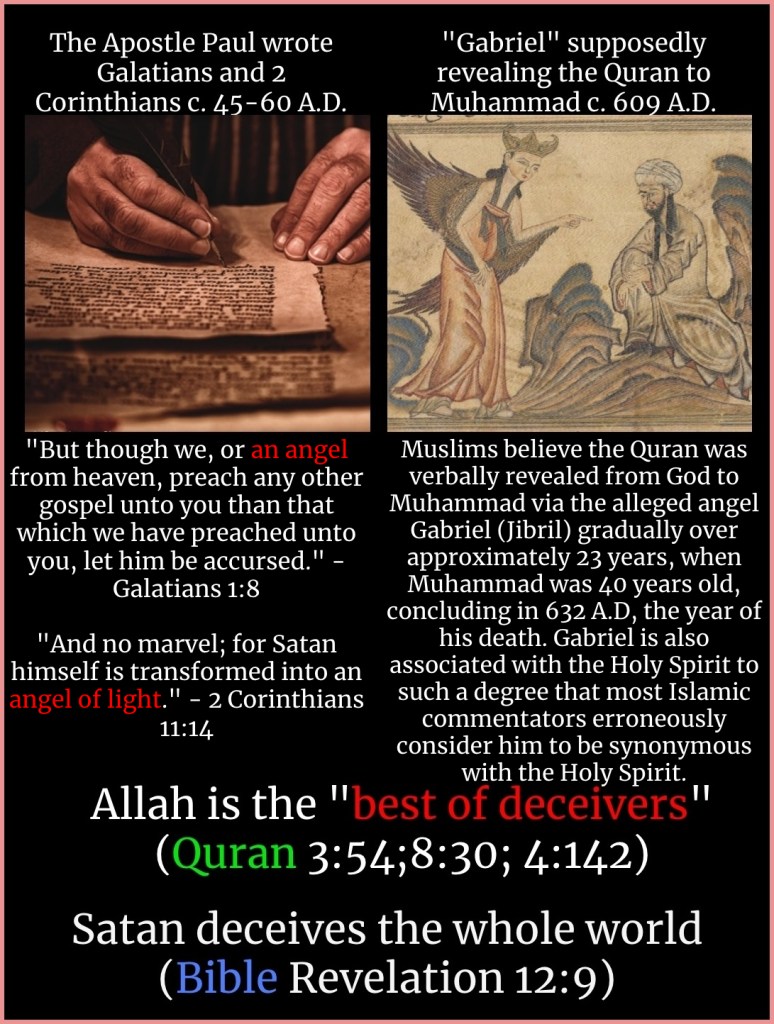
Muhammad had encounters with a spirit that he believed to be the angel Gabriel. The nature of some of these encounters was strange. According to Muslim scholars, Allah did not speak to Muhammad directly but dealt with him only through the angel Gabriel. However, when looking at the texts concerning the circumstances of this angel via a critical lens, it should cast doubt it was really from God.
1) At least one person referred to his “Gabriel” as satan.
…Gabriel did not come to the Prophet (for some time) and so one of the Quraish women said, “His Satan has deserted him.
(Sahih al-Bukhari 1125)
Considering Muhammad’s strange manifestations, such a claim wasn’t a reach.
2) “Gabriel” wouldn’t go into a house with a dog or a picture and hates garlic.
This is both strange and comical. Why would a supposed angel of God not enter a house because there is a dog or a picture? Why dogs of all animals? What about cats, birds, or rabbits? What if one has a family photo or a drawing made by a child with crayons? Would an angel like Gabriel still be reluctant to enter a house?
Once Gabriel promised the Prophet (that he would visit him, but Gabriel did not come), and later on he said, “We, angels, do not enter a house which contains a picture or a dog.”
(Sahih al-Bukhari 3227)
Muhammad claimed Gabriel didn’t visit him because of a puppy in his house. Muhammad then ordered all dogs to be killed, which led to the Medina dog massacre:
Maimuna reported that one morning Allah’s Messenger (ﷺ) was silent with grief. Maimuna said:
Allah’s Messenger, I find a change in your mood today. Allah’s Messenger (ﷺ) said: Gabriel had promised me that he would meet me tonight, but he did not meet me. By Allah, he never broke his promises, and Allah’s Messenger (ﷺ) spent the day in this sad (mood). Then it occurred to him that there had been a puppy under their cot. He commanded and it was turned out. He then took some water in his hand and sprinkled it at that place. When it was evening Gabriel met him and he said to him: you promised me that you would meet me the previous night. He said: Yes, but we do not enter a house in which there is a dog or a picture. Then on that very morning he commanded the killing of the dogs until he announced that the dog kept for the orchards should also be killed, but he spared the dog meant for the protection of extensive fields (or big gardens).
Abdullah (b. Umar) (Allah be pleased with them) reported:
Allah’s Messenger (ﷺ) ordered the killing of dogs and we would send (men) in Medina and its corners and we did not spare any dog that we did not kill, so much so that we killed the dog that accompanied the wet she-camel belonging to the people of the desert.
(Sahih Muslim 1570c. Sunan an-Nasa’i 4276 reads that Muhammad even ordered for small dogs to be killed.)
One would think angels wouldn’t mind being around puppies since they are generally cute and adorable, but not Gabriel.
The following hadith is also strange and comical:
Jabir b. ‘Abdullah reported the Messenger of Allah (ﷺ) mying:
He who eats of this (offensive) plant, i. e garlic, and sometirres he said: He who eats onion and garlic and leek, should not approach our mosque for the angels are harmed by the same things as the children of Adam.
Why would angels be harmed by garlic, leeks, and onions when they are safe to consume for most humans? In fact, studies have shown that consuming plant vegetables from the allium family has many health benefits. For instance, one study reads that garlic “has a high medicinal value and is used to cure a variety of human diseases.”
Nowhere in the Bible does it read that angels refuse to enter homes with a picture, or a dog, and will be harmed by certain vegetables.
3) “Gabriel” failed in science.
Narrated Anas:
When `Abdullah bin Salam heard the arrival of the Prophet (ﷺ) at Medina, he came to him and said, “I am going to ask you about three things which nobody knows except a prophet: What is the first portent of the Hour? What will be the first meal taken by the people of Paradise? Why does a child resemble its father, and why does it resemble its maternal uncle” Allah’s Messenger (ﷺ) said, “Gabriel has just now told me of their answers.” `Abdullah said, “He (i.e. Gabriel), from amongst all the angels, is the enemy of the Jews.” Allah’s Messenger (ﷺ) said, “The first portent of the Hour will be a fire that will bring together the people from the east to the west; the first meal of the people of Paradise will be Extra-lobe (caudate lobe) of fish-liver. As for the resemblance of the child to its parents: If a man has sexual intercourse with his wife and gets discharge first, the child will resemble the father, and if the woman gets discharge first, the child will resemble her.”…
(Sahih al-Bukhari 3329)
It was narrated that Anas said:
“The Messenger of Allah (ﷺ) said: ‘The man’s water is thick and white, and the woman’s water is thin and yellow. Whichever of them comes first, the child will resemble (that parent).'”
There is no scientific evidence that this is factual. It doesn’t matter which parent climaxes or has discharge first when it comes to the resemblance of a child to his/her parents. Moreover, the female discharge of fluid during intercourse has absolutely nothing to do with the genetic information that the child receives because the female discharge does not contain the ovum (egg cell). A child’s physical appearance is determined by genetic combinations from both parents, who contribute half of the child’s genetic material. The offspring will have traits of both parents:
Every person has two copies of most genes in their genome. One copy of the gene comes from their mother, and the other one comes from their father. The two copies of the genes are not exactly the same. They contain small changes in the sequence of DNA bases. These two different versions of the same gene are called alleles. The small differences in the alleles cause offspring to resemble their parents without looking exactly the same as either parent (Figure 1.3).
(Kristi Lew, Heredity, p. 10)
The following hadith also has scientific errors:
Abu Tufail reported:
I visited Abu Sariha Hudhaifa b. Usaid al-Ghifari who said: I listened with these two ears of mine Allahs Messenger (ﷺ) as saying: The semen stays in the womb for forty nights, then the angel, gives it a shape. Zubair said: I think that he said: One who fashions that and decides whether he would be male or female. Then he (the angel) says: Would his limbs be full or imperfect? And then the Lord makes thein full and perfect or otherwise as He desires. Then he says: My Lord, what about his livelihood, and his death and what about his disposition? And then the Lord decides about his misfortune and fortune.
(Sahih Muslim 2645c. Note that a similar idea was written in Babylonian Talmud: Tractate Yebamoth (35-39), which predates Muhammad.)
So according to Muhammad, semen stays 40 nights in the womb (uterus) and the angel of Allah gives a baby shape to it. It has been scientifically established that no part of the semen or even the semen itself stays in the womb for 40 nights. Sperm can live inside a woman’s body for less than 5 days. Moreover, the unborn baby is already changing shape before 40 nights of gestation, as he or she rapidly grows and develops.
Remember that, according to Islamic claims, Muhammad’s supposed revelation is considered 100% absolutely perfect and cannot be wrong. If even one revelation contains a scientific error, it undermines the entire framework of Islam.
Indeed, the Quran (53:3-4) reads that Muhammad didn’t speak from his own desire. Renowned exegete Ibn Kathir (c. 1300–1373), who is considered a leading authority on Sunni Islam, wrote:
Allah said,… (Nor does he speak of desire), asserting that nothing the Prophet utters is of his own desire or wish,… (It is only a revelation revealed.), means, he only conveys to the people what he was commanded to convey, in its entirety without additions or deletions.
4) “Gabriel” was responsible for the massacre and enslavement of a Jewish tribe.
Gabriel urges Muhammad to go and attack the Jews of Banu Qurayza. This action ended with about 800 prisoners of war being massacred, and thousands of Jewish women and children being enslaved by Muhammad.
.. .When the Prophet returned from the (battle) of Al-Khandaq (i.e. Trench) and laid down his arms and took a bath Gabriel came to him while he (i.e. Gabriel) was shaking the dust off his head, and said, “You have laid down the arms?” By Allah, I have not laid them down. Go out to them (to attack them).” The Prophet said, “Where?” Gabriel pointed towards Bani Quraiza. So Allah’s Apostle went to them (i.e. Banu Quraiza) (i.e. besieged them). They then surrendered to the Prophet’s judgment but he directed them to Sad to give his verdict concerning them. Sad said, “I give my judgment that their warriors should be killed, their women and children should be taken as captives, and their properties distributed.”
(Sahih al-Bukhari 4122)
This is strange and questionable because, according to the Jews’ own religious texts and tradition, Gabriel is regarded as one of those spirit creatures assigned to intercede for them (cf. Daniel 8:15-19).
5) “Gabriel” supposedly took the form of a person they knew.
Why would the supposed Gabriel take Dihya’s form?
According to what al-Zuhri told me, at the time of the noon prayers Gabriel came to the apostle wearing an embroidered turban and riding on a mule with a saddle covered with a piece of brocade. ….. The apostle passed by a number of his companions in al-Saurayn before he got to the B. Qurayza and asked if anyone had passed them. They replied that Dihya b. Khalifa al-Kalbi had passed upon a white mule with a saddle covered with a piece of brocade. He said, “That was Gabriel who has been sent to B. Qurayza to shake their castles and strike terror to their hearts.”
(Ibn Ishaq, The Life of Muhammad, p. 461)
6) “Gabriel” supposedly performed surgery on Muhammad.
Interestingly, the following hadith reads that part of satan actually lived inside of him and was supposedly somehow removed, presumably when he was a child:
Anas b. Malik reported that Gabriel came to the Messenger of Allah (ﷺ) while he was playing with his playmates. He took hold of him and lay him prostrate on the ground and tore open his breast and took out the heart from it and then extracted a blood-clot out of it and said:
That was the part of Satan in thee. And then he washed it with the water of Zamzam in a golden basin and then it was joined together and restored to it place. The boys came running to his mother, i. e. his nurse, and said: Verily Muhammad has been murdered. They all rushed toward him (and found him all right) His color was changed, Anas said. I myself saw the marks of needle on his breast.
Imagine being a child where a spirit entity, without your consent, rips open your chest to perform surgery. How frightening! It must have been such a serious event that afterward they thought Muhammad had been murdered.
Apparently, satan wasn’t actually removed, based on what was read in the Muslim literature earlier. Remember, Muhammad asserted that satan flowed through him as the blood flows!
7) Khadija, Muhammad’s first wife, determined it was an angel from God using an unbiblical test.
Isma`il b. Abu Hakim, a freedman of the family of al-Zubayr, told me on Khadija’s authority that she said to the apostle of God, ‘O son of my uncle, are you able to tell me about your visitant, when he comes to you?” He replied that he could, and she asked him to tell her when he came. So when Gabriel came to him, as he was wont, the apostle said to Khadija, ‘This is Gabriel who has just come to me.’ `Get up, O son of my uncle,’ she said, `and sit by my left thigh.’ The apostle did so, and she said, `Can you see him?’ `Yes,’ he said. She said, `Then turn around and sit on my right thigh.’ He did so, and she said, `Can you see him?’ When he said that he could she asked him to move and sit in her lap. When he had done this she again asked if he could see him, and when he said yes, she disclosed her form and cast aside her veil while the apostle was sitting in her lap. Then she said, `Can you see him?’ And he replied, `No.’ She said, `O son of my uncle, rejoice and be of good heart, by God he is an angel and not a satan.’
(Ibn Ishaq, The Life of Muhammad, p. 107)
It reads that Khadija tested the spirit by showing off more of her body. The spirit strangely disappeared when it saw more of her body, and by that, she concluded that it was an angel. That’s strange considering Adam and Eve were naked before the fall, as the Bible says. Didn’t angels see them without clothes? Do angels see naked babies when they are born? What a strange way to test and determine if an angel is sent by God.
What’s also strange is not only that Khadija seemed unable to see “Gabriel” but also Muhammad’s child wife, Aisha:
Narrated Abu Salama:
`Aisha said that the Prophet (ﷺ) said to her “O `Aisha’ This is Gabriel and he sends his (greetings) salutations to you.” `Aisha said, “Salutations (Greetings) to him, and Allah’s Mercy and Blessings be on him,” and addressing the Prophet (ﷺ) she said, “You see what I don’t see.”
8) “Gabriel” Seems To Have the Status of Allah, Shares His Attributes, and is Worshiped
Several passages in the Quran read that Allah is called the Truth (e.g., 22:62, 24:25). One Muslim website confirms that one of Allah’s exclusive names is the Truth:
Allah سُبْحَٰنَهُۥ وَتَعَٰلَىٰ is Al-Haqq (in Arabic: ٱلْحَقُّ), meaning: the only reality, the one who is the embodiment of truth, the absolute. Since He is the sole and true God, He has every right to be worshipped. His essence is unavoidable and unchanged.
(Source)
According to the hadith and sīra literature, the Truth (al-haqq) appeared to Muhammad to commission him as a prophet messenger. These sources identify the Truth as the angel Gabriel:
The commencement of the Divine Inspiration to Allah’s Messenger (ﷺ) was in the form of good dreams which came true like bright daylight, and then the love of seclusion was bestowed upon him. He used to go in seclusion in the cave of Hira where he used to worship (Allah alone) continuously for many days before his desire to see his family. He used to take with him the journey food for the stay and then come back to (his wife) Khadija to take his food likewise again till suddenly the Truth descended upon him while he was in the cave of Hira. The angel came to him and asked him to read…
Ahmad b. ‘Uthman, known as Abu al-Jawza – Wahb b. Jarir – his father – al-Nu‘man b. Rashid – al-Zuhri – ‘Urwah – ‘A’ishah: The first form in which the revelation came to the Messenger of God was true vision; this used to come to him like the break of dawn. After that, he grew to love solitude and used to remain in a cave on Hira’ engaged in acts of devotion for a number of days before returning to his family. Then he would return to his family and supply himself with provisions for a similar number of days. This continued until THE TRUTH came to him unexpectedly,96 AND SAID: “Muhammad, you are the Messenger of God.” [Describing what happened next], the Messenger of God said, “I had been standing, but fell to my knees; and crawled away, my shoulders trembling. I went to Khadijah and said, ‘Wrap me up! Wrap me up!’ When the terror had left me, he came to me and said, ‘Muhammad, you are the Messenger of God.’”
(Al-Tabari, The History of al-Tabari: Muhammad at Mecca, Vol. VI, pp. 67-68)
The English translator of The History of al-Tabari (p. 67) in the footnote claims that Muhammad may have initially thought that it was Allah who appeared to him and physically manhandled him in the cave:
96. In this usage, the Truth (al-haqq) is God, and the apparent declaration of Muhammad’s messengership by God supports the view that he originally took the visions to be of God.
The Quran reads it is Allah who is the Lord or Owner of the Throne (40:15), but some reports say that at least on one occasion, the supposed angel appeared to Muhammad seated on a throne:
Jabir b. ‘Abdullah al-Ansari who was one of the Companions of the Messenger of Allah (ﷺ) reportedThe Messenger of Allah (ﷺ) told about the intermission of revelation and narrated While I was walking I heard a voice from the sky, and raising my head I saw the angel who had come to me in Hira’, sitting on a Throne between heaven and earth I was terror-stricken on that account and came back (to my family) and said:
Wrap me up, wrap me up! So they wrapped me up, and the Blessed and Most Exalted Allah sent down:” You who are shrouded, arise and deliver warning, your Lord magnify, your clothes cleanse, and defilement shun,” and” defilement” means idols; and then the revelation was followed continuously.
One report reads that Muhammad actually knelt down to this supposed angel, whom he saw seated on a throne, thereby committing a very serious sin (called shirk) for bowing down to and worshiping someone other than Allah:
In both sahih collections there is a tradition from ‘Abd al-Razzaq, from Ma‘mar, from al-Zuhri, who said that he heard Abu Salama ‘Abd al-Rahman relate from Jabir b. ‘Abd Allah, who had heard the Messenger of God talking about the intermission in the revelation, say, “While I walked, I heard a voice from heaven. I raised my sight towards the sky and there I saw the angel who came to me in Hira’, seated upon a throne amidst the sky. I knelt down before him in fear, right down to the ground…’”
… The Messenger of God said, “I spent a month in seclusion in Hira‘ and when it was over I went down into the heart of the valley. I heard a voice calling out to me and I looked ahead, behind me and to left and right, but I saw nothing. Then I looked up at the sky and there he was, on a throne in the air…”
According to a variant account he used the words, “And there was the angel who had come to me in Hira‘ seated on a throne between the heavens and the earth, AND I KNELT DOWN BEFORE HIM.”
(Ibn Kathir, The Life of the Prophet Muhammad (Al-Sira al-Nabawiyya), Vol. I, pp. 299-300. Referenced also in Al-Tabari’s The History of al-Tabari: Muhammad at Mecca, Vol. VI, pp. 73-74)
The Quran nowhere refers to angels sitting on thrones. Instead, angels are depicted as standing around and/or bowing before Allah, praising Allah, and praying for the Muslims.
In the Bible, only Jesus is referenced as the Truth (John 14:6). Also, there are no depictions of angels of God sitting on thrones. Thus, this can’t be the Biblical Gabriel. However, the Bible does read that satan has a throne (Rev. 2:13).
The aforementioned Islamic accounts of encounters with Gabriel were either fabrications or demonic apparitions.
9) The supposed angel Gabriel blew into Mary’s private parts.
According to the Quran, Allah sent his Spirit to the virgin Mary (Maryam) to give her a faultless son, most holy and pure (19:19). However, many Muslims believe that it was the supposed angel Gabriel who breathed into Mary’s vagina (21:91; 66:12) to conceive Jesus (19:16-21), though nowhere in the Arabic text of the Quran does it read it was actually Gabriel.
If it was Gabriel who did it, as many Muslims claim, then how come he wasn’t shy when he supposedly did such a vulgar, indecent thing? Remember, this is the Gabriel who departed because Khadija showed more of her skin.
Interestingly, every English translation of the Quran obscures where Allah or the alleged Gabriel supposedly breathed or blew into because the translators of the verses were likely embarrassed to translate the word “فَرْجَهَا” (farjaha) into its real meaning, which is “her vagina” or “her genital parts.” They used alternative words to appear more palatable and appropriate.
Ibn Kathir wrote his commentary on Quran 66:12 and 19:20-23, admitting where Allah/Gabriel really breathed into:
(And We breathed into it (private part) through Our Ruh,) meaning, through the angel Jibril. Allah sent the angel Jibril to Maryam, and he came to her in the shape of a man in every respect. Allah commanded him to blow into a gap of her garment and that breath went into her womb through her private part; this is how `Isa was conceived. This is why Allah said here,
(Tafsir of Ibn Kathir on 66:12)
Allah, the Exalted, informs about Maryam that when Jibril had spoken to her about what Allah said, she accepted the decree of Allah. Many scholars of the predecessors (Salaf) have mentioned that at this point the angel (who was Jibril) blew into the opening of the garment that she was wearing. Then the breath descended until it entered into her vagina and she conceived the child by the leave of Allah…
(Tafsir of Ibn Kathir on 19:22-23)
The following Tafsir by al-Qurtubi was even more graphic and tasteless:
One of them said that Jibrīl breathed into her womb and it attached itself. One of them said that it is not permitted that the creation be from the breath of Jibrīl because then the child would be part angel and part human, but rather the reason for that is that when Allah Almighty created Ādam and took the covenant from his progeny, he put some of the fluid in the loins of fathers and some in the wombs of mothers. When the two fluids meet, a child is produced. Allah gave Maryam both fluids: some in her womb and some in her spine. Jibrīl breathed into her to stimulate her desire because as long as a woman does not have her desire ignited, she does not become pregnant. When that happened by Jibrīl’s breath, the fluid in her spine descended into her womb and the two fluids mixed and the foetus was attached. That is why Allah then says: ‘When He decides on something,’ meaning when He wants to create something. This was discussed in al-Baqarah.
(Aisha Bewley, Tafsir al-Qurtubi: Juz’ 3: Sūrat al-Baqarah 254–286 & Sūrah Āli ‘Imrān 1–95, Volume 3, pp. 313-314)
This is coming from the filthy minds of prominent Islamic scholars who were influenced by their demonized prophet.
By the way, nowhere does it read that Allah, “Gabriel,” or the Spirit asked for Mary’s consent before breathing into or entering her vagina. What woman or girl wouldn’t feel violated after some stranger blows into or enters her private parts?
While on the topic of private parts, why did “Gabriel” sprinkle water on his penis? What a very strange thing to do. The following is narrated by Zayd ibn Haritha [translated from Arabic using Gemini]:
Gabriel came to me at the very beginning of the revelation, and he taught me ablution (wudu’) and prayer (salat). When he finished [the] ablution, he took a handful of water and sprinkled it on his private parts.
What is also worth noting is that the Quran reads it is Allah who gives and creates life (15:23, 2:228), but it was Gabriel, at least according to Muslim expositors, who blew into Mary’s vagina, which implies Gabriel has another exclusive attribute of Allah: the life-giver (al-muhyi). This would imply Gabriel is also god or co-creator with Allah. If it were instead the Spirit (under the assumption that the Spirit is not Gabriel) who created or gave life, then that would suggest he is also god or co-creator with Allah. Either way, this seems like evidence of a numerical plurality within the being of Allah. It would make sense why plural pronouns are used concerning Allah all throughout the Quran, and why Allah said he is the best of the creators (23:14, Arberry).
As a side note, Muslim commentators claim that Gabriel is the Holy Spirit, but there is not a single verse in the entire Quran that explicitly supports it. In fact, the Quran and authentic hadiths distinguish between the angels (of which Gabriel is obviously one, at least according to the hadiths) and the Spirit, affirming that they are not one and the same entity (Quran 70:4; 78:38; 97:4; Sahih Muslim 487a, 2490).
Regarding the issue of multiple creators in Islam, the Quran teaches that Jesus is also a creator of life (3:49; 5:110) when he gave life to clay birds. Muslims may object by saying that Jesus did it with Allah’s permission (or by Allah’s leave), but that doesn’t negate the fact that the Quran reads that Jesus created life. Indeed, the Quran has Jesus creating life the exact way that Allah does, according to the following commentary:
… His creating live birds out of clay birds, healing the blind and the leper, and raising the dead are likewise recounted in 3:49 (for blind and leper, see 3:49c). These last three miraculous powers attributed to Jesus are EXTRAORDINARY in that THEY SUGGEST POWERS USUALLY RESERVED FOR GOD; God is the one who heals (26:8); He is the raiser of the dead throughout the Quran: and the creation of birds from clay and bringing them to life by breathing upon them IS EXACTLY PARALLEL TO GOD’S CREATION OF THE HUMAN BEING (15:26-29; 32:7-9; 38:71-72). The verse repeatedly makes clear, however, that all these powers are done by God’s leave (by My Leave) and so are ultimately His. Jesus’ ability to heal and power to raise the dead are also found in the canonical Gospels, and a similar account of Jesus’ creating birds from clay is given in the noncanonical Infancy Gospel of Thomas.”
(Editor-in-Chief Seyyed Hossein, The Study Quran: A New Translation and Commentary, Ch. 5, 110)
Allah deliberately used Jesus, a supposed mere creature in Islam, to be his partner by permitting him to share in his divine, unique power to create life and raise the dead. But in so doing, Allah essentially ended up committing the very transgression that the Muslim scripture says is unforgivable, which is shirk. Or it could be that Jesus isn’t a mere creature but truly divine, which is why he can create and give life the same way Allah does. Either way, the Quran ascribes to Jesus the same divine exclusive power Allah possesses to create life, which would imply that he is also god. This means that the Quran inadvertently affirms there are multiple gods/creators in Islam!
As another side note, in its rejection of the Christian faith, the Quran implies Allah can’t have a son because he lacks a consort or companion. The Quran asks the rhetorical question, “How can He have a son when He hath no consort?” (6:101, Yusuf Ali), meaning Allah needs a consort (to have sex with) to produce a son. Mary asks a similar question about herself, but Allah says, “’that is easy for Me’” (19:19-21, Yusuf Ali). So the Quran says that Allah cannot have a son without a consort (inadvertently negating his omnipotence), but Mary can have a son without a consort because it is easy for Allah. This shows that the Quran is inconsistent with itself in its attack against the Sonship of Jesus to God. The Quran misrepresents the Bible, which reads that Jesus is the Son of God (denoting a spiritual relationship between Jesus and the Father), by falsely assuming that the only way for God to be the Father of Jesus (or of anyone else) is via sexual procreation. Yet, there is another inconsistency in the Quran: elsewhere it reads Allah could have taken himself a son from among his creation (without the necessity of a consort) to father such a son (39:4). But remember, Quran 6:101 clearly rejects the same idea as a logical impossibility.
10) “Gabriel” pressed Muhammad’s chest so hard that it caused him pain and great terror that had him shake convulsively.

The revelations of Muhammad, the very seeds of Islam, began amidst a violent and dark encounter with a spiritual entity in the cave of Hira (Sahih al-Bukhari 6982). Muhammad’s encounter with the alleged angel is unprecedented, inconsistent, and uncharacteristic of Biblical angelic encounters. According to the account, which lacks outside testimony, the supposed angel Gabriel manifested without any greeting or self-identification, immediately ordering Muhammad to “Read” and then pressing him so hard the experience became unbearable. Strange.
… The Prophet added, “The angel caught me (forcefully) and pressed me so hard that I could not bear it any more. He then released me and again asked me to read and I replied, ‘I do not know how to read.’ Thereupon he caught me again and pressed me a second time till I could not bear it any more. He then released me and again asked me to read but again I replied, ‘I do not know how to read (or what shall I read)?’ Thereupon he caught me for the third time and pressed me, and then released me and said, ‘Read in the name of your Lord, who has created (all that exists) has created man from a clot. Read! And your Lord is the Most Generous.” (96.1, 96.2, 96.3) . . .
(Sahih al-Bukhari 3)
Muhammad b. ‘Abd al-Malik b. Abi al-Shawarib – ‘Abd al-Wahid b. Ziyad – Sulayman al-Shaybani – ‘Abd Allah b. Shaddad: Gabriel came to Muhammad and said, “O Muhammad recite!” He said, “I cannot recite.” GABRIEL WAS VIOLENT TOWARDS HIM and then said again, “O Muhammad recite!” He said, “I cannot recite,” AND GABRIEL AGAIN WAS VIOLENT TOWARDS HIM…
(Al-Tabari, The History of al-Tabari: Muhammad at Mecca, Vol. VI, p. 69)
It was while he was making his annual retreat on Mount Hira’ in about the year 610 that he experienced the astonishing and dramatic ATTACK. The words are squeezed, as if from the depths of his being, went to the root of the problem in Mecca…
When Muhammad came to himself, he was so horrified to think, after all his spiritual striving, that he had simply been visited by a jinni that he no longer wanted to live. In despair, he fled from the cave and started to climb to the summit of the mountain TO FLING HIMSELF TO DEATH. But there he had another vision. He saw a mighty being that filled the horizon and stood ‘gazing at him, moving neither forward nor backward.’ He tried to turn away, but, he said afterwards, ‘Towards whatever region of the sky I looked, I saw him as before.’ It was the spirit (ruh) of revelation, which Muhammad would LATER call Gabriel. But this was no pretty, naturalistic angel, but a transcendent presence that defied ordinary human and spatial categories.
TERRIFIED and still unable to comprehend what had happened, Muhammad stumbled down the mountainside to Khadijah. By the time he reached her, HE WAS CRAWLING ON HIS HANDS AND KNEES, SHAKING CONVULSIVELY. ‘Cover me!’ he cried, as he flung himself into her lap… After the experiences on Mount Hira’, there were more visions–we do not know exactly how many–and then, to Muhammad’s dismay, the divine voice fell silent and there was no further revelations…
It was a time of great desolation. Had Muhammad been deluded after all? Was the presence simply a mischievous jinni? Or had God found him wanting and abandoned him? For two long years, the heavens remained obdurately closed and then, suddenly, the darkness was dispersed in a burst of luminous assurance…
(Karen Armstrong, Muhammad: A Prophet For Our Time, Ch.1, Mecca, pp. 33-37)
How come this supposed angel of God didn’t know Muhammad beforehand, couldn’t read, and tried to coerce him via violence to read when he repeatedly said he was unable to? Shouldn’t this entity have received some sort of memo that Muhammad was illiterate?
Moreover, Muhammad said, “A true good dream is from Allah, and a bad dream is from Satan” (Sahih al-Bukhari 6984). If it were the case that the first encounter with the violent entity was in a dream, then the dream was indeed bad, resulting in him being seriously agitated. It should be evident, even by Muhammad’s criteria, that it was a dream/nightmare from satan.
The violence he experienced is reminiscent of what some initiated shamans go through. In the book Shamanism, among South American shamans, it reads:
… a spirit, Pasuka, appears to the candidate in the form of a warrior. The master (spirit being) immediately begins to strike the apprentice (shamanic candidate) until he falls to the ground unconscious. When he revives his body, it is completely sore. This proves that the spirit has taken possession of him.”
(Eliade, Shamanism, p. 84)
It also reads in the book that “… the candidate-shaman’s first possession is manifested by a trance that prostrates him” (p. 55), and “[t]he future shaman exhibits exceptional traits from adolescence; he very early becomes nervous and is sometimes even subject to epileptic seizures, which are interpreted as meetings with the gods” (p. 15). Remember, earlier it was mentioned how there were moments when Muhammad seemed to have gone into a trance and had mysterious epileptic-like seizures. In Muhammad’s case, such symptoms are likely attributed to the demonic.
In the following quotation pulled from Britannica, we can read more of what a shaman may go through:
… it is not the shaman who summons up the spirits but they, the supernatural beings, who choose him. Adolescence typically marks the point when the spirits begin to take an overt role in the shaman’s life, although variations in the age of onset do occur. The spirits may cause the chosen one to fall into hysterics, to faint repeatedly, to have visions, or to have similar symptoms, with these events sometimes persisting for weeks.
(Source)
Similar to shamans, Muhammad was also selected by a supernatural entity, experienced hysterics (descended into madness), fainted, and experienced visions!
The Bible records that people sometimes were afraid when Gabriel communicated with them, but he allayed their fear. In Luke 1:11-19, Gabriel appeared to Zechariah, which caused Zechariah to be afraid. However, Gabriel immediately comforted him and said to fear not, since God’s blessing was coming to him with the birth of John the Baptist. There was no assault like Muhammad was assaulted.
Moreover, in Luke 1:26-31, Gabriel appeared to Mary, and she became troubled. However, Gabriel immediately allayed her fear and told her to not fear since she had found favor with God and was to give birth to the divine Son of God, Jesus Christ. Again, there was no abuse.
Daniel 9:20-23 reads that when Daniel was praying, confessing his sin and the sin of his people of Israel, and presenting his supplication before the Lord his God, Gabriel appeared and relayed a prophecy to record. Gabriel was peaceable, and there was no violence.
Another time, an angel (presumably a different angel) manifested to the prophet Daniel. Even though the manifestation resulted in his face turning deathly pale, losing his vigor or strength, and falling into a deep sleep, the angel told him to fear not and strengthened him (Daniel 10).
Analytically, it’s apparent that the spirit that appeared to Muhammad was not Gabriel but some sort of hostile, deceiving being – perhaps even satan himself. Interestingly, the cousin of Muhammad’s first wife, Khadijah, named Waraqa, himself a supposed Christian (though it’s debatable), knew that satan could imitate Gabriel:
“Waraqa was dumbfounded at this, and said, ‘If Gabriel has actually placed his feet upon the earth, he has done so for the best of people thereupon. And he never came down for anyone except a prophet. For he is the companion of all the prophets and messengers, the one whom God sends down to them. I believe what you tell me of him. Send for ‘Abd Allah’s son, so that I may question him, hear what he says and talk to him. I am afraid it may be someone other than Gabriel, for certain devils imitate him and by so doing can mislead and corrupt some men. This can result in a man becoming confused and even crazy whereas before he had been of sound mind.’”
(Ibn Kathir, The Life of the Prophet Muhammad (Al-Sira al-Nabawiyya), Vol. I, pp. 296-297)
Waraqa was correct, as the Bible reads, “And no marvel; for Satan himself is transformed into an angel of light” (2 Corinthians 11:14).
11) “Gabriel” prayed for Muhammad to become healed, but the prayer wasn’t answered.

Gabriel used to chant on Muhammad, may Allah bless him, saying: In the name of Allah, the Compassionate, the Merciful. In the name of Allah I chant to ward off every thing that harms you, blemish of every eye. blowing of an envier and iniquity of an unjust; In the name of Allah I chant and Allah will heal you.
(Ibn Sa’d, Kitab Al Tabaqat Al Kabir Vol. 2, Part I & II, pp. 265-266)
How come the supposed Gabriel’s prayer failed to lead to his healing? And what happened to the supposed power of ‘Ajwa dates protecting a person from poison? Muhammad still died (an agonizing death) after he felt his aorta being cut from eating poison-laced food given to him by a Jewish woman (Sahih al-Bukhari 2617). At least one of her motives for feeding Muhammad poisoned food was to test if he was a true prophet, thinking poison wouldn’t harm him if he was (Sunan Abi Dawud 4512). This occurred following the conquest of Khaibar (Khaybar), where he took Safiya as a wife, and ordered the torture and beheading of her husband Kinana, the chief of the Jews at Khaibar.
“Ibn ‘Abbas replied, ‘That indicated the death of Allah’s Apostle which Allah informed him of.’ ‘Umar said, ‘I do not understand of it except what you understand.’ Narrated ‘Aisha: The Prophet in his ailment in which he died, used to say, ‘O ‘Aisha! I still feel the pain caused by the food I ate at Khaibar, and at this time, I feel as if my aorta is being cut from that poison“
(Sahih al-Bukhari 4428)
‘Aishah said:
“I never saw anyone suffer more pain than the Messenger of Allah (ﷺ).”
(Sunan Ibn Majah 1622)
Whereas Muhammad succumbed to poison, the Bible implies that a venomous snake attacked the Apostle Paul, but he was protected by God (Acts 28:3-6).
Interestingly, the god of Muhammad threatened him by stating that if he fabricated false teachings (i.e., invented revelations), his aorta would be cut:
And if he had fabricated against Us some of the sayings, We would certainly have seized him by the right hand, Then We would certainly have cut off his aorta.
(Quran 69:44-46, Shakir)
It is known that he did utter false teachings in the infamous “Satanic Verses” episode.
12) The Content of the Supposed Gabriel’s Revelations to Muhammad Contradicts the Bible.
Before contuining, I would like to preface that I do not believe that the Quran is the word of God. The Quran is a feeble imitation of God’s true and inspired word, the Holy Bible. I reference the Quran here to show that their own sources support the authenticity and reliability of the Bible. I will show later that it puts Muslims in an unresolvable dilemma.
The Quran claims that the God of the Bible and the God of Muslims are one. It also commands Muslims to tell Jews and Christians that they believe in the Judeo-Christian Scriptures, making it obligatory for Muslims to believe in the Bible since that is the revelation that the Jews and Christians possess:
And argue not with the People of the Scripture unless it be in (a way) that is better, save with such of them as do wrong; and say: We believe in that which hath been revealed unto us and revealed unto you; our Allah and your Allah is One, and unto Him we surrender.
(Quran 29:46, Pickthall)
As a side note, the Roman Catholic Church believes similarly. The “Dogmatic Constitution on the Church” reads, “But the plan of salvation also includes those who acknowledge the Creator. In the first place amongst these there are the Muslims, who, professing to hold the faith of Abraham, along with us adore the one and merciful God, who on the last day will judge mankind” (CCC 841. Also found in Lumen Gentium 16).
We will read later that the God of the Bible and Allah CANNOT be the same!
It’s worth noting that the term “Gospel” was used by the early Church to refer to the fourfold Gospel accounts of Matthew, Mark, Luke, and John. Noted biblical scholar, F.F. Bruce (1910-1990), explains:
At a very early date it appears that the four Gospels were united in one collection. They must have been brought together very soon after the writing of the Gospel according to John. This fourfold collection was known originally as ‘The Gospel’ singular, not ‘The Gospels’ in the plural; there was only one Gospel, narrated in four records, distinguished as ‘according to Matthew’, ‘according to Mark’, and so on. About A.D. 115 Ignatius, bishop, of Antioch, refers to ‘The Gospel’ as an authoritative writing, and as he knew more than one of the four ‘Gospels’ it may well be that by ‘The Gospel’ sans phrase he means the fourfold collection which went by that name.
(F.F. Bruce, The New Testament Documents: Are They Reliable?, p. 18)
Irenaeus of Lyon (c. 130 – c. 202), an apologist and Bishop, wrote:
It is not possible that the Gospels can be either more or fewer in number than they are. For, since there are four zones of the world in which we live, and four principal winds, while the Church is scattered throughout all the world, and the pillar and ground 1 Timothy 3:15 of the Church is the Gospel and the spirit of life; it is fitting that she should have four pillars, breathing out immortality on every side, and vivifying men afresh. From which fact, it is evident that the Word, the Artificer of all, He that sits upon the cherubim, and contains all things, He who was manifested to men, has given us the Gospel under four aspects, but bound together by one Spirit.
(Ireneaus, Against Heresies, Book III, Chapter 11, 8)
It’s also worth noting that the early Muslims referenced the Torah to loosely refer to all the scriptures of the Jews and Christians. Ibn Kathir wrote:
Al-Bukhari recorded it from ‘Abdullah bin ‘Amr. It was also recorded by Al-Bukhari [up to the word] forgoes. And he mentioned the narration of ‘Abdullah bin ‘Amr then he said: “It was COMMON in the speech of our Salaf that they describe the Books of the People of the Two Scriptures AS THE TAWRAH, as some Hadiths concur…”
(Ibn Kathir, Tafsir Ibn Kathir (Abridged) Volume 4, (Surat Al-Ar’af to the end of Surah Yunus), p. 179)
And it should be recognized that many of our forebears used to apply the word “Torah” to the books of the peoples of the scriptures. These are in their view more comprehensive than those God revealed to Moses. This fact is attested from the hadith.
(Ibn Kathir, The Life of the Prophet Muhammad (Al-Sira al-Nabawiyya), Volume I, p. 237)
There are several instances where the Quran claims the Gospels (Injeel or Injil) were previously revealed, given, and guarded by Allah. People are commanded to believe and follow the Previous Revelations:
This is the Scripture whereof there is no doubt, a guidance unto those who ward off (evil). Who believe in the Unseen, and establish worship, and spend of that We have bestowed upon them; And who believe in that which is revealed unto thee (Muhammad) and that which was revealed before thee, and are certain of the Hereafter.
(Quran 2:2-4, Pickthall)
Say (O Muhammad Peace be upon him ): “Whoever is an enemy to Jibrael (Gabriel) (let him die in his fury), for indeed he has brought it (this Quran) down to your heart by Allah’s Permission, confirming what came before it [i.e. the Taurat (Torah) and the Injeel (Gospel)] and guidance and glad tidings for the believers.
(Quran 2:97, Mohsin Khan)
Say ye: “We believe in Allah, and the revelation given to us, and to Abraham, Isma’il, Isaac, Jacob, and the Tribes, and that given to Moses and Jesus, and that given to (all) prophets from their Lord: We make no difference between one and another of them: And we bow to Allah (in Islam).”
(Quran 2:136, Yusuf Ali)
The Messenger believes in what was sent down to him from his Lord, and the believers; each one believes in God and His angels, and in His Books and His Messengers; we make no division between any one of His Messengers. They say, ‘We hear, and obey. Our Lord, grant us Thy forgiveness; unto Thee is the homecoming.’
(Quran 2:285, Arberry)
He has revealed to you the Book with truth, verifying that which is before it, and He revealed the Tavrat and the Injeel aforetime, a guidance for the people, and He sent the Furqan.
(Quran 3:3, Shakir)
O ye who believe! Believe in Allah and His Messenger, and the scripture which He hath sent to His Messenger and the scripture which He sent to those before (him). Any who denieth Allah, His angels, His Books, His Messengers, and the Day of Judgment, hath gone far, far astray.
(Quran 4:136, Yusuf Ali)
And in their footsteps We sent Jesus the son of Mary, confirming the Law that had come before him: We sent him the Gospel: therein was guidance and light, and confirmation of the Law that had come before him: a guidance and an admonition to those who fear Allah. Let the people of the Gospel judge by what Allah hath revealed therein. If any do fail to judge by (the light of) what Allah hath revealed, they are (no better than) those who rebel. To thee We sent the Scripture in truth, confirming the scripture that came before it, and guarding it in safety: so judge between them by what Allah hath revealed, and follow not their vain desires, diverging from the Truth that hath come to thee. To each among you have we prescribed a law and an open way. If Allah had so willed, He would have made you a single people, but (His plan is) to test you in what He hath given you: so strive as in a race in all virtues. The goal of you all is to Allah; it is He that will show you the truth of the matters in which ye dispute;
(Quran 5:46-48, Yusuf Ali)
If they had observed the Torah and the Gospel and that which was revealed unto them from their Lord, they would surely have been nourished from above them and from beneath their feet. Among them there are people who are moderate, but many of them are of evil conduct.
(Quran 5:66, Pickthall)
Say: “O People of the Book! YE HAVE NO GROUND TO STAND UPON UNLESS YE STAND FAST BY THE Law, the GOSPEL, and all the revelation that has come to you from your Lord.” It is the revelation that cometh to thee from thy Lord…
(Quran 5:68, Yusuf Ali)
And this (the Quran) is a blessed Book which We have sent down, confirming (the revelations) which came before it, so that you may warn the Mother of Towns (i.e. Makkah) and all those around it. Those who believe in the Hereafter believe in (the Quran), and they are constant in guarding their Salat (prayers).
(Quran 6:92, Mohsin Khan)
And this Quran is not such as could ever be produced by other than Allah (Lord of the heavens and the earth), but it is a confirmation of (the revelation)which was before it [i.e. the Taurat (Torah), and the Injeel (Gospel), etc.], and a full explanation of the Book (i.e. laws and orders, etc, decreed for mankind) – wherein there is no doubt from the the Lord of the ‘Alamin (mankind, jinns,and all that exists).
(Quran 10:37, Muhsin Khan)
That which We have revealed to thee of the Book is the Truth,- confirming what was (revealed) before it: for Allah is assuredly- with respect to His Servants – well acquainted and Fully Observant.
(Quran 35:31, Yusuf Ali)
Before this (Quran), the Book of Moses was a guide and a blessing. This Book confirms the Torah. It is in the Arabic language so that it may warn the unjust people, and give glad news to the righteous ones.
(Quran 46:12, Muhammad Sarwar)
They said, ‘Our people, we have heard a Book that was sent down after Moses, confirming what was before it, guiding to the truth and to a straight path.
(Quran 46:30, Arberry)
And when Jesus son of Mary said, ‘Children of Israel, I am indeed the Messenger of God to you, confirming the Torah that is before me, and giving good tidings of a Messenger who shall come after me, whose name shall be Ahmad.’ Then, when he brought them the clear signs, they said, ‘This is a manifest sorcery.’
(Quran 61:6, Arberry)
The Quran maintains that the Bible, or at least the Torah and the Gospel, is the word of God!
The Study Quran reads that the Quran testifies to the validity of the earlier Scriptures:
47 Several commentators note that enjoining the people of the Gospel to judge by what God has sent down therein means that they should follow the rulings of the Torah in most cases, since Jesus himself lived largely according to the Torah rulings, with the exception of those that the Gospel abrogates (IK), and since the Gospel itself contains teachings and exhortations, but relatively few legal rulings (Z). This verse indicates that the Gospel REMAINS A VALID SOURCE OF GUIDANCE for the people of the Gospel, just as vv. 43-44 suggest that the Jews can continue to find guidance in the Torah. The CONTINUING VALIDITY of these two scriptures is also suggested in v. 68… Several commentators, however, argue that the exhortation here to follow the Gospel indicates only that they should have followed the Gospel prior to the coming of the Quran, which thereafter abrogated the scripture that came before it (IK, R). This reading seems implausible in light of other Quranic verses, however, since v. 43 questions why the Jews have come to the Prophet for judgment (regarding two Jewish adulterers) when they have the Torah indicating that Prophetic adjudication is not necessary (EVEN DURING HIS LIFETIME) AS LONG AS THEY FOLLOW THEIR OWN SCRIPTURE. And indeed, in issuing his ruling in that case–namely, the implementation of the penalty of stoning, the Prophet stated that his actions were intended to revive (AND THUS LEGITIMATE) the Torah ruling for the Jews (see commentary on 5:41-44).
(Editor-in-Chief Seyyed Hossein, The Study Quran: A New Translation and Commentary, Ch. 5, 47)
And:
48 This verse addresses the Prophet directly and describes the Book sent down to him–that is, the Quran– as confirming the Book that came before it, just as the Gospel confirms the Torah. The Quran is also described as “confirming” earlier scriptures in 2:41, 89, 91, 97, 101; 3:3, 81; 6:92; 35:31; 46:30. The Quran is further described as a protector (muhaymin) over the previous scriptures, meaning that the Quran testifies to THE VALIDITY OF THE EARLIER SCRIPTURES and serves as their trustee, keeper, and guardian (T, Z). “Protector” (al-Muhaymin) is also one of the Names of God in the Quran (59:23). The idea of the Quran as guardian and keeper of previous revelations is consistent with 5:41c and 5:45c, which report that the Prophet ordered the sentence of stoning for the two idolaters as well as retribution for killing and injury in order to reestablish the original Torah ruling on these matters. When the Prophet “judges between them”–that is, the People of the Book–this verse enjoins him to do so in accordance with what God has sent down, which most major commentators understand to mean that he should judge according to what God had revealed to him, namely the Quran (Bd, T, Z). Alternately, it could mean that he should judge the People of the Book according to what God has sent down TO THEM, namely, THEIR OWN SCRIPTURES (WHICH IS WHAT THE PROPHET EXPLICITLY DOES IN THE INCIDENT DISCUSSED IN VV. 41-43). That he should follow not their caprices means that he should not rule in accordance with their unwarranted digressions from or alterations to their own law, as discussed in vv. 41-47 (T), or that he should comply with their desire to alter or neglect what has come to the Prophet himself in the Quran (Bd). The Prophet is similarly warned against following the caprices of the People of the Book in the following verse, as well as in 2:120, 145; 42:15.
Although vv. 41-47, taken together, suggest THE VALIDITY OF JEWS AND CHRISTIANS JUDGING BY THEIR OWN SCRIPTURES, AND THUS THE CONTINUING SPIRITUAL GUIDANCE TO BE FOUND IN THOSE SCRIPTURES, this verse goes farther by asserting the providential nature of different religious communities and their distinct laws and practices. Indeed, the verse does not pertain only to Jews and Christians, but rather makes a universal statement about all religions. For each among you We have appointed a law and a way indicates that different religious communities may have different ritual and legal formulations specifically “appointed” for them by God, and that each religious community is independent of the laws of other such communities, even if the essential truths and principles of the religions are the same (IK, Q, R, T).
(Editor-in-Chief Seyyed Hossein , The Study Quran: A New Translation and Commentary, Ch. 5, 48)
The Quran confirms the Torah and the Gospel that were available and in use at the time of Muhammad, contrary to the false idea from some Muslims that they became lost:
O Children of Israel! Remember My favour wherewith I favoured you, and fulfil your (part of the) covenant, I shall fulfil My (part of the) covenant, and fear Me. And believe in that which I reveal, confirming that which ye possess already (of the Scripture), and be not first to disbelieve therein, and part not with My revelations for a trifling price, and keep your duty unto Me. Confound not truth with falsehood, nor knowingly conceal the truth. Establish worship, pay the poor-due, and bow your heads with those who bow (in worship). Enjoin ye righteousness upon mankind while ye yourselves forget (to practise it)? And ye are readers of the Scripture! Have ye then no sense?
(Quran 2:40-44, Pickthall)
And when there came to them (the Jews), a Book (this Quran) from Allah confirming what is WITH THEM [the Taurat (Torah) and the Injeel (Gospel)], although aforetime they had invoked Allah (for coming of Muhammad Peace be upon him ) in order to gain victory over those who disbelieved, then when there came to them that which they had recognised, they disbelieved in it. So let the Curse of Allah be on the disbelievers.
(Quran 2:89, Muhsin Khan)
And when there came to them a Messenger from Allah verifying that which they have, a party of those who were given the Book threw the Book of Allah behind their backs as if they knew nothing.
(Quran 2:101, Shakir)
And the Jews say: The Christians do not follow anything (good) and the Christians say: The Jews do not follow anything (good) while they recite the (same) Book. Even thus say those who have no knowledge, like to what they say; so Allah shall judge between them on the day of resurrection in what they differ.
(Quran 2:113, Shakir)
All food was lawful to the Children of Israel except what Israel had made unlawful to himself before the Torah was revealed. Say, [O Muhammad], “So bring the Torah and recite it, if you should be truthful.”
(Quran 3:93, Sahih International)
O ye unto whom the Scripture hath been given! Believe in what We have revealed confirming that which ye possess, before We destroy countenances so as to confound them, or curse them as We cursed the Sabbath-breakers (of old time). The commandment of Allah is always executed.
(Quran 4:47, Pickthall)
How can they come to you for judgment when they already have the Torah which contains the decree of God! It does not take them long to disregard your judgment; they are not true believers.
(Quran 5:43, Muhammad Sarwar)
Those who follow the Messenger, the Prophet who can neither read nor write (i.e.Muhammad SAW) whom they find written with THEM in the Taurat (Torah) (Deut, xviii, 15) and the Injeel (Gospel) (John xiv, 16),…
(Quran 7:157, Muhsin Khan)
And if thou (Muhammad) art in doubt concerning that which We reveal unto thee, then question those who read the Scripture (that was) before thee. Verily the Truth from thy Lord hath come unto thee. So be not thou of the waverers. And be not thou of those who deny the revelations of Allah, for then wert thou of the losers.
(Quran 10:94–95, Pickthall)
Indeed in their stories, there is a lesson for men of understanding. It (the Quran) is not a forged statement but a confirmation of the Allah’s EXISTING Books [the Taurat (Torah), the Injeel (Gospel) and other Scriptures of Allah] and a detailed explanation of everything and a guide and a Mercy for the people who believe.
(Quran 12:111, Muhsin Khan)
The following Quranic passage presumes that both the Torah and the Gospel were reliable and available during the time of Muhammad:
Muhammad is the Messenger of God, and those who are with him are hard against the unbelievers, merciful one to another. Thou seest them bowing, prostrating, seeking bounty from God and good pleasure. Their mark is on their faces, the trace of prostration. That is their likeness in the Torah, and their likeness in the Gospel: as a seed that puts forth its shoot, and strengthens it, and it grows stout and rises straight upon its stalk, pleasing the sowers, that through them He may enrage the unbelievers. God has promised those of them who believe and do deeds of righteousness forgiveness and a mighty wage.
(Quran 48:29, Arberry)
What is significant in the preceding Quranic text is that it paraphrases Mark 4:27-28 and calls it the Gospel! Exegete Abdullah Yusuf Ali notes:
… The similitude in the Gospel is about how the good seed is sown and grown gradually, even beyond the expectation of the sower: “the seed should spring and grow up, he knoweth not how; for the earth bringeth forth fruit of herself; first the blade, then the ear, after that the full corn in the earth”; MARK, iv 27-28 …
(Yusuf Ali, The Holy Qur’an – Meaning and Translation, p. 1586, n. 4917. Also, the exegete, Abul A’la Maududi, noted the parallel to the Book of Mark in his Tafsir on 48:28-29.)
The Quran also echoes other passages found in the Bible extant today:
There did Zakariya pray to his Lord, saying: “O my Lord! Grant unto me from Thee a progeny that is pure: for Thou art He that heareth prayer! While he was standing in prayer in the chamber, the angels called unto him: “Allah doth give thee glad tidings of Yahya, witnessing the truth of a Word from Allah, and (be besides) noble, chaste, and a prophet,- of the (goodly) company of the righteous.”
(Quran 3:38-39, Yusuf Ali)
And:
He said: “O my Lord! How shall I have a son, when my wife is barren and I have grown quite decrepit from old age?”… (Zakariya) said: “O my Lord! give me a Sign.” “Thy Sign,” was the answer, “Shall be that thou shalt speak to no man for three nights, although thou art not dumb.”
(Quran 19:8, 10, Yusuf Ali)
This corresponds closely to what is found in Luke’s Gospel account (1:9, 13, 18, 20):
“According to the custom of the priest’s office, his lot was to burn incense when he went into the temple of the Lord… 13 But the angel said unto him, Fear not, Zacharias: for thy prayer is heard; and thy wife Elisabeth shall bear thee a son, and thou shalt call his name John… 18 And Zacharias said unto the angel, Whereby shall I know this? for I am an old man, and my wife well stricken in years… 20 And, behold, thou shalt be dumb, and not able to speak, until the day that these things shall be performed, because thou believest not my words, which shall be fulfilled in their season.”
The Quran also reads regarding Mary:
She wondered, “How can I have a son when no man has ever touched me, nor am I unchaste?”
The foregoing closely parallels what is found in Luke 1:34:
“Then said Mary unto the angel, How shall this be, seeing I know not a man?”
The following is another example:
Lo! We did reveal the Torah, wherein is guidance and a light, by which the prophets who surrendered (unto Allah) judged the Jews, and the rabbis and the priests (judged) by such of Allah’s Scripture as they were bidden to observe, and thereunto were they witnesses. So fear not mankind, but fear Me. And My revelations for a little gain. Whoso judgeth not by that which Allah hath revealed: such are disbelievers. And We prescribed for them therein: The life for the life, and the eye for the eye, and the nose for the nose, and the ear for the ear, and the tooth for the tooth, and for wounds retaliation. But whoso forgoeth it (in the way of charity) it shall be expiation for him. Whoso judgeth not by that which Allah hath revealed: such are wrong-doers.
(Quran 5:44-45, Pickthall)
Part of the preceding Quranic text is found in the Bible we have today, specifically in Deuteronomy 19:21 (also in Exodus 21:24-25 and Leviticus 24:19-20):
“And thine eye shall not pity; but life shall go for life, eye for eye, tooth for tooth, hand for hand, foot for foot.”
The Quran also alludes to the Psalms:
For We have written in the Psalms, after the Remembrance, ‘The earth shall be the inheritance of My righteous servants.’
(Quran 21:105, Arberry)
The preceding reference is an allusion to Psalm 37:9, 11, 29, which we find in the Bible today:
“For evildoers shall be cut off: but those that wait upon the Lord, they shall inherit the earth… But the meek shall inherit the earth; and shall delight themselves in the abundance of peace… The righteous shall inherit the land, and dwell therein for ever.”
These parallels indicate that the Quran engages traditions found in the Torah, Psalms, and Gospel—all of which are found in our extant Bibles.
The hadiths also read that the Gospel and Torah were available in Muhammad’s time (and note that none of the following hadiths even suggest that they were corrupted):
Khadija then accompanied him to her cousin Waraqa bin Naufal bin Asad bin ‘Abdul ‘Uzza, who, during the pre-Islamic Period became a Christian and used to write the writing with Hebrew letters. He would write from the Gospel in Hebrew as much as Allah wished him to write.
(Sahih al-Bukhari 3)
Narrated Jubair bin Nufair:
from Abu Ad-Darda who said: “We were with the Prophet (ﷺ) when he raised his sight to the sky, then he said: ‘This is the time when knowledge is to be taken from the people, until what remains of it shall not amount to anything.” So Ziyad bin Labid Al-Ansari said: ‘How will it be taken from us while we recite the Qur’an. By Allah we recite it, and our women and children recite it?’ He (ﷺ) said: ‘May you be bereaved of your mother O Ziyad! I used to consider you among the Fuqaha of the people of Al-Madinah. The Tawrah and Injil are with the Jews and Christians, but what do they avail of them?'” Jubair said: “So I met ‘Ubadah bin As-Samit and said to him: ‘Have you not heard what your brother Abu Ad-Darda said?’ Then I informed him of what Abu Ad-Darda said. He said: ‘Abu Ad-Darda spoke the truth. If you wish, we shall narrated to you about the first knowledge to be removed from the people: It is Khushu’, soon you will enter the congregational Masjid, but not see any man in it with Khushu’.'”
Narrated `Aisha:
The Prophet (ﷺ) returned to Khadija while his heart was beating rapidly. She took him to Waraqa bin Naufal who was a Christian convert and used to read the Gospels in Arabic Waraqa asked (the Prophet), “What do you see?” When he told him, Waraqa said, “That is the same angel whom Allah sent to the Prophet) Moses. Should I live till you receive the Divine Message, I will support you strongly.”
(Sahih al-Bukhari 3392)
A’isha, the wife of the Messenger of Allah (ﷺ), reported:
… Khadija then took him to Waraqa b. Naufal b. Asad b. ‘Abd al-‘Uzza, and he was the son of Khadija’s uncle, i. e., the brother of her father. And he was the man who had embraced Christianity in the Days of Ignorance (i. e. before Islam) and he used to write books in Arabic and, therefore, wrote Injil in Arabic as God willed that he should write…
‘Amir b. Shahr said :
I was with the Negus when his son recited a verse of the Gospel. So I laughed. Thereupon he said : Do you laugh at the word of Allah, the Exalted?
Narrated Ata bin Yasar:
I met `Abdullah bin `Amr bin Al-`As and asked him, “Tell me about the description of Allah’s Messenger (ﷺ) which is mentioned in Torah (i.e. Old Testament.”) He replied, ‘Yes. By Allah, he is described in Torah with some of the qualities attributed to him in the Qur’an as follows: “O Prophet ! We have sent you as a witness (for Allah’s True religion) And a giver of glad tidings (to the faithful believers), And a warner (to the unbelievers) And guardian of the illiterates. You are My slave and My messenger (i.e. Apostle). I have named you “Al-Mutawakkil” (who depends upon Allah). You are neither discourteous, harsh Nor a noisemaker in the markets And you do not do evil to those Who do evil to you, but you deal With them with forgiveness and kindness. Allah will not let him (the Prophet) Die till he makes straight the crooked people by making them say: “None has the right to be worshipped but Allah,” With which will be opened blind eyes And deaf ears and enveloped hearts.”
Narrated Abu Huraira:
The people of the Book used to read the Torah in Hebrew and then explain it in Arabic to the Muslims. Allah’s Messenger (ﷺ) said (to the Muslims). “Do not believe the people of the Book, nor disbelieve them, but say, ‘We believe in Allah and whatever is revealed to us, and whatever is revealed to you.’ “
Narrated Ibn `Umar:
A Jew and a Jewess were brought to Allah’s Messenger (ﷺ) on a charge of committing an illegal sexual intercourse. The Prophet (ﷺ) asked them. “What is the legal punishment (for this sin) in your Book (Torah)?” They replied, “Our priests have innovated the punishment of blackening the faces with charcoal and Tajbiya.” `Abdullah bin Salam said, “O Allah’s Messenger (ﷺ), tell them to bring the Torah.” The Torah was brought, and then one of the Jews put his hand over the Divine Verse of the Rajam (stoning to death) and started reading what preceded and what followed it. On that, Ibn Salam said to the Jew, “Lift up your hand.” Behold! The Divine Verse of the Rajam was under his hand. So Allah’s Apostle ordered that the two (sinners) be stoned to death, and so they were stoned. Ibn `Umar added: So both of them were stoned at the Balat and I saw the Jew sheltering the Jewess.
Narrated Abdullah Ibn Umar:
A group of Jews came and invited the Messenger of Allah (ﷺ) to Quff. So he visited them in their school.
They said: AbulQasim, one of our men has committed fornication with a woman; so pronounce judgment upon them. They placed a cushion for the Messenger of Allah (ﷺ) who sat on it and said: Bring the Torah. It was then brought. He then withdrew the cushion from beneath him and placed the Torah on it saying: I believed in thee and in Him Who revealed thee.
He then said: Bring me one who is learned among you. Then a young man was brought. The transmitter then mentioned the rest of the tradition of stoning similar to the one transmitted by Malik from Nafi'(No. 4431).
(Sunan Abi Dawud 4449. Scholars affirmed this hadith, arguing,“If it had been altered and changed, he would not have placed it on the cushion, nor would he, Muhammad, have said: ‘I believe in you and in Him who revealed you.’” Also, such scholars appealed to the Quran, contending that “God Almighty has said: {‘And the word of your Lord has been fulfilled in truth and justice. None can alter His words, and He is the All-Hearing, the All-Knowing.’ [Al-An’am: 115]} And the Torah is among His words.” This is found in Ibn al-Qayyim’s Ighāthat al-Lahfān fī Maṣāyid al-Shayṭān – Tahqīq al-Fiqī. Moreover, Ibn Hajar al-Asqalani mentioned the hadith without criticizing its authenticity in Fath Al-Bari, Explanation of Sahih Al-Bukhari.)
Ibn Kathir commented:
… They arranged a pillow for the Messenger of Allah and he sat on it and said …
((Bring the Tawrah to me))
He was brought the Tawrah and he removed the pillow from under him and placed the Tawrah on it, saying …
((I TRUST YOU AND HE WHO REVEALED IT TO YOU.)) …
These Hadiths state that the Messenger of Allah issued a decision that conforms with the ruling in the Tawrah, not to honor the Jews in what they believe in, for the Jews were commanded to follow the Law of Muhammad only. Rather, the Prophet did this BECAUSE ALLAH COMMANDED HIM TO DO SO …
(Tafsir Ibn Kathir (Abridged) Volume 3, Parts 6, 7 & 8 (Surat An-Nisa Verse 148 to the end of Surat Al-An’am), pp. 181-182)
Ibn Ishaq wrote that Muhammad believed in the Torah available in his day as the truth from God:
Rafi b. Haritha and Sallam b. Mishkam and Malik b. al-Sayf and Rafi b. Huraymila came to him and said: “Do you not allege that you follow the religion of Abraham AND BELIEVE IN THE TORAH WHICH WE HAVE AND TESTIFY THAT IT IS THE TRUTH FROM GOD?” He replied, “CERTAINLY, but you have sinned and broken the covenant contained therein and concealed what you were ordered to make plain to man, and I disassociate myself from your sin.” They said, “We hold by what we have. We live according to the guidance and the truth and we do not believe in you and we will not follow you.” So God sent down concerning them: “Say O Scripture folk, you have no standing until you observe the Torah and the Gospel and what has been sent down to you from your Lord. What has been sent down to thee from thy Lord will assuredly increase many of them in error and unbelief. But be not sad because of the unbelieving people.
(Ibn Ishaq, The Life of Muhammad, p. 268)
Ibn Ishaq quoted the Gospel account of John (15:23-16:1), indicating it must have been available in the 8th century, and he never once hinted that it was inauthentic or corrupt:
“Among the things which have reached me about what Jesus the Son of Mary stated in the Gospel which he received from God for the followers of the Gospel, in applying a term to describe the apostle of God, is the following. It is extracted FROM WHAT JOHN THE APOSTLE SET DOWN FOR THEM WHEN HE WROTE THE GOSPEL FOR THEM FROM THE TESTAMENT OF JESUS SON OF MARY: ‘He that hateth me hateth the Lord. And if I had not done in their presence works which none other before me did, they had not sin: but from now they are puffed up with pride and think that they will overcome me and also the Lord. But the word that is in the law must be fulfilled, ‘They hated me without a cause’ (i.e. without reason). But when the Comforter has come whom God will send to you from the Lord’s presence, and the spirit of truth which will have gone forth from the Lord’s presence he (shall bear) witness of me and ye also, because ye have been with me from the beginning. I have spoken unto you about this that ye should not be in doubt.’
(Ibn Ishaq, The Life Of Muhammad, pp. 103-104)
Imam Ali al-Tabari (d. 870), who was a Muslim scholar, openly acknowledged that the authentic Torah and Gospel remained in the hands of the Jews and the Christians:
… the first one which came into existence, is the Torah, which is in the HANDS of the People of the Book… As to the Gospel which is in the HANDS of the Christians, the greater part of it is the history of the Christ, His birth and His life ; and with that it contains good maxims of morality, remarkable advices, sublime wisdom, and excellent parables, in which, however, there are only short and small portions of laws, prescriptions, and history. As to the Book of the Psalms, it contains historical events, praises, and hymns of high beauty and sublime character, but it does not contain any laws and prescriptions.
(Al-Tabari, The Book of Religion and Empire, p. 51)
Imam Muhammad ibn Jarir al-Tabari (838 – 923) was a Sunni Muslim scholar, historian, exegete, jurist, and one of the most prominent figures of the so-called “Islamic Golden Age.” He cited the Gospel account of Matthew, more specifically Matt. 2:1-15, as an accurate depiction of historical events that transpired in Jesus’ life. There is no suggestion of corruption or unreliability:
Some historians mentioned that Jesus was born forty-two years after Augustus had become emperor. Augustus continued to live on, and his reign lasted fifty-six years; some add a few days. The Jews assaulted Christ. The sovereign in Jerusalem at the time was Caesar, and it was on his behalf that Herod the Great reigned in Jerusalem. Messengers of the king of Persia came to him. Sent to Christ, they came to Herod by mistake. They informed Herod that the king of Persia had sent them to offer Christ the gifts they carried, gifts of gold, myrrh and frankincense. They told him that they had observed that Christ’s star had risen – they had learned this from computation. They offered him the gifts at Bethlehem in Palestine. When Herod learned about them, he plotted against Christ, and looked for him in order to slay him. God commanded an angel to tell Joseph, who was with Mary at the sanctuary, that Herod intended to slay the child, and to instruct him to flee to Egypt with the child and its mother.
When Herod died the angel told Joseph, who was in Egypt, that Herod was dead and that his son Archelaus reigned instead – the man who sought to slay the child was no longer alive. Joseph took the child to Nazareth in Palestine, to FULFILL the word of Isaiah the prophet, “I called you out of Egypt”…
(Al-Tabari, The History of al-Tabari: The Ancient Kingdoms, Vol. IV, pp. 124-125. Also, in The History of Al-Tabari: General Introduction and From the Creation to the Flood, Vol. I, p. 310, and The History of al-Tabari, Prophets and Patriarchs, Vol. II, p. 89, he apparently appealed to the Torah to affirm that it was Isaac who was the sacrificial child instead of Ishmael, indicating he believed in the reliability of the Torah. Furthermore, on pp. 82-86 of Prophets and Patriarchs, he explicitly stated that the Quran serves as proof that it was Isaac who was chosen to be sacrificed by Abraham. He also listed many early Muslims who held this belief, contrary to the common view of Muslims today.)
The Quran nowhere explicitly says that the text of the Previous Scriptures has been changed or corrupted. Its description of the earlier Scripture is uniformly positive and respectful — it gives the impression that it was readily available and remained intact. However, many Muslims today are reluctant to believe in the integrity of the Bible because they have no choice if they are to sustain their confidence in the Quran. The two books conflict. Thus, many Muslims will try to explain away the fact that the Quran contradicts the Bible by saying the Bible has been corrupted or lost, even though they readily will appeal to the Bible by cherry-picking passages to attempt to validate the Quran and Muhammad’s prophethood.
Some Muslims state that the Quran only gives a partial confirmation of the Previous Scriptures, as it supposedly only has remnants of God’s word. Whatever the Quran is in harmony with, they may claim it as God’s word. However, the Quran never asks the reader to use its text as a checkpoint or criterion for the soundness or truthfulness of the Former Scriptures. The Quran does not state that the Torah and Gospel are partially erroneous and require “truth-checking” to determine what should be accepted or disregarded. If the Former Scriptures had been partly corrupted, a clear statement of contrast and distinction between confirmation and rejection would have been crucial to safeguard against misunderstandings and misinterpretations, since the Quran claims to be a clear book and fully detailed (12:1, 111; 16:89; 26:2) (Yet, 3:7 mentions it has ambiguous verses, indicating another contradiction).
Still, Muslim apologists are forced to grasp onto some Quranic passage to try to argue that the Previous Scriptures have been corrupted, since there are discrepancies between them. One of the go-to passages is Quran 5:48, which they interpret to mean that the Quran functions as a criterion over the Previous Scripture, determining which parts are pure and which parts have been changed or corrupted. The key Arabic word in the verse is muhaymin. The Study Quran, which was quoted earlier, suggests what the word means: the Quran is described as a protector (muhaymin) over the Previous Scriptures, it testifies to the validity of the earlier scriptures, and serves as a trustee, keeper, and guardian.
Now I will quote from classical Quranic exegetes. The following is a snippet from al-Qurtubi’s Tafsir on what the early Muslims thought the Arabic word muhaymin means [translated from Arabic using Google Translate]:
Qatada said: “Al-Muhaymin” means “the witness.” It was also said: “the preserver.” Al-Hasan said: “the confirmer.” From this is the saying of the poet:
The Book is the guardian of our Prophet, and the truth is known to those of understanding.
Ibn Abbas said: “And a guardian over it” meaning a trustee over it. Saeed bin Jubair said: The Qur’an is a trustee over the books that came before it. It was also narrated from Ibn Abbas and Al-Hasan: Al-Muhaymin is the trustworthy… It is said from it: Hayman over something, yuhaymin, if he is its guardian, so he is Muhaymin, according to Abu Ubaid. Mujahid and Ibn Muhaisin read: “and a guardian over it“…
The following is a snippet of what Al-Tabari wrote in his Tafsir [translated using Google Translate]:
This is an address from Allah the Most High to His Prophet Muhammad, may Allah bless him and grant him peace. Allah the Most High says: {And We have sent down to you, [O Muhammad], the Book}, which is the Qur’an that He sent down to him. By His statement: {in truth}, He means: in truth, with no lie in it, and there is no doubt that it is from Allah. {Confirming what was before it of the Scripture} means: We sent it down confirming what came before it of Allah’s books that He sent down to His prophets. {and as a guardian over it} means: We sent down the Book that We sent down to you, O Muhammad, confirming the books that came before it, and as a witness over them that they are the truth from Allah, trustworthy over them, and protecting them. The root of the word “haymanah” is to preserve and watch. When a man watches, preserves, and witnesses something, it is said: “So-and-so has dominated it,” so he dominates it with dominance, and he is a master over it. The commentators said something similar to what we have said about this. However, their expressions differed about it. Some of them said: It means: a witness. Those who said this were mentioned: Al-Muthanna told me, he said: Abdullah bin Salih told us, he said: Muawiyah bin Salih told us, on the authority of Ali bin Abi Talha, on the authority of Ibn Abbas, his statement: {and a master over it} means: a witness. Muhammad ibn al-Husayn narrated to us, saying: Ahmad ibn Mufaḍal narrated to us, saying: Asbat narrated to us, on the authority of al-Suddi: {And a keeper over it} He said: A witness over it. Bishr ibn Mu’adh narrated to us, saying: Yazid narrated to us, saying: Sa’id narrated to us, on the authority of Qatadah, regarding His statement: {And We have sent down to you, [O Muhammad], the Book in truth, confirming what was before it of the Scripture} He said: The Scriptures that came before it, {And a keeper over it} He said: A trustworthy one and a witness over the Scriptures that came before it… Muhammad ibn Sa’d narrated to me, saying: My father narrated to me, saying: My uncle narrated to me, saying: My father narrated to me, on the authority of his father, on the authority of Ibn ‘Abbas, regarding His statement: {And We have sent down to you, [O Muhammad], the Book in truth, confirming that which preceded it of the Scripture} meaning the Qur’an, a witness to the Torah and the Gospel, confirming them. {And a guardian over it} means: a trustee over it, ruling over what came before it of the books…
The commentators revealed that the precise meaning of the word muhaymin is actually unclear, and the early Muslims had differing opinions regarding it. But one thing is clear, that it seems unanimous that the early Muslims agree that the word does not have the meaning conveying that the Quran confirms only parts of the Previous Scriptures. Many of them clearly said that the word implies being a guardian, a witness, to preserve, and to confirm. It seems that the early Muslims believed the Quran is muhaymin over the Previous Scriptures in the sense that it guards, preserves, and confirms them. According to a Quran dictionary, it is affirmed that the word means a guardian. The Quran does not confirm the parts that are only in agreement with it.
Muslims who espouse the partial confirmation view contradict the following Quranic verse, which denounces and threatens people for dividing a scripture into parts and not believing in all of it:
After this it is ye, the same people, who slay among yourselves, and banish a party of you from their homes; assist (Their enemies) against them, in guilt and rancour; and if they come to you as captives, ye ransom them, though it was not lawful for you to banish them. Then is it only a part of the Book that ye believe in, and do ye reject the rest? but what is the reward for those among you who behave like this but disgrace in this life?– and on the Day of Judgment they shall be consigned to the most grievous penalty. For Allah is not unmindful of what ye do.
(Quran 2:85, Yusuf Ali)
Some Muslim apologists argue that the Quran is the criterion (al-furqan in Arabic) over the Previous Scriptures, indicating that its function is to expose the corruption of the former texts. However, the Quran reads that the revelation given to Moses was the criterion:
And ˹remember˺ when We gave Moses the Scripture—the decisive authority—that perhaps you would be ˹rightly˺ guided.
Indeed, We granted Moses and Aaron the decisive authority—a light and a reminder for the righteous,
This indicates that the term criterion does not suggest that a scripture called by this term corrects and exposes corruption to Previous Scriptures. If there was a scripture given by Allah before the Torah, how can the Torah be the criterion over it when the Torah is allegedly corrupted?
Some Muslim apologists appeal to Quran 15:9 to say that Allah only preserved the Reminder, the Message, or the Remembrance, translated from the Arabic word Dhikr, which they believe to be only the Quran (interestingly, the preceding quotation includes the word Dhikr, which means that the revelation of Moses remains uncorrupted today). The following are several translations:
Surely We have revealed the Reminder and We will most surely be its guardian.
(Quran 15:9, Shakir)
We have, without doubt, sent down the Message; and We will assuredly guard it (from corruption).
(Quran 15:9, Yusuf Ali)
then they would not be respited. It is We who have sent down the Remembrance, and We watch over it.
(Quran 15:9, Arberry)
However, elsewhere the Quran reads that the Reminder is the Previous Scriptures:
And We did not send before you any but men to whom We sent revelation– so ask the followers of the Reminder if you do not know—
(Quran 16:43, Yusuf Ali)
The following Tafsir reads:
And We did not send before you anything other than men, to whom We revealed, and [sent] not angels: ‘So ask the followers of the Remembrance, those knowledgeable in the Torah and the Gospels; if you do not know’, that, then they know it, and you are more likely to believe them than the believers are to believe Muhammad (s),
Another Quranic passage says something similar:
And We sent not before you (O Muhammad SAW) but men to whom We inspired, so ask the people of the Reminder [Scriptures – the Taurat (Torah), the Injeel (Gospel)] if you do not know.
(Quran 21:7, Mohsin Khan)
In the preceding passage, Muhammad is told to ask the people of the Reminder (Dhikr) if he has any doubts. The following Tafsir affirms that the Reminder referenced here is specifically the Torah and the Gospel:
And We sent none before you other than men to whom We revealed (read nūhī or yūhā, ‘[to whom] it is revealed’) and [We sent] not any angels. Ask the People of the Remembrance, those with knowledge of the Torah and the Gospel, if you do not know, this; for they will know it. Since you are more likely to believe them than the believers are to believing Muhammad (s).
Another frequently cited verse some Muslims appeal to argue that the Previous Scriptures are textually corrupted is the following:
So woe to those who distort the Scripture with their own hands then say, “This is from Allah”—seeking a fleeting gain! So woe to them for what their hands have written, and woe to them for what they have earned.
(Quran 2:79. See Majma’ al-Zawa’id wa Manba’ al-Fawa’id where a narration states that some Jews wrote a book, followed it, and abandoned the Torah.)
In the full context (2:75-2:79), this appears to refer to a specific group of Jews fabricating a book and passing it off as divine revelation. Even if interpreted as distorting existing texts, it applies only to certain Jews in Muhammad’s era—and says nothing about alteration of the Gospel or New Testament. Moreover, it would affect only their particular copies, not every copy worldwide. By Muhammad’s time, the Torah—available in multiple languages—had already been widely circulated among Jews and Christians across many lands.
Furthermore, the Quran testifies that there were at least some among the Jews and Christians who would not and did not corrupt their Scriptures:
Yet they are not all alike: there are some among the People of the Book who are upright, who recite Allah’s revelations throughout the night, prostrating ˹in prayer˺. They believe in Allah and the Last Day, encourage good and forbid evil, and race with one another in doing good. They are ˹truly˺ among the righteous.
Indeed, there are some among the People of the Book who truly believe in Allah and what has been revealed to you ˹believers˺ and what was revealed to them. They humble themselves before Allah—never trading Allah’s revelations for a fleeting gain. Their reward is with their Lord. Surely Allah is swift in reckoning.
There are some among the people of Moses who guide with the truth and establish justice accordingly.
Several other early Muslims affirmed that the Previous Scriptures weren’t textually corrupted:
The term tahrif finds its origin in the Quran. In its verbal form it indicates an accusation hurled four times (4:46; 5:13; 5:41; 2:75) against Jewish leaders and carries the meaning that they quote their Scriptures wrongly out of context. On this basis a distinction was made early in the polemical tradition between tahrif al-lafz and tahrif al-ma‘na, the first referring to actual textual distortion and corruption, the second referring to the false and distorted interpretation of basically sound texts.
The early Muslim polemicists, such as ‘Ali al-Tabari, the Zaydi al-Qasim ibn Ibrahim, and Al-Hasan ibn Ayyub, applied the concept of tahrif al-ma‘na to the Christian as well as Jewish Scriptures. The later polemicists of the Ash‘arite school such as AL-BAQILLANI, AL-GHAZALI, and FAKR AL-DIN AL-RAZI, approached the Bible AS BASICALLY SOUND IN ITS TEXT but misinterpreted by Christians and Jews.
Ibn Hazm in his Al-Fisal fi al-Milal wal-Ahwa wal-Nihal, carefully built a case for the verbal corruption of the biblical text. According to Ibn Hazm, the Bible is not a message of God which contains some erroneous passages and words, but is of the status of an anti-Scripture, “an accursed book,” the product of satanic inspiration. His conclusion marked A DEPARTURE FROM THE PREVAILING OPINION BEFORE HIS TIME and was followed by subsequent writers only with careful qualifications. Although the majority of later polemicists rejected Ibn Hazm’s conclusions as extreme, by the strength of his argumentation he influenced all subsequent polemical literature. The question of tahrif of scripture was one that no polemicist – Christian, Muslim, or Jewish – could leave untreated.
(Edited and Translated by Thomas F. Michel, S.J., Ibn Taymiyya’s Al-Jawab Al-Sahih, A Muslim Theologian’s Response to Christianity, pp. 89-90. Ibn Taymiyya believed regarding to the Torah that additions were made, and minor words were changed, but most of it remains as it was revealed, saying the alteration is very slight. This is according to Ibn al-Qayyim, who was his student, in Ighāthat al-Lahfān fī Maṣāyid al-Shayṭān – Tahqīq al-Fiqī, 2/354)
Ibn Taymiyya believed that there were copies of the Torah and Gospel at the time of Muhammad, and after that, and they weren’t distorted [translated from Arabic using Gemini]:
It was said before this: It has been claimed that there is no copy in the world that is exactly what Allah revealed in the Torah and the Gospel; rather, that has been altered. Indeed, the Torah’s continuous transmission (tawatur) was interrupted, and the Gospel [page: 104] was only received from four individuals. Then, among these, some claimed that much of what is in the Torah or the Gospel is false and not from the word of Allah, while others said that this is rare. And it was said: No one distorted any of the letters of the books, but rather they distorted their meanings through interpretation. Both of these opinions have been held by many Muslims. The correct opinion is the third one, which states that there are sound copies on Earth that remained until the time of the Prophet (peace be upon him), and also many distorted copies. Whoever says that nothing in the copies was distorted has said what cannot be negated. And whoever says that all copies after the Prophet (peace be upon him) were distorted has said what is known to be false. The Qur’an commands them to judge by what Allah revealed in the Torah and the Gospel, and it states that His judgment is in them. There is no news in the Qur’an that they changed all the copies.
(Majmoo’ Fatawa Ibn Taymiyyah. It can also be found on page 58 of this PDF.)
Additionally, how can Allah’s words be corrupted at all when, according to the Quran and hadith, it reads that they can’t be?
Shall I then seek a judge other than Allah? And He it is Who has revealed to you the Book (which is) made plain; and those whom We have given the Book know that it is revealed by your Lord with truth, therefore you should not be of the disputers. And the word of your Lord has been accomplished truly and justly; there is none who can change His words, and He is the Hearing, the Knowing.
(Quran 6:114-115, Shakir)
For them are glad tidings, in the life of the present world(i.e. righteous dream seen by the person himself or shown to others), and in the Hereafter. No change can there be in the Words of Allah, this is indeed the supreme success.
(Quran 10:64, Muhsin Khan)
And recite (and teach) what has been revealed to thee of the Book of thy Lord: none can change His Words, and none wilt thou find as a refuge other than Him.
(Quran 18:27, Yusuf Ali)
…The Prophet (ﷺ) turned towards Gabriel for advice and Gabriel did not disapprove of that. So he ascended with him for the fifth time. The Prophet (ﷺ) said, “O Lord, my followers are weak in their bodies, hearts, hearing and constitution, so lighten our burden.” On that the Irresistible said, “O Muhammad!” the Prophet replied, “Labbaik and Sa`daik.” Allah said, “The Word that comes from Me does not change, so it will be as I enjoined on you in the Mother of the Book.” Allah added, “Every good deed will be rewarded as ten times so it is fifty (prayers) in the Mother of the Book (in reward) but you are to perform only five (in practice).”…
(Sahih al-Bukhari 7517)
Ibn Kathir cited al-Bukhari’s statements from Ibn Abbas (Muhammad’s cousin) and another early Muslim, Wahb ibn Munabbih (b. 654 or 655), regarding the incorruptibility of Allah’s Books:
Mujahid, Ash-Sha’bi, Al-Hassan, Qatadah and Ar-Rabi’ bin Anas said that,
(who distort the Book with their tongues.)
means, “They alter (Allah’s Words).”
Al-Bukhari reported that Ibn ‘Abbas said that the Ayah means they alter and add although none among Allah’s creation CAN REMOVE THE WORDS OF ALLAH FROM HIS BOOKS, THEY ALTER AND DISTORT THEIR APPARENT MEANINGS. Wahb bin Munabbih said, “The Tawrah and Injil REMAIN AS ALLAH REVEALED THEM, AND NO LETTER IN THEM WAS REMOVED. However, the people misguide others by addition and false interpretation, relying on books that they wrote themselves.” Then,
(they say: “This is from Allah,” but it is not from Allah;)
As for Allah’s books, THEY ARE STILL PRESERVED AND CANNOT BE CHANGED.” Ibn Abi Hatim recorded this statement …
(Tafsir Ibn Kathir – Abridged Vol. 2, Parts 3, 4 & 5, Surat Al-Baqarah, Verse 253, to Surat An-Nisa, verse 147, p. 196. A similar statement was recorded in Aisha Bewley’s translation of the Sahih Collection of al-Bukhari, which reads, “No one removes the words of one of the Books of Allah Almighty, but they twist them, interpreting them improperly.” Imam al-Bukhari also believed that alteration occurred in the interpretation rather than the text itself; he said that no one can remove the actual wording of Allah’s books, but rather that people interpret them differently from their true meaning. This was also the chosen view of al-Razi in his commentary. Some scholars further argued that the Torah has spread throughout the East and West of the earth, and it has spread south and north. Thus, it is impossible for there to be collusion in alteration and change in all those copies, such that no copy remains on earth except for an altered and changed one, and that the change is uniform. This argument is detailed in Ibn al-Qayyim’s Ighāthat al-Lahfān fī Maṣāyid al-Shayṭān – Tahqīq al-Fiqī, 2/351-353. Moreover, Wahb was reported saying “I have read ninety-two books, all of which were sent down from heaven. Seventy-two of them are in the churches and in the hands of the people…” in The Book of the Major Classes — Dar Sader Edition from Ibn Sa’d.)
Based on the preceding quotations, it is a foundational principle that no one can change the words of Allah. Since early Muslim commentators recognized the Torah and the Gospel as divinely revealed speech, it follows that the physical text of these Books remains inviolable. The common claim that these scriptures have been textually corrupted is rendered invalid.
Think about it: as stated earlier, how could there be any alteration in the Law and the Gospel that has reached great circulation? No change can occur in them that is well-circulated among people. A falsification of any portion of the text would involve a worldwide conspiracy between every single Jew who owns the Hebrew Scriptures and every single Christian who owns a Bible. This is historically and logistically implausible.
Furthermore, if the Gospel and the Torah have been actually altered, distorted, or changed, why would Allah command people to stand fast on such Books and use them to judge? For people to “judge by what Allah has revealed in it” (5:47) and to “stand fast by the Law and the Gospel” (5:68) today, it must be available and remain pure and trustworthy. Otherwise, people will submit to scriptures that are no longer the authentic Word of God. What logical explanation is there for Allah to give confirmation to and endorse (alleged) corrupted texts? Each time Muslims accuse the Gospel of corruption, they end up condemning the Quran as a false guide since it confirms supposedly corrupted Scriptures. Allah, in the Quran (10:94), even commanded to ask those who have been reading the Book revealed before for verification or to clear up doubts, which indicates the Previous Scriptures are the authority and judge over the Quran! If the Muslims’ allegation is true, why would Allah say to go to people who read (supposed) unreliable or untrustworthy texts as a verifier? Does it make any sense to go to them for any validation? If the Torah and the Gospel were altered, what were they originally? What, precisely, was changed to make it the Torah and Gospel it is today? Who made these changes? When were they made? Muslims don’t seem to have valid answers to these questions.
According to noted scholars, the integrity of our New Testament, which contains the Gospel, hasn’t been compromised. F.F. Bruce wrote:
There is no body of ancient literature in the world which enjoys such a wealth of good textual attestation as the New Testament.
(F. F. Bruce, The Books and the Parchments, p. 178)
The evidence for our New Testament writings is ever so much greater than the evidence for many writings of classical writers, the authenticity of which no one dreams of questioning. And if the New Testament were a collection of secular writings, their authenticity would generally be regarded as beyond all doubt.
(F. F. Bruce, The New Testament Documents: Are They Reliable?, p. 10)
Bruce Metzger (1914–2007), who was a scholar of Greek, the New Testament, and New Testament Textual Criticism, and served as a professor at Princeton Theological Seminary for over 45 years, was quoted as saying:
“…even if we had no Greek manuscripts today, by piecing together the information from these translations from a relatively early date, we could actually reproduce the contents of the New Testament. In addition to that, even if we lost all the Greek manuscripts and the early translations, we could still reproduce the contents of the New Testament from the multiplicity of quotations in commentaries, sermons, letters, and so forth of the early church fathers.”
(Lee Strobel, The Case for Christ, p. 76)
Metzger and Ehrman wrote:
Indeed, so extensive are these citations that if all other sources for our knowledge of the text of the New Testament were destroyed, they would be sufficient alone for the reconstruction of practically the entire New Testament.
(Bruce Metzger & Bart D. Ehrman, The Text of the New Testament, p. 126)
As shown, Islamic sources confirm that the Torah and the Gospel were in circulation during the time of Muhammad. Despite this, some contemporary Muslims claim these sacred texts were lost. This raises significant theological and historical questions. If the Previous Scriptures were truly unavailable, why would the Quran issue a command to “stand upon the Law and the Gospel”? Such a directive would be nonsensical if it were missing. Moreover, it is difficult to reconcile the notion of a lost divine revelation with the concept of an omnipotent deity, as one would expect God to have the power to preserve his own Books, which are his uncreated, precious word.
The claim also raises a chain of unresolved inquiries: If the Torah and Gospel were lost, at what point did this occur? What exactly is the true Torah and the true Gospel that the Quran confirms, and by what mechanism can they be identified? If no one knows what they are, how can any Muslim be sure the Gospel and the Torah aren’t in the Bible today? A central theme in the Quran is the idea that Muhammad is the final link in a long chain of prophets sent by God (2:136; 3:81-84). But if the Previous Scriptures are lost or corrupted, then how can we verify or prove the claim that Muhammad is in line or in continuity with the prophets, such as Jesus, who preceded him? Muslims don’t seem to have valid answers to these questions as well.
If it were granted that the Previous Scriptures — the Torah, the Psalms, the Gospel, and the scriptures of Abraham (87:19) (whatever that exactly was) — were corrupted or lost, then that would challenge the very foundations of Islam. Such a claim entails that the essential elements of the religion’s historical and theological narrative are either distorted or missing. Islam’s core tenets are constructed upon the legacy of these earlier divine revelations, viewing them as part of a continuous prophetic tradition. If these texts were not preserved, the claim of the coherence of this narrative remains unsubstantiated, undermining confidence in Islam’s supposed authority as a successor religion. Indeed, how can such a religion be trustworthy if the majority of its scriptures (four out of five) were not preserved because Allah failed to protect them? Such a failure in preserving divine revelation discredits Islam’s claim to a cohesive spiritual legacy.
Yet historical scholarship finds no evidence that the Torah and Gospel manuscripts available in Muhammad’s time became lost or corrupted. On the contrary, extant manuscripts that predate the Islamic period by centuries demonstrate that the canonical text of the Bible possessed by ancient Jews and Christians is precisely what we have today. Noteworthy among these are the Codex Alexandrinus, Codex Sinaiticus, and Codex Vaticanus, which were produced centuries before Muhammad’s mission. Their survival provides conclusive evidence that the Old and New Testaments, encompassing the Torah and the Gospel, were the established scriptures of the Church at least two centuries before Muhammad’s time. The existence of additional ancient texts, such as the Dead Sea Scrolls, the Septuagint, the Latin Vulgate, the Syriac Peshitta, early Coptic Manuscripts, the Ethiopic Garima Gospels, and portions of the Greek New Testament, which all predate the Quran, further strengthens this case. Their contents align with modern Biblical texts with remarkable consistency and fidelity, thus disproving the claim that the Previous Scriptures were lost or distorted.
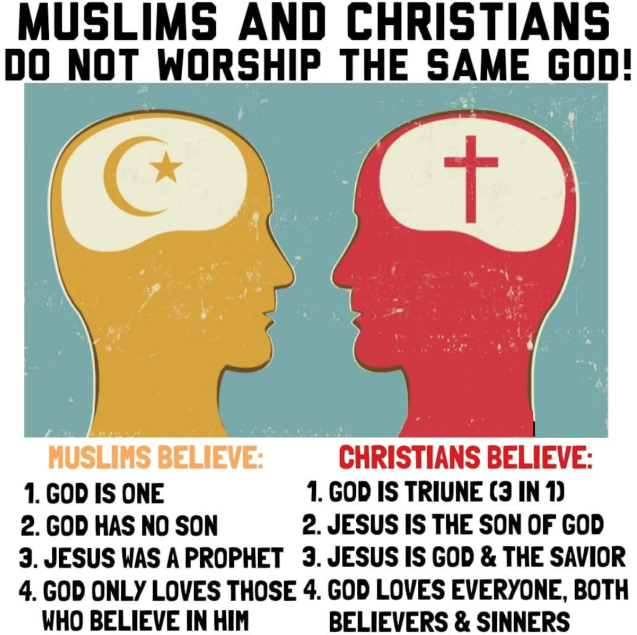
Now that it has been established that the Books the Quran confirms have been preserved, let’s take a look at some examples of the supposed revelation Muhammad received from “Gabriel” contradicting the Bible:
A. The Quran rejects (or grossly misrepresents) the Holy Bible’s doctrine of the triune nature of God (4:171; 5:73; 5:116), whereas God’striune nature can be seen throughout the Holy Bible (Genesis 1:26; Isaiah 48:11-17; Matt. 28:19; John 14:26; 15:26; 2 Cor. 13:14). This alone proves that the God of the Bible and the god of the Quran are not the same—the following points further substantiate it.
B. Allah has 99 names, and the Father is not one. Indeed, the Quran rejects the fatherhood of Allah (5:18; 18:4-5; 21:26; 39:4; 72:3; 112:3). It even states that the highest relation anyone can have with Allah is that of being His slave (19:88-93, Pickthall). However, the Holy Bible clearly shows God as the Father (Ex. 4:22-23; Deut. 14:1; 32:6; 2 Sam. 7:14; Ps. 68:5; 89:26-27; Prov. 30:4; Isaiah 63:16; 64:8; Jer. 3:4, 19, 22; 31:9, 20; Hosea 11:1-4; Mal. 1:6; 2:10; 3:17; Matt. 3:17; 5:9, 16, 48; 6:6, 6:9-13, 26; 7:21; 8:54; 10:32-33; 18:10; 23:9; Mark 8:38; 14:36; Luke 2:49; 22:42; 23:34; John 1:14,18; 8:28; 14:6; 17:1; 20:17; Acts 13:33; Col. 1:12; 1 Cor. 1:3; Heb. 1:5; 1 Pet. 1:3; 1 John 3:1; Rev. 21:7), who begets (John 3:18; cf. 16:28). Only believers in the Biblical Jesus can be children of God (John 1:12). Since Jesus prayed to the Father (John 11:41), but Allah is not a father, and the Quran (6:163) reads Muhammad was the first Muslim, how is it that Jesus is a Muslim as Muslims claim?
C. The Quran states that Allah doesn’t love everyone (3:32; 30:45), whereas Jesus stated as recorded in the Gospel of John that “God so loved the world, that he gave his only begotten Son, that whosoever believeth in him should not perish, but have everlasting life” (John 3:16). John the Apostle also wrote that we love God because He first loved us (1 John 4:19).
D. The Quran rebukes those who worship Jesus Christ (5:116). However, despite Jesus saying worship is only due to God (Matt. 4:10; Luke 4:8), He frequently permitted people to worship Him and never rebuked them as recorded in the Holy Bible (Matt. 8:2;9:18;14:33;15:25;20:20;28:9,17; Mark 5:6; Luke 24:52; John 9:38). The Bible reads that Jesus will be worshipped by ALL creatures (Phil. 2:10-11; Rev. 5:12-14), and will receive sacred service or religious homage (latreuó) alongside the Father (Rev. 22:3). Jesus taught that it was the Father’s will for all to honor Him equally to how they honor the Father (John 5:22-23). Jesus even told His followers that they could pray to Him directly once He returns to the Father, and that He would personally answer all their prayers (John 14:12-14).
E. The Quran repudiates the Christian claim that followers of Jesus will enter paradise (2:111), whereas the Gospel account of John reads that Jesus is not just a way but the ONLY way to enter paradise (John 3:16-18, 36; 8:24; 14:6). Indeed, Jesus said that He is the Judge, will resurrect others, and gives eternal life (Matt. 25:31-40; John 5:22; John 6:40; 10:24-33; 17:2).
F. The Quran rejects the Lord Jesus Christ as God and the Son of God (2:116; 5:17; 6:101; 17:111; 19:88-89, 35, 88-92; 23:91; 72:3) — the Quran literally pronounces a curse on those who believe that Jesus is God’s Son (9:30, Mohsin Khan), whereas the Holy Bible affirms He is God and the Son of God (John 1:1-3, 14, 18, 49; 11:26-27; 20:28; Acts 20:28; Rom. 9:5; Col. 2:9; Titus 2:13-14; Heb. 1:8-12; 2 Peter 1:1). Jesus Himself stated He is the Son of God (John 3:16; 5:25-27; 10:36). The Father spoke from heaven and proclaimed Jesus as His Son (Matt. 3:17; 17:5). Jesus blessed Peter for confessing He is the Son of God (Matt. 16:16-17). The Biblical Gabriel said Jesus will be called the Son of God (Luke 1:35). One of the reasons why they crucified Jesus was because He affirmed to be the Son of God (Matt. 26:62-66; Luke 22:69-71; John 19:7). Even evil spirits recognized Jesus is the Son of God (Matt. 8:29). Further indicating His deity, Jesus said that if you have seen Him, you have seen the Father, and if you know Him, you know the Father (John 8:19; 14:7, 9).
G. The Quran rejects that the Lord Jesus was crucified (4:157-158) and resurrected (at least that’s how many Muslims interpret those verses). In contrast, the Holy Bible makes it clear that the Lord Jesus was sent to be crucified resulting in His death and resurrected as part of His plan for atonement for the sins of the world (Matt. 16:21-23; 21:33-46; 26:28; 27:34-35, 50-56; 28:5-20; Mark 10:45; 15:21-41; 16:7-8; Luke 22:19-20; 23:32-33; 24:39-43, 46-48; John 19:16-38; 20:1-18; 1 Cor. 1:23). Indeed, hundreds of years before Jesus’ incarnation, the Bible prophesied His crucifixion, with detailed predictions in passages like Psalm 22. For instance, it reads that the Messiah will have His hands and His feet pierced (Ps. 22:16; cf. Zech 12:10; John 20:25), and His bones not getting broken (Ps. 22:17; cf. John 19:33). Isaiah 53, called the “Suffering Servant” prophecy, also details the death of the Messiah for the sins of believers. It reads that the Messiah will be rejected (Is. 53:3; Luke 13:34), will be silent in front of His accusers (Is. 53:7; cf. 1 Peter 2:23), and that His blood would be poured out for the atonement of many souls (Is. 53:5–9; cf. Lev. 17:11; 2 Cor. 5:21; 1 Peter 1:18-19; 1 John 1:7). Jesus Himself prophesied of His own crucifixion when He said “Behold, we go up to Jerusalem; and the Son of man shall be betrayed unto the chief priests and unto the scribes, and they shall condemn him to death, And shall deliver him to the Gentiles to mock, and to scourge, and to crucify him: and the third day he shall rise again” (Matt. 20:18-19; cf. Matt. 17:22-23; 26:1-2; Mark 8:31). And it was accomplished!
So why would this alleged Gabriel give a contradictory revelation to Muhammad if supposedly Allah had revealed such immutable truths previously?
This is reminiscent of an alleged angel (called Moroni) who appeared to the founder of Mormonism (Latter Day Saints), Joseph Smith (1805-1844), and gave him a different gospel. The parallels between Joseph Smith and Muhammad are uncanny. Just as Smith was instructed by a spirit entity in the guise of an angel of God with a conflicting message to that of the Bible, Muhammad was also directed by a spirit entity in the guise of an angel of God with a contradictory message to that of the Bible.
What’s interesting is that Allah, according to some Quranic exegetes, made it seem that Jesus was crucified, thereby accidentally giving birth to Biblical Christianity! Since Christians were supposedly deceived in believing that Jesus died on the cross, who was their deceiver? One of the greatest deceptions that Allah supposedly perpetrated is the crucifixion of Christ. Let’s read a commentary:
And for their saying boastfully ‘We slew the Messiah Jesus son of Mary the Messenger of God’ as they claim in other words for all of these reasons We have punished them. God exalted be He says in repudiating their claim to have killed him And yet they did not slay him nor did they crucify him but he the one slain and crucified who was an associate of theirs the Jews was given the resemblance of Jesus. In other words God cast his Jesus’s likeness to him and so they thought it was him Jesus. And those who disagree concerning him that is concerning Jesus are surely in doubt regarding the slaying of him for some of them said when they saw the slain man the face is that of Jesus but the body is not his and so it is not he; and others said no it is he…
Ibn Kathir gave his commentary on Allah being a deceiver:
Allah states that the Children of Israel tried to kill `Isa by conspiring to defame him and crucify him. They complained about him to the king who was a disbeliever. They claimed that `Isa was a man who misguided people, discouraged them from obeying the king, caused division, and separated between man and his own son. They also said other lies about `Isa, which they will carry on their necks, including accusing him of being an illegitimate son. The king became furious and sent his men to capture `Isa to torture and crucify him. When they surrounded `Isa’s home and he thought that they would surely capture him, Allah saved him from them, raising him up from the house to heaven. Allah put the image of `Isa on a man who was in the house; when the unjust people went in the house while it was still dark, they thought that he was `Isa. They captured that man, humiliated and crucified him. They also placed thorns on his head. However, Allah DECEIVED these people. He saved and raised His Prophet from them, leaving them in disarray in the darkness of their transgression, thinking that they had successfully achieved their goal. Allah made their hearts hard, and defiant of the truth, disgracing them in such disgrace that it will remain with them until the Day of Resurrection. This is why Allah said,
In Islam, we are asked to believe that the deity of the Quran substituted someone else to die in Jesus’ place. This led millions to believe the “lie” that the real Jesus died, inadvertently and indirectly giving rise to Christianity. This serious error was allowed to persist for a whopping 600 years—during which countless followers were persecuted and martyred for this misconception—until Allah finally “corrected” the deception through Muhammad. Amazing.
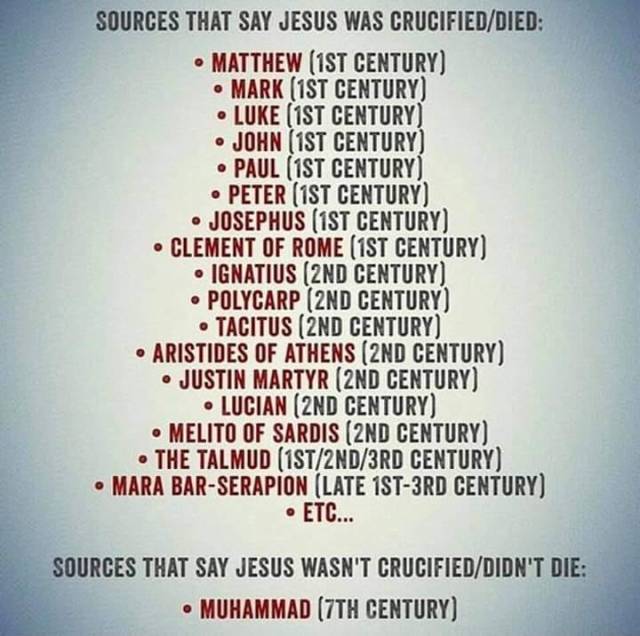
However, numerous scholarly sources and historians affirmed that the historical Jesus did indeed die by crucifixion as a fact of history. Gerd Lüdemann (1946—2021) was an atheist Biblical scholar, historian, and New Testament professor at Göttingen, who wrote:
The fact of Jesus’ death as the consequence of crucifixion is indisputable.
(Gerd Lüdemann, The Resurrection of Jesus: History, Experience, Theology, p. 39)
Paula Fredriksen (1951-) is an American historian and scholar of early Christianity who held the position of William Goodwin Aurelio Professor of Scripture at Boston University from 1990 to 2010 and converted to Judaism. She wrote:
We have facts. Facts about Jesus, and facts about the movement that formed after his crucifixion. Facts are always subject to interpretation — that’s part of the fun — but they also exist as fixed points in our investigation. . .
So let’s put our facts up front in order to begin our search here. What do we know about Jesus of Nazareth, and how do these facts enable us to start out on the road to a solid and plausible historical portrait of him?
The single most solid fact about Jesus’ life is his death: he was executed by the Roman prefect Pilate, on or around Passover, in the manner Rome reserved particularly for political insurrectionists, namely, crucifixion.
(Paula Fredriksen, Jesus of Nazareth, The King of the Jews, pp. 7-8)
Géza Vermes (1924–2013) was a British academic, Biblical scholar, and Judaist of Jewish–Hungarian descent, described as the greatest Jesus scholar of his time. He wrote:
It was not on a Jewish religious indictment, but on a secular accusation that he was condemned by the emperor’s delegate to die shamefully on the Roman cross.
(Geza Vermes, Jesus the Jew – A Historian’s Reading of the Gospels, p. 37)
In the Dictionary of World History, edited by the late historian Gerald Howat (1928—2007), reads:
JESUS CHRIST (fl. 1st cent. AD), founder of the Christian religion, born probably between 9 and 6 BC. His mother, Mary, and her spouse, Joseph of Nazareth, were pious Jews and Jesus was brought up as a carpenter. His ministry began c. AD 27-29 when he was baptized by John the Baptist. His main scene of activity was in Galilee and the neighbouring districts of north Palestine, from which he went to Jerusalem, where he was crucified. St John’s Gospel, however, states that there were earlier visits to the Holy City. Jesus taught about the imminent coming of the Kingdom or Reign of God, and referred to himself as the Son of Man. His teaching concerning the Fatherhood of God was in harmony with the message of the Kingdom. The Church saw in his life, death, and resurrection a unique act of God.
(GMD Howat, et al., Dictionary of World History, p. 769)
Bart Ehrman (1955— ), an atheist New Testament scholar, stated on his blog:
… I do not think that the Qur’an has any particular insights about the historical Jesus that are to be taken as independent reports by historical scholars. Neither does any other historical scholar that I know (or anyone who works seriously on the historical Jesus).
And I doubt very much that my views coincide with 99% of Islamic belief about Jesus. For one thing, I am convinced beyond a shadow of a doubt that Jesus was physically crucified and died on the cross. That is rock-bottom certain in my books. And it stands completely odds with standard Islamic beliefs.
(Source)
Flavius Josephus (c. 37— c. 100 AD) was a Roman–Jewish historian and military leader. Thanks to his proximity to Jesus in terms of time and place, his voluminous writings provide eyewitness-quality details concerning the cultural background of the New Testament era. Because of his works, we have independent extra-biblical accounts of figures such as Herod the Great, Pontius Pilate, John the Baptist, James (brother of Jesus), and Jesus of Nazareth. In the eighteenth book of his Jewish Antiquities, he wrote the following paragraph, called The Testimonium Flavianum:
Now, there was about this time Jesus, a wise man, if it be lawful to call him a man, for he was a doer of wonderful works,—a teacher of such men as receive the truth with pleasure. He drew over to him both many of the Jews, and many of the Gentiles. He was [the] Christ; and when Pilate, at the suggestion of the principal men amongst us, had condemned him to the cross, those that loved him at the first did not forsake him, for he appeared to them alive again the third day, as the divine prophets had foretold these and ten thousand other wonderful things concerning him; and the tribe of Christians, so named from him, are not extinct at this day.
(Quoted in F. F. Bruce’s, Jesus and Christian Origins Outside the New Testament, p. 37)
Scholars have long debated whether the aforementioned is genuine or not. The minority position is that it is entirely authentic. The majority consider it to be overall authentic, with a few lines of additions or interpolations by later Christians. However, the alleged interpolations do not include the part where it reads Jesus was condemned to the cross.
Cornelius Tacitus (c. 56— c. 120 AD) was a non-Christian Roman historian and politician. He is widely regarded as one of the greatest Roman historians by modern scholars. He wrote:
…Therefore, to scotch the rumour, Nero substituted as culprits, and punished with the utmost refinements of cruelty, a class of men, loathed for their vices, whom the crowd styled Christians. Christus, the founder of the name, had undergone the death penalty in the reign of Tiberius, by sentence of the procurator Pontius Pilatus,’ and the pernicious superstition was checked for a moment, only to break out once more, not merely in Judaea, the home of the disease, but in the capital itself, where all things horrible or shameful in the world collect and find a vogue. First. then, the confessed members of the sect were arrested; next, on their disclosures, vast numbers were convicted, not so much on the count of arson as for hatred of the human race. And derision accompanied their end: they were covered with wild beasts’ skins and torn to death by dogs; orthey were fastened on crosses, and, when daylight failed were burned to serve as lamps by night. Nero had offered his Gardens for the spectacle, and gave an exhibition in his Circus, mixing with the crowd in the habit of a charioteer, or mounted on his car…
(Tacitus, The Annals (translated by John Jackson), Vol. 4, pp. 283-284)
Robert E. Van Voorst (1952—), a former Professor of New Testament Studies at Western Theological Seminary, wrote:
Sometime after 73 C.E., a man named Mara bar (“son of”) Serapion wrote an eloquent letter in Syriac to his son, who was also named Serapion. The sole manuscript which has survived, now in the British Museum, is dated to the seventh century… In writing to Serapion, Mara speaks of Jesus as the “wise king” of the Jews, whose death God justly avenged and whose “new laws” continue…
[…]:
What else can we say, when the wise are forcibly dragged off by tyrants, their wisdom is captured by insults, and their minds are oppressed and without defense? What advantage did the Athenians
gain by murdering Socrates, for which they were repaid with famine and pestilence? Or the people of Samos by the burning of Pythagoras, because their country was completely covered in sand in just one
hour? Or the Jews [by killing] their wise king, because their kingdom was taken away at that very time? God justly repaid the wisdom of these three men: the Athenians died of famine; the Samians were
completely overwhelmed by the sea; and the Jews, desolate and driven from their own kingdom, are scattered through every nation. Socrates is not dead, because of Plato; neither is Pythagoras, because
of the statue of Juno; nor is the wise king, because of the new laws he laid down.Although he is not named, and although “wise king” is not at all a common christological title, Jesus is doubtless the one meant by “wise king.” First, Mara speaks of this wise Jew as a king, and “king” is prominently connected to Jesus at his trial, and especially at his death in the titulus on his cross (Mark 15:26 par.). Second, Mara’s link between the destruction of the Jewish nation and the death of the “wise king” is paralleled in Christianity, where the destruction of Jerusalem is a punishment for Jewish rejection of Jesus. The Synoptic Gospels imply this connection (e.g., Matt 23:37-39, 24:2, 27:25; Mark 13:1-2; Luke 19:42-44, 21:5-6,20-24; 23:28-31), but Justin first makes it explicit (1 Apology 32:4-6; 47-49; 53:2-3; Dialogue 25:5,108:3). In later church writers this becomes a common theme. Third, “the new laws he laid down” is probably a reference to the Christian religion, especially its moral code. What is more, we know of no one else beside Jesus in ancient times who comes close to this description.
(Robert E. Van Voorst, Jesus Outside of the New Testament: An Introduction to the Ancient Evidence, pp. 54-55)
Biblical scholars Dr. Paul Rhodes Eddy (1959—) and Dr. Gregory A. Boyd (1957—) wrote:
A second source of dubious value is the Qur’an. The Qur’an mentions Mary (e.g., suras 4,5,19) and Jesus—or Isa—a number of times (e.g., on Jesus’s miraculous birth, see 3:42-49; 66:12). However, there are significant reasons to call into question the historical basis of a number of its claims about Jesus. For one thing, the Qur’an dates from the seventh century, far too late to be taken seriously as a reliable independent source of information about Jesus. Second, the claim is made that Jesus did not die on a cross but was taken up to heaven by Allah (4:157—58). However, if there is any fact of Jesus’s life that has been established by a broad consensus, it is the fact of Jesus’s crucifixion.
(Paul Rhodes Eddy & Gregory A. Boyd, The Jesus Legend: A Case for the Historical Reliability of the Synoptic Jesus Tradition, pp. 171-172)
Even some early Muslims believed that Jesus died. Al-Tabari records an early Islamic tradition:
According to Ibn Humayd- Ibn Ishaq- an impeccable authority– Wahb b. Munabbih al-Yamani: GOD ALLOWED JESUS, THE SON OF MARY, TO DIE AT THREE O’CLOCK IN THE DAY; then He took him unto himself.
According to Ibn Humayd- Salamah- Ibn Ishaq: The Christians assert that God granted him death for seven hours of the day, and then resurrected him saying, ‘Descend upon Mary Magdalene on her mountain, for nobody wept for thee as she did, nor did anybody grieve for thee as she did. Let her assemble for thee the apostles, and send them forth as preachers for God, for you have not done that.’ God let him descend to her; the mountain was aglow with light as he descended, and she gathered the apostles. Jesus sent them out and commanded to tell men IN HIS NAME of the divine injunction. Then God raised Jesus unto Himself, gave him wings of an angel and dressed him in radiance. No longer did Jesus relish food or drink; he was flying along with the angels, around the throne.
(Al-Tabari, The History of al-Tabari: The Ancient Kingdoms, Vol. IV, pp. 122-123)
And:
According to Ibn Humayd- Salamah- Ibn Ishaq- ‘Umar b. ‘Abdullah b. Urwah b. al-Zubayr- Ibn Sulaym al-Ansari al-Zuraqi: One of our women was under a vow to appear on al-Jamma’, a mountain in ‘Aqiq near Madinah, and I went with her. We stood on the mountain and, lo and behold, there was a huge grave with two huge stone slabs over it- one at the head, one at the feet. On them was an inscription in the ancient script (musnad) which I could not decipher. I carried the slabs with me halfway down the mountain, they proved too heavy, however, so I threw one (down) and descended with the other. I showed it to readers of Syriac (to determine) whether they knew its script; but they did not. I showed it to psalm (zabur) copyists from the Yaman and those versed in reading the musnad script; but they did not recognize it, either.
As I found nobody who recognized it, I threw it under a coffer we had, and there it lay for years. Then people from Mah in Persia came to us looking for pearls, and I said to them, ‘ Do you have a script?’ ‘Yes,’ they said. I brought out the stone for them and lo and behold, they read it. It was in their script, ‘This is the tomb of Jesus, son of Mary, God’s messenger to the people of this land.’ They were its people at that time. Among them HE DIED, SO THEY BURIED HIM ON THE MOUNTAINTOP.
According to Ibn Humyad- Salamah- Ibn Ishaq: The rest of the apostles were assaulted, viciously exposed to the sun, tortured, and dishonorably paraded. The Roman king, who ruled over them and who was an idol-worshiper, heard this. He was told that a man among the Israelites, subject to his rule, WAS ASSAULTED AND SLAIN. The man had announced to them that he was God’s messenger. He performed miracles, revived the dead and healed the sick. He created a bird of clay, breathed into it, and it flew, by God’s permission. He told them of hidden things. The king exclaimed, ‘But why did you not mention this to me, about him and them? By God, had I known, I would not have let them have a free hand against him!’ Then he sent for the apostles and snatched them from the hands of the Israelites. He asked the apostles about the faith of Jesus and about his fate. They told him, whereupon he embraced their faith. The king released Sergius, and concealed him. He took THE WOODEN CROSS WHICH JESUS HAD BEEN CRUCIFIED, AND HE HONORED AND PRESERVED IT BECAUSE JESUS HAD TOUCHED IT. The king thus became an enemy of the Israelites, and killed many of them. From this arose Christianity in Rome.
(Ibid., pp. 123-124)
Al-Tabari wrote in his Tafsir [translated from Arabic using Gemini]:
And Al-Rabi’ ibn Anas said: What is meant by “taking” (al-tawaffi) is sleep, and every eye is asleep. Jesus had slept, and Allah raised him while he was sleeping to heaven. Its meaning is: “I will make you sleep and raise you to Myself,” as Allah, the Most High, said: “And it is He who takes your souls by night” (6:60), meaning “He makes you sleep.”
And some of them said: What is meant by “taking” (al-tawaffi) is death. It is narrated from Ali ibn Talha, from Ibn Abbas, may Allah be pleased with both of them, that its meaning is: “I will cause you to die.“
Imam Malik ibn Anas (c. 711–795), who is the eponym of the Maliki school and was given titles such as Shaykh al-Islam and Proof of the Community, believed Jesus died. Imam Ibn ‘Atiyyah (1088-1147), who was considered the foremost Quran commentator of his time, wrote in his Tafsir [translated from Arabic using Gemini]:
Wahb ibn Munabbih said: Allah caused him to die for three hours and then raised him during that time, and then brought him back to life after that, with Him in heaven. In some books, it states seven hours.
…
Malik, in his “Jami’ al-Utbiyyah,” said: Jesus died when he was thirty-three years old. It was mentioned in a book by Makki from some people: that the meaning of “mutawaffika” (I will take you) is “I will accept your deeds,” but this is weak linguistically.
(Tafsir of Ibn ‘Atiyyah on Quran 3:57. Also written in Ibn Ashur’s The Liberation and the Enlightenment, and Al-Baghawi’s The Exegesis of al-Baghawi.)
Strangely, Muhammad even referenced the event of Jesus after being beaten, where He prayed for His abusers as He was being nailed to the cross:
Narrated `Abdullah:
As if I am looking at the Prophet (ﷺ) while he was speaking about one of the prophets whose people have beaten and wounded him, and he was wiping the blood off his face and saying, “O Lord! Forgive my, people as they do not know.”
The preceding hadith is undoubtedly taken from the Bible. Compare it with what is written in Luke 23:34:
“Then said Jesus, Father, forgive them; for they know not what they do. And they parted his raiment, and cast lots.”
So what’s more probable, that there was a “body double” put in Jesus’ place in His last moments, as many modern Muslims believe, or the real Jesus actually being crucified? The Bible even records sayings of Jesus on the cross, which shows very clearly that it could only have been Him who was crucified (Matt. 27:46; Mark 15:34 (cf. Psalm 22); Luke 23:34, 23:43, 23:46 (cf. Psalm 31:5); John 19:28 (cf. Psalm 22:15, 69:21), 19:30). There were people at the cross who knew Jesus very personally, such His blessed mother Mary, highly esteemed in Islam, and a disciple believed to be John (John 19:26-27). And not a single person in all the recordings of the Book of Acts raised an objection to the crucifixion of Jesus. It wasn’t until many years after the crucifixion that men questioned this historic fact and passed off cunningly devised fables.
One such person was the heretic Gnostic teacher Basilides of Alexandria (117-161), whom some Muslim apologists like to appeal to. Basilides taught that it was instead Simon of Cyrene, not Jesus, who was crucified (he also believed that Jesus did not possess a physical body but was instead an incorporeal divine being—a belief that directly contradicts the Islamic theological view of Jesus). However, no mainstream historian endorses such a narrative as historical fact, since it was late and unsupported by primary evidence or any external corroboration. On the other hand, rigorous scholarship affirms Jesus’ crucifixion as an actual historical event, as it is attested by diverse, independent sources as shown earlier.
The Quran does get some things right about the Biblical Jesus: He was born of a virgin (19:20); He is holy and faultless (19:19); He created life; He healed the sick or disabled; He raised the dead (3:49; 5:110); He came with clear signs (43:63); He is a sign to all mankind (19:21; 21:91); He was strengthened by the Holy Spirit (2:87; 2:253; 5:110); He is illustrious in this world and the hereafter (3:45); He was raised unto God Himself in heaven (where He still is) (4:158); He is the Messiah; He is the Word of God; and He is a spirit from God, which inadvertently implies Jesus preexisted His incarnation and is divine (3:45; 4:171). However, the Quranic message Muhammad supposedly relayed from Gabriel is inconsistent with the core truths the Gospel contains and even undermines it. Islam rejects Christianity’s essential salvation requirements while accepting certain agreeable doctrines.
Indeed, if Christianity is true, Islam would be a crafty fabrication to hinder or blind people from believing in the true Gospel for salvation. The core message of the Christian Gospel consists of three tenets: (1) Jesus Christ (the divine Son of God), who (2) died on the cross for the sins of many, and (3) was bodily resurrected (1 Cor. 15:1-4). These are the key elements of the Gospel found in the Bible; this is the heart and soul of Christianity (1 Cor. 15:12-19). Yet, the Bible warns that false prophets will emerge, attempting to distort this essential Gospel message. Muhammad and his “angel” taught his followers to reject all three tenets, and this is exactly what Christians would expect if Muhammad were influenced by the demonic realm. One of the main agendas of satan is to have people doubt or disbelieve in God’s word, and he accomplishes it via lies and deception (Gen. 3; John 8:44; Rev. 12:9).
The Bible, which came about 600 years before the Quran, warned:
“But though we, or an angel from heaven, preach any other gospel unto you than that which we have preached unto you, let him be accursed.” (Galatians 1:8)
Another passage reads something similar:
“For if he that cometh preacheth another Jesus, whom we have not preached, or if ye receive another spirit, which ye have not received, or another gospel, which ye have not accepted, ye might well bear with him.” (2 Cor. 11:4)
It also reveals that Islam qualifies as an antichrist religion since it denies the Father and the Son:
“Who is a liar but he that denieth that Jesus is the Christ? He is antichrist, that denieth the Father and the Son. Whosoever denieth the Son, the same hath not the Father: he that acknowledgeth the Son hath the Father also.” (1 John 2:22-23)
Modern Muslims, of course, adamantly reject the Apostle Paul and his writings cited here, even though the Quran implicitly affirms that his teachings came from God. They erroneously believe, as stated earlier, that the true message of Jesus became corrupted or distorted. However, the following Quranic passages read that Allah promised that the true followers of Jesus will be given the power to prevail over the disbelievers, and will make them superior (or “uppermost” in other translations) until the Day of Judgment:
He told Jesus, “I will save you from your enemies, raise you to Myself, keep you clean from the association with the disbelievers, and give superiority to your followers over the unbelievers until the Day of Judgment. On that day you will all return to Me and I shall resolve your dispute.
(Quran 3:55, Muhammad Sarwar)
O ye who believe! Be ye helpers of Allah: As said Jesus the son of Mary to the Disciples, “Who will be my helpers to (the work of) Allah?” Said the disciples, “We are Allah’s helpers!” then a portion of the Children of Israel believed, and a portion disbelieved: But We gave power to those who believed, against their enemies, and they became the ones that prevailed.
(Quran 61:14, Yusuf Ali)
Who were the followers of Jesus who became dominant and prevailed historically, that Allah said he would support in Quran 3:55 and 61:14? The Apostles (such as Paul and his followers) – trinitarian Christians! Non-trinitarian Christians were deemed heretics, and they didn’t become dominant or prevail. If the true message of Jesus got distorted and a false message prevailed, then that means Allah’s plans were thwarted. The Apostle Paul’s message, the same message preached by Jesus and the other disciples, prevailed and became dominant and superior to all other opposing messages. This means that if the Quran is correct, Paul’s message must be true, since it prevailed and became dominant. However, the Quran contradicts the core teachings of Paul, such as the death, burial, and resurrection of Jesus, as well as the message of the Holy Bible as a whole. Yet to believe in trinitarian Christianity entails the rejection of the Quran since, again, the Quran contradicts the fundamental teaching of Paul. So, it’s either that the true followers of Jesus didn’t dominate and prevail, thus falsifying the Quran. Or, the Quran is false since it contradicts the true message of Jesus’ followers. Either way, the Quran is false. Therefore, Islam is false.
In al-Qurtubi’s commentary, he admitted that Paul was a legitimate follower of Jesus! Thus, according to him, this means that Paul was one of the followers God gave the power to prevail [translated from Arabic using Gemini]!
{Just as Jesus, son of Mary, said to the Disciples} (61:14) They were his chosen ones, twelve men. Their names have been mentioned in [Surat] ‘Al Imran’. Ibn Abbas said they were the first of the Children of Israel to believe in him. Muqatil said: Allah said to Jesus, ‘When you enter the village, go to the river where the fullers are and ask them for help.’ So Jesus came to them and said: ‘Who are my helpers towards Allah?’ They said: ‘We will help you.’ So they believed him and helped him. The meaning of ‘Who are my helpers towards Allah?’ is ‘who are my helpers with Allah,’ just as you say: ‘A herd with a herd makes camels,’ meaning ‘with the herd.’ And it was said: ‘Who are my helpers in what brings one closer to Allah.’ This has already been discussed in ‘Al Imran’.
{So a faction of the Children of Israel believed, and a faction disbelieved} (61:14) The two factions during the time of Jesus separated after his ascension to heaven, as explained previously in ‘Al Imran’.
{Then We supported those who believed against their enemy} (61:14) those who disbelieved in Jesus. {And they became dominant} (61:14) meaning, victorious. Ibn Abbas said: Allah supported those who believed in the time of Jesus by making Muhammad manifest over the religion of the disbelievers. Mujahid said: They were supported in their time against those who disbelieved in Jesus. And it was said: We have now supported the Muslims against the two misguided factions: those who said Allah was [present then] ascended, and those who said He was the son of Allah and Allah raised him to Himself, because Jesus, son of Mary, did not fight anyone, and there was no fighting in the religion of his companions after him. Zayd ibn Ali and Qatadah said: {And they became dominant} victorious by proof and evidence, for they said, as it is narrated: ‘Do you not know that Jesus used to sleep, while Allah does not sleep, and that Jesus used to eat, while Allah the Almighty does not eat!’
It was also said: This verse was revealed concerning the messengers of Jesus, peace be upon him. Ibn Ishaq said: Those whom Jesus sent from the disciples and followers were Peter and Paul to Rome; Andrew and Matthew to the land whose people eat human flesh; Thomas to the land of Babylon from the East; Philip to Carthage, which is Africa; John to Daksus, the village of the People of the Cave; Jacob to Jerusalem, which is Bait al-Maqdis; and Ibn Talma to Arabia, which is the land of Hejaz; Simon to the land of the Berbers; and Judah and Bardas to Alexandria and its surroundings. So Allah supported them with proof. {And they became dominant} meaning, superior…
Muḥammad al-Ṭāhir ibn ʿĀshūr (1879-1973), who was a Maliki scholar and was given the title Shaykh al-Islām, wrote [translated from Arabic using Gemini]:
Stemming from the disciples’ saying (“We are supporters”), the news is conveyed that the Children of Israel split into two factions: a faction that believed in Jesus and what he brought, and a faction that disbelieved in that. This branching implies an unstated statement, which is: “So they supported Allah by calling to Him and persevering in it, and some of the Children of Israel responded while others disbelieved.” Only a small number of the Children of Israel responded to them, as it is stated in the Gospel of Luke that Jesus’s followers were more than seventy.
The purpose of His saying: “So a faction of the Children of Israel believed and a faction disbelieved” (61:14) is to pave the way for His saying: “Then We supported those who believed against their enemy, and they became dominant.” (61:14) Support, victory, and strengthening: Allah supported the Christians through many who followed Christianity through the call of the disciples and their followers, such as Paul.
He only said, “Then We supported those who believed,” and did not say, “Then We supported them,” because the support was for the collective body of believers in Jesus, not for every individual among them. Many of his followers were killed, subjected to mutilation, and thrown to wild beasts in public spectacles to be devoured. Among those killed from the disciples was the greatest disciple, whom Jesus named Peter, meaning “the rock” in his steadfastness in Allah.
Al-Tabari reported that Paul was even martyred for his faith, which shows his credibility as well as early Islam’s support of Paul:
Among the apostles, and the followers who came after them were the apostle Peter and Paul who was a follower and not an apostle;317…
[…]
Abu Ja’far says: They assert that after Tiberius, Palestine and other parts of Syria were ruled by Gaius, son of Tiberius, for four years. He was succeeded by another son, Claudius, for fourteen years, following which Nero ruled for fourteen years. He slew Peter and crucified Paul head down.
(Al-Tabari, The History of al-Tabari: The Ancient Kingdoms, Vol. 4, p. 123, 126)
The footnote reads, “317. In Islamic terms the messengers or apostles pave the new path. Their work is continued by the tābi’ūn, the followers, members of the next generations, who lead the Faithful.”
Jalal al-Din al-Suyuti wrote [translated from Arabic using Gemini]:
Ibn Abi Hatim narrated from Shu’ayb Al-Jubbai, who said: The names of the two messengers that He said: [p. 336] “When We sent to them two” were Shim’on and Yuhanna (John), and the name of the third was Paulus (Paul).
…
Ibn Al-Mundhir narrated from Said ibn Jubair regarding His saying: “When We sent to them two” the verse, he said: The name of the third with whom Shim’on and Yuhanna were reinforced was Paulus…
(The Scattered Pearls. Also found in his Tafsir on Quran 36:17)
Ibn Kathir wrote [both following quotations are translated from Arabic using Gemini]:
… Paul the Jew, who was a tyrannical, oppressive man, hateful of the Messiah and what he brought. He had shaved the head of his nephew when he believed in the Messiah, and paraded him around the city, then stoned him until he died, may Allah have mercy on him. When Paul heard that the Messiah, peace be upon him, had headed towards Damascus, he prepared his mules and went out to kill him. He met him at Kawkaba. When he confronted the companions of the Messiah, an angel came to him and struck his face with the edge of his wing, blinding him. When he saw that, the confirmation of the Messiah entered his heart, so he came to him and apologized for what he had done, and believed in him. He accepted him, and he asked him to wipe his eyes so that God would return his sight to him. He said: “Go to Dayna, with you in Damascus, at the end of the long market from [p. 530] the East, and he will pray for you.” So he came to him, and he prayed, and his sight was restored to him. And the faith of Paul in the Messiah, peace be upon him, was good, that he is the servant of God and His Messenger. A church was built in his name, and it is Paul’s Church, famous in Damascus…
And:
Ibn Jurayj said, from Wahb ibn Sulayman, from Shu’ayb Al-Jubbai, who said: The names of the first two messengers were Shim’on (Simon) and Yuhanna (John), and the name of the third was Paulus (Paul), and the town was Antioch.
Ibn Hajar al-Asqalani wrote [translated from Arabic using Google Translate]:
The names of the two apostles were Simon and John, and the name of the third was Paul. Qatada said: They were apostles before Christ…
Mahmud al-Alusi (1802–1854), who was an Iraqi Islamic scholar, wrote [translated from Arabic using Gemini]:
And John the Disciple said in the stories of the Apostles: O my beloved ones, we are the children of Allah Almighty, He named us so. And Paul the Apostle said in his epistle to the King of Rome: The Spirit bears witness to our spirits that we are the children of Allah Almighty and His beloved ones, and countless other examples.
Shaykh Ahmad ibn Abi Talib Tabarsi (1075-6 or 1076-7 — 1153), who was a Shīa exegete, wrote [translated from Arabic using Gemini]:
(So We reinforced (or strengthened) them with a third) meaning: so We strengthened them, and supported their cause with a third messenger, derived from al-izzah (might/power), which is strength and invincibility, and from it is their saying: Man azza bazza (Whoever prevails takes [plunders]). Shu’ba said: The names of the two messengers were Shim’on (Simon) and Yuhanna (John), and the name of the third was Paulus (Paul). Ibn Abbas and Ka’b said: Sadiq (Truthful) and Sadooq (Very Truthful), and the third was Saloum. And it was said: They were the messengers of Jesus, and they were the disciples (Al-Hawariyyun), according to Wahb and Ka’b, who said: God attributed them to Himself only because Jesus (peace be upon him) sent them by His command.
(Tafsir Majma’ al-Bayan – Sheikh al-Tabarsi – Vol. 8 – Page 263)
Moreover, if the Apostle Paul was a false prophet, why did Muhammad plagiarize his words and pass them off as a revelation he received from God?
Narrated Abu Huraira:
the Prophet (ﷺ) said, “Allah said, “I have prepared for My righteous slaves (such excellent things) as no eye has ever seen, nor an ear has ever heard nor a human heart can ever think of.’ “
The preceding hadith is awfully similar to what Paul wrote:
“But as it is written, Eye hath not seen, nor ear heard, neither have entered into the heart of man, the things which God hath prepared for them that love him.” (1 Corinthians 2:9)
So it’s either that the statement found in Paul’s writing is NOT of divine origin. Or, the statement in Paul’s writing IS of divine origin. If the former, then Muhammad attributed to God what was not actually from God, which makes him a false prophet. If the latter, then God really did inspire Paul to write it, which still makes Muhammad a false prophet since Islam, again, contradicts the doctrine of Paul. Either way, Muhammad was a false prophet.
The following is another example of Muhammad copying from the Bible:
On the authority of Abu Hurayrah (may Allah be pleased with him), who said that the Messenger of Allah (ﷺ) said:
Allah (mighty and sublime be He) will say on the Day of Resurrection: O son of Adam, I fell ill and you visited Me not. He will say: O Lord, and how should I visit You when You are the Lord of the worlds? He will say: Did you not know that My servant So-and-so had fallen ill and you visited him not? Did you not know that had you visited him you would have found Me with him? O son of Adam, I asked you for food and you fed Me not. He will say: O Lord, and how should I feed You when You are the Lord of the worlds? He will say: Did you not know that My servant So-and-so asked you for food and you fed him not? Did you not know that had you fed him you would surely have found that (the reward for doing so) with Me? O son of Adam, I asked you to give Me to drink and you gave Me not to drink. He will say: O Lord, how should I give You to drink when You are the Lord of the worlds? He will say: My servant So-and-so asked you to give him to drink and you gave him not to drink. Had you given him to drink you would have surely found that with Me.
It was related by Muslim.(Hadith 18, 40 Hadith Qudsi. Also referenced in Sahih Muslim 2569. Cf. Quran 1:4; 89:21-22.)
Now compare to what the Lord Jesus said roughly 600 years before, as recorded in the Gospel account of Matt. 25:31-40:
“When the Son of man shall come in his glory, and all the holy angels with him, then shall he sit upon the throne of his glory: And before him shall be gathered all nations: and he shall separate them one from another, as a shepherd divideth his sheep from the goats: And he shall set the sheep on his right hand, but the goats on the left. Then shall the King say unto them on his right hand, Come, ye blessed of my Father, inherit the kingdom prepared for you from the foundation of the world: For I was an hungred, and ye gave me meat: I was thirsty, and ye gave me drink: I was a stranger, and ye took me in: Naked, and ye clothed me: I was sick, and ye visited me: I was in prison, and ye came unto me. Then shall the righteous answer him, saying, Lord, when saw we thee an hungred, and fed thee? or thirsty, and gave thee drink? When saw we thee a stranger, and took thee in? or naked, and clothed thee? Or when saw we thee sick, or in prison, and came unto thee? And the King shall answer and say unto them, Verily I say unto you, Inasmuch as ye have done it unto one of the least of these my brethren, ye have done it unto me.”
Muhammad stole the words of Jesus, who will be the Judge of all humanity, and attributed them to Allah, which inadvertently indicates that Jesus is Allah!
Since Muhammad blatantly and shamelessly copied a lot from Matthew’s Gospel account, wouldn’t that suggest it was divinely inspired? If yes, wouldn’t that further falsify the Muslims’ claim that the Gospels have been lost or corrupted?
Here is a big dilemma for Muslims that hasn’t been resolved. As we have read, the Quran explicitly affirms the inspiration, preservation, and authority of the Gospel. Muhammad even brazenly plagiarized from the Gospel and passed off a passage in it as Allah’s words. But the Quran contradicts the teachings of the Gospel. So the Quran contradicts books it affirms as the Word of God. If the Gospel is the Word of God, then the Quran is false (because the Quran contradicts the Gospel). If the Gospel is not the Word of God, then the Quran is still false (because the Quran affirms that the Gospel is the Word of God). Either way, the Quran is false. Therefore, Islam is false!
Muhammad Had a Severely Bad Moral Compass
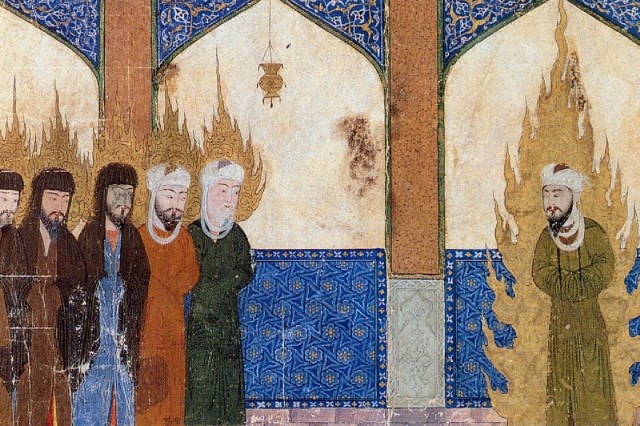
The real Jesus said, “Beware of false prophets, which come to you in sheep’s clothing, but inwardly they are ravening wolves. Ye shall know them by their fruits. Do men gather grapes of thorns, or figs of thistles? Even so every good tree bringeth forth good fruit; but a corrupt tree bringeth forth evil fruit. A good tree cannot bring forth evil fruit, neither can a corrupt tree bring forth good fruit. Every tree that bringeth not forth good fruit is hewn down, and cast into the fire. Wherefore by their fruits ye shall know them” (Matthew 7:15-20).
A compelling indicator that the spirit guiding Muhammad was not the Holy Spirit of God but rather an entity from satan’s kingdom is the nature of his actions—his deeds were often unequivocally immoral. According to Islamic texts, Muhammad’s moral character is highly questionable, as he committed and endorsed acts that many would consider deeply reprehensible. The Bible’s second-greatest commandment is to love others as yourself, often summarized as the Golden Rule: treat others as you would wish to be treated (Matt. 7:12-14; 22:36-40). To say Muhammad failed miserably to live up to such a standard would be a gross understatement. Yet, despite this, Muhammad is revered in Islam as the ultimate exemplar for humanity. For instance, Ibn Kathir, in his Tafsir on Quran 48:1, describes Muhammad as “the perfect human being and the leader of all mankind in this life and the Hereafter.” The Quran itself (33:21) praises Muhammad as an exemplary model for humanity. Astonishing!
If you are a follower of Muhammad, I encourage you to reflect on the teachings and actions attributed to him in Islamic texts. Consider whether you find any of his deeds or teachings morally troubling. If you recognize any as reprehensible, it suggests your moral compass may surpass that of Muhammad. If so, why continue to view him as the ultimate example for humanity or follow his teachings?
[Disclaimer: the following section can be viewed as really disturbing. Reader’s discretion advised.]
Muhammad Sanctioned Sex With Prepubescent Girls
One of the most evil, demonic things one can do is to destroy the innocence of a child, which is what Muhammad’s deity permits via sexual relations.
In the following passage, the Quran directs Muslims to wait for a certain period (called ‘Iddah) before finalizing the divorce or deciding to forgo it. The Quran gives the commandment for men to wait about three months in the case of women/girls who haven’t yet started their menstrual cycles! Thus, Islam permits men to marry prepubescent girls!
The reason for the waiting period is to guarantee that the wife who is about to be divorced is not pregnant, or if she is pregnant, to make sure that the true father is known (i.e., that the child is from the current husband, and not the next husband that she may marry afterward). The following verse presupposes that Muslim men who are married to prepubescent girls have had sexual intercourse with them. Otherwise, there would be no need for a waiting period. This view is supported by Quran 33:49, which reads that if a man divorces a woman he didn’t touch, then there is no waiting period because there is no possibility of pregnancy. Thus, sexual intercourse isn’t limited to puberty as many Muslims claim!
And those of your women as have passed the age of monthly courses, for them the ‘Iddah (prescribed period), if you have doubt (about their periods), is three months; and for those who have no courses [(i.e. they are still immature) their ‘lddah (prescribed period) is three months likewise, except in case of death]. And for those who are pregnant (whether they are divorced or their husbands are dead), their ‘lddah (prescribed period) is until they lay down their burden…
(Quran 65:4, Hilali-Khan)
Before we continue, many of the following Tafsirs quoted use the Arabic word “saghira” (صَغِيرٌ) or some form of the word to refer to the second category of “women,” which denotes a child who has not reached puberty.
The following Islamic text reads [translated from Arabic using Google Translate]:
… the word “saghra” (littleness), meaning that he is small in size or age, so he is small. The plural is “sighar.” It also includes “asghar” as a superlative. Smallness is the opposite of largeness, and smallness is the opposite of greatness. Technically, it is a description that is attached to a person from birth until he reaches puberty.
According to Lane’s Arabic English Lexicon:
صَغِيرٌ Small, or little; (S, K;) [in body, or corporeal substance: and in estimation or rank or dignity; as is implied in the K: and in years, or age; a youngling; a young one of any female; and of a tree and the like: applied to a human being, a child; i.e., one who has not attained to puberty: opposed to كَبِيرٌ:]
(Lane’s Arabic English Lexicon (Digitized Text Version), p. 1709)
Ibn Kathir wrote regarding Quran 65:4:
The ‘Iddah of Those in Menopause and Those Who do not have Menses
Allah the Exalted clarifies the waiting period of the woman in menopause. And that is the one whose menstruation has stopped due to her older age. Her ‘Iddah is three months instead of the three monthly cycles for those who menstruate, which is based upon the Ayah in (Surat) Al-Baqarah. (see 2:228]
The same for the young, who have not reached the years of menstruation. Their Iddah is three months like those in menopause. This is the meaning of His saying;
(Tafsir Ibn Kathir (Abridged) Vol. 10 (Surat At-Taghabun to the end of the Qur’an), Surah 65, p. 43)
Since Islam allows a man to divorce a girl who isn’t old enough to have her period, it follows that Islam also enables a man to marry a girl who hasn’t yet had her menses. This is read in more commentaries or exegetical texts:
<divorce them at their ‘Iddah>,“The ‘Iddah is made up of cleanliness and the menstrual period.” So he divorces her while it is clear that she is pregnant, or he does not due to having sex, or since he does not know if she is pregnant or not.
This is why the scholars said that there are two types of divorce, one that conforms to the Sunnah and another innovated.
The divorce that conforms to the Sunnah is one where the husband pronounces one divorce to his wife when she is not having her menses and without having had sexual intercourse with her after the menses ended. One could divorce his wife when it is clear that she is pregnant. As for the innovated divorce, it occurs when one divorces his wife when she is having her menses, or after the menses ends, has sexual intercourse with her and then divorces her, even though he does not know if she became pregnant or not. There is a third type of divorce, which is neither a Sunnah nor an innovation where one divorces a young wife who has not begun to have menses, the wife who is beyond the age of having menses, and divorcing one’s wife before the marriage was consummated. Allah said,
(Tafsir Ibn Kathir (Abridged) Vol. 10 (Surat At-Taghabun to the end of the Qur’an), Surah 65, pp. 34-35)
Ibn Kathir wrote that the consensus among scholars is that the waiting period (‘Iddah) is for those whose marriages have been consummated. Thus, if a divorced woman observes the ‘Iddah, it means her marriage was consummated before she was divorced:
A Gift and no (Iddah) for Women Who are divorced before Consummation of the Marriage
…
This is a command on which the scholars are agreed, that if a woman is divorced before the marriage is consummated, she does not have to observe the ‘Iddah (prescribed period for divorce) and she may go and get married immediately to whomever she wishes. The only exception in this regard is a woman whose husband died, which case she has to observe an ‘Iddah of four months and ten days even if the marriage was not consummated. This is also according to the consensus of the scholars.
(Tafsir Ibn Kathir (Abridged) Vol. 7 (Surat An-Nur to Surat Al-Ahzab, Verse 50), Surah 33, pp. 716, 718)
The following is another Tafsir:
And [as for] those of your women who (read allā’ī or allā’i in both instances) no longer expect to menstruate, if you have any doubts, about their waiting period, their prescribed [waiting] period shall be three months, and [also for] those who have not yet menstruated, because of their young age, their period shall [also] be three months — both cases apply to other than those whose spouses have died; for these [latter] their period is prescribed in the verse: they shall wait by themselves for four months and ten [days] [Q. 2:234]…
The following gives the reason for the “revelation”:
(And for such of your women as despair of menstruation…) [65:4]. Said Muqatil: “When the verse (Women who are divorced shall wait, keeping themselves apart…), Kallad ibn al-Nu‘man ibn Qays al-Ansari said: ‘O Messenger of Allah, what is the waiting period of the woman who does not menstruate and the woman who has not menstruated yet? And what is the waiting period of the pregnant woman?’ And so Allah, exalted is He, revealed this verse”. Abu Ishaq al-Muqri’ informed us> Muhammad ibn ‘Abd Allah ibn Hamdun> Makki ibn ‘Abdan> Abu’l-Azhar> Asbat ibn Muhammad> Mutarrif> Abu ‘Uthman ‘Amr ibn Salim who said: “When the waiting period for divorced and widowed women was mentioned in Surah al-Baqarah, Ubayy ibn Ka‘b said: ‘O Messenger of Allah, some women of Medina are saying: there are other women who have not been mentioned!’ He asked him: ‘And who are they?’ He said: ‘Those who are too young [such that they have not started menstruating yet], those who are too old [whose menstruation has stopped] and those who are pregnant’. And so this verse (And for such of your women as despair of menstruation…) was revealed”.
The following commentary by Imam Abul A’la Maududi (1903–1979) from the Hanafi school of jurisprudence, who was given the titles Shaykh of Islam and Mujaddid (one who brings “renewal” to the religion) of the 20th century, clearly states that one can consummate the marriage with a girl who has not yet menstruated!
Here, one should bear in mind the fact that according to the explanations given in the Qur’an the question of the waiting period arises in respect of the women with whom marriage may have been consummated, for there is no waiting-period in case divorce is pronounced before the consummation of marriage. (Al-Ahzab: 49). Therefore, making mention of the waiting-period for the girls who have not yet menstruated, clearly proves that it is not only permissible to give away the girl in marriage at this age but it is also permissible for the husband to consummate marriage with her. Now, obviously no Muslim has the right to forbid a thing which the Qur’an has held as permissible.
(Sayyid Abul Ala Maududi – Tafhim al-Qur’an, Tafsir on 65:4)
Ibn Wahb (743-813) was one of Imam Malik’s best-known companions. He wrote [translated from Arabic using Gemini]:
… [Ibn Wahb] informed us, saying: […] informed me, from Al-Musayyib ibn Rafi’ and Mujahid ibn Jabr, regarding God’s saying: “If you doubt, then their waiting period is three months.” They said: “This refers to those who have not reached menstruation. ‘If you doubt, then their waiting period is three months.’ And those who have ceased menstruation, their waiting period is three months.”
He said: Malik told me the same.
(The Book of the Interpretation of the Quran from Al-Jami’ by Ibn Wahb)
Al-Tabari wrote [both following quotations translated from Arabic using Gemini]:
… then the ruling on their waiting periods if they are divorced and they are those with whom their husbands have consummated the marriage, is that their waiting period is three months. “And as are those who have not menstruated.” He says: And likewise are the waiting periods of those young girls who have not menstruated due to their young age (5), if their husbands divorce them (6) after consummation.
(The Book: Tafsir al-Tabari, Jami’ al-Bayan – Edited by Al-Turki)
Regarding the verse referring to “those who have not yet menstruated,” these are the virgins who haven’t started menstruating, and their waiting period (iddah) is three months (1).
I was told by Al-Husayn, who said: I heard Abu Mu’adh say: ‘Ubayd narrated to us, who said: I heard Al-Dahhak say regarding the verse: “And those women who have passed the age of menstruation…” He said: These are the elderly women. As for “And those who have not yet menstruated”: These are those who have not reached the age of menstruation but have had sexual relations, and their waiting period is three months (2).
(The Book: Tafsir al-Tabari, Jami’ al-Bayan – Edited by Al-Turki)
And as for those of your women who have despaired of menstruation, if you have any doubts about the ruling on them, and about their waiting periods, and you do not know what they are, then the ruling on their waiting periods when they are divorced and their husbands have consummated the marriage with them, is that their waiting period is three months, and “as are those who have not menstruated,” meaning: And likewise the waiting period of the young girls who have not menstruated if their husbands divorce them after consummation.
And the interpreters of the Qur’an said something similar to what we have said about this.
A mention of those who said this: Muhammad told us, he said: Asbat told us, on the authority of Al-Suddi, regarding the verse: “And as for those of your women who have despaired of menstruation,” he says: The one whose menstruation has ceased, her waiting period is three months. “and as are those who have not menstruated,” he said: The young girls.
The following is a quotation from al-Qurtubi [translated from Arabic using Google Translate]:
God Almighty says: {And those who have not menstruated} – meaning the young girl – so their waiting period is three months,…
The following is a quotation from Imam Ibn Hajar al-Asqalani [translated from Arabic using Google Translate]:
…And those who have not menstruated – He made their waiting period three months before reaching puberty) meaning it indicates that marrying her before reaching puberty is permissible…
Ibn Qudamah (1147–1223) was a jurist and theologian who was given the honorific epithet of Shaykh of Islam and is highly regarded in Sunni Islam as one of the most notable and influential thinkers of the Hanbali school of orthodox Sunni jurisprudence. He wrote in Al-Kafi [translated from Arabic using Google Translate]:
Women who observe waiting periods by months. There are three types:
One of them: the woman who has despaired of menstruation, and the young girl who has not menstruated, if she becomes separated during her husband’s lifetime after he has consummated the marriage with her, then if she is free, her waiting period is three months, according to the statement of God Almighty: {And those of your women who have despaired of menstruation, if you are in doubt, their waiting period is three months. And those who have not menstruated}
Ibn Qudamah explained why a divorced woman or girl doesn’t have to observe the waiting period if there is no consummation [translated from Arabic using Google Translate]:
If a man leaves his wife during his life before consummation or seclusion, then she does not have to observe ‘iddah according to consensus, because Allah the Almighty says: {O you who believe! When you marry believing women and then divorce them before you have touched them, then you have no waiting period to count for them.} [Al-Ahzab: 49]. And because ‘iddah is required to cleanse the womb, and this is known by the absence of the reason for being busy. If he leaves her after consummation, then she must observe ‘iddah according to consensus, because Allah the Almighty says: {Divorced women shall wait, concerning themselves, three menstrual periods.} [Al-Baqarah: 228]. Because it is a possibility that the womb may be occupied with pregnancy, the waiting period is required to purify it.
Ibn al-Qayyim al-Jawziyya (1292–1350), a leading figure of the Hanbali school and a Salafi jurisconsult and theologian, wrote [translated from Arabic using Google Translate]:
The waiting period of a woman who does not menstruate. This period is of two types : a young woman who does not menstruate, and an old woman who has passed the age of menopause. Allah, the Exalted, clarifies the waiting period of both types in His statement: {And for those of your women who have despaired of menstruation, if you are in doubt, their waiting period is three months. And for those who have not menstruated.} [At- Talaq: 4], meaning: their waiting period is the same.
(The Book of Zad al-Ma’ad in the Guidance of the Best of Servants – The Second Epistle)
Al-Razi, who was from the Shafi’i school of jurisprudence and given the title Shaykh al-Islam, and often known by the sobriquet Sultan of the Theologians, wrote in his Tafsir [translated from Arabic using Google Translate]:
A man stood up and said: O Messenger of God, what is the waiting period of a young woman who has not menstruated? Then the verse was revealed: {And those who have not menstruated} meaning that she is like an older woman whose waiting period has passed and is three months.
Jalal Al-Din al-Suyuti, who was a Shafi’i, wrote:
It is narrated on the authority of Ubayy Ibn Ka’b [Allah be pleased with him] that he said: When Allah revealed in Surat Al-Baqarah the Qur’anic Verses about the ‘Iddah (post-marriage waiting period) of the different kinds of divorced women, they said: “There remains only the women who do not menstruate because of their youngness, oldness or pregnancy”. On that occasion, Allah revealed this Qur’anic Verse. [Ibn Jarir; Ishaq Ibn Rahawayh; Al-Hakim and others: its chain of narrators is authentic]
(By Jalal Al-Din Al-Suyuti, translated by Dr. Muhammed Mahdi Al-Sharif, Revelation of the Holy Qur’an (Lubâb An-Nuqûl Fî Asbâb An-Nuzûl), p. 408)
Imam al-Firuzabadi (1329–1414) was a Shafi’i regarded as a major linguist and one of the prominent scholars of the 15th century. He wrote [translated from Arabic using Google Translate]:
… Then another man stood up and said, O Messenger of God, what is the waiting period for those who have not menstruated due to their young age? Then the following was revealed: {And those who have not menstruated} due to their young age, their waiting period is also three months…
Abu Mansur al-Maturidi (853–944), who was a Hanafi jurist and theologian and the eponym of the Maturidi school of kalam in Sunnism, and was given the title Shaykh al-Islām, stated [translated from Arabic using Google Translate]:
… the doubt is about their waiting period; because if what was intended by it was doubt about their menstruation, then it would have been correct for the speech to say: “If you are in doubt” or to say: “And those who are in doubt” so that it would be coordinated with His statement: {And those who have despaired}. So when He said: {are in doubt}, it was established that what was intended is: If you are in doubt about the waiting period of those who have despaired and those who are minors, which is three months, and God knows best.
Imam al-Tabarani (874–971), who was a Muslim scholar from the Hanbali school of jurisprudence, wrote [translated from Arabic using Google Translate]:
Allah the Almighty says: {And those who have not menstruated} meaning: And those who are young are like the old woman who has passed the age of menopause, their waiting period is three months.
Qadi Abd al-Wahhab (973-1031) was an important Iraqi jurist in the Maliki school. He wrote [translated from Arabic using Gemini]:
And for the father is the right to marry off his young virgin daughter without disagreement (2). And the origin for this is His saying, the Most High: “{And marry the unmarried among you}” (3), and His saying, the Most High: “{Indeed, I want to marry you to one of these two daughters of mine}” (4), and His saying: “{And those of your women who have despaired of menstruation — if you have doubts — then their waiting period is three months; and those who have not menstruated}” (5). So, He made a waiting period for the one who has not reached puberty, and the waiting period is not obligatory except upon separation in a valid marriage.
And because the Messenger of Allah (peace and blessings be upon him) married Aisha (may Allah be pleased with her) while she was the daughter of six (6) years, and he consummated the marriage with her while she was the daughter of nine (7) years. And it was narrated: that he (peace and blessings be upon him) married his two daughters to Uthman (may Allah be pleased with him) and did not consult them (8), and there is no disagreement in this.
Al-Mawardi (c. 972–1058), a Sunni polymath, Shafi’i jurist, muhaddith (a scholar who specializes in the study, collection, and interpretation of hadiths), and theologian, wrote [translated from Arabic using Google Translate]:
And those who have not menstruated} [At-Talaq: 4] meaning minors, and a minor girl must observe the waiting period after her husband’s divorce. This indicates the permissibility of concluding a marriage contract with her while she is a minor. It was narrated on the authority of Aisha that she said: The Messenger of God, may God bless him and grant him peace, married me when I was seven years old, he consummated the marriage with me when I was nine years old, and he died when I was eighteen years old.
Mansur al-Buhuti (1591–1641) was an Egyptian Islamic theologian and jurist from the Hanbali school of Islam and is widely considered the “final editor and commentator.” He wrote [translated from Arabic using Google Translate]:
… ( The fourth) of the women who are observing the waiting period: (whom) her husband (separated from while she was alive and she did not menstruate due to being too young or menopause, then she observes the waiting period of a free woman for three months); based on the statement of God Almighty: (And those of your women who have despaired of menstruation, if you are in doubt, their waiting period is three months and those who have not menstruated) [At-Talaq: 4] , meaning: likewise, (and) the waiting period of (a slave woman) is likewise (two months)…
(The Book of Al-Rawd Al-Murabba’ with Explanation of Zad Al-Mustaqni’ – Raka’iz Edition)
Muqatil Ibn Sulayman (d. 767), who was a Muslim scholar of the Quran, wrote in his Tafsir [translated from Arabic using Google Translate]:
Then He said: {And those who have not menstruated} so also, meaning the waiting period of the female slaves who have not reached menstruation, and they have been married, then divorced, their waiting period is three months.
Al-Baghawī (1042 or 1045–1123), who was a Muslim scholar, mufassir, Shafi’i jurist, and given the title Shaykh al-Islam, wrote [translated from Arabic using Google Translate]:
{And those who have not menstruated} meaning the young girls who have not menstruated, their waiting period is also three months.
Al-Arabi (1076–1148), who was a master of Maliki Jurisprudence, stated [translated from Arabic using Google Translate]:
The Almighty’s statement: {And those who have not menstruated} [At-Talaq: 4] is evidence that a man may marry his young children, because Allah Almighty has made the waiting period for a woman who has not menstruated three months, and she does not have a waiting period unless she has been married; so this indicates this purpose, and it is unique in its art.
(The Book of the Rulings of the Qur’an by Ibn al-Arabi, Scientific Edition)
Yahya ibn Abi al-Khair al-Omrani (1096-1163) was a Shafi’i jurist and one of the great imams of the Shafi’i school. He was a jurist and knowledgeable in jurisprudence and theology. He wrote [translated from Arabic using Gemini]:
If she is young, her father is permitted to marry her off without her permission, and there is no disagreement on this point. The evidence for this is the Almighty’s saying:
“And those of your women who have despaired of menstruation – if you have doubts, then their waiting period is three months – and those who have not menstruated…” (Quran 65:4).
The interpretation of this verse is: “And similarly, the waiting period for those who have not menstruated.” The wife is only obligated to observe a waiting period after divorce following intercourse. This indicates that the marriage of a young girl who has not yet menstruated is valid. And there is no valid way for her to be married except through her father.
Aisha (may Allah be pleased with her) narrated: “The Messenger of Allah (peace and blessings be upon him) married me when I was seven years old, and he consummated the marriage with me when I was nine years old.” It is well-known that her permission held no legal weight at that time. Therefore, it is understood that her father married her off without her explicit permission.
It is permissible for the father and paternal grandfather to compel her into marriage. However, it is not permissible for any other guardians to marry her off before she reaches puberty.
Ibn al-Rif’ah (1247–1310) was a Shafi’i and a major commentator. He wrote [translated from Arabic using Gemini]:
Ubayy ibn Ka’b said: The first thing revealed regarding the waiting periods was the [first] verse. Consequently, some people in Medina were uncertain about the waiting period for the young (pre-pubescent), those past menopause, and those who are pregnant. So I went to the Messenger of Allah (peace be upon him) and informed him of that; then Allah the Almighty revealed: “As for those of your women who have reached menopause…” to the end of the verse.
He [the author]—may Allah have mercy on him—said: If he divorces his wife after consummation, the waiting period becomes obligatory upon her. This applies whether the consummation occurred during childhood or after reaching puberty…
Al-Zarkashi (1344 –1392) specialized in the fields of law, hadith, and Shafi’i legal jurisprudence (fiqh). He wrote [translated from Arabic using Google Translate]:
He said: If a man marries his virgin daughter and provides for her, then the marriage is valid, even if she dislikes it, whether she is old or young.
There is no dispute among the scholars as far as we know that the father has the right to marry off his virgin daughter who has not yet completed nine years, even if she does not like it, on the condition that he places her in a position of sufficiency. Ibn al-Mundhir narrated it as a consensus, and it is indicated by the words of God Almighty: {And those of your women who have despaired of menstruation, if you are in doubt, their waiting period is three months. And those who have not menstruated} [At-Talaq: 4] , meaning their waiting period is like that [or on the basis of precedence and delay, and the estimate: And those of your women who have despaired of menstruation, if you are in doubt, and those who have not menstruated, their waiting period is three months. In any case, it indicates] that the young girl may be married and divorced…
Ibn Juzayy (1294–1340) was a Maliki jurist, legal theoretician, Quran commentator, Quran reciter, and hadith scholar, and given the title Shaykh al-Islam, stated [translated from Arabic using Google Translate]:
… they said: O Messenger of God, what is the period of one who has not menstruated, whether she is young or old? This verse was revealed to indicate that if a divorced woman is one who does not menstruate, then her waiting period is three months. His statement, “ those who have despaired of menstruation,” means the one whose menstruation has stopped due to her old age. His statement, “those who have not menstruated,” means the young girl who has not reached menstruation.
(Ibn Juzayy’s Interpretation Book = The Facilitation of the Sciences of Revelation)
Al-Hattab (1497–1547) was a scholar of the Maliki school of Islamic jurisprudence (fiqh) who wrote [translated from Arabic using Google Translate]:
As for young virgins, fathers have the right to force them into marriage. He may marry his young virgin daughter without taking her choice into consideration, and the marriage contract is binding on her while she is young and after she grows up. Similarly, the grandfather, no matter how high, takes the place of the father in marrying off a young virgin if the father is absent. The evidence for this, even if it is in agreement, is the saying of Allah the Almighty: {And those of your women who have despaired of menstruation, if you doubt, their period is three months. And those who have not menstruated.} [At-Talaq: 4] meaning young girls, and a young girl must observe the waiting period after her husband’s divorce, so this indicates that it is permissible to contract a marriage contract with her while she is young. It was narrated on the authority of Aisha that she said: “The Messenger of God, may God bless him and grant him peace, married me when I was seven years old, and consummated the marriage with me when I was nine years old, and he died while I was eighteen . ”
Ibrahim al-Kurani (1615–1690) was a Shafi’i Sunni Muslim scholar and Athari theologian who wrote [translated from Arabic using Google Translate]:
39 – Chapter on a man marrying off his young children
Because God Almighty said : “And those who do not menstruate,” so He made her waiting period three months before reaching puberty.
(The Book of Al-Kawthar, which leads to the gardens of Bukhari’s hadiths)
Al-Nafrawi (1634–1714), who was a Maliki jurist, stated [translated from Arabic using Google Translate]:
“If the divorced woman is one who has not menstruated , due to being too young, but is capable of intercourse , or if she is an adult, but has despaired of menstruation, by exceeding seventy , then
her waiting period is three months, for a free woman…(The Book of Fruits of Al-Dawani on the Epistle of Ibn Abi Zayd Al-Qayrawani)
Imam al-Shawkani (1759–1834) was a prominent Yemeni Sunni Islamic scholar, jurist, theologian, and reformer, who held the titles Shaykh al-Islam and Qadi (judge). He stated [translated from Arabic using Google Translate]:
And those who have not menstruated} because they are young and have not reached the age of menstruation, that is, their waiting period is three months.
Mahmud al-Alusi was a Hanafi Iraqi scholar who was given the title al-Ālūsī Al-Kabīr (The Grand Ālūsī). He stated [translated from Arabic using Google Translate]:
What is meant by “those who have not menstruated” are the young girls who have not reached the age of menstruation.
Abu Hayyan argued that it includes those who have not menstruated due to being too young…
(Al-Alusi’s Interpretation Book, The Spirit of Meanings – Scientific Edition)
Abū Ḥayyān (1256–1344), who was a leading scholar on the Quran, wrote [translated from Arabic using Google Translate]:
It appears that his statement: {and those who have not menstruated} includes those who have not menstruated due to being young, and those who do not menstruate at all, and this is found in women, which is that she lives until she dies without menstruating.
Al-Zamakhshari, who was a theologian, linguist, and interpreter of the Quran from the Hanafi school of jurisprudence, wrote [translated from Arabic using Google Translate]:
… so what is the waiting period of those who do not menstruate? So it was revealed, and the meaning of {If you are in doubt} is that if you are unclear about their ruling and do not know how to observe their waiting period, then this is their ruling. It was said: If you are in doubt about the blame of those who have reached the age of menopause, which they estimated at sixty years and fifty-five years, is it menstrual blood or istihadah? {Then their waiting period is three months}. If this is the waiting period of the one in doubt, then the one who is not in doubt is more deserving of that. {And those who have not menstruated} are the minors…
The following commentary from Shaykh Jamal Al-Din Al-Qasimi (1866–1914), who held to the Shafi’i school of thought, reads that one can consummate the marriage with a prepubescent girl [translated from Arabic using Google Translate]:
{And those of your women who have despaired of menstruation, if you are in doubt} meaning: if you are confused about their ruling, or you are in doubt about the blood that appears from them due to their old age, is it menstruation or istihadah? {Their waiting period is three months. And those who have not menstruated} meaning: of the female slaves due to their young age, if their husbands divorce them after consummation, then their waiting period is three months.
Imam Abdul-Rahman al-Sa’di (1889–1957), who was a scholar of the Salafi movement (a conservative branch of Sunni Islam that emphasizes the practices and beliefs of the first three generations of Muslims), stated:
Having mentioned the type of divorce that is enjoined, which is when the woman’s prescribed waiting period can properly start, Allah… now discusses further the issue of the prescribed waiting period: Regarding those of your women who have passed the age of menstruation because they used to menstruate, but now menstruation has ceased, because of old age or otherwise, and there is no hope of it returning,
their waiting period is three months; each month is instead of one menstrual cycle.
that also applies to those who have not yet begun to menstruate that is, those who are very young and have not yet menstruated, or adult women who never got their menses at all. They are like those who no longer menstruate; their prescribed waiting period is three months.
Muhammad Sayyid Tantawi (1928–2010) was Grand Mufti (a Muslim legal expert who is empowered to give rulings on religious matters) of Egypt, and Grand Imam of Al-Azhar, who wrote [translated from Arabic using Google Translate]:
And those of your women who have despaired of menstruation, if you are in doubt about their waiting period, then their waiting period is three months, and those who have not yet menstruated because of their young age and not having reached the age of menstruation… then their waiting period – also – is three months.
Shaykh Saleh al-Fawzan (1935 AD– ), who is considered to be the most senior scholar of Islam in Saudi Arabia, wrote [translated from Arabic using Google Translate]:
… the young woman who has not yet menstruated, she must observe a waiting period of three months, based on the Almighty’s statement…
…
Imam Muwaffaq al-Din Qudamah and others said: “The scholars agreed that the waiting period for a free woman who has reached menopause and a young girl who has not menstruated is three months.”
(The book of the summary of jurisprudence)
The following hadith reads:
Narrated By Sahl bin Sad : While we were sitting in the company of the Prophet a woman came to him and presented herself (for marriage) to him. The Prophet looked at her, lowering his eyes and raising them, but did not give a reply. One of his companions said, “Marry her to me O Allah’s Apostle!” The Prophet asked (him), “Have you got anything?” He said, “I have got nothing.” The Prophet said, “Not even an iron ring?” He Sad, “Not even an iron ring, but I will tear my garment into two halves and give her one half and keep the other half.” The Prophet; said, “No. Do you know some of the Quran (by heart)?” He said, “Yes.” The Prophet said, “Go, I have agreed to marry her to you with what you know of the Qur’an (as her Mahr).” ‘And for those who have no courses (i.e. they are still immature). (65.4) And the ‘Iddat for the girl before puberty is three months (in the above Verse).
(Sahih Bukhari Volume 7, Book 62, Hadith Number 63)
Imam al-Bukhari (810-870), who was a muhaddith and widely regarded as the most important hadith scholar in the history of Sunni Islam, wrote:
(39) CHAPTER. Giving one’s YOUNG CHILDREN in marriage (is permissible).
By virtue of the Statement of Allah: “…and for those who have no (monthly) courses (i.e. THEY ARE STILL IMMATURE) …” (v. 65:4)
And the ‘Idda for the girl BEFORE PUBERTY is three months (in the above Verse).
5133. Narrated ‘Aishah that the Prophet wrote the marriage contract with her when she was six years old and he consummated his marriage when she was nine years old, and then she remained with him for nine years (i.e. till his death).
(The Translation of the Meanings of Sahih Al-Bukhari, Vol. 7, 67 – Book of An-Nikah (The Wedlock), p. 57)
According to Reliance of the Traveller, a classical manual for the Shafi’i school of Islamic jurisprudence, it is lawful to have intercourse with a prepubescent:
09.2 A waiting period is obligatory for a woman divorced after intercourse, whether the husband and wife are prepubescent, have reached puberty, or one has and the other has not.
Intercourse means copulation (def: n7.7). If the husband was alone with her but did not copulate with her. and then divorced her, there is no waiting period.
(Ahmad ibn Naqib al-Misri, Reliance of the Traveller: The Classic Manual of Islamic Sacred Law (Umdat Al-Salik), n9.2, p. 567)
Though prepubescent wives are spared from being stoned to death:
If the offender is someone with the capacity to remain chaste, then he or she is stoned to death (def: ol2.6). someone with the capacity to remain chaste meaning anyone who has had sexual intercourse (A: at least once) with their spouse in a valid marriage, and is free, of age, and sane. A person is not considered to have the capacity to remain chaste if he or she has only had intercourse in a marriage that is invalid, or is prepubescent at the time of marital intercourse, or is someone insane at the time of marital intercourse who subsequently regains their sanity prior to committing adultery.
(Ahmad ibn Naqib al-Misri, Reliance of the Traveller: The Classic Manual of Islamic Sacred Law (Umdat Al-Salik), o12.2, p. 610)
Ashraf Ali Thanwi (1863–1943) wrote in Bahishti Zewar (Heavenly Ornaments), a classic manual of Islamic sacred law (Hanafi fiqh):
3. If a young girl who has not commenced experiencing hayd [menstruation], or an old woman whose hayd [menstruation] has terminated is divorced, then their iddah will be three months.
(Ashraf Ali Thanwi, Bahishti Zewar (Heavenly Ornaments), p. 446)
Burhan al-Din al-Marghinani (1135-1197), who was an Islamic scholar of the Hanafi school of jurisprudence, wrote:
If she is one who does not menstruate due to young or old age, then, her waiting period is three months, due to the words of the Exalted, “Such of your women as have passed the age of monthly courses, for the prescribed period, if ye have any doubts, is three months…
(Burhan al-Din al-Marghinani, Al-Hidāyah in English, pp. 61-62)
The following is pulled from IslamQA.info, one of the largest fatwa (a ruling on a point of Islamic law given by a recognized authority) Islamic websites:
Question:
I have not yet reached the age of puberty. Is it correct that a girl could get married before her menses start, or is that just a traditional myth?.
Answer:
Praise be to Allah.
Firstly:
Marriage to a young girl before she reaches puberty is permissible according to sharee’ah, and it was narrated that there was scholarly consensus on this point.
1 – Allaah says (interpretation of the meaning):
“And those of your women as have passed the age of monthly courses, for them the ‘Iddah (prescribed period), if you have doubt (about their periods), is three months; and for those who have no courses [(i.e. they are still immature) their ‘Iddah (prescribed period) is three months likewise”
[al-Talaaq 65:4]
In this verse we see that Allaah states that for those who do not menstruate – because they are young and have not yet reached the age of puberty – the ‘iddah in the case of divorce is three months. This clearly indicates that it is permissible for a young girl who has not started her periods to marry.
Al-Tabari (may Allaah have mercy on him) said:
The interpretation of the verse “And those of your women as have passed the age of monthly courses, for them the ‘Iddah (prescribed period), if you have doubt (about their periods), is three months; and for those who have no courses [(i.e. they are still immature) their ‘Iddah (prescribed period) is three months likewise”. He said: The same applies to the ‘idaah for girls who do not menstruate because they are too young, if their husbands divorce them after consummating the marriage with them…
(Source)
The following fatwa, posted on Islamweb.net, a mainstream Islamic website, reads that one can consummate the marriage with a girl who hasn’t menstruated because of her young age [translated from Arabic using Google Translate]:
If she does not menstruate due to being too old or too young, then her waiting period is three months, as Allah the Almighty says: {And for those of your women who have despaired of menstruation – if you doubt, their period is three months, and for those who have not menstruated} [At-Talaq: 4]. All of this is if he has consummated the marriage with her, otherwise there is no waiting period for her, as Allah the Almighty says: {O you who believe! When you marry believing women and then divorce them before you have touched them, then you have no waiting period to count for them} [Al-Ahzab: 49].
(Source)
Another fatwa on Islamweb.net, with the heading “The ruling on an older man marrying a younger woman and enjoying her,” explicitly says that it is permissible to marry a prepubescent girl [translated from Arabic using Google Translate]:
It is permissible for an adult man to marry a young girl who has not yet reached puberty. The Prophet, may God bless him and grant him peace, married Aisha, may God be pleased with her, when he was over fifty years old, and she was six years old, and he consummated the marriage with her when she was nine years old, as stated in the two Sahihs and others.
And in His Almighty’s saying: “And those of your women who have despaired of menstruation, if you doubt, their waiting period is three months. And those who have not menstruated and those who are pregnant, their term is until they give birth. And whoever fears Allah – He will make for him of his matter ease.” [At-Talaq: 4], there is an indication that a young girl who has not yet menstruated can marry and be divorced, and her waiting period in that case will be three months.
If an adult man marries a young girl who he normally enjoys without causing her any harm, then it is permissible for him to enjoy her and have intercourse with her if she is able to do so…
(Source)
Yet, another fatwa on Islamweb.net reads:
So, Allah set rulings of marriage, divorce and waiting period for the women who have not yet had menses, i.e. the young girls.
The Iddah (waiting period) does not take place except after marriage.
(Source)
Despite the countless Tafsirs by scholars who confirmed that women (nisa) may include prepubescents, some Muslims may still object by stating that the Arabic word “nisa” (women) in Quran 65:4 can only be used about adult women, disproving the claim that the Quran permits marrying and consummating with prepubescents.
However, elsewhere, “nisa” (women) referring to prepubescents is also explicit in the following Quranic verse:
(Children of Israel, recall My favor) of saving you from the Pharaoh’s people who afflicted you with the worst kind of cruelty, slaying your sons and sparing your women. Your suffering was indeed a great trial from your Lord.
(Quran 2:49, Muhammad Sarwar)
Another translation:
And [recall] when We saved your forefathers from the people of Pharaoh, who afflicted you with the worst torment, slaughtering your [newborn] sons and keeping your females alive. And in that was a great trial from your Lord.
(Quran 2:49, Sahih International)
The background of Pharaoh’s command can be read in Ex. 1:15-16, 22:
“And the king of Egypt spake to the Hebrew midwives, of which the name of the one was Shiphrah, and the name of the other Puah: And he said, When ye do the office of a midwife to the Hebrew women, and see them upon the stools; if it be a son, then ye shall kill him: but if it be a daughter, then she shall live… And Pharaoh charged all his people, saying, Every son that is born ye shall cast into the river, and every daughter ye shall save alive.”
Al-Tabari wrote his commentary on Quran 2:49, confirming that “nisa” can mean a female child [translated from Arabic using Gemini]:
… according to the interpretation of those who said what we mentioned from Ibn Abbas, Abu Al-Aliyah, Al-Rabi’ bin Anas, and Al-Suddi in the interpretation of His saying: “And they spared your women [nisa]“: that their leaving the females from killing at their birth means it is permissible to call a female infant, in her infancy and after her birth, a woman, and young girls, who are infants: women [nisa], because they interpreted the saying of Allah, glorified be He: “And they spared your women [nisa]“: they kept the female infants alive at birth and did not kill them.
Al-Qurtubi also confirmed it [translated from Arabic using Gemini]:
So Pharaoh used to slaughter the male infants and spare the girls, and he referred to them by the name of women [nisa] due to their eventual state. And a group said: “They slaughter your sons” means the men, and they were called sons because they were such. This speaker cited His saying “your women [nisa]” as evidence. But the first opinion is more correct because it is more apparent, and Allah knows best.
Imam Ibn ‘Atiyya, who was a prominent Maliki jurist, grammarian, and linguist, wrote about how the word “nisa” (women) can be used to refer to female infants [translated from Arabic using Gemini]:
Judge Abu Muhammad (may God have mercy on him) said: The correct interpretation is that the sons are the male infants, and the women [nisa] are the female infants, and they were referred to by the name of women [nisa] due to their eventual state…
(Tafsir Ibn ‘Atiyyah: Al-Muharrar al-Wajiz fi Tafsir al-Kitab al-‘Aziz)
Some other Muslims may object to child marriage being permissible in Islam by appealing to Quran 4:6, which reads that orphans have a marriageable age:
Prove orphans till they reach the marriageable age; then, if ye find them of sound judgment, deliver over unto them their fortune; and devour it not by squandering and in haste lest they should grow up Whoso (of the guardians) is rich, let him abstain generously (from taking of the property of orphans); and whoso is poor let him take thereof in reason (for his guardianship). And when ye deliver up their fortune unto orphans, have (the transaction) witnessed in their presence. Allah sufficeth as a Reckoner.
(Quran 4:6, Pickthall)
However, the following narration reads that there is no orphanhood after puberty:
Narrated Ali ibn AbuTalib:
I memorised (a tradition) from the Messenger of Allah (ﷺ): There is no orphanhood after puberty, and there is no silence for the whole day till the night.
Moreover, IslamQA.info refutes the modern Muslims’ interpretation regarding Quran 4:6 [translated from Arabic using Google Translate]:
There is no specific age for marriage in Sharia for a man or woman. Scholars have agreed that it is permissible to marry a minor, and likewise a young girl if her father marries her to a suitable man.
The Qur’an, Sunnah, and consensus have indicated the validity of marrying a young girl who has not reached puberty, and that there is no specific age for that.
…
The permissibility of marrying a young girl is indicated by the statement of God Almighty: (And those of your women who have despaired of menstruation, if you doubt, their waiting period is three months, and those who have not menstruated) So He made the waiting period for the one who has not menstruated three months, and the waiting period is not three months except for a divorce in a marriage or annulment, so this indicates that she may marry and be divorced, and she does not have permission to do so.
Aisha, may God be pleased with her, said: “The Prophet, may God bless him and grant him peace, married me when I was six years old, and consummated the marriage with me when I was nine.” Agreed upon. It is known that in that situation she was not one whose permission was considered.
…
There is no contradiction between this and the Almighty’s saying: “And test the orphans until they reach the age of marriage. Then if you perceive in them sound judgment, release their property to them.” (An-Nisa’: 6)
This verse explains when money should be given to an orphan, male or female, and that this should be after they reach maturity and maturity. Maturity means good management of money, and this only happens after maturity.
What is meant by reaching puberty here is reaching puberty, which is known by well-known signs, such as menstruation for women and the growth of pubic hair, or reaching the age of fifteen.
He expressed reaching maturity as reaching the age of marriage, because marriage is usually only performed by an adult, and this does not prevent marriage to a person who is not an adult, which is indicated by the Qur’an, Sunnah, and consensus.
The verses of Surat An-Nisa’ in this same place indicate this; for God Almighty said before this verse: “And if you fear that you will not deal justly with the orphan girls, then marry those that please you of [other] women, two or three or four” (An-Nisa’ 4:3). This is evidence of the permissibility of marrying an orphan girl, and orphanhood does not occur after puberty!
Al-Bukhari (2494) and Muslim (3018) narrated on the authority of Urwah ibn al-Zubayr that he asked Aisha, may God be pleased with her, about the words of God Almighty: “ And if you fear that you will not be able to deal justly” [An-Nisa’: 3] to “and a fourth” [An-Nisa’: 3], and she said: O son of my sister; She is the orphan girl who is in the care of her guardian, sharing his wealth. He is impressed by her wealth and beauty, and her guardian wants to marry her without being fair in her dowry, so he gives her the same as someone else would give her. So they were forbidden to marry them unless they were fair to them and gave them the highest dowry they could. They were ordered to marry whomever they liked. Women are the same .
Al-Hafiz Ibn Hajar, may God have mercy on him, said: “It includes the permissibility of marrying orphans before puberty, because after puberty they are not called orphans.” End quote from Fath al-Bari (8/241).
…
… The noble verse does not prohibit the marriage of a young boy or girl, and it was not cited to explain the subject of marriage. Rather, it is about giving money to orphans, and that this should be after puberty. The most important thing is that it expresses reaching puberty as reaching the age of marriage, taking into consideration the most common, which is that marriage should be with puberty, and with it its objectives are fulfilled.
(Source. Note that Quran 4:3 uses the word “nisa.” Primary source for Ibn Hajar’s quotation: Fath Al-Bari book with explanation of Al-Bukhari – Al-Salafiya edition)
Ibn Shubruma (d. 761) is perhaps the only classical scholar who believed that it is not permissible for prepubescent girls to be married. However, Ibn Battal (d. 1057), who was a Maliki scholar, primarily known for his expertise in Hadith and Islamic jurisprudence, wrote [translated from Arabic using Google Translate]:
– Chapter on a man marrying off his young children, based on His statement: (And those who have not menstruated) [At-Talaq: 4] , so He made her waiting period three months before puberty.
… Aisha, that the Prophet (may God bless him and grant him peace) married her when she was six years old, and she entered upon him when she was nine years old, and she stayed with him for nine years. Al-Muhallab said: The scholars agreed that it is permissible for a father to marry off his young daughter who is not to be had intercourse with, due to the generality of the verse: “And those who have not yet menstruated” [At-Talaq: 4] . It is permissible to marry someone who has not menstruated since she was first created. I think that Al-Bukhari intended with this chapter to respond to Ibn Shabrama, for Al-Tahawi narrated from him that he said: It is not permissible for fathers to marry off young girls, and they have the option when they reach puberty. This is a statement that no other jurists have said, and it should not be paid attention to because of its anomaly and its contradiction of the evidence of the Qur’an and Sunnah.
(Explanation of Sahih Al-Bukhari – Ibn Battel. Also written in Badr al-Din al-Ayni’s The book of Umdat Al-Qari, an explanation of Sahih Al-Bukhari)
Muhammad ibn al-Uthaymeen (or Ibn al-Uthaymin) (1929–2001) was a Hanbali Islamic scholar and professor who held the title Al-Faqih (an Islamic jurist). He was perhaps the only modern Muslim scholar who seemed to have been against child marriage. He appealed to Ibn Shubruma to support his opinion. However, he admitted that the consensus, according to the scholars, is that child marriage is permissible. His opinion was likely influenced by most of the modern world’s strong condemnation of child marriage rather than going along with the consensus on the matter. He wrote [translated from Arabic using Gemini]:
A girl under nine years of age does not have valid permission, because she does not know anything about marriage. She may give permission knowingly, or she may not give permission because she does not know. Therefore, she does not have valid permission. But is it permissible for her father to marry her off in this case?
A nine-year-old girl’s permission is not considered valid because she does not understand anything about marriage. She may consent, but she may not understand what she is agreeing to. Therefore, her permission is not considered. But is it permissible for her father to marry her off in this situation? We say that the basic rule is that it is not permissible, based on the Prophet’s saying, “A virgin shall not be married until her permission is sought.” And this is a virgin, so we cannot marry her off until she reaches the age where she is qualified to give permission, and then her permission is sought.
However, some scholars mentioned a consensus that he is allowed to marry her off, citing the hadith of Aisha. We have already mentioned the difference. Ibn Shubruma, one of the well-known jurists, said: It is not permissible to marry off a minor who has not reached puberty at all. Because if we say that consent is a condition, then her consent is not considered, and we do not say that it is permissible to force an adult to marry, so this is even more so. This opinion is the correct one, that a father should not marry off his daughter until she reaches puberty, and when she reaches puberty, he should not marry her off until she consents.
However, if we assume that the man finds that this suitor is a good match, and the father is old, and he fears that if he passes away, the daughter will be under the guardianship of her brothers, who may toy with her and marry her off according to their desires, not according to her best interest, then if he sees the benefit in marrying her to a good match, there is no harm in that. However, she has the option when she grows up; if she wishes, she can say: I do not consent to this, and I do not want him.
If this is the case, then the safest course of action is not to marry her off and to leave her be.
However, in what seems to be a contradiction, Ibn al-Uthaymin interpreted Quran 65:4 to mean that a man can divorce a girl who is so young that she has not had her menses [translated from Arabic using Gemini]!
… If she does not menstruate, either because of her young age, because she has reached menopause, or because of a medical procedure that removed her uterus, for example, then her waiting period is three months, as God Almighty says: “And for those of your women who have passed the age of menstruation, if you have doubts, their waiting period is three months, and for those who have not menstruated.”
And:
His saying: “who is fit to be cohabited with,” the scholars said: “She is a girl of nine.” The truth is that restricting this by age is questionable because some nine-year-old women cannot be cohabited with due to their small or thin bodies, and so on. Conversely, some eight-year-old women are fit for cohabitation. Therefore, the correct view is not to restrict it by age but to say: she is the one who can be cohabited with and enjoyed, so she must be handed over.
As shown, Quran 65:4 clearly reads that it is permissible to consummate the marriage with prepubertal girls (young girls who haven’t attained sexual maturation). This is the understanding of numerous Sunni scholars (and many more are not listed here). If Quran 4:6 means that one can’t marry a girl until she reaches “marriageable age,” then this would be just another contradiction in the Quran.
Still, some Muslims may dismiss what numerous Muslim scholars have said about the permissibility of prepubescent marriage, but it is prohibited to have one’s own interpretation. The following hadith reads [translated from Arabic using Google Translate]:
… And whoever speaks about the Qur’an based on his opinion, let him take his seat in Hellfire.
Since the Quran is supposedly a timeless book that should apply to all people, that means Muhammad’s deity permits having sexual relations with prepubescents even today. Would the true God allow such an abominable practice?
Muhammad Sanctioned Female Genital Mutilation

According to UNICEF.org, over 230 million girls and women worldwide have undergone female genital mutilation (FGM). What exactly is it? According to the World Health Organization, “female genital mutilation comprises all procedures involving partial or total removal of the external female genitalia or other injury to the female genital organs for non-medical reasons.” According to UNFPA.org, the term “female circumcision” has been criticized for drawing a parallel with male circumcision and creating confusion between the two different practices. It has been argued that the term obscures the physical and psychological effects on girls and women. In contrast, the use of the word “mutilation” emphasizes the gravity of the act and reinforces that the practice is a violation of women’s and girls’ fundamental human rights. The term “female genital mutilation” is used in several United Nations and intergovernmental documents.
Historically, most, if not all, classical schools of Islamic jurisprudence agree that female genital mutilation is at the very least called an honor or recommended, with the Shafi’i school specifically deeming it obligatory (wājib). This may explain why data from The FGM/C Research Initiative shows that FGM is practiced most widely in Muslim-majority countries, particularly where the Shafi’i school is predominant, such as in Somalia and Indonesia.
Multiple studies have established a link between FGM practice and Islam. One study, for instance, notes that “belonging to the Muslim religion increase the likelihood of FGM.” Another study reads that the “favourable disposition towards FGM is further enhanced among women, especially, in some Muslim settings, where such practice is viewed as a religious rite.” A different study found a relationship between Islam and FGM and support, stating that “the Muslim community perceives that FGM (‘Sunna type’) is an important tradition and religious requirement for Muslim women.” Indeed, a report titled “Prevalence of female genital mutilation and associated factors among women and girls in Africa: a systematic review and meta-analysis,” found that being a Muslim is one of the leading factors associated with the practice of FGM.
Since nothing can be forbidden that Muhammad allowed, Islamic legal schools have been unable to prohibit FGM. This stance is rooted in Islam’s primary sources:
Narrated Abu Huraira:
Allah’s Messenger (ﷺ) said, “Five practices are characteristics of the Fitra: circumcision, shaving the pubic region, clipping the nails and cutting the moustaches short.”
Abu Huraira reported:
Five are the acts quite akin to the Fitra, or five are the acts of Fitra: circumcision, shaving the pubes, cutting the nails, plucking the hair under the armpits and clipping the moustache.
(Sahih Muslim 257a. The Encyclopedia of Consensus in Islamic Jurisprudence – Al-Fadilah Edition reads that the “Hadith mentions circumcision in a general sense, without differentiating between men and women, which indicates that it’s sanctioned for women just as it is for men.”)
Muhammad’s child wife narrated:
It was narrated that ‘Aishah the wife of the Prophet said:
“When the two circumcised parts meet, then bath is obligatory. The Messenger of Allah and I did that, and we bathed.”
(Sunan Ibn Majah 608. According to Ibn Hajar’s Fath Al-Bari, Explanation of Sahih Al-Bukhari , when the two circumcised parts meet means the circumcision of the man and the woman.)
The following hadith is graded sahih or authentic by Islamic scholar al-Albani (1914-1999), who was a leading figure of Salafism, and commemorated for his works on re-evaluation of hadith studies:
Narrated Umm Atiyyah al-Ansariyyah:
A woman used to perform circumcision in Medina. The Prophet (ﷺ) said to her: Do not cut severely as that is better for a woman and more desirable for a husband.
Abu Dawud said: It has been transmitted by ‘Ubaid Allah b. ‘Amr from ‘Abd al-Malik to the same effect through a different chain.
Abu Dawud said: It is not a strong tradition. It has been transmitted in mursal form (missing the link of the Companions)
Abu Dawud said: Muhammad b. Hasan is obscure, and this tradition is weak.
(Sunan Abi Dawud 5271. Also posted on Dorar. net.)
Jalal Al-Din al-Suyuti wrote [translated from Arabic using Google Translate]:
Al-Bayhaqi narrated on the authority of Shaddad ibn Aws that the Prophet (peace and blessings of Allah be upon him) said: Circumcision is a Sunnah for men and an honor for women. At -Tabarani narrated in “Musnad Ash-Shamiyyin,” and Abu Shaykh in his book “Al-Aqeeqah,” and Al-Bayhaqi narrated from the hadith of Ibn Abbas , something similar.
Al-Nawawi (1233–1277) was a Sunni Shafi’ite jurist and hadith scholar and was given the honorific title Shaykh al-Islām. He wrote [translated from Arabic using Google Translate]:
Circumcision is obligatory for men and women according to us, and many of the early Muslims said the same. Al-Khattabi narrated it. Among those who made it obligatory are Ahmad. Malik and Abu Hanifa said it is a Sunnah for all. Al-Rafi’i narrated it as a view to us. He narrated a third view, that it is obligatory for men and a Sunnah for women. These two views are anomalous. The correct and well-known school of thought, which states: Al-Shafi’i, may God have mercy on him, agreed with him, and the majority of scholars have stated that it is obligatory for men and women. Our evidence is what was mentioned previously. If those who say that it is a Sunnah cite the hadith of the fitrah, which includes ten characteristics, including circumcision, as evidence, then the answer to that is that we have already mentioned the interpretation of the fitrah, and God knows best.
(The Book of Al-Majmu’ Sharh Al-Muhadhdhab – Al-Munira Edition, 1/300-301)
Shaykh Dr. Wahbah Mustafa al-Zuhayli (1932 – 2015) was a Shafi’i and widely regarded as one of the foremost experts on Islamic law and legal theory in the world. He wrote [translated from Arabic using Google Translate]:
Circumcision: It is a Sunnah according to the Hanafi and Maliki schools of thought. It is obligatory according to the Shafi’i and Hanbali schools of thought for both males and females, as we explained in the explanation of the previous hadith. According to the Hanbali view, it is obligatory for both males and females upon reaching puberty, unless they fear harm to themselves, based on the statement of Ibn Abbas: “They would not circumcise a man until he reached puberty . ”
(The Book of Islamic Jurisprudence and its Evidence by Al-Zuhayli)
Reliance of the Traveller reads:
e4.3 Circumcision is obligatory (O: for both men and women. For men it consists of removing the prepuce from the penis, and for women, removing the prepuce (Ar. bazr) of the clitoris (n: not the clitoris itself, as some mistakenly assert). (A: Hanbalis hold that circumcision of women is not obligatory but sunna. whileHanafis consider it a mere courtesy to the husband.)
(Ahmad ibn Naqib al-Misri, Reliance of the Traveller: The Classic Manual of Islamic Sacred Law (Umdat Al-Salik), e4.3, p. 59)
The English translation of the preceding quotation is not completely accurate. It was obviously made for Western sensibilities, so it obscures what the Shafi’i text says. Using Gemini to translate, it reads:
Circumcision is obligatory (wajib) for both males and females.
- Male circumcision is the cutting of the skin that is on the glans of the penis.
- Female circumcision is the cutting of the clitoris [and is called clitoridectomy].
Ibn Raslan (1371-1440) was a prominent Shafi’i jurist and hadith expert. He wrote [translated from Arabic using Gemini]:
And circumcision is obligatory (wajib) according to us [the Shafi’is] for men and women, and this was stated by many of the Pious Predecessors (Salaf); among those who made it obligatory was Ahmad (4). Malik (5) and Abu Hanifa (6) said: It is a Sunnah for everyone…
(The Book of the Explanation of Sunan Abi Dawud by Ibn Raslan)
Shaykh Hatem al-Haj, who holds a PhD in Comparative Fiqh and a Master’s Degree in Islamic Law, wrote [translated from Arabic using Gemini]:
This is the response of the former Shaykh of Al-Azhar Mosque, Shaykh Jad al-Haqq, may Allah have mercy on him. He said: “The jurists are in agreement that circumcision for men and infibulation (khafḍ) for women is legislated. Then they differed on its obligation. The two Imams, Abu Hanifah and Malik, said: It is a Sunnah for both of them, and not an obligatory duty, but one who abandons it is sinful. Imam al-Shafi‘i said: It is an obligation for both males and females. Imam Ahmad said: It is an obligation for men, and there are two narrations concerning women, the most apparent of which is the obligation…”
(The Impact of the Development of Medical Knowledge on Changes in Fatwas and Judicial Rulings)
In Islam, at least one of the purposes of FMG is to reduce a woman’s longing for men by reducing sexual desire.
Ibn al-Uthaymin (Hanbali) wrote [translated from Arabic using Google Translate]:
The ruling on circumcision is a matter of dispute, and the most likely opinion is that circumcision is obligatory for men and recommended for women. The point of distinction between them is that circumcision for men has a benefit that goes back to one of the conditions of prayer, which is purity, because if the foreskin remains, then if urine comes out of the hole of the glans it remains and collects in the foreskin and becomes a cause either of burning or inflammation, or because whenever he moves something comes out of him and thus becomes impure.
As for women, the most beneficial thing about it is that it reduces their lust – that is, their desire – and this is a quest for perfection, not a matter of removing harm.
(The book of the collected fatwas and letters of Al-Uthaymeen)
Ahmad al-Dardir (1715 -1786), who was a prominent late jurist in the Maliki school from Egypt, wrote [translated from Arabic using Gemini]:
And female circumcision is recommended without mutilation, based on the saying of the Prophet (peace be upon him) to the one who circumcises females: “Lower it but do not mutilate it,” meaning, do not be excessive in cutting the flesh.
…
Regarding his statement: “To the one who circumcises females”: He is referring to Umm Atiyyah, for he said to her: “Lower it and do not mutilate it, for it is better for the face and more pleasing to the husband.” He means: do not be excessive, and “better for the face” means more noble for her complexion, and “more pleasing” means more pleasurable during intercourse, because the skin tightens with the male when it is complete, so the desire for that is strengthened.
(Sharh as-Saghirm, p. 51 of the PDF)
Al-Kamal ibn al-Humām (d. 1457), who was a Hanafi and highly regarded in all fields of knowledge, including fiqh and Tafsir, wrote [translated from Arabic using Gemini]:
The two circumcised parts are the place of the cut on the male’s penis and the female’s vagina. Circumcision is a sunnah (emphasized tradition) for men and an honor for women, as intercourse with a circumcised woman is more pleasurable. In the system of jurisprudence, it is a sunnah for both, but if a man were to abandon it, he would be compelled to do it unless there is a fear of death. If she were to abandon it, she would not be compelled…
Islamweb.net reads:
… the scholars… differed in opinion about the ruling of female circumcision and that the most preponderant opinion is that it is a desirable act [desirable Sunnah]. Some of them stated the wisdom of female circumcision; for instance, Ibn Taymiyyah… said: ‘The purpose of female circumcision is to reduce the woman’s desire because if she is uncircumcised, she becomes lustful… because an uncircumcised woman tends to long more for men.’
(Source)
IslamQA.info reads:
Shaykh al-Islam Ibn Taymiyah (may Allah have mercy on him) was asked about whether women should be circumcised or not. He replied:
Yes, they should be circumcised, i.e., the top of the piece of skin that looks like a rooster’s comb should be cut. The Messenger of Allah said to the woman who did circumcisions: “Leave something sticking out and do not go to extremes in cutting. That makes her face look brighter and is more pleasing to her husband.” That is because the purpose of circumcising a man is to make him clean from the impurity that may collect beneath the foreskin. But the purpose of circumcising women is to regulate their desire, because if a woman is not circumcised her desire will be strong. Hence the words “O son of an uncircumcised woman” are used as an insult, because the uncircumcised woman has stronger desire. Hence immoral actions are more common among the women of the Tatars and the Franks, that are not found among the Muslim women. If the circumcision is too severe, the desire is weakened altogether, which is unpleasing for men; but if it is cut without going to extremes in that, the purpose will be achieved, which is moderating desire…
Majmoo’ al-Fataawa, 21/114
(Source. Primary source: Collection of Fatwas of Ibn Taymiyyah)
Sadly, IslamQA.info supports the practice of FGM:
Circumcision is not an inherited custom as some people claim, rather it is prescribed in Islam and the scholars are unanimously agreed that it is prescribed. Not a single Muslim scholar – as far as we know – has said that circumcision is not prescribed.
Their evidence is to be found in the saheeh ahaadeeth of the Prophet (peace and blessings of Allaah be upon him), which prove that it is prescribed, for example:
1-
The hadeeth narrated by al-Bukhaari (5889) and Muslim (257) from Abu Hurayrah (may Allaah be pleased with him), that the Prophet (peace and blessings of Allaah be upon him) said: “The fitrah is five things – or five things are part of the fitrah – circumcision, shaving the pubes, cutting the nails, plucking the armpit hairs, and trimming the moustache.”
This hadeeth includes circumcision of both males and females.
2-
Muslim (349) narrated that ‘Aa’ishah (may Allaah be pleased with her) said: The Messenger of Allaah (peace and blessings of Allaah be upon him) said: “When a man sits between the four parts (arms and legs of his wife) and the two circumcised parts meet, then ghusl is obligatory.”
The Prophet (peace and blessings of Allaah be upon him) mentioned the two circumcised parts, i.e., the circumcised part of the husband and the circumcised part of the wife, which indicates that a woman may be circumcised just like a man.
3-
Abu Dawood (5271) narrated from Umm ‘Atiyyah al-Ansaariyyah that a woman used to do circumcisions in Madeenah and the Prophet (peace and blessings of Allaah be upon him) said to her: “Do not go to the extreme in cutting; that is better for the woman and more liked by the husband.” But the scholars differed concerning this hadeeth. Some of them classed it as da’eef (weak) and others classed it as saheeh. It was classed as saheeh by al-Albaani in Saheeh Abi Dawood. The fact that circumcision for women is prescribed in Islam is confirmed by the ahaadeeth quoted above, not by this disputed hadeeth. But the scholars differed concerning the ruling, and there are three opinions:
1 – That it is obligatory for both males and females. This is the view of the Shaafa’is and Hanbalis, and is the view favoured by al-Qaadi Abu Bakr ibn al-‘Arabi among the Maalikis (may Allaah have mercy on them all).
Al-Nawawi (may Allaah have mercy on him) said in al-Majmoo’ (1/367): Circumcision is obligatory for both men and women in our view. This is the view of many of the salaf, as was narrated by al-Khattaabi. Among those who regarded it as obligatory is Ahmad… it is the correct view that is well known and was stated by al-Shaafa’i (may Allaah have mercy on him), and the majority stated definitively that it is obligatory for both men and women. end quote.
See Fath al-Baari, 10/340; Kishshaaf al-Qinaa’, 1/80
2 – That circumcision is Sunnah for both males and females. This is the view of the Hanafis and Maalikis, and was narrated in one report from Ahmad. Ibn ‘Aabideen al-Hanafi (may Allaah have mercy on him) said in his Haashiyah (6/751): In Kitaab al-Tahaarah of al-Siraaj al-Wahhaaj it says: Know that circumcision is Sunnah in our view – i.e., according to the Hanafis – for men and for women. end quote.
See: Mawaahib al-Jaleel, 3/259
3 – That circumcision is obligatory for men and is good and mustahabb for women. This is the third view of Imam Ahmad, and it is the view of some Maalikis such as Sahnoon. This view was also favoured by al-Muwaffaq ibn Qudaamah in al-Mughni.
See: al-Tamheed, 21/60; al-Mughni, 1/63
It says in Fataawa al-Lajnah al-Daa’imah (5/223):
Circumcision is one of the Sunnahs of the fitrah, and it is for both males and females, except that is it obligatory for males and Sunnah and good in the case of women. End quote
Thus it is clear that the fuqaha’ of Islam are agreed that circumcision is prescribed for both males and females, and in fact the majority of them are of the view that it is obligatory for both. No one said that it is not prescribed or that it is makrooh or haraam.
Secondly:
With regard to the criticism of circumcision by some doctors, and their claim that it is harmful both physically and psychologically,
This criticism of theirs is not valid. It is sufficient for us Muslims that something be proven to be from the Prophet (peace and blessings of Allaah be upon him), then we will follow it, and we are certain that it is beneficial and not harmful. If it were harmful, Allaah and His Messenger (peace and blessings of Allaah be upon him) would not have prescribed it for us.
In the answer to question no. 45528 we have mentioned some of the medical benefits of circumcision for women, quoting from some doctors.
Thirdly:
We would add here the fatwas of some modern scholars who have responded to this war that has been launched against female circumcision on the grounds that it is harmful to health.
Shaykh Jaad al-Haqq ‘Ali Jaad al-Haqq, the former Shaykh of al-Azhar, said:
Hence the fuqaha’ of all madhhabs are agreed that circumcision for both men and woman is part of the fitrah of Islam and one of the symbols of the faith, and it is something praiseworthy. There is no report from any of the Muslim fuqaha’, according to what we have studied in their books that are available to us, to say that circumcision is forbidden for men or women, or that it is not permissible, or that it is harmful for females, if it is done in the manner that the Prophet (peace and blessings of Allaah be upon him) taught to Umm Habeebah in the report quoted above.
Then he said:
From the above it is clear that the circumcision of girls – which is the topic under discussion here – is part of the fitrah of Islam, and the way it is to be done is the method that the Messenger of Allaah (peace and blessings of Allaah be upon him) explained. It is not right to abandon his teachings for the view of anyone else, even if that is a doctor, because medicine is knowledge and knowledge is always developing and changing. End quote.
In the fatwa of Shaykh ‘Atiyah Saqar – the former heard of the Fatwa Committee in al-Azhar – it says:
The calls which urge the banning of female circumcision are call that go against Islam, because there is no clear text in the Qur’aan or Sunnah and there is no opinion of the fuqaha’ that says that female circumcision is haraam. Female circumcision is either obligatory or recommended. Even though there is a fiqhi principle which says that the decree of a ruler may put an end to a dispute regarding controversial matters, the decree of the ruler in this case cannot be but either of two things: that it is either obligatory or recommended, and it is not correct to issue a decree banning it, so as not to go against sharee’ah which is the principal source of legislation in our land, whose constitution states that Islam is the official religion of the country. It is permissible to issue some legislation that provides guidelines for performing this procedure (female circumcision) in the proper manner in such a way that does not contradict the rulings of sharee’ah.
The words of the doctors and others are not definitive. Scientific discoveries are still opening doors every day which change our old perceptions. End quote.
In the fatwa of Dar al-Ifta’ al-Misriyyah (6/1986) it says:
Thus it is clear that female circumcision is prescribed in Islam, and that it is one of the Sunnahs of the fitrah and it has a good effect of moderating the individual’s behaviour. As for the opinions of doctors who say that female circumcision is harmful, these are individual opinions which are not derived from any agreed scientific basis, and they do not form an established scientific opinion. They acknowledge that the rates of cancer among circumcised men are lower than among those who are not circumcised, and some of these doctors clearly recommend that circumcision should be done by doctors and not these ignorant women, so that the operation will be safe and there will be no negative consequences. However, medical theories about disease and the way to treat it are not fixed, rather they change with time and with ongoing research. So it is not correct to rely on them when criticizing circumcision which the Wise and All-Knowing Lawgiver has decreed in His wisdom for mankind. Experience has taught us that the wisdom behind some rulings and Sunnahs may be hidden from us. May Allaah help us all to follow the right path. End quote.
(Source. Primary sources: Sahih Muslim 349; Fath Al-Bari with Al-Bukhari’s Commentary – Al-Salafiya Edition; The book Kashshaf al-Qina’ an Matn al-Iqna’ – T. Musaylihi; and The Book of Purification, The Enricher)
Contrary to the claim of IslamQA.info, the practice of FGM or female genital cutting is actually harmful to girls and women!
One study, “Health Consequences of the Female Genital Mutilation: A Systematic Review,” reads, “This study showed the presence of the severity of injury among women with FGM compared to non-circumcised women. There are sufficient reasons to conclude that FGM carries physical, sexual, obstetric, and psychological damages to women health. Irrespective of the size of the risk of FGM, increased obstetric complications, and the morbidities can justify the cessation of the practice.”
The World Health Organization says, “The practice has no health benefits for girls and women and can result in severe bleeding and problems urinating, and later cysts, menstrual difficulties, infections, as well as complications in childbirth and increased risk of newborn deaths.” They also say, “The practice of FGM is recognized internationally as a violation of the human rights of girls and women. It reflects deep-rooted inequality between the sexes and constitutes an extreme form of discrimination against girls and women.”
Indeed, according to a scientific report, “Estimating excess mortality due to female genital mutilation,” there are an estimated 44,320 excess deaths per year across countries where FGM is practiced. It reads “These estimates imply that FGM is a leading cause of the death of girls and young women in those countries where it is practised accounting for more deaths than any cause other than Enteric Infections, Respiratory Infections, or Malaria.”
Some Muslim apologists say that Type I FGM (excision of the prepuce and part or all of the clitoris), known as “Sunna Circumcision,” is innocuous. However, a study, “Health consequences of female genital mutilation/cutting in the Gambia, evidence into action,” concluded that “All forms of FGM/C, even type I, lead to a high percentage of complications, especially the infections associated with haemorrhage and anaemia.”
This raises the question: if Muhammad was really inspired by Allah, a deity who possesses knowledge of the future, then why did he endorse the practice of FGM, a very grotesque and inhumane act that has led to so much suffering and many deaths of girls and women, even to this day? Muhammad (or Allah) could have prohibited the practice, which would have protected innumerable girls and women from harm and premature death, but he didn’t. This is just more evidence that Muhammad was a false prophet.
Muhammad Sanctioned Prostitution (Temporary Marriage) Called Mutah
What exactly is mutah? It’s an agreement where a man pays a certain amount beforehand for the temporary marriage (sexual service) that the woman or girl will then deliver for a certain time, which can be as short as an hour. It’s legalized or religiously sanctioned prostitution. Mutah is a means for men to use women or girls to satisfy their lust. Even a married man is allowed to practice it, which is obviously unethical and contrary to the spirit and sacredness of marriage.
Every Muslim legal school agrees that mutah was granted and practiced in the time of Muhammad. Both Sunnis and Shiites agree that this so-called “marriage” is a pre-Islamic Arabic tradition and is not prohibited by the Quran. According to classical Sunni scholars, numerous prominent companions continued to believe in the permissibility of the practice of mutah after the death of Muhammad. The majority of Sunni Muslims today, however, believe the practice to have been abrogated by their prophet. Mutah is practiced mainly by the Shia sect of Islam, which makes up approximately 10% of the Muslim population.
Since mutah is essentially fornication, (potentially) adultery, and prostitution, that means Muhammad allowed men to fornicate, commit adultery, and solicit prostitutes since he permitted mutah, as the following hadiths read:
Abdullah (b. Mas’ud) reported:
We were on an expedition with Allah’s Messenger (ﷺ) and we had no women with us. We said: Should we not have ourselves castrated? He (the Holy Prophet) forbade us to do so He then granted us permission that we should contract temporary marriage for a stipulated period giving her a garment, and ‘Abdullah then recited this verse: ‘Those who believe do not make unlawful the good things which Allah has made lawful for you, and do not transgress. Allah does not like trangressers” (al-Qur’an, v. 87).
(Sahih Muslim 1404a)
Rabi’ b. Sabra reported that his father went on an expedition with Allah’s Messenger (ﷺ) during the Victory of Mecca, and we stayed there for fifteen days (i. e. for thirteen full days and a day and a night), and Allah’s Messenger (ﷺ) permitted us to contract temporary marriage with women. So I and another person of my tribe went out, and I was more handsome than he, whereas he was almost ugly. Each one of us had a cloaks, My cloak was worn out, whereas the cloak of my cousin was quite new. As we reached the lower or the upper side of Mecca, we came across a young woman like a young smart long-necked she-camel. We said:
Is it possible that one of us may contract temporary marriage with you? She said: What will you give me as a dower? Each one of us spread his cloak. She began to cast a glance on both the persons. My companion also looked at her when she was casting a glance at her side and he said: This cloak of his is worn out, whereas my cloak is quite new. She, however, said twice or thrice: There is no harm in (accepting) this cloak (the old one). So I contracted temporary marriage with her, and I did not come out (of this) until Allah’s Messenger (ﷺ) declared it forbidden.
(Sahih Muslim 1406b)
Narrated ‘Abdullah:
We used to participate in the holy battles led by Allah’s Messenger (ﷺ) and we had nothing (no wives) with us. So we said, “Shall we get ourselves castrated?” He forbade us that and then allowed us to marry women with a temporary contract (2) and recited to us: — ‘O you who believe ! Make not unlawful the good things which Allah has made lawful for you, but commit no transgression.’ (5.87)
Narrated Jabir bin `Abdullah and Salama bin Al-Akwa`:
While we were in an army, Allah’s Messenger (ﷺ) came to us and said, “You have been allowed to do the Mut’a (marriage), so do it.”
Ibn Abbas, Muhammad’s cousin, permitted the practice:
Narrated Abu Jamra:
I heard Ibn `Abbas (giving a verdict) when he was asked about the Mut’a with the women, and he permitted it (Nikah-al-Mut’a). On that a freed slave of his said to him, “That is only when it is very badly needed and women are scarce.” On that, Ibn `Abbas said, “Yes.”
Many Sunni Muslims believe Muhammad abrogated mutah, but did he really?
The following hadith reads that temporary marriages (prostitution) were still practiced by the early Muslims even after the death of Muhammad:
Ibn Uraij reported:
‘Ati’ reported that jibir b. Abdullah came to perform ‘Umra, and we came to his abode, and the people asked him about different things, and then they made a mention of temporary marriage, whereupon he said: Yes, we had been benefiting ourselves by this temporary marriage during the lifetime of the Prophet (ﷺ) and during the time of Abu Bakr and ‘Umar.
The following hadith shows that Ibn Abbas permitted the practice after the death of Muhammad:
‘Urwa b. Zabair reported that ‘Abdullah b. Zubair (Allah be pleased with him) stood up (and delivered an address) in Mecca saying:
Allah has made blind the hearts of some people as He has deprived them of eyesight that they give religious verdict in favour of temporary marriage, while he was alluding to a person (Ibn ‘Abbas). Ibn Abbas called him and said: You are an uncouth person, devoid of sense. By my life, Mut’a was practised during the lifetime of the leader of the pious (he meant Allah’s Messenger, may peace be upon him), and Ibn Zubair said to him: just do it yourselves, and by Allah, if you do that I will stone you with your stones. Ibn Shihab said. Khalid b. Muhajir b. Saifullah informed me: While I was sitting in the company of a person, a person came to him and he asked for a religious verdict about Mut’a and he permitted him to do it. Ibn Abu ‘Amrah al-Ansari (Allah be pleased with him) said to him: Be gentle. It was permitted in- the early days of Islam, (for one) who was driven to it under the stress of necessity just as (the eating of) carrion and the blood and flesh of swine and then Allah intensified (the commands of) His religion and prohibited it (altogether). Ibn Shihab reported: Rabi’ b. Sabra told me that his father (Sabra) said: I contracted temporary marriage with a woman of Banu ‘Amir for two cloaks during the lifetime of Allah’s Messenger (ﷺ) ; then he forbade us to do Mut’a. Ibn Shihab said: I heard Rabi’ b. Sabra narrating it to Umar b. ‘Abd al-‘Aziz and I was sitting there.
Some hadiths read Umar ibn al-Khattab (the 2nd caliph) forbade the practice of mutah (e.g., Sahih Muslim 1405d), but Imam al-Tabari claimed that Umar rescinded his prohibition:
According to Muhammad b. Ishaq—Yahya b. Ma’In693 —Ya’¬ qub b. Ibrahim—’Isa b. Yazid b. Da’b—’Abd al-Rahman b. Abi Zayd694 —’Imran b. Sawadah:695 I said the morning prayer with ‘Umar, and he recited the Subhan chapter696 and one other. Then he left. I went off with him, and he asked if there was anything he could do. I told him there was, so he asked me to join him. I did so and, when he entered (his house), he gave me permission [to enter). There he was on a bed with nothing on it. I told him I wanted to give him some advice. His reply was, “The person giving good advice is welcome anytime.” I said, “Your community finds fault with you on four counts.” (’Umar) put the top of his whip in his beard and the lower part on his thigh. Then he said, “Tell me more.” I continued, “It has been mentioned that you declared the lesser pilgrimage697 forbidden during the months of the [full] pilgrimage. The Messenger of God did not do this, nor Abu Bakr, though it is permitted.” He answered, “It is permitted. If they were to perform the lesser pilgrimage during the months of the pilgrimage, they would regard it as being in lieu of the full pilgrimage, and (Mecca) would be a deserted place that year, and the pilgrimage would be celebrated by no one, although it is part of God’s greatness. You are right.” I continued, “It is also said that you have forbidden temporary marriage,698 although it was a license (rukhsah) given by God. We enjoy a temporary marriage for a handful [of dates],699 and we can separate after three nights.” He replied, “The Messenger of God permitted it at a time of necessity. Then people regained their life of comfort. I do not know any Muslim who has practiced this or gone back to it. Now anyone who wishes to can marry for a handful |of dates] and separate after three nights. You are right.” I continued, “You emancipate a slave girl if she gives birth, without her master’s (consenting to] the emancipation.”700 He replied, “I added one thing that is forbidden to another, intending only to do some good. I ask God’s forgiveness.” I continued, “There have been complaints of your raising your voice against your subjects and your addressing them harshly.” He raised his whip, then ran his hand down it right to the end. Then he said, “I am Muhammad’s traveling companion”—he had [in fact] sat behind him at the raid on Qarqarat al-Kudr.700
(Al-Tabari, The History of al-Tabari: The Conquest of Iran, Volume XIV, pp. 139-140)
So was it really abrogated? In any case, Muhammad still, at least at one point, permitted the degrading, immoral practice of prostitution, though under the guise of a “marriage.”
But Sunni Muslims don’t have much of a moral high ground over the Shia Muslims on this issue. Sunnis may prohibit mutah, but they still permit a comparable practice called misyar “marriages.” It is a cover for a form of prostitution, much like mutah. It is primarily used for sexual gratification, but in a licit manner. Although misyar could theoretically last until death, it usually doesn’t last longer than 60 days, ending in divorce or abandonment.
IslamQA.org, a website that is a repository of Islamic answers, gives the definition of a misyar “marriage”:
A Misyar marriage can be defined as an official marriage contract between a man and a woman, with the condition that the spouses give up one, two or several of their rights by their own free will. These include: living together, equal division of nights between wives in cases of polygamy, the wife’s right to housing (sukna) and financial support (nafaqa). In some cases, only one right is relinquished by the spouses, such as living together, but the husband is still required to provide housing for the wife and maintain her financially, whilst in other instances, the wife gives up all her rights including housing and financial support. The bottom line in such arrangements is that the couple agree to live separately from each other, as before their Nikah contract, and see each other to fulfil their needs in a lawful manner when they so desire. At times, a Misyar marriage is contracted on a temporary basis which ends in divorce on the expiration date of the contract.
(Source)
IslamQA.org says misyar “marriage” is Islamically permissible:
If all the basic requirements for an Islamic marriage contract are fulfilled, then this type of marriage arrangement is permissible and valid, and the couple will not be guilty of being involved in an unlawful illicit relationship. The basic requirements for a valid marriage according to Shari’a are the following:
a) Offer (ijab) from one party and acceptance (qabul) from the other in one session (majlis), and that this offer and acceptance is verbal and thus heard and understood clearly. In other words, the agreement of both parties.
b) The presence of at least two male witnesses (shahidayn), or one male and two female witnesses, who hear and clearly understand the offer and acceptance. (Mukhtasar al-Quduri 2/140 & Fath al-Qadir 3/190)
c) The consent of a legal guardian of the woman (wali) is also a necessary requirement according to the Maliki, Shafi’i and Hanbali Schools of Sunni Islamic Law. However, according to the relied upon position in the Hanafi School, the marriage of a free, sane and adult woman without the approval of her guardian (wali) is valid if the person she is marrying is a “legal” and suitable match (kuf’) for her. Conversely, if the person she is marrying is not a legal match for her, then her marriage would be considered invalid. (Radd al-Muhtar ala ‘l-Durr al-Mukhtar 3/56-57 & I’la al-Sunan 11/69 in the chapter: “Having a guardian is not a pre-requisite for the validity of an adult woman’s marriage”. For more details, please refer to the answer previously posted on this website titled: “Divorced woman marrying without her guardian’s approval”).
d) The absence of a fixed time-period. It is a basic requirement of a valid marriage contract that it does not entail any agreement of it being limited to a specified time such as two moths or five days, since it is essentially the Mut’a marriage that has been explicitly prohibited by the Messenger of Allah (Allah bless him and give him peace).
Classical jurists (fuqaha) have clearly stated the impermissibility and invalidity of time-limited (mu’aqqat) marriages. Imam al-Haskafi, the renowned Hanafi jurist, states:
“A Mut’a and time-limited marriage (nikah mu’aqqat) is invalid, even if the period [of marriage] is unknown to the wife or is prolonged…” (Radd al-Muhtar ala ‘l-Durr al-Mukhtar 3/51. Also see for the Shafi’i School: Mughni al-Muhtaj Sharh al-Minhaj 4/231, for the Hanbali School: Kashshaf al-Qina’ 5/96-97, and the Maliki School: Hashiyat al-Dasuqi ala ‘l-Sharh al-Kabir 2/238-239)
As for when there is no explicit mention of the marriage being limited to a specified time, but both or one of the spouses intend to terminate the marriage some time in the future, the position of the majority of classical scholars is that such a marriage is valid, and the couple will not be guilty of involving themselves in an unlawful relationship.
It is stated in al-Fatawa al-Hindiyya, a renowned Hanafi reference work:
If a man marries a woman unconditionally [i.e. without it being limited to a specified time], and it is in his intention to remain with her for a time that he intends [and then divorce her], then the marriage is valid…” (al-Fatawa al-Hindiyya 1/283)
Likewise, Imam Ibn al-Humam (Allah have mercy on him) states in his Fath al-Qadir:
As for when the husband marries and it is in his intention to divorce her after a period that he intends, then the marriage is valid.” (Fath al-Qadir, 3/152)
The Shafi’is also state that if one marries, and it is in his intention to divorce the wife after a period of time he has in mind, the marriage is considered valid. As for the Hanbalis, they have explicitly stated that if a person marries with the intention of divorcing the woman, even without stating it explicitly in the marriage contract itself, then the marriage is invalid, because it is a temporary marriage, which is invalid by explicit primary texts. (See: al-Mawsu’a al-Fiqhiyya, Kuwait)
Since Islam emphasises upholding marriages, the couple will not be obligated to terminate their marriage according to their intention, rather they must not resort to divorce without a genuine reason. Marrying with the intention of ending the marriage after a given period is disliked according to Shari’a, and as such, a marriage contracted with such an intention in mind is also disliked, although valid per se. (Mufti Taqi Usmani, Fiqhi Maqalat 1/258)
So, the basic minimum requirement in order for a marriage to be considered Islamically valid is that there be a valid offer from one party and a corresponding acceptance from the other, in the presence of two male (or one male and two female) witnesses who are able to hear clearly and understand what is happening. The offer, acceptance and the presence of the witnesses must all take place in the same session and at the same place, and there must not be any explicit mention of the marriage being limited to a specified time. The consent of the woman’s guardian is also necessary according to the three Schools, and in some cases, according to the Hanafi School also. As for the payment of dowry (mahr), this is the woman’s right and should be stipulated at the time of the marriage contract, but it is not a pre-requisite for the validly of the marriage.
As such, if the above necessary factors are met, the marriage is valid according to Shari’a, even if it is a “Misyar” marriage. Thus, if the Misyar marriage is limited to a specified time, it is invalid, and the couple’s relationship will be unlawful and sinful. Men who sometimes enter into a “temporary” Misyar marriage while on holiday must realize that if this is explicitly mentioned at the time of contracting the marriage, then it would make such a marriage invalid and unlawful, and more akin to Mut’a. If there is no explicit mention of this, but the man marries with the intention of divorce, then it is disliked, and unlawful [but valid] if it entails harm to the woman.
(Source. Primary sources: The Book of Al-Fatawa Al-Alamkiriya = The Indian Fatwas; and The Book of Fath al-Qadir by Kamal ibn al-Hammam – Halabi edition)
Islamweb.net also relates how a misyar “marriage” is Islamically valid [translated from Arabic using Google Translate]:
The Question
Please answer my question, as it concerns a large segment of young people. I am a young man, 30 years old, and I am married, thank God. I have a lot of energy, but I cannot marry another woman from Saudi Arabia because of the high dowries and life requirements. For my fear of falling into sin, I will travel to Indonesia and get married there with a very small dowry. This marriage will involve my guardian (the girl’s father), witnesses, a contract, a dowry, and the approval of the bride and her family. As for me, I intend not to continue the marriage and to divorce the bride before leaving the country. Note that there are marriage offices in Indonesia, and they know that I will divorce her even if I do not speak about it, because it is a common custom there without my saying anything. However, they do not know exactly when I will divorce her. Please clarify the ruling for me, as I am under your care. Is it adultery?
The Answer
…
The majority of scholars hold that it is permissible to marry with the intention of divorce without that being stipulated in the contract. Imam al-Shafi’i said in al-Umm: If a man comes to a town and wants to marry a woman, and his and her intentions are that he will not keep her until he stays in the town, or for a day, two, or three, then in this case his intention is less than hers, or her intention is less than his, or both of their intentions are the same, and so is the intention of the guardian. However, if they contract a marriage contract in general, with no conditions attached, then the marriage is valid, and the intention does not invalidate the marriage at all, because intention is a thought, and what people think about themselves has been removed. A person may intend something but not do it, or intend it but do it, so the action is different from the intention. Similarly, if he marries her, and his and her intentions, or the intention of one of them but not the other, is that he will not keep her except for the amount of time that will be sufficient to have intercourse with her, thus making her permissible for her husband, then the marriage is valid. Whether the guardian intended that with them, or someone else intended it, or he did not intend it, or someone else did, the guardian and the guardian in this case have no meaning in spoiling anything unless the marriage took place with a condition that spoils it.
Al-Shafi’i ( may Allah have mercy on him) said : “If there was mutual compromising between them and he promised that if he married her, he would not keep her except for a few days, or until he stayed in the city, or until he could have intercourse with her, whether that was with an oath or not, it is the same. I disliked him to compromising on this basis, and I looked at the contract. If the contract was general and had no conditions, then it is valid, because each of them was entitled to from the other what is due to the spouses. But if it was concluded with that condition, then it is invalid and like a temporary marriage. Any marriage that was valid and included intercourse protected the man and the woman, if she was free, and made the woman permissible for the husband who divorced her three times, and required the entire dowry. The minimum that could occur for intercourse to occur in order for these rulings to be met is for the glans to disappear into the vagina itself .” End quote.
Imam Ibn Qudamah (may Allah have mercy on him) said in Al-Mughni: If he marries her without any condition, except that he intends to divorce her after a month, or if his need in this country is fulfilled, then the marriage is valid according to the majority of scholars, except for Al-Awza’i , who said: It is a temporary marriage. The correct view is that there is nothing wrong with it, and his intention does not matter. A man does not have to intend to keep his wife, and it is sufficient for him if she agrees to it, otherwise he may divorce her .
Sheikh Al-Dardir said in his explanation of the Mukhtasar of Sheikh Khalil : The reality of a temporary marriage that is permanently annulled is that the contract is concluded with the woman or her guardian stating the time limit. However, if that is not stated in the contract and the husband does not inform her of that but rather intends it in his heart and the woman or her guardian understands the separation after a period, then there is no harm, and it is a benefit that benefits the stranger . End quote.
Sheikh Al-Islam Ibn Taymiyyah (may Allah have mercy on him) was asked , as stated in Al-Fatawa Al-Kubra, about a man who travels the country, staying in each city for a month or two, and isolating himself from his wife because he fears falling into sin. Is he allowed to marry during his stay in that city, and if he travels, divorce her and give her her rights, or not? And is the marriage valid, or not?
Answer: He is permitted to marry, but he should enter into an absolute marriage, without stipulating a time limit for it, such that if he wishes he can keep her and if he wishes he can divorce her. If he intends to divorce her definitely when his journey ends, then this is disliked, and there is a dispute over the validity of the marriage. If he intends that if he travels and she pleases him he will keep her, otherwise he will divorce her, then this is permissible. As for stipulating a time limit, then this is a temporary marriage which the four imams and others have agreed is forbidden . End quote.
Therefore, marriage with the intention of divorce is not a temporary marriage, let alone adultery. Because someone who marries with the intention of divorce may change this intention, and the relationship may continue and the situation may improve…
(Source. Primary sources: Collection of Fatwas of Ibn Taymiyyah; Al-Mughni by Ibn Qudamah – Cairo Library Edition 7/179-180; The Mother Book by Al-Shafi’i – Al-Fikr Edition)
Misyar “marriages” are being used as loopholes for prostitution and human trafficking, and as a religious cover for married men to commit adultery, often with much younger women and even girls. Because these non-permanent marriages are Islamically permissible, girls and women in poverty have been sold to visiting (typically wealthy and old) foreign men to obtain money. Once the men are done exploiting them, they abandon their brides.
The Los Angeles Times shared the following story involving misyar/mutah:
Her first contract marriage was to a tourist from Saudi Arabia. He was in his 50s, and she was 17. They wed in a small ceremony in a guest room at a three-star hotel in Jakarta under a controversial provision of Islamic law.
An older sister came as her guardian, and the agent who brokered the deal served as the witness.
The man paid a dowry of about $850, and after the agent and the officiant took their cuts, she was left with about half that.
The newlyweds decamped to the man’s vacation villa in the mountain resort of Kota Bunga, a two-hour drive south. When they weren’t having sex, she mopped the floors and cooked, watched TV or chatted with the Indonesian maid. But mostly she just waited for it to end.
That took five days. The man got on a plane back to Saudi Arabia, where he unilaterally ended the marriage by saying the Arabic word for divorce: “talaq.”
She had never even told him her real name, instead calling herself Cahaya, an alias she has used ever since in a decade’s worth of contract marriages. She lost track of the exact number long ago, but believes it is at least 15 — all tourists from the Middle East.
“It’s all torture,” she said. “All I had in mind, every time, was I wanted to go home.”
Despite its cheapening of marriage, in Islam, the practice of Misyar and Mutah cannot be declared forbidden, because its roots lie in Muhammad.
Muhammad the Self-Serving and Self-Entitled
Aisha, Muhammad’s child-wife, noticed that Muhammad’s god conveniently catered to his lusts:
Narrated Aisha:
I used to look down upon those ladies who had given themselves to Allah’s Messenger (ﷺ) and I used to say, “Can a lady give herself (to a man)?” But when Allah revealed: “You (O Muhammad) can postpone (the turn of) whom you will of them (your wives), and you may receive any of them whom you will; and there is no blame on you if you invite one whose turn you have set aside (temporarily).’ (33.51) I said (to the Prophet), “I feel that your Lord hastens in fulfilling your wishes and desires.”
(Sahih al-Bukhari 4788)
Whereas the Biblical Jesus affirmed monogamy (Matt. 19:4-6), the Quran permits a Muslim to have up to four wives:
And if ye fear that ye will not deal fairly by the orphans, marry of the women, who seem good to you, two or three or four; and if ye fear that ye cannot do justice (to so many) then one (only) or (the captives) that your right hands possess. Thus it is more likely that ye will not do injustice.
(Quran 4:3, Pickthall)
Muhammad told a man to divorce some of his wives since he had more than four:
Narrated Al-Harith ibn Qays al-Asadi:
I embraced Islam while I had eight wives. So I mentioned it to the Prophet (ﷺ). The Prophet (said) said: Select four of them.
…
Yet Muhammad, being a hypocrite, had more than four wives:
Narrated Anas bin Malik:
The Prophet (ﷺ) used to pass by (have sexual relation with) all his wives in one night, and at that time he had nine wives.
Another hadith reads that he had at least 11 wives at one point (Sahih al-Bukhari 268).
Like a common cult leader, Muhammad was given special privileges exclusive to him. It’s the old “rules for thee, but not for me.”
One commentator wrote:
…Keeping of more than four wives was made lawful for him though he was not enjoined to do equal treatment with them. He was permitted to marry a woman who gave herself to him without any dower, and after his death his wives wen forbidden for the Ummah. None of these privileges could be enjoyed by any other Muslim…
(Sayyid Abul Ala Maududi – Tafhim al-Qur’an, Tafsir on 33:50)
He was so privileged that it was permissible for him to take any woman he lusted after, even if she was married [translated from Arabic using Google Translate]:
If his sight falls on a woman, her husband must divorce her, and it is permissible for him to marry her. Ibn al-`Arabi said: This is what the Imam of the Two Sanctuaries said, and what the scholars have said in the story of Zayd has already passed in this regard.
In Qurtubi’s Tafsir, many other special privileges were listed for him. For example, a guaranteed portion of the spoils went to him, he could marry without a dowry, marry (or have intercourse) in the state of ritual consecration or purification, it was lawful for him to take food and drink from the hungry and thirsty, and it was incumbent upon every Muslim to protect him with their own life. This is odd; these perks of being a prophet are not given in the Previous Scripture that the Quran affirms.
On a side note, Muhammad didn’t treat all of his wives well. The following hadith indicates that he favored his child-wife Aisha over his other wives:
Narrated `Urwa from `Aisha:
The wives of Allah’s Messenger (ﷺ) were in two groups. One group consisted of `Aisha, Hafsa, Safiyya and Sauda; and the other group consisted of Um Salama and the other wives of Allah’s Messenger (ﷺ). The Muslims knew that Allah’s Messenger (ﷺ) loved `Aisha, so if any of them had a gift and wished to give to Allah’s Messenger (ﷺ), he would delay it, till Allah’s Messenger (ﷺ) had come to `Aisha’s home and then he would send his gift to Allah’s Messenger (ﷺ) in her home. The group of Um Salama discussed the matter together and decided that Um Salama should request Allah’s Messenger (ﷺ) to tell the people to send their gifts to him in whatever wife’s house he was. Um Salama told Allah’s Messenger (ﷺ) of what they had said, but he did not reply. Then they (those wives) asked Um Salama about it. She said, “He did not say anything to me.” They asked her to talk to him again. She talked to him again when she met him on her day, but he gave no reply. When they asked her, she replied that he had given no reply. They said to her, “Talk to him till he gives you a reply.” When it was her turn, she talked to him again. He then said to her, “Do not hurt me regarding Aisha, AS THE DIVINE INSPIRATIONS DO NOT COME TO ME ON ANY OF THE BEDS EXCEPT THAT OF AISHA.” On that Um Salama said, “I repent to Allah for hurting you.” Then the group of Um Salama called Fatima, the daughter of Allah’s Messenger (ﷺ) and sent her to Allah’s Messenger (ﷺ) to say to him, “Your wives request to treat them and the daughter of Abu Bakr on equal terms.” Then Fatima conveyed the message to him. The Prophet (ﷺ) said, “O my daughter! Don’t you love whom I love?” She replied in the affirmative and returned and told them of the situation. They requested her to go to him again but she refused. They then sent Zainab bint Jahsh who went to him and used harsh words saying, “Your wives request you to treat them and the daughter of Ibn Abu Quhafa on equal terms.” On that she raised her voice and abused `Aisha to her face so much so that Allah’s Messenger (ﷺ) looked at `Aisha to see whether she would retort. `Aisha started replying to Zainab till she silenced her. The Prophet (ﷺ) then looked at `Aisha and said, “She is really the daughter of Abu Bakr.”
Muhammad’s justification for his preferential treatment of Aisha over the rest of his wives was that Allah supposedly only sent down his “revelations” to him when he was on his child’s wife’s bed as opposed to his other wives’ beds. What a coincidence that it just so happened to be the wife he favored most. How very convenient for Muhammad.
Muhammad also wanted to divorce Sawdah bint Zamah, who was one of his first wives after Khadijah’s death. Muhammad decided to divorce and desert her when she became old. She was described as very fat and slow (Sahih al-Bukhari 1680). Thus, it’s reasonable to infer Muhammad found her unattractive. Sawdah pleaded with Muhammad to not divorce her, resulting in her making the concession to give up her conjugal visit day to Aisha, the child wife.
Ibn Kathir wrote:
Abu Dawud At-Tayalisi recorded that Ibn ‘Abbas said, “Sawdah feared that the Messenger of Allah… might divorce her and she said, ‘O Messenger of Allah! Do not divorce me; give my day to ‘A’ishah.’ And he did, and later on Allah sent down… In the Two Sahihs, it is recorded that ‘A’ishah said that when Sawdah bint Zamah became old, she forfeited her day to ‘A’ishah, and the Prophet used to spend Sawdah’s night with ‘A’ishah. There is a similar narration also collected by Al-Bukhari.
Al-Tabari wrote [translated from Arabic using Gemini]:
Ibn Abbas (from Ikrimah) said that Sawdah feared that the Messenger of Allah (PBUH) would divorce her, so she said, “Do not divorce me and include me among your wives, but do not divide your time with me.” He agreed, and then this verse was revealed.
…
Al-Suddi narrated that this verse was revealed concerning the Prophet Muhammad (peace be upon him) and Sawdah bint Zam’ah. When she grew old, the Prophet intended to divorce her, but they reconciled. She agreed for her day (turn) to be given to Aisha, and she was “stingy” (i.e., concerned or protective) about her position with the Prophet.
Muhammad’s unfair treatment of his wives contradicts Quran 4:3, which gives the commandment that a man is to treat all his wives justly.
Muhammad the Arrogant, Narcissist, and Megalomaniac
Like most cult leaders, Muhammad was a satanically inspired narcissist who believed he was beyond special and had an extreme sense of self-importance.
In the following hadith, Muhammad boasts about himself and his special privileges:
Narrated Jabir bin `Abdullah:
The Prophet (ﷺ) said, “I have been given five things which were not given to any one else before me. -1. Allah made me victorious by awe, (by His frightening my enemies) for a distance of one month’s journey. -2. The earth has been made for me (and for my followers) a place for praying and a thing to perform Tayammum, therefore anyone of my followers can pray wherever the time of a prayer is due. -3. The booty has been made Halal (lawful) for me yet it was not lawful for anyone else before me. -4. I have been given the right of intercession (on the Day of Resurrection). -5. Every Prophet used to be sent to his nation only but I have been sent to all mankind.
(Sahih al-Bukhari 335)
Muhammad’s ego was so big that he even claimed that the Earth belonged to him:
Narrated Abu Huraira:
While we were in the mosque, Allah’s Messenger (ﷺ) came out to us and said, “Let us proceed to the Jews.” So we went along with him till we reached Bait-al-Midras (a place where the Torah used to be recited and all the Jews of the town used to gather). The Prophet (ﷺ) stood up and addressed them, “O Assembly of Jews! Embrace Islam and you will be safe!” The Jews replied, “O Aba-l-Qasim! You have conveyed Allah’s message to us.” The Prophet (ﷺ) said, “That is what I want (from you).” He repeated his first statement for the second time, and they said, “You have conveyed Allah’s message, O Aba-l- Qasim.” Then he said it for the third time and added, “You should Know that the earth belongs to Allah and His Apostle, and I want to exile you fro,,, this land, so whoever among you owns some property, can sell it, otherwise you should know that the Earth belongs to Allah and His Apostle.” (See Hadith No. 392, Vol. 4)
Muhammad ordered his followers not to love anything as much as, or more than, Allah AND himself:
Say: ‘If your fathers, your sons, your brothers, your wives, your clan, your possessions that you have gained, commerce you fear may slacken, dwellings you love — if these are dearer to you than God and His Messenger, and to struggle in His way, then wait till God brings His command; God guides not the people of the ungodly.’
(Quran 9:24, Arberry)
To Muhammad, he comes first along with Allah:
O Ye who believe! Put not yourselves forward before Allah and His Messenger; but fear Allah: for Allah is He Who hears and knows all things. O ye who believe! Raise not your voices above the voice of the Prophet, nor speak aloud to him in talk, as ye may speak aloud to one another, lest your deeds become vain and ye perceive not.
(Quran 49:1-2, Yusuf Ali)
In the following verse, the Quran equates migrating to another land for the sake of Muhammad as the exact same thing as doing it for Allah’s sake:
He who emigrates (from his home) in the Cause of Allah, will find on earth many dwelling places and plenty to live by. And whosoever leaves his home as an emigrant unto Allah and His Messenger, and death overtakes him, his reward is then surely incumbent upon Allah. And Allah is Ever OftForgiving, Most Merciful.
(Quran 4:100, Mohsin Khan)
You will supposedly have the sweetness (delight) of faith if Muhammad becomes dearer to you than anything else:
Narrated Anas:
The Prophet (ﷺ) said, “Whoever possesses the following three qualities will have the sweetness (delight) of faith:
1. The one to whom Allah and His Apostle becomes dearer than anything else.
2. Who loves a person and he loves him only for Allah’s sake.
3. Who hates to revert to Atheism (disbelief) as he hates to be thrown into the fire.”
A Muslim is commanded to love Muhammad even more than their own children!
Chapter 17: IT IS OBLIGATORY TO LOVE THE PROPHET MORE THAN THE MEMBERS OF ONE’S HOUSEHOLD: ONE’S CHILD, FATHER OR EVEN THE WHOLE OF HUMANITY
It is reported on the authority of Anas that the Messenger of Allah said: No bondsman believes, and, in the hadith narrated by Abdul Warith, no person believes, till I am dearer to him than the members of his household, his wealth AND THE WHOLE OF MANKIND.
The Prophet (ﷺ) said “None of you will have faith till he loves me more than his father, his children and all mankind.”
One must supposedly have good relations with Muhammad to have a connection with Allah:
‘Aishah (May Allah be pleased with her) reported:
Messenger of Allah (ﷺ) said, “The bond of relationship is suspending from the Throne, and says: ‘He who keeps good relations with me, Allah will keep connection with him, but whosoever severs relations with me, Allah will sever connection with him”.
[Al-Bukhari and Muslim].
Allah had such a liking for his special one that he even commanded Muslims to revere Muhammad, much like they revere him! For the following Quranic passage, the nearest antecedent to all the pronouns is “His Messenger,” which means that Muslims are being exhorted to not only aid Muhammad but also to revere him and declare his glory morning and evening:
That you may believe in Allah and His Messenger and may aid him and revere him; and (that) you may declare His glory, morning and evening.
(Quran 48:9, Yusuf Ali)
The Quran reads that to annoy Muhammad is to annoy Allah:
Verily, those who annoy Allah and His Messenger (SAW) Allah has cursed them in this world, and in the Hereafter, and has prepared for them a humiliating torment.
(Quran 33:57, Mohsin Khan)
Muhammad (or his deity) even went as far as to proclaim that he could purify people:
Truly God was gracious to the believers when He raised up among them a Messenger from themselves, to recite to them His signs and to purify them, and to teach them the Book and the Wisdom, though before they were in manifest error.
(Quran 3:164, Arberry)
It is He who has raised up from among the common people a Messenger from among them, to recite His signs to them and to purify them, and to teach them the Book and the Wisdom, though before that they were in manifest error,
(Quran 62:2, Arberry)
How can Muhammad, who is himself a sinner, purify his followers?
Muhammad was so special to his deity that Allah’s pleasure was coupled with Muhammad’s:
They swear by Allah to you (Muslims) in order to please you, but it is more fitting that they should please Allah and His Messenger (Muhammad SAW), if they are believers.
(Quran 9:62, Mohsin Khan)
Muhammad claimed that if you saw him in your dream, you had seen the truth!
Narrated Abu Qatada:
The Prophet (ﷺ) said, “Whoever sees me (in a dream) then he indeed has seen the truth .”
Abu Qatada reported Allah’s Messenger (ﷺ) as saying:
He who saw me in dream in fact saw the truth (what is true).
Allah even allowed Muhammad to flip-flop when it came to the direction of prayer from Jerusalem to the Kaaba (the central shrine of the Arab pagan religion) in Mecca to please him:
Verily! We have seen the turning of your (Muhammad’s SAW) face towards the heaven. Surely, We shall turn you to a Qiblah (prayer direction) that shall PLEASE you, so turn your face in the direction of Al-Masjid- al-Haram (at Makkah). And wheresoever you people are, turn your faces (in prayer) in that direction. Certainly, the people who were given the Scriptures (i.e. Jews and the Christians) know well that, that (your turning towards the direction of the Ka’bah at Makkah in prayers) is the truth from their Lord. And Allah is not unaware of what they do.
(Quran 2:144, Mohsin Khan)
The Quran (33:56) claims that the very object of the prayers of Allah, his angels, and believers, is Muhammad. How wonderful for him that he was the center of everyone’s attention, including Allah’s!
Verily, God and His angels pray for the prophet. O ye who believe! pray for him and salute him with a salutation.
(Palmer, The Sacred Books of East, Vol. 9, Quran Part 2 of 2, p. 148)
Surely Allah and His Angels shower Serenity (Literally: shower prayers) on the Prophet. O you who have believed, pray for (benediction on) him, and submit in full submission.
(Quran 33:56, Dr. Ghali)
The following Islamic text by Imam Qāḍī ʿIyāḍ (1083-1149), who is considered the leading scholar in Maliki law and hadith in his time and was given the title Shaykh al-Islām, reads that Allah bestows his prayers upon Muhammad:
Salama al-Kindi said: ‘Ali used to teach us the prayer on the Prophet as follows: “O Allah, the One who spread out the flat expanses and created the heavens! Bestow YOUR NOBLE PRAYERS, Your increasing blessing and the compassion of Your tenderness upon Muhammad…”…
‘Ali also said about the prayer on the prophet in the ayat, “Allah and his angels pray on the Prophet” (33:56) “At your service and obedience, my Lord. The PRAYERS OF Allah, the good and Merciful, the near angels, the true ones, the martyrs, the salihun, and anything that glorifies You, O Lord of the worlds, be upon Muhammad ibn ‘Abdullah…”…
Ibn Mas’ud used to say, “When you bless the Prophet, then make the prayer on him excellent. You do not know; perhaps it will be shown to him. Say, ‘O Allah, bestow YOUR PRAYERS, Your MERCY and Your BLESSING on the Master of the Messengers, the Imam of the God-fearing, the Leader of the Good and the Messenger of Mercy.’”
(Qadi ‘Iyad Musa al-Yahsubi, Muhammad Messenger of Allah (Ash-Shifa of Qadi ‘Iyad), Ch. 4, Section 4)
The following hadith reveals that Allah prays on a person if the person prays on Muhammad. What is worth noting is that Sunnah.com, from where the following quotation is pulled, recently changed the translation from “Allah prays” to “Allah blesses.” The hyperlink goes to the webpage before the change was made:
Anas ibn Malik reported that the Prophet, may Allah bless him and grant him peace, said, “If anyone says the prayer on me once, Allah prays on him ten times and removes ten errors from him.“
On a side note, it’s interesting that Allah prays, which is also read in Jami` at-Tirmidhi 2685, Jami` at-Tirmidhi 483, and Al-Ahadith Al-Qudsiyyah – Divine Narratives, Section 2, (Hadith 216, pp. 305-306). Yes, amazingly, the Islamic deity prays and praises like his creatures do! The big question is who does Allah pray to?
Muhammad gave the incentive for praying for him:
Anas bin Malik said:
“The Messenger of Allah (ﷺ) said: “Whoever sends salah upon me once, Allah (SWT) will send salah upon him tenfold, and will erase ten sins from him, and will raise him ten degrees in status.”
Praying (salat) upon Muhammad will supposedly grant one 10 times more prayers from his deity:
Abu Hurairah narrated that :
Allah’s Messenger said: “Whoever sends Salat upon me, Allah sends Salat upon him ten times.”
Muhammad claimed one would be closer to him on judgment day if one prayed upon him more:
Abdullah bin Mas’ud narrated that :
Allah’s Messenger said: “The person closest to me on the Day of Judgement is the one who sent the most Salat upon me.”
Muhammad warned or outright threatened people that they would experience humiliation if they did/do not pray for him when his name is mentioned:
Abu Hurairah narrated that the Messenger of Allah (ﷺ) said:
“May the man before whom I am mentioned – and he does not send Salat upon me – be humiliated. And may a man upon whom Ramadan enters and then passes, before he is forgiven, be humiliated. And may a man whose parents reached old age in his presence, and they were not a cause for his entrance to Paradise, be humiliated.”
Many Muslim apologists would argue that salat doesn’t mean prayer because of the problematic theological implications that Allah prays. However, the following Islamic source reads:
It is said that “they pray” means they invoke blessing (baraka). However, when the Prophet taught people the prayer on himself, he made a distinction between the word salat (prayer) and baraka (blessing). We will return to the meaning of the prayer on him later.
(Qadi ‘Iyad Musa al-Yahsubi, Muhammad Messenger of Allah (Ash-Shifa of Qadi ‘Iyad), Ch. 1, Section 8)
And:
The Prophet made a distinction between salat (prayer) and baraka (blessing) in the hadith in which he taught about making the prayer on him. This indicates that they have two separate meanings.
(Qadi ‘Iyad Musa al-Yahsubi, Muhammad Messenger of Allah (Ash-Shifa of Qadi ‘Iyad), Ch. 4, Section 1)
Muhammad instructed his followers to pray to him directly during their daily acts of worship, which was blatant idolatry. Today, Muslims directly address the dead Muhammad during every one of their five daily prayers!
Narrated Shaqiq bin Salama:
`Abdullah said, “Whenever we prayed behind the Prophet (ﷺ) we used to recite (in sitting) ‘Peace be on Gabriel, Michael, peace be on so and so. Once Allah’s Messenger (ﷺ) looked back at us and said, ‘Allah Himself is As-Salam (Peace), and if anyone of you prays then he should say, at-Tahiyatu li l-lahi wa ssalawatu wa t-taiyibat. As-salamu `alalika aiyuha n-Nabiyu wa rahmatu l-lahi wa barakatuh. Assalamu `alaina wa `ala `ibadi l-lahi s-salihin. (All the compliments, prayers and good things are due to Allah; peace be on you, O Prophet, and Allah’s mercy and blessings [be on you]. Peace be on us an on the pious subjects of Allah). (If you say that, it will reach all the subjects in the heaven and the earth). Ash-hadu al-la ilaha illa l-lah, wa ash-hadu anna Muhammadan `Abduhu wa Rasuluh. (I testify that there is no Deity [worthy of worship] but Allah, and I testify that Muhammad is His slave and His Apostle).
(Sahih al-Bukhari 831)
Ibn `Abbas reported:
The Messenger of Allah (ﷺ) used to teach us tashahhud just as he used to teach us a Surah of the Qur’an, and he would say: All services rendered by words, acts of worship, and all good things are due to Allah. Peace be upon you, O Prophet, and Allah’s mercy and blessings. Peace be upon us and upon Allah’s upright servants. I testify that there is no god but Allah, and I testify that Muhammad is the Messenger of Allah. In the narration of Ibn Rumh (the words are): “As he would teach us the Qur’an.”
The deification and idolatry of Muhammad are evident.
This is in direct contradiction with the Quran, which instructs people to pray to Allah alone and not to dead people:
Say (O Muhammad): “Verily, my Salat (prayer), my sacrifice, my living, and my dying are for Allah, the Lord of the ‘Alamin (mankind, jinns and all that exists).
(Quran 6:162, Hilali-Khan)
And those whom they call on besides Allah have not created anything while they are themselves created; Dead (are they), not living, and they know not when they shall be raised.
(Quran 16:20-21, Shakir)
In Ibn Kathir’s commentary, Allah’s salah consists of praising his slaves, such as Muhammad, before the angels in heaven, and Muslims should pray for Muhammad often. It also reads that Muhammad had the audacity to claim that a person’s prayer will not reach Allah if s/he does not pray for him and encouraged his followers to make their entire prayer for him, promising that their sins would be forgiven if they did so!
The Command to say Salah upon the Prophet
Al-Bukhari said: “Abu Al-`Aliyah said: “Allah’s Salah is His praising him before the angels, and the Salah of the angels is their supplication.” Ibn `Abbas said: “They send blessings.” Abu `Isa At-Tirmidhi said: “This was narrated from Sufyan Ath-Thawri and other scholars, who said: `The Salah of the Lord is mercy, and the Salah of the angels is their seeking forgiveness. There are Mutawatir Hadiths narrated from the Messenger of Allah commanding us to send blessings on him and how we should say Salah upon him. We will mention as many of them as we can, if Allah wills, and Allah is the One Whose help we seek…
(Say: “O Allah, send Your Salah upon Muhammad and upon the family of Muhammad, as You sent Your Salah upon the family of Ibrahim, verily You are the Most Praiseworthy, Most Glorious. O Allah, send Your blessings upon Muhammad and upon the family of Muhammad, as You sent Your blessings upon the family of Ibrahim, verily You are Most Praiseworthy, Most Glorious.”)” This Hadith has been recorded by the Group in their books with different chains of narration…
Occasions for saying Salah upon Him
It is reported that we should send blessings upon him on many occasions, such as following the call to prayer, as in the Hadith recorded by Imam Ahmad from `Abdullah bin `Amr bin Al-`As, who said that he heard the Messenger of Allah say:
(When you hear the Mu’adhdhin, repeat what he says, then send Salah upon me, for whoever sends Salah upon me, Allah will send Salah upon him tenfold. Then ask Allah to grant me Al-Wasilah, which is a status in Paradise to which only one of the servants of Allah will be entitled, and I hope that I will be the one. Whoever asks Allah for Al-Wasilah for me, it will be permitted for me to intercede for him.) This was recorded by Muslim, Abu Dawud, At-Tirmidhi and An-Nasa’i…
Saying Salah upon the Prophet before the Supplication
Imam Ahmad, Abu Dawud and At-Tirmidhi reported the following Hadith and graded it Sahih; An-Nasa’i, Ibn Khuzaymah and Ibn Hibban recorded in their Sahihs that Fadalah bin `Ubayd, may Allah be pleased with him, said: “The Messenger of Allah heard a man making supplication in his prayer when he had not praised Allah or said Salah upon the Prophet. The Messenger of Allah said:
(This man is rushing.) Then he called him over and said, to him or to someone else,
(When any one of you supplicates, let him start by praising and glorifying Allah, may He be exalted, then let him send Salah upon the Prophet, and after that let him make supplication as he wishes.)”…
At-Tirmidhi recorded that `Umar bin Al-Khattab said: “A supplication remains suspended between heaven and earth and does not ascend any further until you send Salah upon your Prophet.” This was also narrated by Mu`adh bin Al-Harith from Abu Qurrah from Sa`id bin Al-Musayyib from `Umar, as a saying of the Prophet. It was also recorded by Razin bin Mu`awiyah in his book, where he also attributed it to the Prophet reporting that he said:
(A supplication remains suspended between heaven and earth and does not ascend any further until a person sends Salah on me. Do not treat me like a spare water container, send Salah upon me at the beginning of your supplication, at the end and in the middle.) hSending Salah upon the Prophet is even more strongly encouraged in the Qunut supplication. Ahmad, the Sunan compilers, Ibn Khuzaymah, Ibn Hibban and Al-Hakim recorded that Al-Hasan bin `Ali, may Allah be pleased with him, said: “The Messenger of Allah taught me some words to say during Al-Witr:..
…”I said, `O Messenger of Allah, I send a lot of Salah upon you, how much of my prayer should be Salah upon you’ He said,
(Whatever you want.) I said, `A quarter’ He said,
(Whatever you want, but if you increase it, it will be better for you.) I said, `Half’ He said,
(Whatever you want, but if you increase it, it will be better for you.) I said, `Two thirds’ He said,
(Whatever you want, but if you increase it, it will be better for you.) I said, `Should I make my whole prayer for you’ He said,
(This would be sufficient to relieve your distress and earn you forgiveness of your sins.)” Then he said: “This is a Hasan Hadith.”
Even in the Shia tradition, Muhammad is deified, as written in al-Kafi, considered one of the premier Shia hadith collections:
2. Muhammad b. Yahya from Ahmad ibn Muhammad from al-Hajjal from Hammad from Abu ‘Abdallah who said the following: When mentioning the Messenger of Allah he said, “Amir al-Mu’minin Ali has said, “Allah has not created any creature better than Muhammad.”
4. Ahmad has narrated from Al-Husayn from Muhammad ibn ‘Abdallah from Muhammad ibn al-Fudayl from Abu Hamza who has said the following: “I heard Abu Ja‘far say “Allah, the Most High sent revelation to Muhammad ﷺ saying, ‘O Muhammad I created you. You did not exist. I blew into you from My spirit. It was an honor with which I honored you when I made it an obligation on all of My creatures to obey you. Whoever would obey you has obeyed Me and whoever disobeys you has disobeyed Me. I have made such obedience to Ali also obligatory as well as to those of his descendants whom I have chosen for Myself.
1. Muhammad b. Yahya has narrated from Ahmad b. Muhammad from Ibn Fadhal from ‘Abdallah ibn Muhammad, son of the brother of Hammad al-Katib from Al-Husayn b. ‘Abdallah who has said the following: “Once I asked Abu ‘Abdallah, ‘Was the Messenger of Allah the master of the children of Adam?’ The Imam said, ‘By Allah, he was the master of all whom Allah has created. Allah has not created any creature better than Muhammad.”
According to Muhammad, obedience to him is connected with Allah’s love, forgiveness of sins, and entrance to paradise:
Say (O Muhammad to mankind): “If you (really) love Allah then follow me (i.e. accept Islamic Monotheism, follow the Qur’an and the Sunnah), Allah will love you and forgive you of your sins. And Allah is Oft-Forgiving, Most Merciful.” Say (O Muhammad): “Obey Allah AND the Messenger (Muhammad).” But if they turn away, then Allah does not like the disbelievers.
(Quran 3:31-32, Hilali Khan)
Narrated Abu Huraira:
Allah’s Messenger (ﷺ) said, “All my followers will enter Paradise except those who refuse.” They said, “O Allah’s Messenger (ﷺ)! Who will refuse?” He said, “Whoever obeys me will enter Paradise, and whoever disobeys me is the one who refuses (to enter it).”
(Sahih al-Bukhari 7280)
To receive mercy is to obey Allah AND Muhammad:
And obey Allah and the Messenger (Muhammad SAW) that you may obtain mercy.
(Quran 3:132, Mohsin Khan)
Obeying Allah AND Muhammad will supposedly give you life:
O you who believe! Answer Allah (by obeying Him) and (His) Messenger when he (SAW) calls you to that which will give you life, and know that Allah comes in between a person and his heart (i.e. He prevents an evil person to decide anything). And verily to Him you shall (all) be gathered.
(Quran 8:24, Muhsin Khan)
There is even a passage where one is commanded to obey Muhammad without the mention of Allah:
So establish regular Prayer and give regular Charity; and obey the Messenger; that ye may receive mercy.
(Quran 24:56, Yusuf Ali)
Obedience to Muhammad means obedience to Allah:
Whosoever obeys the Messenger, thereby obeys God; and whosoever turns his back – We have not sent thee to be a watcher over them.
(Quran 4:80, Arberry)
Abu Hurairah narrated that:
The Prophet said: “Whoever obeys me, obeys Allah; and whoever disobeys me, disobeys Allah.”
Muhammad wanted the pagans to discard their idols, but also wanted them to take the very love and reverence they had for their gods and redirect it to him. In other words, Muhammad essentially wanted everyone to make him their personal idol!
(Say, (O Muhammad, to mankind): If ye love Allah…) [3:31]. Said al-Hasan ibn Jurayj: “Some people had claimed at the time of the Messenger of Allah that they loved Allah. They said: ‘O Muhammad! Verily, we love our Lord’, and so Allah, exalted is He, revealed this verse”. Juwaybir also reported that al-Dahhak related that Ibn ‘Abbas said: “The Prophet saw the Quraysh in the Sacred Mosque prostrating to their idols which they erected therein, with eggs of ostriches hanging from them and earrings dangling from their ears. And so he said to them: ‘O Quraysh! You have contravened the religion of your fathers Abraham and Ishmael, both of whom were Muslims’. They responded: ‘O Muhammad! We worship them out of love for Allah and so that they bring us closer to Him’. Upon which Allah, exalted is He, revealed (Say, (O Muhammad, to mankind): If ye love Allah) and you worship your idols to bring you closer to Him, as you claim, then (follow me; Allah will love you…) for I am His Messenger to you, His proof against you, AND I AM MORE WORTHY OF REVERENCE THAN YOUR IDOLS”. Al-Kalbi also related from Abu Salih that Ibn ‘Abbas said: “When the Jews said: ‘We are the children of Allah and His beloved’, Allah, exalted is He, revealed this verse. Then the Messenger of Allahread it to the Jews but they refused to accept it”. Muhammad ibn Ishaq reported that Muhammad ibn Ja’far ibn al-Zubayr said: “This was revealed about the Christians of Najran, for they had said: ‘We venerate and worship Christ out of love and veneration for Allah’. And so Allah, exalted is He, revealed this verse as a response”.
No one should question Muhammad like people questioned Moses (Musa):
Or do you desire to question your Messenger as Moses was questioned in former time? Whoso exchanges belief for unbelief has surely strayed from the right way.
(Quran 2:108, Arberry)
According to the Quran, the forgiveness of sins is based on Muhammad’s mediation:
We sent no messenger save that he should be obeyed by Allah’s leave. And if, when they had wronged themselves, THEY HAD BUT COME UNTO THEE and asked forgiveness of Allah, AND ASKED FORGIVENESS OF THE MESSENGER, they would have found Allah Forgiving, Merciful.
(Quran 4:64, Pickthall)
One cannot have faith until he/she makes Muhammad the judge in all disputes, does not resist his decisions, and accepts them in full submission:
But no, by your Lord, they can have no Faith, until they make you (O Muhammad SAW) judge in all disputes between them, and find in themselves no resistance against your decisions, and accept (them) with full submission.
(Quran 4:65, Muhsin Khan)
The Bible reads that Jesus is the sole mediator between man and God (1 Timothy 2:5). In contrast, according to Ibn Kathir, not only is Muhammad a mediator between man and Allah, but he also gave an example of what would happen to any person who refuses to fully submit to Muhammad’s demands:
(If they (hypocrites), when they had been unjust to themselves,) directs the sinners and evildoers, when they commit errors and mistakes, to come to the Messenger, so that they ask Allah for forgiveness in his presence and ask him to supplicate to Allah to forgive them. If they do this, Allah will forgive them and award them His mercy and pardon. This is why Allah said,
… One Does not Become a Believer Unless He Refers to the Messenger for Judgment AND SUBMITS TO HIS DECISIONS
Allah said…
(But no, by your Lord, they can have no faith, until they make you judge in all disputes between them,) Allah swears by His Glorious, Most Honorable Self, that no one shall attain faith until he refers to the Messenger for judgment in all matters. Thereafter, whatever the Messenger commands, is the plain truth that must be submitted to inwardly and outwardly. Allah said,
(and find in themselves no resistance against your decisions, and accept (them) with full submission.) meaning: they adhere to your judgment, and thus do not feel any hesitation over your decision, and they submit to it inwardly and outwardly. They submit to the Prophet’s decision with total submission without any rejection, denial or dispute. Al-Bukhari recorded that `Urwah said, “Az-Zubayr quarreled with a man about a stream which both of them used for irrigation. Allah’s Messenger said to Az-Zubayr,
…
(But no, by your Lord, they can have no faith, until they make you (O Muhammad ) judge in all disputes between them.)”’ Another Reason In his Tafsir, Al-Hafiz Abu Ishaq Ibrahim bin `Abdur-Rahman bin Ibrahim bin Duhaym recorded that Damrah narrated that two men took their dispute to the Prophet, and he gave a judgment to the benefit of whoever among them had the right. The person who lost the dispute said, “I do not agree.” The other person asked him, “What do you want then” He said, “Let us go to Abu Bakr As-Siddiq.” They went to Abu Bakr and the person who won the dispute said, “We went to the Prophet with our dispute and he issued a decision in my favor.” Abu Bakr said, “Then the decision is that which the Messenger of Allah issued.” The person who lost the dispute still rejected the decision and said, “Let us go to `Umar bin Al-Khattab.” When they went to `Umar, the person who won the dispute said, “We took our dispute to the Prophet and he decided in my favor, but this man refused to submit to the decision.” `Umar bin Al-Khattab asked the second man and he concurred. `Umar went to his house and emerged from it holding aloft his sword. He struck the head of the man who rejected the Prophet’s decision with the sword and killed him. Consequently, Allah revealed,
(Tafsir of Ibn Kathir on 4:65)
Here was a person who was murdered by Umar bin Al-Khattab, the 2nd Caliph, simply because he questioned and disagreed with Muhammad’s decision!
According to the Quran, Muhammad is also capable of forgiving sins and protecting believers, which contradicts other Quranic passages (2:107; 3:135; 7:3; 40:3). The weight of the following passage rests on the nearest antecedent. In verse 31, the command to believe in the “summoner” is immediately followed by the promise that “He [the summoner] will forgive you… and protect you.” In any standard linguistic analysis, the pronouns “He” and “Him” naturally anchor to the most recent subject: the Messenger. This implies that it is Muhammad, not Allah, who holds the keys to forgiveness and safety from “painful chastisement”:
O our people, answer God’s summoner, and believe in Him, and He will forgive you some of your sins, and protect you from a painful chastisement. Whosoever answers not God’s summoner cannot frustrate God in the earth, and he has no protectors apart from Him; those are in manifest error.
(Arberry, Quran 46:31–32)
While traditional interpretations insist these pronouns revert to God, the immediate syntax tells a different story. By placing the ‘Summoner’ as the final noun before the promise of forgiveness, the text—intentionally or not—clothes the Messenger in the attributes of the Divine. If we adhere to the law of the nearest antecedent, the Quran here presents a Messenger who does not just deliver a message, but personally secures the soul.
Muhammad was supposedly so special and magnificent that his intercession will merit salvation for Muslims in hell, despite all the evil they have committed:
Narrated Ma`bad bin Hilal Al-`Anzi:
… Anas then said, “Muhammad talked to us saying, ‘On the Day of Resurrection the people will surge with each other like waves, and then they will come to Adam and say, ‘Please intercede for us with your Lord.’ He will say, ‘I am not fit for that but you’d better go to Abraham as he is the Khalil of the Beneficent.’ They will go to Abraham and he will say, ‘I am not fit for that, but you’d better go to Moses as he is the one to whom Allah spoke directly.’ So they will go to Moses and he will say, ‘I am not fit for that, but you’d better go to Jesus as he is a soul created by Allah and His Word.’ (Be: And it was) they will go to Jesus and he will say, ‘I am not fit for that, but you’d better go to Muhammad.’ They would come to me and I would say, ‘I am for that.’ Then I will ask for my Lord’s permission, and it will be given, and then He will inspire me to praise Him with such praises as I do not know now. So I will praise Him with those praises and will fall down, prostrate before Him. Then it will be said, ‘O Muhammad, raise your head and speak, for you will be listened to; and ask, for your will be granted (your request); and intercede, for your intercession will be accepted.‘ I will say, ‘O Lord, my followers! My followers!’ And then it will be said, ‘Go and take out of Hell (Fire) all those who have faith in their hearts, equal to the weight of a barley grain.’ I will go and do so and return to praise Him with the same praises, and fall down (prostrate) before Him. Then it will be said, ‘O Muhammad, raise your head and speak, for you will be listened to, and ask, for you will be granted (your request); and intercede, for your intercession will be accepted.’ I will say, ‘O Lord, my followers! My followers!’ It will be said, ‘Go and take out of it all those who have faith in their hearts equal to the weight of a small ant or a mustard seed.’ I will go and do so and return to praise Him with the same praises, and fall down in prostration before Him. It will be said, ‘O, Muhammad, raise your head and speak, for you will be listened to, and ask, for you will be granted (your request); and intercede, for your intercession will be accepted.’ I will say, ‘O Lord, my followers!’ Then He will say, ‘Go and take out (all those) in whose hearts there is faith even to the lightest, lightest mustard seed. (Take them) out of the Fire.’ I will go and do so.”‘ When we left Anas, I said to some of my companions, “Let’s pass by Al-Hasan who is hiding himself in the house of Abi Khalifa and request him to tell us what Anas bin Malik has told us.” So we went to him and we greeted him and he admitted us. We said to him, “O Abu Sa`id! We came to you from your brother Anas Bin Malik and he related to us a Hadith about the intercession the like of which I have never heard.” He said, “What is that?” Then we told him of the Hadith and said, “He stopped at this point (of the Hadith).” He said, “What then?” We said, “He did not add anything to that.” He said, Anas related the Hadith to me twenty years ago when he was a young fellow. I don’t know whether he forgot or if he did not like to let you depend on what he might have said.” We said, “O Abu Sa`id ! Let us know that.” He smiled and said, “Man was created hasty. I did not mention that, but that I wanted to inform you of it. Anas told me the same as he told you and said that the Prophet (ﷺ) added, ‘I then return for a fourth time and praise Him similarly and prostrate before Him me the same as he ‘O Muhammad, raise your head and speak, for you will be listened to; and ask, for you will be granted (your request): and intercede, for your intercession will be accepted .’ I will say, ‘O Lord, allow me to intercede for whoever said, ‘None has the right to be worshiped except Allah.’ Then Allah will say, ‘By my Power, and my Majesty, and by My Supremacy, and by My Greatness, I will take out of Hell (Fire) whoever said: ‘None has the right to be worshipped except Allah.’ ”
Narrated `Imran bin Husain:
The Prophet (ﷺ) said, “Some people will be taken out of the Fire through the intercession of Muhammad they will enter Paradise and will be called Al-Jahannamiyin (the Hell Fire people).
The following hadith reads that Muhammad is essentially the savior and hope of Muslims:
Narrated Anas:
The Prophet said, “The believers will be kept (waiting) on the Day of Resurrection so long that they will become worried and say, ‘Let us ask somebody to intercede far us with our Lord so that He may relieve us from our place.’
Then they will go to Adam and say, ‘You are Adam, the father of the people. Allah created you with His Own Hand and made you reside in His Paradise and ordered His angels to prostrate before you, and taught you the names of all things. Will you intercede for us with your Lord so that He may relieve us from this place of ours?’ Adam will say, ‘I am not fit for this undertaking.’ He will mention his mistakes he had committed, i.e., his eating off the tree though he had been forbidden to do so. He will add, ‘Go to Noah, the first prophet sent by Allah to the people of the Earth.’ The people will go to Noah who will say, ‘I am not fit for this undertaking.’ He will mention his mistake which he had done, i.e., his asking his Lord without knowledge. He will say (to them), ‘Go to Abraham, Khalil Ar-Rahman.’ They will go to Abraham who will say, ‘I am not fit for this undertaking.’ He would mention three words by which he told a lie, and say (to them). ‘Go to Moses, a slave whom Allah gave the Torah and spoke to, directly and brought near Him, for conversation.’
They will go to Moses who will say, ‘I am not fit for this undertaking.’ He will mention his mistake he made, i.e., killing a person, and will say (to them), ‘Go to Jesus, Allah’s slave and His Apostle, and His Spirit and His Word.’ They will go to Jesus who will say, ‘I am not fit for this undertaking but you’d better go to Muhammad the slave whose past and future sins have been forgiven by Allah.’ So they will come to me, and I will ask my Lord’s permission to enter His House and then I will be permitted. When I see Him I will fall down in prostration before Him, and He will leave me (in prostration) as long as He will, and then He will say, ‘O Muhammad, lift up your head and speak, for you will be listened to, and intercede, for your intercession will be accepted, and ask (for anything) for it will be granted:’ Then I will raise my head and glorify my Lord with certain praises which He has taught me. Allah will put a limit for me (to intercede for a certain type of people) I WILL TAKE THEM OUT AND MAKE THEM ENTER PARADISE.” (Qatada said: I heard Anas saying that), the Prophet said, “I will go out and take them out of Hell (Fire) and let them enter Paradise, and then I will return and ask my Lord for permission to enter His House and I will be permitted.
When I will see Him I will fall down in prostration before Him and He will leave me in prostration as long as He will let me (in that state), and then He will say, ‘O Muhammad, raise your head and speak, for you will be listened to, and intercede, for your intercession will be accepted, and ask, your request will be granted.'” The Prophet added, “So I will raise my head and glorify and praise Him as He has taught me. Then I will intercede and He will put a limit for me (to intercede for a certain type of people). I will take them out and let them enter Paradise.” (Qatada added: I heard Anas saying that) the Prophet said, “I will go out and take them out of Hell (Fire) and let them enter Paradise, and I will return for the third time and will ask my Lord for permission to enter His house, and I will be allowed to enter.
When I see Him, I will fall down in prostration before Him, and will remain in prostration as long as He will, and then He will say, ‘Raise your head, O Muhammad, and speak, for you will be listened to, and intercede, for your intercession will be accepted, and ask, for your request will be granted.’ So I will raise my head and praise Allah as He has taught me and then I will intercede and He will put a limit for me (to intercede for a certain type of people). I will take them out and let them enter Paradise.” (Qatada said: I heard Anas saying that) the Prophet said, “So I will go out and take them out of Hell (Fire) and let them enter Paradise, till none will remain in the Fire except those whom Quran will imprison (i.e., those who are destined for eternal life in the fire).” The narrator then recited the Verse:– “It may be that your Lord will raise you to a Station of Praise and Glory.” (17.79) The narrator added: This is the Station of Praise and Glory which Allah has promised to your Prophet.
Muhammad boasted of himself (despite denying it) as being the Master on Judgment Day:
Narrated Abu Sa’eed:
that the Messenger of Allah (ﷺ) said: “I am the master of the children of Adam on the Day of Judgement, and I am not boasting. The Banner of Praise will be in my hand, and I am not boasting. There will not be a Prophet on that day, not Adam nor anyone other than him, except that he will be under my banner. And I am the first one for whom the earth will be opened for, and I am not bragging.”
Allah wants everyone to praise and glorify his human “prophet” in the hereafter:
(It may be that your Lord will raise you to Maqam Mahmud.) meaning, `do that which you are commanded to do, and We will raise you to a station of praise and glory (Maqam Mahmud) on the Day of Resurrection, where ALL OF CREATION will praise you,’ AS WILL THEIR CREATOR, may He be glorified and exalted… I, Ibn Kathir, say: the Messenger of Allah will have honors in the Day of Resurrection in which no one else will have a share, honors which will not be matched by anyone else. He is the first one for whom the earth will be opened and he will come forth riding to the gathering place. He will have a banner under which Adam and anyone else will gather, and he will have the Hawd (Lake) to which no one else will have more access than he. He will have the right of the Grand Intercession with Allah when He comes to judge between His creation. This will be after the people ask Adam, then Nuh, then Ibrahim, then Musa, then `Isa to intercede, and each of them will say, “I am not able for that.” Then they will come to Muhammad, and he will say…
(I can do that, I can do that.) We will mention this in more detail shortly, If Allah wills. Part of that will be that he will intercede for some people who had been commanded to be taken to Hell, and they will be brought back. He is the first Prophet whose Ummah will be judged, and the first to take them across the Bridge over the Fire, and the first to intercede in Paradise, as was reported in Sahih Muslim. In the Hadith about the Trumpet, it says that none of the believers will enter Paradise except through his intercession. He will be the first to enter Paradise, and his Ummah will be the first nation to enter. He will intercede for the status to be raised for people whose deeds could not get them there. He is the one who will reach Al-Wasilah, which is the highest position in Paradise, which befits no one but him. When Allah gives permission for intercession on behalf of sinners, the angels, Prophets and believers will intercede, and he will intercede for people whose number is known only to Allah. No one will intercede like him and no one will match him in intercession…
Muhammad wanted people to readily respond to him when he called them, even when they were praying, because he was that special. Thus, Muhammad is greater than Allah, because when he calls you even during your prayer time, you better stop praying and answer him:
Narrated Abu Sa`id bin Al-Mu’alla: While I was praying, Allah’s Messenger (ﷺ) passed me and called me, but I did not go to him until I had finished the prayer. Then I went to him, and he said, “What prevented you from coming to me? Didn’t Allah say:– “O you who believe! Answer the call of Allah (by obeying Him) and His Apostle when He calls you?”…
(Sahih al-Bukhari 4647)
Muhammad personally taught a man to invoke him by name in his supplication to Allah, making himself an intermediary:
`Uthman bin Hunaif narrated that a blind man came to the Prophet (ﷺ) and said:
“Supplicate to Allah to heal me.” He (ﷺ) said: “If you wish I will supplicate for you, and if you wish, you can be patient, for that is better for you.” He said: “Then supplicate to Him.” He said: “So he ordered him to perform Wudu’ and to make his Wudu’ complete, and to supplicate with this supplication: ‘O Allah, I ask You and turn towards You by Your Prophet Muhammad (ﷺ), the Prophet of Mercy. Indeed, I have turned to my Lord, by means of You, concerning this need of mine, so that it can be resolved, so O Allah so accept his intercession for me (Allāhumma innī as’aluka wa atawajjahu ilaika binabiyyka Muḥammadin nabi-ir-raḥmati, innī tawajjahtu bika ila rabbī fī ḥājatī hādhihī lituqḍā lī, Allāhumma fashaffi`hu fīyya).’”
The following narration reveals that Muhammad actually instructed a blind man to pray to Allah as well as to himself. The blind man wasn’t commanded to simply ask Allah to heal him on behalf of or for the sake of Muhammad. Rather, he was specifically commanded to address Muhammad directly by asking for his intercession:
It was narrated from ‘Uthman bin Hunaif that a blind man came to the Prophet (ﷺ) and said:
“Pray to Allah to heal me.” He said: “If you wish to store your reward for the Hereafter, that is better, or if you wish, I will supplicate for you.” He said: “Supplicate.” So he told him to perform ablution and do it well, and to pray two Rak’ah, and to say this supplication: “Allahumma inni as’aluka wa atawajjahu ilaika bimuhammadin nabiyyir-rahmah. Ya Muhammadu inni qad tawajjahtu bika ila rabbi fi hajati hadhihi lituqda. Allahumma fashaffi’hu fiya (O Allah, I ask of You and I turn my face towards You by virtue of the intercession of Muhammad the Prophet of mercy. O Muhammad, I have turned to my Lord by virtue of your intercession concerning this need of mine so that it may be met. O Allah, accept his intercession concerning me)”.
Tirmidhi relates, through his chain of narrators from ‘Uthman ibn Hunayf, that a blind man came to the Prophet and said, “I’ve been afflicted in my eyesight, so please pray to Allah for me.” The Prophet said: “Go make ablution (wudu), perform two rak’as of prayer, and then say:
“Oh Allah, I ask You and turn to You through my Prophet Muhammad, the Prophet of mercy; O MUHAMMAD, I SEEK YOUR INTERCESSION with my Lord for the return of my eyesight [and in another version: “for my need, that it may be fulfilled. O Allah, grant him intercession for me”].”
The Prophet added, “And if there is some need, do the same.”
(Ahmad ibn Naqib al-Misri, Reliance of the Traveller: The Classic Manual of Islamic Sacred Law (Umdat Al-Salik), w40.3, p. 935; on pp. 937-939 it reads that this narration has been rigorously authenticated)
But according to Muslim sources, supplication is worship:
An-Nu`man bin Bashir narrated that:
The Prophet said: “The supplication, is worship.” Then he recited: And Your Lord said: “Call upon me, I will respond to you. Verily, those who scorn My worship, they will surely enter Hell humiliated.”
Asking anything that is subjected to Allah alone from any creature IS WORSHIPING THAT CREATURE, so it is considered polytheism, (i.e., associating partners with Allah). The creature might be a non-living thing like a stone, sun, straw, tree, etc., or a living thing like an animal, jinni, angel or even a pious person or a Prophet; asking them for anything which is beyond the ability of creatures is polytheism.
(English Translation of Sunan Ibn Majah, Vol. 5, 34. The Chapter On Supplication, Chapter 1. The Virtue of Supplication, pp. 95-96)
Thus, Muhammad was complicit in having the man violate the Quran on this matter:
Thee (alone) we worship; Thee (alone) we ask for help.
(Quran 1:5, Pickthall)
Muhammad allowed his followers to venerate him as if he were a demigod, so much so that they would rub his spit on their faces and skin, and rub and drink the water he washed himself with:
… Before embracing Islam Al-Mughira was in the company of some people. He killed them and took their property and came (to Medina) to embrace Islam. The Prophet said (to him, “As regards your Islam, I accept it, but as for the property I do not take anything of it. (As it was taken through treason). Urwa then started looking at the Companions of the Prophet. By Allah, whenever Allah’s Apostle spat, the spittle would fall in the hand of one of them (i.e. the Prophet’s companions) WHO WOULD RUB IT ON HIS FACE AND SKIN; if he ordered them they would carry his orders immediately; if he performed ablution, they would struggle to take the remaining water; and when they spoke to him, they would lower their voices and would not look at his face constantly out of respect. Urwa returned to his people and said, “O people! By Allah, I have been to the kings and to Caesar, Khosrau and An-Najashi, yet I have never seen any of them respected by his courtiers as much as Muhammad is respected by his companions. By Allah, if he spat, the spittle would fall in the hand of one of them (i.e. the Prophet’s companions) who would rub it on his face and skin; if he ordered them, they would carry out his order immediately; if he performed ablution, they would struggle to take the remaining water; and when they spoke, they would lower their voices and would not look at his face constantly out of respect…”
Narrated Abu Juhaifa:
Allah’s Messenger (ﷺ) came to us at noon and water for ablution was brought to him. After he had performed ablution, the remaining water was taken by the people and they started smearing their bodies with it (as a blessed thing). The Prophet (ﷺ) offered two rak`at of the Zuhr prayer and then two rak`at of the `Asr prayer while a short spear (or stick) was there (as a Sutra) in front of him.
The following hadith reads that a woman used Muhammad’s sweat as perfume. Muhammad gave his approval by smiling despite saying in another hadith that a woman who wears perfume and walks past someone is an adultress (Sunan an-Nasa’i 5126):
It was narrated from Anas bin Malik that:
The Prophet [SAW] lay down on a leather mat and sweated. Umm Sulaim got up and collected his sweat and put it in a bottle. The Prophet [SAW] saw her and said: “What are you doing O Umm Sulaim?” She said: “I am putting your sweat in my perfume.” And the Prophet [SAW] smiled.
How is this not a form of idolatry?
Some Muslims will boast that they do not serve or follow a man but submit to the one true God, supposedly Allah. But Muhammad and his companions referred to people as “followers of Muhammad”:
Narrated Ibn `Abbas:
Once the Prophet (ﷺ) ascended the pulpit and it was the last gathering in which he took part. He was covering his shoulder with a big cloak and binding his head with an oily bandage. He glorified and praised Allah and said, “O people! Come to me.” So the people came and gathered around him and he then said, “Amma ba’du.” “From now onward the Ansar will decrease and other people will increase. So anybody who becomes a ruler of the followers of Muhammad and has the power to harm or benefit people then he should accept the good from the benevolent amongst them (Ansar) and overlook the faults of their wrong-doers.”
Narrated `Aisha:
…The Prophet then said, “O followers of Muhammad! By Allah! There is none who has more ghaira (selfrespect) than Allah as He has forbidden that His slaves, male or female commit adultery (illegal sexual intercourse). O followers of Muhammad! By Allah! If you knew that which I know you would laugh little and weep much.
Narrated `Aisha:
The Prophet (ﷺ) said, “O followers of Muhammad! By Allah, if you knew what I know, you would weep much and laugh little.”
Narrated Salim:
I heard Um Ad-Darda’ saying, “Abu Ad-Darda’ entered the house in an angry mood. I said to him. ‘What makes you angry?’ He replied, ‘By Allah! I do not find the followers of Muhammad doing those good things (which they used to do before) except the offering of congregational prayer.” (This happened in the last days of Abu Ad-Darda’ during the rule of `Uthman) .
Abu Bakr admitted that people worshipped Muhammad:
Narrated `Aisha:
Abu Bakr came riding his horse from his dwelling place in As-Sunh. He got down from it, entered the Mosque and did not speak with anybody till he came to me and went direct to the Prophet, who was covered with a marked blanket. Abu Bakr uncovered his face. He knelt down and kissed him and then started weeping and said, “My father and my mother be sacrificed for you, O Allah’s Prophet! Allah will not combine two deaths on you. You have died the death which was written for you.” Narrated Abu Salama from Ibn `Abbas : Abu Bakr came out and `Umar , was addressing the people, and Abu Bakr told him to sit down but `Umar refused. Abu Bakr again told him to sit down but `Umar again refused. Then Abu Bakr recited the Tashah-hud (i.e. none has the right to be worshipped but Allah and Muhammad is Allah’s Messenger (ﷺ)) and the people attended to Abu Bakr and left `Umar. Abu Bakr said, “Amma ba’du, whoever amongst you worshipped Muhammad, then Muhammad is dead, but whoever worshipped Allah, Allah is alive and will never die. Allah said: ‘Muhammad is no more than an Apostle and indeed (many) Apostles have passed away before him ..(up to the) grateful.’ ” (3.144) (The narrator added, “By Allah, it was as if the people never knew that Allah had revealed this verse before till Abu Bakr recited it and then whoever heard it, started reciting it.”)
Bilal Ibn Rabah (a Black African associate of Muhammad), a freed slave who converted to Islam, has often been romanticized by Muslims to score desperate race-based apologetics points. Bilal has been falsely presented as evidence of Muhammad’s respect and honor for inclusion, human diversity, equality, and anti-racism. However, the hadiths reveal he was involved in degrading janitorial services for Muhammad. He was also involved in the cultish behavior of venerating the “prophet”:
Narrated Abu Juhaifa:
I came to the Prophet (ﷺ) while he was inside a red leather tent, and I saw Bilal taking the remaining water of the ablution of the Prophet, and the people were taking of that water and rubbing it on their faces; and whoever could not get anything of it, would share the moisture of the hand of his companion (and then rub it on his face).
Abu Musa reported:
I was in the company of Allah’s Apostle (ﷺ) as he had been sitting in Ji’rana (a place) between Mecca and Medina and Bilal was also there, that there came to Allah’s Apostle (ﷺ) a desert Arab, and he said: Muhammad, fulfill your promise that you made with me. Allah’s Messenger (ﷺ) said to him: Accept glad tidings. Thereupon the desert Arab said: You shower glad tidings upon me very much; then Allah’s Messenger (ﷺ) turned towards Abu Musa and Bilal seemingly in a state of annoyance and said: Verily he has rejected glad tidings but you two should accept them. We said: Allah’s Messenger, we have readily accepted them. Then Allah’s Messenger (ﷺ) called for a cup of water and washed his hands in that and face too and put the saliva in it and then said: Drink out of it and pour it over your faces and over your chest and gladden yourselves. They took hold of the cup and did as Allah’s Messenger (ﷺ) had commanded them to do. Thereupon Umm Salama called from behind the veil: Spare some water in your vessel for your mother also, and they also gave some water which had been spared for her.
(40) Chapter: The using of the remaining water after ablution
Abu Musa said:
The Prophet asked for a tumbler containing water and washed both his hands and face in it and then threw a mouthful of water in the tumbler and said to both of us (Abu Musa and Bilal), “Drink from the tumbler and pour some of its water on your faces and chests.”
Muhammad had so much sway over his devotees that he even controlled the most trivial aspects of their lives, such as how to use the restroom:
It was narrated that Salman said:
“The idolators said: ‘We see that your companion teaches you how to go to the toilet.’ He said: ‘Yes, he forbade us from cleaning ourselves with our right hand, and from facing toward the Qiblah, and he said: ‘None of you should clean with less than three stones.'”
According to a classical Sunni work, Muhammad would permit his devotees to drink his urine and blood, thinking that they would receive a blessing or a cure as a result of it!
Another narration was related concerning Malik bin Sanan who, on the day of Uhud (battle), drank and sucked blood of the Prophet (pbuh), and therein the Prophet (pbuh) permitted him and said, ’you will be spared from the hell-fire (i.e. you will admit to Paradise). ‘
A similar narration relates: when ’Abdullah bin Az-Zubair drank the blood left behind after the Prophet (pbuh) had himself cupped, the Prophet (pbuh) said to him, “save yourself from people and save them from you.” (4) Yet, he (pbuh) did not blame him for that.
A similar version was transmitted by him relating: one day a woman drank the urine of the Prophet (pubh). Therein, he said to her, “you will never suffer from any stomachache.”
Yet the Prophet (pbuh) neither asked anyone of them to rinse his mouth nor prohibited them to repeat that (deed of drinking his urine or blood).
That aforementioned hadith of the above-mentioned woman who drank his urine is Sahih (sound). Ad-Darqutni committed Muslim and Al-Butkhari report it in their Sahihs (Authentic Books). The woman’s name is ‘Baraka.’ It is differed as regards her lineage and it is said: she is called Umm Ayman and she used to serve the prophet (pbuh).
(Qadi ‘Iyad Ibn Musa al-Yahsubi, Kitab Ash-shifa bi ta’rif huquq al-Mustafa (Healing by the recognition of the Rights of the Chosen One, pp. 80-81)
Islamweb.net reads [translated from Arabic using Gemini]:
Al-Tabarani narrated in Al-Mu’jam Al-Awsat, with his chain of narration, from Rabih bin Abd al-Rahman bin Abi Sa’id, from his father, from his grandfather, that his father, Malik bin Sinan, when the Messenger of Allah, peace and blessings be upon him, was wounded in his face on the day of Uhud, sucked the blood of the Messenger of Allah, peace and blessings be upon him, and swallowed it. He was asked, “Do you drink blood?” He replied, “Yes, I drink the blood of the Messenger of Allah, peace and blessings be upon him.” Then the Messenger of Allah, peace and blessings be upon him, said, “My blood has mixed with his blood; the Fire will not touch him.”
Many scholars have stated that the blood of the Prophet, peace and blessings be upon him, is pure. This has been explicitly stated by a group of them, including Al-Nawawi in Al-Majmoo’, Al-Mardawi in Al-Insaf, Al-Hattab in Sharh Al-Mukhtasar, Sheikh Zakariya Al-Ansari Al-Shafi’i, Al-Buhuti in Kashshaf Al-Qina’, and Al-Salihi in his book Subul Al-Huda wal-Rashad fi Sirah Khayr Al-Ibad.
In the Fatwas of Al-Ramli: “(He was asked) Is it established that his excretions, peace and blessings be upon him, are impure like others, as is the view of the majority and affirmed by the two Sheikhs, or not? (He replied) that what is established is their purity, as affirmed by Al-Baghawi and others, and affirmed by Judge Hussein and others, and narrated by Al-Imrani from the Khurasanis, and affirmed by Al-Barizi, Al-Subki, Sheikh Najm Al-Din Al-Isfarayini, and others. Then Al-Bulqini said: ‘This is the fatwa.’ And Ibn Al-Rif’ah said: ‘This is what I believe and with which I will meet Allah.’ Al-Zarkashi said: ‘And so do I say, and it should be extended to all prophets.'”
Al-Salihi said in his book Subul Al-Huda wal-Rashad fi Sirah Khayr Al-Ibad, while discussing the characteristics [of the Prophet]: Al-Bazzar, Al-Tabarani, Al-Hakim, and Al-Bayhaqi narrated with a chain that Sheikh [Al-Albani] deemed Hasan (good), from Abdullah bin Al-Zubayr, who said: The Messenger of Allah, peace and blessings be upon him, was cupped and gave me the blood, saying: “(Go and hide it).” So I went and drank it. Then I came to the Prophet, peace and blessings be upon him, and he said to me: “(What did you do?)” I said: “I hid it.” He said: “(Perhaps you drank it?)” I said: “I drank it.”
Al-Daraqutni narrated in Al-Sunan from Asma bint Abi Bakr, who said: Indeed, the Prophet, peace and blessings be upon him, was cupped, and he gave his blood to my son, who drank it. Then Jibreel, peace be upon him, came and informed him. He said: “What did you do?” He said: “I disliked to pour out your blood.” So the Prophet, peace and blessings be upon him, said: “The Fire will not touch you,” and he wiped his head and said: “Woe to the people from you, and woe to you from the people.”
Al-Hakim narrated from Abu Sa’id Al-Khudri, may Allah be pleased with him, who said: The Messenger of Allah, peace and blessings be upon him, was wounded on the day of Uhud, and my father met him and licked the blood from his face with his mouth and swallowed it. So the Prophet, peace and blessings be upon him, said: “Whoever wishes to look at a man whose blood has mixed with my blood, let him look at Malik bin Sinan.“
Sa’id bin Mansour narrated it from Amr bin Al-Sa’ib as a Mursal narration. Al-Bazzar, Abu Ya’la, Ibn Abi Khaythama, Al-Bayhaqi in Al-Sunan, and Al-Tabarani narrated from Safinah, who said: The Prophet, peace and blessings be upon him, was cupped, then he said: “Take this blood and bury it from animals, birds, and people.” So I went and drank it. Then I came, and he said: “What did you do?” So I informed him, and he laughed.
…
The point of these hadiths is that the Prophet, peace and blessings be upon him, did not disapprove of Ibn Al-Zubayr, nor Umm Ayman, nor anyone who did what they did, nor did he order them to rinse their mouths, nor did he forbid them from repeating such actions. For those who interpret this as a form of treatment, it is said to them: The Prophet, peace and blessings be upon him, informed that Allah has not made the cure for his nation in what He has forbidden to them. This was narrated by Ibn Hibban in his Sahih. Therefore, it is not correct to interpret these hadiths in that way; rather, they are clear in indicating purity.
It’s important to note that Malik bin Sinan’s motivation for sucking the blood from the Prophet, peace and blessings be upon him, was likely due to common knowledge at the time. People understood that clotted blood in a wound, resulting from a severe blow or impact, if not removed, could lead to wound inflammation and worsen its effects on the injured person. This is in addition to the possibility of small parts of the helmet’s rings, which were on the head of the Messenger of Allah, peace and blessings be upon him, remaining inside his noble body. Malik extracted these by sucking the blood.
(Source. Primary source: The Book of the Confluence of Additions and the Source of Benefits.)
Permitting the abhorrent act of drinking his blood is in violation of the Bible (Leviticus 17:10-14). The Quran doesn’t even permit drinking blood (2:173).
Muhammad even claimed that a woman will be saved from hellfire because she drank his urine! [translated from Arabic using Google Translate]:
The Prophet, may God bless him and grant him peace, had a cup made of sticks in which he would urinate and place it under his bed. He got up and looked for it but couldn’t find it. He asked, “Where is the cup?” They said, “Barrah, the servant of Umm Salamah who had come with her from the land of Abyssinia, drank it.” The Prophet, may God bless him and grant him peace, said, “You have protected yourself from the Fire with a protection.”
His devotees would fight against each other for the leftover water he washed himself with and catch his hair when it fell off:
As soon as he (pbuh) performed ablution, they would rush to take the water of ablution left over by him and were about to fight against each other for it. When he (pbuh) either spat or expectorated, they would seize it (the spittle or expectoration) with their handpalms and rub their faces and bodies with. When a hair of his fell off, they would hurry to catch it. No sooner had he commanded them to do any order than they hastened and fulfilled it. Whenever he (pbuh) spoke, they lowered their voices in his presence, and they did not gaze at him out of exalting and respecting him.
(Qadi ‘Iyad Ibn Musa al-Yahsubi, Kitab Ash-shifa bi ta’rif huquq al-Mustafa (Healing by the recognition of the Rights of the Chosen One, p. 471)
Would a true prophet of God allow the deification of himself? It’s no wonder Muhammad’s contemporaries accused him of likening himself to Jesus in Christian devotion:
(Say) O Muhammad!: (If ye love Allah) and His religion, (follow me) follow my Religion; (Allah will love you) He will increase your love (and forgive you your sins) which were committed when you followed Judaism. (Allah is Forgiving) of whoever repents, (Merciful) towards whoever dies in a state of repentance. This verse was revealed about the Jews who claimed they were the children of Allah and His beloved ones. When this verse was revealed ‘Abdullah Ibn Ubayy said: “Muhammad is commanding us to love him as the Christians loved Jesus”, and the Jews said: “Muhammad wants us to take him as a compassionate Lord, just as the Christians took Jesus as a compassionate Lord”.
(Tanwîr al-Miqbâs min Tafsîr Ibn ‘Abbâs, Q. 3:31)
Muhammad, in his delusions of grandeur, falsely believed he was more similar to Jesus Christ than anyone else:
Abu Huraira reported Allah’s Messenger (ﷺ) as saying:
I am most akin to Jesus Christ among the whole of mankind, and all the Prophets are of different mothers but belong to one religion and no Prophet was raised between me and Jesus.
Muhammad boasted of himself as being characterized as the cornerstone:
Narrated Abu Huraira:
Allah’s Messenger (ﷺ) said, “My similitude in comparison with the other prophets before me, is that of a man who has built a house nicely and beautifully, except for a place of one brick in a corner. The people go about it and wonder at its beauty, but say: ‘Would that this brick be put in its place!’ So I am that brick, and I am the last of the Prophets.”
However, the Bible revealed it is Jesus who is the cornerstone:
“And he beheld them, and said, What is this then that is written, The stone which the builders rejected, the same is become the head of the corner?” (Luke 20:17; cf. Psalm 118:22)
“And are built upon the foundation of the apostles and prophets, Jesus Christ himself being the chief corner stone;” (Eph. 2:20)
“This is the stone which was set at nought of you builders, which is become the head of the corner. Neither is there salvation in any other: for there is none other name under heaven given among men, whereby we must be saved.” (Acts 4:11-12)
In his audacity, Muhammad even copied Jesus’ own words and applied them to himself:
Anas ibn Malik reported: The Messenger of Allah, peace and blessings be upon him, said, “Blessed are those who had faith in me and saw me, and blessed seven times are those who had faith in me and never saw me.”
Source: Musnad Aḥmad 12578
Grade: Sahih (authentic) according to Al-Wadi’i
(Source. Also posted on Shamela.ws and Islamweb.net)
Roughly 600 years before, the Lord Jesus said, as recorded in John 20:28-29:
“Thomas answered and said to Him, ‘My Lord and my God!’ Jesus saith unto him, Thomas, because thou hast seen me, thou hast believed: blessed are they that have not seen, and yet have believed.”
To briefly digress, it was widely well-known to Muslims that Muhammad copied so much from Christian sources that they had to invent a ridiculous, fanciful story to undermine and discredit it:
Narrated Anas:
There was a Christian who embraced Islam and read Surat-al-Baqara and Al-`Imran, and he used to write (the revelations) for the Prophet. Later on he returned to Christianity again and he used to say: “Muhammad knows nothing but what I have written for him.” Then Allah caused him to die, and the people buried him, but in the morning they saw that the earth had thrown his body out. They said, “This is the act of Muhammad and his companions. They dug the grave of our companion and took his body out of it because he had run away from them.” They again dug the grave deeply for him, but in the morning they again saw that the earth had thrown his body out. They said, “This is an act of Muhammad and his companions. They dug the grave of our companion and threw his body outside it, for he had run away from them.” They dug the grave for him as deep as they could, but in the morning they again saw that the earth had thrown his body out. So they believed that what had befallen him was not done by human beings and had to leave him thrown (on the ground).
According to the sīra literature, Muhammad accepted everything he heard. One person said about him: “‘Muhammad is all ears: if anyone tells him anything he believes it’” (The Life of Muhammad, p. 243. Cf. Quran 9:61).
Indeed, there are many other examples of Muhammad “borrowing” from sources that predate the Quran, even outside the Bible, such as the Talmud, Jewish legends, and many heretical non-canonical apocryphal sources. For instance:
- The tale about satan being cast out of heaven for refusing to bow down to Adam is a narrative found in the mythical story The Life of Adam and Eve (ch. 12-17), a 1st to 4th century Jewish Hellenistic work. However, the Quran incorporates it in 2:34-36; 7:11-18. The Quran alludes to this story as a historical fact which readers are expected to be familiar with. It was indeed a known story of Muhammad’s day, but not from the Previous Scripture or history.
- The Quran 6:76-78 claims that Abraham worshiped the star, the Moon, and the Sun because they are not always visible. The Quranic account is very similar to the account found in The Apocalypse of Abraham 7:8–10, which is typically dated between 70 and 150.
- The story of God sending a bird to show Cain how to bury Abel, which is part of Jewish folklore, is found in Tanhuma Bereshit 10, but was copied in Quran 5:31.
- The maxim that whoever kills a soul, it is as if he has slain mankind, is found in Talmud: Sanhedrin 37a:38-39, but was copied in Quran 5:32.
- The tale that Jesus, as a baby, performed a miracle by having fruit of a tall tree acquired by the hungry and thirsty Mary, and for water to suddenly flow on the ground for her to drink, can be found in The Gospel of Pseudo-Matthew: Ch. 20, but was copied in Quran 19:22-26.
- The tale of Jesus, as a boy, creating clay birds that he brought to life is found in the Infancy Gospel of Thomas 1:1-5, but was copied in Quran 3:49 and 5:110.
- The story that Solomon and Ants had a verbal conversation is found in the Legends of the Jews 4:5:117-123, but was copied in Quran 27:18-19.
- The idea that Solomon fraternized with demons (or jinn) and used them to help build the temple can be found in the Babylonian Talmud Gittin 68b and the pseudepigraphal Testament of Solomon 6:9;7:2-8;22:7-8,12-14;23:1-3, but was copied in Quran 21:81-82;27:38-40;34:12-14; and 38:36-38.
- The tale that Mary grew up in the temple or sanctuary under the care of Zechariah and was fed miraculously is found in The Protoevangelium of James: Ch. 7-9, but was copied in Quran 3:35-3:44.
- The tale about Abraham admonishing his people for their worship of idols, breaking all the idols except the biggest, and being put into a fire but delivered from it, is found in Midrash Bereshit Rabbah 38, but was copied in Quran 21:51-71.
- The legend of the Seven Sleepers of Ephesus is about seven Christians who were saved from persecution by the Roman Emperor by hiding in a cave and emerging many years later, but this legend was copied in Quran 18:8-25, known as the “Companions of the Cave.”
- Quran 18:83–98 gives an account of Zul-qarnain, who travels to the setting point of the sun and builds an iron wall to contain Gog and Magog, but it is a near-exact parallel to the Syriac Alexander Legend. In this pre-Islamic Christian legend, Alexander the Great—reimagined as a monotheistic king—discovers the sun setting in a “fetid sea” (p. 148) and constructs a massive barrier out of iron and molten brass to hold back the apocalyptic tribes of the north (pp. 153–154). The Quranic author presents this folklore as historical revelation, despite it being a well-known legendary “romance” circulating in the Near East at the time.
These myths and tales have no basis in historical fact, nor are they found in the Previous Scripture. But the Quran records these ancient legends that were circulating during Muhammad’s day as if they were fact. Muhammad mistook these secondhand stories for truth, but the Quran is supposed to be the dictated word of God! The author of the Quran apparently failed to distinguish between the true and biblical events of history and the mythical tales of later men’s imaginations.
It’s no wonder his contemporaries viewed him as a plagiarist and forger:
And some of them there are that listen to thee, and We lay veils upon their hearts lest they understand it, and in their ears heaviness; and if they see any sign whatever, they do not believe in it, so that when they come to thee they dispute with thee, the unbelievers saying, ‘This is naught but the fairy-tales of the ancient ones.’
(Quran 6:25, Arberry)
When Our revelations are recited to them (the unbelievers), they say, “We have heard them. Had we wanted, we could also have composed such statements; they are no more than ancient legends.”
(Quran 8:31, Muhammad Sarwar)
Or do they say, ‘He has forged it’? Say: ‘Then bring you ten suras the like of it, forged; and call upon whom you are able, apart from God, if you speak truly.’…(Or do they say, ‘He has forged it’? Say: ‘If I have forged it, upon me falls my sin; and I am quit of the sins you do.’)
(Quran 11:13, 35, Arberry)
And when it is said to them, ‘What has your Lord sent down?’ they say, ‘Fairy-tales of the ancients.‘
(Quran 16:24, Arberry)
And when We change a Verse [of the Quran, i.e. cancel (abrogate) its order] in place of another, and Allah knows the best of what He sends down, they (the disbelievers) say: “You (O Muhammad SAW) are but a Muftari! (forger, liar).” Nay, but most of them know not.
(Quran 16:101, Mohsin Khan)
Nay, they say:”These (revelations of the Quran which are inspired to Muhammad SAW) are mixed up false dreams! Nay, he has invented it! Nay, he is a poet! Let him then bring us an Ayah (sign as a proof) like the ones (Prophets) that were sent before (with signs)!”
(Quran 21:5, Mohsin Khan)
Those who disbelieve say: “This (the Quran) is nothing but a lie that he (Muhammad SAW) has invented, and others have helped him at it, so that they have produced an unjust wrong (thing) and a lie.” And they say: “Tales of the ancients, which he has written down, and they are dictated to him morning and afternoon.” Say: “It (this Quran) has been sent down by Him (Allah) (the Real Lord of the heavens and earth) Who knows the secret of the heavens and the earth. Truly, He is Oft-Forgiving, Most Merciful.”
(Quran 25:4-6, Muhsin Khan)
Moving on, when the following two adjectives, “kindness” and “merciful” (or their variants), are paired together, they are exclusively used for Allah (with one exception), as in the following passages:
…And never would Allah Make your faith of no effect. For Allah is to all people Most surely full of kindness, Most Merciful.
(Quran 2:143, Yusuf Ali)
…but He turned to them (also): for He is unto them Most Kind, Most Merciful.
(Quran 9:117, Yusuf Ali)
….for your Lord is indeed Most Kind, Most Merciful…
(Quran 16:7, Yusuf Ali)
… for thy Lord is indeed full of kindness and mercy.
(Quran 16:47, Yusuf Ali)
…for Allah is Most Kind and Most Merciful to man.
(Quran 22:65, Yusuf Ali)
…and that Allah is full of kindness and mercy, (ye would be ruined indeed).
(Quran 24:20, Yusuf Ali)
…verily Allah is to you most kind and Merciful.
(Quran 57:9, Yusuf Ali)
“… Our Lord! Thou art indeed Full of Kindness, Most Merciful.”
(Quran 59:10, Yusuf Ali)
But Muhammad is also called the most kind and merciful:
Now hath come unto you a Messenger from amongst yourselves: it grieves him that ye should perish: ardently anxious is he over you: to the Believers is he most kind and merciful.
(Quran 9:128, Yusuf Ali)
Muhammad is said to have these two attributes (amongst others) in the following hadith [translated from Arabic using Google Translate]:
Harmalah ibn Yahya told me, Ibn Wahb told us, Yunus told me, on the authority of Ibn Shihab, on the authority of Muhammad ibn Jubayr ibn Mut’im, on the authority of his father, that the Messenger of Allah, may Allah bless him and grant him peace, said: “I have names: I am Muhammad, I am Ahmad, I am al-Mahi, through whom Allah will wipe out disbelief, I am al-Hashir, at whose feet the people will be gathered, and I am al-‘Aqib, after whom there is no other.” One. And God called him the Most Compassionate, the Most Merciful.
The following Islamic source reads that these two names or titles ascribed to Allah are given to Muhammad and that Allah has honored, clothed, and described Muhammad with these sublime qualities:
One of the men of knowledge, Al-Husayn ibn al-Fadl, said, “He honoured him with two of His own names: the “compassionate” and the “merciful” (ra’uf, rahim)”. The same point is made in another ayat: “Allah was kind to the believers when He sent among them a Messenger from among themselves.” (3:164)…
(Qadi ‘Iyad Musa al-Yahsubi, Muhammad Messenger of Allah (Ash-Shifa of Qadi ‘Iyad), Ch. 1, Section 1)
And:
SECTION 14
On Allah honouring the Prophet with some of His own Beautiful Names and describing him with some of His own Sublime Qualities
…
One of His names is the Praiseworthy (al-Hamid). This means the One who is praised because He praises Himself and His slaves praise Him. It also means the One who praises Himself and praises acts of obedience. The Prophet is called Muhammad and Ahmad. Muhammad means praised, and that is how his name occurs in the Zabur of Da’ud. Ahmad means the greatest of those who give praise and the most sublime of those who are praised. Hassan ibn Thabit indicated this when he said:
It is taken for him from His own name in order to exalt him.
The One with the Throne is praised (Mahmud) and he is Muhammad.
Two of Allah’s names are the Compassionate, the Merciful (ar-Ra’uf, ar-Rahim). They are similar in meaning. He calls him by them in His Book when He says, “Compassionate, merciful to the believers.” (9.128)
(Ibid., Ch. 3, Section 14)
Muhammad thought so highly of himself that he thought he would be Allah’s advisor and consultant:
In Islam every action of a believer is an intercessor, and the Prophet has told us that the Qur’an also will intercede for us on the Day of Resurrection, while he himself is the greatest intercessor other than ALLAH. The position of the Prophet as Intercessor between creation and the Creator is illustrated by his position AS THE ONE WHOM ALLAH CONSULTS WITH REGARD TO HIS COMMUNITY. This is established by the following AUTHENTIC HADITH narrated by Imam Ahmad in his musnad and we start with this narration as it also shows us the rank of our beloved Prophet Muhammad Mustafa:
Hudhayfa said: The Prophet was absent and he did not come out until we thought that he would never come out anymore. When he did come out, he fell into such a long prostration that we thought that his soul had been taken back during that prostration. When he raised his head he said:
My Lord SOUGHT MY ADVICE (istasharani) concerning my Community, saying: “What shall I do with them?” I said: “What You will, my Lord, they are Your creation and Your servants!” Then He SOUGHT MY ADVICE AGAIN (fa istasharani al-thaniya), and I said to Him the same thing, so He said: “We shall not put you to shame concerning your Community, O Muhammad.”
Then He informed me that the first of my Community to enter Paradise will be seventy thousand, each of whom will have seventy thousand with them [4,900,000,000], and none of them shall incur any accounting.
Then He sent me a messenger who said: “Supplicate and it will be answered to you. Ask and it will be given to you.” I said to His messenger: “Will my Lord give me whatever I ask for?” He replied: “He did not send me to you except to give you whatever you ask for.”
And indeed my Lord has given me whatever I asked for, and I say this without pride: He has forgiven me my sins past or future while I am still alive and walking about; He has granted me that my Community shall not starve, and shall not be overcome. And He has granted me al-Kawthar, a river of Paradise which flows into my Pond; and He has given me power and victory over my enemies, and terror running in their ranks at a month’s distance from my Community; and He has granted me that I be the first among the Prophets to enter Paradise; and He has made spoils of war lawful and good for me and my Community, and He has made lawful much of what He had forbidden those before us, nor did He take us to task for it.
Narrated by Imam Ahmad, and Haythami said in Majma ‘al-zawa’id (10:68) that its chain was fair (hasan).
(Al Hall al Masa’il Min Waseela wal Wasa’il: A comprehensive research in the subject of tawassul and its validity in Islam by going through the Qu’ran, hadith, and sayings and opinions of the Eminent Muslim Scholars, compiled by Ruhan Madni Naqash, p. 9)
Narrations assert that both the names of Allah and Muhammad are written on the pillars of Allah’s throne!
Abu Muhammad al-Makki, Abu’l-Layth as-Samarqandi and others related that when Adam rebelled, he said, “O Allah, forgive me my error BY THE RIGHT OF MUHAMMAD!” Allah said to him, “How do you know Muhammad?” He said, “I saw written in every place in the Garden, ‘There is no god but Allah, Muhammad is the Messenger of Allah.’ So I knew that he was the most honoured creation in Your eyes.” SO ALLAH TURNED TO HIM AND FORGAVE HIM. It is said that this is the interpretation of the words of Allah, “Adam learned some words from his Lord.” (2:27)
Another variant has that Adam said, “When you created me, I lifted my gaze to Your Throne AND WRITTEN ON IT WAS: ‘There is no god but Allah, Muhammad is the Messenger of Allah,’ so I knew there would be no one held in greater esteem by You THAN THE ONE WHOSE NAME YOU PLACED ALONGSIDE YOUR OWN NAME.” Allah then revealed to him, “By My might and majesty, he is the last of the prophets among your descendants. IF IT HAD NOT BEEN FOR HIM, I WOULD HAVE NOT CREATED YOU.” It is said that Adam was given the kunya, Abu Muhammad. Some people say that it was Abu’l-Bashar (the father of mankind).
(Qadi ‘Iyad Musa al-Yahsubi, Muhammad Messenger of Allah (Ash-Shifa of Qadi ‘Iyad), Ch. 3, Section 1)
Just like the Biblical Jesus was seen standing at the right hand of the Father (Acts 7:55), Muhammad claimed he will be standing at the right of the Throne, implying he will be co-ruler with Allah:
Narrated Abu Hurairah [may Allah be pleased with him]:
that the Messenger of Allah (ﷺ) said: “I am the first for whom the earth will be split, and then I will be adorned with garments from the garments of Paradise. Then I will stand at the right of the Throne. No one from the creation will in that place other than I.”
According to expositors of the following Quranic passage, Allah will actually seat Muhammad on his very own throne!
And in some parts of the night (also) offer the Salat (prayer) with it (i.e. recite the Quran in the prayer), as an additional prayer (Tahajjud optional prayer Nawafil) for you (O Muhammad SAW). It may be that your Lord will raise you to Maqaman Mahmuda (a station of praise and glory, i.e. the highest degree in Paradise!).
(Quran 17:79, Mohsin Khan)
The renowned Muslim historian and commentator al-Tabari wrote that:
“Even though the traditions we have mentioned on the authority of the Prophet and his Companions and the Followers indicate the correct interpretation of maqaman mahmudan in Qur. 17:79 (as referring to Muhammad’s role as intercessor on the Day of Resurrection), Mujahid’s statement that God will seat Muhammad on His Throne remains one whose soundness CANNOT BE REJECTED either on the basis of traditions (khabar) or on the basis of speculation (nazar). This is so because there is no tradition from the Messenger of God or anyone of his Companions or the Followers that declares it to be impossible… From what we have said, it has become clear that, it is not impossible for an adherent of Islam to say what Mujahid had said, namely, that God will seat Muhammad on His Throne. If someone says: We do not disapprove of God’s seating Muhammad on His Throne (in view of the following tradition transmitted by) ‘Abbas b. ‘Abd al-‘Azim – Yahya b. Kathir – al-Jurayri – Sayf al-Sadusi – ‘Abdallah b. Salam: ‘On the Day of Resurrection, Muhammad will be on the Lord’s footstool (kursi),’ but we disapprove of God’s seating him together with Him, it should be said: Is it then permissible in your opinion that He seat him on it but not together with him? If he permits this, he is led to affirming that either he is together with Him, or God seats him (on the Throne) while being Himself either separate from it or neither contiguous with nor separate from it. Whatever alternative he chooses, he thereby enters into something that he disapproves. If he says that it is not permissible, he deviates from the statements of all the groups we have reported. This means diverging from the views of all adherents of Islam, since there is no other possible statement than those three, according to each of which Mujahid’s statement in this sense is not impossible.”
(Al-Tabari, The History of Al-Tabari – General Introduction and From Creation to the Flood, Vol. I, Appendix A. A Partial Translation of Tafsir on Qur. 17:79 (Above, pp. 75 f.), pp. 149, 151)
A modern Islamic scholar, Gibril Fouad Haddad, who was featured in the inaugural list of The 500 Most Influential Muslims and has been called “one of the clearest voices of traditional Islam in the Western world,” reaffirms that Muhammad will be elevated to the same level as Allah:
Do they know any other Prophet or angel whom Allah addressed directly and by whose life He swore? “By thy life (O Muhammad)!” (15:72); “And who is better in his discourse than he who calls unto Allah and does good and says: I am one of the Muslims?” (41:33) i.e. who is better in speech than the Prophet? “Lo! those who believe and do good works are the best of created beings” (98:7) i.e. the Prophet is the best of created beings; “Lo! the noblest of you, in the sight of Allah, is the best in conduct” (49:13) i.e. the Prophet is the noblest of those to whom the Qur’an is addressed in the sight of Allah; “And lo! thou (Muhammad) art [I swear] of a tremendous nature” (68:4). The reality of this compliment – khuluqin `azim – can be fathomed only by the Speaker Himself and whoever He wills; “Of those messengers, some of whom We have caused to excel others, and of whom there are some unto whom Allah spake, while _some of them He exalted (above others) in degree_” (2:253) i.e. the Prophet. “And we preferred some of the Prophets above others” (17:55) then He said: “It may be that thy Lord will raise thee to a praised estate” (17:79), a Station which the Prophet said none but he would receive and this is the Station of Intercession at the right of the Glorious Throne as we described at length in the posting “The Seating of the Prophet on the Throne.”
(G.F. Haddad, The Prophetic Title “Best of Creation”)
Haddad gave many quotations from Islamic scholars that affirm Muhammad will sit on Allah’s throne:
“Muhammad the Messenger of Allah (s) will be seated by His Lord on the Throne next to Him.” – Ibn Taymiyya. [1]…
However, several narrations are also adduced whereby the Exalted Station is the seating of the Prophet (s) by Allah (swt) on the Throne. The school of Imam Ahmad gave precedence to the latter view as the definitive explanation of the verse, despite the overall weakness of the narrations supporting it…
Ibn al-Jawzi in the thirthy-ninth hadith of his Daf‘ Shubah al-Tashbih mentions that ‘A’isha asked the Prophet (s) about the Exalted Station and he replied: “My Lord promised to seat me on the Throne.” Ibn al-Jawzi said: “This narration is not authentic from the Prophet (s).” …
Ibn Abi ‘Asim said: [34]… From ‘Abd Allah ibn Salam who said: “On the Day of Resurrection your Prophet shall be brought and he shall be made to sit in front of Allah the Almighty, on His Throne” (yuq‘adu bayna yaday Allâhi ‘alâ kursiyyihi). One of the sub-narrators, Salm ibn Ja‘far, said to the one previous to him in the chain of transmission, Abu Mas‘ud al-Jariri: “If he is on His kursî, then, surely, he is with Him [rather than in front of Him]?” (idhâ kâna ‘alâ kursiyyihi fa huwa ma‘ahu?). Abu Mas‘ud replied: “Woe to you all! This is the dearest of all hadiths in my sight.”…
Imam al-Tabari said in his Tafsir:
Others said [concerning the verse of the Exalted Station]: “Rather [than meaning Intercession], that Praiseworthy Station to which Allah has promised to raise His Prophet is the fact that He shall seat him with Him on His Throne!” …”Concerning the saying of Allah: [ It may be that you Lord will raise you to an Exalted Station] – He shall make him sit with Him on His Throne (yujlisuhu ma‘ahu ‘alâ ‘arshihi).” … [48]…
Even if [the meaning of Intercession] is the sound position (al-sahîh min al-qawl) in the interpretation [of the Exalted Station] due to what we mentioned from the Prophet (s), the Companions, and the Successors – nevertheless, what Mujahid said to the effect that Allah shall seat Muhammad (s) on His Throne is a position that is by no means unsound whether from the perspective of narration or from that of reason. For there is no report from the Prophet (s) nor from any of the Companions nor Successors precluding it… In conclusion, it is clear that, as we said before, what Mujahid said is not impossible, according to all those who profess Islam, namely: that Allah (swt) shall seat the Prophet (s) on His Throne… [59]…
Imam al-Qurtubi commented thus on the verse of the Exalted Station in his Tafsir:
The third explanation of this verse is what al-Tabari reported from a party of scholars – among them Mujahid – whereby “the Exalted Station is the seating by Allah (swt) of the Prophet (s) with Him on His Throne (kursiyyih).” They narrated a hadith to that effect, and al-Tabari backed up the possibility (jawâz) of such a thing with some extravagant statements (shatatin min al-qawl). However, what he said cannot be inferred [from the verse] except with over-subtlety as to meaning (al-talattuf bi al-ma‘nâ), and it is far-fetched (fîhi bu‘d). This is not to say that there is no such narration; only that [one endowed with] knowledge interprets it figuratively (al-‘ilmu yata’awwaluhu)… On that basis it is the same, with respect to possibility, whether Allah seats the Prophet (s) on the Throne or on the ground. For His elevation over the Throne is not in the sense of displacement (intiqâl), removal (zawâl), nor change of position from standing to sitting, nor any state or condition to which the Throne itself is subject. Rather, He is elevated over the Throne in the way He has stated concerning Himself, without saying how. Nor does His seating of the Prophet (s) on the Throne impose upon the Prophet (s) the attribute of Lordship or move him out of that of servanthood. Rather, it consists in an elevation because of his status, and an honor bestowed upon him because of his sublime character… [76]…
Ibn Abi Ya‘la wrote the following in his chapter on Abu Bakr al-Najjad in Tabaqat al-Hanabila … From Mujahid:
Concerning the verse: “It may be that thy Lord will raise you to an Exalted Station”: “He will seat him with Him on the Throne” (yujlisuhu ma‘ahu ‘alâ al-‘arsh)…
“Therefore, what we declare and believe before Allah Almighty is what we have just described and made clear concerning the meanings of the hadiths quoted from the Prophet (s) with an uninterrupted chain (al-ahadith al-musnada ‘an rasul Allah), and what was said by ‘Abd Allah ibn ‘Abbas and the scholars after him, which was handed down from elder to elder and from age to age until our shaykhs’ time concerning the saying of Allah: [ It may be that your Lord will raise you to an Exalted Station] : the Exalted Station consists in the seating of the Prophet (s) with his Lord on the Throne. Whoever denies this or contradicts it is only attempting to promote the sayings of the Jahmis. He should be avoided, exposed, and warned against. [138]…
Ibn Batta stated in his book al-Sharh wa al-Ibana ‘ala Usul al-Sunna wa al-Diyana (“Elaboration of the Principles of Sunni Doctrine”):
The Prophet (s) shall be seated on the Throne with his Lord (yujlas ma‘a rabbihi ‘alâ al-‘arsh), and this privilege belongs to no-one else. Thus did Nafi‘ narrate it from Ibn ‘Umar from the Prophet (s) concerning the verse: “It may be that thy Lord will raise you to an Exalted Station” – he said that He shall seat him with Him on the Throne. Thus also did Mujahid explain it, as narrated by Muhammad ibn Fudayl, from al-Layth, from Mujahid. [140]
Ibn Taymiyya wrote:
The scholars recognized by Allah and His accepted Friends have narrated that Muhammad the Messenger of Allah (s) will be seated by His Lord on the Throne next to Him.
Muhammad ibn Fudayl narrated this from Layth from Mujahid in the commentary of the verse: “It may be that your Lord will raise you to an Exalted Station.” This was also mentioned through other chains, some traced back to the Prophet (s) and some not.
Ibn Jarir [al-Tabari] said: “This does not contradict the nearly-mass-narrated narrations (ma istafâdat bihi al-ahâdith) whereby the Exalted Station is the Intercession as agreed upon by the Imams of all Muslims.” He does not say that the Prophet’s (s) seating on the Throne is denounced as false; only some Jahmis held it so. Nor is it objectionable to mention it in the context of a commentary on the verse. [141]
[1] Ibn Taymiyya, Majmu‘ al-Fatawa (Mufassal al-I‘tiqad – “Specifics of Belief” – 4:374)…
[34] In al-Sunna (p. 351 #786)…
[48] Al-Tabari, Jami‘ al-Bayan fi Tafsir al-Qur’an (Beirut: Dar al-Ma‘arif, 1980, 8:98)…
[59] Al-Tabari, Tafsir (8:97-100)…
[76] Al-Qurtubi, al-Jami‘ li Ahkam al-Qur’an (verse 17:79)…
[138] Abu Bakr al-Najjad in Ibn Abi Ya‘la’s Tabaqat al-Hanabila (2:9-12)…
[140] Ibn Batta, al-Sharh wa al-Ibana (p. 61)…
[141] Ibn Taymiyya, Majmu‘ al-Fatawa (Mufassal al-I‘tiqad – “Specifics of Belief” – 4:374).
(Dr. G. F. Haddad, The Prophet’s (saws) Seating on the Throne (IQ‘ÂD AL-NABÎ (S) ‘ALÂ AL-‘ARSH))
Muslims have erroneously given Muhammad the rank and position that the followers of Jesus taught that God the Father granted to His only-begotten Son, the Lord Jesus. In their idolatry, they have “stolen” from the Holy Bible, specifically, the Biblical depiction of the Lord Jesus seated in heaven, and applied it to their demonized prophet to make him more comparable to the resurrected Son of God. The God-breathed Christian Scriptures read that the risen Christ now sits on and rules from his Father’s Divine throne as the exalted and immortal Lord of all creation, whom all creatures shall eventually worship:
“… Again the high priest asked him, and said unto him, Art thou the Christ, the Son of the Blessed? And Jesus said, I am: and ye shall see the Son of man sitting on the right hand of power, and coming in the clouds of heaven.” (Mark 14:61b-62)
“And he shewed me a pure river of water of life, clear as crystal, proceeding out of the THRONE [singular] of God and of the Lamb. In the midst of the street of it, and on either side of the river, was there the tree of life, which bare twelve manner of fruits, and yielded her fruit every month: and the leaves of the tree were for the healing of the nations. And there shall be no more curse: but the THRONE [singular] of God and of the Lamb shall be in it; and his servants shall serve him:” (Rev. 22:1-3)
Satan has used Islam to basically transform Muhammad into another Christ, in an obvious attempt of trying to rob Jesus of the glory that He alone deserves, considering that He is the beloved, divine Son of God.
As shown, Muhammad’s deification and idolatry are evident. It is no wonder that the word Mohammedan was once in common usage to reference Muslims. The quotations in this section alone should be the nail in the coffin that Muhammad was a false prophet, considering he permitted himself to be deified and idolized. But alas, there is much more evidence that he was a charlatan.
Muhammad the Threatener, Aggressor, and Warmonger

The Islamic texts contain numerous references threatening and committing violence against nonbelievers. Some are quite gruesome, with commands to strike people’s necks and kill “infidels” wherever they may be hiding. Muslims who refuse to join the fight are called hypocrites and threatened with hell from Allah if they do not join in on the slaughter.
Fighting is prescribed for you, and ye dislike it. But it is possible that ye dislike a thing which is good for you, and that ye love a thing which is bad for you. But Allah knoweth, and ye know not.
(Quran 2:216, Yusuf Ali)
Ibn Kathir wrote in his Tafsir:
Jihad is made Obligatory
In this Ayah, Allah made it obligatory for the Muslims to fight in Jihad against the evil of the enemy who transgress against Islam. Az-Zuhri said, “Jihad is required from every person, whether he actually joins the fighting or remains behind. Whoever remains behind is required to give support, if support is warranted; to provide aid, if aid is needed; and to march forth, if he is commanded to do so. If he is not needed, then he remains behind.” It is reported in the Sahih: (Whoever dies but neither fought (i.e., in Allah’s cause), nor sincerely considered fighting, will die a death of Jahiliyyah (pre-Islamic era of ignorance).)
Muqatil Ibn Sulayman wrote in his Tafsir [translated from Arabic using Google Translate]:
Allah the Almighty says: {Fighting is prescribed for you}, meaning it is obligatory upon you, like His statement: {Fasting is prescribed for you}, meaning it is obligatory, {while it is hateful to you}, meaning it is a hardship for you, {But perhaps you dislike a thing and it is good for you}, so Allah makes its outcome a victory, spoils, and martyrdom, {But perhaps you like a thing}, meaning sitting back from jihad, {while it is bad for you}, so Allah makes its outcome evil, so you do not attain victory or spoils, {And Allah knows while you do not know} [verse: 216] That is, God knows what you do not know.
Abu Ishaq al-Tha’labi (d. (1035/1036), who was a Shafi’i and was considered a leading Quranic exegete of the eleventh century, wrote [translated from Arabic using Gemini]:
It was written: its meaning is that it was mandated, and there is a continuous consensus that Jihad is a collective obligation (fard kifaya) upon the Ummah of Muhammad…
(Tafsir Al-Tha’alibi: Al-Jawahir al-Hissan fi Tafsir al-Qur’an)
“They desire that you should disbelieve as they have disbelieved, so that you might be (all) alike; therefore take not from among them friends until they fly (their homes) in Allah’s way; but if they turn back, then seize them and kill them wherever you find them, and take not from among them a friend or a helper.”
(Quran 4:89, Shakir)
O ye who believe! when ye meet the Unbelievers in hostile array, never turn your backs to them. If any do turn his back to them on such a day – unless it be in a stratagem of war, or to retreat to a troop (of his own)- he draws on himself the wrath of Allah, and his abode is Hell,- an evil refuge (indeed)!
(Quran 8:15-16, Yusuf Ali)
And fight them until there is no more Fitnah (disbelief and polytheism: i.e. worshipping others besides Allah) and the religion (worship) will all be for Allah Alone [in the whole of the world]. But if they cease (worshipping others besides Allah), then certainly, Allah is All-Seer of what they do.
(Quran 8:39, Muhsin Khan)
Al-Zamakhshari wrote in his Tafsir on Quran 8:39 [translated from Arabic using Google Translate]:
{ And fight them until there is no more persecution and religion is all for Allah. But if they desist – then indeed, Allah is Seeing of what they do. } * { And if they turn away – then know that Allah is your Protector – an excellent Protector and an excellent Helper .}
{And fight them until there is no more fitnah} until there is no more polytheism among them {and religion is all for Allah} and every false religion vanishes from them, and only the religion of Islam…
And let not those who disbelieve think that they can outstrip (escape from the punishment). Verily, they will never be able to save themselves (from Allah’s Punishment). And make ready against them all you can of power, including steeds of war (tanks, planes, missiles, artillery, etc.) to threaten the enemy of Allah and your enemy, and others besides whom, you may not know but whom Allah does know. And whatever you shall spend in the Cause of Allah shall be repaid unto you, and you shall not be treated unjustly.
(Quran 8:59-60, Muhsin Khan)
O Prophet! Exhort the believers to fight. If there be of you twenty steadfast they shall overcome two hundred, and if there be of you a hundred (steadfast) they shall overcome a thousand of those who disbelieve, because they (the disbelievers) are a folk without intelligence.
(Quran 8:65, Pickthall)
So when the sacred months have passed away, then slay the idolaters wherever you find them, and take them captives and besiege them and lie in wait for them in every ambush, then if they repent and keep up prayer and pay the poor-rate, leave their way free to them; surely Allah is Forgiving, Merciful.
(Quran 9:5, Shakir)
Ibn ‘Atiyya wrote [translated from Arabic using Gemini]:
And His saying, “Then kill the polytheists,” is a command to fight the polytheists. The command is issued with the phrase “kill” for encouragement and to strengthen morale, meaning this is how your stance with them should be. This verse abrogated every temporary truce or ceasefire in the Quran, and whatever was similar to that. It is said to be one hundred and fourteen verses.
(Tafsir Ibn Atiyyah: The Concise Editor in the Interpretation of the Glorious Book)
He also wrote [translated from Arabic using Gemini]:
And His saying, the Almighty: “And fight them until there is no more persecution (fitnah) [Quran 2:193]” is a command to fight every polytheist in every place, according to those who consider it an abrogation. Those who do not consider it an abrogation said: The meaning is to fight those about whom Allah said, “If they fight you.” However, the former (abrogation) is more apparent, and it is a command for absolute fighting without the condition that the disbelievers initiate it. The proof for this is His saying “and the religion will be entirely for Allah.” And “fitnah” here is:
Polytheism (shirk) and the harm it causes to believers, as stated by Ibn Abbas, Qatadah, Al-Rabi’, and Al-Suddi…
Abu al-Layth al-Samarqandi (944–983), who was an Islamic scholar of the Hanafi school and Quran commentator, wrote [translated from Arabic using Google Translate]:
When the months that you have made their term have passed, then kill the polytheists wherever you find them within the sacred precincts and outskirts, meaning: the polytheists with whom you have no covenant after that term. It is said that this verse “So kill the polytheists wherever you find them” abrogated seventy verses in the Qur’an about peace, covenants, and refraining from war, such as His saying: “Say, ‘I am not a guardian over you’” [Al-An’am: 66] and His saying:
You have no control over them [Al-Ghashiyah: 22] , and His statement: So turn away from them [An-Nisa’: 63] , and His statement. To you be your religion, and to me mine. [Al-Kafirun: 6] And all other verses similar to this were all abrogated by this verse.
(The Book of Samarkandi’s Interpretation = The Sea of Knowledge (2/39-40))
Al-Qurtubi gave his commentary on Quran 9:5 (revealing how psychopathic Abu Bakr and Ali were) [translated from Arabic using Gemini]:
The verse states: “Then kill the polytheists.” This is a general command encompassing every polytheist. However, the Sunnah has specified exceptions, as previously explained in Surah Al-Baqarah, such as women, monks, children, and others.
Allah Almighty said concerning the People of the Book: “until they give the jizya (tribute).” However, it is possible that the term “polytheists” does not include the People of the Book, which would imply prohibiting the collection of jizya from idol worshippers and others, as will be explained later.
It should be known that the absolute statement “Then kill the polytheists” implies the permissibility of killing them in any manner. However, narrations have prohibited mutilation. Despite this, it is possible that Abu Bakr (may Allah be pleased with him), when he killed the apostates by burning them with fire, stoning them, throwing them from mountain tops, and immersing them headfirst in wells, relied on the generality of the verse. Similarly, Ali (may Allah be pleased with him)’s burning of a group of apostates could have been a leaning towards this view and a reliance on the generality of the wording…
The following is Ibn Kathir’s commentary on Quran 9:5 [translated from Arabic using Google Translate]:
And His statement: { And besiege them and lie in wait for them at every place of ambush} meaning do not be satisfied with merely finding them, but rather intend to besiege them in their strongholds and fortresses and to lie in wait. In their ways and paths until you make the spacious place narrow for them and force them to be killed or to convert to Islam.
In Islam, it is permissible to kill a person even before calling him to Islam. Ibn al-Arabi wrote [translated from Arabic using Gemini]:
Issue: Permissibility of Assassinating Polytheists Before Invitation (to Islam)
The Seventh Issue: His saying: “{And lie in wait for them at every ambush}” [At-Tawbah: 5]. Our scholars said: This is evidence for the permissibility of assassinating them before inviting them (to Islam), and its explanation has been given previously.
Siddiq Hasan Khan (1832–1890), a mufassir (Quranic exegete) who was a prominent scholarly authority of the Arab Salafiyya movement of the late 19th and early 20th centuries, stated [translated from Arabic using Google Translate]:
This verse, which includes the command to kill the polytheists at the end of the sacred months, is general for every polytheist, and no one is excluded from it except those who are specified by the Sunnah, which is the woman, the child, and the disabled who do not fight. Likewise, the People of the Book who pay the jizyah are specified from it, assuming that the word polytheists includes them. This verse abrogated every verse in which there is mention of turning away from the polytheists and being patient with them.
O Prophet! strive hard against the unbelievers and the hypocrites and be unyielding to them; and their abode is hell, and evil is the destination.
(Quran 9:73, Shakir)
Ibn Kathir wrote in his Tafsir:
The Order for Jihad against the Disbelievers and Hypocrites
Allah commanded His Messenger to strive hard against the disbelievers and the hypocrites and to be harsh against them. Allah also commanded him to be merciful with the believers who followed him, informing him that the destination of the disbelievers and hypocrites is the Fire in the Hereafter. Ibn Mas`ud commented on Allah’s statement, (Strive hard against the disbelievers and the hypocrites) “With the hand, or at least have a stern face with them.” Ibn `Abbas said, “Allah commanded the Prophet to fight the disbelievers with the sword, to strive against the hypocrites with the tongue and annulled lenient treatment of them.” Ad-Dahhak commented, “Perform Jihad against the disbelievers with the sword and be harsh with the hypocrites with words, and this is the Jihad performed against them.”
Al-Baghawi wrote in his Tafsir [translated from Arabic using Google Translate]:
Ata’ said: This verse abrogated everything about forgiveness and pardon…
O you who believe! fight those of the unbelievers who are near to you and let them find in you hardness; and know that Allah is with those who guard (against evil).
(Quran 9:123, Shakir)
If the hypocrites, and those in whose hearts is a disease (evil desire for adultery, etc.), and those who spread false news among the people in AlMadinah, cease not, We shall certainly let you overpower them, then they will not be able to stay in it as your neighbours but a little while. Accursed, wherever found, they shall be seized and killed with a (terrible) slaughter. That was the Way of Allah in the case of those who passed away of old, and you will not find any change in the Way of Allah.
(Quran 33:60-62, Muhsin Khan)
When you meet the unbelievers, smite their necks, then, when you have made wide slaughter among them, tie fast the bonds; then set them free, either by grace or ransom, till the war lays down its loads. So it shall be; and if God had willed, He would have avenged Himself upon them; but that He may try some of you by means of others. And those who are slain in the way of God, He will not send their works astray.
(Quran 47:4, Arberry)
Al-Sarakhsi (d. 1090), who was a Persian jurist and an Islamic scholar of the Hanafi school of thought, wrote [translated from Arabic using Gemini]:
And Allah Almighty said: “{So when you meet those who disbelieve, strike [their] necks until, when you have inflicted slaughter upon them…}” [Muhammad: 4] the verse. Indeed, we were commanded to fight until the point of capture, and then the ruling after that was either release as a favor or ransom.
Our evidence for the permissibility of killing after capture is the story of Banu Qurayzah. The Messenger of Allah, peace be upon him, killed them after their capture and after the war had laid down its burdens. “And the Messenger of Allah, peace be upon him, killed Uqbah ibn Abi Mu’ayt and Al-Nadr ibn Al-Harith at Al-Atheel, and they were among the captives of Badr.” (p. 340) And Umar ibn Al-Khattab, may Allah be pleased with him, killed Ma’bad ibn Wahb, whom Abu Burdah ibn Niyar had captured on the Day of Badr. Umar heard him saying: “O Umar, do you think you have won? No, by Al-Lat and Al-Uzza!” So he said: “Do you say this while you are a captive in our hands?” Then he took him from Abu Burdah and struck his neck.
This is because safety from killing is only established by amnesty or by embracing Islam. Nothing of that is established by capture, so the shedding of his blood remains permissible as it was before capture. And by being captured, he has not ceased to be a combatant; rather, he has become incapable of fighting because he is subdued in our hands, while the reason that compels him to that—namely, opposition in religion—still exists.
Thus, it is permissible to kill him, like the apostate who is subdued in our hands. And His saying, the Almighty: “{Then either [release them as] a favor afterwards or [accept] ransom}” [Muhammad: 4] is abrogated.
Muhammad is the messenger of Allah. And those with him are hard against the disbelievers and merciful among themselves…
(Quran 48:29, Pickthall)
Ibn ‘Adil, who was a Hanbali scholar, jurist, and interpreter, wrote [translated from Arabic using Google Translate]:
{Harsh against the disbelievers} meaning harsh towards them like a lion towards its prey, they are not moved by compassion towards them. “Compassionate among themselves” compassionate and loving towards one another like a parent towards his child…
O Prophet! Strive hard against the Unbelievers and the Hypocrites, and be firm against them. Their abode is Hell,- an evil refuge (indeed).
(Quran 66:9, Yusuf Ali)
Al-Qurtubi gave his exegesis on Quran 66:9 [translated from Arabic using Google Translate]:
The Almighty’s saying: (O Prophet, fight the disbelievers and the hypocrites and be harsh upon them) contains one issue – which is severity in the religion of Allah. So He commanded him to fight the disbelievers with the sword, good sermons, and supplication to Allah. And the hypocrites with harshness and establishing proof, and that He informs them of their conditions in the Hereafter, and that they have no light to cross the Sirat with the believers.
(The book of interpretation of Al-Qurtubi = the collection of the provisions of the Qur’an)
Al-Tabari wrote [translated from Arabic using Google Translate]:
Allah the Almighty says to His Prophet Muhammad, peace and blessings be upon him, {O Prophet, strive against the disbelievers and the hypocrites} with the sword {and the hypocrites} with threats and the tongue. Qatadah used to say in this regard what: Bishr told us, he said: Yazid told us, he said: Saeed told us, on the authority of Qatadah, regarding His statement, {O Prophet, strive against the disbelievers and the hypocrites} He said: Allah commanded His Prophet, peace and blessings be upon him, to strive against the disbelievers with the sword, and to be harsh with the hypocrites with the prescribed punishments. {And be harsh upon them} meaning: be severe upon them for the sake of Allah. {And their refuge is Hell} meaning: their abode is Hell, and their destination that they will go to is the fire of Hell. {And wretched is the destination} He said: And wretched is the place that they will go to, Hell.
The following hadiths show a part of the violent, evil legacy of Muhammad:
Narrated Abu Huraira:
When Allah’s Messenger (ﷺ) died and Abu Bakr became the caliph some Arabs renegade (reverted to disbelief) (Abu Bakr decided to declare war against them), `Umar, said to Abu Bakr, “How can you fight with these people although Allah’s Messenger (ﷺ) said, ‘I have been ordered (by Allah) to fight the people till they say: “None has the right to be worshipped but Allah, and whoever said it then he will save his life and property from me except on trespassing the law (rights and conditions for which he will be punished justly), and his accounts will be with Allah.’ ” Abu Bakr said, “By Allah! I will fight those who differentiate between the prayer and the Zakat as Zakat is the compulsory right to be taken from the property (according to Allah’s orders) By Allah!
(Sahih al-Bukhari 1399, 1400)
Narrated Anas bin Malik:
Allah’s Messenger (ﷺ) said, “I have been ordered to fight the people till they say: ‘None has the right to be worshipped but Allah.’ And if they say so, pray like our prayers, face our Qibla and slaughter as we slaughter, then their blood and property will be sacred to us and we will not interfere with them except legally and their reckoning will be with Allah.”
Chapter: The command to fight the people until they say “La ilaha illallah Muhammad Rasul-Allah”, and establish Salat, and pay the Zakat, and believe in everything that the prophet (saws) brought. Whoever does that, his life and his wealth are protected except by its right, and his secrets are entrusted to Allah, the most high. Fighting those who withhold Zakat or other than that is one of the duties of Islam and the Imam should be concerned with the Laws of Islam
It has been narrated on the authority of Abdullah b. ‘Umar that the Messenger of Allah said:
I have been commanded to fight against people till they testify that there is no god but Allah, that Muhammad is the messenger of Allah, and they establish prayer, and pay Zakat and if they do it, their blood and property are guaranteed protection on my behalf except when justified by law, and their affairs rest with Allah.
(Sahih Muslim 22)
It was narrated that An-Nu’man bin Bashir said:
“We were with the Messenger of Allah [SAW] and a man came and whispered to him. He said: ‘Kill him.’ Then he said: ‘Does he bear witness to La ilaha illallah (there is none worthy of worship except Allah)?’ He said: ‘Yes, but he is only saying it to protect himself.’ The Messenger of Allah [SAW] said: ‘Do not kill him, for I have been commanded to fight the people until they say La ilaha illallah, and if they say it, their blood and their wealth are safe from me, except for a right that is due, and their reckoning will be with Allah.'”
Chapter: The High Positions that Allah has prepared for the Mujahid in Paradise
It has been narrated on the authority of Abu Sa`id al-Khudri that the Messenger of Allah (ﷺ) said (to him):
Abu Sa`id, whoever cheerfully accepts Allah as his Lord, Islam as his religion and Muhammad as his Apostle is necessarily entitled to enter Paradise. He (Abu Sa`id) wondered at it and said: Messenger of Allah, repeat it for me. He (the Messenger of Allah) did that and said: There is another act which elevates the position of a man in Paradise to a grade one hundred (higher), and the elevation between one grade and the other is equal to the height of the heaven from the earth. He (Abu Sa`id) said: What is that act? He replied: Jihad in the way of Allah! Jihad in the way of Allah!
(Sahih Muslim 1884)
Narrated Abu Huraira:
A man came to Allah’s Messenger (ﷺ) and said, “Instruct me as to such a deed as equals Jihad (in reward).” He replied, “I do not find such a deed.” Then he added, “Can you, while the Muslim fighter is in the battle-field, enter your mosque to perform prayers without cease and fast and never break your fast?” The man said, “But who can do that?” Abu- Huraira added, “The Mujahid (i.e. Muslim fighter) is rewarded even for the footsteps of his horse while it wanders bout (for grazing) tied in a long rope.”
(Sahih al-Bukhari 2785)
Narrated `Abdullah bin Abi `Aufa:
Allah’s Messenger (ﷺ) said, “Know that Paradise is under the shades of swords.“
(Sahih al-Bukhari 2818)
Narrated Anas bin Malik:
The Prophet (ﷺ) said, “A single endeavor (of fighting) in Allah’s Cause in the forenoon or in the afternoon is better than the world and whatever is in it.”
It was narrated that ‘Amr bin ‘Abasah said:
“I came to the Prophet (ﷺ) and said: ‘O Messenger of Allah, which Jihad is best?’ He said: ‘(That of a man) whose blood is shed and his horse is wounded.’”
(Sunan Ibn Majah 2794)
The Islamic god is so serious about having Muslims terrorize non-Muslims that he uses threats and fear to force Muslims into participating in jihad. As a Muslim, if one refuses to fight against the unbelievers, help jihadis with weapons, or take care of their families in their absence, Allah will cause calamity to befall such a person:
Narrated AbuUmamah:
The Prophet (ﷺ) said: He who does not join the warlike expedition (jihad), or equip, or looks well after a warrior’s family when he is away, will be smitten by Allah with a sudden calamity. Yazid ibn Abdu Rabbihi said in his tradition: ‘before the Day of Resurrection”.
Jihad was so important to Muhammad himself that he declared it to be the second most important deed in Islam:
Narrated Abu Huraira:
Allah’s Messenger (ﷺ) was asked, “What is the best deed?” He replied, “To believe in Allah and His Apostle (Muhammad). The questioner then asked, “What is the next (in goodness)? He replied, “To participate in Jihad (religious fighting) in Allah’s Cause.” The questioner again asked, “What is the next (in goodness)?” He replied, “To perform Hajj (Pilgrim age to Mecca) ‘Mubrur, (which is accepted by Allah and is performed with the intention of seeking Allah’s pleasure only and not to show off and without committing a sin and in accordance with the traditions of the Prophet).”
(Sahih al-Bukhari 26)
In classical Islamic religious law (Sharia), which is a complete guide of the Islamic community and supreme to all human laws, the term jihad refers to armed struggle against unbelievers. The association of jihad with spiritual struggle in the modern discourse is a rhetorical strategy to downplay the association of Islam with violence or a holy war to spread Islam. The Quran specifically exempts the disabled and weak from jihad (4:95, 9:91), which would make no sense if the word is being used within the context of spiritual struggle. Moreover, according to Reliance of the Traveller, “Jihad means to war against non-Muslims, and is etymologically derived from the word mujahada signifying warfare to establish the religion” (o9.0). It also reads jihad is a communal obligation: “He who provides the equipment for a soldier in Jihad has himself performed Jihad” (o9.1).
Jihad is not for defense only, as some modern liberal Muslims have claimed. Ibn Baz (1912–1999), who was a Saudi Islamic scholar who served as the grand mufti of Saudi Arabia, stated [translated from Arabic using Google Translate]:
Thus, everyone who has the slightest insight will know that the statement of those contemporary writers and others who said that jihad was legislated for defense only is incorrect.
Ibn ‘Arafa (716-803) was a Maliki Imam. He wrote [translated from Arabic using Gemini]:
Jihad: A Muslim’s fighting of a disbeliever who is not under a covenant, in order to make the Word of Allah supreme, or [a Muslim’s] presence for it, or his entry into the [disbeliever’s] land for it…
(The Jurisprudential Abridgment (Al-Mukhtasar al-Fiqhi) by Ibn Arafa)
What are the goals of jihad? The following is an excerpt:
09.8: The Objectives of Jihad
The caliph… makes war upon Jews, Christians, and Zoroastrians (N: provided he has first invited them to enter Islam in faith and practice, and if they will not, then invited them to enter the social order of Islam by paying the non-Muslim poll tax… -which is the significance of their paying it, not the money itself-while remaining in their ancestral religions) (0: and the war continues) until they become Muslim or else pay the non-Muslim poll tax (0: in accordance with the word of Allah Most High…
(Ahmad ibn Naqib al-Misri, Reliance of the Traveller, o9.8)
The Muslim jurist, Ibn Rushd (1126–1198), wrote:
Why wage war? The Muslim jurists agreed that the purpose of fighting the People of the Book, excluding the (Qurayshite) People of the Book and the Christian Arabs, is one of two things: it is either for their conversion to Islam or the payment of jizya.
(Ibn Rushd, The Distinguished Jurist’s Primer I& II, p. 464)
Ibn Khaldun (d. 1406), a Maliki jurist, renowned philosopher, historian, and sociologist, summarized these consensus opinions from five centuries of prior jihad:
In the Muslim community, the holy war is a religious duty, because of the universalism of the Muslim mission and (the obligation to) convert everybody to Islam either by persuasion or by force…. The other religious groups did not have a universal mission, and the holy war was not a religious duty for them, save only for purposes of defense…. Islam is under obligation to gain power over other nations.
(Ibn Khaldun, The Muqudimmah: An Introduction to History, Vol. 1, p. 291)
Islamic scholar Ibn Taymiyya wrote [the following quotation is edited to correct certain typos]:
The penalties that the Shari’ah has introduced for those who disobey Allaah and His Messengers are of two kinds:
1. The punishment of those who are under the sway [of the imam], both individuals and collectives, as has been mentioned before [in the chapter on criminal law],
2. The punishment of recalcitrant groups, such as those that can only be brought under the sway of the Imam by a decisive fight. That then is the Jihaad against the unbelievers (kuffaar), the enemies of Allaah and His Messenger. For whoever has heard the summons of the Messenger of Allaah, and has not responded to it, must be fought
“…until there is no more fitnah and the religion is entirely for Allaah.”
…Since lawful warfare is essentially Jihad and since its aim is that religion is entirely for Allah [2:189, 8:39] and the word of Allah is uppermost [9:40], therefore, according to all Muslims, those who stand in the way of this aim must be fought.
As for those who cannot offer resistance or cannot fight, such as women, children, monks, old people, the blind, handicapped and their likes, they shall not be killed, unless they actually fight with words [e.g. by propaganda] and acts [e.g. by spying or otherwise assisting in the warfare]. Some [jurists] are of the opinion that all of them may be killed, on the mere ground that they are unbelievers, but they make an exception for women and children since they constitute property for Muslims.
(Ibn Taymiyyah, Governance According to Allaah’s Law in Reforming the Ruler and his Flock, p. 19, 28)
Ibn Taymiyya gave the justification for jihad [translated from Arabic using Google Translate]:
Jihad against those who did not fight us from the polytheists and the People of the Book is a way of increasing the manifestation of the religion.
To Ibn Taymiyya, jihad was even more important than voluntary prayer [translated from Arabic using Google Translate]:
The command to wage jihad and the mention of its virtues in the Qur’an and Sunnah are too numerous to list. That is why it is the best voluntary act a person can do, and it is agreed upon by scholars to be better than Hajj, Umrah, voluntary prayer, and voluntary fasting.
Ibn al-Qayyim al-Jawziyya wrote:
Because Jihad is the apex of Islam and the positions of those who perform it are the loftiest positions in Paradise and likewise, they have a high status in the life of this world, the Messenger of Allah was at the highest peak of it, for he mastered all types of it: He struggled (Jihad) with his heart and soul, by calling (to Islam) and proclaiming (the truth), with the sword and the spear. His hours were devoted to Jihad, which is why he was the best in all the worlds in remembering Allah and the greatest in Allah’s Estimation.
(Ibn Qayyim al-Jawziyya, Provisions for the Hereafter (Mukhtasar zad Al-Ma’ad), p. 245)
Al-Ghazali (c. 1058–1111), who was known as one of the most prominent and influential Shafi’i jurisconsults, legal theoreticians, muftis, philosophers, theologians, logicians, and mystics in Islamic history, and is considered to be the 11th century’s mujaddid and given the honorific title “Proof of Islam” (Ḥujjat al-Islām), wrote in Kitab Al-Wagiz Fi Fiqh Madhab Al-Imam Al-Safi’i:
… [O]ne must go on jihad (i.e., warlike razzias or raids) at last once a year… one may use a catapult against them [non-Muslims] when they are in a fortress, even if among them are women and children. One may set fire to them and/or drown them…. If a person of the ahl al-kitab [People of the Book—Jews and Christians, typically] is enslaved, his marriage is [automatically] revoked…. One may cut down their trees…. One must destroy their useless books. Jihadists may take as booty whatever they decide…they may steal as much food as they need….
(Quoted in Andrew G. Bostom’s The Legacy of Jihad, p. 199)
He also wrote [translated from Arabic using Gemini]:
And now: It is obligatory upon the Imam to conduct a military expedition in every year, or close to it, for which his soldiers rise up, in order to maintain the forceful call (al-da’wah al-qahriyyah) and to manifest Islam. Then, he should observe fairness in the rotation among the soldiers and should not specify [only] certain regions of the disbelievers; rather, he prioritizes based on importance, prioritizing the most important. He should seek to spread injury and terror among all of them. Indeed, the obligation becomes one of sufficiency (fard al-kifayah), rather than an individual obligation (fard al-ta’yin), when the matter is intended to be achieved in itself by the Law (Shar’) and the specific individual is not the intended target of the trial. This is divided into three categories:
Siraj al-Din al-Bulqini (1324-1403), who was regarded as the foremost Shafi’i jurist of his time, was given the title Shaykh al-Islām and was known to have reached ijtihad (an Islamic legal term referring to independent reasoning by an expert in Islamic law) in the science of jurisprudence, wrote [translated from Arabic using Gemini]:
The first: When they are in their own lands, Jihad becomes a collective obligation (fard kifayah). If a sufficient number of people undertake it, the burden is lifted from the rest.
Ibn ‘Atiyya wrote [translated from Arabic using Google Translate]:
Ata’ ibn Abi Rabah said: “Fighting was imposed on the prominent companions of Muhammad, but when the Shari’ah was established and implemented, it became a collective obligation.” The majority of the nation said: It was initially imposed on a collective obligation, without specifying a specific group.
Judge Abu Muhammad Abdul Haqq (may Allah be pleased with him) said: There is continued consensus that jihad is a communal obligation upon the Ummah of Muhammad.
(Ibn Atiyyah’s Interpretation = The Concise Editor in the Interpretation of the Noble Book)
According to al-Quduri, in Mukhtasar al-Quduri, an expository book that is one of the foundations for the Hanafi school’s doctrine and jurisprudence, it is obligatory to fight the infidels even if they don’t attack:
Fighting unbelievers is obligatory, even it they do not initiate it against us.
…
It is recommended to invite those whom the invitation of Islam has [already] reached [before fighting them], but that is not obligatory.
If they refuse, [the Muslims] should seek the aid of Allah, exalted is He, against them and wage war on them. They should fire catapults at them and burn [their buildings and strategic positions]. They should unleash water against them and cut down their trees and destroy their crops.
There is no objection in shooting them [with arrows], even though there may be Muslim prisoners or traders amongst them.
If they shield themselves with children of the Muslims, or with prisoners, [the Muslims] should not cease shooting at them [with arrows]. With the shooting [of arrows, etc.] they target non-Muslims, but not the Muslims.
(Al-Quduri, Mukhtasar al-Quduri: A Manuel of Islamic Law According To The Hanafi, SIYAR – CAMPAIGNS)
He also wrote [translated from Arabic using Google Translate]:
Whoever among them converts to Islam, his conversion protects himself, his young children, and all the money in his hand or a deposit in the hand of a Muslim or a dhimmi. If we gain control of the house, then his property is a booty, his wife is a booty, her fetus is a booty, and his children are a booty.
Burhan al-Din al-Marghinani wrote [translated from Arabic using Google Translate]:
He said: “Jihad is a communal obligation. If a group of people undertake it, it is dropped from the rest.” As for the obligation, it is due to the statement of God Almighty: {And fight the polytheists collectively as they fight you collectively} [At-Tawbah: 36] , and the statement of the Prophet, may God’s prayers and peace be upon him: “Jihad will continue until the Day of Resurrection.”
…
This is because the intended purpose at that time is not achieved except by the establishment of all, so it is obligatory on all. “Fighting the infidels is obligatory,” even if they do not initiate, for the generalities.
(The Book of Guidance in Explaining the Beginner’s Beginning)
Ibn Qutlubugha (1399-1474) was a historian and Hanafi jurist. He wrote [translated from Arabic using Gemini]:
Jihad is a communal obligation: if a sufficient number of people undertake it, the responsibility is lifted from the rest. However, if no one takes it on, the entire community incurs sin for its neglect. Fighting disbelievers is mandatory even if they don’t initiate hostilities.
(The Book of Correction and Preference on Al-Quduri’s Compendium)
Ibn Abī Shaybah (775-849) was an early Muslim scholar of hadith. He has been considered by many Muslim specialists in hadith as one of the four most significant authors in the field. He wrote [translated from Arabic using Gemini]:
And the obligation of fighting the disbelievers is established as general in every time and place, including the Sacred Precinct (Haram) and the Sacred Months, and other times. None of this prevents initiating combat against them, even if they do not begin it. This is the view of the majority of scholars.
(The Book of Assistance/Support regarding the Chapters/Aspects of Jihad)
Badr al-Din al-‘Ayni (1351–1461), regarded as one of the most influential Hanafi jurists and hadith scholars of his time, wrote [translated from Arabic using Gemini]:
M: (And fighting the disbelievers is obligatory even if they do not initiate it.)
Sh: Meaning the disbelievers who refused to accept Islam and refused to pay the jizya (tribute tax), it is obligatory to fight them even if they do not initiate combat against us. Likewise, it is permissible to fight them during the sacred months.
Uthman bin Ali Zayla’i (d. 1342), who was a Hanafi jurist, wrote [translated from Arabic using Google Translate]:
With it, like the rituals of Hajj matters, he said – may God have mercy on him – (Jihad is a communal obligation in the beginning) meaning it is obligatory upon us to start fighting them even if they do not fight us, according to the Most High’s saying : {And fight the polytheists all together} [At-Tawbah: 36] {Fight those who do not believe in God or the Last Day} [At-Tawbah: 29] and He said: {Go forth, whether light or heavy, and strive {With your wealth and your lives} [At-Tawbah: 41] and his saying – may God’s prayers and peace be upon him – “Jihad is an obligation that has been in effect since God sent me until the last of my nation fights the Antichrist. It will not be nullified by the injustice of an unjust person or the justice of a just person.” And his saying – may God’s prayers and peace be upon him – “I have been commanded to fight the people until they say, ‘There is no god but God.’”
…
(His saying {And fight them until there is no more persecution} [Al-Baqarah: 193] meaning, and His Most High saying {Fight those who do not believe in Allah and {On the Last Day} [At-Tawbah: 29] and the matter was settled on that and the prohibition of fighting in the sacred months was abrogated by this verse. End quote. Atqani and in Al-Idah: The prohibition of fighting in the sacred months was abrogated by the Most High’s saying {And kill them wherever you find them} [An-Nisa’: 89] .
(The Book of Clarifying the Facts, Explanation of the Treasure of Minutes and Al-Shalabi’s Commentary)
Akmal al-Din al-Babarti (1310 or 1314–1384), who was a Hanafi scholar and mufassir (Quranic exegete), wrote [translated from Arabic using Google Translate]:
If it is said that the generalities are contradicted by the Most High’s saying: “If they fight you, then kill them,” then it indicates that fighting the infidels is only obligatory if they initiate fighting. It was answered that it was abrogated, and its explanation is that the Messenger of Allah, may Allah bless him and grant him peace, was initially commanded to forgive and turn away from the polytheists, as He said: {So forgive with gracious forgiveness} and {And turn away from the polytheists}. Then he was commanded to call to the religion with preaching and arguing in the best way, as He, the Most High, said: {Invite to the way of Your Lord, with wisdom, then He permitted fighting if they were the first to start, with His Most High saying, “Permission is given to those who are being fought,” and with His saying, “But if they fight you, then kill them,” then fighting was ordered to begin at some times, with His Most High saying, “So when the sacred months have passed, then kill.” (The polytheists) the verse, then he was commanded to begin the fighting absolutely at all times and in all places, so the Most High said: (And fight them until there is no more Fitnah) the verse: (Fight those who do not believe in Allah and the Last Day) the verse.
(The Book of Care, Explanation of Guidance – In the Margin of Fath Al-Qadir, Al-Halabi Edition)
Abdullah ibn Abi Zayd al-Qayrawani (922–996) wrote in al-Risala, a Maliki law manual:
30.2a. An obligation
Jihad is an obligation which can be taken on by some of the people on behalf of others.
[By the words of the Almighty: “Those believers who stay behind – other than those forced by necessity – are not the same as those who do jihad in the way of Allah.” (4:95) Allah has promised both good, ie. the best reward which is the Garden. There is mutawatir sunna that the Prophet sent some people rather than others.]
30.2b. Inviting people to Islam first
And it is preferable, according to us, that the enemy are not fought until they have been invited to the din of Allah except if they attack first.
[The Malikis prefer that each group be called upon to abandon their disbelief and be called to the shahada whose contents are not prescribed. He calls to the general message of the Prophet for three days in succession unless they attack first. Then the call is not recommended. Indeed, it becomes obligatory to fight them.]
30.2c. Offering a choice between Islam and jizya
They can either accept Islam or pay the jizya (tax on non-Muslims); if not they are to be fought.
…
30.2d Where jizya is acceptable
Jizya is only acceptable in places where they are subject to our law. If they are a long way from our jurisdiction jizya can only be accepted from them if they move to our territory. If they do not do this they are to be fought.
(Shaikh Abdullah ibn Abi Zayd al-Qayrawani, al-Risala, Ch. 30. Cf. with the Commentary on Sahih al-Bukhari – by Ibn Battal, where he is quoted saying, “All nations are to be fought until they submit to Islam or pay the Jizyah.”)
What about Quranic verses such as 2:190 that reads “Fight in the cause of Allah ˹only˺ against those who wage war against you, but do not exceed the limits. Allah does not like transgressors”? Ibn Juzayy wrote [translated from Arabic using Google Translate]:
Those who fight you. Fighting was not permissible at the beginning of Islam. Then He ordered fighting the infidels who fight the Muslims, not those who do not fight. This is what is required by this verse.
Then He ordered fighting all the infidels in His statement: Fight the polytheists altogether. Kill them wherever you find them. This verse [2:190] was abrogated.(Ibn Juzayy’s Interpretation Book = The Facilitation of the Sciences of Revelation)
Al-Juwayni (1028-1085) was a Persian, a Shafi’i scholar, famous for being the foremost jurisconsult, legal theoretician, and Islamic theologian of his time, and was given the title Sheikh al-Islām. He wrote [translated from Arabic using Gemini]:
When it is a communal obligation, this is when the disbelievers are settled in their lands, not encroaching upon the borders of Islamic territories. In such a case, fighting them is a communal obligation. The jurists then stated that it is incumbent upon the Imam to engage in combat with the disbelievers every year, and it is obligatory to send troops to every direction where they are found, if possible. They claimed that the communal obligation is fulfilled by a single battle in each direction, as we will explain this in detail, God willing. They based this on the argument that the year is the duration of the jizya (tribute tax paid by non-Muslims), and thus it is not permissible to leave it devoid of Jihad.
My preferred approach in this matter aligns with the principles of the Usuliyyun (legal theorists), who did not specify the year as a limit. Rather, they saw Jihad as a coercive call (to Islam or submission), and thus it must be maintained as much as possible and within capability, until there remains no one but a Muslim or one who has made peace…
(The Book of the Ultimate Goal in Understanding the Madhhab (School of Thought))
Zakariyya al-Ansari (1420-1520), who held the title Shaykh of al-Islām, was regarded as the foremost authority in the Shafi’i school, and described as the most renowned and revered scholar, judge, and teacher of his time, wrote [translated from Arabic using Gemini]:
If a sufficient number of individuals (those who meet the criteria for this communal obligation) engage in Jihad, then the obligation falls away from the rest. Sufficiency is achieved when the Imam (leader) fortifies the border regions with forces capable of matching the disbelievers, along with strengthening fortresses and digging trenches and similar defenses. This also includes appointing commanders by assigning a competent leader to each area, entrusting him with the affairs of the Muslims, including Jihad and other matters. Alternatively, sufficiency is achieved by the Imam himself or his deputy entering the land of disbelief with armies to fight them.
The minimum frequency of Jihad is once a year, akin to revitalizing the Kaaba. This is based on the Prophet Muhammad’s consistent practice of engaging in expeditions every year since he was commanded to do so. For example, the great Battle of Badr was in the second year (of Hijra), Uhud, then the minor Badr, then Banu Nadir in the third, Al-Khandaq (The Trench) in the fourth, Dhat al-Riqa’ then Dumat al-Jandal and Banu Qurayza in the fifth, Hudaybiyah and Banu Mustaliq in the sixth, Khaybar in the seventh, Mu’tah, Dhat al-Salasil, the Conquest of Makkah, Hunayn, and Ta’if in the eighth, and Tabuk in the ninth. There is some difference of opinion on certain details, which al-Rafi’i followed, and I followed him in my commentary on al-Bahjah. Also, Jizya (tribute tax) is for deterring conflict and is collected once a year, and similarly is the share for the warriors, so Jihad must occur within it. If it exceeds once a year, it is better, as explicitly stated in the original text. Less than once (a year) is not permissible, meaning it is not allowed for a year to be devoid of Jihad, unless there is a necessity due to inability to fight them, or an excuse like the strengthening of the enemy (where increasing forces on the path is needed), or awaiting reinforcements, or expecting a group of them to embrace Islam. In such cases, Jihad is delayed until the necessity or excuse is removed. If the need arises for more than once a year, it becomes obligatory, as mentioned by Ibn Abi Asrun.
And:
A maturing adolescent who has grown coarse pubic hair is to be killed, because its growth is a sign of his puberty, as mentioned in the chapter on guardianship. Unless he claims to have accelerated its growth with medicine and swears that he did so, in which case he is not to be killed, based on the understanding that hair growth is not puberty itself but a sign of it. His oath about this is obligatory, even if it involves the oath of someone claiming to be a child, due to the clear sign of puberty, so he is not left simply based on his claim.
It is permissible to kill a monk (old or young), a hired worker, a craftsman, an old man (even if weak), a blind person, and a chronically ill person (and one with a severed hand and foot), even if they are not present in the ranks. This is due to the generality of Allah’s saying: “{So kill the polytheists}” [At-Tawbah: 5]. Al-Tirmidhi authenticated the Hadith: “Kill the old men of the polytheists and spare their youths” (meaning their maturing adolescents). This is because they are free and accountable, so it is permissible to kill them like others.
Those among them with influence (and others) are to be killed. If others were mentioned, it would have been better. Likewise, the common people (suqah) are to be killed, but not envoys, for they are not to be killed, as is the established Sunnah.
It is permissible to besiege them in cities, castles, and fortresses, even if there are women and children among them and it is likely that they will be harmed.
It is also permissible to destroy them with water and fire. Allah says: “{And seize them and besiege them}” [At-Tawbah: 5]. “The Prophet, peace and blessings be upon him, besieged the people of Ta’if,” narrated by the two Shaykhs (Bukhari and Muslim). “And he set up a catapult against them,” narrated by al-Bayhaqi. Anything that causes widespread destruction is analogous to this. However, if they seek refuge in the sacred precinct of Mecca, it is not permissible to fight them with methods that cause widespread destruction, as stated in al-Umm…
Abu al-Hassan al-Lakhmi (1006-1085) was a famous jurist in the Maliki school of Sunni Islamic Law. He wrote [translated from Arabic using Gemini]:
The very first command given to the Prophet (peace be upon him) was to convey the message – to call people to Allah Almighty, to give good tidings of Paradise to those who obey Him, and to warn those who disobey Him of the Fire, all without fighting. Then, he was permitted to fight, but not commanded to do so. After that, he was commanded to fight only those who fought him, not those who did not. Subsequently, he was commanded to fight those near him, whether they fought him or not. Finally, he was commanded to fight all polytheists.
Abdullah bin Muhammad al-Bassam (1928-2003) was a Saudi sheikh and scholar. He wrote [translated from Arabic using Gemini]:
It becomes clear from this final phase of warfare that fighting and confronting disbelievers is a religious obligation after inviting them and presenting them with arguments, all to ensure that Allah’s word reigns supreme. The fight against disbelievers in Islam is not solely defensive; rather, it is a jihadist movement aimed at making the entire religion solely for Allah. We pray to Allah to grant victory to His faith and elevate His word, for He is indeed All-Powerful, All-Mighty.
The Book of Jihad by Ibn al-Nahhas reads:
Imam Abu Abdullah al Haleemi in his book Shu’ab al Iman (The branches of faith) says:
The Prophet had different stages with the nonbelievers before jihad was prescribed…
When a base was provided in Madinah, Allah Almighty commanded the believers to make Hijrah from Makkah to Madinah… When they made Hijrah they were given permission to fight… [Quran 22:39]. Then they were instructed to fight whoever fights them… [Quran 2:190]. They were later on ordered to fight all the nonbelievers surrounding them… [Quran 9:123].
(Ibn al-Nahhas al-Dimashqi al-Dumyati, The Book of Jihad, p. 126)
The different stages in which Jihad was implemented by Muhammad can be divided into the following:
1) Fighting is prohibited.
2) Defensive jihad is permitted.
3) Defensive jihad is obligatory.
4) Offensive jihad is obligated to make all worship alone for Allah.
Ibn al-Qayyim wrote [translated from Arabic using Google Translate]:
So he remained for a few dozen years after his prophethood, warning with the call without fighting or paying the jizya, and he was ordered to refrain, be patient, and forgive. Then he was given permission to emigrate, and he was given permission to fight. Then he was ordered to fight whoever fought him, and to refrain from whoever withdrew from him and did not fight him. Then he was ordered to fight the polytheists until the religion is entirely for Allah.
(The Book of Zad al-Ma’ad in the Guidance of the Best of Creation – The Second Message)
Al-Jaṣṣās (917–981), who was a Hanafite scholar, wrote [translated from Arabic using Google Translate]:
… we do not know of any of the jurists who prohibit fighting those of the polytheists who have refrained from fighting us.
(The Book of the Rulings of the Qur’an by Al-Jassas T. Qamhawi)
Nizam al-Din al-Nisaburi (d. 1328/29), who was a Shafi’i scholar and Quran exegete, wrote [translated from Arabic using Gemini]:
This is another ruling from the rulings of Jihad. The meaning of “ما كانَ (mā kāna)” is “it was not right” or “it was not proper.” Al-Ithkhan (الإثخان) means extensive killing and its widespread occurrence, derived from “thakhana” (ثخانة) which signifies thickness and density. The meaning here is the subjugation and weakening of disbelief, and the glorification and manifestation of Islam by widespread killing among the disbelievers.
Kitab Tafsir al-Nisaburi = Ghara’ib al-Quran wa Ragha’ib al-Furqan)
Ibn Kathir commented on Quran 9:123, and has no shame admitting the offensive nature of jihad and how Muslims implemented it in expanding Islam beyond Arabia:
The Order for Jihad against the Disbelievers, the Closest, then the Farthest Areas
Allah commands the believers to fight the disbelievers, the closest in area to the Islamic state, then the farthest. This is why the Messenger of Allah started fighting the idolators in the Arabian Peninsula. When he finished with them and Allah gave him control over Makkah, Al-Madinah, At-Ta’if, Yemen, Yamamah, Hajr, Khaybar, Hadramawt and other Arab provinces, and the various Arab tribes entered Islam in large crowds, he then started fighting the People of the Scriptures. He began preparations to fight the Romans who were the closest in area to the Arabian Peninsula, and as such, had the most right to be called to Islam, especially since they were from the People of the Scriptures. The Prophet marched until he reached Tabuk and went back because of the extreme hardship, little rain and little supplies. This battle occurred on the ninth year after his Hijrah. In the tenth year, the Messenger of Allah was busy with the Farewell Hajj. The Messenger died eighty-one days after he returned from that Hajj, Allah chose him for what He had prepared for him [in Paradise]. After his death, his executor, friend, and Khalifah, Abu Bakr As-Siddiq, may Allah be pleased with him, became the leader. At that time, the religion came under attack and would have been defeated, if it had not been for the fact that Allah gave the religion firmness through Abu Bakr, who established its basis and made its foundations firm. He brought those who strayed from the religion back to it, and made those who reverted from Islam return. He took the Zakah from the evil people who did not want to pay it, and explained the truth to those who were unaware of it. On behalf of the Prophet , Abu Bakr delivered what he was entrusted with. Then, he started preparing the Islamic armies to fight the Roman cross worshippers, and the Persian fire worshippers. By the blessing of his mission, Allah opened the lands for him and brought down Caesar and Kisra and those who obeyed them among the servants. Abu Bakr spent their treasures in the cause of Allah, just as the Messenger of Allah had foretold would happen. This mission continued after Abu Bakr at the hands of he whom Abu Bakr chose to be his successor, Al-Faruq, the Martyr of the Mihrab, Abu Hafs, `Umar bin Al-Khattab, may Allah be pleased with him. With `Umar, Allah HUMILIATED the disbelievers, suppressed the tyrants and hypocrites, and opened THE EASTERN AND WESTERN PARTS OF THE WORLD. The treasures of various countries were brought to `Umar from near and far provinces, and he divided them according to the legitimate and accepted method. `Umar then died as a martyr after he lived a praise worthy life. Then, the Companions among the Muhajirin and Ansar agreed to choose after `Umar, `Uthman bin `Affan, Leader of the faithful and Martyr of the House, may Allah be pleased with him. During `Uthman’s reign, Islam wore its widest garment and Allah’s unequivocal proof was established in various parts of the world OVER THE NECKS OF THE SERVANTS. Islam appeared in the eastern and western parts of the world and Allah’s Word was elevated and His religion apparent. The pure religion reached its deepest aims against Allah’s enemies, and whenever Muslims overcame an Ummah, they moved to the next one, and then the next one, crushing the tyranical evil doers. They did this in reverence to Allah’s statement, …
(O you who believe! Fight those of the disbelievers who are close to you,) Allah said next, …
(and let them find harshness in you), meaning, let the disbelievers find harshness in you against them in battle. The complete believer is he who is kind to his believing brother, and harsh with his disbelieving enemy. Allah said in other Ayah, …
(Allah will bring a people whom He will love and they will love Him; humble towards the believers, stern towards the disbelievers…)[5:54], …
(Muhammad is the Messenger of Allah. And those who are with him are severe against the disbelievers, and merciful among themselves.)[48:29], and, …
(O Prophet! Strive hard against the disbelievers and the hypocrites, and be harsh against them.)[9:73] Allah said, …
(And know that Allah is with those who have Taqwa), meaning, fight the disbelievers and trust in Allah knowing that Allah is with you if you fear and obey Him. This was the case in the first three blessed generations of Islam, the best members of this Ummah. Since they were firm on the religion and reached an unsurpassed level of obedience to Allah, they consistently prevailed over their enemies. During that era, victories were abundant, and enemies were ever more in a state of utter loss and degradation. However, after the turmoil began, desires and divisions became prevalent between various Muslim kings, the enemies were eager to attack the outposts of Islam and marched into its territory without much opposition. Then, the Muslim kings were too busy with their enmity for each other. The disbelievers then marched to the capital cities of the Islamic states, after gaining control over many of its areas, in addition to entire Islamic lands. Verily, ownership of all affairs is with Allah in the beginning and in the end. Whenever a just Muslim king stood up and obeyed Allah’s orders, all the while trusting in Allah, Allah helped him regain control over some Muslim lands and took back from the enemy what was compatible to his obedience and support to Allah. We ask Allah to help the Muslims gain control over the forelocks of His disbeliever enemies and to raise high the word of Muslims OVER ALL LANDS. Verily, Allah is Most Generous, Most Giving.
(Tafsir of Ibn Kathir on Quran 9:123)
Ibn Kathir wrote of Muhammad’s aggression:
When Allah, Most High, ordered the believers to prohibit the disbelievers form [sic] entering or coming near the sacred Mosque. On that, Quraish thought that this would reduce their profit from trade. THEREFORE, Allah, Most High, COMPENSATED THEM and ordered them to fight the people of the Book UNTIL THEY EMBRACE ISLAM OR PAY THE JIZYAH. Allah says… (At-Tawbah: 28-29)
Therefore, the Messenger of Allah decided to fight the Romans IN ORDER TO CALL THEM TO ISLAM…
(Ibn Kathir, The Battle of the Prophets, pp. 183-184)
This is what Ibn Kathir wrote in his biography of Muhammad with respect to Quran 9:28-29:
It is related from Ibn ‘Abbas, Mujahid, Sa’id b. Jubayr, Qatada, al-Dahahak and others that when God Almighty decreed that the polytheists should be prevented from approaching the Sacred Mosque, whether in the pilgrimage or at other times, the Quraysh said they would be deprived of the commercial activity that took place during the pilgrimage, and that they would therefore suffer financial loss. And so God compensated them for that by ordering them to battle the people of the scriptures so that they either accepted Islam or paid the jizya tax ‘an yadin, “being in a state of submission”.
I comment that the Messenger of God THEREFORE DECIDED TO BATTLE THE BYZANTINES. This was BECAUSE THEY WERE THE PEOPLE NEAREST TO HIM and most appropriate to invite to the truth because of their proximity to Islam and to those who believed in it. God Almighty had stated, “O you who believe, FIGHT THOSE UNBELIEVERS WHO ARE NEAR YOU. LET THEM FIND SEVERITY IN YOU; and know that God is with those who are pious” (surat al-Tawba (or al-Bara’a); IX, v.123).
(Ibn Kathir, The Life of the Prophet Muhammad: Al-Sira al-Nabawiyya, Vol. IV (4), p. 1)
And:
Imam Ahmad stated that it was related to him by Ishaq b. ‘Isa, quoting Yahya b. Salim, from ‘Abd Allah b. Uthman b. Khuthaym, from Sa’id b. Abu Rashid, who said, “In Hims I met al-Tanukhi, the envoy of Heraclius to the Messenger of God; he was a neighbor of mine and a very old man who had reached 90 or so. “I asked, ‘Won’t you tell me about the message of Heraclius to the Messenger of God and of his message to Heraclius?’ ‘Certainly,’ he replied.
“(He narrated) The Messenger of God reached Tabuk and sent Dihya al-Kalbi to Heraclius. When the message of the Messenger of God reached him, Heraclius summoned the priests and patriarchs of Rome AND LOCKED HIMSELF AND THEM INSIDE A BULDING. He told them, ‘This man is encamped where you are aware, AND HE HAS SENT ME OFFERING ME THREE ALTERNATIVES. He invites me to follow him in his religion, OR THAT WE GIVE HIM WHAT WE HAVE ON THIS OUR LAND, THIS LAND REMAINING OURS, OR THAT WE GO TO WAR WITH HIM. By God, you well know from what you read in the books that he will definitely take our land, SO LET US EITHER FOLLOW HIM IN HIS FAITH OR GIVE HOM WHAT WE HAVE ON OUR LAND.’
“They snorted in disgust as one man so hard as almost to burst from their hooded gowns, saying, ‘You are inviting us to abandon Christianity or have us be slaves to a Bedouin from Hijaz?’
“When he realized that when they left him they would turn the Byzantines against him, he made peace with them immediately, saying, I only said that to find out bow dedicated you are.’
“He then summoned an Arab of Tajib who had power over the Christian Arabs and said, ‘Find me some man who can well remember speech and whose native tongue is Arabic whom I can send to this man WITH A REPLY TO HIS MESSAGE.
“He brought me to him and Heraclius gave me a letter, saying, ‘Take this letter of mine to this man. Commit to memory what he says and note three specifics: take note of any comment he makes about the letter he wrote me; observe whether he reads my letter and whether he makes mention of “night”. and [sic] observe whether there is anything you find curious about his back.’
“So I set off with his letter and reached Tabuk where I found him seated among his men, his legs drawn up and wrapped in his garment, over near the spring. I asked, ‘Where is your leader?’ ‘This is he,’ I was told.
“I went over and sat down before him, handed him my letter which he placed on his lap. He then asked, ‘From whom have you come?’ ‘I am a brother of Tanukh,’ I answered. He asked, ‘Would you like to join Islam, the hanafi faith of your father Abraham?’ I replied, ‘I am the messenger of my people and belong to the faith of my people; I cannot turn from it before I return to them!’ He laughed and said, ‘You cannot lead aright whomever you wish; but God leads aright whomever He wishes; He knows best those who will be led aright’ (surat al-Qasa, XXVIII, v.56). Brother of Tanukh, I wrote a message to Chosroe (and he tore it up) and God will tear him up and tear up his realm. I wrote a letter to Negus and he burned it; and God will burn him up along with his realm. I wrote a letter to your leader and he kept it; the people will experience courage from him so long as there remains goodness in life.’…
“When he had finished reading my letter, he said, ‘You are right; you are indeed a messenger. If I had some reward, I would give it to you. We are travelers out of supplies.’ One of the group of men then called out to him. ‘I will give him a reward.’ And he opened his pack and brought me a gold-threaded garment which he placed in my lap. I asked who was the donor of the reward, and I was told it was ‘Uthman.
“The Messenger of God then asked, ‘which of you will accommodate this man?’ One of the young ansar said, ‘I will.’ The ansar got up and I arose with him. When I had left the group of men, the Messenger of God called out to me, ‘Come here, brother of Tanukh!’ I hurried over to where I had been sitting in front of him and he lifted off the shirt from his back and said, ‘Over here; carry on and do as you were ordered.’ I looked over at his back and saw a seal in the place of the fold of his shoulder blades, like a large mole.”
This is a hadith that is gharib, unilateral; its line of authority IS NOT BAD. Imam Ahmad is alone in giving it.
(Ibid., pp. 18-20)
The following hadith also tells how Muhammad was a bully:
Narrated ‘Abdullah bin ‘Abbas:
… Heraclius then asked for the letter addressed by Allah’s Apostle which was delivered by Dihya to the Governor of Busra, who forwarded it to Heraclius to read. The contents of the letter were as follows: “In the name of Allah the Beneficent, the Merciful (This letter is) from Muhammad the slave of Allah and His Apostle to Heraclius the ruler of Byzantine. Peace be upon him, who follows the right path. Furthermore I invite you to Islam, and if you become a Muslim YOU WILL BE SAFE, and Allah will double your reward, and if you reject this invitation of Islam you will be committing a sin by misguiding your Arisiyin (peasants). (And I recite to you Allah’s Statement:)
‘O people of the scripture! Come to a word common to you and us that we worship none but Allah and that we associate nothing in worship with Him, and that none of us shall take others as Lords beside Allah. Then, if they turn away, say: Bear witness that we are Muslims (those who have surrendered to Allah).’ (3:64)
Abu Sufyan then added, “When Heraclius had finished his speech and had read the letter, there was a great hue and cry in the Royal Court. So we were turned out of the court. I told my companions that the question of Ibn-Abi-Kabsha) (the Prophet Muhammad) has become so prominent that even the King of Bani Al-Asfar (Byzantine) is afraid of him. Then I started to become sure that he (the Prophet) would be the conqueror in the near future till I embraced Islam (i.e. Allah guided me to it).
Al-Tabari provides additional details (much of which is likely mythical and embellished):
According to Ibn Humayd – Salamah – Muhammad b. Ishaq – Khalid b. Yasar – a very old Syrian, who said: When Heraclius was about to leave the land of Syria for Constantinople because of the report he received about the Messenger of God, he assembled the Romans and said: “People of the Romans, I shall present certain matters to you. Consider what I have decided.” “What are they?” they asked. He said: “You know, by God, that this man is a prophet who has been sent [sic]. We find him in our book [sic]. We know him by the description whereby he has been described to us. Let us follow him, that our life in this world and the next may be secure.” They said, “Shall we be under the hands of the Arabs, when we are mankind’s greatest kingdom, most numerous nation, and best land?” He said, “Then let me give him TRIBUTE453 each year, SO THAT I CAN AVERT HIS VEHEMENCE FROM ME AND FIND REST FROM HIS WARFARE BY MEANS OF MONEY THAT I GIVE HIM.” They said, “Shall we concede to the Arabs [our own] HUMILIATION AND ABASEMENT BY A TAX THAT THEY TAKE FROM US when we are mankind’s most numerous nation, greatest kingdom, and most impregnable land? By God, we will never do it!” He said, “Then let me make peace with him on condition that I give him the land of Syria and that he leave me with the land of al-Sha’m.” … They said to him: “Shall we give him the land of Syria, when you know that it is the navel of al-Sha’m? By God, we will never do it!” They having refused, he said, “By God, you shall see that, if you hold back from him, you will be defeated in your own city.” …
453. Arabic jizyah, later the technical term for the poll tax paid by members of protected minorities, here is used in the general sense of tribute…
(Al-Tabari, The History of al-Tabari: The Victory of Islam, Vol. VIII, pp. 106-107)
Heraclius’ words to pay tribute or jizya to deter any warfare with Muhammad presuppose that Muhammad threatened him and his empire with violence if the Byzantine emperor refused to submit to Islam.
The Ghassan tribe was another group of Christians that Muhammad threatened. They had connections with the Byzantine Empire:
In this year the Messenger of God sent out messengers. He sent out six persons in the month of Dhu al-Hijjah, three of them setting out together: Hatib b. Abi Balta‘ah of Lakhm, a confederate of the Banu Asad b. ‘Abd al-Uzza, to al-Muqawqis; Shuja‘ b. Wahb of the Banu Asad b. Khuzaymah, a confederate of Harb b. Umayyah and veteran of Badr, to al-Harith b. Abi Shimr al-Ghassani; and Dihyah b. Khalifah al-Kalbi to Caesar…
According to Ibn Ishaq: The Messenger of God sent Shuja‘ b. Wahb, a member of the Banu Asad b. Khuzaymah, to al-Mundhir b. al-Harith b. Abi Shimr al-Ghassani, the ruler of Damascus.
According to Muhammad b. ‘Umar al-Waqidi: He wrote to him via Shuja‘:
Peace be with whoever follows the right guidance and believes in it. I call you to believe in God alone, Who has no partner, AND YOUR KINGDOM SHALL REMAIN YOURS.
Shuja‘ b. Wahb brought the letter to him, and he read it to them. Al-Mundhir said: “Who can wrest my kingdom from me? It is I who will go against him!” The Prophet said, “His kingdom has perished.”
423 … The mission was to the ruler of the Banu Ghassan, an Arab tribal kingdom with its capital at Busra (Bostra) in Syria. The Ghassanids were Monophysite Christians and ruled as a client state of the Byzantine Empire…
(Al-Tabari, The History of al-Tabari: The Victory of Islam, Vol. VIII, pp. 98, 107-108)
The following is another example of Muhammad giving a threat:
8. A Letter to the King of ‘Oman, Jaifer, and his Brother ‘Abd Al-Jalandi:
“In the Name of Allah, the Most Beneficent, the Most Merciful.
From Muhammad bin ‘Abdullah to Jaifer and ‘Abd Al-Jalandi.
Peace be upon him who follows true guidance; thereafter I invite both of you to the Call of Islam. Embrace Islam. Allah has sent me as a Prophet to all His creatures in order that I may instil fear of Allah in the hearts of His disobedient creatures so that there may be left no excuse for those who deny Allah. If you two accept Islam, you will remain in command of your country; but if you refuse my Call, you’ve got to remember that all your possessions are perishable. My horsemen will appropriate your land, and my Prophethood will assume preponderance over your kingship.”
(Saif-ur-Rahman al-Mubarakpuri, Ar-Raheeq Al-Makhtum (The Sealed Nectar) Biography of the Noble Prophet, p. 360)
Muhammad would send out his jihadi followers to invite people to Islam, but if they refused, they would face violence:
The Apostle of Allah, sent Khalid Ibn al-Walid with four hundred Muslims to Banu al-Harith … He ordered him to invite them to Islam thrice before fighting. … They accepted what he had called them to. He stayed among them to teach them Islam, its regulations, the Book of Allah and the sunnah of His Prophet.
(Ibn Sa’d, Kitab Al-Tabaqat Al-Kabir, Vol. 1, Part I & II, p. 399)
The following is another example of the use of a threat by a jihadi to try to get a person to give allegiance to his leader:
Narrated Qais:
Jarir said “Allah’s Messenger (ﷺ) said to me, “Won’t you relieve me from Dhul-Khalasa?” I replied, “Yes, (I will relieve you).” So I proceeded along with one-hundred and fifty cavalry from Ahmas tribe who were skillful in riding horses. I used not to sit firm over horses, so I informed the Prophet (ﷺ) of that, and he stroke my chest with his hand till I saw the marks of his hand over my chest and he said, O Allah! Make him firm and one who guides others and is guided (on the right path).’ Since then I have never fallen from a horse. Dhul-l–Khulasa was a house in Yemen belonging to the tribe of Khatham and Bajaila, and in it there were idols which were worshipped, and it was called Al-Ka`ba.” Jarir went there, burnt it with fire and dismantled it. When Jarir reached Yemen, there was a man who used to foretell and give good omens by casting arrows of divination. Someone said to him. “The messenger of Allah’s Messenger (ﷺ) is present here and if he should get hold of you, he would chop off your neck.” One day while he was using them (i.e. arrows of divination), Jarir stopped there and said to him, “Break them (i.e. the arrows) and testify that None has the right to be worshipped except Allah, or else I will chop off your neck.” So the man broke those arrows and testified that none has the right to be worshipped except Allah. Then Jarir sent a man called Abu Artata from the tribe of Ahmas to the Prophet to convey the good news (of destroying Dhu-l-Khalasa). So when the messenger reached the Prophet, he said, “O Allah’s Messenger (ﷺ)! By Him Who sent you with the Truth, I did not leave it till it was like a scabby camel.” Then the Prophet (ﷺ) blessed the horses of Ahmas and their men five times.
Al-Buti wrote about how Muhammad threatened people who didn’t follow his religion:
In the year 7 A.H., the Messenger of God (pbuh) began sending out detachments to the various tribes scattered throughout the Arabian Peninsula, their mission being to invite these tribes to embrace Islam. Then, if they refused to do so, the Muslims would initiate hostilities against them. Ten different detachments were sent out in this manner, each of them under the command of one of the Companions. During this same period of time, the Prophet (pbuh) began dispatching letters to the world’s various monarchs and rulers, calling upon them to embrace Islam and denouncing the false religions which these leaders had been following.
(Shaykh Ramadan Al Buti رحمه الله, The Jurisprudence Of The Prophetic Biography, p. 439)
Those who joined Muhammad joined the fight against those who did not accept Muhammad’s religion:
Surad Ibn `Abd Allah al-Azdi arrived with about thirteen to nineteen members of his people in a deputation to the Apostle of Allah … The Apostle of Allah, may Allah bless him, appointed him (Surad) amir of those of his people who had embraced Islam, and enjoined him to wage war against the polytheists of the tribe of Yaman, who were living in the adjoining territories. He set out and alighted at Jurash which was a strongly fortified city and where the tribes of Yaman had taken shelter. He (Surad) invited them to embrace Islam but they declined. He besieged them for a month and used to raid their animals and seize them. Then he retreated to a mountain, called Shakar. They thought that he had fled, and came out to pursue him. He arrayed his forces, and attacked them. Muslims put them to the sword as they liked. They seized twenty of their horses and fought them all day long. The people of Jurash had sent two men to the Apostle of Allah, who were waiting for an opportunity to meet him. The Apostle of Allah, Allah bless him, informed them of this combat and the victory of Surad. The two men came to their people and informed them of the circumstances, along with other incidents. So a deputation of them set out, and they waited on the Apostle of Allah, may Allah bless him, and embraced Islam.
(Ibn Sa’d, Kitab Al-Tabaqat Al-Kabir, Vol. 1, Part I & II, pp. 397-398)
Many poems were composed to celebrate their victories, as it was a source of pride. Here is a portion of a poem that Ka’b b. Malik composed before the Islamic conquest of Al-Ta’if:
If you offer peace we will accept it
And make you partners (with us) in peace and war.
If you refuse we will fight you doggedly. …
We shall fight as long as we live
Till you turn to Islam, humbly seeking refuge.
We will fight not caring whom we meet
Whether we destroy ancient holdings or newly gotten gains. …
And we cut off their noses and ears
With our fine polished Indian swords,
Driving them violently before us to the command of God and Islam,
Until religion is established, just and straight.(Ibn Ishaq, The Life of Muhammad, pp. 587-588)
The following is one of the best-documented examples of Muslim aggression during the lifetime of Muhammad: the attack on the peaceful community of Khaybar. They laid siege to a farming community inhabited by Arabian Jewish tribes, located about 100 miles (ca. 161 km) north of Medina, that didn’t pose a necessary threat.

One whom I do not suspect told me from Anas b. Malik: When the apostle raided a people he waited until the morning. If he heard a call to prayer he held back; if he did not hear it he attacked. We came to Khaybar by night, and the apostle passed the night there; and when morning came he did not hear the call to prayer, so he rode and we rode with him, and I rode behind Abu Talha with my foot touching the apostle’s foot. We met the workers of Khaybar coming out in the morning with their spades and baskets. When they saw the apostle and the army they cried, ‘Muhammad with his force,’ and turned tail and fled. The apostle said, ‘Allah akbar! Khaybar is destroyed. When we arrive in a people’s square it is a bad morning for those who have been warned.’ Harun told us from Humayd from Anas similarly.
…
The apostle seized the property piece by piece and conquered the forts one by one as he came to them.
(Ibn Ishaq, The Life of Muhammad, p. 511)
Narrated Anas:
The Prophet (ﷺ) set out for Khaibar and reached it at night. He used not to attack if he reached the people at night, till the day broke. So, when the day dawned, the Jews came out with their bags and spades. When they saw the Prophet; they said, “Muhammad and his army!” The Prophet (ﷺ) said, Allahu–Akbar! (Allah is Greater) and Khaibar is ruined, for whenever we approach a nation (i.e. enemy to fight) then it will be a miserable morning for those who have been warned.”
Muhammad attacked only after waiting to see if the people of Khaybar issued a morning call to prayer. This would have no relevance had the people of Khaybar already been at war with him. The people of Khaybar were not attacking Muhammad. They were just living their life farming their land with shovels and baskets/bags.
Perhaps the best evidence that Muhammad was not acting in self-defense in the attack on Khaybar is that his companions did not understand why they were fighting them. Ali, his cousin and son-in-law, asked for the justification for the attack:
Suhail reported on the authority of Abu Huraira that Allah’s Messenger (ﷺ) said on the Day of Khaibar:
I shall certainly give this standard in the hand of one who loves Allah and his Messenger and Allah will grant victory at his hand. Umar b. Khattab said: Never did I cherish for leadership but on that day. I came before him with the hope that I may be called for this, but Allah’s Messenger (ﷺ) called ‘Ali b. Abu Talib and he conferred (this honour) upon him and said: Proceed on and do not look about until Allah grants you victory, and ‘Ali went a bit and then halted and did not look about and then said in a loud voice: Allah’s Messenger, on what issue should I fight with the people? Thereupon he (the Prophet) said: Fight with them until they bear testimony to the fact that there is no god but Allah and Muhammad is his Messenger, and when they do that then their blood and their riches are inviolable from your hands but what is justified by law and their reckoning is with Allah.
The following are more examples of their aggression:
Narrated Salamah ibn al-Akwa’:
The Messenger of Allah (ﷺ) appointed AbuBakr our commander and we fought with some people who were polytheists, and we attacked them at night, killing them. Our war-cry that night was “put to death; put to death.” Salamah said: I killed that night with my hand polytheists belonging to seven houses.
It is narrated on the authority of Usama b. Zaid:
The Messenger of Allah may peace be upon him) sent us to Huraqat, a tribe of Juhaina. We attacked that tribe early in the morning and defeated them and I and a man from the Ansar caught hold of a person (of the defeated tribe). When we overcame him, he said: There is no god but Allah. At that moment the Ansari spared him, but I attacked him with my spear and killed him. The news had already reached the Apostle (peace be upon him), so when we came back he (the Apostle) said to me: Usama, did you kill him after he had made the profession: There is no god but Allah? I said. Messenger of Allah, he did it only as a shelter. The Prophet observed: Did you kill him after he had made the profession that there is no god but Allah? He (the Holy Prophet) went on repeating this to me till I wished I had not embraced Islam before that day.
The Prophet (ﷺ) passed by me at a place called Al-Abwa or Waddan, and was asked whether it was permissible to attack the pagan warriors at night with the probability of exposing their women and children to danger. The Prophet (ﷺ) replied, “They (i.e. women and children) are from them (i.e. pagans).” I also heard the Prophet (ﷺ) saying, “The institution of Hima is invalid except for Allah and His Apostle.”
Muhammad asked his jihadi companions to destroy a pagan temple, and then they did it and killed all the people there. Muhammad praises them:
Jarir bin ‘Abdullah narrated:
There was a house called Dhul-Khalasa in the Pre-lslamic Period and it was also called Al-Ka’ba Al-Yamaniya or Al-Ka’ba Ash-Shamiya. Allah’s Messenger (ﷺ) said to me, “Will you relieve me from Dhul-Khalasa?” So I left for it with 150 cavalrymen from the tribe of Ahmas and then we destroyed it and killed whoever we found there. Then we came to the Prophet (ﷺ) and informed him about it. He invoked good upon us and upon the tribe of Ahmas.
The following is yet another example of Muhammad’s aggression:
They said: The Messenger of God sent an army to al-Qurata’; with them was Dahhak b. Sufyan b. ‘Awf b. Abr Bakr al-Kilabi and al-Asyad b. Salama b. Qurt b. ‘Abd until they met them in Zujj. They invited them to Islam but they refused. So they fought them and defeated them.
(Edited by Rizwi Faizer, The Life Of Prophet Wāqidī’s Kitāb Al Maghāzī, p. 481)
As we have read, the Islamic wars and battles weren’t always defensive. Muslim apologists who make such a claim have not read sufficient history regarding Islam.
At least one motive to fight for Muhammad was that they believed they would be of a higher status than those who did not fight:
Not equal are those of the believers who sit (at home), except those who are disabled (by injury or are blind or lame, etc.), and those who strive hard and fight in the Cause of Allah with their wealth and their lives. Allah has preferred in grades those who strive hard and fight with their wealth and their lives above those who sit (at home). Unto each, Allah has promised good (Paradise), but Allah has preferred those who strive hard and fight, above those who sit (at home) by a huge reward;
(Quran 4:95, Hilali-Khan)
The false promise that one’s sins will be forgiven if one fights for Muhammad or his Allah was given:
So their Lord responded to them: “I will never deny any of you—male or female—the reward of your deeds. Both are equal in reward. Those who migrated or were expelled from their homes, and were persecuted for My sake and fought and ˹some˺ were martyred—I will certainly forgive their sins and admit them into Gardens under which rivers flow, as a reward from Allah. And with Allah is the finest reward!”
Let those who would sacrifice this life for the Hereafter fight in the cause of Allah. And whoever fights in Allah’s cause—whether they achieve martyrdom or victory—We will honour them with a great reward.
Allah has indeed purchased from the believers their lives and wealth in exchange for Paradise. They fight in the cause of Allah and kill or are killed. This is a true promise binding on Him in the Torah, the Gospel, and the Quran. And whose promise is truer than Allah’s? So rejoice in the exchange you have made with Him. That is ˹truly˺ the ultimate triumph.
As for those who emigrate in the cause of Allah and then are martyred or die, Allah will indeed grant them a good provision. Surely Allah is the Best Provider. He will certainly admit them into a place they will be pleased with. For Allah is truly All-Knowing, Most Forbearing.
The promises of a carnal paradise that Muhammad taught inspired the Muslims to give their lives towards the spread of the Islamic empire:
When God gave permission to his apostle to fight, the second ‘Aqaba contained conditions involving war which were not in the first act of fealty. Now they bound themselves to war against all and sundry for God and his apostle, while he promised them for faithful service thus the reward of paradise.
‘Ubāda b. al-Walīd b. ‘Ubāda b. al-Sāmit from his father from his grandfather ‘Ubāda b. al-Sāmit who was one of the Leaders told me, ‘We pledged ourselves to war in complete obedience to the apostle in weal and woe, in ease and hardship and evil circumstances…
(Ibn Ishaq, The Life of Muhammad, p. 208)
Also, consider the example of `Umayr b. al-Humam:
Then the apostle went forth to the people and incited them saying, “By God in whose hand is the soul of Muhammad, no man will be slain this day fighting against them with steadfast courage advancing not retreating but God will cause him to enter Paradise.” `Umayr b. al-Humam brother of B. Salima was eating some dates which he had in his hand. “Fine, Fine!” said he, “is there nothing between me and my entering Paradise save to be killed by these men?” He flung the dates from his hand, seized his sword, and fought against them till he was slain.
(Ibn Ishaq, The Life of Muhammad, p. 300)
The false promise of paradise if they fought for him was also stated in the following hadiths (note that he put seven of his companions ahead of him to protect and die for him):
It has been reported on the authority of Anas b. Malik that (when the enemy got the upper hand) on the day of the Battle of Uhud, the Messenger of Allah (ﷺ) was left with only seven men from the ansar and two men from the Quraish. When the enemy advanced towards him and overwhelmed him, he said:
Whoso turns them away from us will attain Paradise or will be my Companion in Paradise. A man from the Ansar came forward and fought (the enemy) until he was killed. The enemy advanced and overwhelmed him again and he repeated the words: Whoso turns them away, from us will attain Paradise or will be my Companion in Paradise. A man from the Arsar came forward and fought until he was killed. This state continued until the seven Ansar were killed (one after the other). Now, the Messenger of Allah (ﷺ) said to his two Companions: We have not done justice to our Companions.
Narrated Al-Bara:
A man whose face was covered with an iron mask (i.e. clad in armor) came to the Prophet (ﷺ) and said, “O Allah’s Messenger (ﷺ)! Shall I fight or embrace Islam first? “The Prophet (ﷺ) said, “Embrace Islam first and then fight.” So he embraced Islam, and was martyred. Allah’s Messenger (ﷺ) said, A Little work, but a great reward. “(He did very little (after embracing Islam), but he will be rewarded in abundance).
Narrated Abu Huraira:
I heard Allah’s Messenger (ﷺ) saying, “The example of a Mujahid in Allah’s Cause– and Allah knows better who really strives in His Cause—-is like a person who fasts and prays continuously. Allah guarantees that He will admit the Mujahid in His Cause into Paradise if he is killed, otherwise He will return him to his home safely with rewards and war booty.”
(41) Chapter: Affirmation of Paradise for the Martyr
It has been reported on the authority of Jabir that a man said:
Messenger of Allah, where shall I be if I am killed? He replied: In Paradise. The man threw away the dates he had in his hand and fought until he was killed (i. e. he did not wait until he could finish the dates). In the version of the tradition narrated by Suwaid we have the words:” A man said to the Prophet (ﷺ). on the day of Uhud……”
(33) Chapter: The souls of the martyrs are in Paradise, and they are alive with their Lord and they have provision
It has been narrated on the authority of Masruq Who said:
We asked ‘Abdullah about the Qur’anic verse:” Think not of those who are slain in Allah’s way as dead. Nay, they are alive, finding their sustenance in the presence of their Lord..” (iii. 169). He said: We asked the meaning of the verse (from the Holy Prophet) who said: The souls, of the martyrs live in the bodies of green birds who have their nests in chandeliers hung from the throne of the Almighty. They eat the fruits of Paradise from wherever they like and then nestle in these chandeliers. Once their Lord cast a glance at them and said: Do ye want anything? They said: What more shall we desire? We eat the fruit of Paradise from wherever we like. Their Lord asked them the same question thrice. When they saw that they will continue to be asked and not left (without answering the question). they said: O Lord, we wish that Thou mayest return our souls to our bodies so that we may be slain in Thy way once again. When He (Allah) saw that they had no need, they were left (to their joy in heaven).
Narrated Samura:
The Prophet (ﷺ) said, “Last night two men came to me (in a dream) and made me ascend a tree and then admitted me into a better and superior house, better of which I have never seen. One of them said, ‘This house is the house of martyrs.”
Chapter: A disbeliever kills a Muslim and later on embraces Islam
Narrated Abu Huraira:
Allah’s Messenger (ﷺ) said, “Allah welcomes two men with a smile; one of whom kills the other and both of them enter Paradise. One fights in Allah’s Cause and gets killed. Later on Allah forgives the ‘killer who also get martyred (In Allah’s Cause).”
Narrated Anas:
The Prophet (ﷺ) said, “A single endeavor (of fighting) in Allah’s Cause in the afternoon or in the forenoon is better than all the world and whatever is in it. A place in Paradise as small as the bow or lash of one of you is better than all the world and whatever is in it. And if a houri from Paradise appeared to the people of the earth, she would fill the space between Heaven and the Earth with light and pleasant scent and her head cover is better than the world and whatever is in it.”
Chapter: Regarding The Virtue Of Killing Disbeliever
Abu Hurairah reported the Apostle of Allaah(ﷺ) as saying “An infidel and the one who killed him will never be brought together in Hell.”
Muhammad gave the false promise to his followers that their sins would be forgiven if they invaded Caesar’s City (Constantinople):
Narrated Khalid bin Madan:
That ‘Umair bin Al-Aswad Al-Anasi told him that he went to ‘Ubada bin As-Samit while he was staying in his house at the sea-shore of Hims with (his wife) Um Haram. ‘Umair said. Um Haram informed us that she heard the Prophet (ﷺ) saying, “Paradise is granted to the first batch of my followers who will undertake a naval expedition.” Um Haram added, I said, ‘O Allah’s Messenger (ﷺ)! Will I be amongst them?’ He replied, ‘You are amongst them.’ The Prophet (ﷺ) then said, ‘The first army amongst’ my followers who will invade Caesar’s City will be forgiven their sins.’ I asked, ‘Will I be one of them, O Allah’s Messenger (ﷺ)?’ He replied in the negative.”
Muhammad wanted his followers to invade India:
It was narrated that Thawban, the freed slave of the Messenger of Allah (ﷺ), said:
“The Messenger of Allah (ﷺ) said: ‘There are two groups of my Ummah whom Allah will free from the Fire: The group that invades India, and the group that will be with ‘Isa bin Maryam, peace be upon him.'”
Note how Muhammad shamed those who didn’t fight for him:
It was narrated from Abu Hurairah that the Prophet (ﷺ) said:
“Whoever dies without having fought or thought of fighting, he dies on one of the branches of hypocrisy.”
Muhammad even outright threatened people with hellfire if they didn’t fight for him:
Yazid b. Ziyad on the authority of Muhammad b. Ka r b. al-QurazI told me that when they were all outside his door Abu Jahl said to them: ‘Muhammad alleges that if you follow him you will be kings of the Arabs and the Persians. ‘Then after death you will be raised to gardens like those of the Jordan. But if you do not follow him you will be slaughtered, and when you are raised from the dead you will be burned in the fire of hell.’ The apostle came out to them with a handful of dust saying: ‘I do say that. You are one of them.’ God took away their sight so that they could not see him and he began to sprinkle the dust on their heads as he recited these verses: ‘Ya Sin, by the wise Quran…
(Ibn Ishaq, The Life Of Muhammad, p. 222)
However, when it came to Muhammad participating in battle with his troops, it seemed that he preferred staying behind while risking the lives of his followers. The following hadith shows his cowardice.
Narrated Abu Huraira:
The Prophet (ﷺ) said, “By Him in Whose Hands my life is! Were it not for some men amongst the believers who dislike to be left behind me and whom I cannot provide with means of conveyance, I would certainly never remain behind any Sariya’ (army-unit) setting out in Allah’s Cause. By Him in Whose Hands my life is! I would love to be martyred in Allah’s Cause and then get resurrected and then get martyred, and then get resurrected again and then get martyred and then get resurrected again and then get martyred.
In another hadith, he also boasted of being brave:
Narrated Al-A’raj:
Abu Huraira said, Allah’s Messenger (ﷺ) said, “By Him in Whose Hand my life is, I would love to fight in Allah’s Cause and then get martyred and then resurrected (come to life) and then get martyred and then resurrected (come to life) and then get martyred, and then resurrected (come to life) and then get martyred and then resurrected (come to life).” Abu Huraira used to repeat those words three times and I testify to it with Allah’s Oath.
Yet he feared clouds and wind:
‘A’isha, the wife of the Messenger of Allah (ﷺ), reported:
I never saw Allah’s Messenger (ﷺ) laugh to such an extent that I could see his uvula-whereas he used to smile only-and when he saw dark clouds or wind, (the signs of fear) were depicted on his face. I said: Messenger of Allah, I find people being happy when they ace the dark cloud in the hope that it would bring rain, but I find that when you see that (the cloud) there is an anxiety on your face. He said: ‘A’isha, I am afraid that there may be a calamity in it, for a people was afflicted with wind, when the people saw the calamity they said:” It is a cloud which would give us rain” (Qur’an. xlvi. 24).
Who qualifies as a martyr according to Muhammad?
Narrated Abu Huraira:
Allah’s Messenger (ﷺ) said, “Five are regarded as martyrs: They are those who die because of plague, Abdominal disease, drowning or a falling building etc., and the martyrs in Allah’s Cause.”
Muhammad falsely taught that the intercession of a martyr would be accepted for 70 family members:
Narrated AbudDarda’:
The Prophet (ﷺ) said: The intercession of a martyr will be accepted for seventy members of his family.
Abu Dawud said: The correct name if the narrator is Rabah b. al-Walid (and not al-walid b. Rabah as occurred in the chain of narrators in the text of the tradition)
Muhammad promised his martyrs the entrance to paradise, where they would supposedly have sexual intercourse with beautiful supernatural virgins (more on this later), but he didn’t know where he was going in the hereafter:
They say, “(Muhammad) has invented it (Quran) by himself.” Say, “Had I invented it, you would not have been able to rescue me from God. He knows best what you say about it. He is our witness and He is All-forgiving and All-merciful”. Say, “I am not the first Messenger. I do not know what will be done to me or to you. I follow only what has been revealed to me and my duty is only to give clear warning”.
(Quran 46:8–9, Pickthall)
Narrated ‘Um Al-`Ala:
An Ansari woman who gave the pledge of allegiance to the Prophet (ﷺ) that the Ansar drew lots concerning the dwelling of the Emigrants. `Uthman bin Maz’un was decided to dwell with them (i.e. Um Al-`Ala’s family), `Uthman fell ill and I nursed him till he died, and we covered him with his clothes. Then the Prophet (ﷺ) came to us and I (addressing the dead body) said, “O Abu As-Sa’ib, may Allah’s Mercy be on you! I bear witness that Allah has honored you.” On that the Prophet (ﷺ) said, “How do you know that Allah has honored him?” I replied, “I do not know. May my father and my mother be sacrificed for you, O Allah’s Messenger (ﷺ)! But who else is worthy of it (if not `Uthman)?” He said, “As to him, by Allah, death has overtaken him, and I hope the best for him. By Allah, though I am the Apostle of Allah, yet I do not know what Allah will do to me,” By Allah, I will never assert the piety of anyone after him. That made me sad, and when I slept I saw in a dream a flowing stream for `Uthman bin Maz’un. I went to Allah’s Messenger (ﷺ) and told him of it. He remarked, “That symbolizes his (good) deeds.”
Muhammad said that, essentially, satan wants peace, but Allah wants belligerence and bloodshed. Wait, which is the evil one in Islam?
Chapter: What Reward Is There For The One Who Accepts Islam, Emigrates And Strives For Jihad?
It was narrated that Sabrah bin Abi Fakih said:
“I heard the Messenger of Allah (ﷺ) say: ‘the Shaitan sits in the paths of the son of Adam. He sits waiting for him, in the path to Islam, and he says: Will you accept Islam, and leave your religion, and the religion of your forefathers? But he disobeys him and accepts Islam. Then he sits waiting for him, on the path to emigration, and he says: Will you emigrate and leave behind your land and sky? The one who emigrates is like a horse tethered to a peg. But he disobeys him and emigrates. Then he sits, waiting for him, on the path to Jihad, and he says: Will you fight in Jihad when it will cost you your life and your wealth? You will fight and be killed, and your wife will remarry, and your wealth will be divided. But he disobeys him and fights in Jihad.’ The Messenger of Allah (ﷺ) said: ‘Whoever does that, then he had a right from Allah, the Mighty and Sublime, that He will admit him to paradise. Whoever is killed, he has a right from Allah, the Mighty and Sublime, that He will admit him to Paradise. If he is drowned, he has a right from Allah that He will admit him to paradise, or whoever is thrown by his mount and his neck is broken, he had a right from Allah that he will admit him to Paradise.'”
The following hadith references a brutal military commander considered to be a war hero to Sunni Muslims, Khalid bin Al-Walid, who massacred recent converts to Islam in cold blood. Muhammad didn’t punish him in any significant way, and continued to use him to be in charge of other military expeditions:
Narrated Salim’s father:
The Prophet (ﷺ) sent Khalid bin Al-Walid to the tribe of Jadhima and Khalid invited them to Islam but they could not express themselves by saying, “Aslamna (i.e. we have embraced Islam),” but they started saying “Saba’na! Saba’na (i.e. we have come out of one religion to another).” Khalid kept on killing (some of) them and taking (some of) them as captives and gave every one of us his Captive. When there came the day then Khalid ordered that each man (i.e. Muslim soldier) should kill his captive, I said, “By Allah, I will not kill my captive, and none of my companions will kill his captive.” When we reached the Prophet, we mentioned to him the whole story. On that, the Prophet (ﷺ) raised both his hands and said twice, “O Allah! I am free from what Khalid has done.”
Khalid said the following words according to Ibn Kathir [translated from Arabic using Google Translate]:
Khalid said: … we are a people who drink blood, and we have been told that there is no blood sweeter than the blood of the Romans, so we came for that.
Note Khalid’s threat to the Persians [translated from Arabic using Gemini]:
Khalid wrote to the maraziba (Persian nobles), commanders, and authorities there, inviting them to Allah and to embrace the religion of Islam so that their rule might be affirmed over them. Otherwise, they should pay the jizya (tribute). If they refused, then they should know and prepare for his arrival with a people who love death just as they love life (1).
(The Beginning and the End – Ibn Kathir – Volume 6 – Page 384)
Muhammad sent Khalid to kidnap a man and spared his life when he agreed to pay jizya:
Narrated Anas ibn Malik ; Uthman ibn AbuSulayman:
The Prophet (ﷺ) sent Khalid ibn al-Walid to Ukaydir of Dumah. He was seized and they brought him to him (i.e. the Prophet). He spared his life and made peace with him on condition that he should pay jizyah (poll-tax).
The following Islamic text reinforces how Islam is a religion of violence, intimidation, subjugation, coercion, and oppression:
Aims of Muslim conquests:
The basic aim of Muslim conquests was to spread the call to Islam to all nations in all lands, away from all forms of coercion, and to conquer tyrannical rulers who would adamantly stand in its way.
When reviewing Muslim conquests that took place between Muslims and other nations, whether at its outset, during its peak, or towards its end, we realize that they were all based on one and the same principle: calling on people to embrace Islam, or to enter into a peace agreement and lead a dignified life under the protection of Muslims. If they rejected both options, war would be the only choice left.
This is illustrated in the words of Khalid Ibn Al-Waleed to the ruler of Al-Hayrah when he said: “I call on you to worship Allah and embrace Islam. Should you accept our call, you become Muslims enjoying the same rights and shouldering the same responsibilities. Should you reject, you have to pay the Jizyah. Should you refuse to pay the Jizyah, you will have to face men who are keener on death than you are on life. We will fight you till Allah’s word comes to pass between us.” Similarly, Khalid always had his army leaders call on people to embrace Islam first before battling with them. This is best expressed in the message he sent to rulers of Persia which read: “In the Name of Allah. Most Gracious, Most Merciful, from Khalid Ibn Al-Waleed to the ruler of Persia: embrace Islam in order to live in peace. If you do not, you will live under my protection in return for the Jizyah. Otherwise, you are up against people who love death just as much as you love wine.”
(Prepared and Translated by Tamir Abu As-Suood Muhammad & Noha Kamal Ed-Din Abu Al-Yazid, Biographies of Rightly Guided Caliphs, pp. 97-98)
Shaykh Saleh al-Fawzan, one of the major Muftis and considered to be the most senior scholar of the Salafi movement in Saudi Arabia, who argued that slavery remains Islamically legitimate, gave his view:
… Jihād was legislated to raise the word of Allah and to uphold the worship of Allah alone, for He has no partners. Man is the servant of Allah, Who created them and gave them sustenance such that they will worship Him. He who does not abide even after the evidence is produced shall be fought: {Fight them until there is no [more fitnah and [until] worship is [acknowledged to be] for Allah.] [Quran 2:193]
Allah says: [Then fight the polytheists wherever you find them.] [Quran 9:5]
These people are described as those who associate partners with Allah (mushrikīn). This is the reason for the command to fight them. This type of jihād is offensive i.e. to initiate the war against the disbelievers.
…if they are strong and have the capacity to wage war, then they must engage in an offensive war against the disbelievers to raise the word of Allah. This way, the oneness of Allah becomes manifest in the world.
The deviated and ignorant authors write that, “There is no waging of war in Islam for it is not an aggressive religion. In fact, it is a religion that advocates only peace. It enjoins peace among people who are left to do as they please.” This is a fabrication against Islam. Islam is the truth and everything else is falsehood. Therefore the truth must be established and falsehood eradicated. This cannot be achieved except by inviting people towards Allah, followed by jihād in the path of Allah.
…
They were commanded to wage an offensive war against the disbelievers. The Prophet said, “Battle in the path of Allah. Fight those who disbelieve in Allah.” He also said, “He who dies without having fought in the cause of Allah or without having thought of doing so, will die with one characteristic of hypocrisy in him.”
Islam was spread by the sword with regards to those who rejected and refused to accept Islam. They [are treated sternly] for they chose to become worshippers of others besides Allah and the worshippers of Shaytan. They [are treated sternly] for they will propagate their evil and disbelief. They might even hinder others from the path of Allah and avert people from embracing the din of Allah. This is especially true if they are people with authority: {Then fight the leaders of disbelief, for indeed, there are no oaths [sacred] to them; [fight them that] they might cease.} [Quran 9:12]
(Shaykh Salih ibn Fawzan, A Commentary on Zad al-Mustaqni’, pp. 745, 747)
Imam al-Buti was frank about Islam’s goal:
… divine permission was given to fight against anyone who stood in the way of the establishment of an Islamic society. In dealing with atheists, idol-worshippers or polytheists, nothing was to be accepted from them but submission to Islam, due to the impossibility of harmony between atheism or paganism and a sound Islamic society. As for the “people of the Book,” that is, the Christians and the Jews, it was sufficient for them to live in accordance with the laws of the Islamic society and submit to the rule of the Islamic state, as well as pay a poll tax referred to as the jizyah instead of the zakah required of Muslims.
This last-mentioned stage of development represents the Islamic ruling on jihad which has remained valid until this day, and which remains incumbent on Muslims in all ages provided that they have the necessary power and arms. Concerning this stage, God Almighty says, “O you who believe! Fight those of the disbelievers who are close to you, and let them find harshness in you, and know that God is with those who are pious” (Qur’an 9:123). Similarly, the Prophet (pbuh) said, “I have been commanded to wage war on people until they say, ‘There is no god but God.’ Once they have said this, they have nothing to fear from me for their wealth or their lives; all they have to fear then is their reckoning with God, Hence, it is meaningless in speaking of jihad to distinguish between defensive war and offensive war, for the aim of jihad is neither defense for its own sake nor offense for its own sake. Rather, its aim is to meet the need for the establishment of an Islamic society with all of its associated systems and principles. Once this aim has been achieved, it makes no difference whether it came about by means of defense or offense.
(Shaykh Ramadan Al Buti رحمه الله, The Jurisprudence Of The Prophetic Biography, pp. 223-224)
One modern Sheikh, Muhammad Saalih Al-Munajjid, of Islam Q&A or IslamQA.info, was very candid when he gave the following fatwa:
Praise be to Allah.
…Undoubtedly taking the initiative in fighting has a great effect in spreading Islam and bringing people into the religion of Allaah in crowds. Hence the hearts of the enemies of Islam are filled with fear of jihad.
In the English-language Muslim World Magazine it says: There should be some kind of fear in the western world, one of the causes of which is that since the time it first appeared in Makkah, Islam has never decreased in numbers, rather it has always continued to increase and spread. Moreover Islam is not only a religion, rather one of its pillars is jihad.
Robert Bean says: The Muslims conquered the entire world before and they could do it again.
The Orientalists wanted to slander Islam by claiming that it was spread by the sword.
The orientalist Thomas Arnold wrote his book The Preaching of Islam with the aim of killing off the spirit of jihad among the Muslims and proving that Islam was not spread by the sword, rather that it spread by means of peaceful preaching, free from any use of force.
The Muslims fell into the trap that was set up for them. When they heard the orientalists’ accusations that Islam was spread by the sword, they said: You are mistaken, listen to a refutation from one of your own people, this Thomas says such and such.
The defeatists among the Muslims come out to defend Islam, and they want to disavow Islam of this so-called lie, so they deny that Islam was spread by the sword, and they say that jihad is not prescribed in Islam, except in the case of self-defence. There is no such thing in Islam as taking the initiative in fighting in their view. This goes against what the Muslim scholars have stated, let alone the fact that it goes against the Qur’aan and Sunnah.
Shaykh al-Islam Ibn Taymiyah said in Majmoo’ al-Fataawa, 28/263.
The purpose is that all religion should be for Allaah alone, and that the word of Allaah should be supreme. The word of Allaah is a comprehensive phrase that refers to His words that are contained in His Book. Hence Allaah says (interpretation of the meaning):
“Indeed We have sent Our Messengers with clear proofs, and revealed with them the Scripture and the Balance (justice) that mankind may keep up justice”
[al-Hadeed 57:25]
The purpose behind sending the Messengers and revealing the Books was so that mankind might keep up justice with regard to the rights of Allaah and the rights of His creation. Then Allaah says (interpretation of the meaning):
“And We brought forth iron wherein is mighty power (in matters of war), as well as many benefits for mankind, that Allaah may test who it is that will help Him (His religion) and His Messengers in the unseen”
[al-Hadeed 57:25]
So whoever deviates from the Book is to be brought back with iron, i.e. by force. Hence the soundness of the religion is based on the Qur’aan and the Sword. It was narrated that Jaabir ibn ‘Abd-Allaah (may Allaah be pleased with him) said: The Messenger of Allaah (peace and blessings of Allaah be upon him) commanded us to strike with this, meaning the sword, whoever turns away from this, meaning the Qur’aan.
Ibn al-Qayyim (may Allaah have mercy on him) said in al-Faroosiyyah (p.18):
Allaah sent him – meaning the Prophet (peace and blessings of Allaah be upon him) – with the guiding Book and the conquering sword, ahead of the Hour, so that Allaah alone would be worshipped with no partner or associate, and his provision was placed beneath the shade of his sword and spear. Allaah has established the religion of Islam with proof and evidence, and with the sword and spear, both together and inseparable.
This is some of the evidence from the Qur’aan and Sunnah. The evidence clearly indicates that the sword is one of the most important means that led to the spread of Islam.
1 – Allaah says (interpretation of the meaning):
“For had it not been that Allaah checks one set of people by means of another, monasteries, churches, synagogues, and mosques, wherein the Name of Allaah is mentioned much would surely, have been pulled down. Verily, Allaah will help those who help His (Cause). Truly, Allaah is All-Strong, All-Mighty”
[al-Hajj 22:40]
“And if Allaah did not check one set of people by means of another, the earth would indeed be full of mischief. But Allaah is full of bounty to the ‘Aalameen (mankind, jinn and all that exists)”
[al-Baqarah 2:251]
2 – Allaah has commanded us to prepare the means of fighting against the kuffaar and frightening them. He says (interpretation of the meaning):
“And make ready against them all you can of power, including steeds of war (tanks, planes, missiles, artillery) to threaten the enemy of Allaah and your enemy, and others besides whom, you may not know but whom Allaah does know”
[al-Anfaal 8:60]
If Islam was only spread by peaceful means, what would the kuffaar have to be afraid of? Of mere words spoken on the tongue? In al-Saheehayn it is narrated that the Prophet (peace and blessings of Allaah be upon him) said: “I have been supported with fear as far as a month’s journey.” Would the kuffaar be afraid of being told, “become Muslim, but if you do not then you are free to believe and do whatever you want”? or were they afraid of jihad and the imposition of the jizyah and being humiliated? That may make them enter Islam so that they may be spared this humiliation.
3 – When the Messenger called people to Islam, his call was accompanied by the sword, and he commanded his leaders to do likewise, so that when the people saw the serious of the Muslims in calling people to their religion, that dispelled any confusion.
Al-Bukhaari (3009) and Muslim (2406) narrated that Sahl ibn Sa’d (may Allaah be pleased with him) said: The Prophet (peace and blessings of Allaah be upon him) said on the day of Khaybar: “Tomorrow I will give the banner to a man at whose hands victory will come, one who loves Allaah and His Messenger, and Allaah and His Messenger love him.” The people spent that night wondering which of them would be given the banner and all of them were hoping for it. Then he (the Prophet (peace and blessings of Allaah be upon him)) said, “Where is ‘Ali?” It was said, “His eye is hurting.” So he spat in his eyes and made du’aa’ for him, and he was healed, as if there had not been anything wrong with him. Then he gave him the flag and he [‘Ali] said: “Shall I fight them so that they will be like us?” He said: “Go ahead, until you reach their encampment, then call them to Islam and tell them what they are obliged to do, for by Allaah if Allaah were to guide a man at your hands that would be better for you than having red camels [the best kind].”
So this call to Islam was accompanied by the force of arms.
Muslim (3261) narrated that Buraydah said: When the Messenger of Allaah (peace and blessings of Allaah be upon him) appointed a commander to lead an army or a raiding party, he would advise him to fear Allaah with regard to himself and the Muslims with him, then he said: “Fight in the name of Allaah and for the sake of Allaah. Fight those who disbelieve in Allaah, fight but do not steal from the war booty (before it is shared out), betray, or mutilate. Do not kill children. If you meet your enemy of the mushrikeen, call them to three things, and whichever one of them they respond to, accept that from them and leave them alone. Then call them to Islam and if they respond, accept that from them and leave them alone. If they refuse but they pay the jizyah, then they have responded to you, so accept that from them and leave them alone. If they refuse then seek the help of Allaah and fight them…”
So the Messenger of Allaah (peace and blessings of Allaah be upon him) told his commanders to call the kuffaar to Islam whilst wielding their swords over their heads. If they refused to become Muslim then they should pay the jizyah with humility. If they refused then there was nothing left for them but the sword – “If they refuse then seek the help of Allaah and fight them”
4 – The Prophet (peace and blessings of Allaah be upon him) said: “I have been sent ahead of the Hour with the sword so that Allaah will be worshipped alone, and my provision has been placed in the shade of my spear, and humiliation has been decreed for those who go against my command, and whoever imitates a people is one of them.” Narrated by Ahmad, 4869; Saheeh al-Jaami’, 2831.
The fact that the sword and power were means of spreading Islam is not a sources of shame for Islam, rather it is one of its strengths and virtues, because that makes people adhere to that which will benefit them in this world and in the Hereafter. Many people are foolish and lacking in wisdom and knowledge, and if they are left to their own devices they will remain blinded to the truth, indulging in their whims and desires. So Allaah has prescribed jihad in order to bring them back to the truth and to that which will benefit them. Undoubtedly wisdom dictates that the fool should be prevented from doing that which will harm him, and should be forced to do that which will benefit him.
Al-Bukhaari (4557) narrated that Abu Hurayrah (may Allaah be pleased with him) said: “ ‘You (true believers in Islamic Monotheism, and real followers of Prophet Muhammad and his Sunnah) are the best of peoples ever raised up for mankind’ [Aal- Imraan 3:110 – interpretation of the meaning].” He said: “You are the best (i.e., the most beneficial) of people for mankind, you bring them in the chains that are around their necks until they enter Islam.” Can people be brought in chains except in the case of jihad??
This is something for which Islam deserves to be praised, not condemned. The defeatists should fear Allaah lest they distort this religion and cause it to become weak on the basis of the claim that it is a religion of peace. Yes, it is the religion of peace but in the sense of saving all of mankind from worshipping anything other than Allaah and submitting all of mankind to the rule of Allaah. This is the religion of Allaah, not the ideas of any person or the product of human thought, so that those who promote it should feel ashamed to state its ultimate goal, which is that all religion (worship) should be for Allaah alone. When the ideas that people follow are all produced by human beings and the systems and laws that control their lives are all made up by human beings, then in this case each idea and each system has the right to live safely within its own borders so long as it does not transgress the borders of others, so the various ideas and laws can co-exist and not try to destroy one another. But when there is a divine system and law, and alongside it there are human systems and laws, then the matter is fundamentally different, and the divine law has the right to remove the barriers and free people from enslavement to human beings…
Fiqh al-Da’wah by Sayyid Qutb, 217-222.
It says in Fataawa al-Lajnah al-Daa’imah (12/14):
Islam spread by means of proof and evidence to those who listened to the message and responded to it, and it spread by means of force and the sword to those who were stubborn and arrogant, until they were overwhelmed and became no longer stubborn, and submitted to that reality.
And Allaah knows best.
(Source)
Indeed, by means of the sword, Islam spread. Ibn al-Qayyim wrote [translated from Arabic using Google Translate]:
God Almighty established the religion of Islam with proof and evidence, the sword and the spear, so both of them are brothers in His support.
(The Book of Muhammadan Chivalry – T. Mashhour, pp. 83-84)
After Muhammad’s death, his followers carried out his legacy of wickedness and violence. Abu Bakr (remember the one who admitted he had satan living in him?), the 1st caliph, consolidated Islam in the Arabian Peninsula by the sword (called the Ridda Wars or the “Wars of Apostasy”) after many people renounced Islam and revolted. Multitudes of people who no longer wanted to be Muslims were killed or returned to Islam under threat of death:
… Even as the core of the Muslim community – the Prophet’s Meccan and Medinan followers – was deciding to remain under united leadership, may other groups whom the Prophet had brought into his community in various parts of Arabia were deciding to end their submission to Medina. Some tribes claimed that they wished to remain Muslims in the religious sense – by performing prayer, for example – but would not send to Abu Bakr the tax payments that Muhammad had requested of them in his last years. Others repudiated both the political and the religious leadership of Medina; they wished simply to go their own way, now that the Prophet was dead, in some cases choosing to follow other figures who claimed, like Muhammad, to be prophets (and whom the Muslim tradition naturally, condemns as “false prophets”). Still others, it seems hoped simply to take advantage of the turmoil in Medina to raid the town, enriching themselves with plunder and ending what they perhaps felt to be vexations demands for tribute. All of these movements are termed riddah “apostasy” by the Muslim sources, even in cases where the opponents of Medina showed no desire to repudiate the religious aspects of the faith. Abu Bakr vowed to fight them all until they were subdued and dispatched several armies to deal with the main rebellions. Indeed, the campaigns did not limit themselves to the reconquest of Arabian tribes that had previously had some contract with Muhammad; they spilled over the whole of Arabia, and many tribes and groups that had had no contact with the Prophet at all, and who certainly had not been allied to or subjected by him, were conquered for the first time. The Arabic sources classify these wars, too, as wars against the riddah, even though they involved neither apostasy nor rebellion – only resistance to expansion of the new Islamic state based in Medina. The riddah wars constitute, in effect, the first chapter in the early Islamic conquest movement that led to the establishment throughout the Near East of a new imperial state ruled by Arabian Muslims.
(Al-Tabari, The History of Al-Tabari: The Conquest of Arabia, Vol. X, pp. xii-xiii)
Abu Bakr wrote a letter threatening so-called apostates:
[Abu Bakr’s Letter to the Apostates]
According to al-Sarī-Sayf- Abdallāh b. Saīd-Abd al-Rahmān b. Ka’b b. Mālik: Qahdham participated with him in commissioning [the armies] and in writing [the letter to the apostates], so that the letters to the apostate tribes of the Arabs were identical:
… So God guided with the truth whoever responded to Him, and the Apostle of God, with His permission, struck whoever turned his back to Him until he came to Islam, willingly or grudgingly.
… I have learned that some of you have turned back from your religion after you had acknowledged Islam and labored in it, out of negligence of God and ignorance of His command, and in compliance with the devil…
… I have sent you someone at the head of an army of the Muhajirun and the Ansar and those who follow (them) in good works. I ordered him not to fight anyone or to kill anyone until he has called him to the cause of God; so that those who respond to him and acknowledge (Him) and renounce (unbelief) and do good works, (my envoy) shall accept him and help him to (do right), but I have ordered him to fight those who deny (Him) for that reason. So he will not spare any one of them he can gain mastery over, (but may) burn them with fire, slaughter them by any means, and take women and children captive; nor shall he accept from anyone anything except Islam. So whoever follows him, it is better for him; but whoever leaves him, will not weaken God. I have read my messenger to read my letter to you in all gathering places. The invitation [to God’s cause] shall be the call to prayer. If, when the Muslims make the call to prayer, they do likewise [in response], leave them alone; but, if they do not make the call to prayer [with the Muslims], then grant them no respite. And, if they do make the call to prayer [with the Muslims], ask them
what has come over them; then, if they deny [God], grant them no respite, but, if they acknowledge [God],
He will accept them and bring them to what they should do.(Al-Tabari, The History of Al-Tabari: The Conquest of Arabia, Vol. X, pp. 55-58)
The following is from Ibn Kathir, revealing more of Abu Bakr’s aggression [translated from Arabic using Google Translate]:
[The thirteenth year of the Hijra]
This year began with Abu Bakr determined to gather soldiers to send to Ash-Sham [the Levant] after his return from Hajj, in accordance with the words of Allah the Almighty: “O you who have believed, fight those adjacent to you of the disbelievers and let them find in you harshness and know that Allah is with the righteous.” And in the words of Allah the Almighty: “Fight those who believe not in Allah and in the Last Day” (Al-An’am 2:17).
Following the example of the Messenger of Allah, peace and blessings be upon him, he gathered the Muslims to invade the Levant – that was in the year of Tabuk – until he reached it in intense heat and hardship, then he returned that year, then before his death he sent his freedman Usama bin Zaid to invade the borders of the Levant as mentioned above. When Abu Bakr finished with the matter of the Arabian Peninsula, he extended his right hand to Iraq, so he sent Khalid bin Al-Walid to it…
Continuing in the bloodthirsty spirit of Muhammad, Muslims drove for their expansion far abroad by the sword. According to the book, Onward Jihad Soldiers:
Before the Prophet had been dead ten years, Muslim armies had taken Syria, Egypt, and Persia. Muslim armies conquered Damascus in 635, only three years after Muhammad’s death; substantial portions of Iraq in 636; Jerusalem in 638; Caesarea in 641; and Armenia in 643. The conquest of Egypt took place in the same period. The Muslims also won decisive victories over the Byzantines at Sufetula in Tunisia in 647, opening up North Africa; and over the Persians at Nihavand in 642. By 709 they had complete control of North Africa; by 711 they had subdued Spain and were moving into France. Muslim forces first besieged “Caesar’s city” of Muhammad’s promise, Constantinople, for a full year starting in August 716; but despite repeated subsequent attempts, it would not fall to them for another 700 years. Meanwhile, Sicily fell in 827. By 846 Rome was in danger of being captured by Muslim invaders; repulsed, they “sacked the cathedrals of St. Peter beside the Vatican and of St. Paul outside the walls, and desecrated the graves of the pontiffs.”
These were not defensive wars. The Muslims in Arabia were not threatened by either of the two great powers bordering on their lands, Byzantium and Persia, unless one counts the very presence of large neighboring empires to be a threat. These powers were too consumed with each other to pay much attention to the rise of Muhammad’s empire.
Nor were they Arab wars; after the conquests, the victors constructed a society based on Muslim, not Arab, hegemony. A convert to Islam from the conquered peoples enjoyed rights far greater than those granted to those of his countrymen who did not convert. The Muslim armies considered themselves to be advancing in the spirit dictated by Muhammad accept Islam or face war.
(Spencer, Onward Muslim Soldiers: How Jihad Still Threatens America and the West, pp. 168-169)
The following text reads similarly:
IN JUST OVER A HUNDRED YEARS— from the death of Muhammad in 632 to the beginning of the Abbasid Caliphate in 750—the followers of the Prophet swept across the whole of the Middle East, North Africa, and Spain. Their armies threatened states as far-flung as the Franks in Western Europe and the Tang Empire in China. The conquered territory was larger than the Roman Empire at its greatest expansion, and it was claimed for the Arabs in roughly half the time.
(Robert G. Hoyland, In God’s path: The Arab Conquests and the Creation of an Islamic Empire, book flap)
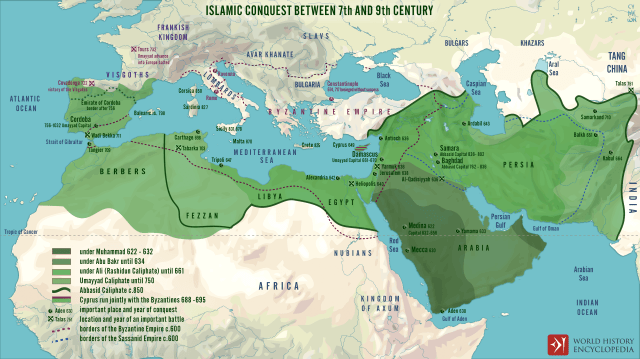
This is a sad fact of history. Muslims were sent out to conquer the surrounding nations. These were offensive campaigns. This is even recorded in the following hadith:
Narrated Jubair bin Haiya:
`Umar sent the Muslims to the great countries to fight the pagans. When Al-Hurmuzan embraced Islam, `Umar said to him. “I would like to consult you regarding these countries which I intend to invade.”… Our Prophet, the Messenger of our Lord, has ordered us to fight you till you worship Allah Alone or give Jizya (i.e. tribute); and our Prophet has informed us that our Lord says:– “Whoever amongst us is killed (i.e. martyred), shall go to Paradise to lead such a luxurious life as he has never seen, and whoever amongst us remain alive, shall become your master.”…
It should be evident that the heart of Islam is to spread the religion via offensive wars. Early Islam wasn’t spread through preaching and by setting up dawah tables in cities to convert people.
Under Umar, four thousand synagogues and churches were destroyed. Imam Muhammad ibn Abd al-Wahhab (1703–1792), who was a Sunni Muslim scholar and theologian, wrote [translated from Arabic using Gemini]:
Abdullah ibn Salam told Umar, may Allah be pleased with them both, “I see in the Torah that you are a closed door to Hell, preventing people from rushing in. When you die, it will open.”
Through Umar, Allah conquered 1036 cities from the lands of disbelievers, destroyed 4000 synagogues and churches, and built 4000 mosques. He established administrative departments (Diwans), founded new cities (Amsar), implemented land taxes (Kharaj), and established the Islamic calendar.
Indeed, the consequence of the jihadis’ invasion of other lands led to the widespread takeover of Christianity:
… all ancient Christian lands between Greater Syria to the east and Mauretania (Morocco) to the west—approximately 3,700 miles—were forever conquered by Islam. Put differently, two-thirds (or 66 percent) of Christendom’s original territory—including three of the five most important centers of Christianity—Jerusalem, Antioch, and Alexandria—were permanently swallowed up by Islam and thoroughly Arabized.
(Raymond Ibrahim, Sword and Scimitar, pp. 42-43)
Of course, early independent non-Muslim references to Muhammad rightly depicted him and his companions as violent barbarians. The book, Seeing Islam As Others Saw It: A Survey And Evaluation Of Christian, Jewish and Zoroastrian Writings On Early Islam, written by Professor Robert Hoyland, references a 7th-century Greek source, Doctrina Jacobi nuper Baptizati, which refers to “the prophet who has appeared with the [Arabs],” identifying him in a negative light: “He is false, for the prophets do not come armed with a sword” (p. 57).
Another source dated 634 is attributed to the Syriac priest Thomas the Presbyter, who reports, “There was a battle between the Romans and the Arabs of Muḥammad in Palestine twelve miles east of Gaza. The Romans fled, leaving behind the patrician bryrdn, whom the Arabs killed. Some 4000 poor villagers of Palestine were killed there, Christians, Jews, and Samaritans. The Arabs ravaged the whole region” (p. 120).
Also, Sophronius, the patriarch of Jerusalem from 634 to 638, spoke about the Arabs and Muhammad in his sermons. In 636 or 637, Sophronius described “the Arabs’ atrocities and victories,” as they “overrun the places which are not allowed to them, plunder cities, devastate fields, burn down villages, set on fire the holy churches, overturn the sacred monasteries.” For Sophronius, these warriors were “the vengeful and God-hating” Arabs “who insult the cross, Jesus, and the name of God, and whose leader is the devil” (pp. 72-73).
There is also a 6th-century Syriac manuscript containing the Gospel according to Matthew and the Gospel according to Mark that has a scribbled few lines about an Arab conquest: “…. many villages were ravaged by the killing of {the Arabs of} Muhammad (Mūhmd) and many people were slain and {taken} prisoner from Galilee as far as Beth….” (p. 117).
One of the earliest surviving Christian texts from the Islamic period in Syria, dated around 640 AD, described the rise of Islam in this way:
They take the wife away from her husband and slay him like a sheep. They throw the babe from her mother and drive her into slavery; the child calls out from the ground and the mother hears, yet what is she to do? And so it is trampled under the feet of the horses, camels and infantry …. They separate the children from the mother like the soul from within the body, and she watches as they divide her loved ones from off her lap, two of them to go to two masters, herself to another …. Her children cry out in lament, their eyes hot with tears. She turns to her loved ones, milk pouring forth from her breast: “Go in peace, my darlings, and may God accompany you.”
(Ibid., p. 262)
The following text provides further details about what happened when the Muslims invaded. Associate Professor Darío Fernández-Morera wrote:
The seventh-century chronicle of the Coptic bishop John of Nikiû, which records the Muslim conquest of the lands of Greek Christian North Africa, echoes the terror tactics mentioned in other accounts:
And thereupon the Moslem made their entry into Nakius [sic], and took possession, and finding no soldiers (to offer resistance), they proceeded to put to the sword all whom they found in the streets and in the churches, men, women, and infants, and they showed mercy to none. And after they had captured (this) city, they marched against other localities and sacked them and put all they found to the sword. And they came also to the city of Sa, and there they found Esqutaws and his people in a vineyard, and the Moslem seized them and put them to the sword.
In 646 Muslim armies set fire to the great Greek Christian city of Alexandria, killing its men and enslaving its women and children—as punishment for the Christians’ rebelling after having signed an agreement of submission in 642 to become dhimmis.
(Darío Fernández-Morera, The Myth of the Andalusian Paradise: Muslims, Christians, and Jews under Islamic Rule in Medieval Spain, Chapter 1. Conquest and Reconquest)
He also wrote:
Another way to check the veracity or, at times, the falsity of the Muslim chronicles is through archaeology. Thus, archaeological evidence from North Africa in the region of Cyrenaica points to the destruction of churches along the route the Islamic conquerors followed in the late seventh century, and the remarkable artistic treasures buried along the routes leading to the North of Spain by fleeing Visigoths and Hispano-Romans during the early eighth century consist largely of religious and dynastic paraphernalia that the Christian inhabitants obviously wanted to protect from Muslim looting and desecration.
(Ibid., Introduction)
Bat Ye’or (b. 1933), a historian, quotes John of Nikiû:
The Capture of the Fayyum
Theodosius, the general, learning of the arrival of the Ishmaelites [Arabs], moved from place to place in order to observe the enemy. The Ishmaelites attacked, killed the commandant, massacred all his troops and immediately seized the town. Whoever approached them was massacred; they spared neither old men, nor women, nor children…
After the Flight of the Greek Army near Nikiou
Then the Muslims arrived in Nikiou. There was not one single soldier to resist them. They seized the town and slaughtered everyone they met in the street and in the churches—men, women and children, sparing nobody. Then they went to other places, pillaged and killed all the inhabitants they found. In the town of Sa they caught unawares Esqutaos and his men, of the tribe of Theodore the general, who were hidden in the vineyards, and they slew them. But let us now say no more, for it is impossible to describe the horrors the Muslims committed when they occupied the island of Nikiou, on Sunday, the eighteenth day of the month of Guenbot, in the fifteenth year of the lunar cycle, as well as the terrible scenes which took place in Cesarea in Palestine…
Amr oppressed Egypt. He sent its inhabitants to fight the inhabitants of the Pentapolis [Tripolitania] and, after gaining a victory, he did not allow them to stay there. He took considerable booty from this country and a large number of prisoners. Abulyanos […], governor of the Pentapolis, with his troops and the leading citizens of the province withdrew to the town of Teycheira, which was heavily fortified, and shut themselves up there. The Muslims returned to their country with booty and captives.
The patriarch Cyrus felt deep grief at the calamities in Egypt, because Amr, who was of barbarian origin, showed no mercy in his treatment of the Egyptians and did not fulfil the covenants which had been agreed with him…
Amr’s position became stronger from day to day. He levied the tax that had been stipulated; but he did not touch the property of the churches, preserved them from all pillage and protected them during the entire length of his government. After taking possession of Alexandria, he had the town’s canal drained, following the example set by Theodore the evildoer. He raised the tax to as much as twenty-two batr of gold, with the result that the inhabitants, crushed down by the burden and in no position to pay it, went into hiding…
But it is impossible to describe the lamentable position of the inhabitants of this town, who came to the point of offering their children in exchange for the enormous sums that they had to pay each month, finding no one to help them because God had abandoned them and had delivered the Christians into the hands of their enemies.
(Bat Ye’or, The Decline Of Eastern Christianity Under Islam, pp. 271-272)
According to Michael the Syrian (d. 1199), best known today as the author of the largest medieval chronicle, there was systematic pillaging by the Muslims:
“The Taiyaye [Arabs] grew rich, increased and overran (the lands) which they took from the Romans [Byzantines] and which were given over to pillage.”
After the surrender of Damascus:
Umar [Ibn al-Khattab] sent Khalid [b. Walid] with an army to the Aleppo and Antioch region. There, they murdered a large number of people. No-one escaped them. Whatever may be said of the evils that Syria suffered, they cannot be recounted because of their great number; for the Taiyaye [the Arabs] were the great rod of God’s wrath.
Palestine was laid waste and plundered. The Arabs moved into Cilicia, taking inhabitants with them into captivity. Mu’awiya sent Habib b. Maslama to Armenia, then torn by internecine conflicts. On his orders, the population of Euchaita (on the river Halys) was put to the sword; those who escaped were all taken into slavery. According to the Armenian chroniclers, the Arabs, after they decimated the populations in Assyria and forced large numbers of people to embrace Islam, “entered the district of Daron [south-west of lake Van] which they sacked, shedding rivers of blood. They exacted tribute and forced the women and children to be handed over to them.” In 642 they took the town of Dvin and annihilated the population by the sword. Then “the Ishmaelites returned by the route whence they had come, carrying off in their wake a multitude of captives to the number of thirty-five thousand.”
The following year, according to the same chronicler, the Arabs again invaded Armenia, “wreaking havoc, ruin and slavery.”
Mu’awiya while in Cappadocia, ravaged the entire region, seized men, and collected considerable booty. Then he led his troops on to devastate the whole region of Amorium. Cyprus was sacked and pillaged (649), after which Mu’awiya turned toward Constantia (Salamis), its capital, where he established his rule by a “great massacre.” The island was pillaged again.
In North Africa, the Arabs took thousands of captives and accumulated a large stock of booty. Whereas the strongholds were defended, “the Muslims set to work overrunning and laying waste the open country.” Tripoli was ransacked in 643; Carthage was entirely razed to the ground and most of its inhabitants killed. The Arabs put the Maghreb to fire and sword, and it took them more than a century to restore peace there by crushing the Berber resistance.
The wars continued on land and sea with Mu’awiya’s successors. Arab troops wrought havoc in Anatolia by numerous incursions; churches were desecrated and burned down; all the inhabitants of Pergamum, Sardes, and other towns were led into captivity. The Greek towns of Gangresand Nicaea were destroyed. Contemporary Christian chronicles mention entire regions ravaged, villages razed to the ground, towns burned, pillaged and destroyed, while entire populations were enslaved.
As has been mentioned, town populations were not always spared. They often suffered massacre or slavery, always accompanied by deportations. This was the fate of the Christians and Jews of Aleppo, Antioch, Ctesiphon, Euchaita, Constantia, Pathos (Cyprus), Pergamum, Sardes, Germanicea (Marash), and Samosata—to cite but a few examples. In the course of the Umayyads’ last attempt to take Constantinople (717), the Arab army commanded by Maslama carried out a pincer movement by land and sea and laid waste the whole region around the capital.
The religious obligation to fight the Christians required a permanent state of war which justified the organization of seasonal raids (ghazwa)— in winter, spring, summer, and autumn. They sometimes consisted of short pillaging incursions into adjacent harbi villages to collect booty, steal livestock, and enslave the villagers. Other campaigns, led by the caliph in person, called for considerable military preparations. Provinces were ravaged and burned down, towns pillaged and destroyed, inhabitants massacred or deported. The first Abbasid caliphs—at the head of their Arab troops and Turkish slaves—continued to lead razzias into Byzantine Anatolia and Armenia…
(Ibid., pp. 47-48)
Muawiya bin Abu Sufyan (b. 602) was a Muslim general who, in circa 650, sent his men as far north as Euchaita (an Armenian Christian town) where they sacked it and subjected the entire population to captivity. Michael the Syrian describes what happened next:
…when Mu’awiya arrived he ordered all the inhabitants to be put to the sword; he placed guards so that no one escaped. After gathering up all the wealth of the town, they set to torturing the leaders to make them show them things [treasures] that had been hidden. The Taiyaye led everyone into slavery—men and women, boys and girls—and they committed much debauchery in that unfortunate town: they wickedly committed immoralities inside churches. They returned to their country rejoicing.
(Ibid., pp. 276-277)
One medieval historian and academic, Hugh Nigel Kennedy (b. 1947), wrote about the atrocities committed by another early Muslim invader, Uqba ibn Nafi:
He [Uqba] went to Ifriqiya [Africa] and besieged its cities, conquering them by force and putting the people to the sword. A number of Berbers converted to Islam at his hand and Islam spread among them until it reached the lands of Sudan [literally meaning the “black lands” in Arabic, i.e., sub-Saharan Africa]. Then Uqba gathered his companions and addressed them saying, “The people of this country are a worthless lot; if you lay into them with the sword they become Muslims but the moment your back is turned, they revert to their old habits and religion.”
(Quoted in Hugh Kennedy’s, The Great Arab Conquests: How The Spread Of Islam Changed The World We Live In, p. 210)
Historian Aḥmad ibn Muḥammad Maqqarī (c. 1577–1632), one of the most comprehensive sources on the Muslim conquest of North Africa, wrote about the atrocities committed by Musa ibn Nusayr:
No sooner had Músa arrived in Africa proper, than hearing that some of the nations… had shaken off the yoke of Islam [as was their habit after perfunctorily saying the shahada], he sent against them his own son Abdullah, who soon returned with one hundred thousand captives. He sent Merwán, another of his sons, against the enemy in another quarter, and he also returned with one hundred thousand captives.
(Aḥmad ibn Muḥammad Maqqarī, The History of the Mohammedan Dynasties in Spain, Vol. 1, p. 251)
And:
After this, Músa went out against the Berbers, and pursued them far into their native deserts, leaving wherever he went traces of his passage, killing numbers of them, taking thousands of prisoners, and carrying on the work of havoc and destruction. He next penetrated into Sús al-adání, where he met with no resistance on the part of the inhabitants, who humbly besought him to grant them peace, and embraced Islám. Those, however, who still persisted in their hostility against the Moslems, Músa attacked in person, or by the various divisions of his army, defeated them in the field, and stormed their towns; and never ceased pushing his conquests until he arrived before Tangiers, the citadel of their country and the mother of their cities, which he also besieged and took, obliging its inhabitants to embrace Islám.
(Ibid., p. 252)
What spirit was working behind such Muslims who went out to kill, steal, and destroy?
Maximus the Confessor (c. 580–662), who was a theologian, commented on the Muslims rampaging over the lands of others:
For indeed, what is more dire than the evils which today afflict the world? What is more terrible for the discerning than the unfolding events? What is more pitiable and frightening for those who endure them? To see a barbarous people of the desert overrunning another’s lands as though they’were their own; to see civilisation itself being ravaged by wild and untamed beasts whose form alone is human.
(Robert G. Hoyland, Seeing Islam As Others Saw It: A Survey And Evaluation Of Christian, Jewish and Zoroastrian Writings On Early Islam, pp. 77-78)
Anastasius of Sinai (died after 700), a Greek writer and abbot, believed (and rightly so) that the Saracens (the Muslims) were in league with demons:
Note well that the demons name the Saracens as their companions. And it is with reason. The latter are perhaps even worse than the demons. Indeed, the demons are frequently much afraid of the mysteries of Christ… the cross… But these demons of flesh trample all that is under their feet, mock it, set fire to it, destroy it…
(Ibid., pp. 100-101)
Anastasius gave examples to support his claim:
At Damascus a possessed man named Sartabias was told by his demon that he would be taking temporary leave of him while he accompanied the Arab army on its expedition to the straits of Abydos of Constantinople, for “our prince has sent guards in order that we help our comrades the Saracens on the trip to Constantinople.” Back in 660 Anastasius had himself witnessed demons participating in the clearing work commissioned by the Muslims on the Temple Mount. And ca. 670 a secretary at Damascus, John of Bostra, was sent on a mission by the governor (symboulos) to interrogate possessed girls at Antioch. Via the latters’ mouths the demons within them inform John that what they fear most from the Christians is their cross, baptism and the eucharist. When asked which among all the faiths of the world they prefer, they reply: “That of our companions … those who do not have any of the three things of which we have spoken and those who do not confess the son of Mary to be God or son of God.”
(Ibid., p. 101)
Even if one thinks what Anastasius said is questionable, can there be any doubt that it was diabolical for the jihadis in the name of Allah to cause so much suffering and devastation?
Muhammad the Liar and Deceiver
Muhammad made the claim that Allah would never allow his body to decay but instead be incorruptible, something that Allah has sworn to do for the bodies of all the prophets:
Narrated Aws ibn Aws:
The Prophet (ﷺ) said: Among the most excellent of your days is Friday; on it Adam was created, on it he died, on it the last trumpet will be blown, and on it the shout will be made, so invoke more blessings on me that day, for your blessings will be submitted to me. The people asked: Messenger of Allah, how can it be that our blessings will be submitted to you while your body is decayed? He replied: Allah, the Exalted, has prohibited the earth from consuming the bodies of Prophets.
Well, that was a lie. The Holy Bible attests that the bodies of the true prophets of God do, in fact, decay, such as in the case of Joseph (Gen. 50:24-26; Ex. 13:19-20). And remember, as shown earlier, Muhammad confirmed the Torah.
Moreover, there is a narration that seems to indicate that Muhammad’s body did (began to) decompose [translated from Arabic using Gemini]:
Sulayman ibn Harb narrated to us, Hammad ibn Zayd narrated to us, from Ayyub, from Ikrimah, who said:
“The Messenger of Allah, peace and blessings be upon him, passed away on a Monday. He was kept for the rest of that day, that night, and the next day until he was buried on Wednesday night. And they (some people) said, ‘Indeed, the Messenger of Allah, peace and blessings be upon him, has not died, but his soul has been ascended just as the soul of Musa was ascended.’
Then Umar stood up and said, ‘Indeed, the Messenger of Allah, peace and blessings be upon him, has not died, but his soul has been ascended just as the soul of Musa was ascended. By Allah, the Messenger of Allah, peace and blessings be upon him, will not die until he cuts off the hands and tongues of some people!’ Umar kept speaking until foam appeared at the corners of his mouth from what he was promising and saying.
Then Al-Abbas stood up and said, ‘Indeed, the Messenger of Allah, peace and blessings be upon him, has died. He is but a human, and he will decay just as humans decay. O people, bury your companion! For he is more honored by Allah than for Him to cause him to die twice. Would He cause one of you to die once and cause him (the Prophet) to die twice? He is more honored by Allah than that. O people, bury your companion! If it is as you say, then it is not difficult for Allah to bring him forth from the dust.
The following Islamic source reads that his body was indeed decomposing [translated from Arabic using Gemini]:
Anas bin Malik said that he heard Umar bin Al-Khattab on the morning after Abu Bakr was pledged allegiance in the Messenger of Allah’s mosque. When Abu Bakr stood on the Messenger of Allah’s pulpit, Umar bore witness before Abu Bakr, then said: “To proceed, yesterday I told you a statement that was not as I said. And by Allah, I did not find it in a book revealed by Allah, nor in a covenant that the Messenger of Allah made with me. Rather, I had hoped that the Messenger of Allah would live”—he said a word intending “until he is the last of us”—”But Allah chose for His Messenger what is with Him over what is with you. And this is the Book by which Allah guided your Messenger, so hold fast to it and you will be guided to what the Messenger of Allah was guided to.”
Abdul Wahhab bin Atta informed us, saying that Awf informed him from Al-Hasan, who said: When the Messenger of Allah passed away, his companions consulted each other and said, “Wait for your Prophet, perhaps he was ascended.” He said: So they waited until his stomach bloated. Then Abu Bakr said: “Whoever used to worship Muhammad, verily Muhammad has died. And whoever used to worship Allah, verily Allah is Living and does not die.”
Muhammad bin Umar informed us, saying that Maslamah bin Abdullah bin Urwah narrated to me from Zayd bin Abi Attab from Abu Salamah bin Abdur Rahman, who said: The people crowded into the Prophet’s house in Aisha’s dwelling, looking at him. They said: “How can he die when he is a witness over us, and we are witnesses over the people? So he dies and does not appear to the people? No, by Allah, he did not die, but rather he was raised as Jesus son of Mary was raised. And he will surely return.” And they threatened whoever said he had died, and they called out in Aisha’s room and at the door, “Do not bury him, for the Messenger of Allah has not died!”
(Al-Tabaqat Al-Kubra – Muhammad ibn Sa’d – Vol. 2 – Page 271)
Most Muslims may dismiss the preceding narrations as weak (even though they may be weak, it doesn’t necessarily mean it is fabricated), but if his body never decayed, why don’t Muslims prove to the world that Muhammad’s body is still intact by showing it, which is supposedly buried in Medina, Saudi Arabia? This would be strong evidence that Islam is true.
Muhammad asserted that he had absolutely no qualms about breaking his oath to do something better!
Narrated Zahdam:
We were in the company of Abu Musa Al-Ash`ari and there were friendly relations between us and this tribe of Jarm. Abu Musa was presented with a dish containing chicken. Among the people there was sitting a red-faced man who did not come near the food. Abu Musa said (to him), “Come on (and eat), for I have seen Allah’s Messenger (ﷺ) eating of it (i.e. chicken).” He said, “I have seen it eating something (dirty) and since then I have disliked it, and have taken an oath that I shall not eat it ‘ Abu Musa said, “Come on, I will tell you (or narrate to you). Once I went to Allah s Apostle with a group of Al-Ash`ariyin, and met him while he was angry, distributing some camels of rak`at. We asked for mounts but he took an oath that he would not give us any mounts, and added, ‘I have nothing to mount you on’ In the meantime some camels of booty were brought to Allah’s Messenger (ﷺ) and he asked twice, ‘Where are Al-Ash`ariyin?” So he gave us five white camels with big humps. We stayed for a short while (after we had covered a little distance), and then I said to my companions, “Allah’s Messenger (ﷺ) has forgotten his oath. By Allah, if we do not remind Allah’s Messenger (ﷺ) of his oath, we will never be successful.” So we returned to the Prophet (ﷺ) and said, “O Allah’s Messenger (ﷺ)! We asked you for mounts, but you took an oath that you would not give us any mounts; we think that you have forgotten your oath.’ He said, ‘It is Allah Who has given you mounts. By Allah, and Allah willing, if I take an oath and later find something else better than that. then I do what is better and expiate my oath.‘”
Muhammad even told a follower to break his oath:
Narrated `Abdur-Rahman bin Samura:
The Prophet (ﷺ) said, “O `Abdur-Rahman! Do not seek to be a ruler, for if you are given authority on your demand then you will be held responsible for it, but if you are given it without asking (for it), then you will be helped (by Allah) in it. If you ever take an oath to do something and later on you find that something else is better, then you should expiate your oath and do what is better.”
The following hadiths read that it is allowable to lie in Islam:
Narrated Jabir bin ‘Abdullah: Allah’s Apostle said, “Who is willing to kill Ka’b bin Al-Ashraf who has hurt Allah and His Apostle?” Thereupon Muhammad bin Maslama got up saying, “O Allah’s Apostle! Would you like that I kill him?” The Prophet said, “Yes,” Muhammad bin Maslama said, “Then allow me to say a false thing (i.e. to deceive Kab).” The Prophet said, “You may say it.”…
(Sahih al-Bukhari 4037)
Asma bint Yazid narrated that the Messenger of Allah said:
“it is not lawful to lie except in three cases: Something the man tells his wife to please her, to lie during war, and to lie in order to bring peace between the people.”
(Jami` at-Tirmidhi 1939)
Allah allowed Muhammad to lie and break his oaths:
Allah indeed has sanctioned for you the expiation of your oaths and Allah is your Protector, and He is the Knowing the Wise.
(Quran 66:2, Shakir)
Allah himself deceives:
Verily, the hypocrites seek to deceive Allah, but it is He Who deceives them. And when they stand up for As-Salat (the prayer), they stand with laziness and to be seen of men, and they do not remember Allah but little.
(Quran 4:142, Muhsin Khan)
Allah even deceives Muslims. Allah showed the opposing fighting forces as few to Muhammad, since the Muslims would have been reluctant to fight if he had shown their actual numbers. Hence, Allah used deception to encourage Muslims to fight for his cause:
When Allah showed them unto thee (O Muhammad) in thy dream as few in number, and if He had shown them to thee as many, ye (Muslims) would have faltered and would have quarrelled over the affair. But Allah saved (you). Lo! He knoweth what is in the breasts (of men). And when He made you (Muslims), when ye met (them), see them with your eyes as few, and lessened you in their eyes, (it was) that Allah might conclude a thing that must be done. Unto Allah all things are brought back.
(Quran 8:43-44, Pickthall)
There was an event where Muhammad made an agreement to return any Meccans who had defected to the Muslim camp, an agreement that he reneged on, as read in Muslim sources. Al-Tabari mentions a woman who escaped to the Muslim camp, whose brothers came to get her back. Muhammad’s refusal to return her to them is a clear violation of the peace treaty. Muhammad lied:
Ibn Ishaq added in his account: Umm Kulthum bt. ‘Uqbah b. Abi Mu‘ayt emigrated to the Messenger of God during that period. Her brothers, ‘Umarah and al-Walid b. ‘Uqbah, went to the Messenger of God to ask him to return her to them ACCORDING TO THE TREATY BETWEEN HIM AND QURAYSH AT AL-HUDAYBIYAH, BUT HE DID NOT DO SO: GOD HAD REJECTED IT.
(Al-Tabari, The History of Al-Tabari: The Victory of Islam, Vol. 8, p. 92)
Ibn Kathir gave his corroboration:
After Al-Hudaybiyyah, Emigrant Muslim Women may not be returned to the Disbelievers
In Surat Al-Fath, we related the story of the treaty at Al-Hudaybiyyah that was conducted between the Messenger of Allah and the disbelievers of Quraysh. In that treaty, there were these words, “Everyman (in another narration, EVERY PERSON) who reverts from our side to your side, should be returned to us, even if he is a follower of your religion.” This was said by `Urwah, Ad-Dahhak, `Abdur-Rahman bin Zayd, Az-Zuhri, Muqatil bin Hayyan and As-Suddi.
So according to this narration, this Ayah specifies and explains the Sunnah. And this is the best case of understanding. Yet according to another view of some of the Salaf, it abrogates it.
Allah the Exalted and Most High ordered His faithful servants to test the faith of women who emigrate to them. When they are sure that they are faithful, they should not send them back to the disbelievers, for the disbelievers are not allowed for them and they are not allowed for the disbelievers. In the biography of `Abdullah bin Abi Ahmad bin Jahsh in Al-Musnad Al-Kabir, we also mentioned that `Abdullah bin Abi Ahmad said, “Umm Kulthum bint `Uqbah bin Abi Mu`ayt emigrated and her brothers, `Umarah and Al-Walid, went after her. They came to Allah’s Messenger and talked to him about Umm Kulthum and asked that she be returned to them. ALLAH ABOLISHED THE PART OF THE TREATY BETWEEN THE PROPHET AND THE IDOLATORS ABOUT THE WOMEN PARTICULARLY. So He forbade returning Muslim women to the idolators and revealed the Ayah about testing them” …
<Likewise do not keep disbelieving women,>
Then `Umar bin Al-Khattab divorced two of his wives, who were idolatresses, and one of them got married to Mu`awiyah bin Abi Sufyan, while the other got married to Safwan bin Umayyah.
Ibn Thawr narrated that Ma`mar said that Az-Zuhri said, “This Ayah was revealed to Allah’s Messenger while he was in the area of Al-Hudaybiyyah, after making peace. He agreed that WHOEVER COMES from the Quraysh to his side, WILL BE RETURNED TO MAKKAH. When some women came, this Ayah was revealed. Allah commanded that the dowery that was paid to these women be returned to their husbands. Allah also ordered that if some Muslim women revert to the side of the idolators, the idolators should return their dowery to their Muslim husbands …
(Tafsir Ibn Kathir (Abridged) Vol. 9 (Surat Al-Jathiyah to the end of Surat Al-Munafiqun), pp. 599-600, 602)
Taqiyyah is the practice of a Muslim not showing their faith openly through pretense, dissimulation, or concealment. Arguably, it is a special type of lying. Many Sunni Muslims wrongly believe that Taqiyyah is only allowed in the Shia sect of Islam, but it’s allowed in the Sunni sect. Ibn Kathir expressly and emphatically states that Al-Hasan claimed that Tuqyah (or Taqiyyah) is permitted!
<unless you indeed fear a danger from them>
meaning, except those believers who in some areas or times fear for their safety from the disbelievers. In this case, such believers are allowed to show friendship to the disbelievers outwardly, but never inwardly. For instance, Al-Bukhāri recorded that Abu Ad-Dardā’ said, “We smile in the face of some people although our hearts curse them.”[1] Al-Bukhāri said that Al-Hasan said, “The Tuqyah“[2] is allowed until the Day of Resurrection.” Allāh said,
…
[2] To shield what is in one’s heart.
(Tafsir Ibn Kathir (Abridged) Vol. 2, Parts 3, 4, & 5 (Surat Al-Baqarah, Verse 253, to Surat An-Nisa, Verse 147), p. 142)
Muhammad the Antisemite
Muhammad’s disdain for Jews is shown when he stated that Allah transformed some of them into apes and swine:
Say (O Muhammad to the people of the Scripture): “Shall I inform you of something worse than that, regarding the recompense from Allah: those (Jews) who incurred the Curse of Allah and His Wrath, those of whom (some) He transformed into monkeys and swines, those who worshipped Taghut (false deities); such are worse in rank (on the Day of Resurrection in the Hellfire), and far more astray from the Right Path (in the life of this world).”
(Quran 5:60, Hilali-Khan)
Muhammad also believed that they were turned into mastigures (spiny-tailed lizards), but strangely he still permitted eating them:
Abu Sa’id reported that an Arab of the desert came to Allah’s Messenger (ﷺ) and said:
I live in a low land abounding in lizards, and these are the common diet of my family, but he (the Holy Prophet) did not make any reply. We said to him: Repeat it (your problem) and so he repeated it, but he did not make any reply. (It was repeated thrice ) Then Allah’s Messenger (ﷺ) called him out at the third time saying: O man of the desert, verily Allah cursed or showed wrath to a tribe of Bani Isra’il and distorted them to beasts which move on the earth. I do not know, perhaps this (lizard) may be one of them. So I do not eat it, nor do I prohibit the eating of it.
There is yet another species. Muhammad also believed they turned into rats:
(11) Chapter: Mice Are A Transformed Race
Abu Huraira reported that Allah’s Messenger (ﷺ) said:
A group of Bani Isra’il was lost. I do not know what happened to it, but I think (that it ‘underwent a process of metamorphosis) and assumed the shape of rats. Don’t you see when the milk of the camel is placed before them, these do not drink and when the milk of goat is placed before them, these do drink. Abu Huraira said: I narrated this very hadith to Ka’b and he said: Did you hear this from Allah’s Messenger (ﷺ)? I (Abu Huraira) said: Yes. He said this again and again, and I said: Have I read Torah? This hadith has been transmitted on the authority of Ishaq with a slight variation of wording.
The following hadiths clearly show he had a disdain for Jews:
Abu Huraira reported Allah’s Messenger (may peace be upon him) as saying: The last hour would not come unless the Muslims will fight against the Jews and the Muslims would kill them until the Jews would hide themselves behind a stone or a tree and a stone or a tree would say: Muslim, or the servant of Allah, there is a Jew behind me; come and kill him; but the tree Gharqad would not say, for it is the tree of the Jews.
(Sahih Muslim 2922)
Narrated ‘Abdullah bin ‘Umar: I heard Allah’s Apostle saying, “The Jews will fight with you, and you will be given victory over them so that a stone will say, ‘O Muslim! There is a Jew behind me; kill him!’“
(Sahih Bukhari 3593)
Narrated Ibn ‘Abbas: I saw the Messenger of Allah (ﷺ) sitting neat the Black stone (or at a corner of the Ka’bah). He said: He (the Prophet) raised his eyes towards the heaven, and laughed, and he said: May Allah curse the Jews! He said this three times…
(Sunan Abi Dawud 3488)
In the following hadith, it really reads (قَاتَلَ اللَّهُ الْيَهُودَ) “May Allah KILL the Jews” in Arabic. But the English translator changed it to something less serious. The Dictionary of Arabic defines “قَاتَلَ” as “killing, murdering; deadly, lethal, mortal, fatal…” The big question is why did the English translator change it? He/she was apparently embarrassed by what Muhammad really said.
Narrated Abu Huraira:
Allah’s Messenger (ﷺ) said, “May Allah’s curse be on the Jews for they built the places of worship at the graves of their Prophets.”
The same is true for the following hadith:
Narrated Jabir bin `Abdullah:
I heard Allah’s Messenger (ﷺ), in the year of the Conquest of Mecca, saying, “Allah and His Apostle made illegal the trade of alcohol, dead animals, pigs and idols.” The people asked, “O Allah’s Messenger (ﷺ)! What about the fat of dead animals, for it was used for greasing the boats and the hides; and people use it for lights?” He said, “No, it is illegal.” Allah’s Messenger (ﷺ) further said, “May Allah curse the Jews, for Allah made the fat (of animals) illegal for them, yet they melted the fat and sold it and ate its price.”
Muhammad the Briber
Muhammad tried to bribe people to persuade them to convert to Islam:
So the Quraish and the Ansar became angry and said, “He (i.e. the Prophet’) gives the chief of Najd and does not give us.” The Prophet said, “I give them so as to attract their hearts (to Islam).”
(Sahih Bukhari 3344)
Narrated Anas:
The Prophet (ﷺ) gathered some people of Ansar and said, “The People of Quraish are still close to their Pre-lslamic period of ignorance and have suffered a lot, and I want to help them and attract their hearts (by giving them the war booty). Won’t you be pleased that the people take the worldly things) and you take Allah’s Messenger (ﷺ) with you to your homes?” They said, “Yes, (i.e. we are pleased with this distribution).” The Prophet (ﷺ) said, “‘If the people took their way through a valley and the Ansar took their way through a mountain pass, then I would take the Ansar’s valley or the Ansar’s mountain pass.”
Yet, Muhammad cursed people who gave bribes:
Narrated Abdullah ibn Amr ibn al-‘As:
The Messenger of Allah (ﷺ) cursed the one who bribes and the one who takes bribe.
Muhammad the Murderer
An infidel spy came to the Prophet (ﷺ) while he was on a journey. The spy sat with the companions of the Prophet (ﷺ) and started talking and then went away. The Prophet (ﷺ) said (to his companions), ‘Chase and kill him.’ So, I killed him.” The Prophet (ﷺ) then gave him the belongings of the killed spy (in addition to his share of the war booty).
(Sahih al-Bukhari 3051)
Muhammad ordered a poet to be killed just because she made satirical songs about him:
Another [to be killed] was Abdullah Khatal of B. Taym b. Ghalib. He had become a Muslim and the apostle sent him to collect the poor tax in company with one of the Ansar. He had with him a freed slave who served him. (He was Muslim). When they halted he ordered the latter to kill a goat for him and prepare some food, and went to sleep. When he woke up the man had done nothing, so he attacked and killed him and apostatized. He had two singing-girls Fartana and her friend who used to sing satirical songs about the apostle, so he ordered that they should be killed with him.
…
As for Ibn Khatal’s two singing girls, one was killed and the other ran away until the apostle, asked for immunity, gave it to her.
(Ibn Ishaq, The Life of Muhammad, p. 551)
Muhammad ordered the execution of 10 people when he took Mecca:
The apostle of Allah entered through Adhakhir, [into Mecca], and prohibited fighting. He ordered six men and four women to be killed, they were (1) Ikrimah Ibn Abi Jahl, (2) Habbar Ibn al-Aswad, (3) Abd Allah Ibn Sa’d Ibn Abi Sarh, (4) Miqyas Ibn Sababah al-Laythi, (5) al-Huwayrith Ibn Nuqaydh, (6) Abd Abbah Ibn Hilal Ibn Khatal al-Adrami, (7) Hind Bint Utbah, (8) Sarah, the mawlat (enfranchised girl) of Amr Ibn Hashim, (9) Fartana and (10) Qaribah. Out of them, Ibn Khatal, al-Huwayrith ibn Nugaydh and Miqyas Ibn Sababah were slain.
(Ibn Sa’d’s Kitab al-Tabaqat al-Kabir (Book of the Major Classes), Vol. 2, Part I & II, p. 168)
There is a long list of Muhammad’s other murders on this Wikiislam page.
Muhammad the Mass Murderer
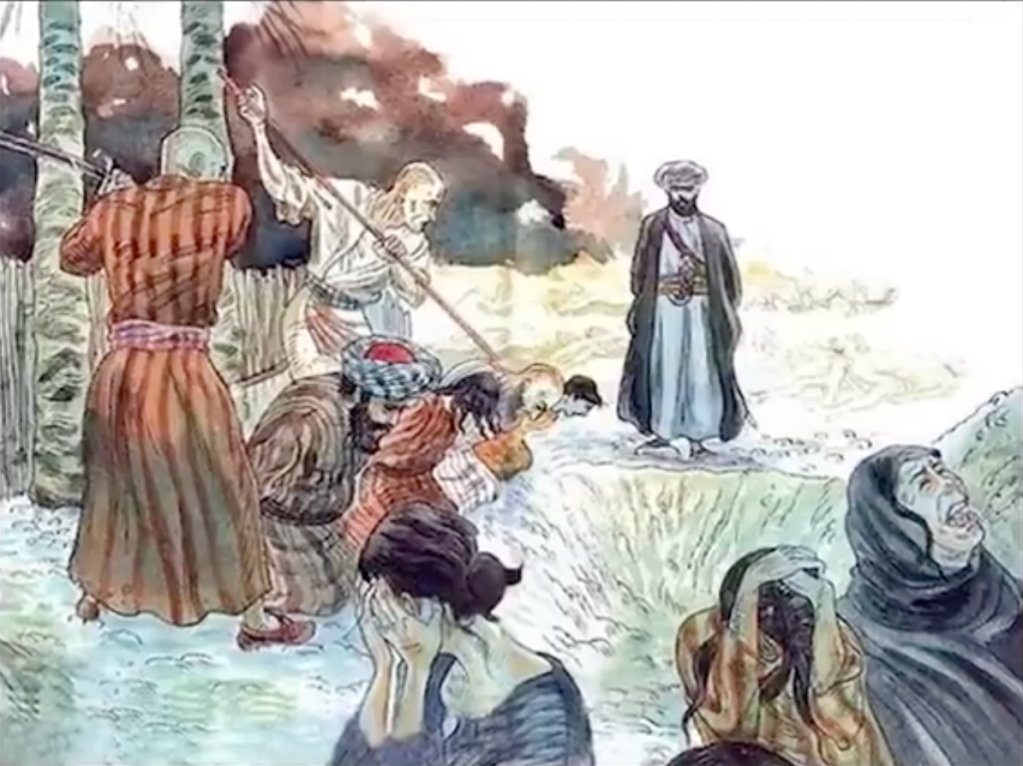
According to the following Islamic sources, Muhammad mass murdered the last remaining major tribe of Jews in Medina: the Qurayza. Muhammad and his companions presumably undressed men and boys, and then those who began to grow pubic hair were massacred. However, just because a person has pubic hair doesn’t mean they are a man or a woman. A 10-year-old could have begun to grow pubic hair, but he or she is still a child. Thus, Muhammad sanctioned the murder of many children:
Narrated Atiyyah al-Qurazi:
I was among the captives of Banu Qurayzah. They (the Companions) examined us, and those who had begun to grow hair (pubes) were killed, and those who had not were not killed. I was among those who had not grown hair.
(Sunan Abi Dawud 4404)
It was narrated that ‘Abdul-Malik bin `Umair said:
“I heard ‘Atiyyah Al-Quradhi say: ‘We were presented to the Messenger of Allah (ﷺ) on the Day of Quraidhah. Those whose pubic hair had grown were killed, and those whose pubic hair had not yet grown were let go. I was one of those whose pubic hair had not yet grown, so I was let go.”
The Messenger of God went out into the marketplace of Medina (it is still its marketplace today) and had trenches dug in it; then he sent for them and had them beheaded in those trenches. They were brought out to him in groups. Among them were the enemy of God, Huyayy b. Akhfab, and Ka’b b. Asad, the head of the tribe.
They numbered 600 or 700—the largest estimate says they were between 800 and 900. As they were being taken in groups to the Messenger of God,…
…
The Messenger of Allah commanded that all of the Jewish men and boys who had reached puberty should be killed… Then the Prophet divided the wealth, wives, and children of the Banu Qurayza Jews among the Muslims.
(Al-Tabari, The History of al-Tabari: The Victory of Islam, Vol. 8, pp. 35, 38)
The Jews were made to come down, and Allah’s Messenger imprisoned them. Then the Prophet went out into the marketplace of Medina, and he had trenches dug in it. He sent for the Jewish men and had them beheaded in those trenches. They were brought out to him in batches. They numbered 800 to 900 boys and men.
(Ibn Ishaq’s The Life of Muhammad, p. 464)
One woman was killed when they massacred the men and boys:
Narrated Aisha, Ummul Mu’minin:
No woman of Banu Qurayzah was killed except one. She was with me, talking and laughing on her back and belly (extremely), while the Messenger of Allah (ﷺ) was killing her people with the swords. Suddenly a man called her name: Where is so-and-so? She said: I I asked: What is the matter with you? She said: I did a new act. She said: The man took her and beheaded her. She said: I will not forget that she was laughing extremely although she knew that she would be killed.
In his 1861 biography of Muhammad, Mahomet and Islam, William Muir argued that the massacre could not have been justified by political necessity. He also argued that the “indiscriminate slaughter of the whole tribe cannot but be recognized as an act of enormous cruelty, which casts an odious blot upon the prophet’s name” (p. 151).
In the book Muhammad and the Jews: A Re-examination, written by the late scholar Barakat Ahmad, it reads, “No one could come out of such a holocaust – 600 to 900 killed in cold blood in one day – without damage to his personality. ‘All and Zubayr’s holocaust legacy of massive deadness would not have left them in peace” (p. 86). Ahmad continues: “The very idea of such a massacre by persons who neither before nor after the killing showed any sign of a dehumanised personality is inadmissible from a psychological point of view” (p. 87). Even though Ahmad challenged the historicity of the event, he viewed what Muhammad did in the narrations as a “massacre” and a “holocaust.”
The Banu Qurayza massacre contradicts the narrative from Muslim apologists, who say that killing children in Islam is not permissible. Indeed, Allah is okay with indiscriminately punishing a whole group of people, which would include children:
Chapter: If Allah sends a punishment upon a nation
Narrated Ibn `Umar:
Allah’s Messenger (ﷺ) said, “If Allah sends punishment upon a nation then it befalls upon the whole population indiscriminately and then they will be resurrected (and judged) according to their deeds. “
In Islam, it’s also permissible to mass kill the elderly — Muhammad sanctioned it [translated from Arabic using Google Translate]:
1583 Ahmad ibn Abd al-Rahman Abu al-Walid al-Dimashqi told us , al-Walid ibn Muslim told us , on the authority of Sa`id ibn Bashir, on the authority of Qatada, on the authority of al-Hasan, on the authority of Samura ibn Jundub, that the Messenger of God, may God bless him and grant him peace, said: Kill the old men of the polytheists and spare their young men. The young men are the boys who have not yet grown hair. Abu `Isa said: This is a good, authentic, strange hadith. Al-Hajjaj ibn Artah narrated it on the authority of Qatada in a similar manner.
Ibn Qudamah wrote in his book al-Mughani [translated from Arabic using Google Translate]:
Al-Shafi’i said, in one of his two opinions, and Ibn al-Mundhir: It is permissible to kill the elderly, because the Prophet (blessings and peace of Allah be upon him) said: { Kill the elderly of the polytheists, and spare their young ones }. Narrated by Abu Dawud and al-Tirmidhi, who said: A good and authentic hadith. And because Allah the Almighty said: { Then kill the polytheists }. This is general and includes the elderly in its generality. Ibn al-Mundhir said: I do not know of any argument for not killing the elderly that can be used as an exception to the generality of His words: { Then kill the polytheists }. And because he is a disbeliever and there is no benefit in his life, so he is killed like a young man.
Why did the early Muslims spare the boys [translated from Arabic using Google Translate]?
Ibn ‘Umar (may Allah be pleased with him) narrated that the Prophet (blessings and peace of Allah be upon him) “forbade the killing of women and children.” Agreed upon. Because a boy becomes a slave by being taken captive himself, killing him is a waste of money, and if he is taken captive alone, he becomes a Muslim, so killing him is the waste of someone who can be made a Muslim.
Why kill the elderly of the polytheists? Because they are less likely to accept Islam. The following Islamic text reads [translated from Arabic using Google Translate]:
On the authority of Samurah ibn Jundub, who said: The Messenger of God, may God bless him and grant him peace, said: “Kill the old men of the polytheists, and spare their young men.” Abdullah said : I asked my father about the interpretation of this hadith: “Kill the old men of the polytheists.” He said: It says: “The old man is unlikely to convert to Islam, and the young man, that is, converts to Islam, is as if he is closer to Islam than the old man.” He said: “The young men.”
Ibn Rushd wrote [translated from Arabic using Google Translate]:
Al-Shafi’i used as evidence the hadith of Samurah that the Messenger of Allah, may Allah bless him and grant him peace, said: “Kill the elders of the polytheists and spare their young men .” It seems that the reason for killing, in his view, is disbelief, so this reason must be applied to all disbelievers.
(The Beginning of the Diligent and the End of the Economist)
Al-Nawawi has in his writings [translated from Arabic using Google Translate]:
It is permissible to kill a monk, a hired hand, an old man, a blind man, or a person in a time when there is no fighting or opinion, according to the most apparent opinion. They are enslaved and their women and money are taken captive. It is permissible to besiege the infidels in the lands and castles, to send water upon them, to throw fire and catapults at them, and to take them by surprise.
(The book of the curriculum of the seekers and the pillar of the muftis in jurisprudence)
Al-Mawardi wrote [translated from Arabic using Google Translate]:
It is permissible for a Muslim to kill whoever he captures from among the polytheists, whether he is a combatant or not. There is a difference of opinion regarding killing their elders and monks who live in monasteries and monasteries . One of the two opinions regarding them is that they are not to be killed until they fight, because they are like children.
The second: They are killed even if they do not fight, because they may have indicated an opinion that is more harmful to the Muslims than fighting. Duraid ibn al-Simmah1 was killed in the Hawazin War on the day of Hunayn, and he was over one hundred years old, and the Messenger of Allah, may Allah bless him and grant him peace, saw him and did not deny his killing.
The following quotation reads Muhammad declared the mass killing of a certain ethnic group:
The Messenger of God said, “Whoever of the Jews falls into your hands, kill him.” So Muhayyisah b. Mas’ūd fell upon Ibn Sunaynah, one of the Jewish merchants who was on close terms with them and used to trade with them, and killed him.
(Al-Tabari, The History of al-Tabari: The Foundation of the Community, Vol. 7, p. 97)
Muhammad the Pedophile
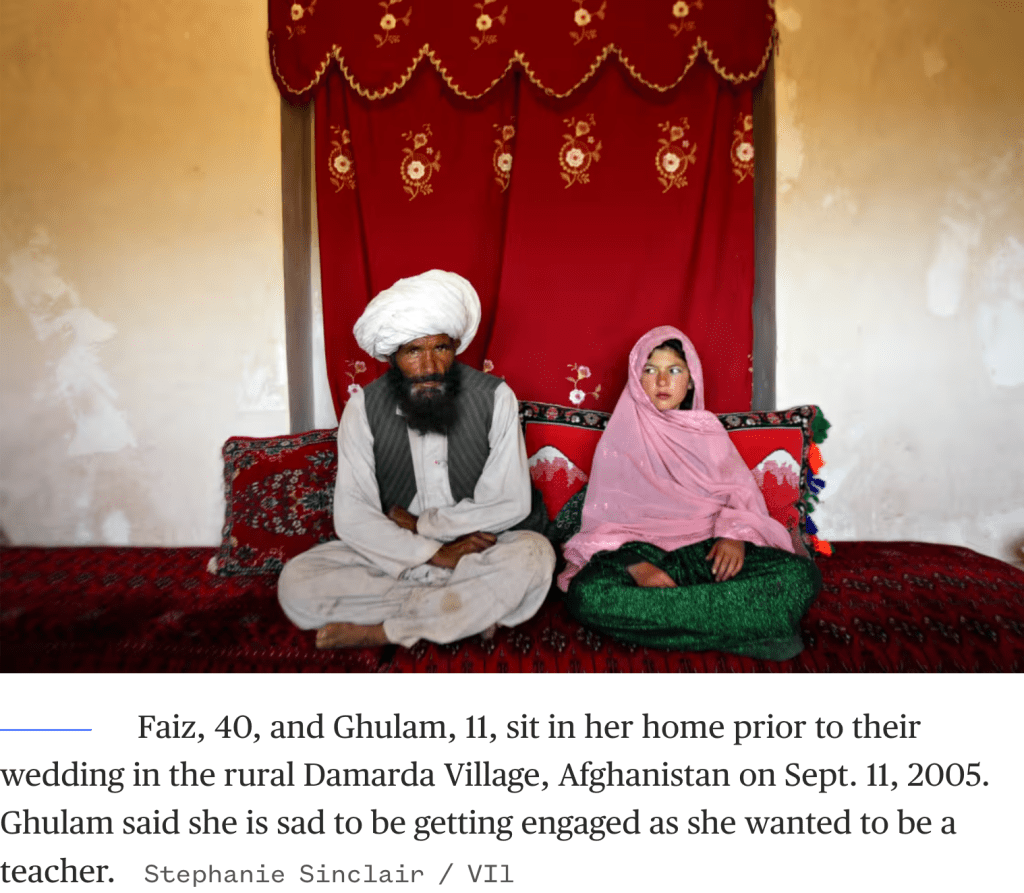
When Muhammad, the supposed greatest example for humanity, was 50+ years old, he married a 6-year-old girl named Aisha and had intercourse with her when she was 9 years old. How utterly depraved and demonic that a man claiming to be a prophet of God mounted a girl, violating her, when he was about 6 times her age!
Narrated ‘Urwa: The Prophet wrote the (marriage contract) with ‘Aisha while she was six years old and consummated his marriage with her while she was nine years old and she remained with him for nine years (i.e. till his death).
(Sahih Bukhari 5158. Similar hadiths narrated by Aisha can be found in Sahih al-Bukhari 5133 and 5134.)
‘Aisha (Allah be pleased with her) reported: Allah’s Apostle (may peace be upon him) married me when I was six years old, and I was admitted to his house when I was nine years old.
(Sahih Muslim Book 008, Number 3310)
Narrated `Aisha:
I used to play with the dolls in the presence of the Prophet, and my girl friends also used to play with me. When Allah’s Messenger (ﷺ) used to enter (my dwelling place) they used to hide themselves, but the Prophet would call them to join and play with me. (The playing with the dolls and similar images is forbidden, but it was allowed for `Aisha at that time, as she was a little girl, not yet reached the age of puberty.) (Fath-ul-Bari page 143, Vol.13)
It was narrated that ‘Aishah said:
“The Messenger of Allah married me when I was six, and consummated the marriage with me when I was nine, and I used to play with dolls.”
‘A’isha (Allah be pleased with her) reported that Allah’s Apostle (ﷺ) married her when she was seven years old, and he was taken to his house as a bride when she was nine, and her dolls were with her; and when he (the Holy Prophet) died she was eighteen years old.
What have Muslim scholars said concerning Aisha playing with her dolls? Al-Nawawi wrote [translated from Arabic using Gemini]:
Her statement, “And she was escorted to him when she was nine years old and her toys were with her,” the meaning of “toys” is these toys, known as “girls’ dolls,” that young girls play with. The meaning is to draw attention to her young age. Al-Qadi said: “In this is the permissibility of making toys and the lawfulness for young girls to play with them. It has been narrated in another hadith that the Prophet, peace and blessings be upon him, saw this and did not disapprove of it.” They said the reason for this is to train them for raising children and managing their affairs and their homes.
Ibn Hajar wrote [translated from Arabic using Gemini]:
Al-Khattabi said: “In this hadith, playing with dolls is not like engaging with other images for which a stern warning has come. He only gave ‘Aishah permission for it because at that time, she was not yet an adult.”
(Fath Al-Bari book with explanation of Al-Bukhari – Al-Salafiya edition)
The following text, compiled by Ahmad bin Hanbal, reads [translated from Arabic using Google Translate]:
… She made me get down from the swing, and I had a long hair, which she parted, and wiped my face with some water. Then she came forward leading me until she stopped me at the door, and I was still pacing until I calmed down. Then she entered with me, and there was the Messenger of Allah, may Allah bless him and grant him peace, sitting on a bed in our house, and with him were Men and women from the Ansar came, so she sat me on his lap, then she said: These are your family, so may Allah bless you in them and bless them in you. So the men and women jumped up and went out, and the Messenger of Allah, may Allah bless him and grant him peace, consummated the marriage with me in our house. No camel was slaughtered on my behalf, nor was a sheep slaughtered on my behalf, until Sa`d ibn `Ubadah sent us a large bowl of food. He would send it to the Messenger of God, may God bless him and grant him peace, when he went to visit his wives, and I was nine years old at that time.”
Narrated Aisha:
The Prophet (ﷺ) engaged me when I was a girl of six (years). We went to Medina and stayed at the home of Bani-al-Harith bin Khazraj. Then I got ill and my hair fell down. Later on my hair grew (again) and my mother, Um Ruman, came to me while I was playing in a swing with some of my girl friends. She called me, and I went to her, not knowing what she wanted to do to me. She caught me by the hand and made me stand at the door of the house. I was breathless then, and when my breathing became Allright, she took some water and rubbed my face and head with it. Then she took me into the house. There in the house I saw some Ansari women who said, “Best wishes and Allah’s Blessing and a good luck.” Then she entrusted me to them and they prepared me (for the marriage). Unexpectedly Allah’s Apostle came to me in the forenoon and my mother handed me over to him, and at that time I was a girl of nine years of age.
(Sahih al-Bukhari 3894. Sahih Muslim 1422a is a similar hadith)
Who plays on the swings? Al-Nawawi wrote [translated from Arabic using Gemini]:
The urjuhah (swing) is a piece of wood on which children and young girls play; its middle is placed on a raised spot, and they sit on its ends and move it, so one side goes up and the other goes down.
More Muslim sources that read Aisha’s marriage was consummated at a very young age:
It was narrated that:
Abdullah said: “The Prophet married Aishah when she was seven years old, and consummated the marriage with her when she was nine, and he passed away when she was eighteen.”
It was narrated that ‘Aishah said: “The Messenger of Allah married me when I was seven or six years old. When we came to AIMadinah, some women” —- Bishr said: “Umm Ruman” — came to me when I was on a swing, and took me, and prepared me, and adorned me. Then I was brought to the Messenger of Allah, and he consummated the marriage with me when I was nine years old. She made me stand at the door and I started to breathe deeply. Then I was brought into a room where there were some of the Ansari women and they said: ‘With good and blessings.’”” (Sahih)
(The English Translation of Sunan Abi Dawud Vol. 5, The Book of Etiquette, Chapter 55. About Swings, Hadith no. 4933, p. 327)
‘A’ishah states: We came to Medina and Abu Bakr took up quarters in al-Sunh among the Banu al-Harith b. al-Khazraj. The Messenger of God came to our house and men and women of the Ansar gathered around him. My mother came to me WHILE I WAS BEING SWUNG ON A SWING BETWEEN TWO BRANCHES AND GOT ME DOWN. Jumaymah, my nurse, took over and wiped my face with some water and started leading me. When I was at the door, she stopped so I could catch my breath. I was then brought [in] while the Messenger of God was sitting on a bed in our house. [My mother] made me sit on his lap and said, “These are your relatives. May God bless you with them and bless them with you!” Then the men and women got up and left. The Messenger of God consummated his marriage with me in my house when I was nine years old. Neither a camel nor a sheep was slaughtered on behalf of me. Only Sa‘d b. ‘Ubaidah sent a bowl of food which he used to send to the Messenger of God.
…
…Then the Messenger of God married ‘A’ishah bt. Abi Bakr, whose name is ‘Atiq b. Abi Quhafah, who is ‘Uthman, and is called ‘Abd al-Rahman b. ‘Uthman b. ‘Amir b. ‘Amir b. Ka‘b b. Sa‘d b. Taym b. Murrah: [The Prophet] married her three years before the Emigration, when she was seven years old, and consummated the marriage when she was nine years old, after he had emigrated to Medina in Shawwal. She was eighteen years old when he died. The Messenger of God did not marry any maiden except her.
(Al-Tabari, The History of al-Tabari: The Last Years of the Prophet, Vol. IX, pp. 130-131)
‘Aishah bint Abu Bakr: He married her in the eleventh year of Prophethood, a year after his marriage toSawdahjand two years and five months before Al-Hijra. She was six years old when he married her. However, he did not consummate the marriage with her till Shawwal seven months after Al-Hijra, and that was in Madinah. She was nine then. She was the only virgin he married, and the most beloved creature to him As a woman she was the most learned woman in jurisprudence.
(Saif-ur-Rahman al-Mubarakpuri, Ar-Raheeq Al-Makhtum (The Sealed Nectar) Biography of the Noble Prophet, p. 483)
Sahih Bukhari and Sahih Muslim, which contain narrations that Muhammad slept with a 9-year-old, are authentic according to the scholars. Al-Nawawi wrote [both following quotations translated from Arabic using Google Translate]:
The scholars agreed that the most authentic books written are Sahih al-Bukhari and Sahih Muslim. The majority agreed that Sahih al-Bukhari is the most authentic of the two, and has the most benefits…
Ibn Taymiyya wrote:
As for the well-known books of hadith, such as al-Bukhari and Muslim, there is no book under the sky more authentic than al-Bukhari and Muslim after the Qur’an and what was combined between them…
Al-Qurtubi (source), al-Shawkani (source), Ibn al-Qayyim (source), Qadi ‘Iyad (source), al-Bayhaqi (source), Khalil Ahmad Saharanpuri (source), and numerous other scholars affirmed Aisha’s marriage was consummated when she was 9 years old.
Despite the numerous authentic hadiths with different chains of narration, some Sunni Muslims still can’t believe Muhammad had sexual relations with a 9-year-old girl. However, to dismiss the authentic hadiths is to reject over 1,300 years of Sunni scholarship!
The following Muslim scholars wrote that there was no doubt Aisha’s marriage was consummated when she was 9 years old:
This tradition is considered gharib (unique in this line).
Al-Bukhari had related, from ‘Ubayd b. Isma‘il, from Abu Usama, from Hisham b. ‘Urwa, from his father, who said, “Khadija died three years before the emigration of the Prophet. He allowed a couple of years or so to pass after that, and then he contracted marriage with ‘A’isha when she was six, thereafter consummating marriage with her when she was nine years old.”
What ‘Urwah stated here is mursal, incomplete, as we mentioned above, but in its content it must be judged as muttasil, uninterrupted.
His statement, “He contracted marriage with ‘A’isha when she was six, thereafter consummating marriage with her when she was nine” IS NOT DISPUTED BY ANYONE, and is well established in the sahih collections of traditions and elsewhere.
(Ibn Kathir, The Life of the Prophet Muhammad (Al-Sira al-Nabawiyya), Vol. II, pp. 93-94)
Al-Baghawī wrote [translated from Arabic using Google Translate]:
… on the authority of Aisha, she said: “The Messenger of God, may God bless him and grant him peace, married me when I was seven years old, and he consummated the marriage with me when I was nine years old. I used to play with dolls, and my female slaves used to come to me. When they saw the Messenger of God, may God bless him and grant him peace, they would retreat from him, so it was…” The Prophet, may God bless him and grant him peace, would send them to me.”
This is a hadith whose authenticity is agreed upon.
Badr al-Din al-‘Ayni wrote the following [translated from Arabic using Google Translate]:
The hadith of Aisha – may God Almighty be pleased with her – is well-known and close to being mutawatir; for he – may God bless him and grant him peace – married her when she was six years old, and consummated the marriage with her when she was nine years old, and she was with him for nine years.
According to IslamQA.org, “Hadith Mutawaatir is such a narration which is narrated by such a large number of people in each era that it would be impossible for all the narrators to make up the hadith and orchestrate a lie.”
Even in a Shia hadith, it is said that Muhammad had relations with Aisha when she was at a very young age:
1. Ali ibn Ibrahim has narrated from Muhammad ibn ‘Isa from Yunus from abu Ayyub al-Khazzaz who has narrated the following: “I once asked Isma’il ibn Ja’far, ’When it is permissible for a boy to testify?’ He said, ’It is permissible when he becomes ten years old.’ I then asked, ‘Can he issue a command?’ He said, ‘The Messenger of Allah ﷺ went to bed with ‘A’ishah when she was ten years old, and it is not permissible to go to bed with a girl unless she is a woman. When a boy becomes ten years old his commanding is permissible and his testimony is admissible.’”
Some Shia scholars even affirmed that Muhammad married Aisha when she was very young. A Twelver Shīa scholar, Sayyid Sa’eed Akhtar Rizvi (1927–2002), who was an Allamah (an Islamic honorary title for a profound scholar), wrote:
At the same time, he married ‘Ayishah bint Abu Bakr, who was then a six-year old child. She came to the Prophet’s house some time after the migration to Medina.
(The Life of Muhammad the Prophet, Marriages of the Holy Prophet)
Muhammad Baqir Majlisi (1627–1699), who was an influential Iranian Akhbari Twelver Shīa scholar from the Jaʿfarī school and Allamah, believed Aisha’s marriage was consummated when she was just 9 years old:
Later it is mentioned that Qasim was elder to Abdullah. And four daughters were also born from her: Zainab, Ruqaiyyah, Umm Kulthum and Fatima Zahra. The next wife of the Prophet was Sauda binte Zama-a; before marrying the Messenger of Allah (S) she was the wife of Sakran bin Umar. Sakran embraced Islam and died in Abyssinia. The third wife was Ayesha binte Abu Bakr. His Eminence had married her in Mecca when she was seven years old. Except for Ayesha the Prophet did not marry any virgin lady. Seven months after migration to Medina, the Prophet consummated his marriage to Ayesha, when she was nine years old.
(Hayat Al-Qulub Vol.2, Wives of the Prophet – their number and a brief account of them)
Shaykh Ahmad ibn Abi Talib Tabarsi, who was a Persian Shīa Twelver exegete, hadith scholar, theologian, and given the title Amīn al-Islām (Trustee of Islam), wrote [translated from Arabic using Google Translate]:
… The third: Aisha bint Abi Bakr . He married her in Mecca when she was seven years old, and he did not marry any other virgin. He consummated the marriage with her when she was nine years old, seven months after his arrival in Medina. She lived until the caliphate of Mu’awiya.
(Informing the People of the Signs of Guidance – Sheikh Al-Tabarsi – Part 1 – Page 276)
What Muhammad did was undeniably rape, since a 9-year-old can’t consent to any sexual contact. They don’t have the cognitive abilities or the life experience to make an informed decision when it comes to sexual contact.
According to Shia hadiths, it is permissible for men to have sexual relations with little girls as they can be deemed mature, presumably because of Muhammad’s relationship with Aisha:
2. Ali ibn Ibrahim has narrated from his father and Muhammad ibn Yahya from Ahmad ibn Muhammad, all from Ibn Abi ‘Umayr from Hammad from al-Halabiy from abu ‘Abdillah… who said: “If a man marries a maid while she is still young, he should not have sex with her until she reaches the age of nine years.“
5. Ali has narrated from his father from Ibn Abi ‘Umayr from a man who has said the following: “I once asked abu ‘Abd Allah… , ‘When is a girl not considered a child? Is it a girl who is six or seven years old?’ He (the Imam) said, ‘No, a nine-year-old girl is not considered a child and all of them are unanimous that a girl who is nine years old is not considered a child unless there is weakness in her reason, otherwise, when she becomes nine years old she becomes mature.’”
(Al-Kāfi – Volume 5, Book 3, Chapter 107, Virgins, Ḥadīth #5)
Note the lax attitude towards having sexual relations with a girl before the age of 9 in the following Shia tradition:
9-16 Muhammad ibn al-Hassan ibn Ahmad ibn al-Walid – may God be pleased with him – narrated that Muhammad ibn al-Hassan al-Saffar quoted Yaqoob ibn Yazid, on the authority of Muhammad ibn Abi Umayr, on the authority of Hammad ibn Uthman, on the authority of Ubaydullah ibn Ali al-Halabi that Aba Abdullah as-Sadiq (MGB) said, “Whoever has sexual intercourse with his woman before she reaches nine years old and she gets hurt is responsible for it.”
In the Sunni tradition, Aisha was so small that her mother had to fatten her up before sending her to Muhammad, perhaps so that the little girl could support the weight of her 50+ year-old prophet on top of her:
It was narrated that ‘Aishah said:
“My mother was trying to fatten me up when she wanted to send me to the Messenger of Allah (ﷺ) (when she got married), but nothing worked until I ate cucumbers with dates; then I grew plump like the best kind of plump.”
(Sunan Ibn Majah 3324)
It could have been that Aisha’s hair fell out because of the trauma she likely went through being a child bride to a man who was old enough to be her great-grandfather:
(13) Chapter: Marriage of minor girls arranged by their fathers
It was narrated that:
Aishah said: “The Messenger of Allah married me when I was six years old. Then we came to Al-Madinah and settled among Banu Harith bin Khazraj. I became ill and my hair fell out, then it grew back and became abundant. My mother Umm Ruman came to me while I was on an Urjuhah with some of my friends, and called for me. I went to her, and I did not know what she wanted. She took me by the hand and made me stand at the door of the house, and I was panting. When I got my breath back, she took some water and wiped my face and head, and led me into the house. There were some woman of the Ansar inside the house, and they said: ‘With blessings and good fortune (from Allah).’ (My mother) handed me over to them and they tidied me up. And suddenly I saw the Messenger of Allah in the morning. And she handed me over to him and I was at that time, nine years old.”
Muhammad tried to justify marrying a 6-year-old because of a supposed divine dream that suggested he should marry her. But what was Allah’s purpose for supposedly arranging Aisha to be a child bride, especially when she eventually ended up childless her whole life? The dream was likely Muhammad’s fabrication. But if the dream was real and was inspired by the spirit world, it definitely wasn’t from the true, pure, holy God. Only satan would try to influence someone to do such evil.
Narrated `Aisha:
Allah’s Messenger (ﷺ) said to me, “You were shown to me twice (in my dream) before I married you. I saw an angel carrying you in a silken piece of cloth, and I said to him, ‘Uncover (her),’ and behold, it was you. I said (to myself), ‘If this is from Allah, then it must happen.’ Then you were shown to me, the angel carrying you in a silken piece of cloth, and I said (to him), ‘Uncover (her), and behold, it was you. I said (to myself), ‘If this is from Allah, then it must happen.’ “
Narrated `Aisha:
That the Prophet (ﷺ) said to her, “You have been shown to me twice in my dream. I saw you pictured on a piece of silk and some-one said (to me). ‘This is your wife.’ When I uncovered the picture, I saw that it was yours. I said, ‘If this is from Allah, it will be done.”
Even Abu Bakr, Muhammad’s close companion, seemed hesitant to give up his 6-year-old daughter to be married to a 50+-year-old man. But who can deny their supreme cult leader of Allah?
Chapter: The marrying of young lady to an elderly man
Narrated ‘Urwa:
The Prophet (ﷺ) asked Abu Bakr for `Aisha’s hand in marriage. Abu Bakr said “But I am your brother.” The Prophet (ﷺ) said, “You are my brother in Allah’s religion and His Book, but she (Aisha) is lawful for me to marry.”
Even Muhammad recognized that a girl could be too young for marriage when Abu Bakr wanted to marry his daughter Fatimah (Sunan an-Nasa’i 3221), who was believed to be 5 years older than Aisha. Of course, in his hypocrisy, Muhammad still married the child Aisha.
Some Muslim apologists will try to justify the 50+-year-old Muhammad having sex with a 9-year-old with the retort that Aisha was mature for her age and was considered to be a woman. The following hadiths suggest otherwise:
…That night I kept on weeping and could not sleep till morning. In the morning Allah’s Messenger (ﷺ) called `Ali bin Abu Talib and Usama bin Zaid when he saw the Divine Inspiration delayed, to consul them about divorcing his wife (i.e. `Aisha). Usama bin Zaid said what he knew of the good reputation of his wives and added, ‘O Allah’s Messenger (ﷺ)! Keep you wife, for, by Allah, we know nothing about her but good.’ `Ali bin Abu Talib said, ‘O Allah’s Messenger (ﷺ)! Allah has no imposed restrictions on you, and there are many women other than she, yet you may ask the woman-servant who will tell you the truth.’ On that Allah’s Messenger (ﷺ) called Barirah and said, ‘O Barirah. Did you ever see anything which roused your suspicions about her?’ Barirah said, ‘No, by Allah Who has sent you with the Truth, I have never seen in her anything faulty except that she is a girl of immature age, who sometimes sleeps and leaves the dough for the goats to eat.’ On that day Allah’s Messenger (ﷺ) ascended the pulpit and requested that somebody support him in punishing `Abdullah bin Ubai bin Salul. Allah’s Apostle said, ‘Who will support me to punish that person (`Abdullah bin Ubai bin Salul) who has hurt me by slandering the reputation of my family?…
Narrated Aisha, Ummul Mu’minin:
When the Messenger of Allah (ﷺ) arrived after the expedition to Tabuk or Khaybar (the narrator is doubtful), the draught raised an end of a curtain which was hung in front of her store-room, revealing some dolls which belonged to her.
He asked: What is this? She replied: My dolls. Among them he saw a horse with wings made of rags, and asked: What is this I see among them? She replied: A horse. He asked: What is this that it has on it? She replied: Two wings. He asked: A horse with two wings? She replied: Have you not heard that Solomon had horses with wings? She said: Thereupon the Messenger of Allah (ﷺ) laughed so heartily that I could see his molar teeth.
“… ‘A’isha said… The women in those days were light of weight and they did not wear much flesh, as they ate less food; so they did not perceive the weight of my haudaj as they placed it upon the camel as I was A YOUNG GIRL at that time… Barira said: By Him Who sent thee with the truth, I have seen nothing objectionable in her but only this much that she is A YOUNG GIRL and she goes to sleep while kneading the flour and the lamb eats that…”
Narrated Yusuf bin Mahik:
I was in the house of `Aisha, the mother of the Believers. She said, “This revelation: “Nay, but the Hour is their appointed time (for their full recompense); and the Hour will be more previous and most bitter.” (54.46) was revealed to Muhammad at Mecca while I was a playfull little girl.”
Al-Shafi’i suggested that Aisha, being really young, lacked agency in her own affairs [translated from Arabic using Gemini]:
(Al-Shafi‘i said): If someone asks: ‘Why do you claim that fathers may marry off minors?’ it is said: ‘Abu Bakr married Aisha to the Messenger of Allah (peace and blessings of Allah be upon him) when she was six or seven years old, and the Prophet (peace and blessings of Allah be upon him) consummated the marriage with her when she was nine.’ Thus, the two states in which the marriage and consummation occurred were while Aisha was a minor, one who had no authority over herself. Also, more than one of the companions of the Messenger of Allah (peace and blessings of Allah be upon him) married off his minor daughter.
It was a very mainstream and accepted opinion that Muhammad had sex with Aisha even before she hit puberty. This was the view of the Hanbali, Shafi’i, and some high-ranking Hanafis as stated on IslamQA.info:
… what al-Haafiz Ibn Hajar (may Allah have mercy on him) said about ‘Aa’ishah (may Allah be pleased with her) reaching puberty at the age of fifteen is the view of the Shaafa‘is and Hanbalis, and of two senior scholars of the Hanafi madhhab…
(Source)
Badr al-Din al-‘Ayni said she was prepubescent:
‘Aa’ishah had not yet reached puberty, so this was a concession granted to her. However, it [playing with dolls] is still disliked for those who have reached puberty.
(Source. Primary source: Umdat al-Qari, an explanation of Sahih al-Bukhari)
Al-Nawawi didn’t think she reached puberty before Muhammad had sex with her:
… Imam an-Nawawi’s view that ‘Aa’ishah (may Allah be pleased with her) was still young and had not yet reached puberty at that time.
(Source)
Al-Bayhaqi (994-1066) was a Shafi’i scholar who was given the title Shaykh al-Islam and was widely recognized as the foremost leading hadith master of his time. He said there is no evidence that she reached puberty [translated from Arabic using Gemini]:
From Al-Zuhri, from ‘Urwah, from ‘Aishah, that the Prophet, may Allah’s peace and blessings be upon him, married her when she was seven years old, and she was brought to him (as a bride) when she was nine years old, and her dolls were with her. And he passed away when she was eighteen years old…
There is nothing in any of the narrations that she had reached puberty in the sense of a woman’s maturity, other than her age at the time of her being brought to him as a bride. It is possible that her preoccupation with her dolls and the Prophet’s, may Allah’s peace and blessings be upon him, approval of that for her until the time she reached puberty, and Allah knows best.
(Kitab al-Sunan al-Kubra – Al-Bayhaqi – Dar al-Kutub al-Ilmiyyah)
Muhammad recommended that another person marry a young girl:
Narrated Jabir bin `Abdullah:
When I got married, Allah’s Messenger (ﷺ) said to me, “What type of lady have you married?” I replied, “I have married a matron’ He said, “Why, don’t you have a liking for the virgins and for fondling them?” Jabir also said: Allah’s Messenger (ﷺ) said, “Why didn’t you marry a young girl so that you might play with her and she with you?’
(Sahih al-Bukhari 5080. Cf. Sahih al-Bukhari 2097)
Muhammad explained why he liked virgins [translated from Arabic using Google Translate]:
Choose virgins, for they have sweeter mouths, purer wombs , and are more content with little.
Muhammad had intentions to marry another very young girl, but thankfully, he died before she reached the age of 6:
(Suhayli, ii. 79: In the riwaya of Yunus I. I. recorded that the apostle saw her (Ummu’lFadl) when she was a baby crawling before him and said, ‘If she grows up and I am still alive I will marry her.’ But he died before she grew up and Sufyan b. al-Aswad b. ‘Abdu’l-Asad al-Makhzumi married her and she bore him Rizq and Lubab…
(Ibn Ishaq, The Life of Muhammad, p. 311)
Umm Al-Fadl bint Al-Harith related that the Messenger of Allah (SAW) saw Umm Habib, the daughter of ‘Abbas, when she had just been weaned. And He said: If ‘Abbas’s little girl here grows up and I am still alive, most assuredly I will marry her.
(Musnad Ahmad, Narrations from among women, Section: the hadith of Umm Al-Fadl)
Muhammad did a perverted act with a male child as well, by putting “his mouth in his mouth”:
It is related that Abu Hurayra said, “I never sae al-Hasan without my eyes overflowing with tears. That is because the Prophet, may Allah bless him and grant him peace, went out one day and he found me in the mosque. He took my hand and I went along with him. He did not speak to me until we reached the market of Banu Qaynuqa’. He walked around it and looked. Then he left and I left with him until we reached the mosque. He sat down and wrapped himself in his garment. Then he said, ‘Where is the little one? Call the little one to me.’ Hasan came running and jumped into his lap. Then he put his hand in his beard. Then the Prophet, may Allah bless him and grant him peace, opened his mouth and put his mouth in his mouth. Then he said, O Allah, I love him, so love him and the one who loves him!'”
(Al-Adab Al-Mufrad 1183)
Another narration reads that Muhammad sucked his tongue, and whoever whose tongue Muhammad sucked will not be punished (implying hellfire) [translated from Arabic using Google Translate]:
Hashim bin Al-Qasim narrated to us, Hariz narrated to us, on the authority of Abd Al-Rahman bin Abi Auf Al-Jarshi, on the authority of Muawiyah , who said: I saw the Messenger of God, may God bless him and grant him peace, sucking his tongue, or he said his lip, meaning Al-Hasan bin Ali, may God’s prayers be upon him, and that a tongue or lips that the Messenger of God, may God bless him and grant him peace, sucked will not be punished.
The following was narrated by Abu Hurairah [translated from Arabic using Google Translate]:
I saw the Messenger of God, may God bless him and grant him peace, sucking the saliva of Al-Hasan and Al-Husayn as a man sucks a date.
Summary of the hadith scholar’s ruling: Sahih
Further showing Muhammad was a (sexual) deviant, it has been reported that he not only used to suck little Hasan’s tongue but also kissed his private part! Imam al-Dhahabi (1274–1348), who was a Shafi’i Islamic historian and Hadith scholar, wrote [translated from Arabic using Gemini]:
And Jarir ibn Abd Al-Hamid narrated from Qabus, from his father, from Ibn Abbas: “Indeed, the Messenger of Allah, peace be upon him, spread apart Hasan’s thighs and kissed his private part.” Qabus: Hasan Al-Hadith (good Hadith).
Nur al-Din al-Haythami wrote [translated from Arabic using Gemini]:
And from Ibn Abbas, he said: “I saw the Messenger of Allah (peace be upon him) spread apart the thighs of Al-Husayn and kiss his ‘zaybaba’ (his small penis).”
Narrated by Al-Tabarani, and its chain of narration is hasan (good).
Ibn Hajar wrote about Muhammad kissing a boy’s genitals [translated from Arabic using Gemini]:
And from Ibn Abbas, he said: “I saw the Messenger of Allah, peace be upon him, spread apart the thighs of Al-Hasan and kiss his ‘zaybaba’ (his small penis).” Al-Tabarani narrated it, and in it is evidence that a child does not have ‘awrah (private parts that must be covered).
(The Book of Knowledge in the Graduation of the Hadiths of Guidance, 1/123-124)
Ibn Kathir wrote [translated from Arabic using Gemini]:
Abu Muhammad al-Qurashi al-Hashimi, the grandson of the Messenger of God, may God’s prayers and peace be upon him, the son of his daughter Fatimah al-Zahra’, his basil, and the one who most resembled God’s creation of him in his face. He was born in the middle of Ramadan in the third year of the Hijrah. The Messenger of God, may God’s prayers and peace be upon him, gave him his saliva, and named him Hasan. He was the eldest child of his parents. The Messenger of God, may God’s prayers and peace be upon him, loved him with an intense love, so much so that he would kiss his “small penis” when he was little, and would sometimes suck his tongue, hug him, and play with him. Sometimes he would come while the Messenger of God, may God’s prayers and peace be upon him, was prostrating in prayer, and he would ride on his back. The Prophet would allow him to do that and would prolong the prostration for his sake. He would also sometimes climb up with him to the pulpit.
Ibn Taymiyya believed it was permissible to kiss the private parts of little boys because Muhammad did it [both following quotations translated from Arabic using Gemini]:
Circumcision is obligatory only when it is highly probable that the circumcised person will be safe. However, if there is a fear for his health due to old age or illness, it is not required and is even forbidden.
Circumcision is only obligatory when purification and prayer become obligatory, because it was legislated for that purpose. It is better to perform circumcision before that time, and according to the most well-known opinion, it is better to do so before the age of discernment rather than after it. This is because it is an act of worship and purification, and performing it earlier is safer, as it prevents touching and looking at the private parts. The private parts of a small child are not subject to the same rules. For this reason, it is permissible to touch and kiss them, just as the Prophet, may God’s prayers and peace be upon him, would kiss the penis of Al-Hasan.
(Sharh Umdat al-Fiqh – Ibn Taymiyyah – Published by Ataat al-Ilm. Also posted on Islamicbook.ws)
And:
Al-Bukhari mentioned that ‘Umar ibn al-Khattab performed ablution from a jar belonging to a Christian woman. And the Prophet (peace be upon him) used to kiss al-Hasan’s penis, and he prayed while carrying Umamah, his granddaughter. When he prostrated, he would put her down, and when he stood up, he would pick her up. And there are many similar reports in the traditions that show the breadth of the matter in this regard.
Just how demonized was Muhammad that he would do such an abhorrent, despicable act with a little boy?
Muhammad got really “physical” with his daughter, Fatima, as well, according to a Shia source [translated from Arabic using Gemini]:
Al-Baqir and Al-Sadiq (peace be upon them) narrated that the Prophet (may God bless him and his family) would not sleep until he kissed the width of Fatima’s face, placing his face between Fatima’s breasts and supplicating for her. In another narration, it says until he kissed the width of Fatima’s cheek or between her breasts.
Abu Bakr Muhammad ibn Abdullah al-Shafi’i, Ibn Shihab al-Zuhri, and Ibn al-Musayyab, all from Saad ibn Abi Waqqas; Abu Muadh al-Nahwi al-Marwazi and Abu Qatada al-Harrani, from Sufyan al-Thawri, from Hashim ibn Urwah, from his father, from Aisha; al-Kharkushi in Sharaf al-Nabi; al-Ashnani in al-I’tiqad; al-Sam’ani in al-Risalah; Abu Salih al-Mu’adhdhin in al-Arba’in; and Abu al-Sa’adat in al-Fada’il; and from our companions, Abu Ubaydah al-Hadhdha and others, from al-Sadiq (peace be upon him) narrated that the Messenger of God (may God bless him and his family) used to kiss Fatima frequently. Some of his wives disapproved of this…
(Bihar al-Anwar – Allamah al-Majlisi – Vol. 43 – Page 42)
In the following hadith, Muhammad commanded husbands to wait until their wives shaved their pubic hair. In other words, Muhammad instructed the husband to wait until the vagina of his wife resembles that of a young child! Is this a clue or an indication of Muhammad’s own demonic inner desire for young prepubescent vaginas?
Narrated Jabir bin `Abdullah:
The Prophet (ﷺ) said, “If you enter (your town) at night (after coming from a journey), do not enter upon your family till the woman whose husband was absent (from the house) shaves her pubic hair and the woman with unkempt hair, combs her hair” Allah’s Messenger (ﷺ) further said, “(O Jabir!) Seek to have offspring, seek to have offspring!”
In the following quotation, sexual contact with one’s minor wife is permitted. The eponym of the Hanbali school of Islamic jurisprudence, Ahmad ibn Hanbal (780–855), who was a scholar, theologian, and jurist and is considered to be one of the most venerated intellectual figures in Islamic history, was reported to have said:
Ablutions (Ghusl) Are Required after Intercourse for the Minor Girl, As Well As for Jewish and Christian Women
I asked my father about a man who has intercourse with his wife when she is a minor. “Should she perform an ablution?” He said, “Yes, if intercourse has taken place, ablutions are required for women of all ages.”
(Chapters on Marriage and Divorce: Responses of Ibn Ḥanbal and Ibn Rāhwayh, translated by Susan Spectorsky, §27, p. 100. Primary source: The Book of Imam Ahmad’s Questions, narrated by his son Abdullah)
Ibn Qudamah wrote [translated from Arabic using Gemini]:
The permissibility of intercourse with a young girl is determined by her condition and her capacity to withstand it. This was stated by Al-Qadi. He further mentioned that girls differ; a younger girl might be suitable, while an older one might not be.
Ahmad set the age limit at nine years old. In a narration from Abu Al-Harith, concerning a young girl whose husband requests her, Ahmad said, “If she reaches nine years, she should be handed over to him. They are not permitted to withhold her after nine.” In arriving at this conclusion, he referred to the Prophet Muhammad’s marriage to Aisha when she was nine years old.
Ibn Qudamah also wrote that there is no punishment for sexually violating a child [translated from Arabic using Gemini]:
Regarding a minor girl, if she is capable of intercourse, then having intercourse with her constitutes adultery (zina) and necessitates punishment (hadd), as she is considered like an adult in this regard. However, if she is not fit for intercourse, there are two opinions, similar to the case of intercourse with a deceased person.
Al-Qadi stated that no punishment is due for someone who has intercourse with a minor girl who has not reached nine years of age, because such a person is not desired, making it similar to inserting a finger into her private part. Likewise, if a woman inserts the penis of a boy under ten years old into her private part, no punishment is due upon her.
Al-Shafi’i (767–820), the eponym of the Shafi’i school of Sunni jurisprudence, suggests that intercourse is permitted before the wife has reached puberty. Dr. Carolyn Baugh, who holds a master’s and a doctorate from the University of Pennsylvania in Arabic and Islamic Studies, wrote:
If a man is contractually married to a woman upon the like of whom the sexual act can be performed, even if she is not pubescent, and she allows him to visit with her (khalat baynahu wa-bayna al-dukhūl ʿalayhā) or her family allows them to be together (if she is a virgin) (khallā ahluhā baynahu wa-bayna dhālik in kānat bikran), and she is not prevented from visiting him (lam tamtaniʿ min al-dukhūl ʿalayhi), he must pay her maintenance, just as it would be incumbent upon him if he had had sex with her (idhā dakhala bi-hā), for the withholding is from his side.”
(Carolyn Baugh, Minor Marriage in Early Islamic Law, p. 134)
Al-Shafi’i referenced Quran 65:4 to justify men having sexual relations with prepubescent girls [translated from Arabic using Gemini]:
Allah, blessed and exalted be He, made the waiting period for menstruation to be menstrual cycles, and for those who have despaired of menstruation and non-pubescent girls, He made it months. So He said: “{And those of your women who have despaired of menstruation – if you have doubts – then their waiting period is three months}”.
Ibn Mundhir (d. 930), who was a prominent jurist of the Shafi’i school, said that it was permissible to have sexual relations with a child even before the age of 9:
It is established that the Messenger of God contracted marriage with ʿĀʾisha when she was a girl of seven, and consummated the marriage when she was girl of nine. The scholars have differed with regard to this issue. Aḥmad and Abū ʿUbayd supported a literal interpretation of this hadith (kāna yaqūlān bi-ẓāhir hādha al-ḥadīth), and this was [Abū Ḥanīfa’s] opinion.56
[Ibn al-Mundhir said:] Our opinion is other than this: If she reaches [nine years of age] and does not possess the body and strength [that would allow her to] tolerate a man, her family may keep her away from him (li-ahlihā manʿuhā minhu). And if she is not yet nine, and she possesses the body and strength that would tolerate a man, they should not keep her away from him.
And al-Shāfiʿī said, “If the bride is husky (jasīma),57 and others of her type (mithluhā) tolerate sexual intercourse, it means they should be allowed to be together (khuliyya baynuhu wa baynuhā). If she cannot tolerate that, then her family should prevent her until she can tolerate sex.”
(Carolyn Baugh, Minor Marriage in Early Islamic Law, p. 179. The primary source for Ibn Mundhir’s quotation: The Book of Supervision of the Schools of Scholars by Ibn al-Mundhir)
Baugh notes on the same page regarding the translated word “husky,” “Although semantically jasīma indicates large or fat, the idea is clearly to depict a girl with a bigger, more sexually-developed body.”
Badr al-Din al-‘Ayni wrote that it is permissible to have sexual relations with a girl at a very young age as long as she can handle it [translated from Arabic using Google Translate]:
A group, including Ahmad and Abu Ubaid: He enters when she is nine years old, following the hadith of Aisha. On the authority of Abu Hanifa: We take the nine, except that we say: If she reaches nine and is not able to have intercourse, her family has the right to prevent her, and if she does not reach nine and is strong enough to have intercourse, they do not have the right to prevent her from her husband. Malik used to say: There is no maintenance for a young girl until she reaches puberty or is able to have intercourse. Al-Shafi’i said: If she is close to puberty and is large enough to have intercourse, her husband has the right to have intercourse with her, otherwise her family prevents her until It is tolerated, i.e. sexual intercourse.
(The book of Umdat Al-Qari, an explanation of Sahih Al-Bukhari)
Al-Kamal ibn al-Humām wrote that a girl is fit for intercourse based on her physique. There is no fixed age limit [translated from Arabic using Gemini]:
(His statement, “no intimacy can be had with her”) means she cannot be engaged in sexual intercourse. It is explicitly stated in Al-Dhakhira that the meaning of ‘intimacy’ here is intercourse. Al-Hakim also restricted it this way, saying: “There is no maintenance for a minor girl with whom intercourse cannot be had. So she has no maintenance until she reaches a state where she can tolerate intercourse, whether she is in the husband’s house or her father’s.”
There is disagreement on her age for this purpose. Some say the minimum is seven years. Al-‘Attabi said: “The preferred view of our scholars is nine years.” However, the truth is that there is no specific age limit, as her capacity varies with her physique. Our view (that there’s no fixed age) is held by the majority of scholars and is the chosen opinion among the Shafi’is.
(The Book of Fath al-Qadeer by Kamal ibn al-Humam – Halabi Edition)
Ibn Hajar wrote [translated from Arabic using Google Translate]:
Ibn Battel said: It is permissible to marry a young girl to an older man, by consensus, even if she is in the cradle, but it is not permissible until she is fit for intercourse.
Ibn Abidin (1784-1836), who was a jurist and given the title “Final verifier of the Hanafi School,” wrote that it is permissible to have sexual relations with a girl as long as she can take it [translated from Arabic using Google Translate]:
… they have stated in our opinion that if the wife is young and cannot bear intercourse, she is not to be handed over to the husband until she can bear it. The correct view is that [consummation] it is not determined by age, but rather it is delegated to the judge to look at her in terms of fatness or thinness. We have already mentioned from the Tatarkhaniyya that if the adult woman cannot bear it, she is not ordered to be given to the husband either. So his saying “she cannot bear it” includes what is due to her weakness or thinness or the size of his penis. In the similar rulings of the disappearance of the glans penis, regarding what prohibits the husband from having intercourse with his wife while the marriage remains in effect, he said: And if she cannot bear it due to being too young, sick, or obese.
Perhaps his fatness is understood to mean the size of his penis. Al-Sharnbalali stated in his commentary on Al-Wahbaniyah that if he had intercourse with his wife and she died or became deflowered, then if she was young or forced or could not bear it, then he is obligated to pay blood money by consensus. It is known from all of this that it is not permissible for him to have intercourse with her in a way that would cause her harm, so he should limit himself to what she can bear in number, according to the judge’s opinion or the women’s information. If he does not know that, then according to her statement. And likewise in the case of a thick penis, and in the case of a long penis, he is commanded to insert as much as she can bear of it, or as much as the penis of a man of moderate build. And Allah, the Most High, knows best.
(Ibn Abidin’s Commentary Book = The Response of the Perplexed, Al-Halabi Edition)
Ibn Abidin also wrote [translated from Arabic using Google Translate]:
(He was asked) If the husband wants to have intercourse with his young wife, saying that she is able to have intercourse, and the father says that she is not able to have intercourse, what is the legal ruling?
(The answer) : Al-Khair Al-Ramli answered this question by saying: If she is large and fat and can handle men, and he pays the stipulated dowry, which must be paid promptly, the father is forced to hand her over to the husband, according to the most correct of the opinions. Otherwise, no. If she is one of those who does not go out, he orders the women he trusts to come. If they say that she can tolerate men and endure intercourse, the father orders her to be sent to the husband. If they say that she cannot endure it, he does not order that. And Allah knows best. End quote.
Al-Bazzaziyyah said: The father is not forced to give the minor girl to the husband, but the husband is forced to pay the immediate amount. If the husband claims that she can bear men and the father denies it, then the judge shows her to women and age is not taken into consideration. End quote.
(The Book of Pearl Contracts in Refining the Hamidiyya Fatwas)
Muhammad ‘UIaysh (1802–1882), an important late scholar of the Maliki school of Islamic jurisprudence (fiqh), and perhaps the last of a line of widely read and respected sources of traditional fatwas of the late Maliki school from an Azharite scholar, stated that there is no age limit when it comes to consummation [translated from Arabic using Google Translate]:
… (and it is possible to have intercourse with her) meaning the wife, and he does not have a specific age [limit for her] because it differs according to the different conditions of girls from the abundance [fat] of the body and its thinness, so her reaching puberty is not a condition…
(The Book of Grants of the Sublime, a Brief Explanation of Khalil)
Burhan Al-Din Ibn Maza (Hanafi) wrote [translated from Arabic using Google Translate]:
If she has not reached puberty, then her reaching puberty was not mentioned in the hadith, and the sheikhs took this, and some of the sheikhs said: The husband does not have the right to have intercourse with her until she has reached puberty, and most of the sheikhs are of the opinion that age is not important in this matter, but rather the important thing is the capacity, if she is healthy and fat and can tolerate men and there is no fear of her falling ill from that, then the husband can have intercourse with her even if she has not reached nine years. If she is thin and emaciated and cannot tolerate intercourse and there is fear of her falling ill, then it is not permissible for the husband to have intercourse with her, even if she is old, and this is the correct opinion.
Muhammad Aurangzeb Alamgir (1618 –1707) was a Hanafi who was the sixth Mughal emperor, reigning from 1658 until he died in 1707. He wrote [translated from Arabic using Gemini]:
There is a difference of opinion regarding the appropriate time for consummating marriage with a minor girl. Some scholars say consummation should not occur until she reaches puberty. Others permit it once she turns nine years old, as found in “Al-Bahr al-Ra’iq.”
However, most scholars hold that age is not the determining factor in this matter. Instead, the crucial element is her physical capacity. If she is well-built and robust enough to endure sexual relations without fear of illness, the husband is permitted to consummate the marriage, even if she has not yet reached nine years of age. Conversely, if she is frail and weak, unable to tolerate intercourse, and there’s a risk of her falling ill, it is impermissible for the husband to consummate the marriage, even if she is older. This latter view is considered the soundest.
(The Book of Indian Fatawa (Legal Rulings) = The Alamgiri Fatawa)
Imam Muhammad al-Kharashi (1601/1602–1690) was a Maliki Egyptian cleric, author, and Islamic scholar who was reportedly the first Grand Imam of the Al-Azhar Mosque in Cairo. He wrote [translated from Arabic using Gemini]:
(Sh) This means that if one of the spouses initiates (by fulfilling their obligation), whether there was a dispute or not, by giving what is due from their side, the other spouse is compelled to deliver what is due from their side. So, if the husband pays the due portion of the dower, and the wife is capable of intercourse, and the husband is mature, then the wife is compelled to allow him access to herself. Similarly, if the wife initiates by allowing access to herself while being capable of intercourse, and the husband refuses to enter upon her while being mature, then he is compelled to pay her the due portion of her dower.
His statement, “if the husband is mature,” means reaching puberty (the age of majority), not merely being capable of intercourse, according to the well-known opinion. His statement, “and intercourse is possible with her,” means without a specific age limit, as it varies with individuals, and wet dreams are not a condition for her as they are for a man. This is because if a woman is capable of intercourse, a man can achieve complete pleasure with her, and complete pleasure is only achieved if he reaches puberty. This applies if the dower is not a specific item. Otherwise, maturity or capability is not a condition.
(The Book: Commentary by Al-Kharshī on Mukhtaṣar Khalīl – Accompanied by the Gloss of Al-‘Adawī)
Ya’qub ibn Ibrahim al-Ansari (also known as Abu Yusuf) (729-798) was an Islamic jurist and a student of Abu Hanifa and Malik ibn Anas. He was one of the foremost authorities of the early Hanafi school of Islamic law. It is reported that he stated [translated from Arabic using Gemini]:
On the authority of Abu Yusuf, may Allah have mercy on him: If a young girl is five years old but “those like her are desired” [due to her physical development], then she is classified as “desired,” as there is no fixed age limit for this. He narrated this from Abu Hanifa. If a man has intercourse with her but does not cause physical rupture (ifda’), she is considered “among those like whom intercourse is performed.” If he causes rupture, the prohibition [of affinity] is not established by it, contrary to the view of Abu Yusuf, based on juristic preference (Istihsan). Imam Muhammad said: Sometimes even a girl physically capable of intercourse can be ruptured. Abu Yusuf stated in the narration of Ibn Sama’ah: Regarding a girl of seven years and five months; if a man touched her [body] with desire and she died—and it was unknown if she was physically mature enough to be “desired” for her beauty—his wife [the girl’s mother] does not become prohibited to him.
Dr. Carolyn Baugh wrote in the footnote of her book Minor Marriage in Early Islamic Law:
Almost invariably, as jurists consider the legal parameters of sex with prepubescents, (“at what point is the minor female able to tolerate the sexual act upon her”/matā tuṣliḥ lilwaṭʾ) the word used when describing sexual relations with a prepubescent female is waṭʾ. This is a word that I have chosen to translate as “to perform the sexual act upon her.” This translation, although unwieldy, seems to convey the lack of mutuality in the sexual act that this word suggests (unlike, for example, the word jimāʿ ). It is worth noting that the semantic range of the word includes “to tread/step on;” indeed this is given as the primary meaning of the word. See Ibn Manẓūr, Lisān al-‘Arab (Beirut: Dār Ṣādir, 1955), 2:195–197.
(Carolyn Baugh, Minor Marriage in Early Islamic Law, p. 10, footnote 45)
According to an Islamic law book, the age of a girl is irrelevant when it comes to consummation. As long as a girl can handle intercourse with a man, it is permissible:
There is a difference of opinion as to the time when a marriage with a young girl may be consummated; some saying that it should not be till she has actually arrived at puberty, and others that it may take place when she has attained the age of nine years. Most of the learned are of opinion that no regard should be paid to years in this matter, but that ability is rather to be considered; and that if a girl be stout and plump, able to bear the embraces of a man, and there is no apprehension of danger to her health, the husband may consummate with her, though she should not have attained to nine years; but that if she be weak or slender, and unable, and there is any reason to apprehend injury to her health, the husband is not at liberty to consummate with her, even though she exceed that age: and this is sound.
(Neil B. E. Baillie, A Digest of Moohummudan Law, p. 54)
According to a fatwa on Islamweb.net, a man can have intercourse with a prepubescent as long as she can tolerate it [translated from Arabic using Google Translate]:
As for enjoyment… if she has reached an age where she can tolerate men, then it is permissible for him to enjoy her through intercourse and other things, even if she has not reached puberty. Some of them have set this age at nine years, but it appears that this is not restricted. How many girls have reached nine years of age and are not able to tolerate intercourse due to the weakness of their constitution?
(Source)
As posted on IslamQA.org, there is no age limit when it comes to consummation with a girl:
What is the minimum age for a girl for her to consumate her marriage with her husband? Is it puberty?
Answer
In the name of Allah, Most Gracious, Most Merciful
Assalaamu `alaykum waRahmatullahi Wabarakatuh
The permissibility of consummating a marriage with a girl is based on her physical strength and not on her age. If consummating the marriage will be injurious to her health then it will not be permissible to do so, although she may have reached the age of puberty. However, if consummating the marriage will not be injurious to her health then it will be permissible to do so, although she may have not reached the age of puberty. (Hashiyya Ibn Aabideen, vol 3, pg 204, HM Sa’eed)
…
Checked and Approved by:
Mufti Ebrahim Desai
Darul Iftaa, Madrassah In’aamiyyah(Source)
According to IslamQA.info, in Islam, it is permissible to marry a young girl, and the husband can have intercourse with her as long as she can handle it, and there is no age limit!
This is the Muslims’ conclusion based on Muhammad’s actions. All his actions and sayings—known as the Sunnah—are a model for Muslim conduct universally for all times. As such, Allah requires every generation of Muslims to imitate the example of the “prophet.” This is part of the dark, demonic legacy of Muhammad.
The fact that it is permissible to marry a young girl does not mean that it is permissible to have intercourse with her; rather that should not be done until she is able for it. For that reason the Prophet (peace and blessings of Allaah be upon him) delayed the consummation of his marriage to ‘Aa’ishah. Al-Nawawi said: With regard to the wedding-party of a young married girl at the time of consummating the marriage, if the husband and the guardian of the girl agree upon something that will not cause harm to the young girl, then that may be done. If they disagree, then Ahmad and Abu ‘Ubayd say that once a girl reaches the age of nine then the marriage may be consummated even without her consent, but that does not apply in the case of who is younger. Maalik, al-Shaafa’i and Abu Haneefah said: the marriage may be consummated when the girl is able for intercourse, which varies from one girl to another, so no age limit can be set. This is the correct view. There is nothing in the hadeeth of ‘Aa’ishah to set an age limit, or to forbid that in the case of a girl who is able for it before the age of nine, or to allow it in the case of a girl who is not able for it and has reached the age of nine. Al-Dawoodi said: ‘Aa’ishah (may Allaah be pleased with her) was reached physical maturity (at the time when her marriage was consummated).
(Source. Primary source for Al-Nawawi’s quotation: An-Nawawi’s explanation of Muslim. Another source for Abu Hanifa’s, al-Shafi’s’, etc., quotation: The book of Umdat Al-Qari, an explanation of Sahih Al-Bukhari)
It reads that intercourse “should not be done until she is able for it.” The big question is, how does one test if the girl is capable of handling intercourse? Wouldn’t a man have to attempt to penetrate her to test if she can handle it? And what if the man has a micropenis? Does it mean the man can have intercourse with his 6-year-old wife if she can bear it?
It also reads, “Once a girl reaches the age of nine then the marriage may be consummated even without her consent…” In such circumstances, it is unequivocally rape!
In an attempt to defend Muhammad, some Muslims say that Muhammad delayed the consummation till she became mature enough and ready at 9 years old. However, according to the following Islamic source, Muhammad only waited because he couldn’t pay the bridal gift:
According to Ibn ‘Umar [al-Waqidi]—Musa b. Muhammad b.’Abd al-Rahman—Raytah—’Amrah [bt. ‘Abd al-Rahman b.Sa’d]: ‘A’ishah was asked when the Prophet consummated his marriage with her, and she said:
…
We stayed in Abu Bakr’s house for a few days,- then Abu Bakr asked [the Prophet] “O Messenger of God, what prevents you from consummating the marriage with your wife?” The Prophet said “The bridal gift (sadaq).” Abu Bakr gave him the bridal gift, twelve and a half ounces [of gold], and the Prophet sent for us. He consummated our marriage in my house, the one where I live now and where he passed away.
(Al-Tabari, The History of Al-Tabari: Biographies of the Prophet’s Companions and Their Successors, Vol. 39, pp. 171-173. Also referenced in Al-Mustadrak on the Two Sahihs – Al-Risalah Edition)
Muslim apologists may argue that Muhammad consummating the marriage with a girl, who would be the equivalent of a 3rd grader in North America, was a concession only granted to him. However, Quran 65:4 reads that it is indeed permissible for all men to marry prepubescent girls and consummate the marriage. Furthermore, Quran 33:21 reads that Muhammad is a good example to follow. Thus, Allah gives his seal of approval to pedophilia for men universally, regardless of time or culture.
Ibn Hazm (995–1063), who was of the Ẓāhirī school of jurisprudence, a scholar, jurist, and theologian of the so-called Islamic Golden Age, affirmed that men can wed little girls in Al-Muhalla [translated from Arabic using Google Translate]:
The evidence for permitting a father to marry his young virgin daughter is the marriage of Abu Bakr – may Allah be pleased with him – to the Prophet – may Allah bless him and grant him peace – to Aisha – may Allah be pleased with her – when she was six years old. This is a well-known matter that does not require providing a chain of transmission for it. So whoever claims that it is specific, his statement should not be paid attention to, because Allah the Almighty says: And He, the Most High, said: {Indeed, in the Messenger of Allah you have a good example to follow for anyone whose hope is in Allah and the Last Day.
Al-Sarakhsi wrote [translated from Arabic using Google Translate]:
… in it is evidence that a young girl may be married to her husband if she is righteous towards men, because she was married to him when she was nine years old, so she was apparently young. It was mentioned in the hadith that they fattened her, and when she became fat, she was brought to the Messenger of God, may God bless him and grant him peace.
Islamweb.net admits in their fatwa, sadly, that marrying young girls was common amongst the sahabah, the Muslim companions of Muhammad:
…The evidence from the Sunnah is: The Prophet (Sallallahu Alaihi wa Sallam) established the marriage contract with Aisha, may Allah be pleased with her, when she was 6 years old, and he consummated the marriage with her when she was 9 years of age.
It is reported in Sahih AlBukhari and Muslim that Aisha, may Allah be pleased with her, said: “The Prophet (Sallallahu Alaihi wa Sallam) established the marriage contract with me when I was 6 years of age and consummated the marriage with me when I was 9 years of age.”
Ibn Qudama said in Al-Mughni: “There is no difference as regards a young girl who is still a virgin”. Ibn Al-Mundhir said: “The reliable people of knowledge agree unanimously that it is permissible for a father to marry off his young and virgin daughter to an eligible man. It is also permissible for him to marry her off despite her reluctance to be married.“
Al Baghawi said, like in Fath Al-Bari,: “There is a consensus of the scholars that it is permissible for the fathers to marry their young daughters even if they are still in the cradle, but it is not permissible for the husbands to consummate the marriage with them, unless they become physically fit for sexual intercourse by mature males.”
The actions of companions:
There are many Ahadith which confirm that marriage at an early age was widespread among the companions and no one denied its permissibility. Getting married at an early age was not peculiar to the Prophet (Sallallahu Alaihi wa Sallam) as some people think, but it was general for him and for his Ummah.
The following are some of the actions of the Sahaba (companions):
1. Ali Ibn Abi Talib, may Allah be pleased with him, married off his daughter, Um Kulthum to Omar Ibn Al-Khattab, may Allah be pleased with him, and she mothered a child before the death of the Prophet (Sallallahu Alaihi wa Sallam). Omar got married to her while she was young before reaching the age of puberty.
This is reported by Ibn Saad in ‘Al-Tabaqat’.
2. From Urwa Ibn Zubair: that Zubair, may Allah be pleased with him, married off his daughter when she was very young. Reported by Saeed Ibn Mansour in his Sunnah, and Ibn Abi Shaibah, in Al-musannaf, with a Sahih chain of narration.
Al-Shafie said in the book of Al-Um: “Many companions of the Prophet (Sallallahu Alaihi wa Sallam) married their daughters while these were still young.”
Delaying the marriage of girls in many Muslim countries is something new and contradictory to what Muslims used to do over many centuries. This is because of westernization and the application of man-made laws. This caused a change in understandings and customs within a considerable number of the population, and it is absolutely not permissible to consider the customs and traditions in a given country as the standard by which people abide, and fail to obey the absolute evidences of Shariah.
In some Muslim countries, the marriage for girls has been delayed by many years beyond the age of puberty. This has indeed led to an increase in the removal of the veil from the face, and increased fornication and adultery, as well as the emergence of deviation in conduct and religion among the youth. They had become morally unstable as they lack affection, chastity, and protection their private parts from illegal sexual relations.
By delaying marriage, there is also a reduction in the number of Muslims in the Ummah, and this is contrary to the order of the Prophet (Sallallahu Alaihi wa Sallam), as he ordered us to have many children so that the Muslim nation will be greater in number than the previous nations.
(Source)
Regarding Umar ibn al-Khattab (the 2nd Caliph) marrying a prepubescent girl, the following Islamic text reads:
Umm Kulthum bint ‘Ali ibn Abi Talib
Her mother was Fatima, the daughter of the Prophet. She married “Umar ibn al-Khattab when she was a young girl who had not yet reached puberty.
…
When ‘Umar ibn al-Khattab asked to marry ‘Ali’s daughter, Umm Kulthum, he said, “Amir al-Mu’minin, she is still child…
(Muhammad Ibn Sa‘d, The Women Of Madina, pp. 299-300)
Umar seemed to have been sexually aggressive towards the girl. Imam Sa’id ibn Mansur (d. 842) wrote [translated from Arabic using Gemini]:
Umar ibn al-Khattab proposed to ‘Ali for his daughter, Umm Kulthum. ‘Ali mentioned her young age. It was said to Umar, “He rejected you, so try again.” Then ‘Ali said to him, “I will send her to you, and if you are pleased with her, then she is your wife.” So, he sent her to him, and Umar uncovered her leg. She (Umm Kulthum) said, “Stop! By God, had you not been the Commander of the Faithful, I would have slapped your eye!“
(Kitab Sunan Sa’id ibn Mansur – From Fara’id to Jihad – Edited by Al-A’zami)
One of the most problematic and disturbing things about Islam is that many practicing Muslims won’t categorically condemn pedophilia. Many Muslims cannot condemn it even if they would like to, for they would have to abandon Islam. It would call into question Muhammad’s pedophilia. And becoming Quran-only is not going to free them from the problem of the permissibility of pedophilia in Islam since, again, Quran 65:4 permits it.
Trying to justify what their prophet did, some Muslim apologists claim that marrying a girl as young as 6 years old and consummating the marriage as young as 9 years old was not out of the ordinary during Muhammad’s era and prior. However, in ancient Rome, the minimum legal age of marriage for a girl was 12 years old, and it was NOT the norm for a girl to marry that young:
The minimum legal age of marriage was twelve for females and fourteen for males. The normal age for most people was probably higher—much higher for males, less so for females. In the upper classes females seem to have married for the first time in their early teens, males at least ten years older. In other classes, however, the late teens were more usual for females, with again a good ten-year gap between them and their husbands.
(Edited by Beryl Rawson, Marriage, Divorce, and Children in Ancient Rome, p. 27)
Byzantine law required that a girl attain the age of thirteen before contracting a marriage. Whether she would have consented to the marriage or not prior to this age is deemed immaterial as she would have no legally viable consent to give.22 All parties to a marriage needed to issue consent, including the groom, the bride, and her parents. In cases where a girl consented to intercourse prior to marriage it was assumed that she consented to the marriage itself and the families would then arrange it. However, if that intercourse occurred prior to the age of thirteen, the groom would meet with the law’s most serious punishments due to the girl’s assumed legal inability to consent.23
(Carolyn Baugh, Minor Marriage in Early Islamic Law, p. 28)
… it seems reasonable to postulate that the modes of age at first marriage for most girls in the western Roman empire (i.e., in the Roman-type urban communities setting up funerary stones) were probably in the late teens.
…
The few indicators that there are concerning age at marriage, therefore, seem to point to a rather later age of marriage, probably in their late teens, as typical of most girls in Roman society.
(Brent Shaw, The Age of Roman Girls at Marriage: Some Reconsiderations, pp. 39, 43)
It certainly wasn’t the norm for Jews to marry 6-year-olds and consummate with 9-year-olds:
On the basis of rabbinic sources (and ancient documents), scholars suggest that the average age of first marriage in Palestine and the Western Diaspora was in the late teens or early twenties for women and around thirty for men. In Babylonia, however, the average age at first marriage was apparently younger with women marrying in their early or mid-teens and men marrying closer to the age of twenty.
(Amram Tropper, Children And Childhood In Light Of Demographics Of The Jewish Family In Late Antiquity, pp. 330-331)
But even if one dismisses the preceding sources and still holds on to the belief that it was once the societal norm for old men to marry 9-year-old girls or younger, it still wouldn’t justify Muhammad’s pedophilia. Since he is supposedly the best moral example, he should have gone against the grain and raised the ethical standards of his time and culture.
A question for the Muslims who appeal to societal or cultural ethical standards to condemn or justify the consummation with girls under the age of 10: why reference any societal norm at all when Muhammad is supposed to be the one ALL people ought to emulate, regardless of time and culture? In other words, if Muhammad’s morality was exceptional, then why look at any society or era as a compass to judge the ethics of child marriage?
Many Muslim apologists claim that because the average life expectancy was much lower in centuries past, it was supposedly necessary to marry little girls to sustain the population. However, the high infant mortality rate was the primary reason for the lower average life expectancy in previous centuries.
An article titled “Human Lifespans Nearly Constant for 2,000 Years” reads:
… the high infant mortality rate skews the “life expectancy” dramatically downward. If a couple has two children and one of them dies in childbirth while the other lives to be 90, stating that on average the couple’s children lived to be 45 is statistically accurate but meaningless. Claiming a low average age of death due to high infant mortality is not the same as claiming that the average person in that population will die at that age.
(Source)
As mentioned before, Aisha ended up childless. So why did Muhammad’s deity allegedly direct him to marry Aisha at such a young age if the purpose was to sustain the population?
Another common argument Muslim apologists use to try to save their prophet from being labeled a pedophile is that girls or women first began their menses (called menarche) at a much earlier age back in the medieval period. They paint a picture of that era where 9-year-old females were like super-humans, becoming adults at a young age and resembling adult women today. Was that really the case?
In Classical Greece and Rome, and during the Middle Ages, women seem to have started menstruating at about thirteen or fourteen. The sources assume that twelve is the earliest menarche ever happened, and few writers mention puberty arriving later than fifteen.
(Edward Shorter, Women’s Bodies: A Social History of Women’s Encounter With Health, Ill-Health, and Medicine, p. 18)
A commentator on the thirteenth-century De secretis mulierum explained that girls began to menstruate at twelve, thirteen or fourteen… A version of the Prose Salernitan Questions which was in Peterhouse, Cambridge, by 1418, posited that girls did not menstruate before the age of twelve or fourteen…
…
Versions of The Sekenesse of Wymmen make the link clear: ‘…nature has ordained [for] women a purgation at certain time, of bleeding… from the time of twelve winters age unto the age of fifty winters.’… Medical texts conveyed a variety of opinions regarding the age at first menstruation. The Sekenesse of Wymmen states that women menstruate from the ages of twelve to fifty, while many vernacular translations of ‘Trotula’ place the age range at fifteen to fifty. The De secretis mulierum of Pseudo-Albertus Magnus gives twelve, thirteen or fourteen as common ages of menarche, while Latin copies of Trotula’s De mulierum passionibus of English provenance cite ages from thirteen to fifteen.
(Kim M. Phillips, Medieval Maidens: Young Women and Gender in England, pp. 24-25)
The age of menarche in the Classical period most probably averaged around 13-14 years (Amundsen and Diers, 1969). Backman (1948) suggests that the age of first menstruation probably remained 14 years throughout medieval times until the modern era beginning around 1500, except that the average was one year later in Germany than in the Mediterranean countries. Post (1971) has reviewed some medieval sources, primarily the manuscripts of Trotula. He reports that in manuscripts dating from mid thirteenth to late fifteenth centuries the age at menarche is recorded variously as 13, 14 and in one case 15 years. The purpose of this study is to present further evidence from medieval sources in an effort to determine the probable age at menarche from sixth through the fifteenth century A.D.
The first two sources are Byzantine. In the sixth century, Aëtius, physician to Justinian I, wrote: “The menses appear in women around the fourteenth year together with puberty and a growing of the breasts” (Tetrabiblos, XVI, iv)…
In the next century, Paulus Aegineta noted variation in the age: “In the majority, the menses begin around the fourteenth year, in a few sooner, during the thirteenth or twelfth, but in many later than the fourteenth year” (Epitome, III, 60)…
(Darrel W. Amundsen and Carol Jean Diers, The Age of Menarche in Medieval Europe, Human Biology, Vol. 45, No. 3, (September 1973), Abstract)
In fact, data suggests that people are entering puberty earlier today than they did in the past. According to a 2020 global data analysis, the average age of puberty onset has dropped approximately three months every decade over the last 40 years. According to another study, girls in the U.S. are getting their first menstrual period about six months earlier on average than they did in the 1950s and ‘60s.
Some Muslim apologists claim Aisha supposedly reached puberty at a young age because Arabia is in a hot climate. But even if it were the case that girls in hotter climates on average mature faster and reach puberty earlier, what evidence is there that Aisha specifically matured early? As shown earlier, the evidence supports that she was still prepubescent and immature when the marriage was consummated.
With that said, the claim that growing up in a hotter climate is an important factor when it comes to the age at which girls reach puberty is unscientific. The following text reads:
Climatic theories about puberty persisted well into the twentieth century. As late as the 1950s, some medical writers were still claiming that women from the tropics matured earlier than those from temperate or cold climates (Peters and Shirkande 1957; Shaw 1959).
During the mid-twentieth century, a number of developmental studies uncovered the methodological flaws in earlier studies of the effect of sexual activity and climate on age of puberty. Tanner (1962), for example, demonstrated that many of the studies of adolescents from tropical regions were performed on girls and boys from wealthy families who had access to abundant sources of protein-rich foods and, therefore, did not represent the average age of puberty in these societies. Moreover, researchers noted that the age of menarche in Eskimo girls was actually earlier than that of western European girls, a phenomenon that resulted from the Eskimos’ meat-rich diet (Boljén and Bentzon 1968).
The most definitive studies on the relationship between nutrition and adolescent fertility were performed during and after World War II. Studies of children who had experienced famine, illness, and other harsh conditions during the war years showed a definite link between poor nutrition and age of physical maturity (Ellis 1945; Markowitz 1955; Krali-Cercek 1956; Maresh 1972; Wellens et al. 1990; Murata and Hibi 1992). Likewise, cross-cultural studies of women in both Western and non-Western countries have demonstrated that socioeconomic status and, hence, nutrition, are much more important than climate in determining age of puberty (Kolata 1974; McBarnette 1988; Brink 1989; Riley, Huffman, and Chowdhury 1989). These discoveries have completely undermined earlier notions about the effect of climate or sexual activity on age of puberty and have established once and for all that nutritional status is the determining factor in age of sexual maturation.
(Edited by Kenneth F. Kiple & Kriemhild Coneè Ornelas, The Cambridge World History of Food, Volume 2, p. 1455)
Without surprise, numerous studies show that child marriage is detrimental to children! I will give excerpts of some studies.
A study called “Overlooked and unaddressed: A narrative review of mental health consequences of child marriages” reads:
Depression, anxiety, suicidal thoughts and attempts, as well as emotional distress caused by poverty, IPV, isolation, challenges in childbirth, self-esteem and loss of autonomy were associated with CM [child marriage] in the literature…
(Source)
A study called “Child Marriage: A Silent Health and Human Rights Issue” reads:
Girls between the ages of 10 and 14 years are 5 to 7 times more likely to die in childbirth; girls between the ages of 15 and 19 years are twice as likely. High death rates are secondary to eclampsia, postpartum hemorrhage, sepsis, HIV infection, malaria, and obstructed labor. Girls aged 10 to 15 years have small pelvises and are not ready for childbearing. Their risk for obstetric fistula is 88%.
(Source)
A study called “Childbearing in adolescents aged 12–15 years in low resource countries: a neglected issue. New estimates from demographic and household surveys in 42 countries” reads:
It is frequently cited that girls who give birth aged 15–19 are more than twice as likely to die as those in their 20s… However, this fails to capture the fact that risk increases with decreasing age. Few studies have disaggregated outcomes for adolescent mothers by age, but one Latin American study… found that after adjusting for confounding factors such as economic status, parity and maternal health care, girls aged 15 or under had an odds ratio for maternal death four times higher than women aged 20–24.
(Source)
A study called “Prenatal care and infant outcomes of teenage births: a Project WATCH study” reads:
Pregnancy and birth complications are the number one cause of death of girls ages 15–19 globally…
In addition to maternal mortality, teenage pregnancy increases the risk of infant mortality, preterm birth, low birth weight, placental abruption, and eclampsia…
(Source)
Aid workers confirm deaths and fistulas because of child pregnancy, as written in an article called “Doctors Appalled By 10-Year-Old Giving Birth”:
The greatest danger, however, is to the pelvic floor. Girls may start ovulating and menstruating as early as age 9, though the average is around 12 to 13. (Some studies suggest that the average age of first menstruation is dropping, but the data is not conclusive.) Just because a girl can get pregnant, though, doesn’t mean she can safely deliver a baby. The pelvis does not fully widen until the late teens, meaning that young girls may not be able to push the baby through the birth canal.
The results are horrific, said Wall and Thomas, who have both worked in Africa treating women in the aftermath of such labors. Girls may labor for days; many die. Their babies often don’t survive labor either.
(Source)
Even as far back as the 2nd or 1st century, people knew early marriage and consummation were harmful to girls. Soranus of Ephesus (1st–2nd century AD, Greek doctor) wrote in his book, Gynecology, about the difficulty for girls to go through labor:
VIII Up to What Time Females Should Be Kept Virgins.
33. Since the female on the other hand also receives seed and conceives it… one finds her endangered if led to defloration earlier or later than necessary…
Now since virgins who have not been brought up wisely and lack education arouse in themselves premature desires, one must, therefore, not trust the appetites. It is good to preserve the state of virginity until menstruation begins by itself. For this will be a definite sign that the uterus is already able to fulfill its proper functions, one of which, as we have said before, (is) also conception. (For) danger arises when the injected seed is conceived while the uterus is still small in size…
Since women usually are married for the sake of children and succession, and not for mere enjoyment, and since it is utterly absurd to make inquiries about the excellence of their lineage and the abundance of their means but to leave unexamined whether they can conceive or not, and whether they are fit for childbearing or not. It is only right for us to give an account of the matter in question. One must judge the majority from the ages of 15 to 40 to be fit for conception...
[…]
A small orifice or small neck occurs for many reasons. For it obtains whenever women married before maturity conceived and give birth while the uterus has not yet fully grown nor the funds of <the> uterus expanded.
(Soranus, Gynecology, pp. 30-31, 181)
Muhammad has enshrined marriages to immature girls by his example and teachings, thereby causing multitudes of young girls to suffer irreparable physical and emotional damage. According to a recent Time.com news report, the predominantly Muslim country of Iraq is proposing a bill that could allow girls as young as 9 years old to marry. The age of 9 is not an arbitrary number. Studies have shown that Islam is certainly a factor when it comes to the prevalence of child marriage. One study, “Prevalence and factors associated with child marriage, a systematic review,” for instance, reads that “At the societal level, religion was the sole factor associated with child marriage. Child marriage is more prevalent in certain religions, such as Islam and Hinduism.” This is just another horrible legacy Muhammad has left to the world. Was the morally righteous God really working behind such a man?
As mentioned before, many Muslim apologists shockingly claim that when Aisha was 9 years old, the age when Muhammad had sexual intercourse with her, she was actually a woman. Since Aisha was supposedly a woman at 9, they disturbingly assert that other 9-year-old females can be a woman!
In contrast, when the Lord Jesus Christ supernaturally revived a 12-year-old, He called her a child (paidion) and a girl (korasion), not a woman (Mark 5:39-42). According to the Lexical Summary, the Greek word used in verse 39, “paidion,” is a word that “describes a very young child, from newborn through early childhood, and is employed both literally and metaphorically.” The Greek word used in verse 42, “korasion,” means “a (little) girl.”
In Christianity, it’s not permissible for one to marry a prepubescent, as Muhammad did. 1 Corinthians 7:36 reads that one can marry their virgin after “she pass the flower of her age.” The key Greek word used is “huperakmos,” and according to Strong’s Lexicon, it means “beyond the ἀκμή or bloom of life, past prime.” The Topical Lexicon reads that “The adjective describes a woman who has passed the prime of her youth—no longer at the opening bloom of maidenhood, yet still unmarried.”
Clement of Alexandria (c. 150–c. 215), who was a Christian theologian, even claimed that it was a sin for a girl to be given up to marry prematurely inIX.-Fragment of the Treatise on Marriage:
“It is not only fornication, but also the giving in marriage prematurely, that is called fornication; when, so to speak, one not of ripe age is given to a husband, either of her own accord or by her parents.”
Jesus gave a serious warning to those who harm children:
“But whoso shall offend one of these little ones which believe in me, it were better for him that a millstone were hanged about his neck, and that he were drowned in the depth of the sea” (Matt. 18:6).
How can anyone with discernment and a conscience not see that Islam is a morally bankrupt religion?
Muhammad the Terrorist
Aside from Muhammad boasting that the keys of the treasures of the world were put in his hand, he took pride that he had been helped by terror:
Narrated Abu Huraira: Allah’s Apostle said, “I have been sent with the shortest expressions bearing the widest meanings, and I have been made victorious with terror (cast in the hearts of the enemy), and while I was sleeping, the keys of the treasures of the world were brought to me and put in my hand.” Abu Huraira added: Allah’s Apostle has left the world and now you, people, are bringing out those treasures.
(Sahih Bukhari, Volume 4, Book 52, Number 220)
Abu Huraira reported: The Messenger of Allah (may peace be upon him) said: I have been helped by terror (in the heart of the enemy); I have been given words which are concise but comprehensive in meaning; and while I was asleep I was brought the keys of the treasures of the earth which were placed in my hand.
(Sahih Muslim, Book 004, Number 1066)
Abu Huraira reported that the Messenger of Allah (may peace be upon hlmg) said:
I have been given superiority over the other prophets in six respects: I have been given words which are concise but comprehensive in meaning; I have been helped by terror (in the hearts of enemies): spoils have been made lawful to me: the earth has been made for me clean and a place of worship; I have been sent to all mankind and the line of prophets is closed with me.
It was narrated from Muhammad bin `Ali that he heard `Ali bin Abi Talib (رضي الله عنه) say:
The Messenger of Allah (ﷺ) said: “I have been given that which was not given to any of the other Prophet (ﷺ).” We said: O Messenger of Allah (ﷺ), what is it? He said: “I have been supported (against the enemy) with fear, I have been given the keys of the Earth, I have been named Ahmad, the dust has been made a means of purification for me and my ummah has been made the best of nations.`
“It is not for any prophet to have captives until he hath made slaughter in the land. Ye desire the lure of this world and Allah desireth (for you) the Hereafter, and Allah is Mighty, Wise.”
(Quran 8:67, Pickthall)
The following Tafsir from al-Tabari is translated from Arabic using Google Translate:
… on the authority of Saeed bin Jubair, regarding his statement: {It is not for a prophet to have captives until he has inflicted a great slaughter on the land}, he said: If you take them captive, do not ransom them until you have inflicted a great slaughter on them.
He burned palm trees, which are rare in the desert, to terrorize a tribe:
Narrated `Abdullah:
The Prophet (ﷺ) got the date palm trees of the tribe of Bani-An-Nadir burnt and the trees cut down at a place called Al-Buwaira . Hassan bin Thabit said in a poetic verse: “The chiefs of Bani Lu’ai found it easy to watch fire spreading at Al-Buwaira.”
Muhammad the Bandit, Raider, and Plunderer
He was the “prophet” who made a profit by living a criminal lifestyle:
Narrated Jabir bin `Abdullah:
Allah’s Messenger (ﷺ) said, “Booty has been made legal for me.”
(Sahih al-Bukhari 3122)
(88) CHAPTER. What is said regarding spears.
Narrated Ibn ‘Umar that the Prophet said, “My livelihood is under the shade of my spear(1), and he who disobeys my orders will be humiliated by paying Jizya.”
(1) (Ch. 88) “Under the shade of my spear” means, from war booty.
(The Translation of the Meanings of Sahih Al-Bukhari, Vol. IV, p. 108)
Narrated Jabir:
The Prophet (ﷺ) sent us as an army unit of three hundred warriors under the command of Abu ‘Ubaida to ambush a caravan of the Quraish. But we were struck with such severe hunger that we ate the Khabt (desert bushes), so our army was called the Army of the Khabt. Then the sea threw a huge fish called Al-`Anbar and we ate of it for half a month and rubbed our bodies with its fat till our bodies became healthy. Then Abu Ubaida took one of its ribs and fixed it over the ground and a rider passed underneath it. There was a man amongst us who slaughtered three camels when hunger became severe, and he slaughtered three more, but after that Abu ‘Ubaida forbade him to do so.
(1) Chapter: Permissibility of raiding the Kuffar, who have been reached with the call of Islam, without giving prior warning
Ibn ‘Aun reported:
I wrote to Nafi’ inquiring from him whether it was necessary to extend (to the disbelievers) an invitation to accept (Islam) before meeting them in fight. He wrote (in reply) to me that it was necessary in the early days of Islam. The Messenger of Allah (ﷺ) made a raid upon Banu Mustaliq while they were unaware and their cattle were having a drink at the water. He killed those who fought and imprisoned others. On that very day, he captured Juwairiya bint al-Harith. Nafi’ said that this tradition was related to him by Abdullah b. Umar who (himself) was among the raiding troops.
By the way, Muhammad likely kept Juwairiya for himself because, as a hadith reads, “She was a very beautiful woman, most attractive to the eye” (Sunan Abi Dawud 3931).
How did Muhammad become wealthy? The following Islamic texts provide the answer:
Narrated Abu Huraira:
Whenever a dead man in debt was brought to Allah’s Messenger (ﷺ) he would ask, “Has he left anything to repay his debt?” If he was informed that he had left something to repay his debts, he would offer his funeral prayer, otherwise he would tell the Muslims to offer their friend’s funeral prayer. When Allah made the Prophet (ﷺ) wealthy through conquests, he said, “I am more rightful than other believers to be the guardian of the believers, so if a Muslim dies while in debt, I am responsible for the repayment of his debt, and whoever leaves wealth (after his death) it will belong to his heirs. “
They ask you (O Muhammad SAW) about the spoils of war. Say: “The spoils are for Allah and the Messenger.” So fear Allah and adjust all matters of difference among you, and obey Allah and His Messenger (Muhammad SAW), if you are believers.
(Quran 8:1, Yusuf Ali)
The following hadith is a specific example of Muhammad gaining a lot of wealth. The Banu Nadir tribe was expelled, and their property became booty for the Muslims:
It has been narrated on the authority of Umar, who said:
The properties abandoned by Banu Nadir were the ones which Allah bestowed upon His Apostle for which no expedition was undertaken either with cavalry or camelry. These properties were particularly meant for the Prophet (ﷺ). He would meet the annual expenditure of his family from the income thereof, and would spend what remained for purchasing horses and weapons as preparation for Jihad.
Since Muhammad was supposedly so special, his companions were commanded to give him a fifth of the plunder:
And know that out of all the booty that ye may acquire (in war), a fifth share is assigned to Allah,- and to the Messenger, and to near relatives, orphans, the needy, and the wayfarer,- if ye do believe in Allah and in the revelation We sent down to Our servant on the Day of Testing,- the Day of the meeting of the two forces. For Allah hath power over all things.
(Quran 8:41, Yusuf Ali)
The assertion that the spoils belong to Allah and his “messenger” really meant that whatever portion Allah received automatically went to Muhammad, since Allah didn’t come down in person to receive his portion of the booty. Moreover, one-fifth of the booty still went to Muhammad, even though he didn’t directly fight in every excursion.
As a sidenote, since Allah never came down to receive a portion of the booty, perhaps this is the reason he asked for a loan:
Who will lend to Allah a good loan which Allah will multiply many times over? It is Allah ˹alone˺ who decreases and increases ˹wealth˺. And to Him you will ˹all˺ be returned.
Who is it that will lend to Allah a good loan which Allah will multiply ˹many times over˺ for them, and they will have an honourable reward?
Such Quranic verses prompted the Jews of Muhammad’s time to conclude that Allah must be poor if he needs to take a loan from people. The Quran even records what the Jews say about Allah:
Indeed, Allah has heard those ˹among the Jews˺ who said, “Allah is poor; we are rich!” We have certainly recorded their slurs and their killing of prophets unjustly. Then We will say, “Taste the torment of burning!
The Jews reasoned that Allah must be very greedy and selfish with his wealth, since he preferred people to offer their wealth to him rather than him spending it on them. Allah was not pleased with that, so he cursed them. Ibn Kathir wrote:
Allah states that the Jews, may Allah’s continuous curses descend on them until the Day of Resurrection, describe Him as a miser. Allah is far holier than what they attribute to Him. The Jews also claim that Allah is poor, while they are rich. `Ali bin Abi Talhah reported that Ibn `Abbas commented on Allah’s statement…
(The Jews say, “Allah’s Hand is tied up.”) “They do not mean that Allah’s Hand is literally tied up. Rather, they mean that He is a miser and does not spend from what He has. Allah is far holier than what they attribute to Him.” Similar was reported from Mujahid, `Ikrimah, Qatadah, As-Suddi and Ad-Dahhak. Allah said in another Ayah…
(And let not your hand be tied (like a miser) to your neck, nor stretch it forth to its utmost reach (like a spendthrift), so that you become blameworthy and in severe poverty.) In this Ayah, Allah prohibits stinginess and extravagance, which includes unnecessary and improper expenditures. Allah describes stinginess by saying…
(And let not your hand be tied (like a miser) to your neck. ) Therefore, this is the meaning that the Jews meant, may Allah’s curses be on them. `Ikrimah said that this Ayah was revealed about Finhas, one of the Jews, may Allah curse him. We mentioned before that Finhas said…
(“Truly, Allah is poor and we are rich!”) and that Abu Bakr smacked him. Allah has refuted what the Jews attribute to Him and cursed them in retaliation for their lies and fabrications about Him. Allah said…
(Be their hands tied up and be they accursed for what they uttered.) What Allah said occurred, for the Jews are indeed miserly, envious, cowards and tremendously humiliated…
It’s not surprising that Abu Bakr, being possessed by a violent spirit, would assault a man for merely saying that Allah is poor because he seeks a loan.
Muhammad was so greedy with the spoils that he didn’t even want to give up a sword that his companion wanted. That is when he got a convenient “revelation” that it is his:
A hadith has been narrated by Mus’ab b. Sa’d who heard it from his father as saying:
My father took a sword from Khums and brought it to the Prophet (ﷺ) and said: Grant it to me. He refused. At this Allah revealed (the Qur’anic verse):” They ask thee concerning the spoils of war. Say: The spoils of war are for Allah and the Apostle” (viii. 1).
The following are more examples that Muhammad lived a bandit/raider lifestyle:
(THE RAID ON WADDĀN WHICH WAS HIS FIRST RAID)
…until he reached Waddān, which is the raid of al-Abwā…
(Ibn Ishaq, The Life of Muhammad, p. 281)
THE RAID ON BUWĀT
Then the apostle went raiding in the month of Rabī’u’l-Awwal making for Quraysh…
(Ibn Ishaq, The Life of Muhammad, p. 285).
THE RAID ON SAFĀWAN, WHICH IS THE FIRST RAID OF BADR
The apostle stayed only a few nights, less than ten, in Medina when he came back from raiding Al-‘Ushayra…
(Ibn Ishaq, The Life of Muhammad, p. 286)
THE RAID ON B. SULAYM IN AL-KUDR
The apostle stayed only seven nights in Medina before he himself made a raid against B. Sulayman…”
(Ibn Ishaq, The Life of Muhammad, p. 360)
THE RAID OF DHŪ AMARR
When the apostle returned from the raid of al-SawIq he stayed in Medina for the rest of Dhu’l-Hijja, or nearly all of it. Then he raided Najd…
(Ibn Ishaq, The Life of Muhammad, p. 362)
According to Ibn Ishaq, Muhammad personally took part in 27 raids (The Life of Muhammad, pp. 659-660).
Some modern Muslim apologists will try to defend or outright deny that Muhammad was a war initiator who acquired spoils, but classical Muslim historians were more candid.
One Islamic Studies author wrote:
[C]lassical Muslim historians—unlike today’s scholars—did not seem to object to this depiction of Muhammad as a war initiator.29 After all, the Muslim military incursions are often depicted in historiographical accounts as a continuation of the tribal custom of fights to seize possessions, secure spoils, and defeat enemies.30
…
Three months after Sacd’s incursion, Muhammad reportedly ghazā (raided or invaded) the village named al-Abwā’. Muslim narrators call it the expedition of al-Abwā’ and treat it as the first raid Muhammad led in person after he moved to Medina eleven months earlier.98 It reportedly occurred in the Muslim month of Safar.99 Muhammad’s goal, we are told, was to yactarid (intercept or block) the Quraysh’s caravan.100 This is the same stated goal as that of the earlier incursions. This goal is not surprising, as it rightly presents these military activities as a continuation of the pre-Islamic tribal Bedouin raids.101 While some may seek to depict the Muslim raids as different from the common raiding practices among seventh-century Arabs, the Muslim sources do not support such a claim. Here, al-Tabarī reports that Muhammad “went out on a raid as far as Waddān, searching for Quraysh and [other Arabs].”102 … Two months after al-Abwā’, Muhammad ghazā (raided) Buwāt. This was reportedly his second raid in person.109 According to traditions, this raid was also to intercept an important caravan of the Quraysh. The caravan had an abundance of wealth— “two thousand five hundred camels.”110 Here, this accounts further a religious dilemma: Classical Muslim historians do not shy away from depicting Muhammad as a highwayman who seeks to intercept caravans and seize their possessions. While this image of Muhammad is often discouraged and vehemently rejected by modern and contemporary Muslim apologists, classical historians did not find it odd to present Muhammad in this way.111 The reason may simply be that the concerns of classical Muslim historians differed from those of modern times—each presents a specific Muhammad whose character answers the questions posed by the immediate religious, social, and political contexts.112 Classical traditionalists viewed the image of a warrior as a better fit for the promotion of the hegemony of Islam and for establishing its claims of supremacy and superiority, while modern apologists—both Muslim and non-Muslim— prefer a more desirable picture for our day: a mosaic image of both a victorious commander and peaceful proselytizer. Modern thinkers must contend with classical accounts that portray a different Muhammad than the one they purport to depict.113 Indeed, apologetic studies are largely occupied with tweaking ancient reports to argue in defense of Muhammad’s use of violence, whereas Arabic Muslim classical sources seem to marvel at Muhammad’s victories as a warrior and ignore preoccupation with defending his use of violence.
(Ayman Ibrahim, Muhammad’s Military Expeditions: A Critical Reading in Original Muslim Sources, pp. 66, 79-81)
What spirit was working behind Muhammad for him to be culpable of robbing people?
Muhammad the Hypocrite
While Muhammad practiced and supported polygamy as taught in the Quran, he did not want the husband of his daughter to practice polygamy while he was married to her:
Narrated Al-Miswar bin Makhrama:
I heard Allah’s Messenger (ﷺ) who was on the pulpit, saying, “Banu Hisham bin Al-Mughira have requested me to allow them to marry their daughter to `Ali bin Abu Talib, but I don’t give permission, and will not give permission unless `Ali bin Abi Talib divorces my daughter in order to marry their daughter, because Fatima is a part of my body, and I hate what she hates to see, and what hurts her, hurts me.”
(Sahih al-Bukhari 5230)
Muhammad didn’t want Abu Bakr and Umar to marry his daughter because she was young, despite Muhammad marrying Aisha when she was 6 years old:
Narrated ‘Abdullah bin Buraidah:
It was narrated from ‘Abdullah bin Buraidah that his father said: “Abu Bakr and ‘Umar, may Allah be pleased with them, proposed marriage to Fatimah but the Messenger of Allah said: ‘She is young.’ Then ‘Ali proposed marriage to her and he married her to him.
Muhammad urinated facing the Qiblah when he forbade it:
It was narrated that Jabir said:
“The Messenger of Allah forbade facing the Qiblah when urinating. But I saw him, one year before he died, facing the Qiblah (while urinating).“
One must not lie down on their back with their legs crossed, but why?
Jalbir b. Abdullah reported Allah’s Messenger (ﷺ) as saying:
None of you should lie on his back and place one of his feet upon the other.
Muhammad, being a hypocrite, would lie down on his back with his legs crossed:
‘Abdullah bin Zaid (May Allah be pleased with them) reported:
I saw Messenger of Allah (ﷺ) lying down on his back in the mosque, placing one leg on the other.
[Al-Bukhari and Muslim].
As a side note, Muhammad didn’t seem to like it when people lay on their stomachs either:
It was narrated that Abu Dharr said:
“The Prophet(ﷺ) passed by me and I was lying on my stomach. He nudged me with his foot and said: ‘O Junaidib! This is how the people of Hell lie.'””
Muhammad said Allah gives only 50% credit for prayers performed sitting. He then gets caught praying while sitting. He justifies it by essentially saying he’s special:
‘Abdullah b. ‘Amr reported:
It was narrated to me that the Messenger of Allah (ﷺ) had said: The prayer observed by a person sitting is half of the prayer. I came to him (ﷺ) and found him praying in a sitting position. I placed my hand on his head. He said: O ‘Abdullah b. ‘Amr, what is the matter with you? I said: Messenger of Allah, it has been narrated to me that you said: The prayer of a man in a sitting position is half of the prayer, whereas you are observing prayer sitting. He (the Holy Prophet) said: Yes, it is so, but I am not like anyone amongst you.
According to the hadiths, Muhammad allegedly forbade Muslims from marrying and/or proposing marriage either for himself or someone else during ihram. The ihram is the “sacred state” into which a Muslim must enter to perform the hajj (major pilgrimage) or the ʿumrah (minor pilgrimage). A muhrim is a Muslim pilgrim who is in the state of ihram.
Chapter: The prohibition of marriage for one who is in Ihram, and it is disliked for him to propose marriage
Nubaih b. Wahb reported that ‘Umar b. Ubaidullah intended to marry Talha b. ‘Umar with the daughter of Shaiba b. Jubair; so he sent a messenger to Aban b. Uthman to attend the marriage, and he was at that time the Amir of Hajj. Aban said:
I heard ‘Uthman b. ‘Affan say that Allah’s Messenger (ﷺ) had stated: A Muhrim must neither marry himself, nor arrange the marriage of another one, nor should he make the proposal of marriage.
Chapter: The prohibition of marriage for one who is in Ihram, and it is disliked for him to propose marriage
Nabaih b. Wahb reported that Umar b. ‘Ubaidullah b. Ma’mar intended to marry his son Talha with the daughter of Shaiba b. Jubair during the Pilgrimage. Aban b. Uthman was at that time the Amir of Pilgrims. So he (‘Umar b. Ubaidullah) sent someone (as a messenger) to Aban saying:
I intend to marry Talha b. ‘Umar and I earnestly desire you to be present there (in this ceremony of marriage). Aban said to him: I find you a block-headed ‘Iraqi. I heard ‘Uthman b. ‘Affan say that Allah’s Messenger (ﷺ) said: A Muhrim should not marry.
Uthman b. ‘Affan reported that Allah’s Messenger (ﷺ) had said:
A Muhrim should neither marry himself, nor should he be got married to anyone, nor should he make the proposal of marriage.
71 Yaḥyā related to me from Mālik from Nāfi‘, from Nubayh ibn Wahb, who was from the tribe of Banū ʿAbd ad-Dār, that ‘Umar ibn ‘Ubaydullāh sent a message to Abān ibn ‘Uthmān (who was amīr of the ḥaj at the time), while both of them were in iḥrām, saying “I want give the daughter of Shayba ibn Jubayr in marriage to Ṭalḥa ibn ‘Umar and I want you to be present.” Abān told him that he should not do that and said, “I heard ‘Uthmān ibn ‘Affān say that the Messenger of Allah… said, ‘A man in iḥrām should not marry, or give in marriage, or get betrothed.’”
(Al-Muwatta’ of Imām Mālik bin Anas: The First Formulation of Islamic Law, 20.22 Marriage while in iḥrām, p. 267)
Muhammad, being a hypocrite, married a woman during the state of ihram:
Narrated Ibn `Abbas:
The Prophet (ﷺ) got married while he was in the state of Ihram.
Ibn `Abbas added:
The Prophet married Maimuna during the `Umrat-al-Qada’ [the first pilgrimage after the Migration to Medina] (i.e. the `Umra performed in lieu of the `Umra which the Prophet (ﷺ) could not perform because the pagans, prevented him to perform that `Umra).
Ibn ‘Abbas (Allah be pleased with them) reported:
Allah’s Messenger. (ﷺ) married Maimuna while he was a Muhrim.
A Muslim may object by saying the prohibition came after Muhammad married. But Muhammad’s omniscient deity could have sent down a revelation shortly after Muhammad desired to marry Maimuna, that such a proposal was prohibited, and that he must wait until his period of ritual purity was over.
But wait a minute. Some hadiths read that Muhammad didn’t marry during the state of ihram:
Ibn Abbas (Allah be pleased with them) reported that Allah’s Apostle (ﷺ) married Maimuna in the state of Ihram. Ibn Numair made this addition:
” I narrated it to Zuhri and he said: Yazid b. al-Asamm (Allah be pleased with him) told me that he (the Holy Prophet) married her when he was not a muhrim.”
Yazid b. al-Asamm reported:
Maimuna daughter of al-Harith narrated to me that Allah’s Messenger (ﷺ) married her and he was not in the state of Ihram. And she (Maimuna) was my mother’s sister and that of Ibn ‘Abbas (Allah be pleased with them).
This is just another example of the contradictions in the Islamic source materials. It’s likely the hadiths that claim Muhammad didn’t marry her during ihram were forged to not have Muhammad’s reputation tarnished by looking like a hypocrite. This is evidence that the hadiths are not 100% trustworthy, even if they are graded authentic.
Muhammad expressly prohibited people from swearing by anyone other than Allah, including by one’s fathers or ancestors:
Narrated Ibn `Umar:
The Prophet (ﷺ) said, “If anybody has to take an oath, he should swear only by Allah.” The people of Quraish used to swear by their fathers, but the Prophet (ﷺ) said, “Do not swear by your fathers. “
It was narrated from Salim bin ‘Abdullah bin ‘Umar, from his father, from ‘Umar, that :
the Messenger of Allah (ﷺ) heard him swearing by his father. The Messenger of Allah (ﷺ) said: ‘Allah forbids you from making oaths by your forefathers.” ‘Umar said: I never took an oath by them (i.e., my forefathers) myself nor narrating such words from anyone else.”
It was narrated from ‘Abdur-Rahman bin Samurah that :
the Messenger of Allah (ﷺ) said: ‘Do not take oaths by idols nor by your forefathers. “
Yet Muhammad violated his own commandment by swearing by another man’s father!
2706. It was narrated that Abu Hurairah said: “A man came to the Prophet and said: ‘O Messenger of Allah, tell me, which of the people has most right to my good companionship?’ He said: “Yes, by your father, you will certainly be told.”[1] He said: ‘Your mother.’ He said, ‘Then who?’ He said: “Then your mother.’ He said: ‘Then who?” He said: ‘Then your mother.’ He said: ‘Then who?’ He said: ‘Then your father.’ He said: ‘Tell me, O Messenger of Allah, about my wealth — how should I give in charity?’ He said: ‘Yes, by Allah, you will certainly be told…
(The English Translation of Sunan Ibn Majah, Volume 3, Chapter 4: The Prohibition Of Withholding While Alive, Only To Squander Upon One’s Death, pp. 553-554)
The commentary of the preceding quotation reads:
C. An oath can only be taken by the Name of Allah. It is not legal to take an oath over other than Allah’s Name, as in authentic Ahddith it has been made clear. The Prophet said; “Verily! Allah forbids you to swear by your fathers. If one has to take an oath he should swear by Allah or keep quite.” (Sahih Al-Bukhari: 6108.) In this Hadith the oath taken by the father is either before the time when it was prohibited, or just a part of Arabian culture, as a habitual custom. It was common in Arabia that during conversation some additional words or phrases without any particular intention were added.
How come Allah didn’t prevent his messenger from committing idolatry by making an oath in the name of someone other than Allah? How was it possible if he only spoke by way of revelation, as Muslims believe?
Muhammad also swore by the Kaaba until he changed his mind:
It was narrated from ‘Abdullah bin Yasar, from Qutailah, a woman from Juhainah, that a Jew came to the Prophet and said:
“You are setting up rivals (to Allah) and associating others (with Him). You say: ‘Whatever Allah wills and you will,’ and you say: ‘By the Ka’bah.'” So the Prophet commanded them, if they wanted to swear an oath, to say: “By the Lord of the Ka’bah;” and to say: “Whatever Allah wills, then what you will.”
Since Muhammad made an oath in the name of someone other than Allah and swore by the Kaaba, he committed shirk:
Narrated Sa’d bin ‘Ubaidah:
That Ibn ‘Umar heard a man saying: “No by the Ka’bah” so Ibn ‘Umar said: “Nothing is sworn by other than Allah, for I heard the Messenger of Allah (ﷺ) say: ‘Whoever swears by other than Allah, he has committed disbelief or shirk.'”
The Quran is clear that those who commit shirk will not be forgiven:
Allah forgiveth not that partners should be set up with Him; but He forgiveth anything else, to whom He pleaseth; to set up partners with Allah is to devise a sin Most heinous indeed.
(Quran 4:48, Yusuf Ali)
Allah forgiveth not (The sin of) joining other gods with Him; but He forgiveth whom He pleaseth other sins than this: one who joins other gods with Allah, Hath strayed far, far away (from the right).
(Quran 4:116, Yusuf Ali)
Muhammad failed to practice what he preached and even ended up committing idolatry because of it. He also stands to be unforgiven by Allah according to the Quran.
Muhammad the Sex-Crazed Polygamous Maniac
It seemed the demons Muhammad had in him energized him to have an insatiable sexual appetite:
Narrated Anas:
The Prophet (ﷺ) used to go round (have sexual relations with) all his wives in one night, and he had nine wives.
(Sahih al-Bukhari 5068)
Chapter: Having sexual intercourse and repeating it. And engaging with one’s own wives and taking a single bath (after doing so)
Narrated Qatada:
Anas bin Malik said, “The Prophet (ﷺ) used to visit all his wives in a round, during the day and night and they were eleven in number.” I asked Anas, “Had the Prophet (ﷺ) the strength for it?” Anas replied, “We used to say that the Prophet (ﷺ) was given the strength of thirty (men).” And Sa`id said on the authority of Qatada that Anas had told him about nine wives only (not eleven).
(Sahih al-Bukhari 268)
It seems like Muhammad’s wives had STIs or STDs, most likely due to Muhammad’s promiscuity:
Narrated `Aisha:
“One of the wives of Allah’s Messenger (ﷺ) joined him in I`tikaf and she noticed blood and yellowish discharge (from her private parts) and put a dish under her when she prayed.”
What is an important and significant entailment of a marriage contract? It’s the unrestricted access that a man has to his wife’s vagina, according to Muhammad:
Narrated `Uqba:
The Prophet (ﷺ) said: “The stipulations most entitled to be abided by are those with which you are given the right to enjoy the (women’s) private parts (i.e. the stipulations of the marriage contract).
The following Islamic literature shows how sex-obsessed Muhammad was. His imaginary brothel heaven (Jannah) has full-breasted virgin women to fulfill a male’s carnal, sensual pleasure. However, very little is stated in the Quran or the hadiths regarding the rewards for Muslim females in Paradise:
And besides them will be chaste women, restraining their glances, with big eyes (of wonder and beauty).
(Quran 37:48, Yusuf Ali)
Surely for those who guard (against evil) is achievement, Gardens and vineyards, And voluptuous women of equal age…
(Quran 78:31-33, Shakir)
As to the Righteous, they will be in Gardens, and in Happiness,- Enjoying the (Bliss) which their Lord hath bestowed on them, and their Lord shall deliver them from the Chastisement of the Fire. (To them will be said:) “Eat and drink ye, with profit and health, because of your (good) deeds.” They will recline (with ease) upon couches arranged in ranks; and WE SHALL WED THEM TO MAIDENS, with beautiful big and lustrous eyes. And those who believe and whose seeds follow them in Faith,- to them shall We join their families: nor shall We deprive them (of the fruit) of aught of their works: (Yet) is each individual in pledge for his deeds. And We shall bestow on them, of fruit and meat, anything they shall desire. They shall there exchange, one with another, a cup free of frivolity, free of sin, Round about them will serve, (devoted) to them: youths (handsome) as Pearls well-guarded.
(Quran 52:17-24, Yusuf Ali)
In Islamic theology, the fictitious Houris are described as beautiful, angel-like virgins:
Thus (shall it be), and We will wed them with Houris pure, beautiful ones.
(Quran 44:54, Shakir)
And (there will be) Hur (fair females) with wide, lovely eyes (as wives for the pious), Like unto preserved pearls.
(Quran 56:22-23, Hilali-Khan)
Under the word “Hur,” the Shorter Encyclopedia of Islam states the following:
When the believer enters Paradise he is welcomed by one of these beings; a large number of them are at his disposal; he cohabits with each of them as often as he has fasted days in Ramadan and as often as he has performed good works besides. Yet they remain always virgins.
(H.A.R. Gibb & J.H. Kramers, Shorter Encyclopedia of Islam, p. 141)
One source reads that men will have at least two wives in Muhammad’s licentious paradise:
Muhammad reported that some (persons) stated with a sense of pride and some discussed whether there would be more men in Paradise or more women. It was upon this that Abu Huraira reported that Abu’l Qasim (the Holy Prophet) (ﷺ) said:
The (members) of the first group to get into Paradise would have their faces as bright as full moon during the night, and the next to this group would have their faces as bright as the shining stars in the sky, and every person would have two wives and the marrow of their shanks would glimmer beneath the flesh and there would be none without a wife in Paradise.
(Sahih Muslim 2834a. Also referenced in Sahih al-Bukhari 3254)
One will not need Viagra in Muhammad’s celestial brothel:
Anas narrated that the Prophet (s.a.w) said:
“The believer shall be given in paradise such and such strength in intercourse .” it was said: “O Messenger of Allah! And will he able to do that?” He said: “He will be given the strength of a hundred.”
(Jami` at-Tirmidhi 2536)
Having orgasms seems to be the chief activity for men in Islam’s heaven. There will be allegedly heavenly orgies galore, deflowering virgins, and the virgins won’t feel any pain! It’s very appalling how anyone can buy into this!
Indeed today the inhabitants of Paradise are busy (read fī shughlin or fī shughulin), [oblivious] to what the inhabitants of the Fire are suffering, [busy] delighting in pleasures such as deflowering virgins — not busy with anything wearisome, as there is no toil in Paradise — rejoicing, blissful (fākihūna is a second predicate of inna, the first being fī shugulin, ‘busy’);
(The man will be able to have sexual intercourse with a hundred virgins in one day.) Al-Hafiz Abu `Abdullah Al-Maqdisi said, “In my view, this Hadith meets the criteria of the Sahih, and Allah knows best.”…
We have created (their Companions) of special creation. And made them virgin – pure (and undefiled), –
(Quran 56:34–35, Yusuf Ali)
Verily We have created them with an [unmediated] creation, namely, the wide-eyed houris, [We created them] without the process of birth, and made them virgins, immaculate — every time their spouses enter them they find them virgins, nor is there any pain [of defloration] —
(And vineyards, and Kawa`ib Atrab,) meaning, wide-eyed maidens with fully developed breasts. Ibn `Abbas, Mujahid and others have said,
(Kawa`ib) “This means round breasts. They meant by this that the breasts of these girls will be fully rounded and not sagging, because they will be virgins, equal in age. This means that they will only have one age.” The explanation of this has already been mentioned in Surat Al-Waqi`ah. Concerning Allah’s statement,
Wherein both will be those (maidens) restraining their glances upon their husbands, whom no man or jinn yatmithhunna (has opened their hymens with sexual intercourse) before them.
(Quran 55:56, Mohsin Khan)
A martyr for Allah will supposedly get a whopping 72 wives in the brothel heaven!
(25) Chapter: Regarding The Rewards For The Martyr
Narrated Al-Miqdam bin Ma’diykarib:
That the Messenger of Allah (ﷺ) said: “There are six things with Allah for the martyr. He is forgiven with the first flow of blood (he suffers), he is shown his place in Paradise, he is protected from punishment in the grave, secured from the greatest terror, the crown of dignity is placed upon his head – and its gems are better than the world and what is in it – he is married to seventy two wives along Al-Huril-‘Ayn of Paradise, and he may intercede for seventy of his close relatives.”
[Abu ‘Eisa said:] This Hadith is Hasan Sahih.
Even after they are deflowered, they will somehow return to being virgins [translated from Arabic using Gemini]!
In the long and famous hadith of the Trumpet, the Messenger of Allah, peace and blessings be upon him, intercedes for all believers to enter Paradise, and Allah says: I have granted your intercession and allowed them to enter it. The Messenger of Allah, peace and blessings be upon him, used to say: “By Him who sent me with the truth, you are not more familiar with your wives and dwellings in this world than the people of Paradise are with their wives and dwellings. A man among them will enter upon seventy-two wives, seventy from what Allah creates, and two from the offspring of Adam, who have a superiority over those Allah creates, due to their worship of Allah in this world. He enters upon the first of them in a chamber of ruby, on a bed of gold adorned with pearls, upon her are seventy garments of silk and brocade. And he places his hand between her shoulders, then looks at his hand from her chest from behind her clothes, skin, and flesh. And he looks at the marrow of her shin as one of you looks at a thread in a ruby tube. Her liver is a mirror for him – meaning: and his liver is a mirror for her – while he is with her, he does not tire of her, nor does she tire of him. And he does not come to her a single time except that he finds her a virgin. His erection does not subside, nor does her vagina complain, except that there is no semen and no death. While he is like that, it is called out: We have indeed known that you do not tire and are not tired, but you have other wives. So he exits, and he comes to them one by one. Whenever he comes to one, she says: By Allah, there is nothing in Paradise better than you, and there is nothing in Paradise dearer to me than you.”
Abdullah ibn Wahb said: Amr ibn Al-Harith informed me, from Darraj, from Ibn Hujairah, from Abu Hurairah, from the Messenger of Allah, peace and blessings be upon him, that he asked him: Will we have sexual intercourse in Paradise? He said: “Yes, by Him in whose hand is my soul, with vigorous thrusting. And when he leaves her, she returns pure and a virgin.“
Al-Qurtubi wrote [translated from Arabic using Gemini]:
… And Al-Musayyab ibn Shareek said: The Prophet, peace and blessings be upon him, said regarding His saying “{Indeed, We have created them with a [new] creation}” (the verse): “They are the old women of this world; Allheaveah will create them with a new creation. Every time their husbands come to them, they will find them virgins.” When Aisha heard that, she said: “Oh, my pain!” So the Prophet, peace and blessings be upon him, said to her: “There is no pain there.”
There will be privacy for Muslim men when they are having sexual relations with their many supernatural females:
Narrated `Abdullah bin Qais:
Allah’s Messenger (ﷺ) said, “In Paradise there is a pavilion made of a single hollow pearl sixty miles wide, in each corner of which there are wives who will not see those in the other corners; and the believers will visit and enjoy them. And there are two gardens, the utensils and contents of which are made of silver; and two other gardens, the utensils and contents of which are made of so-and-so (i.e. gold) and nothing will prevent the people staying in the Garden of Eden from seeing their Lord except the curtain of Majesty over His Face.”
Narrated `Abdullah bin Qais Al-Ash`ari:
The Prophet (ﷺ) said, “A tent (in Paradise) is like a hollow pearl which is thirty miles in height and on every corner of the tent the believer will have a family that cannot be seen by the others.” (Narrated Abu `Imran in another narration, “The tent is sixty miles in height.”)
Quranic passages suggest that pious Muslims will not only be rewarded with virgin females but with beautiful boys too. Note that the female virgins of paradise are also compared to “pearls,” which is known to be a feminine sexual symbol in Arabic poetry. By using such a term to describe the Houris to similarly portray the boys, the Quran strongly suggests a similarity of their purpose in Muhammad’s imaginary bordello paradise:
And round them shall go boys of theirs as if they were hidden pearls.
(Quran 52:24, Shakir)
They will be served by immortal boys, With cups, and jugs, and a glass from the flowing wine,
(Quran 56:17-18, Muhsin Khan)
Ibn Kathir wrote in his Tafsir of Surat Al-Insan [translated from Arabic using Gemini]:
Regarding Allah’s words: “And circulating among them will be youths of perpetual youth. When you see them, you would think them scattered pearls.” This means that ever-youthful boys from Paradise will serve the inhabitants. “Of perpetual youth” signifies they remain in a constant state, unchanging, their age never advancing beyond that youthful appearance. Those who interpret this as them having earrings are simply expressing the essence, as such adornments are fitting for the young, not the old.
And His statement: “When you see them, you would think them scattered pearls.” This means that observing them as they spread out to attend to their masters’ needs, their sheer number, the radiance of their faces, the beauty of their complexions, their garments, and their ornaments, you would indeed perceive them as scattered pearls. There is no more exquisite simile, nor a more beautiful sight than scattered pearls on a lovely surface.
Qatadah, quoting Abu Ayyub, who quoted Abdullah ibn Amr, said: “No one in Paradise will be without a thousand servants attending to him, each performing a task distinct from the others.”
According to one Muslim scholar, Imam Ibn al-Qayyim, said that houris will not menstruate, urinate, defecate, spit, nor give birth [translated from Arabic using Gemini]:
Abdullah ibn Mas’ud (may Allah be pleased with him) and Abdullah ibn Abbas (may Allah be pleased with them both) said regarding “Mutahharah” (purified ones): “They do not menstruate, nor do they excrete (1), nor do they blow their noses” (2).
Ibn Abbas (may Allah be pleased with them both) also said: “Mutahharah means purified from filth and harm” (3).
Mujahid said: “They do not urinate, nor defecate, nor have pre-seminal fluid (4), nor seminal fluid, nor menstruate, nor spit, nor blow their noses, nor give birth” (5).
Qatadah said: “Mutahharah means purified from sin and harm; Allah has purified them from all urine, feces, filth, and sin” (6).
(The Book of the Guide of Souls to the Lands of Joys – Ata’at Al-Ilm Edition)
According to Imam al-Ghazali, in paradise there will be 70 rooms with 70 beds and a girl on each bed, and they’ll have beautiful dark eyes, and men will be given enough strength to “cohabit” with them:
The Prophet said regarding its meanings: These places are builts of emeralds and jewels and in each building there will be 70 rooms of red colour and in each room 70 sub-rooms of green colour and in each sub-room there will be one throne and over each throne 70 beds of varied colours and on each bed a girl having sweet black eyes. There will be 70 dining cloth in each room and 70 kinds of food in each dining cloth. There will be seven girls in each room. Each believe will be given such strength in the morning as he can cohabit with them.
(Revival of Religious Learnings Imam Ghazzali’s Ihya Ulum-Id-Din, Vol. IV, translated by Fazl-Ul-Karim, p. 428)
Men will supposedly be given the sexual strength of 7 persons, 500 houris, 4000 unmarried women, and 8000 widowed women:
HURS AND GELMAN (BOYS)
The Prophet said: If a woman of Paradise would have peeped up into this world everything therein would have been illuminated and filled up with fragrance. Every hair of her head is better than than the earth and its treasures. God says: They are like Eakut and Marjan. If their faces are seen within screen, they will be more clear than mirrors and the smallest jewel therein will illuminate what is in the heaven and earth. The Prophet said : In the night in which I was taken to heaven, I entered a place in Paradise named Baidakh whose camps are of emeralds and green pearls and red Eakut. They asked : O Prophet of God, Salam to you. I asked : O Gebrail, whose sound is there? He said: of the beautiful women in camps. They seek your permission to salute you. So give them permission. They will be saying : We are pleased therewith. We will never be dissatisfied. We will remain here forever, we will never travel. Then he recited the verse: The beautiful damsels detained in camps. In another verse: Pure women. Muzaher explained this by saying that they will be free menstruation, urine, stool, cough and children.
A man asked the Prophet: O Prophet of God, will the inmates of Paradise have sexual intercourse? He said: Anybody among them will be given sexual strength of seven persons among you. The Prophet said: An inmate of Paradise will have five hundred hurs, four thousand unmarried women and eight thousand widowed women. Each of them will keep embracing him for the duration of his whole worldly life time. He also said: There will be markets in Paradise in which there will be no buy and sale, but there will be men and women. If any man will wish to have sexual intercourse with a woman, he will do at once. The Hurs will sing in Paradise on divine purity and praise-we are most beautiful Hurs and we are for the honoured husbands.
(Ibid., p. 430)
According to Shams ad-Din al-Safiri (1701-1774), who was a Levantine Hanbali cleric, jurist, muhaddith, writer and historian, houris will return to being pure and virgins after intercourse, men will not get bored by them, and intercourse will not cause people to become impure [translated from Arabic using Gemini]:
Regarding “Mukhalla-doon” (Eternally Young Servants)
The verse “Mukhalla-doon?” [Al-Waqi’a 17] (Are they eternally young servants?) raises a question about their identity. Are they the children of Muslims who died without having accumulated good or bad deeds, serving the people of Paradise, given that there’s no childbirth in Paradise? It has also been said that the children of polytheists will be made servants for the people of Paradise.
Ibn al-Qayyim said, “The more likely opinion is that these are children created from Paradise, like the wide-eyed Houris, to serve them as youths. Allah Almighty says: ‘And there will circulate among them [eternal] youths as if they were pearls hidden [in their shells].’ [At-Tur: 24] These are different from their own children, for it is part of Allah’s complete generosity that their own children will be served alongside them, not become their servants.” (1)
…
Marital Relations in Paradise
When a person engages in marital relations in Paradise and then separates from their spouse, she returns purified and a virgin, as stated in the Hadith from the Prophet (peace be upon him): “Indeed, when the people of Paradise have intercourse with their wives, they return as virgins.” (2) Neither he nor she will experience any discharge of semen. He will not tire of her, nor she of him, and every time he approaches her, he will find her a virgin.
The people of Paradise will not experience a state of major ritual impurity (janabah) from intercourse, so they won’t need purification. There is no burden or weakness in Paradise, nor any decline in strength. Rather, their intercourse is purely for enjoyment, free from any flaws whatsoever. The most complete pleasure in intercourse in Paradise will be for those who guarded themselves most from the unlawful in this life. Thus, whoever committed fornication in this world will miss out on the complete pleasure of intercourse in the Hereafter if they die without repentance. A similar analogy applies to drinking wine…
(Sharh Al-Bukhari by Al-Safiri: Al-Majalis Al-Wa’ziyyah fi Sharh Ahadith Khair Al-Bariyyah)
Imam Ibn al-Uthaymin wrote that houris will be free of physical and spiritual impurity [translated from Arabic using Gemini]:
There are also spouses of another type, and they are the Houris (wide-eyed maidens). They are included in His saying: “and purified spouses.” And His saying, the Most High: “purified” means: from every physical or spiritual impurity.
Physical (impurity): such as urine, feces, menstruation, foul-smelling sweat, mucus, and the like.
Spiritual (impurity): such as malice, hatred, immorality, aversion to the husband, and the like.
Ibn Abi Asim (821/2-900) was an Iraqi Sunni scholar and most famous for his work in the field of so-called hadith science. He wrote [translated from Arabic using Gemini]:
287 – Al-Hawti narrated to us, saying: Baqiyyah narrated to us, from Khalid ibn Humaid Al-Mahri, from Humaid ibn Hani’, who narrated to him from Abu Abdur-Rahman Al-Hubuli, from Abdullah ibn Amr, and his saying, he said: “For the martyr who drowned, there are seventy tents, and in every tent, there are seventy Houris, and for every Huri, there are a thousand servants.”
The purpose of the women or girls of paradise is to be deflowered. This is according to al-Tabari [translated from Arabic using Gemini]:
Ibn Humaid narrated to us, he said: Ya’qub narrated to us, from Hafs ibn Humaid, from Shimr ibn Atiyyah, from Shaqiq ibn Salamah, from Abdullah ibn Mas’ud regarding the verse: “Indeed the companions of Paradise, that Day, will be amused [in blissful] occupation.” He said: “Their occupation is the defloration of virgins” (1).
Ibn Abd al-A’la narrated to us, he said: Al-Mu’tamir narrated to us, from his father, from Abu Amr, from Ikrimah, from Ibn Abbas regarding: “Indeed the companions of Paradise, that Day, will be amused [in blissful] occupation.” He said: “The defloration of virgins” (2).
Ubayd ibn Asbat ibn Muhammad narrated to me, he said: My father narrated to us, from his father, from Ikrimah, from Ibn Abbas regarding: “Indeed the companions of Paradise, that Day, will be amused [in blissful] occupation.” He said: “The defloration of virgins” (3).
Al-Hasan ibn Zuraiq Al-Tahawi narrated to me, he said: Asbat ibn Muhammad narrated to us, from his father, from Ikrimah, from Ibn Abbas, similar to it.
Al-Husayn ibn Ali Al-Sada’i narrated to me, he said: Abu An-Nadr narrated to us, from Al-Ashja’i, from Wa’il ibn Dawud, from Sa’id ibn Al-Musayyib regarding the verse: “Indeed the companions of Paradise, that Day, will be amused [in blissful] occupation.” He said: “In the defloration of virgins” (4).
(The Book: Tafsir al-Tabari, Jami’ al-Bayan – Edited by al-Turki. Al-Tabari also wrote that these supernatural beauties are called “white ones” in his Tafsir on Quran 55:72.)
Muslims claim that Allah advocates modesty and sexual restraint in his worshipers, but why does Allah grant people to live a debauched lifestyle, like Hugh Hefner, in paradise? Is this not a contradiction of his moral standards? Does Allah have a double moral standard, one for the Earth and another for paradise? Would the true God lure the pious with the promise of women with swelling breasts in paradise?
Muhammad’s fanciful, crude, promiscuous paradise that caters to the male’s base, self-indulgent, lusts contradicts what the Lord Jesus said about those in His paradise: “For in the resurrection they neither marry, nor are given in marriage, but are as the angels of God in heaven” (Matt. 22:30; cf.Mark 12:25). And remember, the Quran confirms and appeals to the Gospel (5:46-48; 5:66; 5:68; 7:157; 10:37; 12:111).
Having never-ending copulation with celestial beauties, if martyred, was the incentive Muhammad gave to his followers to fight for him. In the book, The Chronicle of Theophanes Confessor, Theophanes (c. 759-817/818), a monk and chronicler, stated:
He [Muhammad] taught his subjects that he who kills an enemy or is killed by an enemy goes to Paradise [Quran 9:111]; and he said that this paradise was one of carnal eating and drinking and intercourse with women, and had a river of wine, honey, and milk, and that the women were not like the ones down here, but different ones, and that the intercourse was long-lasting and the pleasure continuous; and other things full of profligacy and stupidity…
(Translated by Cyril Mango and Roger Scott, The Chronicle Of Theophanes Confessor, p. 465)
It’s apparent the inspiration behind such a devilish lie about the existence of such an immoral place must be the Prince of Darkness — satan himself.
The following story is another example of Muhammad’s degenerate sexual morality — he married his adopted son’s former wife, Zaynab bint Jash. Zayd divorced his wife, and Muhammad was supposedly commanded by his god to marry Zaynab, his adopted son’s divorcee. It seemed that Muhammad lusted after Zaynab before Zaid divorced her; it might well have been the true reason for the divorce itself. He also seemed to have concealed his lusts since he knew the shame and embarrassment this would cause in the eyes of people. There is an obvious moral problem with such a self-serving revelation, but how convenient for Muhammad that his god would exonerate him from the scandal! However, this is inconsistent with the commandments of the God of the Torah, which the Quran confirms, that reads not to covet your neighbor’s wife (Ex. 20:17). But who would dare question Allah’s command? The Quran refers to this marriage in the following passage:
It is not for any believer, man or woman, when God and His Messenger have decreed a matter, to have the choice in the affair. Whosoever disobeys God and His Messenger has gone astray into manifest error. When thou saidst to him whom God had blessed and thou hadst favoured, ‘Keep thy wife to thyself, and fear God,’ and thou wast CONCEALING WITHIN THYSELF what God should reveal, FEARING OTHER MEN; and God has better right for thee to fear Him. So when Zaid had accomplished what he would of her, THEN WE GAVE HER IN MARRIAGE TO THEE, so that there should not be any fault in the believers, touching the wives of their adopted sons, when they have accomplished what they would of them; and God’s commandment must be performed.
(Quran 33:36–37, Arberry)
Isn’t it interesting that the Quran, Allah’s supposed uncreated word for all humanity for all times, focuses on Muhammad giving him the green light to take his adopted son’s ex-wife? What a very privileged man.
The Tafsir al-Jalalayn says of Quran 33:36–37:
And it is not [fitting] for any believing man or believing woman, when God and His Messenger have decided on a matter, to have (read takūna or yakūna) a choice in their matter, in contravention of the decision of God and His Messenger. This [verse] was revealed regarding ‘Abd Allāh b. Jahsh and his sister Zaynab, whose hand the Prophet had asked for in marriage, but meaning on behalf of Zayd b. Hāritha. They were loathe to this [proposal] when they found out [that it was on the latter’s behalf], for they had thought that the Prophet (s) wanted to marry her himself. But afterwards they consented because of the [following part of the] verse: And whoever disobeys God and His Messenger has certainly strayed into manifest error. Thus the Prophet (s) gave her in marriage to Zayd. Then on one occasion he [the Prophet] caught sight of her and felt love for her, whereafter [when he realised that] Zayd lost his affection for her and so said to the Prophet (s), ‘I want to part with her’. But the Prophet said to him, ‘Retain your wife for yourself’, as God, exalted be He, says:
And when (idh is dependent because of [an implied preceding] udhkur, ‘mention [when]’) you said to him to whom God had shown favour, by [guiding him to] Islam, and to whom you [too] had shown favour: by manumitting him — this was Zayd b. Hāritha, who had been a prisoner of war before [the coming of] Islam (in the period of al-jāhiliyya). The Messenger of God (s) purchased him before his call to prophethood, and then manumitted him and adopted him as his son — ‘Retain your wife for yourself and fear God’, before divorcing her. But you had hidden in your heart what God was to disclose, [what] He was to manifest of your love for her and of [the fact] that should Zayd part with her you would marry her, and you feared people, would say, ‘He has married his son’s wife!’, though God is worthier that you should fear Him, in all things, so take her in marriage and do not be concerned with what people say. Zayd subsequently divorced her and her [obligatory] waiting period was completed. God, exalted be He, says: So when Zayd had fulfilled whatever need he had of her, We joined her in marriage to you — the Prophet consummated his marriage with her without [the customary] permission [from her legal guardian] and gratified the Muslims with [a feast of] bread and meat — so that there may not be any restriction for the believers in respect of the wives of their adopted sons, when the latter have fulfilled whatever wish they have of them. And God’s commandment, that which He has decreed, is bound to be realised.
Al-Tabari wrote in his Tafsir:
Regarding the interpretation of His saying, the Almighty: (And [recall, O Muhammad], when you said to the one on whom Allah bestowed favor and you bestowed favor, ‘Keep your wife and fear Allah,’ and you concealed within yourself that which Allah was to reveal, and you feared the people, while Allah is more worthy of your fear. So when Zayd had no longer any desire for her, We married her to you in order that there not be upon the believers any difficulty concerning the wives of their adopted sons when they have no longer any desire for them. And ever is the command of Allah accomplished (37))
The Almighty says to His Prophet (peace be upon him), as an admonishment from Allah to him: (And) remember, O Muhammad, (when you said to the one on whom Allah bestowed favor) with guidance (and you bestowed favor) by freeing him, meaning Zayd ibn Harithah, the freed slave of the Messenger of Allah (peace be upon him), (‘Keep your wife and fear Allah’). This was because Zaynab bint Jahsh, as mentioned, was seen by the Messenger of Allah (peace be upon him) and he was impressed by her, while she was married to his freed slave. So, Allah, knowing what had occurred in His Prophet’s heart, cast a dislike for her into Zayd’s heart, and he wished to separate from her. Zayd mentioned this to the Messenger of Allah (peace be upon him), and the Messenger of Allah (peace be upon him) said to him: (‘Keep your wife’), while he (peace be upon him) wished that she would be divorced so he could marry her. (‘And fear Allah’) and fear Allah regarding your duty towards your wife. (‘And you concealed within yourself that which Allah was to reveal’) meaning: you concealed within yourself the desire for Zayd to divorce her so you could marry her if he divorced her, and Allah would reveal what you concealed within yourself. (‘And you feared the people, while Allah is more worthy of your fear’) meaning, the Almighty says: And you feared that people would say: He ordered a man to divorce his wife and then married her when she was divorced. But Allah is more worthy of your fear than people.
The people of interpretation have said similar to what we have said regarding this.
Mention of those who said that:
Bishr narrated to us, saying: Yazid narrated to us, saying: Sa’id narrated to us, from Qatadah, regarding (And when you said to the one on whom Allah bestowed favor) – he is Zayd, Allah bestowed favor upon him with Islam – (and you bestowed favor) – the Messenger of Allah (peace be upon him) freed him -: (‘Keep your wife and fear Allah, and you concealed within yourself that which Allah was to reveal’). He said: He was concealing within himself the wish that Zayd would divorce her. Al-Hasan said: No verse was revealed to him that was harder on him than this one; His saying (And you concealed within yourself that which Allah was to reveal). If the Prophet of Allah (peace be upon him) were to conceal anything from the revelation, he would have concealed this. (‘And you feared the people, while Allah is more worthy of your fear’). He said: The Prophet of Allah (peace be upon him) feared what people would say.
Yunus narrated to me, saying: Ibn Wahb informed us, saying: Ibn Zayd said: The Prophet (peace be upon him) had married Zayd ibn Harithah to Zaynab bint Jahsh, his paternal cousin’s daughter. One day, the Messenger of Allah (peace be upon him) went out intending to visit him, and there was a hair curtain on the door. The wind lifted the curtain and it uncovered, and she was in her chamber unveiled. Her beauty impressed the Prophet (peace be upon him). When that happened, she became disliked to the other (Zayd). So Zayd came and said: O Messenger of Allah, I want to separate from my companion. The Prophet asked: What is it? Has anything troubled you about her? Zayd replied: No, by Allah, nothing has troubled me about her, O Messenger of Allah, and I have seen nothing but good. So the Messenger of Allah (peace be upon him) said to him: Keep your wife and fear Allah. That is Allah Almighty’s saying (And when you said to the one on whom Allah bestowed favor and you bestowed favor, ‘Keep your wife and fear Allah, and you concealed within yourself that which Allah was to reveal’) – you concealed within yourself that if he divorced her, you would marry her.
…
Regarding His saying: (So when Zayd had no longer any desire for her, We married her to you). The Almighty says: So when Zayd ibn Harithah had fulfilled his need from Zaynab, which is the desire, and from it is the poet’s saying:
“He bade me farewell before I bade him farewell, when he had fulfilled his desire from our youth.”
(We married her to you) means: We married Zaynab to you after Zayd divorced her and she completed her waiting period; (in order that there not be upon the believers any difficulty concerning the wives of their adopted sons) meaning: concerning marrying the wives of those whom they adopted but are not their true sons or offspring, legitimately, if they divorced them and they completed their waiting period; (when they have no longer any desire for them) meaning: when they have fulfilled their needs and desires from them, and separated from them, and they become lawful for others, and that was not a concession from them to them; (And ever is the command of Allah accomplished) meaning: And whatever Allah has decreed is accomplished, meaning: it will inevitably come to pass. This means that Allah’s decree regarding Zaynab, that the Messenger of Allah (peace be upon him) should marry her, was a past, accomplished, and existing decree.
Al-Qurtubi wrote in his Tafsir [translated from Arabic using Gemini]:
People differed in the interpretation of this verse. Qatadah, Ibn Zayd, and a group of commentators, including Al-Tabari and others, went to the opinion that the Prophet (peace be upon him) felt admiration for Zaynab bint Jahsh while she was married to Zayd, and he was eager for Zayd to divorce her so he could marry her. Then, when Zayd informed him that he wished to separate from her and complained about her harsh words, disobedience, verbal abuse, and pride in her lineage, he (the Prophet) said to him: “Fear Allah” (meaning regarding what you say about her) “and keep your wife,” while concealing his eagerness for Zayd to divorce her. This is what he concealed within himself, but he adhered to what was proper in commanding good. Muqatil said: The Prophet (peace be upon him) married Zaynab bint Jahsh to Zayd, and she remained with him for a time. Then, one day, the Prophet (peace be upon him) came looking for Zayd and saw Zaynab standing. She was fair, beautiful, and well-built, one of the most complete women of Quraysh. He admired her and said: “Glory be to Allah, the Changer of Hearts!” Zaynab heard the glorification and mentioned it to Zayd, who then understood. He said: “O Messenger of Allah, permit me to divorce her, for she has pride; she acts superior to me and harms me with her tongue.” The Prophet (peace be upon him) said: “Keep your wife and fear Allah.” It was also said: Allah sent a wind that lifted the curtain, and Zaynab was lightly dressed in her home. He saw Zaynab, and she entered his heart. And it entered Zaynab’s heart that she had entered the Prophet’s heart, when he came looking for Zayd. So Zayd came, and she informed him of this, and it entered Zayd’s heart to divorce her. Ibn Abbas said: “You concealed within yourself love for her.” And “you feared the people” means you were ashamed of them.
…
It is narrated from the Prophet (peace be upon him) that he said to Zayd: “I do not find anyone more trustworthy to me than you, so propose Zaynab for me.” Zayd said: “So I went and turned my back to her out of reverence for the Prophet (peace be upon him), and I proposed to her. She rejoiced and said: ‘I will not do anything until I consult my Lord.’ So she stood in her prayer place, and the Quran was revealed. Then the Prophet (peace be upon him) married her and consummated the marriage.”
And if that situation was not awkward enough, Zaynab and Muhammad were first cousins!
Sadly, the practice of consanguineous marriages (CM), defined as unions between closely related individuals, is more prevalent in certain Muslim-majority societies. One study notes that “it appears that prevalence is associated with a Muslim affiliation.” This is likely partly due to their permissibility under Islamic Sharia law and the deeds of Muhammad (he also married his daughter Fatima to his first cousin Ali). However, scientific research and media reports have highlighted the increased health risks associated with sustained inbreeding.
Saudi Arabia has a notably high prevalence of consanguinity, with over 50% of marriages occurring between first-cousins, according to a study. Another study reads that “Many Arab countries display some of the highest rates of consanguineous marriages in the world, and specifically first cousin marriages which may reach 25-30% of all marriages.” In another study, it notes that “In Arab Gulf countries and Pakistan, where the majority of inhabitants are Muslims, the prevalence of CM ranges between 40% and 60%.”
The health consequences are significant. Globally, the World Health Organization reports that birth defects affect one in 33 newborns. But in Saudi Arabia, this rate is higher, at approximately one in 24, resulting in one of the world’s highest rates of congenital anomalies, according to a study. Research indicates that “The risk of birth defects in first-cousin marriages may be estimated to be 2-2.5 times the general population rate, mainly due to the expression of autosomal recessive disorders.” A study reads that “Evidence for the association between the incidence of hereditary diseases and CM is well-established. CM has been found to be related to increased risks of haemoglobinopathies, intellectual disabilities, congenital glaucoma, ciliopathies, disorders related to inborn errors of metabolism, retinal dystrophies, hearing loss, primary microcephaly, and familial hypercholesterolaemia.” Further showing the negative cognitive impacts of inbreeding, another study states that “parental consanguinity and degree of inbreeding was significantly associated with depression in intellectual behaviors among children.”
Media reports reinforce these findings. According to a news report, scientists say inbreeding is causing an unusually high number of genetic mutations to spread in places such as predominantly Muslim Pakistan, leading to disabilities in children. Underscoring the serious health implications of this practice, a The Guardian article reads that “Marriage between cousins leading to fatal genetic conditions remain a factor in a significant proportion of child deaths.”
This raises the question: How come Allah allowed his special prophet, supposedly the greatest example for humanity, to marry his first cousin when he knew that many people would emulate this aspect of his life, leading to more children with detrimental genetic conditions?
Some may argue that Muhammad only proposed marriage to his adopted son’s wife when Quran 33:37 was “revealed.” The evidence says otherwise. Muhammad sought justification for marrying his son’s divorced spouse, and then came the timely “revelation.” The following hadith proves that Muhammad wanted to marry her even before the verse of the Quran was composed!
Anas (Allah be pleased with him) reported:
When the ‘Iddah of Zainab was over, Allah’s Messenger (ﷺ) said to Zaid to make a mention to her about him. Zaid went on until he came to her and she was fermenting her flour. He (Zaid) said: As I saw her I felt in my heart an idea of her greatness so much so that I could not see towards her (simply for the fact) that Allah’s Messenger (ﷺ) had made a mention of her. So I turned my back towards her. and I turned upon my heels, and said: Zainab, Allah’s Messenger (ﷺ) has sent (me) with a message to you. She said: I do not do anything until I solicit the will of my Lord. So she stood at her place of worship and the (verse of) the Qur’an (pertaining to her marriage) were revealed, and Allah’s Messenger (ﷺ) came to her without permission…
Muhammad’s marriage to his first cousin Zaynab left another terrible legacy to the world: the abolishment of adoption! In the pre-Islamic era, the Arabs considered an adopted person similar to a blood relative. That all changed because of Muhammad, and that’s why adoption doesn’t exist in Islam:
Narrated `Abdullah bin `Umar:
We used not to call Zaid bin Haritha the freed slave of Allah’s Messenger (ﷺ) except Zaid bin Muhammad till the Qu’anic Verse was revealed: “Call them (adopted sons) by (the names of) their fathers. That is more than just in the Sight of Allah.” (33.5)
And:
Abolition of Adoption…
(nor has He made your adopted sons your real sons.) This was revealed concerning Zayd bin Harithah, the freed servant of the Prophet. The Prophet had adopted him before prophethood, and he was known as Zayd bin Muhammad. Allah wanted to put an end to this naming and attribution…
An Adopted Child should be named after His Real Father…
This is a command which abrogates the state of affairs that existed at the beginning of Islam, when it was permitted to call adopted sons after the man who adopted them. Then Allah commanded that they should be given back the names of their real fathers, and states that this was more fair and just. Al-Bukhari narrated that ‘Abdullah bin ‘Umar said: “Zayd bin Muhammad, may Allah be pleased with him, the freed servant of the Messenger of Allah was ALWAYS CALLED Zayd bin Muhammad, UNTIL (the words of the) QUR’AN WERE REVEALED …
(Call them (adopted sons) by (the names of) their fathers, that is more just with Allah.)” This was also narrated by Muslim, At-Tirmidhi and An-Nasa’i. They used to deal with them as sons in every respect, including being alone with them as Mahrams and so on. Hence, Sahlah bint Suhaly, the wife of Abu Hudhayfah said: “O Messenger of Allah! We used to call Salim our son, but Allah has revealed what He has revealed. He used to enter upon me, but I feel that Abu Hudhayfah does not like that.” The Prophet said…
(Breastfeed him and he will become your Mahram.) Hence when this ruling was abrogated, Allah made it permissible for a man to marry the ex-wife of his adopted son, and the Messenger of Allah married Zaynab bint Jash, the divorced wife of Zayd bin Harithah Allah said…
(So that (in the future) there may be no difficulty to the believers in respect of the wives of their adopted sons when the latter have no desire to keep them) (33:37) And Allah says in Ayat At-Tahrim…
(The wives of your sons from your own loins) (4:23). The wife of an adopted son is not included because he was not born from the man’s loins. A “foster” son through breastfeeding is the same as a son born from one’s own loins, from the point of view of the Shari‘ah, because the Prophet said in the Two Sahihs…
(Suckling makes unlawful as lineage does.)…
(Call them by their fathers.) This is concerning Zayd bin Harithah. He was killed in 8 AH at the battle of Mu’tah. In Sahih Muslim it is reported that Anas bin Malik said: “The Messenger of Allah said…
((O my son.))” It was also reported by Abu Dawud and At-Tirmidhi …
(But if you know not their father’s (sic) then they are your brothers in the religion and Mawalikum (your freed servants).) Here Allah commands that adopted sons should be given back their fathers’ names, if they are known; if they are not known, then they should be called brothers in faith or freed servants, to compensate for not knowing what their real lineage is.
Adoption is even believed to be a great sin in Islam!
f. Bloodline relationship cannot be changed, that is why in Islam there is no concept of adoption. According to the Islamic point of view, to adopt someone as a son IS A GREAT SIN.
(English Translation of Sunan Ibn Majah, Vol. 3, The Chapters On Wills, Chapter 6. There Is No Bequest For An Heir, p. 558)
And so is calling anyone your father who is not your biological father:
Abu Dharr (May Allah be pleased with him) reported:
I heard the Messenger of Allah (ﷺ) saying: “A person who attributes his fatherhood to anyone other than his real father, knowing that he is not his father, commits an act of disbelief. And he who makes a claim of anything which in fact does not belong to him, is none of us. He should make his abode in Hell, and he who labels anyone as disbeliever or calls him the enemy of Allah and he is in fact not so, his charge will revert to him.”
[Al-Bukhari and Muslim].
Narrated Sa`d:
I heard the Prophet (ﷺ) saying, “Whoever claims to be the son of a person other than his father, and he knows that person is not his father, then Paradise will be forbidden for him.” I mentioned that to Abu Bakra, and he said, “My ears heard that and my heart memorized it from Allah’s Messenger (ﷺ).
This greatly contrasts with the Biblical God, who readily receives anyone who repents and turns to the Lord Jesus Christ to become a genuine child of God via adoption (John 1:12-13; Rom. 8:14-17, 23; 1 John 3:1-3; Eph. 1:5; Gal. 3:28-29, 4:1-7).
It’s easy to deduce that Muhammad needed to find justification for marrying Zaynab because of the social embarrassment and taboo of marrying his son’s divorcee. So he decided to do away with adoption altogether with his convenient “revelation.”
According to Muhammad’s deity, when one commits adultery, it is fixed, and there is no way one can escape from it. That means Muhammad was predestined to lust after Zaynab and to commit adultery within his heart, a sin condemned in the Bible (Matt. 5:27-28, 31-32), forcing his son-in-law to divorce her so he would have her:
Abu Huraira reported Allah’s Messenger (ﷺ) as saying. Allah fixed the very portion of adultery which a man will indulge in. There would be no escape from it. The adultery of the eye is the lustful look and the adultery of the ears is listening to voluptuous (song or talk) and the adultery of the tongue is licentious speech and the adultery of the hand is the lustful grip (embrace) and the adultery of the feet is to walk (to the place) where he intends to commit adultery and the heart yearns and desires which he may or may not put into effect.
(Sahih Muslim 2658a)
Narrated Ibn `Abbas:
I did not see anything so resembling minor sins as what Abu Huraira said from the Prophet, who said, “Allah has written for the son of Adam his inevitable share of adultery whether he is aware of it or not: The adultery of the eye is the looking (at something which is sinful to look at), and the adultery of the tongue is to utter (what it is unlawful to utter), and the innerself wishes and longs for (adultery) and the private parts turn that into reality or refrain from submitting to the temptation.”
(Sahih al-Bukhari 6612)
Indeed, Allah seems to desire and need for people to commit sins:
Abu Ayyub Ansari reported that Allah’s Messenger (ﷺ) said:
If you were not to commit sins, Allah would have swept you out of existence and would have replaced you by another people who have committed sin, and then asked forgiveness from Allah, and He would have granted them pardon.
Allah has provided cheating husbands with a valid excuse to commit adultery. Thanks to Muhammad’s deity, they can now tell their wives, “Allah made me do it.”
To continue on this tangent, Islamic theology teaches that Allah has decreed everything. Every good or evil deed is said to be predetermined by Allah. That is why Muslims often use the expression “Insha Allah,” which translates to “If Allah wills.” Any claim of free will in Islam is illusory and without basis. The Quran clearly reads that not a single event can transpire without the prior recording of it in the “Book” of Allah:
Verily, We have created all things with Qadar (Divine Preordainments of all things before their creation, as written in the Book of Decrees Al-Lauh Al-Mahfuz)
(Quran 54:49, Mohsin Khan)
The Britannica Dictionary defines preordained as “decided in advance and certain to happen.”
Ibn Kathir wrote:
(Every thing is predetermined, even laziness and intelligence.) Muslim collected this Hadith using a chain of narration through Imam Malik. There is also an authentic Hadith in which the Messenger of Allah ﷺ said, (Seek the help of Allah and do not succumb to feebleness. And when an affliction strikes you, say, “Allah has decreed this, and He does as He wills.” Do not say, “Had I done this or that, this or that would have happened, because “if” opens the door wide for the work of Ash-Shaytan.)”
No evil befalls on the earth nor in your own souls, but it is in a book before We bring it into existence; surely that is easy to Allah:
(Quran 57:22, Shakir)
If God had willed, He would have made you one nation; but He leads astray whom He will, and guides whom He will; and you will surely be questioned about the things you wrought.
(Quran 16:93, Arberry)
(Muhammad), say, “Nothing will happen to us besides what God has decreed for us. He is our Guardian. In God alone do the believers trust.”
(Quran 9:51, Muhammad Sarwar)
If it had been thy Lord’s will, they would all have believed,- all who are on earth! wilt thou then compel mankind, against their will, to believe! No soul can believe, except by the will of Allah, and He will place doubt (or obscurity) on those who will not understand.
(Quran 10:99-100, Yusuf Ali)
Verily! This (Verses of the Quran) is an admonition, so whosoever wills, let him take a Path to his Lord (Allah). But you cannot will, unless Allah wills. Verily, Allah is Ever All-Knowing, All-Wise.
(Quran 76:29-30, Muhsin Khan)
Ibn Kathir wrote:
(But you cannot will, unless Allah wills.) meaning, no one is able to guide himself, enter into faith or bring about any benefit for himself…
Had We wanted, We could have given guidance to every soul, but My decree, that hell will be filled-up with jinn and people, has already been executed.
(Quran 32:13, Muhammad Sarwar)
And We have sent no Messenger save with the tongue of his people, that he might make all clear to them; then God leads astray whomsoever He will, and He guides whomsoever He will; and He is the All-mighty, the All-wise.
(Quran 14:4, Arberry)
Had We sent the angels to them, made the dead speak to them, and resurrected all things before their very eyes, they still would not believe unless God willed it to be so. But, in fact, most of them ignore (the evidence).
(Quran 6:111, Muhammad Sarwar)
Unto whomsoever of you willeth to walk straight. And ye will not, unless (it be) that Allah willeth, the Lord of Creation.
(Quran 81:28-29, Pickthall)
According to the following Quranic passage, some of Muhammad’s contemporaries believed that when good things happened, it was attributed to Allah, but when evil befell them, they blamed Muhammad. However, Allah commands Muhammad to tell them, “All is from Allah.” In other words, both good and evil come from Allah. But then Allah contradicts himself:
“Wherever ye are, death will find you out, even if ye are in towers built up strong and high!” If some good befalls them, they say, “This is from Allah”; but if evil, they say, “This is from thee” (O Prophet). Say: “All things are from Allah.” But what hath come to these people, that they fail to understand a single fact?Whatever good, (O man!) happens to thee, is from Allah; but whatever evil happens to thee, is from thy (own) soul. and We have sent thee as a messenger to (instruct) mankind. And enough is Allah for a witness.
(Quran 4:78-79, Yusuf Ali)
The following hadith reads that a child was an unbeliever by his very nature, which means that Allah purposefully created him for disbelief:
Ubayy b. Ka’b reported that Allah’s Messenger (ﷺ) said:
The young man whom Khadir killed was a non-believer by his very nature and had he survived he would have involved his parents in defiance and unbelief.
The child was killed because he was destined to be a disbeliever and would have caused his parents to unbelief:
Ubayy b. Ka’b said :
The boy whom al-Khidr had killed was created an infidel. Had he lived, he would have moved his parents to rebellion and unbelief.
Narrated Ibn ‘Abbas:
that Ubayy bin Ka’b narrated that the Prophet (ﷺ) said: “The boy that Al-Khidr killed was destined to be a disbeliever the day he was created.'”
According to Muhammad, 40 years before Adam was created, Allah predestined him to sin:
Narrated Abu Huraira:
The Prophet (ﷺ) said, “Adam and Moses argued with each other. Moses said to Adam. ‘O Adam! You are our father who disappointed us and turned us out of Paradise.’ Then Adam said to him, ‘O Moses! Allah favored you with His talk (talked to you directly) and He wrote (the Torah) for you with His Own Hand. Do you blame me for action which Allah had written in my fate forty years before my creation?’ So Adam confuted Moses, Adam confuted Moses,” the Prophet (ﷺ) added, repeating the Statement three times.
The following hadith reveals how Muhammad’s deity sealed the fate of Muslims while they were still in the womb:
Narrated `Abdullah:
Allah’s Messenger (ﷺ), the truthful and truly-inspired, said, “Each one of you collected in the womb of his mother for forty days, and then turns into a clot for an equal period (of forty days) and turns into a piece of flesh for a similar period (of forty days) and then Allah sends an angel and orders him to write four things, i.e., his provision, his age, and whether he will be of the wretched or the blessed (in the Hereafter). Then the soul is breathed into him. And by Allah, a person among you (or a man) may do deeds of the people of the Fire till there is only a cubit or an arm-breadth distance between him and the Fire, but then that writing (which Allah has ordered the angel to write) precedes, and he does the deeds of the people of Paradise and enters it; and a man may do the deeds of the people of Paradise till there is only a cubit or two between him and Paradise, and then that writing precedes and he does the deeds of the people of the Fire and enters it.“
Abdullah (b. Mas’ud) reported that Allah’s Messenger (ﷺ) who is the most truthful (of the human beings) and his being truthful (is a fact) said:
Verily your creation is on this wise. The constituents of one of you are collected for forty days in his mother’s womb in the form of blood, after which it becomes a clot of blood in another period of forty days. Then it becomes a lump of flesh and forty days later Allah sends His angel to it with instructions concerning four things, so the angel writes down his livelihood, his death, his deeds, his fortune and misfortune. By Him, besides Whom there is no god, that one amongst you acts like the people deserving Paradise until between him and Paradise there remains but the distance of a cubit, when suddenly the writing of destiny overcomes him and he begins to act like the denizens of Hell and thus enters Hell, and another one acts in the way of the denizens of Hell, until there remains between him and Hell a distance of a cubit that the writing of destiny overcomes him and then he begins to act like the people of Paradise and enters Paradise.
The following hadith reads Allah predetermines the actions of every person, whether good or bad:
Abu al-Aswad reported that ‘Imran b Husain asked him: What is your view, what the people do today in the world, and strive for, is it something decreed for them or preordained for them or will their fate in the Hereafter be determined by the fact that their Prophets brought them teaching which they did not act upon? I said: Of course, it is something which is predetermined for them and preordained for them. He (further) said: Then, would it not be an injustice (to punish them)? I felt greatly disturbed because of that, and said: Everything is created by Allah and lies in His Power. He would not be questioned as to what He does, but they would be questioned; thereupon he said to me: May Allah have mercy upon you, I did not mean to ask you but for testing your intelligence. Two men of the tribe of Muzaina came to Allah’s Messenger (may peace be upon him) and said: Allah’s Messenger, what is your opinion that the people do in the world and strive for, is it something decreed for them, something preordained for them, and will their fate in the Hereafter be determined by the fact that their Prophets brought them teachings which they did not act upon, and thus they became deserving of punishment? Thereupon, he said: Of course, it happens as it is decreed by Destiny and preordained for them, and this view is confirmed by this verse of the Book of Allah, the Exalted and Glorious: “Consider the soul and Him Who made it perfect, then breathed into it its sin and its piety” (xci. 8).
Allah creates certain people to go to hell by causing them to do the deeds of the people of hell until they die:
It was narrated from Muslim bin Yasar al-Juhani that `Umar bin al-Khattab was asked about this verse:
`And (remember) when your Lord brought forth from the Children of Adam, from their loins` [al-A`raf 7:172], `Umar (رضي الله عنه) said: I heard the Messenger of Allah (ﷺ) being asked about it and the Messenger of Allah (ﷺ) said: `Allah created Adam, then He passed His right hand over his loins and brought forth from him his offspring and said: I have created these for Paradise and they will do the deeds of the people of Paradise. Then He passed (His hand) over his loins and brought forth from him his offspring and said: I have created these for Hell and they will do the deeds of the people of Hell.” A man said: O Messenger of Allah (ﷺ), why then should we strive? The Messenger of Allah (ﷺ) said: `When Allah creates a person for Paradise, He causes him to do the deeds of the people of Paradise until he dies doing one of the deeds of the people of Paradise and is admitted to Paradise thereby. And when He creates a person for Hell, He causes him to do the deeds of the people of Hell until he dies doing one of the deeds of the people of Hell and is admitted to Hell thereby.”
Muhammad blatantly and explicitly denies the existence of free will (defined as “the ability to choose how to act” or “the ability to make choices that are not controlled by fate or God” according to The Britannica Dictionary) in his response found in the following hadith – deeds are already preordained before creation:
It was narrated that Suraqah bin Ju’shum said:
“I said: ‘O Messenger of Allah (ﷺ), is one’s deed in that which has already dried of the Pen and what has passed of the Divine Decree, or is it in the future?’ He said: ‘No, it is in that which he already dried of the Pen and what has passed of the Divine Decree, and each person is facilitated for what he has been created.'”
Ibn ‘Abbas narrated:
“I was behind the Prophet(s.a.w) one day when he said: ‘O boy! I will teach you a statement: Be mindful of Allah and He will protect you. Be mindful of Allah and you will find Him before you. When you ask, ask Allah, and when you seek aid, seek Allah’s aid. Know that if the entire creation were to gather together to do something to benefit you- you would never get any benefit except that Allah had written for you. And if they were to gather to do something to harm you- you would never be harmed except that Allah had written for you. The pens are lifted and the pages are dried.'”
The affirmation of predestination is one of the essential aspects of the Islamic religion:
It is narrated on the authority of Yahya b. Ya’mur that the first man who discussed about Qadr (Divine Decree) in Basra was Ma’bad al-Juhani. I along with Humaid b. ‘Abdur-Rahman Himyari set out for pilgrimage or for ‘Umrah and said: Should it so happen that we come into contact with one of the Companions of the Messenger of Allah (peace be upon him) we shall ask him about what is talked about Taqdir (Division Decree). Accidentally we came across Abdullah ibn Umar ibn al-Khattab, while he was entering the mosque. My companion and I surrounded him. One of us (stood) on his right and the other stood on his left. I expected that my companion would authorize me to speak. I therefore said: Abu Abdur Rahman! There have appeared some people in our land who recite the Holy Qur’an and pursue knowledge. And then after talking about their affairs, added: They (such people) claim that there is no such thing as Divine Decree and events are not predestined. He (Abdullah ibn Umar) said: When you happen to meet such people tell them that I have nothing to do with them and they have nothing to do with me. And verily they are in no way responsible for my (belief). Abdullah ibn Umar swore by Him (the Lord) (and said): If any one of them (who does not believe in the Divine Decree) had with him gold equal to the bulk of (the mountain) Uhud and then, it (in the way of Allah), Allah would not accept it unless he affirmed his faith in Divine Decree. He further said: My father, Umar ibn al-Khattab, told me: One day we were sitting in the company of Allah’s Apostle when there appeared before us a man dressed in pure white clothes, his hair extraordinarily black. There were no signs of travel on him. None amongst us recognized him. At last he sat with the Apostle. He knelt before him placed his palms on his thighs and said: Muhammad, inform me about al-Islam. The Messenger of Allah said: Al-Islam implies that you testify that there is no god but Allah and that Muhammad is the messenger of Allah, and you establish prayer, pay Zakat, observe the fast of Ramadan, and perform pilgrimage to the (House) if you are solvent enough (to bear the expense of) the journey. He (the inquirer) said: You have told the truth. He (Umar ibn al-Khattab) said: It amazed us that he would put the question and then he would himself verify the truth. He (the inquirer) said: Inform me about Iman (faith). He (the Holy Prophet) replied: That you affirm your faith in Allah, in His angels, in His Books, in His Apostles, in the Day of Judgment, and you affirm your faith in the Divine Decree about good and evil. He (the inquirer) said: You have told the truth… He (the narrator, Umar ibn al-Khattab) said: Then he (the inquirer) went on his way but I stayed with him (the Holy Prophet) for a long while. He then, said to me: Umar, do you know who this inquirer was? I replied: Allah and His Apostle knows best. He (the Holy Prophet) remarked: He was Gabriel (the angel). He came to you in order to instruct you in matters of religion.
Predestined is defined as “certain to do or be something or certain to happen” according to The Britannica Dictionary.
Muhammad said that the Qadariyyah shouldn’t even be visited if they are ill, and avoid going to their funerals if they die:
Narrated Abdullah ibn Umar:
The Prophet (ﷺ) said: The Qadariyyah are the Magians of this community. If they are ill, do not pay a sick visit to them, and if they die, do not attend their funerals.
Who were they? According to Britannica, the “Qadariyyah, in Islam, adherents of the doctrine of free will (from qadar, ‘power’). The name was also applied to the Muʿtazilah, the Muslim theological school that believed that humankind, through its free will, can choose between good and evil.”
The significance of predestination in Islam is highlighted in the historical works of the Muslim scholar, Al-Tabari:
There are people who consider predestination untrue. Then they consider the Qur’an untrue…People merely carry out what is a foregone conclusion, decided by predestination and written down by the Pen.
(Al-Tabari, The History of al-Tabari: General Introduction and From the Creation to the Flood, Vol. 1, pp. 201-202)
Predestination is “the belief that everything that will happen has already been decided by God or fate and cannot be changed” according to The Britannica Dictionary.
The following are excerpts from Muslim scholar Hamza Yusuf’s translation of The Creed of Imam Al-Tahawi (Al-Aqidah al-Tahawiyyah). The creed is a summary of orthodox Islamic beliefs written by a renowned Muslim Hanafi jurist and Traditionalist theologian named Imam Abu Ja’far al-Tahawi (853–933):
7. Nothing will be except what He wills.
23. He commanded them to obey Him and proscribed them from disobeying Him.
24. All things are in accordance with His determination and will, and His will is fulfilled.
25. His servants are without volition except what He wills for them. Thus, what He wills for them will be, and what He does not will for them will not be.
26. He guides, protects, and preserves whomever He wills by grace. And He misguides, forsakes, and afflicts whomever He wills by justice.
54. “Each is facilitated to do that for which he was created.”
56. Those saved are ultimately saved by God’s decision, just as those damned are ultimately damned by God’s decision.
63. A servant of God is obliged to know that God’s omniscience preceded everything in His creation. He then measured everything out exactly and decisively. There is none among His creatures either in the heavens or on the earth who can nullify, overrule, remove, change, detract from, or add to His decree.
103. God, the Sublime and Exalted, created Paradise and the Fire before creating [the world]. He then created denizens for both abodes. He admits to Paradise whomever he wills by His grace and condemns to the Fire whomever He wills by His justice.
104. All will act in accordance with their design and are moving inexorably toward the purpose for which they were created.
107. Human actions are God’s creation but humanity’s acquisitions.
108. God, the Sublime and Exalted, has only obliged human beings to do what they are capable of doing, and they are only capable of doing what He obliged them to do – hence the meaning of “No strength or power exists save by means of God.” We assert that no one’s strategy, move, or change can avert anyone from any act of disobedience to God, unless accompanied by God’s providence; nor has anyone the ability to initiate or fulfill duties to God save by the providence of God, the Sublime and Exalted.
(Abu Ja’far al-Tahawi, The Creed of Imam Al-Tahawi (Al-Aqidah al-Tahawiyyah), pp. 50, 52, 58, 62, 72, 74)
This presents some serious theological issues. How can a person believe in Muhammad’s message at all if Allah doesn’t will it for him/her? How can Allah be a deity of justice when he has predetermined our course of action against our will? Can Allah be the true God when he has no misgivings about predestinating multitudes of his slaves to a fiery destination? This shows that the spirit that speaks in the Quran is neither divine nor godly, but rather a deceptive, demonic power that holds multitudes of Muslims in captivity.
Without free will, love cannot be a part of God’s worship because people are programmed or predetermined to do so. Unlike Muhammad’s deity, the true God of the Bible has given people the freedom to choose their destiny (Deut. 30:19). He is not “…willing that any should perish, but that all should come to repentance” (1 Peter 3:9).
Not surprisingly, Muhammad’s contemporaries accused him of being a womanizer. But in light of the foregoing Muslim quotations, Allah decreed it so; he had no choice:
… Layla bt. al-Khatim b. ‘Adi b. ‘Amr b. Sawad b. Zafar b. al-Harith b. al-Khazraj approached the Prophet while his back was to the sun, and clapped him on his shoulder. He asked who it was, and she replied, “I am the daughter of one who competes with the wind. I am Layla bt. al-Khatim. I have come to offer myself [in marriage] to you, so marry me.” He replied, “I accept.” She went back to her people and said that the Messenger of God had married her. They said, “What a bad thing you have done! You are a self-respecting woman, but the Prophet is a womanizer. Seek an annulment from him.” She went back to the Prophet and asked him to revoke the marriage and he complied with [her request]…
(Al-Tabari, The History of Al-Tabari: The Last Years of the Prophet, Vol. IX, p. 139)
Muhammad the Assassin
Muhammad had two poets murdered, Abu ‘Afak and ‘Asma bint Marwan, who had mocked him and his prophetic pretensions in their verses. Abu ‘Afak was reputed to be over one hundred years old and had dared to criticize in verse about Muhammad’s killing of another of his opponents. Muhammad asked his men, “Who will deal with this rascal for me?” He found a ready volunteer in a young Muslim named Salim bin ‘Umayr, who dispatched the old poet as he lay sleeping. The other poet or poetess murdered was a mother who was killed the moment a child was removed from feeding on her breast.
Ibn Ishaq’s version:
Abu ‘Afak was one of the B. Amr b. Auf of the B. Ubayda clan. He showed his disaffection when the apostle [Muhammad] killed al-Harith b. Suwayd b. Samit and said:
Long have I lived but never have I seen
An assembly or collection of people
More faithful to their undertaking
And their allies when called upon
Than the sons of Qayla when they assembled,
Men who overthrew mountains and never submitted,
A rider who came to them split them in two (saying)
“Permitted”, “Forbidden”, of all sorts of things.
Had you believed in glory or kingship
You would have followed Tubba.
The apostle [Muhammad] said, “Who will deal with this rascal for me?” Whereupon Salim b. Umayr, brother of B. Amr b. Auf, one of the “weepers”, went forth and killed him…
‘UMAYR B. ‘ADIY’S JOURNEY TO KILL ‘ASMA’ D. MARWAN
She was of B. Umayya b. Zayd. When Abu ‘Afak had been killed she displayed disaffection…. Blaming Islam and its followers she said:
I despise B. Malik and al-Nabit
And ‘Auf and B. al-Khazraj.
You obey a stranger who is none of yours,…
When the apostle heard what she had said he said, ‘Who will rid me of Marwan’s daughter?‘ Umayr b. ‘Adiy al-Khatmi who with him heard him, and that very night he went to her house and killed her. In the morning he came to the apostle and told him what he had done and he said, ‘You have helped God and His apostle, O ‘Umayr!’ When he asked if he would have to bear any evil consequences the apostle said, ‘Two goats won’t butt their heads about her,’ so ‘Umayr went to back to his people.
(Ibn Ishaq’s The Life of Muhammad, pp. 675-676)
In Ibn Sa’d’s version, it reads:
‘Umayr Ibn ‘Adi came to her in the night and entered her house. Her children were sleeping around her. There was one whom she was suckling. He searched her with his hand because he was blind, and separated the child from her. He thrust his sword in her chest till it pierced up to her back. Then he offered the morning prayers with the Prophet, may Allah bless him, at al-Madinah. The Apostle of Allah, may Allah bless him, said to him: Have you slain the daughter of Marwan? He said: Yes. Is there something more for me to do? He said: No. Two goats will butt together about her…
… Abu ‘Afak, was from Banu ‘Amr Ibn ‘Awf, and was an old man who had attained the age of one hundred and twenty years. He was a Jew, and used to instigate the people against the Apostle of Allah, may Allah bless him, and composed (satirical) verses. Salim Ibn ‘Umayr… said: I take a vow that shall either kill Abu ‘Afak or die before him. He waited for an opportunity until a hot night came, and Abu ‘Afak slept in an open place. Salim Ibn Umayr knew it, so he placed the sword on his liver and pressed it till it, reached his bed. The enemy of Allah screamed and the people, who were his followers, rushed to him, took him to his house and interred him.
(Ibn Sa`d’s Kitab al-Tabaqat al-Kabir, Vol. 2, Part I & II, p. 31)
The following hadith details the assassination of al-Ashraf:
Narrated Jabir bin `Abdullah:
The Prophet (ﷺ) said, “Who is ready to kill Ka`b bin Al-Ashraf who has really hurt Allah and His Apostle?” Muhammad bin Maslama said, “O Allah’s Messenger (ﷺ)! Do you like me to kill him?” He replied in the affirmative. So, Muhammad bin Maslama went to him (i.e. Ka`b) and said, “This person (i.e. the Prophet) has put us to task and asked us for charity.” Ka`b replied, “By Allah, you will get tired of him.” Muhammad said to him, “We have followed him, so we dislike to leave him till we see the end of his affair.” Muhammad bin Maslama went on talking to him in this way till he got the chance to kill him.
One Muslim scholar and jurist gave several examples of people who were killed for satirizing or ridiculing Muhammad:
In a sound hadith the Prophet commanded that Ka’b ibn al-Ashraf be killed. He asked, “Who will deal with Ka’b ibn al-Ashraf? He has harmed Allah and His Messenger.” He sent someone to assassinate him without calling him to Islam, in distinction to other idol-worshippers. The cause of that lay in his causing harm to the Prophet. That indicates that the Prophet had him killed for something other than idol-worship. It was for causing him harm. Abu Rafi’, who used to harm the Messenger of Allah and work against him, was also killed.
Similarly on the Day of the Conquest, he ordered the killing of Ibn Khatal and his two slavegirls who used to sing his curses on the Prophet.
In another hadith about a man who used to curse the Prophet, the Prophet said, “Who will save me from my enemy?” Khalid said, “I will,” so the Prophet sent him out and he killed him.
‘Abdu’r-Razzaq mentioned that a man cursed the Prophet, causing the Prophet to say, “Who will save me from my enemy?” Az-Zubayr said, “I will.” He sent az-Zubayr and he killed him.
It is related that a woman used to curse the Prophet and he said, “Who will save me from my enemy?” Khalid ibn al-Walid went out and killed her.
It is related that a man forged lies against the Prophet and he sent ‘Ali and az-Zubayr to kill him.
Ibn Qani’ related that a man came to the Prophet and said, “Messenger of Allah, I heard my father say something ugly about you, so I killed him,” and that did not distress him.
Ibn ‘Abbas said that a woman from Khatma satirised the Prophet and the Prophet said, “Who will deal with her for me?” A man from her people said, “I will, Messenger of Allah.” The man got up and went and killed her. He told the Prophet who said, “Two goats will not lock horns over me.”
(Qadi ‘Iyad Musa al-Yahsubi, Muhammad Messenger of Allah (Ash-Shifa of Qadi ‘Iyad), Ch. 1, Section 2.)
What spirit was working behind Muhammad that he would have people murdered just for merely hurting his feelings?
Muhammad ordered the assassinations of other people:
Narrated Al-Bara bin Azib: Allah’s Apostle sent a group of persons to Abu Rafi. Abdullah bin Atik entered his house at night, while he was sleeping, and killed him.
( Sahih al-Bukhari 4038)
According to al-Wagidi: The Messenger of God commanded that six men and four women should be killed.
(Al-Tabari, The History of al-Tabari: The Victory of Islam, Vol. 8, p. 181)
Muhammad the Merciless
Reading through the following Islamic literature in this section, we see how much of a psychopath Muhammad was.
Muhammad said that fire will look after the children of a war captive who was about to be killed:
Chapter: To Kill A Captive While Imprisioned
Narrated Abdullah ibn Mas’ud:
Ibrahim said: Ad-Dahhak ibn Qays intended to appoint Masruq as governor. Thereupon Umarah ibn Uqbah said to him: Are you appointing a man from the remnants of the murderers of Uthman? Masruq said to him: Ibn Mas’ud narrated to us, and he was trustworthy in respect of traditions, that when the Prophet (ﷺ) intended to kill your father, he said: Who will look after my children? He replied: Fire. I also like for you what the Messenger of Allah (ﷺ) liked for you.
When the Apostle ordered him to be killed `Uqba said, ‘But who will look after my children?’ ‘Hell’, he said, and `Asim b. Thabit b. Abu’l-Aqlah al-Ansari killed him according to what Abu `Ubayda b. Muhammad b. `Ammar b. Yasir told me.
(Ibn Ishaq’s The Life of Muhammad, p. 308)
Muhammad was about to order a man to burn houses who have not left for prayer:
The Prophet (ﷺ) said, “No prayer is heavier upon the hypocrites than the Fajr and the `Isha’ prayers and if they knew what is in them (in reward), they would have attended them, even if (it was) crawling. Certainly, I felt the urge to order the Mu’adh-dhin (call-maker) so that he would pronounce Iqama, then order a man to lead the people (in prayer), then take a flame of fire so that I burn (the houses) upon those who had not left for the prayer yet.”
(Sahih al-Bukhari 657)
Despite Muhammad being a caravan robber, he ordered thieves to have their hands cut off:
As for the thief, both male and female, cut off their hands. It is the reward of their own deeds, an exemplary punishment from Allah. Allah is Mighty, Wise.
(Quran 5:38, Pickthall)
He (the Holy Prophet) then commanded about that woman who had committed theft, and her hand was cut off. `A’isha (further) said: Hers was a good repentance, and she later on married and used to come to me after that, and I conveyed her needs (and problems) to Allah’s Messenger (ﷺ).
(Sahih Muslim 1688b)
For Muhammad, a person’s hand should be cut off for merely stealing a rope or a helmet:
Narrated Abu Huraira:
Allah ‘s Apostle said, “Allah curses the thief who steals an egg (or a helmet) for which his hand is to be cut off, or steals a rope, for which his hand is to be cut off.”
(Sahih al-Bukhari 6799)
But somehow, plundering, which Muhammad practiced, is not a form of thievery:
Narrated Jabir ibn Abdullah:
The Prophet (ﷺ) said: Cutting of hand is not to be inflicted on one who plunders, but he who plunders conspicuously does not belong to us.
(Sunan Abi Dawud 4391)
Muhammad shrugs his shoulders over the news that innocent children were killed in a raid by his men against unbelievers:
Chapter: Permissibility of killing women and children in night raids, so long as it is not done deliberately
It is narrated by Sa’b b. Jaththama that he said (to the Holy Prophet):
Messenger of Allah, we kill the children of the polytheists during the night raids. He said: They are from them.
(Sahih Muslim 1745b)
In the two following hadiths, Muhammad explicitly permitted the killing of children when asked [both following hadiths are translated from Arabic using Gemini]:
Mention of the report clarifying that his prohibition ﷺ against killing the offspring of the polytheists occurred after his ﷺ statement: “They are of them.”
3943 – Ja’far ibn Ahmad ibn Sinan al-Qattan informed us in Wasit: Al-Abbas ibn Muhammad ibn Hatim narrated to us: Muhammad ibn ‘Ubayd narrated to us: Muhammad ibn ‘Amro narrated to us, from al-Zuhri, from ‘Ubaydullah ibn ‘Abdullah, from Ibn ‘Abbas, from al-Sa’b ibn Jaththamah, who said:
I heard the Messenger of Allah ﷺ say: “There is no protected grazing land (hima) except for Allah and His Messenger.” And I asked him about the children of the polytheists: “Should we kill them along with them?” He said: “Yes, for they are of them.” Then, he prohibited killing them on the Day of Hunayn.
(The Book of Sahih Ibn Hibban: The Classifications and Categories. The hadith from Ibn Hibban, was graded Sahih by al-Albani in The Book of “The Beautiful Comments” on Sahih Ibn Hibban.)
16681 – And I asked him about the children of the polytheists, and he said: “Kill them with them.” He said: And he had prohibited [killing] them on the day of Khaybar.
(The Book of Musnad Ahmad — Al-Risala Edition. The hadith from Ahmad ibn Hanbal, was graded Sahih by al-Arna’ut (Source))
Muhammad used catapults against people, which would have indiscriminately killed children, women, and the elderly:
A trustworthy source related to me that the Prophet was the first in Islam to fire a catapult, using them against the people of al-Ta’if.
(Ibn Kathir, The Life of the Prophet Muhammad: Al-Sira Al-Nabawiyya, Vol. 3, p. 472)
Note that mangonels are large, medieval siege devices used to hurl heavy projectiles like stones [translated from Arabic using Gemini]:
Ibn Wahb narrated from Ismail bin Ayyash who said:
“I heard our elders say that the Messenger of Allah (peace be upon him) pelted the people of Ta’if with mangonels. It was said to him, ‘O Messenger of Allah, there are women and children among them.’ The Messenger of Allah (peace and blessings be upon him) replied, ‘They are from their fathers.’
(Al-Mudawwanah Al-Kubra – Imam Malik – Volume 2 – Page 25)
A slave girl is commanded by Muhammad to be beaten until she bleeds and then beaten again after the bleeding stops. Muhammad indicated that this is prescribed treatment for slaves (“those whom your right hand possesses”):
Narrated Ali ibn AbuTalib:
A slave-girl belonging to the house of the Messenger of Allah (ﷺ) committed fornication. He (the Prophet) said: Rush up, Ali, and inflict the prescribed punishment on her. I then hurried up, and saw that blood was flowing from her, and did not stop. So I came to him and he said: Have you finished inflicting (punishment on her)? I said: I went to her while her blood was flowing. He said: Leave her alone till her bleeding stops; then inflict the prescribed punishment on her. And inflict the prescribed punishment on those whom your right hands possess (i.e. slaves).
Abu Dawud said: A similar tradition has been transmitted by Abu al-Ahwas from ‘Abd al-A’la, and also by Shu’bah from ‘Abd al-A’la. This version has: He said: Do not give her beating until she gives birth to a child. But the former (version) is sounder.
Abd al-Rahman reported that ‘Ali, while delivering the address said:
O people, impose the prescribed punishment upon your slaves, those who are married and those not married, for a slave-woman belonging to Allah’s Messenger (ﷺ) had committed adultery, and he committed me to flog her. But she had recently given birth to a child and I was afraid that if I flogged her I might kill her. So I mentioned that to Allah’s Apostle (ﷺ) and he said: You have done well.
The first caliph of Islam, Abu Bakr, beat his slave for losing a camel. Instead of Muhammad stopping him, he looked on in apparent amusement:
Narrated Asma’ bint AbuBakr:
We came out for performing hajj along with the Messenger of Allah (ﷺ). When we reached al-Araj, the Messenger of Allah (ﷺ) alighted and we also alighted. Aisha sat beside the Messenger of Allah (ﷺ) and I sat beside my father (AbuBakr). The equipment and personal effects of AbuBakr and of the Messenger of Allah (ﷺ) were placed with AbuBakr’s slave on a camel. AbuBakr was sitting and waiting for his arrival. He arrived but he had no camel with him. He asked:
Where is your camel? He replied: I lost it last night. AbuBakr said: There was only one camel, even that you have lost. He then began to beat him while the Messenger of Allah (ﷺ) was smiling and saying: Look at this man who is in the sacred state (putting on ihram), what is he doing?
Ibn AbuRizmah said: The Messenger of Allah (ﷺ) spoke nothing except the words: Look at this man who is in the sacred state (wearing ihram), what is he doing? He was smiling (when he uttered these words).
Muhammad’s widows were to remain widows for the rest of their lives, never to remarry after he died. The real reason is likely because of Muhammad’s protective jealousy, but he was too afraid to express it:
O ye who believe! Enter not the Prophet’s houses,- until leave is given you,- for a meal, (and then) not (so early as) to wait for its preparation: but when ye are invited, enter; and when ye have taken your meal, disperse, without seeking familiar talk. Such (behaviour) annoys the Prophet: he is ashamed to dismiss you, but Allah is not ashamed (to tell you) the truth. And when ye ask (his ladies) for anything ye want, ask them from before a screen: that makes for greater purity for your hearts and for theirs. Nor is it right for you that ye should annoy Allah’s Messenger, or that ye should marry his widows after him at any time. Truly such a thing is in Allah’s sight an enormity.
(Quran 33:53, Yusuf Ali)
More evidence of his protective jealousy is that Allah conveniently tried to keep Muhammad’s wives in line by threatening double punishment:
O wives of the Prophet! Whoever of you commits an open illegal sexual intercourse, the torment for her will be doubled, and that is ever easy for Allah.
(Quran 33:30, Mohsin Khan)
On a side note, it’s interesting that Muhammad was just so special that Allah was concerned with people annoying his precious prophet by staying too long at his home. Such a great privilege, honor, and convenience for Muhammad that out of all the billions of people that have existed, Allah cared so much about him being annoyed that it was included in the Quran (the alleged eternal, timeless, uncreated, and final revelation from God to all mankind) the commandment to readily leave his home after a meal. That means from eternity past Allah honed in on Muhammad’s home life and comfort, but was indifferent to the many who suffered via enslavement, rape, etc., even perpetrated by him and his companions. Amazing!
Another side note: Muhammad had houses, reaffirming that he was wealthy, which contradicts the narrative from some Muslims that he lived a modest lifestyle.
What should one do if one meets widows who are clearly upset, shocked, sad, and uncontrollably wailing about the loss of their husbands? Well, thankfully, Muhammad has the answer to this:
(10) Chapter: Stern warning against wailing
‘A’isha reported that when the Messenger of Allah (ﷺ) was told that Ibn Haritha, Ja’far b. Abu Talib and Abdullah b. Rawaha were killed, he sat down, showing signs of grief. She (further) said:
I was looking (at him) through the crevice of the door. A man came to him and mentioned that Ja’far’s women were lamenting. He (the Holy Prophet) commanded him to go and forbid them (to do so). So he went away but came back and told (him) that they did not obey (him). He commanded him a second time to go and forbid them (to do so). He again went but came back to him and said: I swear by God, Messenger of Allah, that they have overpowered us. She (‘A’isha) said that she thought the Messenger of Allah (ﷺ) had told (her) to throw dust in their mouths. Thereupon ‘A’isha said: May Allah humble you! You did not do what Allah’s Messenger (ﷺ) ordered you, nor did you stop annoying Allah’s Messenger (ﷺ).
So basically, one should first tell them to be quiet. Do it again if they still can’t get over it. If this doesn’t work, attack them by putting dust in their mouth.
Muhammad falsely accused a man (an eunuch) of having sex with his sex slave, Mariyah the Copt, and mercilessly ordered him to be beheaded. Moreover, Muhammad flagrantly violated Islamic law by having him killed. Unlawful sexual relations (zina) require four witnesses to the crime (Quran 24:4-5; Sunan Abi Dawud 4533), but he broke his own commandment. And the punishment for fornication of an unmarried man is 100 lashes (Quran 24:2), not execution. Assuming he was married (unlikely but not completely impossible even without a penis), execution for the adulterer is stoning (Sahih Muslim 1696a; Sahih al-Bukhari 1329; Sunan Ibn Majah 2553), not beheading.
(11) Chapter: Exoneration Of The Prophet’s Concubine
Anas reported that a person was charged with fornication with the slavegirl of Allah’s Messenger (ﷺ). Thereupon Allah’s Messenger (ﷺ) said to ‘Ali:
Go and strike his neck. ‘Ali came to him and he found him in a well making his body cool. ‘Ali said to him: Come out, and as he took hold of his hand and brought him out, he found that his sexual organ had been cut. Hadrat ‘Ali refrained from striking his neck. He came to Allah’s Apostle (ﷺ) and said: Allah’s Messenger, he has not even the sexual organ with him.
Despite Muhammad having sex out of wedlock (more about this later), he had a mother who did it to be stoned to death, leaving the child without his/her mother:
Buraidah said:
A woman of Ghamid came to the Prophet (ﷺ) and said: I have committed fornication. He said: Go back. She returned, and on the next day she came to him again, and said: Perhaps you want to send me back as you did to Ma’iz b. Malik. I swear by Allah, I am pregnant. He said to her: Go back. She then returned and came to him the next day. He said to her: Go back until you give birth to a child. She then returned. When she gave birth to a child, she brought the child to him, and said: Here it is! I have given birth to it. He said: Go back, and suckle him until you wean him. When she had weaned him, she brought him (the boy) to him with something in his hand which he was eating. The boy was then given to a certain man of the Muslims and he (the Prophet) commanded regarding her. So a pit was dug for her, and he gave orders about her and she was stoned to death. Khalid was one of those who were throwing stones at her. He threw a stone at her. When a drop blood fell on his cheeks, he abused her. The Prophet (ﷺ) said to him: Gently, Khalid. By Him in whose hand my soul is, she has reported to such an extent that if one who wrongfully takes extra tax were to repent to a like extent, he would be forgiven. Then giving command regarding her, prayed over her and she was buried.
Like a street gang leader, Muhammad ordered for a man to get mass-pummeled. Why? He merely drank wine:
Narrated Abu Salama:
Abu Huraira said, “A man who drank wine was brought to the Prophet. The Prophet (ﷺ) said, ‘Beat him!” Abu Huraira added, “So some of us beat him with our hands, and some with their shoes, and some with their garments (by twisting it) like a lash, and then when we finished, someone said to him, ‘May Allah disgrace you!’ On that the Prophet (ﷺ) said, ‘Do not say so, for you are helping Satan to overpower him.’ “
Anas b. Malik reported that a person who had drink wine was brought to Allah’s Apostle (ﷺ). He gave him forty stripes with two lashes. Abu Bakr also did that, but when Umar (assumed the responsibilities) of the Caliphate, he consulted people and Abd al-Rahman said:
The mildest punishment (for drinking) is eighty (stripes) and ‘Umar their prescribed this punishment.
Since Jesus drank wine (Luke 7:33–34, 22:17; Matt. 26:27–29; Mark 14:23–25), the violent Muhammad would have tried to have Jesus beaten up if he ever saw Him!
Muhammad even went as far as to command that those who repeatedly drink alcohol should be killed:
It was narrated that Ibn ‘Umar and a number of the Companions of Muhammad [SAW] said:
“The Messenger of Allah [SAW] said: ‘Whoever drinks Khamr, whip him; then if he drinks (again), whip him; then if he drinks (again), whip him; then if he drinks (again), kill him.'”
So in Islam, having sex with prepubescents, as well as owning and raping your slaves, and wife-beating are all morally permissible (as I will show later), but drinking alcohol several times can have a person end up being executed!
Some may argue that the killing of an alcohol drinker after the third warning has been abrogated, but even if that were the case, Muhammad still, at one point, commanded such a harsh punishment.
By the way, Muhammad himself likely got drunk as he used to drink nabidh (Sahih Muslim 2004e and 2005a), which is made from dates or raisins steeped in water that can be mildly or heavily intoxicating, depending on how long it’s fermented. If it were the case that he was a winebibber, it would be just another example of him being a hypocrite.
Children are to be beaten if they don’t pray once they reach ten years old!
Narrated Abdullah ibn Amr ibn al-‘As:
The Messenger of Allah (ﷺ) said: Command your children to pray when they become seven years old, and beat them for it (prayer) when they become ten years old; and arrange their beds (to sleep) separately.
Muhammad declared that a lady would be cursed by him for wearing a wig or hair extensions, even though her hair fell out due to illness:
Narrated Asma:
(the daughter of Abu’ Bakr) A woman came to Allah’s Messenger (ﷺ) and said, “I married my daughter to someone, but she became sick and all her hair fell out, and (because of that) her husband does not like her. May I let her use false hair?” On that the Prophet (ﷺ) cursed such a lady as artificially lengthening (her or someone else’s) hair or got her hair lengthened artificially.
Muhammad cursed the women who removed hair from their faces because it changed the creation of Allah, which was inconsistent with his approval of female genital mutilation, as shown earlier:
Narrated ‘Abdullah:
that the Prophet (ﷺ) cursed the women who practice tattooing and those who seek to be tattooed, the women who remove hair from their faces seeking beautification by changing the creation of Allah.
But Muhammad was okay with people modifying their appearance in other ways:
Narrated Abu Huraira:
Allah’s Messenger (ﷺ) said, “The Jews and the Christians do not dye (their grey hair), so you shall do the opposite of what they do (i.e. dye your grey hair and beards).
Muhammad himself modified his appearance:
It was narrated that Abu Rimthah said:
“I came to the Prophet [SAW] and I saw that he had dyed his beard with yellow dye.”
Why did Muhammad have such harsh words towards children born out of wedlock [translated from Arabic using Google Translate]?
The child of fornication is the worst of the three. Abu Hurairah said: “For me to enjoy a whip in the way of Allah, the Almighty, the Majestic, is more beloved to me than to free the child of fornication .”
Muhammad the Larcenist
A larcenist is one who unlawfully takes personal property with the intent to deprive the rightful owner of it permanently. That’s precisely what Muhammad did:
Allah divided the booty stolen from the first caravan after he made spoils permissible. He gave four-fifths to those He had allowed to take it and one-fifth to His Apostle.
(Ibn Ishaq’s The Life of Muhammad, p. 288)
Muhammad purportedly stole a horse, claiming he bought it. Muhammad appeals to a witness who didn’t even see if the horse had been purchased, and Muhammad made the witness equal to two witnesses:
Narrated Uncle of Umarah ibn Khuzaymah:
The Prophet (ﷺ) bought a horse from a Bedouin. The Prophet (ﷺ) took him with him to pay him the price of his horse. The Messenger of Allah (ﷺ) walked quickly and the Bedouin walked slowly. The people stopped the Bedouin and began to bargain with him for the horse as and they did not know that the Prophet (ﷺ) had bought it.
The Bedouin called the Messenger of Allah (ﷺ) saying: If you want this horse, (then buy it), otherwise I shall sell it. The Prophet (ﷺ) stopped when he heard the call of the Bedouin, and said: Have I not bought it from you? The Bedouin said: I swear by Allah, I have not sold it to you. The Prophet (ﷺ) said: Yes, I have bought it from you. The Bedouin began to say: Bring a witness. Khuzaymah ibn Thabit then said: I bear witness that you have bought it. The Prophet (ﷺ) turned to Khuzaymah and said: On what (grounds) do you bear witness?
He said: By considering you trustworthy, Messenger of Allah (ﷺ)! The Prophet (ﷺ) made the witness of Khuzaymah equivalent to the witness of two people.
Muhammad condoned stealing camels and sheep:
Narrated ‘Abaya bin Rafa’a bin Raft’ bin Khadij:
My grandfather said, “We were in the company of the Prophet (ﷺ) at Dhul-Hulaifa. The people felt hungry and captured some camels and sheep (as booty). The Prophet (ﷺ) was behind the people. They hurried and slaughtered the animals and put their meat in pots and started cooking it. (When the Prophet came) he ordered the pots to be upset and then he distributed the animals (of the booty), regarding ten sheep as equal to one camel. One of the camels fled and the people ran after it till they were exhausted. At that time there were few horses. A man threw an arrow at the camel, and Allah stopped the camel with it. The Prophet (ﷺ) said, “Some of these animals are like wild animals, so if you lose control over one of these animals, treat it in this way (i.e. shoot it with an arrow).”…
(Sahih al-Bukhari 2488)
Muhammad said his black slave, who died, is in hell for stealing what he stole:
It was narrated that Abu Hurairah said:
“We were with the Messenger of Allah in the year of Khaibar, and we did not get any spoils of war except for wealth, goods and clothes. Then a man from Banu Ad-Dubaib, who was called Rifa’ah bin Zaid, gave the Messenger of Allah a black slave who was called Mid’am. The Messenger of Allah set out for Wadi Al-Qura. When we were in Wadi Al-Qura, while Mid’am was unloading the luggage of the Messenger of Allah, an arrow came and killed him. The people said: ‘Congratulations! You will go to Paradise,’ but the Messenger of Allah said: ‘No, by the One in Whose hand is my soul! The cloak that he took from the spoils of war on the Day of Khaibar is burning him with fire.‘ When the people heard that, a man brought one or two shoelaces to the Messenger of Allah and the Messenger of Allah said: ‘One or two shoelaces of fire.'”
The irony is that Muhammad, in a blatant offensive jihad, attacked the Jews of Khaybar, killed their men, took their women and children as captives, and stole their property. Muhammad actually thought that, after the horrors he had committed, he was going to be an intercessor for Muslims to enter paradise, but his slave Mid’am, because he took one cloak, had gone to hell.
By the way, it’s interesting that the narrator, Muhammad’s companion, said “we did not get any spoils of war except for wealth, goods and clothes.” As if what they stole wasn’t enough!
Muhammad the Torturer
Kinana was one of the leaders of Khaibar. Muhammad wanted him to reveal where some buried treasure was hidden, but Kinana refused. Muhammad had him tortured to the point of death and then had him beheaded. This is reminiscent of what the mafia would do to obtain people’s money or possessions.
Kinana al-Rabi, who had the custody of the treasure of Banu Nadir, was brought to the apostle who asked him about it. He denied that he knew where it was. A Jew came (T. was brought), to the apostle and said that he had seen Kinana going round a certain ruin every morning early. When the apostle said to Kinana, “Do you know that if we find you have it I shall kill you?” He said “Yes”. The apostle gave orders that the ruin was to be excavated and some of the treasure was found. When he asked him about the rest he refused to produce it, so the apostle gave orders to al-Zubayr Al-Awwam, “Torture him until you extract what he has.” So he kindled a fire with flint and steel on his chest until he was nearly dead. Then the apostle delivered him to Muhammad b. Maslama and he struck off his head, in revenge for his brother Mahmud.
(Ibn Ishaq, The Life of Muhammad, p. 515)
Kinanah b. al-Rabi b. al-Huqyaq who had the treasure of B. Nadir was brought to the Messenger of God, who questioned him; but he denied knowing where it was. Then the messenger of God was brought a Jew who said to him, “I have seen Kinanah walk around this ruin every morning.” The Messenger of God said to Kinanah: “What do you say? If we find it in your possession, I will kill you.” “All right,” he answered. The Messenger of God commanded that the ruin should be dug up, and some of the treasure was extracted from it. Then he asked him for the rest of it. Kinanah refused to surrender it; so the Messenger of God gave orders concerning him to al-Zubayr b. al-‘Awwam, saying, “torture him until you root out what he has.” Al-Zubayr kept twirling his firestick in his breast until Kinanah almost expired; then the Messenger of God gave him to Muhammad b. Maslamah, who beheaded him to avenge his brother Mahmud b. Maslamah.”
(Al-Tabari, The History of al-Tabari:The Victory of Islam, Vol. 8, pp. 122-123)
The following is another gruesome story of torture. Umm Qirfa was an elderly Arab woman in a tribe named Banu Fazara. The elderly woman was also said to be a chief of her clan, but was brutally and unnecessarily killed when Muhammad and his fellow Muslims raided and subjugated them. Muslim sources read that Muhammad’s companions tied her to a pair of camels, then made them run in opposite directions, which tore her body apart.
Ibn Ishaq wrote:
Zayd also raided Wadi-l-Qurra where he met Banu Fazara and some of his companions were killed; he himself carried wounded from the field. Ward b. Amr b. Madash one of B. Sad b. Hudhayl was killed by one of B. Badr whose name Sa’d b. Hudhaym. When Zayd came he swore that he would use no ablution until he raided B. Fazara; and when he recovered from his wounds the apostle sent him against them with a force. He fought them in Wadi-al-Qura and killed some of them. Qays b. al-Musahhar al-Yamuri killed Mas’ada b. Hakama b. Malik b. Hudhayfa b. Badr and Umm Qirfa Fatima was taken prisoner. She was a very old woman, wife of Malik. Her daughter and Abdulla b. Mas’ada were also taken. Zaid ordered Qays b al-Musahhar to kill Umm Qirfa and he killed her cruelly.
(Ibn Ishaq’s The Life of Muhammad, pp. 664-665)
The History of al-Tabari gives the details of how she was cruelly killed:
Allah’s Messenger sent Zayd to Wadi Qura, where he encountered the Banu Fazarah. Some of his Companions were killed, and Zayd was carried away wounded. Ward was slain by the Banu Badr. When Zayd returned, he vowed that no washing should touch his head until he had raided the Fazarah. After he recovered, Muhammad sent him with an army against the Fazarah settlement. He met them in Qura and inflicted casualties on them and took Umm Qirfah prisoner. He also took one of Umm’s daughters and Abdallah bin Mas’adah prisoner. Zyad bin Harithah ordered Qays to kill Umm, and he killed her cruelly. He tied each of her legs with a rope and tied the ropes to two camels, and they split her in two.
(Al-Tabari, The History of al-Tabari, (The Victory of Islam), Vol. 8, pp. 95-97)
Why would they have an old woman die in such a gruesome way? It’s not certain if Muhammad ordered the torture, but he did order the expedition to be carried out. Thus, Muhammad was ultimately responsible for the evil deeds of his companions. If this atrocious act went against his instructions, then why didn’t Muhammad reprimand any of his companions? There is no record of Muhammad reprimanding them.
Ibn Ishaq adds that Umm Qirfa’s daughter, who had been spared and taken captive, was then presented as a bride to one of Muhammad’s companions:
Then they brought Umm Qirfa’s daughter and Mas’ada’s son to the apostle. The daughter of Umm Qirfa belonged to Salama b. Amr b. al-Akwa who had taken her. She held a position of honor among her people, and the Arabs used to say, “Had you been more powerful than Umm Qirfa you could have done no more”. Salama asked the apostle to let him have her and he gave her to him and he presented her to his uncle Hazn b. Abu Wahb and she bore him Abdul-Rahman b. Hazn.
(Ibn Ishaq’s The Life of Muhammad, p. 665)
The following hadith does not mention the torture but recounts the aftermath of the raid. One of the raiders abducted the daughter of Umm Qirfa and kept her for himself, and brought her back to Medina, where Muhammad lived. Once Muhammad saw the girl, he shouted to the Muslim raider that he coveted her, presumably because of her beauty:
It has been narrated on the authority of Salama (b. al-Akwa’) who said:
We fought against the Fazara, and Abu Bakr was the commander over us. He had been appointed by the Messenger of Allah (ﷺ). When we were only at an hour’s distance from the water of the enemy, Abu Bakr ordered us to attack. We made a halt during the last part of the night to rest and then we attacked from all sides and reached their watering-place where a battle was fought. Some of the enemies were killed and some were taken prisoners. I saw a group of persons that consisted of women and children. I was afraid lest they should reach the mountain before me, so I shot an arrow between them and the mountain. When they saw the arrow, they stopped. So I brought them, driving them along. Among them was a woman from Banu Fazara. She was wearing a leather coat. With her was her daughter who was one of the prettiest girls in Arabia. I drove them along until I brought them to Abu Bakr who bestowed that girl upon me as a prize. So we arrived in Medina. I had not yet disrobed her when the Messenger of Allah (ﷺ) met me in the street and said: Give me that girl, O Salama. I said: Messenger of Allah, she has fascinated me. I had not yet disrobed her. When on the next day the Messenger of Allah (ﷺ) again met me in the street, he said: O Salama, give me that girl, may God bless your father. I said: She is for you, Messenger of Allah! By Allah. I have not yet disrobed her. The Messenger of Allah (ﷺ) sent her to the people of Mecca, and surrendered her as ransom for a number of Muslims who had been kept as prisoners at Mecca.
How terrifying it must have been for the women and children who were trying to avoid capture by the Muslims.
Also note the description of the poor girl as “one of the prettiest,” as a “prize,” and as one who “fascinated” Salama. This implies that it is permissible to rape female captives, as supported in Islamic literature. Salama’s open and unrebuked admission to Muhammad of his disappointment at having “not YET disrobed her” suggests that Salama intended to rape the girl and that Muhammad and his leading companions didn’t take issue with the matter.
Muhammad sanctioned and committed some of the most torturous ways to kill people:
The only reward of those who make war upon Allah and His messenger and strive after corruption in the land will be that they will be killed or crucified, or have their hands and feet on alternate sides cut off, or will be expelled out of the land. Such will be their degradation in the world, and in the Hereafter theirs is an awful doom.
(Quran 5:33, Pickthall)
Narrated Abdullah ibn Abbas: The verse “The punishment of those who wage war against Allah and His Apostle, and strive with might and main for mischief through the land is execution, or crucifixion, or the cutting off of hands and feet from opposite side or exile from the land…most merciful” was revealed about polytheists. If any of them repents before they are arrested, it does not prevent from inflicting on him the prescribed punishment which he deserves.
(Sunan Abi Dawud 4372)
So he (the prophet) order nails to be heated and had them blinded with them, and he had their hands and feet cut off, and did not cauterise them to stop the flow of blood.
(Sunan Abi Dawud 4365)
Narrated Anas: The Prophet cut off the hands and feet of the men belonging to the tribe of ‘Uraina and did not cauterise (their bleeding limbs) till they died.
(Sahih Bukhari 6803)
Matt. 8:28 reads that one of the signs of demon possession was being extremely fierce. What we have read thus far shows Muhammad had extremely fierce tendencies and therefore fits the description of a demon-possessed man.
Muhammad the Wife-Beater

Muhammad struck his child-wife in the chest. When sleeping with Aisha, Muhammad left his bed and went outside; Aisha surreptitiously followed Muhammad; when he learned about Aisha’s “misdeed,” he struck her (beat her) on her chest, causing pain to Aisha:
Muhammad b. Qais said (to the people):
Should I not narrate to you (a hadith of the Holy Prophet) on my authority and on the authority of my mother? We thought that he meant the mother who had given him birth. He (Muhammad b. Qais) then reported that it was ‘A’isha who had narrated this: Should I not narrate to you about myself and about the Messenger of Allah (ﷺ)? We said: Yes. She said: When it was my turn for Allah’s Messenger (ﷺ) to spend the night with me, he turned his side, put on his mantle and took off his shoes and placed them near his feet, and spread the corner of his shawl on his bed and then lay down till he thought that I had gone to sleep. He took hold of his mantle slowly and put on the shoes slowly, and opened the door and went out and then closed it lightly. I covered my head, put on my veil and tightened my waist wrapper, and then went out following his steps till he reached Baqi’. He stood there and he stood for a long time. He then lifted his hands three times, and then returned and I also returned. He hastened his steps and I also hastened my steps. He ran and I too ran. He came (to the house) and I also came (to the house). I, however, preceded him and I entered (the house), and as I lay down in the bed, he (the Holy Prophet) entered the (house), and said: Why is it, O ‘A’isha, that you are out of breath? I said: There is nothing. He said: Tell me or the Subtle and the Aware would inform me. I said: Messenger of Allah, may my father and mother be ransom for you, and then I told him (the whole story). He said: Was it the darkness (of your shadow) that I saw in front of me? I said: Yes. He struck me on the chest which caused me pain, and then said: Did you think that Allah and His Apostle would deal unjustly with you? She said: Whatsoever the people conceal, Allah will know it. He said: Gabriel came to me when you saw me. He called me and he concealed it from you. I responded to his call, but I too concealed it from you (for he did not come to you), as you were not fully dressed. I thought that you had gone to sleep, and I did not like to awaken you, fearing that you may be frightened. He (Gabriel) said: Your Lord has commanded you to go to the inhabitants of Baqi’ (to those lying in the graves) and beg pardon for them. I said: Messenger of Allah, how should I pray for them (How should I beg forgiveness for them)? He said: Say, Peace be upon the inhabitants of this city (graveyard) from among the Believers and the Muslims, and may Allah have mercy on those who have gone ahead of us, and those who come later on, and we shall, God willing, join you.
(Sahih Muslim, Book 4, Hadith 2127)
Another narration reads similarly [translated from Arabic using Google Translate]:
… He said: Are you the blackness that I saw in front of me? She said: Yes. So he gave me a slap in the chest that hurt me. Then he said: Do you think that Allah and His Messenger would be unjust to you? I said: Whatever people conceal, Allah knows it? He said: Yes. He said: Gabriel came to me when you saw me, and he did not enter upon you and you had taken off your clothes. He called me but hid from you, so I answered him but hid from you…
On Dorar.net, an excerpt of the explanation or summary of the preceding hadith reads, “A husband can discipline his wife by hitting her with his hand or the like, even if it pains her.”
Some Muslims may argue that the translation of the text in Sahih Muslim, “He struck me on the chest which caused me pain” is inaccurate and that the only correct translation should read that Muhammad pushed or even poked Aisha. The key Arabic word used in the hadith is “lahada.” According to Francis Joseph Steingass’ The Students Arabic-English Dictionary (p. 929), the word can mean to “… oppress; jade; BEAT, push.” But even if that was the case that Muhammad merely pushed or poked her, he still physically harmed his child-wife, which caused her pain.
The Quran clearly permits a man to scourge, beat, or strike his wife!
Men are in charge of women, because Allah hath made the one of them to excel the other, and because they spend of their property (for the support of women). So good women are the obedient, guarding in secret that which Allah hath guarded. As for those from whom ye fear rebellion, admonish them and banish them to beds apart, and scourge them. Then if they obey you, seek not a way against them. Lo! Allah is ever High, Exalted, Great.
(Quran 4:34, Pickthall)
Another translation reads:
Men are the managers of the affairs of women for that God has preferred in bounty one of them over another, and for that they have expended of their property. Righteous women are therefore obedient, guarding the secret for God’s guarding. And those you fear may be rebellious admonish; banish them to their couches, and beat them. If they then obey you, look not for any way against them; God is All-high, All-great.
(Quran 4:34, Arberry)
The following is a quote from another translation of the Quran:
Men are in charge of women by [right of] what Allah has given one over the other and what they spend [for maintenance] from their wealth. So righteous women are devoutly obedient, guarding in [the husband’s] absence what Allah would have them guard. But those [wives] from whom you fear arrogance – [first] advise them; [then if they persist], forsake them in bed; and [finally], strike them. But if they obey you [once more], seek no means against them. Indeed, Allah is ever Exalted and Grand.
(Quran 4:34, Sahih International)
It is permissible to hit one’s wife under Sharia law:
When a husband notices signs of rebelliousness in his wife (whether in words, as when she answers him coldly when she used to do so politely, or he asks her to come to bed and she refuses, contrary to her usual habit; or whether in acts, as when he finds her averse to him when she was previously kind and cheerful), he warns her in words (“Your obeying me is religiously obligatory”). If she commits rebelliousness, he keeps from sleeping (having sex) with her without words, and may hit her, but not in a way that injures her… it is permissible for him to hit her he believes that hitting her will bring her back to the right path…
(Ahmad ibn Naqib al-Misri, Reliance of the Traveller (Islamic Law), M10.11 – Dealing with a Rebellious Wife)
Ibn Kathir gave his commentary:
…
“And beat them.” If they do not abstain from their disobedience through both advice and desertion. However, the beating should be dharbun ghayru nubrah, i.e. light, according to the Hadith narrated in Sahih Muslim, on the authority of Jabir, who had quoted the Prophet as saying in his farewell pilgrimage: “And fear Allah in women, for they are your aides, and their duties towards you is that your beds should not be shared with someone you dislike. Therefore, if they disobey you, beat them lightly, and your duty towards them is that you should maintain and buy them clothes in a reasonable manner.”
Scholars said: dharbun ghayru nubrah means: The husband should beat his wife lightly, in a way which does not result in breaking one of her limbs or affecting her badly.
“But if they obey, seek not against them means (of annoyance).” If a woman obeys her husband in all what he wants from her, as long as within the boundaries of what is lawful, he should not beat nor desert her.”
Some Muslim apologists will try to defend the permissibility of wife-beating by saying it can only be done without causing an injury or leaving a mark on the wife’s body. But the mere act of hitting can cause psychological and emotional damage to the victim, as she is humiliated and demeaned.
What led to the supposed revelation of the verse?
(Men are in charge of women…) [4:34]. Said Muqatil: “This verse (Men are in charge of women…) was revealed about Sa‘d ibn al-Rabi‘, who was one of the leaders of the Helpers (nuqaba’), and his wife Habibah bint Zayd ibn Abi Zuhayr, both of whom from the Helpers. It happened Sa‘d hit his wife on the face because she rebelled against him. Then her father went with her to see the Prophet, Allah bless him and give him peace. He said to him: ‘I gave him my daughter in marriage and he slapped her’. The Prophet, Allah bless him and give him peace, said: ‘Let her have retaliation against her husband’. As she was leaving with her father to execute retaliation, the Prophet, Allah bless him and give him peace, called them and said: ‘Come back; Gabriel has come to me’, and Allah, exalted is He, revealed this verse. The Messenger of Allah, Allah bless him and give him peace, said: ‘We wanted something while Allah wanted something else, and that which Allah wants is good’. Retaliation was then suspended”…
Concerning Quran 4:34, Imam al-Tabari believed it was permissible for a husband to tie up their wives. Dr. Ayesha S. Chaudhry, a Professor of Islamic studies and Gender studies, wrote:
… Al-Tabarī considered the various lexical meanings of h-j-r and concluded that the most accurate interpretation of wa-hjurūhunna is not abandonment at all but rather “securing” or “tethering” one’s wife. Using the analogy of tethering a camel, al-Tabarī argued that in the event that admonishment failed, “wa-hjurūhunna fī al-madāji’i” prescribed husbands to imprison their wives by tying them to their beds.83 This interpretation was rejected by some later exegetes, who found it to be ethically abhorrent, but it was upheld by others.84 Still, this interpretation did not compromise al-Tabarī’s standing as an authoritative predecessor, since the same exegetes who denounced his stance on abandonment continued to rely on al-Tabarī’s authoritativeness on other matters.
(Dr. Ayesha S. Chaudhry, Domestic Violence and the Islamic Tradition: Ethics, Law, and the Muslim Discourse on Gender, pp. 78-79)
The footnote reads:
84 Although some exegetes rejected this interpretation, others, like al-Māwardī and al-Sulamī, cited al-Tabarī’s interpretation as one of several legitimate interpretations of abandonment. Al-Māwardī wrote that wa-hjurūhunna fī al-madāji’i could mean that a husband should “tie her with a hijār, which is the rope used to tie camels, to subdue her to have sex with him.”…
The following is the quotation directly from the Tafsir of al-Tabari [translated from Arabic using Gemini]:
Since all these meanings contain the inherent flaws we’ve identified, the most accurate understanding of His saying: ﴿And abandon them﴾ is that its meaning is directed towards binding with a hijar, similar to how the Arabs described a camel that its owner ties with a rope, as we explained: he abandoned it, and he abandons it, an abandonment (2).
If this is the meaning, then the interpretation of the verse becomes: “As for those women whose rebellion you fear: admonish them regarding their rebellion against you. If they respond to admonition, then you have no authority over them. But if they refuse to return from their rebellion, then secure them firmly with a tie in their sleeping places (3).” This means: in their homes and houses where they lie down and have intimate relations with their husbands.
As Abbas bin Abi Talib narrated to me, he said: Yahya bin Abi Bukayr narrated to us, from Shibl, he said: I heard Abu Qara’a narrating from (4) Amr bin Dinar, from Hakim bin Mu’awiya, from his father, that he came to the Prophet ﷺ and asked: What is the right of one of our wives upon him? He said: “He feeds her, and clothes her, and does not strike the face, nor revile, nor abandon except within the house (1).”
Al-Hasan bin Arafa narrated to us, he said: Yazid (2) narrated to us, from Shu’ba bin Al-Hajjaj, from Abu Qaza’a, from Hakim bin Mu’awiya, from his father, from the Prophet ﷺ similarly (3).
Al-Muthanna narrated to me, he said: Hibban bin Musa narrated to us, he said: Ibn Al-Mubarak narrated to us, he said: Bahz bin Hakim informed us, [from his father] (4), from his grandfather, he said: I said: O Messenger of Allah, our women, what should we approach from them and what should we leave? He said: “She is your tillage, so approach your tillage however you wish, provided you do not strike the face, nor revile, nor abandon except within the house. And feed when you eat, and clothe when you clothe yourself. How can it be, when some of you have already had intimate relations with others? Except for what is permissible for her (5).”
And similar to what we said in the interpretation of that, several people of interpretation have said.
Mention of those who said that
Al-Muthanna narrated to me, he said: Amr bin Awn narrated to us, he said: Hushaym informed us, from Al-Hasan, he said: If a woman acts rebelliously towards her husband, let him admonish her with his tongue. If she accepts, then that’s it; otherwise, he strikes her with a non-brutal beating. If she returns, then that’s it; otherwise, he is permitted to take from her and leave her.
Ibn Humayd narrated to us, he said: Jarir narrated to us, from Al-Hasan bin Ubayd Allah, from Abu Al-Duha, from Ibn Abbas regarding the verse: ﴿And abandon them in beds and strike them﴾. He said: He does that to her and strikes her until she obeys him in beds. If she obeys him [in bed] (1), then he has no authority over her when she joins him in bed (2).
Al-Muthanna narrated to me, he said: Hibban narrated to us, he said: Ibn Al-Mubarak narrated to us, he said: Yahya bin Bishr informed us that he heard Ikrimah say regarding the verse: ﴿And abandon them in beds and strike them﴾: a non-brutal beating. He said: The Messenger of Allah said: “Strike them if they disobey you in what is good, with a non-brutal beating” (3).
Abu Ja’far said: All of those whose statements we mentioned did not necessitate a meaning for abandonment other than striking, and they did not necessitate abandonment — since it is a state among the states of the beaten woman during striking, along with the indication of the narration that Ikrimah narrated from the Prophet ﷺ, that he commanded striking them if they disobeyed their husbands in what is good, without commanding their husbands to abandon them — for the reason we described.
So if someone thinks that what we said in the interpretation of the narration from the Prophet ﷺ that Ikrimah narrated is not as we said, and it is confirmed that the Prophet’s ﷺ leaving the command for a man to abandon his wife if she disobeys him in what is good, and his command to strike her before abandonment, if it were an evidence for the correctness of what we said that the meaning of abandonment is what we clarified — then it would be necessary that there is no meaning to Allah’s command for her husband to admonish her if she is rebellious, since there is no mention of admonition in Ikrimah’s narration from the Prophet ﷺ — then the matter in that is contrary to what he thought. This is because his ﷺ saying: “If they disobey you in what is good.” is clear evidence that he did not permit a man to strike his wife except after admonishing her for her rebellion. This is because she would not be disobedient to him unless he had previously commanded or admonished her in a good manner, as Allah Almighty commanded.
The saying regarding the interpretation of His saying: And strike them
By that, glorified be His praise, He means: Admonish them, O men, for their rebellion. If they refuse to return to what is incumbent upon them for you, then restrain them firmly in their homes, and strike them so that they may return to what is obligatory upon them of obedience to Allah regarding what is due to you of your rights.
And the people of interpretation said: The description of the striking that Allah permitted for the husband of a rebellious wife to strike her is a non-brutal beating.
Mention of those who said that
Ibn Humayd narrated to us, he said: Hakam narrated to us, from Amr, from Ata’, from Sa’id bin Jubair ﴿And strike them﴾. He said: A non-brutal beating.
Ibn Humayd narrated to us, he said: Yahya bin Wadih narrated to us, he said: Abu Hamza informed us, from Ata’ bin Al-Sa’ib, from Sa’id bin Jubair similarly.
Ibn Humayd narrated to us, he said: Jarir narrated to us, from Mughira, from Al-Sha’bi, he said: The striking is non-brutal (1).
Al-Muthanna narrated to me, he said: Hibban bin Musa narrated to us, he said: Ibn Al-Mubarak narrated to us, he said: Shariq informed us, from Ata’ bin Al-Sa’ib, from, from Sa’id bin Jubair, from Ibn Abbas: ﴿And strike them﴾. He said: A non-brutal beating (1).
Al-Muthanna narrated to us, he said: Abu Salih narrated to us, he said: Mu’awiya narrated to me, from Ali bin Abi Talha, from Ibn Abbas: ﴿And abandon them in beds and strike them﴾. He said: You abandon her in bed. If she complies, then that’s it. Otherwise, Allah has permitted you to strike her with a non-brutal beating, and do not break her bone. If she complies, then that’s it. Otherwise, the ransom from her is permissible for you (2).
Al-Hasan bin Yahya narrated to us, he said: Abd Al-Razzaq informed us, he said: Ma’mar informed us, from Al-Hasan and Qatada regarding His saying: ﴿And strike them﴾. He said: A non-brutal beating (3).
And through him, he said: Abd Al-Razzaq informed us, he said: Ibn Jurayj informed us, he said: I said to Ata’: ﴿And strike them﴾. He said: A non-brutal beating (3).
Bishr bin Mu’adh narrated to us, he said: Yazid bin Zuray’ narrated to us, he said: Sa’id narrated to us, from Qatada: ﴿And abandon them in beds and strike them﴾. He said: You abandon her in bed. If she refuses you, then strike her with a non-brutal beating, meaning: not a deforming one.
Al-Muthanna narrated to me, he said: Ishaq narrated to us, he said: Ibn Uyayna narrated to us, from Ibn Jurayj, from Ata’ [regarding His saying: ﴿And strike them﴾. He said: He strikes her with a non-brutal beating] (4). He said: A toothstick or similar, he strikes her with it.: He strikes her with a non-brutal beating] (4). He said: A toothstick or similar, he strikes her with it.
(The Book: Tafsir al-Tabari, Jami’ al-Bayan – Edited by Al-Turki, 6/707-711)
Abu Hayyan wrote about what Muslim scholars Ibn ‘Atiyya, al-Zamakhshari, and al-Razi said concerning what husbands can do to their wives [translated from Arabic using Gemini]:
The apparent meaning of the verse indicates that he admonishes, abandons in bed, and strikes the one whose nushooz he fears. He may combine these actions, and he may begin with whichever he wishes, because the conjunction “wa” (and) does not imply order. Some scholars held this view.
However, the majority of scholars said: Admonition is when nushooz is feared, and striking is when it becomes evident.
Ibn Atiyyah said: These actions – admonition, abandonment, and striking – are stages. If obedience is achieved at any one of them, he should not proceed to the others.
Al-Zamakhshari said: They are commanded to be admonished first, then abandoned in their beds, then struck if admonition does not benefit them.
Al-Razi summarized: Begin with gentle words in admonition. If that doesn’t work, then use harsher words. Then, stop sharing her bed. Then, completely turn away from her. After that, a light beating like a slap, a punch, or anything similar that conveys disdain and diminishes respect. Then, a beating with a whip or a soft rod or similar, which causes pain and injury but does not result in broken bones or bleeding. If none of that helps, he should tie her with a rope (hijar) and force her into intimacy, because that is his right.
However, if she returns from her disobedience at any point in this sequence, as we’ve arranged, he is not permitted to move to the next step. This is based on His (Allah’s) saying:
“But if they obey you, then seek no means against them.” (Quran 4:34)
(The Book of Al-Bahr Al-Muhit fi al-Tafsir – Dar al-Fikr Edition, 3/627-628)
Ibn Mulaqqin (1323-1401) was a theologian and considered one of the greatest Shafi’i jurists and hadith scholars of his time. He was known for his voluminous scholarship on Hadith and fiqh. He wrote [translated from Arabic using Google Translate]:
It includes: That a man has the right to beat his wife when she rebels against him, even if his beating leaves marks on her skin, and there is no blame on him for that. Don’t you see that Aisha , may Allah be pleased with her, said to the Messenger of Allah, may Allah bless him and grant him peace: “Her skin is greener than her clothes,” and he did not denounce her?
Al-Nawawi wrote that a husband may inflict corporal chastisement:
At the first indication of disobedience to marital authority a wife should be exhorted by her husband without his immediately breaking off relations with her. When she manifests her disobedience by an act which, though isolated, leaves no doubt as to her intentions, he should repeat his exhortations, and confine her to her chamber, but without striking her. [*He may have recourse to blows, even where disobedience is manifested by an isolated act.] Only where there are repeated acts of disobedience may a husband inflict corporal chastisement.
(Abu Zakaria Yahya ibn Sharaf al-Nawawi, Minhaj et Talibin: A Manual of Muhammadan Law According to the School of Shafi’i, p. 318)
Mansur al-Buhuti wrote [translated from Arabic using Google Translate]:
… (And when the signs of it appear from her) i.e., the rebellion (by preventing him) i.e., the husband (from enjoying her ) (or she answers him with resentment) as if she is slow when he calls her or does not answer him except reluctantly (he admonishes her) i.e., frightens her of God and reminds her of what He has made obligatory upon her of the right and obedience and what sin befalls her if she disobeys him and what is dropped by it of Maintenance, clothing, and what is permissible such as abandoning her and beating her…
Muhammad explicitly claimed that wives are like “prisoners” in the hands of their husbands and can be hit:
It was narrated that:
Sulaiman bin Amr bin Ahwas said: “My father told me that he was present at the Farewell Pilgrimage with the Messenger of Allah. He praised and glorified Allah, and reminded and exhorted (the people). Then he said: ‘I enjoin good treatment of women, for they are prisoners with you, and you have no right to treat them otherwise, unless they commit clear indecency. If they do that, then forsake them in their beds and hit them, but without causing injury or leaving a mark…
According to Muhammad, one of the rights a wife has over her husband is to not get hit in the face:
Narrated Mu’awiyah al-Qushayri:
Mu’awiyah asked: Messenger of Allah, what is the right of the wife of one of us over him? He replied: That you should give her food when you eat, clothe her when you clothe yourself, do not strike her on the face, do not revile her or separate yourself from her except in the house.
Abu Dawud said: The meaning of “do not revile her” is, as you say: “May Allah revile you”.
Muhammad addressed a crowd of Muslims in Mecca shortly before he died as a result of poisoning, he said:
“You have rights over your wives and they have rights over you. You have the right that they should not defile your bed and that they should not behave with open unseemliness. If they do, God allows you to put them in separate rooms and to beat them but not with severity. If they refrain from these things, they have the right to their food and clothing with kindness. Lay injunctions on women kindly, for they are prisoners with you having no control of their own persons.”
(Ibn Ishaq’s The Life of Muhammad, p. 651)
A woman came to Muhammad and begged her to stop her husband from beating her. Her skin was bruised so badly that it was described as being “greener” than the green veil she was wearing. Muhammad did not admonish her husband:
Narrated `Ikrima:
Rifa`a divorced his wife whereupon `AbdurRahman bin Az-Zubair Al-Qurazi married her. `Aisha said that the lady (came), wearing a green veil (and complained to her (Aisha) of her husband and showed her a green spot on her skin caused by beating). It was the habit of ladies to support each other, so when Allah’s Messenger (ﷺ) came, `Aisha said, “I have not seen any woman suffering as much as the believing women. Look! Her skin is greener than her clothes!” When `AbdurRahman heard that his wife had gone to the Prophet, he came with his two sons from another wife. She said, “By Allah! I have done no wrong to him but he is impotent and is as useless to me as this,” holding and showing the fringe of her garment, `Abdur-Rahman said, “By Allah, O Allah’s Messenger (ﷺ)! She has told a lie! I am very strong and can satisfy her but she is disobedient and wants to go back to Rifa`a.” Allah’s Messenger (ﷺ) said, to her, “If that is your intention, then know that it is unlawful for you to remarry Rifa`a unless `Abdur-Rahman has had sexual intercourse with you.” Then the Prophet (ﷺ) saw two boys with `Abdur- Rahman and asked (him), “Are these your sons?” On that `AbdurRahman said, “Yes.” The Prophet (ﷺ) said, “You claim what you claim (i.e.. that he is impotent)? But by Allah, these boys resemble him as a crow resembles a crow,”
Note how badly Muhammad’s companions treated the women/girls:
Jabir b. ‘Abdullah (Allah be pleased with them) reported:
Abu Bakr (Allah be pleased with him) came and sought permission to see Allah’s Messenger (ﷺ). He found people sitting at his door and none amongst them had been granted permission, but it was granted to Abu Bakr and he went in. Then came ‘Umar and he sought permission and it was granted to him, and he found Allah’s Apostle (ﷺ) sitting sad and silent with his wives around him. He (Hadrat ‘Umar) said: I would say something which would make the Prophet (ﷺ) laugh, so he said: Messenger of Allah, I wish you had seen (the treatment meted out to) the daughter ofKhadija when you asked me some money, and I got up and slapped her on her neck. Allah’s Messenger (mav peace be upon him) laughed and said: They are around me as you see, asking for extra money. Abu Bakr (Allah be pleased with him) then got up went to ‘A’isha (Allah be pleased with her) and slapped her on the neck, and ‘Umar stood up before Hafsa and slapped her saying: You ask Allah’s Messenger (ﷺ) which he does not possess. They said: By Allah, we do not ask Allah’s Messenger (ﷺ) for anything he does not possess. Then he withdrew from them for a month or for twenty-nine days. Then this verse was revealed to him:” Prophet: Say to thy wives… for a mighty reward” (xxxiii. 28)…
Iyas ibn Abdullah ibn Abu Dhubab reported the Messenger of Allah (ﷺ) as saying:
Do not beat Allah’s handmaidens, but when Umar came to the Messenger of Allah (ﷺ) and said: Women have become emboldened towards their husbands, he (the Prophet) gave permission to beat them. Then many women came round the family of the Messenger of Allah (ﷺ) complaining against their husbands. So the Messenger of Allah (ﷺ) said: Many women have gone round Muhammad’s family complaining against their husbands. They are not the best among you.
According to Muhammad, a man should not be asked why he beats his wives [translated from the Arabic using Gemini]:
Muhammad ibn Yahya and Al-Hasan ibn Mudrik At-Tahhan narrated to us, saying: Yahya ibn Hammad narrated to us: Abu ‘Awanah narrated to us, from Dawud ibn Abdullah Al-Awdi, from Abdur-Rahman [Al-Musli], from Al-Ash’ath ibn Qais, who said:
“I was a guest of Umar one night. When it was the middle of the night, he got up and started hitting his wife. So I intervened between them. When he returned to his bed, he said to me: ‘O Ash’ath! Remember something I heard from the Messenger of Allah (peace and blessings be upon him): “A man will not be asked why he hits his wife. And do not sleep except after observing Witr (prayer).”‘ And I forgot the third thing.”
Muhammad ibn Khalid ibn Khidash narrated to us: Abdur-Rahman ibn Mahdi narrated to us: Abu ‘Awanah narrated to us with its chain of narration, similar to it.
Takhrij (Verification/Grading):
[Hasan (Good)] Narrated by Abu Dawud, in the Book of Nikah (Marriage), Chapter: Regarding Hitting Women, Hadith: 2147, from the hadith of Abu ‘Awanah. Al-Hakim (Vol. 4, p. 175) graded it as Sahih (Authentic), and Al-Dhahabi agreed with him.
(English Translation of Sunan Ibn Majah, Vol. 3, Chapter 51: Hitting Women, p. 135)
In the following hadiths, Abu Bakr, Muhammad’s close companion who claimed satan took possession of him and would later become a caliph, physically abused his daughter Aisha:
Narrated Aisha:
A necklace of mine was lost at Al-Baida’ and we were on our way to Medina. The Prophet (ﷺ) made his camel kneel down and dismounted and laid his head on my lap and slept. Abu Bakr came to me and hit me violently on the chest and said, “You have detained the people because of a necklace.” I kept as motionless as a dead person because of the position of Allah’s Messenger (ﷺ) ; (on my lap) although Abu Bakr had hurt me (with the slap). Then the Prophet (ﷺ) woke up and it was the time for the morning (prayer). Water was sought, but in vain; so the following Verse was revealed:– “O you who believe! When you intend to offer prayer..” (5.6) Usaid bin Hudair said, “Allah has blessed the people for your sake, O the family of Abu Bakr. You are but a blessing for them.”
Narrated Aisha:
Abu Bakr came to towards me and struck me violently with his fist and said, “You have detained the people because of your necklace.” But I remained motionless as if I was dead lest I should awake Allah’s Messenger (ﷺ) although that hit was very painful.
Muhammad also seemed to have been abusive to his daughter, Fatima, by placing his bare foot on her chest:
Fatima complained of what she suffered from the hand mill and from grinding, when she got the news that some slave girls of the booty had been brought to Allah’s Messenger (ﷺ). She went to him to ask for a maid-servant, but she could not find him, and told `Aisha of her need. When the Prophet (ﷺ) came, Aisha informed him of that. The Prophet (ﷺ) came to our house when we had gone to our beds. (On seeing the Prophet) we were going to get up, but he said, ‘Keep at your places,’ I felt the coolness of the Prophet’s feet on my chest. Then he said, “Shall I tell you a thing which is better than what you asked me for? When you go to your beds, say: ‘Allahu Akbar (i.e. Allah is Greater)’ for 34 times, and ‘Al hamdu Li llah (i.e. all the praises are for Allah)’ for 33 times, and Subhan Allah (i.e. Glorified be Allah) for 33 times. This is better for you than what you have requested.”
Violence or abuse against the weaker seemed to have been common and acceptable in the early Muslim community (ummah):
Shumaysa al-‘Atakiyya said, “The disciplining of orphans was mentioned in the presence of ‘A’isha and she said, ‘I would beat an orphan until he submits.'”
Imam al-Qurtubi recorded the following tradition in his commentary on Quran 4:34 that Abu Bakr’s daughter, Asmā’ bint Abi Bakr, used to get beaten severely and Abu Bakr permitted it [translated from Arabic using Google Translate]:
This interpretation is a strange hadith narrated by Ibn Wahb on the authority of Malik that Asma bint Abi Bakr al-Siddiq, the wife of al-Zubayr ibn al-Awwam, used to go out until he was reprimanded for that. He said: He reprimanded her and her co-wife, so he tied the hair of one with the other and then beat them severely. The co-wife was better at avoiding evil, but Asma was not so pious, so the beatings were more severe for her. She complained to her father, Abu Bakr, may God be pleased with him, and he said to her: O my daughter, be patient, for al-Zubayr is a righteous man, and perhaps he will be your husband in Paradise.
It’s no wonder she thought of marriage as slavery for women [translated from Arabic using Google Translate]:
The first hadith came as follows: Muhammad told us, Muhammad ibn Muawiyah told us, he said: Ibn Lahi’ah told us, on the authority of Muhammad ibn Abd al-Rahman ibn Nawfal, on the authority of Urwah ibn al-Zubayr, he said: Asma’ bint Abi Bakr said to us: O my sons and my sons’ sons, this marriage is slavery,so let one of you [scrutinize] look at whom he will enslave his precious daughter .
(Sunan Saeed bin Mansour Book – Beginning of Interpretation – T. Al-Hamid)
Muhammad’s own son-in-law and first cousin, Ali ibn Abu Talib, didn’t hesitate to beat up the opposite sex. He maltreated Aisha’s slave girl:
‘As for ‘Alī he said; “Women are plentiful, and you can easily change one for another. Ask the slave girl, for she will tell you the truth.” So the apostle called Burayra to ask her, and ‘Alī got up and gave her a violent beating, saying, “Tell the apostle the truth,” to which she replied, “I know only good of her…
(Ibn Ishaq, The Life of Muhammad, p. 496)
Ibn ‘Umar, the son of Umar, the son of the 2nd caliph Umar ibn al-Khattab, beat his wife. Al-Khara’iti (d. 938), who was a theologian, wrote [translated from Arabic using Gemini]:
Al-Ramadi narrated to us, saying: Sulayman ibn Harb narrated to us, saying: Hammad ibn Zayd narrated to us, from Ayyub, from Ibn Abi Mulayka, from Ibn ‘Umar:
He (Ibn ‘Umar) heard his wife speaking to a man from behind a wall. There was a kinship between her and the man that Ibn ‘Umar was unaware of.
(The narrator) said: So he gathered some palm fronds for her, then he came to her and hit her until she became like dried grass.
The following hadith is both weird and disturbing:
Narrated `Abdullah bin Zam`a:
The Prophet (ﷺ) forbade laughing at a person who passes wind, and said, “How does anyone of you beat his wife as he beats the stallion camel and then he may embrace (sleep with) her?” And Hisham said, “As he beats his slave”
In Islam, it is permissible to whip your wife. Hanafi jurist Ibn al Humām (d. 1457) set the limit to ten lashes:
Hanafī jurists used general qualifiers to describe the type of hitting a husband might undertake when disciplining his wife: the hitting ought to be non-extreme (ghayr mubarrih), and it should not cause disfigurement. As seen in the exegetical literature, non-extreme hitting is a vague qualifier, and the actual definitions of non-extreme hitting can include surprisingly severe actions. Hanafī jurists often compared the disciplinary beating of a wife with the disciplinary beating of a child or a slave.33 Muhammad bin ‘Abd al-Wāhid Ibn al-Humām (d. 861/1457) thought that as in the case of hitting a child, a husband can whip his wife as long as he restricts himself to ten lashes. He based this opinion on several prophetic reports, including two that tells believers to “Hang the whip where your household can see it” and “Do not lash more than ten times except in the case of corporal (hand) punishment.”34 Lashing a wife or child for more than ten strikes transformed the punishment from a legitimate discretionary (ta’zīr) punishment to a hard penalty, which was meant to be applied by a court, not by individuals.35 In contrast al-Nasafī argued that the ta’zīr punishment was restricted to thirty-nine, seventy-five, or seventy-nine lashes; in general he argued that the upper limit of ta’zīr punishment was a hundred lashes, and the minimum limit was three lashes (thalāth jaldāt).36
Hanafī jurists understood the right of husbands to physically discipline their wives as an essential husbandly right and compared the husband-wife relationship in this regard to a master-slave relationship.37 The analogy between the husband-wife relationship and the master-slave relationship is not coincidental; it is one that permitted in both exegetical literature and legal sources.38 Thinking of marriage as analogous to the master-slave relationship helps to explain the inherent hierarchy in marriage, the right and duty of husbands to discipline their wives, and the discussion surrounding liability if a husband killed his wife while disciplining her. If the wife is seen as property—alongside a slave—then the absence of legal repercussion for a husband who injures his wife (unless he kills her) begins to make sense.39 While Hanafī legal scholars encouraged husbands to hit their wives in a moderate manner, most held fast to the rule that there was no retaliation in marriage, except in the case of a wife’s death at the hands of her husband.40
(Dr. Ayesha S. Chaudhry, Domestic Violence and the Islamic Tradition: Ethics, Law, and the Muslim Discourse on Gender, pp. 105-106. Primary source: Fath al-Qadir by al-Kamal ibn al-Humam – Al-Halabi Edition.)
Ibn al-Jawzi (1116—1201), who was a Hanbali jurisconsult and given the title Shaykh of Islām, gave the husband’s limit to whip his wife to at least three lashes:
… For a strict Baghdad Hanbali like Ibn Jawzi, legal limitations on striking a wife came only from the Hadith limiting any non-Hudud punishment to a maximum of ten lashes with a whip. He limited this even further to between one and three strokes, although he doubted the efficacy of whipping overall, since ‘if threats of whipping don’t work with someone, actually whipping them won’t stop them either.’ Contrary to Ibn Ashur’s court-centered interpretation, the influential thirteenth-century Qur’an commentator Qurtubi, who himself fled the Spanish Reconquista for a safe haven in Egypt, insisted that the right to discipline a wife violently was granted by God to the husband alone.”24
(Jonathan A.C. Brown, Misquoting Muhammad: The Challenge and Choices of Interpreting the Prophet’s Legacy, p. 281)
Abū Ḥayyān, who was given the title Amir al-Mu’minin (Commander of the Faithful), believed it was permissible not only to whip your wives but also to punch and kick them:
Muhammad ibn Yūsuf Abū Hayyān (d. 745/1344) claimed that mere expectation (tawaqqu`) of wifely nushūz [a wife’s severe act of disobedience] was insufficient to begin any part of the disciplinary process, including admonishment.17 Although he had more stringent requirements for setting the disciplinary process in motion, he granted husbands great leeway in hitting their wives. He believed that husbands were allowed to severely beat their wives, by punching (latm), kicking (lakz), and whipping (sawt) them in order to set them straight.18
(Dr. Ayesha S. Chaudhry, Domestic Violence and the Islamic Tradition: Ethics, Law, and the Muslim Discourse on Gender, p. 61)
While on the topic of whipping, Muhammad commanded that a whip should be hung in one’s house [translated from Arabic using Gemini]:
From Ibn Abbas, he said: The Messenger of Allah, may Allah’s prayers and peace be upon him, said: “Hang the whip where the family can see it, for it is more disciplining for them.” Al-Tabarani narrated it in Al-Kabir and Al-Awsat with a similar wording, and Al-Bazzar said: “Where the servant can see it.” The chain of narration in both by Al-Tabarani is hasan (good).
(Gathering of Additions and Source of Benefits. Also found in Kashf al-Khafa’)
In Islam, not every Muslim scholar believed it was permissible for a husband to use a whip on his wife. However, some believed it was permissible for the husband to use a sandal or a stick on his wife:
Supposing a husband chooses to utilize the permission to hit his wife granted by Q. 4:34—for which he had “supremacy” (tasallut)89—Shāfi’ī jurists provided the usual restrictions: a husband should only hit his wife if he thinks it will be effective in deterring her from her nushūz; he should hit her in a non-extreme (ghayer mubarrih) manner; he should avoid hitting her face, sensitive places, and places of beauty and not hit her in a manner that causes disfiguration, bleeding, loss of limbs, or death.90 A husband’s hitting should not cross over from a discretionary (ta’zīr) punishment to a hard penalty, so the beating cannot exceed between thirty-nine strikes or seventy-nine strikes, depending on whether the hadd penalty is set at forty or eighty strikes.91 A husband is permitted to hit his wife with a cloth (thawb), sandal (na’l), and a stick (‘asā), but not with a whip (sawt), because using a whip was not customary and crossed into hard territory.92
(Dr. Ayesha S. Chaudhry, Domestic Violence and the Islamic Tradition: Ethics, Law, and the Muslim Discourse on Gender, p. 121-122)
To some Muslim scholars, a husband is not liable for the death of his wife in the context of disciplinary beating. This is the view of Abu Hafs ‘Umar al-Nasafi (1067–1142), a Hanafi Muslim jurist, theologian, and mufassir (author of a Tafsir) who was given the titles Shaykh al-Islām and Najm al-Din (The star of religion):
In the case of a wife’s death, there was debate regarding the nature of a husband’s liability. If a husband killed his wife while disciplining her, was he liable? If so, in what way—could he be killed for killing his wife, or was his liability only monetary? Al-Nasafī argued that if a wife dies as a result of her husband’s disciplinary beating, which did not exceed a hundred strikes, then the husband was not liable for her death.41 Al-Nasafī defended his position by arguing that if a husband were financially liable for killing his wife while disciplining her in a reasonable manner (striking her less than a hundred times), then he would be unfairly financially penalized twice: once for paying the bride-price (mahr) at the time of marriage and then again for killing her while fulfilling his husbandly disciplinary duties. However, if he exceeded a hundred strikes, then he crossed the boundary of disciplinary beating into abusive hitting and was then liable to pay the treasury (bayt al-māl) half the monetary compensation (diya) of a free man. In the end, al-Nasafī pleaded with the judiciary to show mercy to the husband who killed his wife, since he might have children and other dependents for whom he was responsible.42 Ibn Nujaym and ‘Alā’ al-Din al-Haskafī (d. 1088/1677) agreed that a husband owed monetary compensation—not his life—if he killed his wife while disciplining her.43
(Dr. Ayesha S. Chaudhry, Domestic Violence and the Islamic Tradition: Ethics, Law, and the Muslim Discourse on Gender, pp. 107-108)
Imam Ibn Taymiyya wrote that it is allowed for a husband to beat his wife if she refuses to have sexual relations with him [translated from Arabic using Google Translate]:
[A question: He has a wife who is disobedient and refuses to have sex with him]
A man has a wife who is rebellious and refuses to have intercourse with him. Is her maintenance, clothing, and other obligations waived?
Answer: Praise be to Allah. Her maintenance and clothing are dropped if she does not allow him to have intercourse with her, and he has the right to beat her if she persists in her disobedience. It is not permissible for her to prevent him from doing so if he demands it from her. Rather, she is disobedient to God and His Messenger.
(The Book of Major Fatwas by Ibn Taymiyyah. He has said elsewhere a husband can beat his wife if she is disobedient in The Book of the Compendium of Fatwas.)
Imam al-Qurtubi said only compensation is required if the beating leads to death. But in such a horrible situation, the husband is not taking full culpability for the murder (and the murder is mitigated) [translated from Arabic using Google Translate]:
Eighth: The Almighty’s saying: “And beat them.” Allah has commanded that women should begin with admonition first, then with desertion. If they do not reconcile, then beating; for that is what will make her right and make her fulfill his right. Beating in this verse is a non-severe disciplinary beating, which does not break a bone or disfigure a limb, such as a punch or the like; for the purpose of it is to reform and nothing else. So if it leads to death, then compensation is required. The same applies to a teacher beating his slave to teach the Qur’an and good manners.
All of this should raise some serious questions. Can a divine being really be considered just if they would make such laws against women? Would any sane woman permit husbands to beat their wives if she were put in Allah’s place and had to make laws? Doesn’t it seem that such unjust laws against women are really from an evil man who believed women are inferior, rather than from a good deity?
In contrast to Islamic literature and thought regarding how to treat one’s wife, the Bible instructs husbands to love and honor their wives and even be willing to lay down their lives for them (Col. 3:19; Eph. 5:25, 28; 1 Peter 3:7).
Muhammad the Molester
Since Muhammad married Aisha when she was six years old and consummated the marriage (i.e., sexual intercourse with her) when she was nine years old, it’s likely he touched her sexually before the consummation. Even if the following happened after the consummation, which many Muslims believe occurred after she hit puberty supposedly at the age of nine, she was still a child, and children can’t consent to any sexual contact. Thus, it’s still molestation:
Narrated `Aisha:
The Prophet (ﷺ) and I used to take a bath from a single pot while we were Junub. During the menses, he used to order me to put on an Izar (dress worn below the waist) and used to fondle me. While in I`tikaf, he used to bring his head near me and I would wash it while I used to be in my periods (menses).
(Sahih al-Bukhari 299, 300, 301)
Narrated `Abdur-Rahman bin Al-Aswad:
(on the authority of his father) `Aisha said: “Whenever Allah’s Messenger (ﷺ) wanted to fondle anyone of us during her periods (menses), he used to order her to put on an Izar and start fondling her.” `Aisha added, “None of you could control his sexual desires as the Prophet (ﷺ) could.”
Other hadiths read that Muhammad used to be involved with something that would leave a lot of semen on his clothes. What was Muhammad doing? Muhammad must have been using his wives’ bodies to pleasure himself via “fondling.” Muslim scholars believe he practiced “thighing” (a type of non-penetrative sex in which the penis is placed between the receiving partner’s thighs and friction is generated via thrusting).
Islamweb.net reads:
The term Mufaakhathah means to have foreplay with the wife in between her thighs. It is reported in one narration that when the Prophet wanted to enjoy one of his wives who was in menstruation, he would put a piece of cloth on her vagina (i.e. cover it). [Ibn Maajah].
The author of Faydh Al-Qadeer interpreted the expression ‘if he wanted to enjoy to mean having all permissible foreplay but avoiding the vagina [or the anus], like in between her thighs (i.e. Mufaakhathah).
(Source. Primary source: Sunan Ibn Majah 638)
By the way, aside from the Quran disparagingly calling women’s menstruation a “hurt and a pollution,” Muhammad violated his deity’s commandment about keeping away from women during menstruation:
They ask thee concerning women’s courses. Say: They are a hurt and a pollution: So keep away from women in their courses, and do not approach them until they are clean. But when they have purified themselves, ye may approach them in any manner, time, or place ordained for you by Allah. For Allah loves those who turn to Him constantly and He loves those who keep themselves pure and clean.
(Quran 2:222, Yusuf Ali)
The following hadith suggests he even had sexual relations with his wives when they were menstruating:
‘A’isha reported:
When anyone amongst us (amongst the wives of the Holy Prophet) menstruated, the Messenger of Allah (ﷺ) asked her to tie a waist-wrapper over her (body) and then embraced her.
In the Arabic text, it reads “حَائِضًا أَمَرَهَا يُبَاشِرُ” which is translated to [using Google Translate] “He ordered her to have intercourse with him while she was menstruating.”
This is just one of many examples of Muhammad being a hypocrite and sinning against his god.
The following fatwa reads [translated from Arabic using Gemini]:
Enjoying a Young Wife: A Juristic Perspective
The Question:
Regarding the fatwa permitting thighing (intercourse between the thighs) with a young wife who cannot tolerate full intercourse: it is scientifically proven that for a girl who has not yet reached sexual maturity, mere sexual foreplay, even if it doesn’t involve vaginal intercourse, such as passionate kissing and thighing, leads to harming the girl. There is no difference in this regard whether the person engaging in foreplay is her husband or not.
In the Quran, Allah has set a specific time for marriage, stating: “And test the orphans until they reach the age of marriage (nikah). Then if you perceive in them sound judgment, release their property to them…” (Quran). Al-Qurtubi said: “They reach nikah (marriage) means puberty.” So here, nikah is linked to reaching puberty, and of course, nikah here includes sexual intercourse. And mere foreplay means that mere foreplay is not permissible before puberty. Al-Qurtubi, may Allah have mercy on him, said in his interpretation of the previous verse: “However, our scholars agree that there is no consummation (of marriage) with her except upon reaching puberty.” This includes intercourse and even mere foreplay.
Also, from this is the saying of the Prophet, peace be upon him, in the hadith narrated by Ahmad in his Musnad: “If the daughter of Abbas reaches this (age) while I am alive, I will marry her.” From this, we conclude that there is no marriage before puberty, even if the contract is permissible before puberty. However, the husband is not allowed to be with his wife except upon reaching puberty or when she becomes suitable for intercourse, as Al-Asqalani mentioned in Al-Fath. And suitability for intercourse is linked to sexual maturity and not before that, as doctors and specialists confirm. So, what is your honorable position on the permissibility of foreplaying with a young wife who has not yet reached puberty in light of the above?
The Fatwa:
All praise is due to Allah, and prayers and peace be upon the Messenger of Allah, and upon his family and companions.
Before answering your question, we would first like to point out that the hadith you cited: “If the daughter of Abbas reaches this (age) while I am alive, I will marry her” is a hadith about which Sheikh Hussein Asad said: “Its chain of narration is very weak.” Shu’ayb Al-Arna’ut also deemed it weak. We have not found any specialized hadith scholars who have authenticated it.
Regarding the subject of your question, there is no harm in passionately kissing a young wife, engaging in thighing, and similar acts, even if she cannot tolerate full intercourse. The scholars, may Allah have mercy on them, have clarified that the original ruling is the permissibility for a man to enjoy his wife as he wishes, as long as there is no harm. They mentioned in this regard self-pleasuring with her hand, foreplaying with her, kissing her, and so on. Sheikh al-Islam Zakariya al-Ansari said in Al-Ghurar Al-Bahiyyah: “(The husband) has every enjoyment with his wife permissible for him, even self-pleasuring with her hand, even if it’s not permissible with his own hand, and even penetration into her vagina from the direction of her back.” You can refer to Fatwa No. 23672 for more on this.
Furthermore, the noble verse you cited does not contain evidence that marriage is not permissible before puberty. Rather, it pertains to the guardianship of the orphan and its continuation until they reach maturity. And what you attributed to Al-Qurtubi, regarding his mention that consummation does not occur except upon reaching puberty, we have not found. Even if we assume its authenticity, it contradicts the words of the Maliki scholars, to whom he belongs. Sheikh Alish says, regarding the statement of Khalil: “(And she is able to be intercoursed with),” meaning the wife, “and there is no specific age for her, as it varies according to the circumstances of girls in terms of body fullness and slenderness. So, it is not a condition that she reaches puberty for complete pleasure with her without it.” And similar statements are found in most commentaries on Khalil.
And Allah knows best.
Fatwa Date: 17 Shawwal 1427 AH
(Islamic Network Fatwas Book. Also posted on Islamweb.net)
Another fatwa reads [translated from Arabic using Google Translate]:
Fatwa No. 23672: Limits of enjoying one’s young wife
Fatwa date: 06 Sha’ban 1423
My family married me off at a young age and warned me not to get close to her. What is the Islamic ruling regarding my relationship with this wife, and what are the limits of my desire for her? Thank you.
Praise be to God, and may God’s prayers and peace be upon the Messenger of God, his family, and his companions. Now then:
If this girl cannot tolerate intercourse due to her young age, then it is not permissible to have intercourse with her because it would harm her. The Prophet, may God bless him and grant him peace, said, “There should be neither harming nor reciprocating harm.” Narrated by Ahmad and authenticated by Al-Albani.
He may touch her, embrace her, kiss her, and come between her thighs, but he should avoid the anus because intercourse in it is forbidden, and the one who does it is cursed.
For more information, see Fatwa No. 13190 and Fatwa No. 3907.
And God knows best. Mufti: Fatwa Center under the supervision of Dr. Abdullah Al-Faqih
(Source)
In the Shia sect, it is not only permissible to marry a minor girl, but it is also permissible to use the youngest of children for sexual pleasure, according to their most prominent recent religious leaders.
Grand Ayatollah Muhammad Sadiq Al-Ruhani (1926–2022) stated [translated from Arabic using Gemini]:
Is it permissible to enjoy anything other than intercourse, such as looking and touching with desire, kissing, and thighing? Apparently, yes, even with an infant, based on the fundamental principle that is free from contradiction. So, what is mentioned in Al-Rawdah…
(Jurisprudence of Al-Sadiq (PBUH) – Sayyid Muhammad Sadiq Al-Ruhani – Vol. 21 – Page 88)
Grand Ayatollah Muhsin al-Hakim (1889–1970) was an Iranian Shia marja’ (“source of emulation”). He wrote [translated from Arabic using Google Translate]:
Except for intercourse, such as looking and touching with lust, embracing and thighing, it is permissible in all of them (1), even in the case of a breastfed girl.
(Mustamsak Al-Urwa – Sayyid Mohsen Al-Hakim – Vol. 14 – Page 80)
Shia Imam Khomeini (1902–1989), who was a high-ranking cleric in Twelver Shi’ism, an ayatollah, a marja’, a Mujtahid or faqīh (an expert in Sharia), wrote [translated from Arabic using Google Translate]:
Issue 12 – It is not permissible to have intercourse with a wife before she has completed nine years, whether the marriage is permanent or temporary. As for all other forms of pleasure – such as touching with lust, embracing and thighing – there is nothing wrong with them, even with a breastfed girl…
(The website of the office of His Eminence the Leader, Ayatollah Khamenei)
ʿAlī Ḥusaynī Sīstānī, also known as Grand Ayatollah Sayyid, a marja’, considered one of the leading religious leaders of Twelver Shia Muslims, was included in top positions of The Muslim 500: The World’s Most Influential Muslims from 2004 to 2024 and named one of the 100 most influential people in the world by Time magazine in 2004 and 2005, stated [translated from Arabic using Google Translate]:
Question 8: It is not permissible to have intercourse with one’s wife before she has completed nine years, whether the marriage is permanent or temporary. However, there is nothing wrong with all other forms of enjoyment, such as touching with lust, kissing, embracing, and thighing. If he has intercourse with her before she has completed nine years and does not deflower her, nothing will result from him except sin, according to the stronger opinion. Deflowering is the tearing that causes the paths of urine and menstruation to unite, or the paths of menstruation and feces to unite, or both. If he deflowers her, she does not cease to be his wife, and her rulings apply to her, such as inheritance, the prohibition of the fifth wife, the prohibition of her sister with her, and others. However, it was said: He is forbidden to have intercourse with her forever. However, the stronger opinion is the opposite, especially if the wound heals – with treatment or otherwise – yes, he must pay the blood money for the separation, which is the blood money for the soul if he divorces her, even if he does not divorce her according to the well-known opinion, and it is not without a reason, and he must pay her expenses as long as she is separated, even if she is disobedient or he divorces her, even if she marries after the divorce, to be on the safe side .
(The Path of the Righteous – Sayyid Sistani – Part 3 – Page 10)
Sīstānī also wrote, which is posted on his official website (Sistani.org) (note that a bulūgh or a baligh refers to someone who has reached maturity or puberty and has full responsibility under Islamic law):
Ruling 2428. If a person marries a non-bālighah girl, it is unlawful for him to have sexual intercourse with her until she has completed nine lunar years. However, if he does have sexual intercourse with her before then, it will not be unlawful for him to have sexual intercourse with her after she reaches bulūgh even if she has developed a cloacal abnormality (the meaning of which was explained in Ruling 2399). If she has developed a cloacal abnormality, he must pay her blood money (diyah), which is equivalent to the blood money for killing a human being. He must also pay for her living expenses forever, even after divorce. In fact, based on obligatory precaution, even if that girl marries someone else after getting divorced [he must still pay for her living expenses].
(Source)
Cloacal abnormality is explained in Ruling 2399, point 6 [translated from Arabic using Google Translate]:
… the woman had a cloacal abnormality, meaning that her urethral opening and vagina had become one [vesicovaginal fistula], or her vagina and anus had become one [rectovaginal fistula], or all three had become one [persistent cloaca]…
(Source)
How can any Muslim read this and still hold on to the belief Muhammad was a genuine prophet of God and the epitome of moral virtue? This man instituted a religion that sanctions the marriage of minors, giving the green light for grown men to take advantage of little girls to pleasure themselves sexually, despite the emotional, psychological, and physical damages it causes.
All the schools of Islamic jurisprudence assert that the punishment for an apostate, a Muslim who renounces the religion, is death. This severe retribution is based on the commands of Muhammad and the practices of his companions, as recorded in the hadiths.
Narrated `Ikrima:
`Ali burnt some people and this news reached Ibn `Abbas, who said, “Had I been in his place I would not have burnt them, as the Prophet (ﷺ) said, ‘Don’t punish (anybody) with Allah’s Punishment.’ No doubt, I would have killed them, for the Prophet (ﷺ) said, ‘If somebody (a Muslim) discards his religion, kill him.’ “
(Sahih al-Bukhari 3017)
Ibn ‘Abbas said:
“The Messenger of Allah [SAW] said: ‘Whoever changes his religion, kill him.'”
Narrated `Abdullah:
Allah’s Messenger (ﷺ) said, “The blood of a Muslim who confesses that none has the right to be worshipped but Allah and that I am His Apostle, cannot be shed except in three cases: In Qisas for murder, a married person who commits illegal sexual intercourse and the one who reverts from Islam (apostate) and leaves the Muslims.”
(Sahih al-Bukhari 6878)
Narrated `Ikrima:
Some Zanadiqa (atheists) were brought to `Ali and he burnt them. The news of this event, reached Ibn `Abbas who said, “If I had been in his place, I would not have burnt them, as Allah’s Messenger (ﷺ) forbade it, saying, ‘Do not punish anybody with Allah’s punishment (fire).’ I would have killed them according to the statement of Allah’s Messenger (ﷺ), ‘Whoever changed his Islamic religion, then kill him.'”
Narrated Abu Burda:
… Behold: There was a fettered man beside Abu Muisa. Mu`adh asked, “Who is this (man)?” Abu Muisa said, “He was a Jew and became a Muslim and then reverted back to Judaism.” Then Abu Muisa requested Mu`adh to sit down but Mu`adh said, “I will not sit down till he has been killed. This is the judgment of Allah and His Apostle (for such cases) and repeated it thrice. Then Abu Musa ordered that the man be killed, and he was killed. Abu Musa added, “Then we discussed the night prayers and one of us said, ‘I pray and sleep, and I hope that Allah will reward me for my sleep as well as for my prayers.'”
(Sahih al-Bukhari 6923)
…No doubt I heard Allah’s Apostle saying, “During the last days there will appear some young foolish people who will say the best words but their faith will not go beyond their throats (i.e. they will have no faith) and will go out from (leave) their religion as an arrow goes out of the game. So, where-ever you find them, kill them, for who-ever kills them shall have reward on the Day of Resurrection.”
(Sahih al-Bukhari 6930)
For the following hadith, not only did Muhammad threaten the Jews if they didn’t embrace Islam, but he declared that all the Earth belonged to him along with his god:
Narrated Abu Huraira:
While we were in the Mosque, the Prophet (ﷺ) came out and said, “Let us go to the Jews” We went out till we reached Bait-ul-Midras. He said to them, “If you embrace Islam, you will be safe. You should know that the earth belongs to Allah and His Apostle, and I want to expel you from this land. So, if anyone amongst you owns some property, he is permitted to sell it, otherwise you should know that the Earth belongs to Allah and His Apostle.”
(Sahih al-Bukhari 3167)
Narrated Abu Huraira:
The Verse:–“You (true Muslims) are the best of peoples ever raised up for mankind.” means, the best of peoples for the people, as you bring them with chains on their necks till they embrace Islam.
Fight in the name of Allah and in the way of Allah. Fight against those who disbelieve in Allah. Make a holy war, do not embezzle the spoils; do not break your pledge; and do not mutilate (the dead) bodies; do not kill the children. When you meet your enemies who are polytheists, invite them to three courses of action. If they respond to any one of these, you also accept it and withhold yourself from doing them any harm. Invite them to (accept) Islam; if they respond to you, accept it from them and desist from fighting against them. Then invite them to migrate from their lands to the land of the Muhajireen and inform them that, if they do so, they shall have all the privileges and obligations of the Muhajireen. If they refuse to migrate, tell them that they will have the status of Bedouin Muslims and will be subjected to the Commands of Allah like other Muslims, but they will not get any share from the spoils of war or Fai’ except when they actually fight with the Muslims (against the disbelievers). If they refuse to accept Islam, demand from them the Jizya. If they agree to pay, accept it from them and hold off your hands. If they refuse to pay the tax, seek Allah’s help and fight them. When you lay siege to a fort and the besieged appeal to you for protection in the name of Allah and His Prophet, do not accord to them the guarantee of Allah and His Prophet, but accord to them your own guarantee and the guarantee of your companions for it is a lesser sin that the security given by you or your companions be disregarded than that the security granted in the name of Allah and His Prophet be violated. When you besiege a fort and the besieged want you to let them out in accordance with Allah’s Command, do not let them come out in accordance with His Command, but do so at your (own) command, for you do not know whether or not you will be able to carry out Allah’s behest with regard to them.
Abu Burdah said:
A man who turned back from Islam was brought to Abu Musa. He invited him to repent for twenty days or about so. Muadh then came and invited him (to embrace Islam) but he refused. So he was beheaded.
It was narrated from Abu Hurairah that the Messenger of Allah (ﷺ) said:
“I have been commanded to fight the people until they say: La ilaha illallah. If they say it, then their blood and wealth are protected from me, except for a right that is due from it, and their reckoning will be with Allah.”
The following Tafsir from al-Tabari reads that there really is compulsion in Islam [translated from Arabic using Google Translate]:
… on the authority of Qatada, regarding His statement: {There is no compulsion in religion}, he said: The Arabs had no religion, so they were forced to accept religion by the sword. He said: The Jews, Christians, and Zoroastrians are not compelled if they pay the jizyah.
…
All Muslims have transmitted from their Prophet, may God bless him and grant him peace, that he forced a people to convert to Islam, but he refused to accept anything from them except Islam, and he ruled that they should be killed if they refused, such as the idolaters among the polytheists of the Arabs, and the apostates from their religion, the religion of truth, to disbelief and those like them. And that he left others to be forced to convert to Islam by accepting the jizya from him and approving of his false religion, such as the People of the Book and those like them. It was clear from this that the meaning of his saying: {There is no compulsion in religion} is that there is no compulsion in religion for anyone from whom it is permissible to accept the jizya by paying the jizya and accepting the rule of Islam.
Ibn Kathir wrote on Quran 2:256 [translated from Arabic using Google Translate]:
Ansar from Bani Salim ibn Awf, whose name was al-Husayni. He had two Christian sons, and he was a Muslim. So he said to the Prophet, may Allah bless him and grant him peace, “Shall I not force them? They have insisted on Christianity.” So Allah revealed this about him. Narrated by Ibn Jarir. Al-Suddi narrated something similar to this, and added: They had become Christians at the hands of merchants who had come from Syria carrying oil. When they decided to go with them, their father wanted to force them, and he asked the Messenger of Allah, may Allah bless him and grant him peace, to send someone after them, so this verse was revealed. Ibn Abi Hatim said: My father told us, Amr ibn Awf told us, Sharik told us, on the authority of Abu Hilal, on the authority of Asq, who said: I was a Christian slave of Umar ibn al-Khattab in their religion. He used to offer me Islam, but I refused. He would say: “There is no compulsion in religion,” and he would say: “O Asbaq, if you were to become Muslim, we would seek your help in some of the affairs of the Muslims.” A large group of scholars said that this applies to the People of the Book and those who entered their religion before the abrogation and change, if they paid the jizyah. Others said: Rather, it was abrogated by the verse on fighting, and that all nations must be called to enter the true religion, the religion of Islam. If one of them refuses to enter it, and does not submit to it, or pay the jizyah, he is to be fought until he is killed. This is the meaning of compulsion…
Al-Tabarani wrote in his Tafsir [translated from Arabic using Gemini]:
The saying of the Almighty and Majestic: { وَقَاتِلُوهُمْ حَتَّىٰ لاَ تَكُونَ فِتْنَةٌ } Meaning: Fight the polytheists until there is no polytheism; i.e., fight them until they embrace Islam, for no poll-tax (jizyah) is accepted from an idolater, and nothing is accepted from him except Islam. They are not like the People of the Book from whom the poll-tax is taken. The wisdom in this is that the People of the Book have revealed Scriptures containing the truth, even if they have neglected them. So Allah gave them respite from being killed, out of respect for those Scriptures, and commanded that they be subdued through the poll-tax, and so that they might look into their Scriptures, reflect upon them, and discover the truth within them and follow it. As for the people of idols, they have no Scriptures to guide them to the truth, and giving them respite would only increase their polytheism. Thus, Allah refused to accept anything from them except Islam or death.
Ibn Taymiyya wrote that if one doesn’t become Muslim, he/she is to face violence [translated from Arabic using Google Translate]:
Whoever receives the call of the Messenger of Allah, may Allah bless him and grant him peace, to the religion of Allah with which he was sent, and does not respond to it, then it is obligatory to fight him
(until there is no more strife, and the religion is entirely for Allah).(The Book of Sharia Policy in Reforming the Shepherd and the Flock – Saudi Endowments Edition)
Ibn Taymiyya also wrote [translated from Arabic using Gemini]:
And We sent down iron, in which is mighty force and benefits for mankind, and so that Allah may know who supports Him and His messengers unseen. So whoever deviates from the Book is to be straightened with iron; and for this reason, the foundation of religion is with the Qur’an and the sword. It has been narrated from Jabir ibn Abdullah (may Allah be pleased with both of them) that he said: The Messenger of Allah (peace and blessings be upon him) commanded us to strike with this – meaning the sword – whoever deviates from this – meaning the Qur’an.
Al-Sarakhsi wrote that it is permissible to kill disbelievers because of their disbelief [translated from Arabic using Google Translate]:
The evidence for this is that we were commanded to kill The disbelievers because of their disbelief. Allah the Most High said: {And fight them until there is no more Fitnah} [Al-Baqarah: 193] meaning the Fitnah of disbelief.
Al-Baghawī wrote [both following quotations are translated from Arabic using Google Translate]:
… {And fight them} meaning the polytheists {until there is no more fitnah} meaning polytheism, meaning fight them until they submit, so nothing is accepted from the pagan except Islam…
He [al-Shafi’i] said: The most obvious of it is that the whole of polytheism is two religions: the religion of the People of the Book, and the religion of the illiterate. So the Messenger of Allah, may Allah bless him and grant him peace, subjugated the illiterate until they embraced Islam willingly or unwillingly. He killed the People of the Book and took them captive until some of them embraced Islam and some of them paid the jizya. They were humiliated, and his judgment was applied to them. This is his manifestation over the entire religion, and God knows best.
Al-Muzani (790/791- 877/878) was an Islamic jurist and theologian, one of the leading members of the Shafi’i school, called an al-‘Allamah, and became one of the inheritors of Imam Shafi’i. He wrote something similar [translated from Arabic using Gemini]:
Imam Shafi’i said: The ruling concerning the polytheists (mushrikin) is two-fold:
- Those among them who are idol worshippers, or those who worship what they deem good from among people other than the People of the Book (Ahl al-Kitāb): The jizya (tribute tax) is not to be taken from them. Instead, they are to be fought until they are killed or they embrace Islam. This is based on the saying of Allah, the Exalted: “{Then kill the polytheists wherever you find them}” [At-Tawbah: 5]. And the Messenger of Allah (peace be upon him) said: “I have been commanded to fight the people until they say: ‘There is no god but Allah.'”
- Those among them who are People of the Book: They are to be fought until they embrace Islam or they give the jizya willingly while being humbled (saghirūn) (1). If they do not give it, they are to be fought and killed, and their descendants, women, wealth, and homes are to be taken as spoils. All of this becomes fay’ (spoils of war) after the salab (personal belongings of a slain enemy) which goes to the killer during the advance. This is the case whether the Imam declared it or not, because the Messenger of Allah (peace be upon him) granted Abu Qatadah the salab of his slain enemy on the Day of Hunayn, and he only granted it to him after the battle had concluded. He also granted Muhammad ibn Maslamah the salab of Marhab on the Day of Khaybar. On the Day of Badr, he granted the salab of their slain enemies to a number of individuals, and on the Day of Uhud, to one or two men. I have never known him to be present at a battle where a man killed an enemy during the advance without granting him the salab of his slain enemy. And indeed, after the Messenger of Allah, Abu Bakr and Umar did likewise.
Al-Qurtubi wrote in his Tafsir on Quran 48:16 [translated from Arabic using Google Translate]:
The Most High’s statement: “Either you fight them or they submit.” This is the ruling on those from whom the jizya is not taken, and it is connected to “you fight them ,” meaning that it will be one of two things, either fighting or submitting to Islam, there is no third option.
(The book of interpretation of Al-Qurtubi = the collection of the provisions of the Qur’an)
Al-Khaṭṭābī (931-998), a Sunni scholar, wrote [translated from Arabic using Google Translate]:
As for forcing the infidels to the religion of truth, it is obligatory, and for this reason we fought them until they submit or pay the jizya and accept the ruling of the religion upon them.
(The Book of Landmarks of Sunnah (Explanation of Sunnah of Abu Dawood))
Ibn al-Qayyim wrote [translated from Arabic using Google Translate]:
He used to order the commander of his army to call his enemy before fighting either to Islam and migration, or to Islam without migration, and they would be like the Muslim Arabs, they would not have a share in the spoils of war, or pay the jizya. If they responded to him, he would accept it from them, otherwise he would seek help from God and fight them.
(The Book of Zad al-Ma’ad in the Guidance of the Best of Creation – The Second Message)
Ibn al-Qayyim also wrote [translated from Arabic using Gemini]:
The objective is only for the word of Allah to be supreme, and for all religion to be for Allah. There is nothing in their continued existence through the Jizya that contradicts this meaning, just as the continued existence of the People of the Book through the Jizya among Muslims does not contradict the word of Allah being supreme and all religion being for Allah. Indeed, part of all religion being for Allah is the humiliation and subjugation of disbelief and its people, the imposition of Jizya upon them, and their enslavement. This is from the religion of Allah and is only contradicted by leaving disbelievers in their might and allowing them to establish their religion as they wish, such that they have power and authority…
(Book of Rulings (or Laws) Concerning the People of Dhimma – Ramadi Edition, 1/110-111)
Ibn Hazm wrote [translated from Arabic using Google Translate]:
Nothing is accepted from a disbeliever except Islam or the sword – men and women are equal in this – except for the People of the Book in particular, and they are the Jews, Christians, and Magians only, because if they pay the jizya, they are allowed to do so with the minors.
Abu Hanifa and Malik said: As for those who are not People of the Book, especially Arabs, then it is Islam or the sword.
As for the non-Arabs, the People of the Book and others are the same, and all of them are required to pay the jizya.
Abu al-Barakat al-Nasafi (d. 1310), who was an eminent Hanafi scholar and Quran exegete (mufassir), wrote [translated from Arabic using Google Translate]:
If we besiege them, we call them to Islam.
If they convert to Islam, otherwise they will be subject to the jizya.
Ibn al-Jawzi wrote in his Tafsir on Quran 59:1-5 [translated from Arabic using Google Translate]:
Judge Abu Ya’la said: This verse indicates the permissibility of reconciling with the people of war on evacuating from their homes without captivity, slavery, jizyah, or entering into a dhimmah. This is an abrogated ruling if the Muslims have the strength to fight them, because Allah the Almighty has commanded fighting the infidels until they submit to Islam or pay the jizyah. This ruling is only permissible if the Muslims are unable to resist them and are unable to bring them into Islam or into a dhimmah.
He also wrote [translated from Arabic using Google Translate]:
A group of commentators said: The treaty and truce with the polytheists mentioned in this verse was abrogated by the verse of the sword. Judge Abu Ya’la said: When God glorified Islam, they were commanded not to accept anything from the polytheists of the Arabs except Islam or the sword.
Ibn Hajar wrote about one of the purposes of imposing the jizya [translated from Arabic using Google Translate]:
It can be said that the purpose of imposing the jizya is to force them to convert to Islam… so it is as if he said: until they convert to Islam or adhere to what leads them to Islam, and this is better…
(Fath Al-Bari book with explanation of Al-Bukhari – Al-Salafiya edition)
Abu Hayyan wrote about Abu Hanifa’s serious ultimatum given to polytheists and apostates [translated from Arabic using Google Translate]:
The doctrine of Abu Hanifa, may God Almighty have mercy on him and be pleased with him, is that the jizya is not accepted from the polytheists of the Arabs, nor from the apostates, and there is nothing [accepted] but Islam or death, and it is accepted from those other than them from the polytheists of the Persians, the People of the Book, and the Zoroastrians.
Abu Yusuf wrote about what happens to women who apostatize from Islam [translated from Arabic using Gemini]:
He said: And Mughirah narrated to us from Ibrahim, who said: An apostate is asked to repent; if he repents, he is left alone, otherwise, he is killed.
Abu Yusuf said: With these narrations, those jurists – and they are many – who hold the view of seeking repentance argue. And the best we have heard regarding this, and Allah knows best, is that they should be asked to repent. If they repent, (they are spared); otherwise,their necks should be struck, according to the well-known narrations and what we found the jurists to be upon.
He said: As for a woman if she apostatizes from Islam, her situation is different from that of a man. You take (the ruling) regarding an apostate woman according to the saying of Abdullah ibn Abbas, for Abu Hanifa (may Allah have mercy on him) narrated to me from Asim ibn Abi Razin from Ibn Abbas, who said: “Women are not killed if they apostatize from Islam. Instead, they are imprisoned, invited to Islam, and compelled to accept it.“
Imam Ibn Shaybah wrote:
From Al-Hasan, who said: Women who apostatize from Islam are not to be killed, but they are to be called back to Islam; if they refuse, they are taken captive and made slave girls for the Muslims, but they are not killed.
(Ibn Abi Shayba, The Musannaf, The book of campaigns, Section: what is said regarding women who apostatize from Islam)
Al-Hajjawi (1489-1560), who was a Hanbali scholar, stated that if a dhimmi (non-Muslim who lives in an Islamic state) doesn’t pay jizya or mentions Muhammad or the Quran in a bad way, they are to be killed [translated from Arabic using Google Translate]:
… do not initiate peace with them, and they are forbidden from building churches, selling and rebuilding what has been destroyed, “even unjustly,” from raising a building above a Muslim without being equal to him, from displaying wine, pork, and bells, and from proclaiming their book.
If a Christian converts to Judaism or vice versa, nothing will be accepted from him except Islam or his religion.
If the dhimmi refuses to pay the jizya or adhere to the rule of Islam, or transgresses against a Muslim by killing, committing adultery, highway robbery, spying, harboring a spy, or mentioning God, His Messenger, or His Book in a bad way, his covenant is broken, but not his women and children, and his blood and property are permissible.
(Zad Al-Mustaqni’ Book in the Abridgement of Al-Muqni’ – T. Al-Askar)
Burhan al-Din al-Marghinani wrote the following [translated from Arabic using Google Translate]:
We have his saying, “There is no jizya due from a Muslim,” because it is a punishment for disbelief, and for this reason it is called jizya, and it and the penalty are one and the same. The punishment for disbelief is waived by conversion to Islam…
…
And for Abu Hanifa , peace be upon him, it is a punishment for persisting in disbelief, as we have explained. For this reason, it is not accepted from him if he is sent by his representative, according to the most correct of the narrations. Rather, he is ordered to bring it himself, and he gives it while standing, and the one who receives it is sitting. In another narration, he takes him by the collar and shakes him, saying, “Give the jizya, O dhimmi.” So it is established that it is a punishment…
(The Book of Guidance in Explaining the Beginner’s Beginning)
Muhammad directly and personally gave a person an ultimatum with the threat of death:
He [Muhammad] said: “Woe to you, Abu Sufyan, isn’t it time that you recognize that I am God’s apostle?” He answered, “As to that I still have some doubt.” I [Abbas] said to him, “Submit and testify that there is no God but Allah and that Muhammad is the apostle of God before you lose your head,” so he did so.
(Ibn Ishaq, The Life of Muhammad, p. 547)
Muhammad wanted a man to be killed because he apostatized:
The apostle had instructed his commanders when they entered Mecca only to fight those who resisted them, except a small number who were to be killed even if they were found beneath the curtains of the Kaba. Among them was Abdullah Sa’d, brother of the B. Amir Luayy. The reason he ordered him to be killed was that he had been a Muslim and used to write down revelation; then he apostatized and returned to Quraysh [Mecca] and fled to Uthman Affan whose foster brother he was. The latter hid him until he brought him to the apostle after the situation in Mecca was tranquil, and asked that he might be granted immunity. They allege that the apostle remained silent for a long time till finally he [Muhammad] said yes [granting Abdullah immunity from the execution order]. When Uthman had left he [Muhammad] said to his companions who were sitting around him, ‘I kept silent so that one of you might get up and strike off his head!’ One of the Ansar said, “Then why didn’t you give me a sign, O apostle of God?’ He answered that a prophet does not kill by pointing.
(Ibn Ishaq, The Life of Muhammad, p. 550)
As a side note, Abdullah Sa’d transcribed the “revelations” as they were dictated to him by Muhammad. However, at one point, Abdullah Sa’d’s eyes were opened, leading him to realize that his “revelations” were not of divine origin. How did he find out? Muhammad allowed him to change the text of Allah’s supposed perfect word. Upon this realization, Abdullah Sa’d renounced Islam and became an apostate.
Imam al-Wāḥidī wrote:
(Who is guilty of more wrong than he who forgeth a lie against Allah, or saith: I am inspired…) [6:93]. This was revealed about the liar, Musaylimah al-Hanafi. This man was a soothsayer who composed rhymed speech and claimed prophethood. He claimed that he was inspired by Allah. (… and who saith: I will reveal the like of that which Allah hath revealed?) [6:93]. This verse was revealed about ‘Abd Allah ibn Sa’d ibn Abi Sarh. This man had declared his faith in Islam and so the Messenger of Allah, Allah bless him and give him peace, called him one day to write something for him. When the verses regarding the believers were revealed (Verily, We created man from a product of wet earth…) [23:12-14], the Prophet dictated them to him. When he reached up to (and then produced it as another creation), ‘Abd Allah expressed his amazement at the precision of man’s creation by saying (So blessed be Allah, the Best of Creators!). The Messenger of Allah, Allah bless him and give him peace, said: “This [‘Abd Allah’s last expression] is how it was revealed to me”. At that point, doubt crept into ‘Abd Allah. He said: “If Muhammad is truthful, then I was inspired just as he was; and if he is lying, I have uttered exactly what he did utter”. Hence Allah’s words (and who saith: I will reveal the like of that which Allah hath revealed). The man renounced Islam. This is also the opinion of Ibn ‘Abbas according to the report of al-Kalbi. ‘Abd al-Rahman ibn ‘Abdan informed us> Muhammad ibn ‘Abd Allah ibn Nu’aym> Muhammad ibn Ya’qub al-Umawi> Ahmad ibn ‘Abd al-Jabbar> Yunus ibn Bukayr> Muhammad ibn Ishaq> Shurahbil ibn Sa’d who said: “This verse was revealed about ‘Abd Allah ibn Sa’d ibn Abi Sarh. The latter said: ‘I will reveal the like of that which Allah has revealed’, and renounced Islam. When the Messenger of Allah, Allah bless him and give him peace, entered Mecca, this man fled to ‘Uthman [ibn ‘Affan] who was his milk brother. ‘Uthman hid him until the people of Mecca felt safe. He then took him to the Messenger of Allah, Allah bless him and give him peace, and secured an amnesty for him”.
Jalal Al-Din al-Suyuti wrote:
It is narrated on the authority of ‘Ikrimah that Allah’s saying (what means): (And who can be more unjust than he who invents a lie against Allah, or says: “a revelation has come to me” whereas no revelation has come to him…} was revealed in connection with Musaylamah (Al-Kadhdhab). As for His saying (what means): {and who says: “I will reveal the like of what Allah has revealed”} was revealed in connection with ‘Abdullah Ibn Sa‘d Ibn Abu Sarh: he used to write the divine revelation to The Messenger of Allah [peace be upon him].
When he renegaded from Islam and went to the Quraysh people, he told that whenever the Prophet dictated to him: {Exalted in Might, Full of Wisdom}, he would change it for {Oft-Forgiving, Most Merciful}, and claim that The Messenger of Allah [peace be upon him] would approve. [Ibn Jarir]
The same is narrated on the authority of As-Suddi, with the following addition: he used to say: “If Muhammad is being divinely revealed, then, I also have been divinely revealed; and if Allah sends down (this Qur’an), I also have sent down the same as Allah has sent down. Muhammad says: {All-Hearing, All-Knowing}, and I say: “All-Knowing, All-Wise”. [Ibn Jarir]
(Jalal Al-Din Al-Suyuti, Reasons and Occasions of Revelation of the Holy Qur’an (Lubab An-Nuqul Fi Asbab An-Nuzul), p. 161)
The following is another narration about another individual who did something similar [translated from Arabic using Gemini]:
“Affan narrated to us, saying: Hammad narrated to us, saying: Thabit informed us, from Anas, that a man used to write for the Messenger of Allah (peace be upon him). When the Prophet dictated ‘Samee’an’ (Hearing), he would say, ‘I wrote ‘Samee’an Baseera’ (Hearing, Seeing).’ The Prophet said, ‘Leave it.’ And when he dictated ‘Aleeman Hakeema’ (Knowing, Wise), he would write ‘Aleeman Haleema’ (Knowing, Forbearing). Hammad said something similar to this.
He said: The man had read Surat Al-Baqarah and Al-Imran, and whoever read these two surahs had indeed read a great deal of the Qur’an. Then he went and became a Christian. He said, ‘I used to write for Muhammad whatever I wished, and he would say, ‘Leave it.”
So when Abdullah Sa’d blurted out “Allah, the Best of Creators!” it was included in Allah’s supposed uncreated word (23:14). Abdullah Sa’d reasoned that if he uttered the revealed words of Allah before Muhammad did, then he must be a prophet too. Since Muhammad used Abdullah’s words and passed them off as Allah’s words, he rightly concluded that he was a false prophet. No wonder he abandoned Islam, and that’s why Muhammad wanted to kill him. Muhammad (Allah) was so angry with Abdullah Sa’d that there is a verse that complained about him (6:93). This story is just more evidence that the Quran is nothing more than a fraud of a demonized madman who tried to pass it off as the revealed words of the God of the Bible.
The following is a source that reveals how the people of Mecca wanted to leave Islam but were forced to remain Muslim. `Attab Ibn Asid was the governor appointed by Muhammad over Mecca, and Suhayl Ibn Amr was the military leader who governed most of the soldiers who had conquered Mecca:
Ibn Hisham says: It is narrated on the authority of Abu `Ubaydah and others that when the Messenger of Allah [peace be upon him] died the majority of the people of Makkah intended to renegade from Islam so much that `Attab Ibn Asid feared them and concealed himself (from them). On that Suhayl Ibn Amr stood up and praised Allah and lauded Him, and made a mention of the death of The Messenger of Allah [peace be upon him] and then said: “No doubt, this (death of the Prophet) but increased the Islam in power. Whoever rouses doubt, we will chop off his head.” Thus the people retracted and desisted from what they intended to do and `Attab Ibn Asd appeared.
(`Abd Al Malik Ibn Hisham, The Prophetic Biography – Sirah of Ibnu Hisham, p. 670)
Muhammad’s partner in crime, Abu Bakr, the 1st caliph, affirmed Muhammad’s religious tyranny:
Abu Bakr said: “You asked me for the best advice that I could give you, and I will tell you. God sent Muhammad with this religion and he strove for it until men accepted it voluntary or by force.”
(Ibn Ishaq, The Life of Muhammad, pp. 668-669)
… So God guided with the truth whoever responded to Him, and the Apostle of God, with His permission, struck whoever turned his back to Him until he came to Islam, willingly or grudgingly…
(Al-Tabari, The History al-Tabari: The Conquest of Arabia, Vol. 10, p. 55).
Abu Bakr promised to do the following to those who refused Islam via his followers. Again, al-Tabari is quoted:
… I ordered him not to fight anyone or to kill anyone until he has called him to the cause of God; so that those who respond to him and acknowledge [Him] and renounce [unbelief] and do good works, [my envoy] shall accept him and help him to [do right], but I have ordered him to fight those who deny [Him] for that reason. So he will not spare any one of them he can gain mastery over, [but may] burn them with fire, slaughter them by any means, and take women and children captive; nor shall he accept from anyone anything except Islam. So whoever follows him, it is better for him; but whoever leaves him, will not weaken God. I have ordered my messenger to read my letter to you in all gathering places.
(Ibid., Vol. 10, pp. 57-58)
The 2nd caliph, Umar ibn Al-Khattab, was a religious tyrant:
According to ‘Umar (b. Shabbah?)—‘Ali—‘Isa b. Yazid—‘Abd alMalik b. Hudhayfah and Muhammad b. al-Hajjaj—‘Abd al-Malik b. “Umayr: ‘Umar (b. al-Khattab) said to ‘Utbah b. Ghazwan when he dispatched him to al-Basrah:
…
Summon the people to God; those who respond to your call, accept it from them, but those who refuse must pay the poll tax out of humiliation and lowliness. If they refuse this, it is the sword without leniency. Fear God with regard to what you have been entrusted.
(Al-Tabari, The History of al-Tabari:The Battle of Qadissiyah and the Conquest of Syria and Palestine, Vol. 12, p. 167)
Umar laid down oppressive, discriminatory rules on lands Muslims possessed via conquest, such as Christians not being permitted to build new churches in them [translated from Arabic using Google Translate]:
When Umar, may God be pleased with him, made peace with the Christians of Syria, he wrote a book and stipulated for them in it: that They should not build in their cities or their surroundings a monastery, a hermitage, a church, or a monk’s cell, nor renew what was destroyed, nor prevent any Muslims from staying in their churches for three nights while they feed them, nor shelter a spy, nor conceal the deceit of the Muslims, nor teach their children the Qur’an, nor show polytheism, nor prevent their relatives from Islam if they want it, and that they should respect the Muslims and stand up for them from their gatherings when they wanted to sit, nor resemble the Muslims in any of their clothing: a skullcap, a turban, sandals, or parting of the hair, nor use their nicknames, nor ride a saddle, nor wear a sword, nor take any of their weapons, nor engrave their rings in Arabic, nor sell alcohol, and that they should cut the front of their heads, and that they should adhere to their dress wherever they were, and that… they should tie belts around their waists and not display a cross or any of their books in any way in the path of Muslims , and they should not live next to Muslims with their dead, and they should not ring the bell except quietly, and they should not raise their voices when reading in their churches in the presence of Muslims, and they should not go out to celebrate palm fronds, and they should not raise their voices with their dead, and they should not display fires with them, and they should not buy slaves that are subject to the Muslims’ shares…
The 3rd caliph, Uthman, a second cousin, son-in-law, and companion of Muhammad, was a religious tyrant. Ibn Hazm wrote [translated from Arabic using Google Translate]:
As for the one who said: He should be given the opportunity to repent once, and if he repents, well and good, otherwise he should be killed: This is based on what we have narrated on the authority of Abd al-Razzaq , on the authority of Muammar, on the authority of al -Zuhri, on the authority of Ubayd Allah ibn Abdullah ibn Utbah ibn Mas`ud , on the authority of his father, who said: Ibn Mas`ud took some people from Iraq who had apostatized from Islam and wrote to Uthman about them. Uthman replied : Present to them the religion of truth and the testimony that there is no god but Allah. If they accept it, then release them, and if they do not accept it, then kill them. Some of them accepted it, so he left them, and some of them did not accept it, so he killed them.
Both Umar and Uthman believed that if a person apostatizes from Islam without repenting, they are to be killed. Ibn Ashur (1879-1973), who was a Maliki and a Shaykh al-Islām, wrote [translated from Arabic using Google Translate]:
The majority said: The apostate is given three days to repent and is imprisoned. Therefore, if he repents, his repentance is accepted, and if he does not repent, he is killed as an unbeliever. This is the opinion of Umar ibn al-Khattab and Uthman ibn Affan . Malik , Ahmad ibn Hanbal, and Ishaq ibn Rahawayh said the same about the man, whether he is a man or a woman. Abu Hanifa said the same about the man, but he did not see the killing of the apostate, but rather said that she is enslaved.
Ali ibn Abi Talib, the 4th caliph, was also a religious tyrant:
Among them were many Christians who had accepted Islam, but when dissension had developed in Islam had said, “By God, our religion (dīn) from which we have departed is better and more correct than that which these people follow. Their religion does not stop them from shedding blood, terrifying the roads, and seizing properties.” And they returned to their former religion. Al-Khirrit met them and said to them, “Woe unto you! Do you know the precept (hukm) of ‘Alf regarding any Christian who accepts Islam and then reverts to Christianity? By God he will not hear anything they say, he will not consider any excuse, he will not accept any repentance, and he will not summon them to it. His precept regarding them is immediate cutting off of the head when he gets hold of them”744 Al-Khirrit continued thus until he had united them and duped them (into following him). Those of the Bana Najiyah and others who were in that district came to him, and many men joined him.
… I was in the army that ‘Ali b. Abi Talib sent against the Bana Najiyah. We came to them and found them split into three groups. Our commander said to one of these groups, “What are you?” and they replied, “We are a Christian people who do not consider any religion to be better than ours, and we hold fast to it” Our commander said to them, “Be off with you (i‘tazilu)!” He said to another band, “What are you?” and they said, “We were Christians, but we accepted Islam and we hold fast to our Islam.” He said to them, “Be off with you!” Then he said to the third group, “What are you?” and they said, “We are a people who were Christians. We accepted Islam but we do not think, that any religion is better than our previous one” He said to them, “Accept Islam!” but they refused. He said to his men, “When I rub my head three times, attack them and kill the fighting men and make captive the dependents.”
…
But there was an old man among them, a Christian called al-Rumahis b. Mansur,752 who said, “By God, the only error I have made since attaining reason was abandoning my religion, the religion of truth, for yours, the religion of wickedness. No by God, I will not leave my religion and I will not accept yours so long as I live” Ma‘qil brought him forward and cut off his head.
(Al-Tabari, The History of al-Tabarī: The First Civil War, Vol. 17, pp. 187-188, 191)
One Muslim, Ma‘qil b. Qays, wrote a letter to Ali stating:
… For anyone who had apostatized, we offered return to Islam or else death. They all returned apart from one man, whom we killed. As for the Christians, we made them captive and led them off so that they might be a warning for those of the protected peoples who come after them not to refuse the jizyah75 and not to make bold against our religion and community for the protected people are of little account and lowly in status.
(Al-Tabari, The History of al-Tabarī: The First Civil War, Vol. 17, p. 192)
Ali burned people who apostatized:
‘Ikrimah said:
‘Ali burned some people who retreated from Islam. When Ibn ‘Abbas was informed of it, he said: If it had been I, I would not have burned them, for the Messenger of Allah (ﷺ) said: Do not inflict Allah’s punishment on anyone, but would have had killed them on account of the statement of the Messenger of Allah (ﷺ). The Apostle said: Kill those who change their religion. When ‘Ali was informed about it he said: How truly Ibn ‘Abbas said!
Indeed, some Muslim scholars thought it was permissible to kill people by burning them. Ibn Mulaqqin wrote [translated from Arabic using Gemini]:
And a group said: Whoever burns, he is to be burned, and this was the view of Malik and the people of Medina, al-Shafi’i and his companions, Ahmad, and Ishaq (2).”
(The Book of Clarification for the Explanation of the Authentic Compendium)
Can there be any doubt that satan’s kingdom was working behind Muhammad’s successors to force people into the religion?
The following words are from a Muslim. It’s an example of how following a tyrannical demoniac can lead to a callous heart:
“… We are the Helpers of God and the viziers of His Messenger, and we fight people until they believe in God. He who believes in God and His Messenger has protected his life and possessions [from us]; as for one who disbelieves, we will fight him forever in the cause of God and killing him is a small matter to us. I say this and ask God’s forgiveness for myself and the believing men and the believing women. Peace be upon you.”
(Al-Tabari, The History of Al-Tabari: The Last Years of the Prophet, Vol. IX, p. 69)
According to Sharia law as written in Reliance of the Traveller, “… Leaving Islam is the ugliest form of unbelief (kufr) and the worst…” (o8.0). It also reads, “When a person who has reached puberty and is sane voluntarily apostatizes from Islam, he deserves to be killed” (o8.1). And “There is no indemnity for killing an apostate (0: or any expiation, since it is killing someone who deserves to die)” (o8.4).
Acts that define “leaving Islam” and being subject to execution are listed. They include:
…
-2- to intend to commit unbelief, even if in the future…
-3- to deny the existence of Allah… or any of his attributes…
-4- to revile Allah or His messenger (Allah bless him and give him peace)…
-5- to deny the existence of Allah, His beginingless eternality, His endless eternality, or to deny any of His attributes which the consensus of Muslims ascribes to Him…
-6- to be sarcastic about Allah’s name, his command, his interdiction… or his threat…
-7- to deny any verse of the Quran…
-8- to mockingly say, “I don’t know what faith is”…
…
-15- to hold that any of Allah’s messengers or prophets are liars, or to deny their being sent…
-16- to revile the religion of Islam…
-17- to believe that things in themselves or by their own nature have any causal influence independent of the will of Allah…
-18- to deny the existence of angels or jinn…, or the heavens…
(Ahmad ibn Naqib al-Misri, Reliance of the Traveller (Islamic Law), O8.7 – Acts that Entails Leaving Islam)
According to Muslim scholars, such as Ibn Taymiyya, if a person merely insults Muhammad, then he/she is to be put to death, further proving the deification and idolatry of him in Islam:
WHOEVER INSULTS THE PROPHET IS TO BE KILLED WHETHER THEY ARE MUSLIM OR A DISBELIEVER
This is the general view of the scholars. Ibn Al Mundhir said:1
The generality of the scholars have consensus that whoever insults him is to be killed. Mālik, Layth, Ahmad, Ishāq and Ash-Shāfi’ī also said this.
(Shaykh Ul-Islām Ibn Taymiyyah, summarized by Al- ‘Allāmah Muhammad Al-Ba’alī Al Hanbalī, The Summary of THE UNSHEATHED SWORD Against the One who Insults the Messenger, p. 13)
The third matter treated by Ibn Taymiyya is whether the one who has insulted the prophet should be urged to repent or whether he should be put to death directly without that attempt.10 The answer, which Ibn Taymiyya attempts to show from hadith and the opinions of the salaf and the early imams, is the latter. In detailing the law on this, Ibn Taymiyya states that even if the person who has insulted the prophet has repented, and if he had been a dhimmi and becomes a Muslim, it is still necessary that he be put to death. 11
(Edited and translated by Thomas F. Michel, A Muslim Theologian’s Response to Christianity: Ibn Taymiyya’s al-Jawab al-sahih, p. 70.)
Ibn Taymiyya wrote [translated from Arabic using Google Translate]:
“Why didn’t you kill him?” Then his pardoning him after that is evidence that the Prophet, may God bless him and grant him peace, had the right to kill him and pardon him and protect his blood. It is evidence that he [Muhammad], may God bless him and grant him peace, had the right to kill whoever insulted him even if he repented and returned to Islam.
(The Drawn Sword Book Against the Insulter of the Messenger)
Ibn Taymiyya quoted Ahmad [translated from Arabic using Google Translate]:
Imam Ahmad said: “Whoever insults the Prophet, may God bless him and grant him peace, or disparages him, whether he is a Muslim or an unbeliever, must be killed. I think that he should be killed and not given the opportunity to repent.”
He said in another place: “Whoever mentions something that contradicts the mention of God Almighty, he must be killed, whether he is a Muslim or an infidel. This is the doctrine of the people of Medina . ”
Our companions said: “Insulting God and His Messenger, may God bless him and grant him peace, is apostasy and is punishable by death, just like declaring it explicitly. Our companions do not disagree that slandering the mother of the Prophet, may God bless him and grant him peace, is among the insults that are punishable by death, and it is more serious because that leads to defamation of his lineage. In the words of some of them, it is an absolute statement that whoever insults the mother of the Prophet, may God bless him and grant him peace, is to be killed, whether he is a Muslim or an infidel. What they mean by insult here is slander, as the majority have stated explicitly because it includes insulting the Prophet, may God bless him and grant him peace . ”
(The Drawn Sword Book Against the Insulter of the Messenger)
Ibn Taymiyya also wrote [translated from Arabic using Google Translate]:
What Al-Shafi’i used as evidence that if a dhimmi insults someone, he is to be killed and the dhimma is absolved from him, which is the story of Ka’b ibn Al-Ashraf the Jew.
Al-Khattabi said: Al-Shafi’i said: The dhimmi is killed if he insults the Prophet…
(The Drawn Sword Book Against the Insulter of the Messenger)
Ibn Kathir wrote [translated from Arabic using Google Translate]:
Allah the Almighty says: “And if the polytheists with whom you have made a covenant for a certain period break their oaths, that is, their pledges and agreements, {and attack your religion}, that is, criticize it and belittle it. From here comes the killing of whoever curses the Messenger, may God’s prayers and peace be upon him, or whoever attacks the religion of Islam, or speaks ill of it.
Al-Khaṭṭābī wrote [translated from Arabic using Google Translate]:
… It states that whoever insults the Prophet, may God bless him and grant him peace, is to be killed. This is because insulting the Messenger of God, may God bless him and grant him peace, is an apostasy from the religion. I do not know of anyone among the Muslims who disagreed about the obligation to kill him. However, if the one who insults is a dhimmi, then they disagreed about it. Malik ibn Anas said that whoever insults the Prophet, may God bless him and grant him peace, from among the Jews and Christians, is to be killed unless he converts to Islam. Ahmad ibn Hanbal said the same…
(The Book of Landmarks of Sunnah (Explanation of Sunnah of Abu Dawood)
Ibn Hajar al-Haytami (d. 1090), who was a Shafi’i who was given the title Shaykh al-Islām, wrote [translated from Arabic using Google Translate]:
… A woman satirized him, may Allah bless him and grant him peace, so he said: Who will get her for me? A man from her people said: I will, O Messenger of Allah. So he killed her. The Prophet, may Allah bless him and grant him peace, was informed of that, so he said: (Two goats will not butt heads in it), meaning: There will be no back-and-forth or dispute in it.
They said: It has been proven that he, may Allah bless him and grant him peace, ordered the killing of whoever harmed him or belittled him, and the right was his and he had a choice in it, so he chose to kill some of them and pardon some of them. After his death, it was impossible to distinguish the pardoned from the others, so the ruling remained general in killing due to the lack of knowledge of the pardon. His nation after him cannot drop his right; because he did not give permission for that.
The fifth: By the consensus of the nation to kill whoever belittled him from the Muslims and insulted him, and among those who narrated the consensus on that is Ibn al-Mundhir, al-Khattabi, and others, such as Muhammad ibn Sahnun. His statement: The scholars agreed that the one who insults him and belittles him is an unbeliever and that the threat is to be applied to him, and the ruling according to the imams is killing…
Qadi Iyad wrote [both following quotations are translated from Arabic using Google Translate]:
Abu Hanifa and his companions said : “Whoever disavows Muhammad or denies him is an apostate whose blood is permissible unless he returns.”
Ibn Al- Qasim said in Al-Muslim: If someone says that Muhammad is not a prophet, or that he was not sent, or that the Qur’an was not revealed to him, but rather that it is something he has fabricated, he should be killed .
(The Book of Healing by Defining the Rights of the Chosen One – Deleted Chains of Transmission)
He also wrote:
The Prophet (peace and blessings of Allah be upon him ) said: “Whoever changes his religion, strike off his neck.” Because the Prophet (may God bless him and grant him peace), was distinguished by his sanctity over his nation, and whoever insulted a free man from his nation would be punished. So the punishment for whoever insulted him, may God bless him and grant him peace, was death, due to his great status and the transcendence of his position over others.
(The Book of Healing by Defining the Rights of the Chosen One – Deleted Chains of Transmission)
IslamQA.org reads:
The scholars are unanimously agreed that a Muslim who insults the Prophet (Sallallahu Alaihi Wasallam) becomes a Kaafir and an apostate who is to be executed. This consensus was narrated by more than one of the scholars, such as Imaam Ishaaq ibn Raahawayh, Ibn al-Mundhir, al-Qaadi Iyaad, al-Khattaabi and others. (Al-Saarim al-Maslool, 2/13-16)
(Source)
According to Islamweb.net:
If a Muslim commits blasphemy against the Prophet, sallallaahu ‘alayhi wa sallam, this is an act of disbelief which takes him out of the fold of Islam. Allaah Says (what means): {Make no excuse; you have disbelieved [i.e. rejected faith] after your belief. If We pardon one faction of you—We will punish another faction because they were criminals.}[Quran 9:66] If joking is considered as an act of apostasy, then it is more confirmed for one who is saying it intentionally.
If the blasphemer does not repent, he should be killed for his apostasy. However, if he sincerely repents to Allaah, Allaah will accept his repentance.
Repentance expiates all sins, even Shirk (associating partners to Allaah).
(Source)
According to IslamQA.info:
Defaming the Prophet (peace and blessings of Allaah be upon him) is a kind of kufr. If that is done by a Muslim then it is apostasy on his part, and the authorities have to defend the cause of Allaah and His Messenger (peace and blessings of Allaah be upon him) by executing the one who defamed him. If the one who defamed him repents openly and is sincere, that will benefit him before Allaah, although his repentance does not waive the punishment for defaming the Prophet (peace and blessings of Allaah be upon him), which is execution.
If the person who defames him is a non-Muslim living under a treaty with the Muslim state, then this is a violation of the treaty and he must be executed, but that should be left to the authorities. If a Muslim hears a Christian or anyone else defaming the Prophet (peace and blessings of Allaah be upon him) he has to denounce him in strong terms. It is permissible to insult that person because he is the one who started it. How can we not stand up the Prophet (peace and blessings of Allaah be upon him)? It is also obligatory to report him to the authorities who can carry out the punishment on him. If there is no one who can carry out the hadd punishment of Allaah and stand up for the Messenger (peace and blessings of Allaah be upon him) then the Muslim has to do whatever he can, so long as that will not lead to further mischief and harm against other people…
(Source)
In Islam, a “freethinker” must be put to death. This is according to al-Risala (Maliki):
37.19 CRIMES AGAINST ISLAM
A freethinker (zindiq) must be put to death and his repentance is rejected. A freethinker is one who conceals his unbelief and pretends to follow Islam.
(Shaikh Abdullah ibn Abi Zayd al-Qayrawani, al-Risala, 37.19)
Is it no wonder Islam is often characterized as a totalitarian cult when one can be put to death for leaving it, critiquing their supreme leader, or even being a “freethinker”?
Muhammad the Slaveholder and Slave Trader
As Islam spread across the globe, Muslims captured and distributed an innumerable amount of slaves. Azumah wrote of slave markets in Mecca: “The holiest city of Islam, Mecca, became ‘the centre of the slave-trade in the world’ and remained so well into the twentieth century; from there slaves captured and brought from East Africa and the Sudan were distributed to all parts of Arabia and the Muslim world… The buying and selling of slaves went on in the slave markets of Saudi Arabia, Kuwait and Oman, most especially in Mecca, well into the twentieth century. As late as 1960 some Tuareg notables were reported to have sold slaves in Arabia to defray part of the expense of their pilgrimage” (pp. 166-67).

He also wrote: “I was awakened by shouts and screams coming from the courtyard. Rushing to the window I looked down to see a dozen slaves being herded through a door at the far end of the yard. They were being driven in like cattle by three hefty guards armed with long lashed whips. Even as I watched, one of the poor wretches, a Sudanese girl with huge breasts, received a savage lash across her naked buttocks let out a shriek of agony” (p. 90).
Although slavery is not an Islamic invention, and slave trading was an accepted way of life in many societies before Muhammad, Islam is unique concerning slavery, as it is religiously permitted and endorsed. Slavery persisted in the Arab-Muslim world for over 13 centuries, from its beginning. Unlike the West, the Muslim world has yet to offer an apology for slavery. The institution is ingrained in the Quran and hadiths. To admit that it is a mistake would be to admit to the fallibility of the Quran and Muhammad. It would bring its divine origin and sanction into question.
Slavery has been justified by Muhammad’s example, as clearly laid out in the hadiths. Muhammad took many slaves and was actually very supportive of the institution. Slaves are called in the Quran “Milk al-Yamin,” “the right hand possesses” (4:24). All Islamic Schools of Jurisprudence agree that this verse, “What your right hand possesses,” refers to slaves.
Also (forbidden are) women already married, except those (captives and slaves) whom your right hands possess. Thus has Allah ordained for you. All others are lawful, provided you seek (them in marriage) with Mahr (bridal money given by the husband to his wife at the time of marriage) from your property, desiring chastity, not committing illegal sexual intercourse, so with those of whom you have enjoyed sexual relations, give them their Mahr as prescribed; but if after a Mahr is prescribed, you agree mutually (to give more), there is no sin on you. Surely, Allah is Ever All-Knowing, All-Wise.
(Quran 4:24, Muhsin Khan)
The following Tafsir reads:
And, forbidden to you are, wedded women, those with spouses, that you should marry them before they have left their spouses, be they Muslim free women or not; save what your right hands own, of captured [slave] girls, whom you may have sexual intercourse with, even if they should have spouses among the enemy camp, but only after they have been absolved of the possibility of pregnancy [after the completion of one menstrual cycle]…
Ibn Kathir wrote:
Forbidding Women Already Married, Except for Female Slaves
Allah said,
<Also (forbidden are) women already married, except those whom your right hands possess>
The Ayah means, you are prohibited from marrying women who are already married,
<except those whom your right hands possess>
except those whom you acquire through war, for you are allowed such women after making sure they are not pregnant.
Imam Ahmad recorded that Abu Said Al-Khudri said, “We captured some women from the area of Awtas who were already married, and we disliked having sexual relations with them because they already had husbands. So, we asked the Prophet… about this matter, and this Ayah was revealed,
<Also (forbidden are) women already married, except those whom your right hands possess>
Consequently, we had sexual relations with these women.” This is the wording collected by At-Tirmidhi An-Nasā’i, Ibn Jarīr and Muslim in his Sahīh.
(Tafsir Ibn Kathir (Abridged) Vol. 2, Parts 3, 4 & 5 (Surat Al-Baqarah, Verse 253, to Surat An-Nisa, Verse 147, pp. 421-422)
Ibn Abbas believed it was okay to violate married slaves. Al-Tabari wrote in his Tafsir [translated from Arabic using Gemini]:
…
- 7125 Al-Muthanna narrated to me, who said: Abdullah ibn Salih narrated to us, who said: Mu’awiyah narrated to me, from Ali ibn Abi Talhah, from Ibn Abbas regarding the verse: {And [all] married women are forbidden to you, except for those whom your right hands possess} He said: “Every woman who has a husband is forbidden to you, except a female slave whom you possess and who has a husband in a land of war; she is lawful for you after you have ensured she is not pregnant.” …
Al-Qurtubi affirmed that the four Imams (Malik, Abu Hanifa, Al-Shafi’i, and Ahmad Ibn Hanbal) all agreed on the permissibility of such a practice [translated from Arabic using Gemni]:
… Ibn Abbas, Abu Qilabah, Ibn Zayd, Makhul, Al-Zuhri, and Abu Sa’id al-Khudri said: “Al-muhsanat” here refers to the captive women with husbands, specifically. They are forbidden except for what your right hands possess through captivity from the land of war. That is, such a woman is lawful for the one who gets her in his share, even if she has a husband. This is the opinion of Al-Shafi’i that captivity breaks the marital bond; Ibn Wahb and Ibn Abd al-Hakam said this and narrated it from Malik, and Ashhab also held this view. This is supported by what Muslim narrated in his Sahih from Abu Sa’id al-Khudri that the Messenger of God, peace be upon him, on the day of Hunayn, sent an army to Awtas. They met the enemy, fought them, defeated them, and captured women. Some of the companions of the Prophet, peace be upon him, were hesitant to have intercourse with them because of their husbands who were polytheists. So God, the Almighty, revealed in this matter: “And (prohibited are) the chaste women… except those whom your right hands possess.” That is, they are lawful for you after their waiting period has ended. This is a clear and explicit text that the verse was revealed because of the hesitation of the companions of the Prophet, peace be upon him, to have intercourse with the captive women who had husbands. So God the Almighty revealed in response: “except those whom your right hands possess.” Malik, Abu Hanifah and his companions, Al-Shafi’i, Ahmad, Ishaq, and Abu Thawr held this view, and it is the correct one, God willing. They differed on how her waiting period should be. Al-Hasan said: The companions of the Messenger of God, peace be upon him, would wait for one menstrual cycle for the captive woman. This has been narrated from the hadith of Abu Sa’id al-Khudri regarding the captives of Awtas: “A pregnant woman should not be had intercourse with until she gives birth, and a non-pregnant woman until she menstruates.” The previous husband’s bed was not given any effect to the point where it would be said that the captive woman, although she was owned, was still a wife whose marriage was broken, so she should observe the waiting period of slave women, as was narrated from Al-Hasan b. Salih who said: She has a waiting period of two menstrual cycles if she had a husband in the land of war. The majority of scholars considered her waiting period and the waiting period of the woman who has no husband to be the same, which is one menstrual cycle.
Al-Shafi’i wrote [translated from Arabic using Gemini]:
“… All women’s private parts are prohibited except by one of two meanings: marriage or intercourse by right of ownership.’…”
And:
… It is said to him: “A man has a wife and a female slave, and he is forbidden from having intercourse with them while they are menstruating or fasting. If he were to do so, that intercourse would not be lawful for him in that state, but neither of them would become forbidden to him in a state other than that one, since their origin is permissible and lawful.”
… “And the origin of a man’s wealth is forbidden to others except by what it is made lawful through, such as a legal transaction. And women’s private parts are forbidden except by what they are made lawful through, such as marriage and ownership…
(Kitab al-Risala, pp. 354-355)
Ibn al-Qayyim wrote that Allah allowed the Muslims to have sex with slave-girls/women [translated from Arabic using Google Translate]:
… they would have intercourse with them after they had been purified, and Allah permitted that for them, and did not stipulate Islam, but rather Allah the Most High said: {And chaste women, except those your right hands possess} [An-Nisa’: 24] [An-Nisa’: 24], so He permitted intercourse with the possession of the right hand, even if she was Married if her waiting period has ended by purification. (Salama ibn al-Akwa’ said to him, when he asked him for the Fazarite slave girl from the captives: By God, O Messenger of God! I am pleased with her, and I have not uncovered any of her clothing.)…
(The Book of Zad al-Ma’ad in the Guidance of the Best of Creation – The Second Message)
The following Tafsir is from a Shia scholar. Muhammad Husayn Tabataba’i (1903–1981), who was one of the most prominent thinkers of modern Shia Islam, wrote:
… It has been narrated in traditions that the owner of a married slave woman may take away that woman from her husband, keep her untouched for the prescribed term, then have sexual relation with her, and thereafter return her to her husband…
…
Ibn Muskan has narrated through Abu Basir, from one of the two Imams (a.s.), about the word of Allah: And all married women except those whom your right hands possess, that he said: “They are the women having husbands except those whom your right hands possess. If you have given your slave girl in marriage to your slave boy, you may remove her from him if you so wish.” “I said: ‘Do you see, if he has given her in marriage to other than his own slave boy?’ He said: ‘(Then) he has no right to remove (her from him) until she is sold away; then if he sells her, her affair is transferred to other than him (i.e, to the buyer); then the buyer may separate (her from her husband) if he so desires, and may reconfirm (the marriage) if he so wishes.” (at-Tafsir, al-‘Ayyashi)
(Allameh Tabataba’i, Al-Mizan An Exegesis of the Qur’an, Volume 8, pp. 75, 93)
According to the preceding quotations, it’s not only permissible for Muslims to own slaves, but it is also allowed to have sex with slaves, even if the slaves are married. This means that Muslims were allowed to have sex with married women whom they had either taken captive or owned as slaves. Thus, the Quran allows men to commit adultery in specific cases (more on this later)!
The following are the names of Muhammad’s slaves according to Ibn al-Qayyim:
His Female Slaves
Aboo ‘Ubayda has said: his female slaves were four: Maariya who conceived Ibraaheem, Rayhaana, Jameela, and a slave whom he received from Zaynab Bint Jahsh.
Salma, Umm Raafi’, Maymoona, Khadira, Radwa, Razeena, Umm Dameera, and Maymoona Bint Abee ‘Usayyib were also his slaves.
His Male Slaves
Zayd Bin Haaritha was his male slave whom he emancipated and married to Umm Ayman who gave birth to Usaama.
Aslam, Aboo Raafi’, Thawbaan, Saleem, Saalih, Rabaah, Yasaar, Mud’im, and Karkara were his slaves, and Mud’im and Karkara were slain at Khaybar, and Allaah knows best.
Anjasha and Mihraan whom the messenger of Allaah (may Allaah send salutations upon him) named Safeena were his slaves, and the messenger of Allaah (may Allaah send salutations upon him) emancipated him according to Aboo Haatim.
Aboo Mashrah, Aflah, ’Ubayd, Keesaan, Dhakwaan, Mihraan, Mirwaan, Hunayn, Sandar,
Fudaala, Maaboor, Waaqid, Aboo Waaqid, Qassaam, Aboo ‘Usayyib, and Aboo Muwayhiba were also his slaves.
(Ibn Qayyim al-Jawziyya, (Zad al-Ma’ad) Provisions of the Afterlife Which Lie Within Prophetic Guidance, pp. 30-31)
Some Muslim apologists wrongfully believe that Muhammad freed all his slaves. The following hadiths say otherwise:
Narrated Jabir bin `Abdullah:
A man pledged that his slave would be manumitted after his death. The Prophet (ﷺ) asked, “Who will buy the slave from me?” Nu’aim bin `Abdullah bought the slave and the Prophet (ﷺ) took its price and gave it to the owner.
(Sahih al-Bukhari 2403)
I came and behold, Allah’s Messenger (ﷺ) was staying on a Mashroba (attic room) and a black slave of Allah’s Messenger (ﷺ) was at the top if its stairs. I said to him, “(Tell the Prophet) that here is `Umar bin Al- Khattab (asking for permission to enter).” Then he admitted me.
(Sahih al-Bukhari 7263)
Narrated Jabir bin `Abdullah:
A man amongst us declared that his slave would be freed after his death. The Prophet (ﷺ) called for that slave and sold him. The slave died the same year.
(Sahih al-Bukhari 2534)
It was narrated from ‘Imran bin Husain that:
a man freed six slaves of his when he was dying, and he did not have any wealth apart from them. News of that reached the Prophet and he was angry about that. He said: “I was thinking of not offering the funeral prapyer for him.” Then he called the slaves and divided them into three groups. He cast lost among them, then freed two and left four as slaves.
(Sunan an-Nasa’i 1958)
Narrated Anas bin Malik:
Allah’s Messenger (ﷺ) was on a journey and he had a black slave called Anjasha, and he was driving the camels (very fast, and there were women riding on those camels). Allah’s Messenger (ﷺ) said, “Waihaka (May Allah be merciful to you), O Anjasha! Drive slowly (the camels) with the glass vessels (women)!”
(Sahih al-Bukhari 6161)
Muhammad said one shouldn’t have freed a slave girl but should have given her to his family member:
Narrated Kuraib:
the freed slave of Ibn `Abbas, that Maimuna bint Al-Harith told him that she manumitted a slave-girl without taking the permission of the Prophet. On the day when it was her turn to be with the Prophet, she said, “Do you know, O Allah’s Messenger (ﷺ), that I have manumitted my slave-girl?” He said, “Have you really?” She replied in the affirmative. He said, “You would have got more reward if you had given her (i.e. the slave-girl) to one of your maternal uncles.”
(Sahih al-Bukhari 2592)
A slave was going to be manumitted, but Muhammad stopped it and sold the slave:
Narrated Jabir:
A man manumitted a slave and he had no other property than that, so the Prophet (ﷺ) canceled the manumission (and sold the slave for him). Nu’aim bin Al-Nahham bought the slave from him.
A man believed he had done something wrong when he had intercourse during Ramadan. He asked if setting a slave free would redeem him. Muhammad said no and instead told him to give away dates:
Narrated Abu Hurairah:
A man came to the Prophet (ﷺ) and said: I am undone. He asked him: What has happened to you ? He said: I had intercourse with my wife in Ramadan (while I was fasting). He asked: Can you set a slave free ? He said: No. He again asked: Can you fast for two consecutive months ? He said: No. He asked: Can you provide food for sixty poor people ? He said: No. He said: Sit down. Then a huge basket containing dates (‘araq) was brought to the Prophet (ﷺ). He then said to him: Give it as sadaqah (i.e. alms). He said: Messenger of Allah, there is no poorer family than mine between the two lave plains of it (Medina). The Messenger of Allah (ﷺ) laughed so that his eye-teeth became visible, and said: Give it to your family to eat. Musaddad said in another place: “his canine teeth”.
It is recorded in Islamic literature, in the so-called pre-Islamic age of ignorance, that a man was way more generous regarding freeing slaves than Muhammad was [translated from Arabic using Google Translate]:
… Hakim bin Hizam, may God be pleased with him, freed one hundred slaves during the pre-Islamic era, and carried one hundred camels….
Muhammad handed out slave-girls like candy but kept Safiya because of her beauty (more on this later):
…The people came out for their jobs and some of them said, ‘Muhammad (has come).’ (Some of our companions added, “With his army.”) We conquered Khaibar, took the captives, and the booty was collected. Dihya came and said, ‘O Allah’s Prophet! Give me a slave girl from the captives.’ The Prophet said, ‘Go and take any slave girl.’ He took Safiya bint Huyai. A man came to the Prophet (ﷺ) and said, ‘O Allah’s Messenger (ﷺ)s! You gave Safiya bint Huyai to Dihya and she is the chief mistress of the tribes of Quraidha and An-Nadir and she befits none but you.’ So the Prophet (ﷺ) said, ‘Bring him along with her.’ So Dihya came with her and when the Prophet (ﷺ) saw her, he said to Dihya, ‘Take any slave girl other than her from the captives.’ Anas added: The Prophet (ﷺ) then manumitted her and married her.“…
(Sahih al-Bukhari 371)
Muhammad gifted a slave to his daughter:
Narrated Anas ibn Malik:
The Prophet (ﷺ) brought Fatimah a slave which he donated to her. Fatimah wore a garment which, when she covered her head, did not reach her feet, and when she covered her feet by it, that garment did not reach her head. When the Prophet (ﷺ) saw her struggle, he said: There is no harm to you: Here is only your father and slave.
In the sīra literature, the “apostle” gave Ali a girl called Rayta, Uthman a girl called Zaynab, and Umar a girl whom Umar gave to his son Abdullah (The Life of Muhammad, p. 593).
A companion of Muhammad, Jabir bin `Abdullah, revealed that while Muhammad was living among them, they used to sell slave women who had borne them children:
Jabir bin `Abdullah was heard to say:
“We used to sell our slave women and the mothers of our children (Umahat Awaldina) when the Prophet (ﷺ) was still living among us, and we did not see anything wrong with that.”
(Sunan Ibn Majah 2517)
Narrated Jabir ibn Abdullah:
We sold slave-mothers during the time of the Messenger of Allah (ﷺ) and of AbuBakr. When Umar was in power, he forbade us and we stopped.
(Sunan Abi Dawud 3954)
Muhammad bought a slave for two black slaves!
Chapter: The permissibility of selling animals for animals of the same kind and of different quality
Jabir (Allah be pleased with him) reported:
There came a slave and pledg- ed allegiance to Allah’s Apostle (ﷺ) on migration; he (the Holy Prophet) did not know that he was a slave. Then there came his master and demanded him back, whereupon Allah’s Apostle (ﷺ) said: Sell him to me. And he bought him for two black slaves, and he did not afterwards take allegiance from anyone until he had asked him whether he was a slave (or a free man)
(Sahih Muslim 1602)
Muhammad had an opportunity to free a slave, but he instead sold him:
Narrated Jabir:
The Prophet (ﷺ) came to know that one of his companions had given the promise of freeing his slave after his death, but as he had no other property than that slave, the Prophet (ﷺ) sold that slave for 800 dirhams and sent the price to him.
Muhammad certainly benefited from slave labor. One slave built him a pulpit:
Narrated Sahl:
Allah’s Messenger (ﷺ) sent someone to a woman telling her to “Order her slave, carpenter, to prepare a wooden pulpit for him to sit on.”
Female slaves were traded like any other simple commodity by Muhammad and his companions (sahabah), while some were kept as trophies:
Then the apostle sent Sa’d b. Zayd al-Ansari brother of b. ‘Abdu’I-Ashhal with some of the captive women of B. Qurayza to Najd and he sold them for horses and weapons.
The apostle had chosen one of their women for himself, Rayhana d. ‘Amr b. Khunafa, one of the women of B. ‘Amr b. Qurayza, and she remained with him until she died, in his power.
(Ibn Ishaq, The Life of Muhammad, p. 466)
Muhammad tempted his soldiers to attack the Byzantine Empire so they could acquire Byzantine women as sex slaves:
… when the Messenger of Allah, Allah bless him and give him peace, was preparing for the Battle of Tabuk, he said to him: “O Abu Wahb, would you not like to have scores of Byzantine women and men as concubines and servants?” He said: “O Messenger of Allah, my people know that I am very fond of women and, if I see the women of the Byzantines, I fear I will not be able to hold back. So do not tempt me by them, and allow me not to join and, instead, I will assist you with my wealth”. The Prophet, Allah bless him and give him peace, turned away from him and said: “I allow you”, and so Allah, exalted is He, revealed this verse…
(Asbab Al-Nuzul by Al-Wahidi, Tafsir on 9:49)
To the Arabs, the Byzantines were considered fine examples of physical beauty, and youthful slaves and slave-girls of Byzantine origin were highly valued. They had a lustful fetish for white women as they were called “yellow ones” or “yellow skins”:
Muhammad bin Ishaq reported from Az-Zuhri, Yazid bin Ruwman, `Abdullah bin Abi Bakr, `Asim bin Qatadah and several others that they said, “The Messenger of Allah said to Al-Jadd bin Qays from Bani Salimah…
(`Would you like to fight the yellow ones (Romans) this year) He said, `O Allah’s Messenger! Give me permission (to remain behind) and do not cause Fitnah for me. By Allah! My people know that there is not a man who is more fond of women than I. I fear that if I see the women of the yellow ones, I would not be patient.‘ The Messenger of Allah turned away from him and said,
(I give you permission.) In Al-Jadd’s case, this Ayah was revealed,
(And among them is he who says: “Grant me leave and put me not into trial.”) Therefore, Allah says that the Fitnah that he fell into because of not joining the Messenger of Allah (in Jihad) and preferring his safety to the safety of the Messenger is worse than the Fitnah that he falsely claimed to fear.” …
And:
“The Messenger of God, while readying his own equipment, asked Jadd b. Qays, a man of Banu Salama, ‘Jadd, would you like now to attack the banu asfar, the “yellow skins”?’2 He replied, ‘Messenger of God, do excuse me and not tempt me; I swear by God, my people well know there’s not a man more attracted to women than myself. I fear that if I saw the banu asfar women, I’d not be able to restrain myself!’
“The Messenger of God turned away from him, saying, ‘I excuse you then’.”
2. An epithet to the light skin coloration of the Byzantines.
(Ibn Kathir, The Life of the Prophet Muhammad: Al-Sira al-Nabawiyya, Vol. IV (4), p. 2)
How can anyone with a good moral compass believe Muhammad was a paragon of moral virtue, being a role model for all people of all places to imitate? How could he have been a true prophet when he used the lure of acquiring white sex slaves to entice men to go out and invade and, in fact, murder people in the name of his deity?
Muhammad seemed to have permitted the flogging of slaves:
Narrated `Abdullah bin Zam`a:
The Prophet (ﷺ) said, “None of you should flog his wife as he flogs a slave and then have sexual intercourse with her in the last part of the day.”
Indeed, Muhammad instructs the proper way to hit one’s servant:
Abu Hurayra reported that the Prophet, may Allah bless him and grant him peace, said, “When one of you strikes his servant, let him avoid his face.”
Some Muslim apologists claim that it is obligatory to free a slave if he is beaten without cognizable offense or slapped (without any serious fault). Is that really the case? Al-Nawawi wrote [translated from Arabic using Google Translate]:
The Prophet, may God bless him And grant him peace, said: “Whoever slaps or beats his slave, his expiation is to free him. “The scholars said: In this hadith is kindness to slaves, good companionship with them, and refraining from harming them, and likewise in the hadiths after it. The Muslims unanimously agreed that freeing him in this way is not obligatory, but rather it is recommended in the hope of expiating his sin, in which the sin of his oppression is removed. And among the evidence that it is not obligatory to free him is the hadith of Suwaid bin Muqrin after it: that the Prophet, may God bless him and grant him peace, ordered them when one of them slapped their servant to free her. They said: We do not have another servant. He said: Let them use her, and when they no longer need her, let her go. Al-Qadi Iyad said : The scholars agreed that it is not obligatory to free a slave for something that his master does to him, such as this minor matter. He said: They differed regarding what is more frequent and heinous than that, such as a severe and exhausting beating without justification for that, or burning him with fire, or cutting off a limb of his, or ruining it, or something similar that involves mutilation…
According to Muhammad, if a slave runs away to a non-Muslim land, it is okay to kill him/her:
It was narrated from Jarir that:
The Prophet [SAW] said: “If a slave runs away to the land of Shirk, it becomes permissible to shed his blood.”
Chapter: Calling a runaway slave a kafirg
It is narrated on the authority of Jarir that he heard (the Holy Prophet) saying, The slave who fled from his master committed an act of infidelity as long as he would not return to him. Mansur observed:
By God, this hadith was narrated from the Apostle (may peace and blessings be upon him), but I do not like that this should be narrated on my authority here in Basra.
The companion Jarir slaughtered his slave as punishment for fleeing:
Jarir used to narrate from the Prophet [SAW]:
“If a slave runs away, no Salah will be accepted from him, and if he dies he will die a disbeliever.” A slave of Jarir’s ran away, and he caught him and struck his neck (killing him).
According to Muhammad, if a slave runs away, Allah will not answer his prayer:
Chapter: Calling a runaway slave a kafirg
Jarir b. Abdullah reported it from the Holy Prophet:
When the slave runs away from his master, his prayer is not accepted.
According to Muhammad, a slave wasn’t permitted to marry unless the slave masters allowed it. Otherwise, it is fornication, and the prescribed punishment for fornication is 100 lashes (Quran 24:2):
Narrated Jabir ibn Abdullah:
The Prophet (ﷺ) said: If any slave marries without the permission of his masters, he is a fornicator.
Even Aisha, the so-called mother of the believers, sold a slave to the worst of masters as retaliation for the slave bewitching her:
(84) Chapter: Selling a slave among the Bedouins
‘Amra reported that ‘A’isha had made one of her slavegirls a mudabbar (one who would be set free after her death). Then ‘A’isha became ill and her nephews consulted a gypsy doctor. He said, “You are asking me for information about a bewitched woman. A slavegirl of hers has bewitched her.” ‘A’isha was told and asked the girl, “Have you put a spell on me?” “Yes,” she replied. “Why?’ she asked. “Because you will never free me,” she answered. Then ‘A’isha said, “Sell her to the worst masters among the Arabs.”
But at least Muhammad gave tax breaks to the slaves of Muslims. They are exempt from paying the zakat (a mandatory religious donation):
(46) Chapter: No Zakat on the slave belonging to a Muslim
Narrated Abu Huraira:
The Prophet (ﷺ) said, “There is no Zakat either on a slave or on a horse belonging to a Muslim.”
As a side note, despite zakat being Islam’s third pillar, there is no record of Muhammad ever paying it.
In Islam, a master is permitted to deny the parentage of his own child born from a slave-concubine. Thus, the father could disavow the parentage of his own son or daughter and treat them as a slave and even sell them as slaves:
It was narrated from ‘Amr bin Shu’aib, from his father, from his grandfather, that the Messenger of Allah (ﷺ) said:
“Every child who is attributed to his father after his father to whom he is attributed has died, and his heirs attributed him to him after he died, he ruled that* whoever was born to a slave woman whom he owned at the time when he had intercourse with her, he should be named after the one to whom he was attributed, but he has no share of any inheritance that was distributed previously. Whatever inheritance he finds has not yet been distributed, he will have a share of it. But he cannot be named after his father if the man whom he claimed as his father did not acknowledge him. If he as born to a slave woman whom his father did not own, or to a free woman with whom he committed adultery, then he cannot be named after him and he does not inherit from him, even if the one whom he claims as his father acknowledges him. So he is an illegitimate child who belongs to his mother’s people, whoever they are, whether she is a free woman or a slave.”
Why would Muhammad permit a man to disavow the parentage of his own son or daughter? Perhaps it was to solve the problem of having doubts about whom the biological father was concerning the offspring of slave women/girls, since they were passed around to be raped, and there were joint owners of them (more about this later).
Another evil of Islam was that owners were allowed to separate the children from their parents and then sell them in the slave markets. Others were allowed to keep the child and sell the father, mother, or both in the market. In any case, the separation between the children and the parents took place.
According to al-Risala (Maliki), a slave woman and her child are separated once the child begins to have their second teeth (6-8 months):
34.06 SELLING MERCHANDISE ON TRIAL (KHIYAR), A SLAVE WITH A GUARANTEE (‘UHDA), OR A SLAVE WOMAN IN SECLUSION (MUWADA’A)
…
It is lawful in the sale of slaves for the seller to disclaim responsibility for defects he did not know of. Again a mother and her child are not separated in a sale until the child begins to cut its second teeth.
(Shaikh Abdullah ibn Abi Zayd al-Qayrawani, al-Risala, 34.06)
A freeborn person is not to be killed for murdering a slave, but a slave is to be killed for murdering a freeborn person. Moreover, a non-Muslim is killed for murdering a Muslim, but a Muslim is not killed for murdering a non-Muslim:
A woman shall be killed for killing a man, and a man shall be killed for killing a woman, and retaliation is exercised in respect of mutual wounding. A freeborn person shall not be killed for killing a slave. But a slave shall be killed for having killed a freeborn person. A Muslim shall not be killed for having killed a nonMuslim, but a non-Muslim is to be killed for having killed a Muslim. There is no retaliation in the case of a freeborn person wounding a slave. Nor shall thee be retaliation for a Muslim wounding a non-Muslim.
(Shaikh Abdullah ibn Abi Zayd al-Qayrawani, al-Risala, 37.10)
Al-Shafi’i wrote [translated from Arabic using Google Translate]:
( Al-Shafi’i said ): Likewise, a free man is not to be killed for a slave under any circumstances. If a free dhimmi kills a believing slave, he is not to be killed for it.
(the mom)
In Islam, slaves are not considered human enough to give a testimony in court:
38.03 REJECTION OF WITNESS BECAUSE OF CHARACTER OR RELATIONSHIP
…
Only men of integrity can be accepted as witnesses. Also, the evidence of a man who has received hadd punishment, or a slave or a child or an infidel, is not permitted.
(Shaikh Abdullah ibn Abi Zayd al-Qayrawani, al-Risala, 38.03)
In Islam, slaveholders can force their slaves to marry. Al-Sarakhsi wrote [translated from Arabic using Google Translate]:
… And the master may compel his female slave or male slave to marry. As for the female slave, because her vagina is owned by the master, he only contracts on his own property by marrying her, and he has the authority to contract on his own property without her consent, just as if he sold her. The evidence for this is that the compensation is due to the master, and the maintenance is dropped from the master, so he is in what He did the work for himself…
Ibn Qudamah wrote [translated from Arabic using Google Translate] :
The master has the right to marry all his female slaves and his young slaves without their permission. He has the right to marry the female slave of his ward…
Any slave who marries without the permission of his masters is a fornicator.
Imam Malik ibn Anas stated [translated from Arabic using Gemini]:
She is not compelled upon the marriage, and no one compels anyone upon marriage according to Malik except the father regarding his virgin daughter, and regarding his small (minor) son, and regarding his female slave and his male slave, and the guardian regarding his orphan.
In light of all this, how is Islam a champion of human rights, as Muslim apologists claim?
Muhammad the Rapist
The following hadith reveals that Muhammad had sexual intercourse with his slave girls or women. Since there is a stark power difference between a slaveholder and his slave, it inherently negates meaningful consent; this is rape. There can be no actual sexual consent in a slave/master dynamic.
Narrated `Aisha:
The Prophet (ﷺ) used to take the Pledge of allegiance from the women by words only after reciting this Holy Verse:–(60.12) “..that they will not associate anything in worship with Allah.” (60.12) And the hand of Allah’s Messenger (ﷺ) did not touch any woman’s hand except the hand of that woman his right hand possessed. (i.e. his captives or his lady slaves).
The Kitab al-Tabaqat al-Kabir mentions one of Muhammad’s sex slaves, Mariyah:
…”He presented to the prophet Mariyah, her sister Sirin, a donkey and a mule which was white… The apostle of Allah liked Mariyah who was of white complexion and curly hair and pretty… Then he cohabited with Mariyah as a handmaid and sent her to his property which he had acquired from Banu al-Nadir.”
(Ibn Sa’d’s Kitab al-Tabaqat al-Kabir (Book of the Major Classes), Vol. 1, Part I & II, pp. 151-152)
He [Muhammad] used to visit her there and ordered her to veil herself, [but] he had intercourse with her by virtue of her being his property.845 When she became pregnant [and her time was due] she gave birth there, the midwife being Salma, the Prophet’s client.
(Al-Tabari, The History of al-Tabari: Biographies of the Prophet’s Companions and Their Successors, Vol. 39, p. 194)
The footnote reads “845. That is, Mariyah was ordered to veil herself as did the Prophet’s wives, but he did not marry her.”
A modern Muslim biographer lists Mariyah as one of Muhammad’s slave women:
Besides these, he had two concubines. The first was Mariyah, the Coptic (an Egyptian Christian), a present gift from Al-Muqauqis, vicegerent of Egypt – she gave birth to his son Ibrâhim, who died in Madinah while still a little child, on the 28th or 29th of Shawwal in the year 10 A.H., i.e. 27th January, 632 A.D. The second one was Raihanah bint Zaid An-Nadriyah or Quraziyah, a captive from Bani Quraiza. Some people say she was one of his wives. However, Ibn Al-Qaiyim gives more weight to the first version. Abu ‘Ubaidah spoke of two more concubines, Jameelah, a captive, and another one, a bondwoman granted to him by Zainab bint Jahsh.
(Saif-ur-Rahman al-Mubarakpuri, Ar-Raheeq Al-Makhtum (The Sealed Nectar) Biography of the Noble Prophet, p. 485)
The Tafsir of al-Jalalayn is another source that states that Mariyah was owned by Muhammad. Here is what the commentary says about Quran 33:52:
Women are not lawful for you (read lā tahillu, or lā yahillu) beyond that, beyond the nine that have chosen you [as their husband], nor [is it lawful] for you to change (tabaddala: one of the two original tā’ letters [of tatabaddala] has been omitted) them for other wives, by divorcing them or some of them and marry in place of those whom you divorce, even though their beauty impress you, except those whom your right hand owns, of slavegirls, which is [in contrast] lawful for you. In addition to these [slavegirls] the Prophet (s) came to own Māriya [the Copt]. She bore for him Ibrāhīm, who died during his lifetime. And God is Watcher over, Preserver [of], all things.
(Tafsīr al-Jalālayn on Quran 33:52)
Muhammad committed adultery on his wives by sexually exploiting his slave (though in Islam, it’s conveniently not considered adultery for a married man to have sexual intercourse with one’s slaves or captives):
“It was narrated from Anas, that the Messenger of Allah had a female slave with whom he had intercourse, but ‘Aishah and Hafsah would not leave him alone until he said that she was forbidden for him. Then Allah, the Mighty and Sublime, revealed:
“O Prophet! Why do you forbid (for yourself) that which Allah has allowed to you.’ until the end of the Verse.”
(Sunan an-Nasa’i 3959)
The following Islamic text gives more details about Muhammad getting caught having sex with his slave:
(O Prophet! Why bannest thou that which Allah hath made lawful for thee…) [66:1]. Muhammad ibn Mansur al-Tusi informed us> ‘Ali ibn ‘Umar ibn Mahdi> al-Husayn ibn Isma’il al-Mahamili> ‘Abd Allah ibn Shabib> Ishaq ibn Muhammad> ‘Abd Allah ibn ‘Umar> Abu’l-Nadr, the client of ‘Umar ibn ‘Abd Allah> ‘Ali ibn ‘Abbas> Ibn ‘Abbas> ‘Umar who said: “The Messenger of Allah, Allah bless him and give him peace, entered the house of Hafsah along with the mother of his son, Mariyah. When Hafsah found him with her [in an intimate moment], she said: ‘Why did you bring her in my house? You did this to me, to the exception of all your wives, only because I am too insignificant to you’. He said to her: ‘Do not mention this to ‘A’ishah; she is forbidden for me [i.e. Mariyah] if I ever touch her’. Hafsah said: ‘How could she be forbidden for you when she is your slave girl?’ He swore to her that he will not touch her and then said: ‘Do not mention this incident to anyone’. But she went ahead and informed ‘A’ishah. The Prophet, Allah bless him and give him peace, decided not to go to his wives for a month. He stayed away from them twenty nine days when Allah, glorious and exalted is He, revealed (O Prophet! Why bannest thou that which Allah hath made lawful for thee, seeking to please thy wives?)”…
Al-Qurtubi wrote [translated from Arabic using Gemini]:
Most commentators agree that the verse was revealed concerning Hafsa, when the Prophet (peace be upon him) was alone with his concubine in her house, as mentioned by Al-Tha’labi.
As a side note, in the Quran, the Jews and Christians are condemned for obeying rabbis and monks by obeying things that they made lawful or unlawful according to their own desires without being ordered by Allah; they followed human rules rather than Allah’s (Quran 9:31, Mohsin Khan). Yet also in the Quran, Muhammad did the exact same thing by making what was lawful to become unlawful (haram). Allah even rebukes him for it (Quran 66:1).
At least on one occasion, Muhammad’s child-wife thought that he had gone to one of his slaves, presumably for sex:
‘Aishah said:
“I noticed that the Messenger of Allah (ﷺ) was missing from bed, so I started to look for him, and I thought that he had gone to one of his concubines. Then my hand fell on him when he was prostrating and saying: “Allahummaghfirli ma asrartu wa ma a’lant (O Allah, forgive me for what (sin) I have concealed and what I have done openly).'”
In Islam, it is allowable to have sex with (really rape) captive women when they are free from their menstrual course or give birth:
Narrated Ruwayfi’ ibn Thabit al-Ansari:
Should I tell you what I heard the Messenger of Allah (ﷺ) say on the day of Hunayn: It is not lawful for a man who believes in Allah and the last day to water what another has sown with his water (meaning intercourse with women who are pregnant); it is not lawful for a man who believes in Allah and the Last Day to have intercourse with a captive woman TILL she is free from a menstrual course; and it is not lawful for a man who believes in Allah and the Last Day to sell spoil till it is divided.
(Sunan Abi Dawud 2158)
(711) Chapter: Regarding Intercourse With Captives
Abu Sa’id Al Khudri traced to Prophet (ﷺ) the following statement regarding the captives taken at Atwas. There must be no intercourse with pregnant woman till she gives birth to her child or with the one who is not pregnant till she has had one menstrual period.
Narrated Umm Habibah bint ‘Irbad bin Sariyah:
From her father who told her that the Messenger of Allah (ﷺ) prohibited intercourse with female prisoners, until they deliver what is in their wombs.”
[Abu ‘Eisa said:] There is something on this topic from Ruwaifi’ bin Thabit, and the Hadith of ‘Irbad is a Gharib Hadith. This is acted upon according to the people of knowledge.
Al-Awza’i said: “When a man purchases a slave girl from the captives and she is pregnant, then it has been related from ‘Umar bin Al-Khattab that he said: ‘Do not have intercourse with the pregnant women until she gives birth.'” Al-Awza’i said: “As for the free women, then the Sunnah about them has passed, in that the ‘Iddah is observed.” All of this was narrated to me by ‘Ali bin Khushram who said: ” ‘Eisa bin Yunus narrated to us from Al-Awza’i.”
Muhammad’s deity gave the green light to rape married women after Muhammad’s companions were initially reluctant to do so:
Chapter: It is permissible to have intercourse with a female captive after it is established that she is not pregnant, and if she has a husband, then her marriage is annulled when she is captured
This hadith has been reported on the authority of AbuSa’id (al-Khudri) (Allah be pleased with him) through another chain of transmitters and the words are:
They took captives (women) on the day of Autas who had their husbands. They were afraid (to have sexual intercourse with them) when this verse was revealed:” And women already married except those whom you right hands posses” (iv. 24)
Abu Sa’id Al Khudri said “The Apostle of Allaah(ﷺ) sent a military expedition to Awtas on the occasion of the battle of Hunain. They met their enemy and fought with them. They defeated them and took them captives. Some of the Companions of Apostle of Allaah (ﷺ) were reluctant to have relations with the female captives because of their pagan husbands. So, Allaah the exalted sent down the Qur’anic verse “And all married women (are forbidden) unto you save those (captives) whom your right hand posses.” This is to say that they are lawful for them when they complete their waiting period.
Indeed, in Islam, it is permissible to rape captive women/girls even when their husbands are still alive:
Abu Sa’id al-Khudri (Allah her pleased with him) reported that at the Battle of Hanain Allah’s Messenger (ﷺ) sent an army to Autas and encountered the enemy and fought with them. Having overcome them and taken them captives, the Companions of Allah’s Messenger (may peace te upon him) seemed to refrain from having intercourse with captive women because of their husbands being polytheists. Then Allah, Most High, sent down regarding that:
” And women already married, except those whom your right hands possess [captives of war] (iv. 24)” (i. e. they were lawful for them when their ‘Idda period came to an end).
(Sahih Muslim 1456a)
Sadly, Muhammad’s companions committed rape against married females. Again, Ibn Kathir is quoted:
Imam Ahmad recorded that Abu Sa’id Al-Khudri said, “We captured some women from the area of Awtas who were already married, and we disliked having sexual relations with them because they already had husbands. So, we asked the Prophet about this matter, and this Ayah was revealed…
<Also (forbidden are) women already married, except those whom your right hands possess>.
Consequently, we had sexual relations with these women.” This is the wording collected by At-Tirmidhi, An-Nasa’i, Ibn Jarir and Muslim in his Sahih.
(Tafsir Ibn Kathir (Abridged) Vol. 2, Parts 3, 4 & 5 (Surat Al-Baqarah, Verse 253, to Surat An-Nisa, Verse 147, p. 422)
Some Muslim apologists will claim it’s not actually rape when they (the Muslim captors) had sexual intercourse with their captives, but what woman or girl would willfully have sexual intercourse with their captors, especially a married woman or girl?
Adultery is defined as the voluntary sexual intercourse between a married person and a person who is not his or her spouse. Even if it is granted that the married captive women and girls consented to sexual intercourse with their jihadi captors, that would mean Muhammad permitted and condoned the practice of adultery as the word is defined! It’s no wonder Muhammad taught that adulterers will still enter paradise:
Narrated Abu Dhar:
Allah’s Messenger (ﷺ) said, “Someone came to me from my Lord and gave me the news (or good tidings) that if any of my followers dies worshipping none (in any way) along with Allah, he will enter Paradise.” I asked, “Even if he committed illegal sexual intercourse (adultery) and theft?” He replied, “Even if he committed illegal sexual intercourse (adultery) and theft.“
The preceding quotation contradicts the Bible, which reads that adulterers and thieves will not inherit the kingdom of God (1 Cor. 6:9-11).
Raping slaves or captives was common amongst the Muslims. Note Muhammad’s indifference to the Muslim men using their newly acquired women and girls for sex:
…Abu Sirma said to Abu Said al Khudri: “O Abu Said, did you hear Allah’s messenger mentioning about al-azl (coitus interruptus)?” He said, “Yes”, and added: “We went out with Allah’s messenger on the expedition to the Mustaliq and took captive some excellent Arab women; and we desired them for we were suffering from the absence of our wives, (but at the same time) we also desired ransom for them. So we decided to have sexual intercourse with them but by observing azl” (withdrawing the male sexual organ before emission of semen to avoid conception). But we said: “We are doing an act whereas Allah’s messenger is amongst us; why not ask him?” So we asked Allah’s messenger and he said: “It does not matter if you do not do it, for every soul that is to be born up to the Day of Resurrection will be born”.
(Sahih Muslim 1438a. Cf. Sahih al-Bukhari 4138)
Jabir (Allah be pleased with him) reported that a man came to Allah’s Messenger (ﷺ) and said:
I have a slave-girl who is our servant and she carries water for us and I have intercourse with her, but I do not want her to conceive. He said: Practise ‘azl, if you so like, but what is decreed for her will come to her. The person stayed back (for some time) and then came and said: The girl has become pregnant, whereupon he said: I told you what was decreed for her would come to her.
Narrated AbuSa’id al-Khudri:
A man said: Messenger of Allah, I have a slave-girl and I withdraw the penis from her (while having intercourse), and I dislike that she becomes pregnant. I intend (by intercourse) what the men intend by it.
The Jews say that withdrawing the penis (azl) is burying the living girls on a small scale. He (the Prophet) said: The Jews told a lie. If Allah intends to create it, you cannot turn it away.
Muhammad is offered the clear opportunity to condemn raping women/girls — yet instead he advises on how to proceed!
But in the following hadith, Muhammad discourages coitus interruptus, which is just another example of Muhammad flip-flopping, showing his prophetic fallibility:
Narrated Abu Sa`id Al-Khudri:
that while he was sitting with Allah’s Messenger (ﷺ) he said, “O Allah’s Messenger (ﷺ)! We get female captives as our share of booty, and we are interested in their prices, what is your opinion about coitus interrupt us?” The Prophet (ﷺ) said, “Do you really do that? It is better for you not to do it. No soul that which Allah has destined to exist, but will surely come into existence.
Here, the “prophet” of Islam did not mind his men raping women/girls, as long as they ejaculated within the bodies of their victims!
In the following Islamic tradition, a husband raped the slave girl/woman belonging to his wife (not his own slave, which is permissible). But he received no physical punishment (e.g., no 100 lashes) or imprisonment for the rape. At maximum, the slave girl/woman became free from slavery after being raped. However, this is not full justice for the rape victim. This is also another example of Muhammad perpetuating the practice of slavery by having the rapist replace the victim with another slave girl/woman.
It was narrated that Salamah bin Al-Muhabbaq said:
“The Prophet passed judgment concerning a man who had intercourse with his wife’s slave woman: ‘If he forced her, then she is free, and he has to give her mistress a similar slave as a replacement; if she obeyed him in that, then she belongs to him, and he has to give her mistress a similar slave as a replacement.'”
Umar ibn al-Khattab (the 2nd Caliph) practiced coitus interruptus with one of his slave women, but became concerned when she became pregnant. When she gave birth to a black child, knowing that it wasn’t his, he rejoiced. Ibn Qudamah wrote [translated from Arabic using Gemini]:
Sa’id narrated, he said Sufyan told us, from Ibn Abi Najih, from a young man from the people of Medina, that Umar ibn al-Khattab, may Allah be pleased with him, used to practice coitus interruptus with one of his slave women, and she became pregnant, which distressed him. He said: “O Allah, do not attribute to the family of Umar those who are not from them, for there is no concealment for the family of Umar.” So she gave birth to a black child, and he said: “From whom is he?” She said: “From the camel shepherd.” So he praised Allah and glorified Him.
Imam Malik ibn Anas said that the practice of coitus interruptus (following the act of rape) can be done with a slave-girl without her permission:
100 Yaḥyā related to me from Mālik from Ḥumayd ibn Qays al-Makkī that a man called Dhafif said that Ibn ‘Abbās was asked about coitus interruptus, He called a slave-girl and said, “Tell them,” She was embarrassed. He said, “It is all right, and I do it myself.”
Mālik said, “A man does not practise coitus interruptus with a freewoman unless she gives her permission. There is no harm in practising coitus interruptus with a slave-girl without her permission. Someone who has someone else’s slave-girl as a wife does not practise coitus interruptus with her unless her people give him permission.”
(Al-Muwatta’ of Imām Mālik bin Anas: The First Formulation of Islamic Law, 29.34 Coitus interruptus, p. 441. Ahmad ibn Hanbal gave a similar opinion in Chapters on Marriage and Divorce: Responses of Ibn Ḥanbal and Ibn Rāhwayh, §66, p. 69, translated by Susan Spectorsky)
Imam Malik ibn Anas was asked about intercourse with multiple slave girls. He said Ghusl (full body wash) was not required between intercourse with slave-girls. Thus, it is permissible to rape multiple slave-girls before doing a full body wash:
Yaḥyā related to me from Mālik from Nāfi‘ that the slave-girls of ʿAbdullāh ibn ‘Umar used to wash his feet and bring him a mat of palm-leaves while they were menstruating.
Mālik was asked whether a man who had wives and slave-girls could have intercourse with all of them before he did ghusl. He said, “There is no harm in a man having intercourse with two of his slave-girls before he does ghusl. It is disapproved of, however, to go to a free woman on another’s day. There is no harm having intercourse first with one slave girl and then with another when one is junub.”
Mālik was asked about a man who was junub and water was put down for him to do ghusl with. Then he forgot and put his finger into it to find out whether it was hot or cold. Mālik said, “If no impurity has soiled his fingers, I do not consider that that makes the water impure.”
(Al-Muwatta’ of Imām Mālik bin Anas: The First Formulation of Islamic Law, 2.22 Ghusl for major ritual impurity, pp. 70-71)
The early Muslims differed on whether one can practice coitus interruptus after raping their slave girls. Ibn Mundhir wrote [translated from Arabic using Gemini]:
“Scholars have differed on the issue of a man performing coitus interruptus with his slave-girl. A group of the Companions of the Messenger of God, may God’s prayers and peace be upon him, permitted it. Among those from whom we have narrated that they permitted it are Ali ibn Abi Talib, Sa’d ibn Abi Waqqas, Abu Ayyub al-Ansari, Zayd ibn Thabit, Ibn Abbas, Jabir ibn Abdullah, al-Hasan ibn Ali, Khabbab ibn al-Aratt, Sa’id ibn al-Musayyab, and Tawus. We have also narrated from Abu Bakr al-Siddiq, Umar ibn al-Khattab, Ali ibn Abi Talib, Ibn Mas’ud, and Ibn Umar that they disliked it. Abu Bakr said: ‘Coitus interruptus with a slave-girl is absolutely permissible.’ This is based on a confirmed report from the Messenger of God, may God’s prayers and peace be upon him, who said to a man who had a slave-girl: ‘Perform coitus interruptus with her if you wish, for whatever is destined for her will come to her.'”
… “They differed on the issue of coitus interruptus with a free woman and a slave-girl, with or without their permission. We narrated from Ibn Abbas that he said: ‘A free woman must be consulted about coitus interruptus, but a concubine does not have to be consulted. However, if a slave-girl is married to a free man, she should be consulted just as a free woman is consulted.'”
(Al-Ishraf: A Survey of the Doctrines of the Scholars by Ibn al-Mundhir)
Abdullah ibn Umar (the son of Umar ibn al-Khattab) said that his father ordered a man to have intercourse with a slave-girl after his wife had tried to make this forbidden (haram) for him through adult suckling:
Yaḥyā related to me from Mālik that ‘Abdullāh ibn Dīnār said, “A man came to ‘Abdullāh ibn ‘Umar when I was with him at the place where judgements were given and asked him about the suckling of an older person. ‘Abdullāh ibn ‘Umar replied, ‘A man came to ‘Umar ibn al-Khaṭṭāb and said, ‘I have a slave-girl and I used to have intercourse with her. My wife went to her and suckled her. When I went to the girl, my wife told me to watch out because she had suckled her!’ ‘Umar told him to beat his wife and to go to his slavegirl because kinship by suckling was only by the suckling of the young.”
(Al-Muwatta’ of Imām Mālik bin Anas: The First Formulation of Islamic Law, 30.1 Suckling of the young, p. 448)
Umar seemed to like sexually assaulting slave girls [translated from Arabic using Google Translate]:
…on the authority of Nafi` , on the authority of Ibn Umar , “that when he bought a slave girl, he would uncover her leg and place his hand between her breasts and on her buttocks, and it was as if he was…”
(The Book of Sunnahs by Al-Bayhaqi. Also referenced in Irwa’ al-Ghalil – Muhammad Nasir al-Albani – Vol. 6 – Page 201)
Umar called a slave merchandise, showing how the Muslims (sahabah) dehumanized certain people. Ibn Abi Shaybah wrote [translated from Arabic using Gemini]:
A Man Wants to Buy a Female Slave, So He Touches Her
(1) Jarir narrated to us from Mansur from Mujahid who said: I was walking with Ibn Umar in the market when we came upon some slave dealers gathered around a female slave, turning her over. When they saw Ibn Umar, they moved aside and said: “Ibn Umar has come.” So, Ibn Umar approached her, touched something of her body, and said: “Where are the owners of this female slave? She is merely merchandise.”
(2) Ali ibn Mus’hir narrated to us from Ubaidullah from Nafi’ from Ibn Umar that when he wanted to buy a female slave, he would place his hand on her buttocks or between her thighs, and sometimes he would uncover her shins.
According to Islamic thought, the lack of consent of female sex slaves is irrelevant. Slave women and girls do not have agency over their sexual access, so their owners can have sex with them. No Quranic or hadith text reads that it is prohibited to rape one’s own slaves or captives, as they are considered property in Islam. Dr. Hina Azam, in her book Sexual Violation in Islamic Law: Substance, Evidence, and Procedure, wrote, “Coercion within marriage or concubinage might be repugnant, but it remained fundamentally legal” (p. 69). Dr. Kecia Ali, in her book Marriage and Slavery in Early Islam, wrote, “…sexual and marital self-determination was never available to an enslaved female. Her master’s right of possession granted him licit sexual access to her, and if he married her off that right passed to her husband” (p. 40). Dr. Jonathan Brown wrote in his book, Slavery & Islam, “In the case of the slave-concubine, consent was irrelevant because of the master’s ownership of the woman in question. As Kecia Ali has noted, there is no evidence for any requirement for consent from slave women in books of Islamic law in the formative centuries of Islam… Consent did not matter for minors. And it did not matter for female slaves, who could be married off by their master or whose master could have a sexual relationship with them if he wanted (provided the woman was not married or under a contract to buy her own freedom)” (pp. 281-282).
The following Islamic sources reaffirm that rape is indeed permissible in Islam:
Except those devoted to Salat (prayers)Those who remain constant in their Salat (prayers); And those in whose wealth there is a known right, For the beggar who asks, and for the unlucky who has lost his property and wealth, (and his means of living has been straitened); And those who believe in the Day of Recompense, And those who fear the torment of their Lord, Verily! The torment of their Lord is that before which none can feel secure, And those who guard their chastity (i.e. private parts from illegal sexual acts). Except with their wives and the (women slaves and captives) whom their right hands possess, for (then) they are not to be blamed…
(Quran 70:22-30, Muhsin Khan)
And who guard their modesty -Save from their wives or the (slaves) that their right hands possess, for then they are not blameworthy…
(Quran 23:5-6, Pickthall)
Sheikh Abdul Mohsen Al-Abbad (1934- ), who is a Saudi religious scholar, wrote [translated from Arabic using Gemini]:
The master may have intercourse with her, as she is his property and his concubine. As for anyone else, it is not permissible for him unless it is through marriage. It is not permissible for the master to give her to someone else or to give permission to anyone else to have intercourse with her. Rather, intercourse with her is only permissible through right-hand possession (slavery) or through marriage, based on the statement of the Almighty: “Except with their wives or those their right hands possess, for indeed, they are not to be blamed. But whoever seeks beyond that, then it is those who are the transgressors.” (Al-Mu’minun: 6-7).
O Prophet (Muhammad SAW)! Verily, We have made lawful to you your wives, to whom you have paid their Mahr (bridal money given by the husband to his wife at the time of marriage), and those (captives or slaves) whom your right hand possesses…
(Quran 33:50, Muhsin Khan)
Ibn Kathir wrote:
…(those (slaves) whom your right hand possesses whom Allah has given to you,) means, `the slave-girls whom you took from the war booty are also permitted to you.’ He owned Safiyyah and Juwayriyah, then he manumitted them and married them, and he owned Rayhanah bint Sham`un An-Nadariyyah and Mariyah Al-Qibtiyyah, the mother of his son Ibrahim, upon him be peace; they were both among the prisoners, may Allah be pleased with them…
Bahz b. Hakim said that his father told on the authority of his grandfather:
I said: Messenger of Allah, from whom should we conceal our private parts and to whom can we show? He replied: conceal your private parts except from your wife and from whom your right hands possess (slave-girls)…
Muhammad’s companion(s) would even rape a prepubescent girl. In the following hadith, after a battle, Muhammad sent Ali Ibn Talib (the 4th Caliph) to collect the khumus, one-fifth of the war booty that goes to Muhammad. Ali goes to collect the war booty and rapes a slave girl. Since it seems he didn’t wait until she menstruated once, we can assume she was prepubescent. There is no reason to follow the commandment to wait because the girl has not reached menarche. Such a girl is unlikely to be fertile and therefore not likely to be pregnant.
Narrated Buraida:
The Prophet (ﷺ) sent `Ali to Khalid to bring the Khumus (of the booty) and I hated `Ali, and `Ali had taken a bath (after a sexual act with a slave-girl from the Khumus). I said to Khalid, “Don’t you see this (i.e. `Ali)?” When we reached the Prophet (ﷺ) I mentioned that to him. He said, “O Buraida! Do you hate `Ali?” I said, “Yes.” He said, “Do you hate him, for he deserves more than that from the Khumlus.”
(Sahih al-Bukhari 4350. The event is also found in The Virtues of the Companions by Ahmad ibn Hanbal.)
Ibn Hajar gave his understanding of the event [translated from Arabic using Gemini]:
There has been a question about Ali having intercourse with the handmaiden without waiting for her to have a menstrual cycle, and also about his dividing it for himself. As for the first, it is understood that she was a virgin and not yet of puberty, and he saw that such a girl does not need to have a waiting period, which was also the view of some other Companions… Al-Khattabi answered with the second point, and he answered the first by the possibility that she was a virgin or not yet of puberty, or that his ijtihad (legal reasoning) led him to believe that she did not need a waiting period. The hadith shows the permissibility of having a concubine while married to the daughter of the Messenger of Allah, unlike marrying another woman while married to her, as mentioned in the hadith of Al-Miswar in the Book of Marriage.
Ibn al-Jawzi wrote [translated from Arabic using Gemini]:
A group of scholars have held the view that girls who have not reached puberty do not need a waiting period, among them Al-Qasim bin Muhammad, Al-Layth bin Sa’d, and Abu Yusuf. Abu Yusuf did not see a need for a waiting period for a virgin, even if she had reached puberty. So, it is possible that the handmaiden was a virgin.
(Book of the Notables of Hadith (Explanation of Sahih al-Bukhari))
Al-Suyuti wrote [translated from Arabic using Gemini]:
(To take the fifth, and he had performed ghusl): This is an abbreviation. It is established in the narration by Al-Isma’ili, who said: “Ali chose a captive girl for himself, and then he woke up with his head dripping.” In another wording, “a handmaiden,” meaning, from the best of the captives. His act of taking a share for himself and his intercourse with the girl without a waiting period (istibra’) have been questioned.
The first issue is answered by stating that this was an authority delegated to him by the Prophet, may Allah’s peace and blessings be upon him. The second is answered by the possibility that she was a virgin or a minor, and his legal reasoning led him to believe that no istibra’ was required, a view held by more than one Companion.
I say: This hadith explicitly states that the Prophet, may Allah’s peace and blessings be upon him, was aware of this, which serves as a tacit approval from him. This can be used as evidence for the lack of a required waiting period for a minor, which is one of the two opinions we hold. I will elaborate on this issue in the Hawashi al-Rawdah. It also indicates that Ali was not prevented from taking a concubine while married to Fatimah, may Allah be pleased with her, but only from marrying another wife.
Muhammad did not voice a single objection against the evil committed on the helpless prisoner of war, who was a girl. Nowhere does it read that he was concerned about the welfare of the girl who had been violated.
Ali was the husband of Fatima, the daughter of Muhammad. How many fathers-in-law would be okay with their sons-in-law to rape a defenseless girl? But Muhammad did. Why? Because he was a heartless demoniac. Such a practice wasn’t out of the ordinary for the sahabah. Muhammad seemed to have defended his son-in-law by saying, “he deserves more than that from the Khumus.” The implication is that he deserved to rape more girls and women, after all, raping captives is fair game in Islam.
The following is another disturbing story. Safiya was the daughter of a Jewish tribe leader. “Prophet” Muhammad killed her father, husband, and brother in the battle of Khaybar, and then didn’t even let her weep at their dead bodies, but distributed all the captive women on the same day as slave women amongst his companions. Safiya came into the possession of the companion Dihya Al-Kalbi.
When Muhammad learned about the beauty of Safiya, he took her for himself by giving up 7 of his own slaves to Dihya in exchange for her (Sunan Ibn Majah 2272). Then he handed her to Um Salim so that she could prepare her as a bride for him. Safiya was only 17 years old when she was given to Muhammad (The History of al-Tabari, Vol. 39, p. 185).
Herein lies one of several problems: This is RAPE! No woman or girl would consent to have sex with a man who had just killed her family.
It is a diabolical act to rape a captive woman or girl, but raping her when she is in a state of trauma due to the killing of her relatives is the peak of cruelty. That’s what Muhammad did:
Narrated Anas bin Malik:
We arrived at Khaibar, and when Allah helped His Apostle to open the fort, the beauty of Safiya bint Huyai bin Akhtaq whose husband had been killed while she was a bride, was mentioned to Allah’s Apostle. The Prophet (ﷺ) selected her for himself, and set out with her, and when we reached a place called Sidd-as-Sahba,’ Safiya became clean from her menses…
(Sahih al-Bukhari 4211. Cf. Sahih al-Bukhari 2893)
Narrated Anas:
The Prophet (ﷺ) stayed for three rights between Khaibar and Medina and was married to Safiya. I invited the Muslim to h s marriage banquet and there wa neither meat nor bread in that banquet but the Prophet ordered Bilal to spread the leather mats on which dates, dried yogurt and butter were put. The Muslims said amongst themselves, “Will she (i.e. Safiya) be one of the mothers of the believers, (i.e. one of the wives of the Prophet (ﷺ) ) or just (a lady captive) of what his right-hand possesses” Some of them said, “If the Prophet (ﷺ) makes her observe the veil, then she will be one of the mothers of the believers (i.e. one of the Prophet’s wives), and if he does not make her observe the veil, then she will be his lady slave.” So when he departed, he made a place for her behind him (on his and made her observe the veil.
(Sahih al-Bukhari 4213)
Narrated Anas bin Malik:
Allah’s Messenger (ﷺ) said to Abu Talha, “Seek one of your boys to serve me.” Abu Talha mounted me behind him (on his riding animal) and took me (to the Prophet (ﷺ) ). So I used to serve Allah’s Messenger (ﷺ) whenever he dismounted (to stay somewhere). I used to hear him saying very often, “O Allah! I seek refuge with You from, having worries sadness, helplessness, laziness, miserliness, cowardice, from being heavily in debt and from being overpowered by other persons unjustly.” I kept on serving till we -returned from the battle of Khaibar. The Prophet (ﷺ) then brought Safiyya bint Huyai whom he had won from the war booty. I saw him folding up a gown or a garment for her to sit on behind him (on his shecamel). When he reached As-Sahba’, he prepared Hais and placed it on a dining sheet. Then he sent me to invite men, who (came and) ate; and that was his and Safiyya’s wedding banquet. Then the Prophet proceeded, and when he saw (noticed) the mountain of Uhud, he said, “This mountain loves us, and we love it.” When we approached Medina, he said, “O Allah! I make the area between its two mountains a sanctuary as Abraham has made Mecca a sanctuary. O Allah! Bless their Mudd and Sa (special kinds of measure).
(Sahih al-Bukhari 5425)
In the following hadith, the term “hostile” in parentheses is not in the original Arabic. It is deceitfully added in the English translation to justify the unprovoked attacks of Muhammad against the Jews:
The Prophet (ﷺ) offered the Fajr Prayer near Khaibar when it was still dark and then said, “Allahu-Akbar! Khaibar is destroyed, for whenever we approach a (hostile) nation (to fight), then evil will be the morning for those who have been warned.” Then the inhabitants of Khaibar came out running on the roads. The Prophet (ﷺ) had their warriors killed, their offspring and woman taken as captives. Safiya was amongst the captives, She first came in the share of Dahya Alkali but later on she belonged to the Prophet . The Prophet (ﷺ) made her manumission as her ‘Mahr’.
Noted Muslim biographer Ibn Ishaq wrote:
The apostle seized the property piece by piece and conquered the forts one by one as he came to them. The first to fall was the fort of Na‘im; there Mahmud b. Maslama was killed by a millstone which was thrown on him from it; then al-Qamus the fort of B. Abu’l-Huqayq. The apostle took captives from them among whom was Safiya d. Huyayy b. Akhtab who had been the wife of Kinana b. al-Rabi’ b. Abu’l-Huqayq, and two cousins of hers. The apostle chose Safiya for himself.
Dihya b. Khalifa al-Kalbi had asked the apostle for Safiya, and when he chose her for himself he gave him her two cousins. The women of Khaybar were distributed among the Muslims. The Muslims ate the meat of the domestic donkeys and the apostle got up and forbade the people to do a number of things which enumerated.
(Ibn Ishaq, The Life of Muhammad, p. 511)
Muhammad traded some of his slaves like they were Baseball cards to acquire Safiya:
Anas (Allah be pleased with him) reported:
I was sitting behind Abu Talha on the Day of Khaibar and my feet touched the foot of Allah’s Messenger (ﷺ), and we came (to the people of Khaibar) when the sun had risen and they had driven out their cattle, and had themselves come out with their axes, large baskets and hatchets, and they said: (Here come) Muhammad and the army. Allah’s Messenger (ﷺ) said: Khaibar is ruined. Verily when we get down in the valley of a people, evil is the morning of the warned ones (al-Qur’an, xxxvii. 177). Allah, the Majestic and the Glorious, defeated them (the inhabitants of Khaibar), and there fell to the lot of Dihya a beautiful girl, and Allah’s Messenger (ﷺ) got her in exchange of seven heads, and then entrusted her to Umm Sulaim so that she might embellish her and prepare her (for marriage) with him. He (the narrator) said: He had been under the impression that he had said that so that she might spend her period of ‘Iddah in her (Umm Sulaim’s) house. (The woman) was Safiyya daughter of Huyayy. Allah’s Messenger (ﷺ) arranged the wedding feast consisting of dates, cheese, and refined butter, and pits were dug and tiers were set in them dining cloths, and there was brought cheese and refined butter, and these were placed there. And the people ate to their fill, and they said: We do not know whether he (the Holy Prophet) had married her (as a free woman), or as a slave woman. They said: If he (the Holy Prophet) would make her wear the veil, then she would be a (free married) woman, and if he would not make her wear the veil, then she should be a slave woman. When he intended to ride, he made her wear the veil and she sat on the hind part of the camel; so they came to know that he had married her. As they approached Medina, Allah’s Messenger (ﷺ) drove (his ride) quickly and so we did. ‘Adba’ (the name of Allah’s Apostle’s camel) stumbled and Allah’s Messenger (ﷺ) fell down and she (Radrat Safiyya: also fell down. He (the Holy Prophet) stood up and covered her. Women looked towards her and said: May Allah keep away the Jewess! He (the narrator) said: I said: Aba Hamza, did Allah’s Messenger (ﷺ) really fall down? He said: Yes, by Allah, he in fact fell down.
(Sahih Muslim 1365e)
Muhammad didn’t even pay her the mahr (gift or sum of money that a groom gives his bride as part of an Islamic wedding). Despite Muhammad being responsible for Safiya’s calamity, to him, freeing her from sex slavery by “marrying” her was the mahr:
Narrated Anas bin Malik:
Allah’s Messenger (ﷺ) manumitted Safiyya and regarded her manumission as her Mahr.
The following tradition gives a clearer picture of the amount of distress endured by those captive women and girls as a result of the loss of their loved ones:
… After the Messenger of God conquered al-Qamus, the fortress of Ibn Abi al-Huqayq, Safiyyah bt, Huyayy b. Akhfab was brought to him, and another woman with her. Bilal, who was the one who brought them, led them past some of the slain Jews. When the woman who was with Safiyyah saw them, she cried out, struck her face, and poured dust on her head. When the Messenger of God saw her, he said, “Take this she-devil away from me!”… The Messenger of God said to Bilal (according to what I have received) when he saw the Jewish woman doing what he saw her do, “Are you devoid of mercy, Bilal, that you take two women past their slain men?”
(Al-Tabari, The History of al-Tabari: The Victory of Islam, Vol. 8, p. 122)
Was it really necessary for the man deemed by many to be the greatest example for humanity to call her a she-devil for her trauma?
Understandably, Safiya initially refused to marry Muhammad, but it seemed like she relented to save herself [translated from Arabic using Google Translate]:
When he reached a place called Tabar, six miles from Khaybar, he wanted to marry her, but she refused him. So the Prophet, may God bless him and grant him peace, felt bad about that… He kept talking to her and said to her: “What made you do what you did when I wanted to go down to the first place and enter with you?” She said:I feared for you because of the proximity of the Jews, and that increased her anxiety in the presence of the Messenger of Allah.
The following authentic tradition reads that Safiya considered Muhammad as the “most hated” for murdering her father, brother, and husband [translated from Arabic using Google Translate]:
Abdullah Ibn Umar narrates:
…The Messenger of Allah, may Allah bless him and grant him peace, was the most hated of people to me. He killed my husband, my father and my brother…
Since Muhammad had slaughtered Safiya’s family, Muhammad’s companion was worried that she might try to take revenge on Muhammad when he was lying with her:
Ibn ‘Umar [al-Waqidi] – Kathir b. Zayd – al-Walid b. Rabah – Abu Hurayrah: While the Prophet was lying with Safiyyah Abu Ayyub stayed the night at his door. When he saw the Prophet in the morning he said “God is the Greatest.” He had a sword with him; he said to the Prophet, “O Messenger of God, this young woman had just been married, and you killed her father, her brother and her husband, so I did not trust her (not to harm) you.” The Prophet laughed and said “Good”.
(Al-Tabari, The History of al-Tabari: Biographies of the Prophet’s Companions and Their Successors, Vol. 39, p. 185)
It is believed that Muhammad violated the command ordered by his god with the Jewess Safiya, whose family he had killed since he purportedly didn’t wait for her waiting period of four months and ten days (‘Iddah) (Quran 2:234–235) to end before consummating the “marriage” with her, reaffirming he was a hypocrite.
After all the evil Muhammad did to Safiya, he still didn’t treat her well:
[3228] 387 – ( … ) It was narrated that ‘Aishah said: “When the Prophet wanted to depart, he saw Safiyyah at the door of her tent, looking sad and sorrowful. He said: ‘(May you become) barren and shaven-headed,[1] you are going to detain us.’ Then he said to her: ‘Did you perform Tawâf Al-Ifâdah on the Day of Sacrifice?’ She said: ‘Yes.’ He said: ‘Then depart.”
(The English Translation of Sahih Muslim, Vol. 3, The Book of Hajj, Chapter 65. It Is Permissible To Ride The Sacrificial Animal If Necessary, pp. 471-472)
This is not the only girl who was violated and taken by force by Muhammad in Islamic literature. After Muhammad and his companions committed genocide on the Jewish Banu Qurayza tribe, he admitted Rayhana d. ‘Amr b. Khunafa into his stable of women/girls. Understandably, “She had shown repugnance towards Islam when she was captured and clung to Judaism” (The Life of Muhammad, p. 466).
Muhammad and his companions made widows out of young women so that they could sexually assault them. How can such a man be an exemplar of perfect conduct? Why would his deity be okay with such savagery and barbarism?
Raping women was one of the incentives to conquer. Indeed, his deity promised the Muslim jihadis “much booty” that they “will capture” (Quran 48:20, Pickthall).
One of Muhammad’s jihadis disgustingly declared:
“By God, I did not come to fight Thaqif with you, but I wished Muhammad to be victorious over al-Ta’if, so that I might obtain a slave girl from Thaqif whom I might make pregnant so that she might bear me a son, for Thaqif are clever people (manakir).”
(Al-Tabari, The History of al-Tabari: The Last Years of the Prophet, Vol. IX, pp. 25-26)
Another Islamic source reveals how the early Muslims sexually assaulted girls [translated from Arabic using Google Translate]:
On the authority of Ayoub bin Abdullah Al-Lakhmi, on the authority of Ibn Omar, he said: A girl fell into my lot on the day of Jalula , and her neck was like a silver jug. Ibn Omar said: I could not control myself but began to kiss her – while people were watching – for pleasure was permitted before purification – and success comes from God Almighty
Consistent with what the Muslim men would do, Umar ibn al-Khattab (the 2nd Caliph) committed what seems to be the rape of a female slave. During his fast, he noticed an attractive slave girl. He exploited her sexually. There is no mention of her being his “wife.” There is no mention that he ever “married” her. She looked good to him, and he took her:
A slave girl passed by me who attracted me, and I cohabited with her while I was fasting.
(Ibn Sa’d, Kitab Al Tabaqat Al Kabir Vol. 2, Part I & II, p. 438. Also reported in Al-Ateeq book is a collection of fatwas of the companions of the Prophet, may God bless him and grant him peace by Mohammed bin Mubarak Hakimi, graded as authentic. Moreover, it has been reported that Umar raped Atikah bint Zayd in Kitab al-Tabaqat al-Kubra, but the chain of narration is broken according to The Comprehensive Book of Hadith by al-Jalal Al-Suyuti.)
It has been reported that Umar had someone buy him a slave girl to have sexual relations with, but she was married [translated from Arabic using Gemini]:
8584 – And they narrated to us from Ali bin Hajar, who said: Sharik narrated to us, from Ubaydullah bin Sa’d, from Yasar bin Numayr, who said: Umar commanded me to buy a slave girl for him. So I bought him a slave girl who had a husband. He said: “You bought me a slave girl who has a husband?! Buy her intimacy for me.” So I bought her intimacy for five hundred or thereabouts. (2)
(The Intermediate Book of Sunan, Consensus, and Disagreement – Al-Falah Edition)
On a side note, Umar ibn al-Khattab was such a ferocious man that women were terrified of him. Muhammad was amused by how stern and harsh he was:
Narrated Sa`d:
`Umar bin Al-Khattab asked permission of Allah’s Messenger (ﷺ) to see him while some Quraishi women were sitting with him and they were asking him to give them more financial support while raising their voices over the voice of the Prophet. When `Umar asked permission to enter, all of them hurried to screen themselves the Prophet (ﷺ) admitted `Umar and he entered, while the Prophet (ﷺ) was smiling. `Umar said, “May Allah always keep you smiling, O Allah’s Messenger (ﷺ)! Let my father and mother be sacrificed for you !” The Prophet (ﷺ) said, “I am astonished at these women who were with me. As soon as they heard your voice, they hastened to screen themselves.” `Umar said, “You have more right, that they should be afraid of you, O Allah’s Messenger (ﷺ)!” And then he (`Umar) turned towards them and said, “O enemies of your souls! You are afraid of me and not of Allah’s Messenger (ﷺ)?” The women replied, “Yes, for you are sterner and harsher than Allah’s Messenger (ﷺ).” Allah’s Messenger (ﷺ) said, “O Ibn Al-Khattab! By Him in Whose Hands my life is, whenever Satan sees you taking a way, he follows a way other than yours!”
Umar was likened to a prophet, a person who spoke by a divine power, according to Muhammad:
Narrated Abu Huraira:
The Prophet (ﷺ) said, “Amongst the people preceding you there used to be ‘Muhaddithun’ (i.e. persons who can guess things that come true later on, as if those persons have been inspired by a divine power), and if there are any such persons amongst my followers, it is `Umar bin Al-Khattab.”
Ali: So what is stopping you from asking ‘Umar to make du’a for you? Do you know, Ibn Qurt, that his du’a is never rejected and always reaches Allah and that Rasulullah said in his regard: “Were there to be another prophet after me it would have been ‘Umar.” Is he not that man whose decisions corresponded to that of the Quran until Rasulullah said, “Were punishment to fall from the sky to Earth, none would escape it except ‘Umar bin al-Khattab.”
Do you not know that Allah revealed clear verses about him? Is he not ascetic, pious and always engaged in worship? Does he not greatly resemble the prophet Nuh? Should he offer du’a on your behalf it would be answered.
(Al-Imam al-Waqidi, The Islamic Conquest of Syria, A Translation of Futuhusham: The Inspiring History of the Sahabah’s Conquest of Syria, Part 3: Al-Yarmuk, pp. 287-288. Cf. Jami` at-Tirmidhi 3686)
So Muhammad highly endorsed a man who was a pedophile who was sexually aggressive towards at least one girl, and even raped child slaves (children can’t consent). Apparently, Umar was demon-possessed, just like his prophet. No wonder women were terrified of him.
Astonishingly, Islam is perhaps the only religion in the world that includes rules for rape!
Islamweb.net gave the following fatwa with the heading “Ruling on sexual intercourse with one’s polytheistic slave-woman”:
The slave owner has the right to be intimate with his female slave (who is a Muslim, Christian, or a Jew) because she is his “milk yameen” (that which his right hand possesses) but he cannot marry her. If he wishes to marry her, he has to set her free and then marry her like the Prophet, sallallaahu ‘alayhi wa sallam, did with Safiyyah bint Huyayy…
…
Most of the slave women owned by the Companions were from the polytheist Arabs and it is known that they were idol-worshippers; they did not hold that it was impermissible for them to be intimate with them. It has not been reported that the Prophet, sallallaahu ‘alayhi wa sallam, deemed it unlawful and he, sallallaahu ‘alayhi wa sallam, never forbade any of the Companions from being intimate with their polytheistic slave women.
(Source)
In IslamQA.info, it is reaffirmed that in Islam, one could have sexual relations with their female captives, which is indeed rape, as it is inconceivable that any girl or woman would consent to have sexual relations with their captor. Thus, Islam permits men to have sex slaves:
It is not permissible for a man to have intercourse with anyone except his wife or his female slave (concubine). A wife becomes permissible after shar’i marriage and a concubine becomes permissible to the man who owns her. She may originally be a prisoner of war, and a Muslim may obtain a concubine from the ruler or commander if he took part in fighting in jihad, or if he buys her from her owner. She becomes permissible for him by virtue of his ownership after it is established that she is not pregnant by waiting for one menstrual cycle, or until she has given birth if she is pregnant.
Allaah says (interpretation of the meaning):
“And those who guard their chastity (i.e. private parts, from illegal sexual acts)
6. Except from their wives or (the slaves) that their right hands possess, ـــ for then, they are free from blame”
[al-Mu’minoon 23:5-6]
It was narrated that Abu Sa’eed al-Khudri said: The Prophet (peace and blessings of Allaah be upon him) said, concerning the prisoners of Awtaas: “Do not have intercourse with a pregnant woman until she gives birth, or with one who is not pregnant until she has menstruated once.” Narrated by Abu Dawood, 2157. This hadeeth was classed as saheeh by Shaykh al-Albaani in Irwa’ al-Ghaleel, 187.
In the answer to question no. 10382 we have stated that Islam permits a man to have intercourse with his slave woman whether he has one or more wives or he is not married.
In the answers to questions no. 5707 and 12562 it states that female prisoners of war may be distributed by the commander in jihad, because he has the choice of either distributing them, or ransoming them or setting them free.
(Source)
Imam Ibn Hajar wrote about how the early Muslims thought it was permissible to sexually assault female slaves (note that an istibra’ was the waiting period that had to be observed before commencing intercourse with a newly acquired slave woman or girl to avoid doubts about paternity if she became pregnant) [translated from Arabic using Gemini]:
Chapter: Traveling with a Female Slave before Istibra’
The chapter is specifically about travel, likely because travel often leads to physical intimacy.
Opinions on Physical Contact
Al-Hasan saw no harm in kissing or foreplaying with her. Ibn Abi Shaybah reported this from Yunus ibn Ubaydah from Al-Hasan. However, Ibn Sirin disliked it. Abd al-Razzaq also reported Al-Hasan said: “One may engage in acts short of vaginal penetration.” Al-Dawudi deemed Al-Hasan’s view correct if it referred to a captive woman. But Ibn al-Tin disagreed, saying there’s no difference in istibra’ between a captive and others.
Ibn Umar on Istibra’
Ibn Umar said: “If a female slave who has been subject to intercourse is gifted, sold, or freed, her womb must be ‘cleared’ by one menstrual cycle. A virgin does not need istibra’.” Ibn Abi Shaybah connected the first part from Abdullah from Nafi’ from Ibn Umar. Abd al-Razzaq connected the second part (“A virgin does not need istibra’“) from Ayyub from Nafi’ from Ibn Umar. He seems to have believed that virginity prevents pregnancy or indicates its absence or lack of intercourse, but this is debatable. Even if true, istibra’ has a devotional aspect, which is why even menopausal women undergo it.
Ata’ on Pregnant Slave Girls
Ata’ said: “There is no harm in a man engaging in acts short of vaginal penetration with his pregnant slave girl.” He cited Allah’s verse: “Except with their wives or those their right hands possess.”
According to IslamQA.info, a husband may beat his wife if she refuses to have sex with him, and a slave doesn’t have the right to refuse sex from her master [translated from Arabic using Gemini]:
Question: 33597 Is it permissible for a man to compel his wife or his female slave to have sexual intercourse if she refuses?
Answer: …
A woman is not permitted to withhold herself from her husband. Rather, it is obligatory for her to fulfill his request whenever he calls her, unless it harms her or prevents her from an obligation.
Al-Bukhari (3237) and Muslim (1436) narrated from Abu Hurairah, may Allah be pleased with him, that the Messenger of Allah, peace be upon him, said: “(If a man invites his wife to his bed and she refuses, and he spends the night angry with her, the angels curse her until morning).”
If she refuses without a valid excuse, she is disobedient (nashiz) and forfeits her right to maintenance (n_afaqa_) and clothing.
The husband should advise her, warn her of Allah’s punishment, abandon her in bed, and he may hit her with a non-severe (non-mubarreh) beating. Allah, the Almighty, said: “As for those [wives] from whom you fear disobedience [nashuz], advise them; forsake them in bed; and strike them. But if they obey you, seek no means [of annoyance] against them. Indeed, Allah is ever Exalted and Grand.” (Quran, An-Nisa/34).
Sheikh al-Islam Ibn Taymiyyah, may Allah have mercy on him, was asked about what a husband should do if his wife prevents herself from him when he requests it. He replied: “(It is not permissible for her to be disobedient (nashuz) to him, nor to withhold herself from him. Rather, if she withholds herself and insists on it, he may hit her with a non-severe beating, and she is not entitled to maintenance or a share [of his time if he has other wives].)” (Majmoo’ al-Fatawa 32/279).
He was also asked about a man whose wife is disobedient (nashiz) and withholds herself from him; does she forfeit her maintenance and clothing, and what is obligatory upon her? He replied: “(Her maintenance and clothing are forfeited if she does not allow him access to herself, and he may hit her if she insists on disobedience. It is not permissible for her to refuse if he demands it from her; rather, she is disobedient to Allah and His Messenger. In the Sahih: ‘If a man invites a woman to his bed and she refuses him, the One in the heaven is angry with her until morning.’)” (End of quote from Majmoo’ al-Fatawa 32/278, and the hadith was narrated by Muslim (1736)).
Therefore, the wife should first be advised and warned about disobedience (nashuz), Allah’s anger towards her, and the angels’ curse. If she does not respond, the husband should abandon her in bed. If she still does not respond, he may hit her with a non-severe beating. If that also does not work, he may withhold her maintenance and clothing. He may also divorce her or allow her to seek khul’ (dissolution of marriage) by offering him money.
Similarly, a female slave is not permitted to refuse her master’s desire except for a valid excuse. If she does so, she is disobedient, and he may discipline her in a way he deems appropriate and that Islamic law permits…
(Source. The primary source for Ibn Taymiyya’s statements: The Book of Collected Fatwas 32/278-279)
According to the following fatwa, it is permissible (halal) for a husband to “compel” his wife and his “right-hand possession” [translated from Arabic using Gemini]:
Is a Master Allowed to Force a Female Slave into Intimacy if She Refuses?
The Question:
If a female slave (Malak Al-Yamin) refuses intimacy, is it permissible to force her?
The Fatwa:
All praise is due to Allah, and prayers and peace be upon the Messenger of Allah, and upon his family and companions.
It is better for a Muslim to occupy himself with relevant religious rulings and to invest his time and effort in seeking beneficial knowledge, for the purpose of knowledge is to act upon it. What does not lead to action is not worth researching. This includes matters related to female slaves, as they hold little practical benefit in the current era.
Regarding the specific question: If a wife is not permitted to refuse intimacy with her husband except for a valid excuse, then it is even more so that a female slave is not allowed to refuse intimacy with her master except for a valid excuse. This is because a master’s right to intimacy with his female slave is stronger than a husband’s right to intimacy with his wife through a marriage contract. Ownership of a female slave grants complete ownership, including her person and her benefits, whereas a marriage contract only grants the benefits stipulated by the contract, which is a restricted ownership.
Therefore, if a wife or a female slave refuses intimacy without a legitimate Islamic excuse, then the husband or master is permitted to compel her. However, he should consider her psychological state and generally treat her kindly and gently, as the Prophet, peace be upon him, said: “Indeed, gentleness is not in anything except that it beautifies it, and it is not removed from anything except that it disgraces it.” (Narrated by Muslim).
(Islamic Network Fatwa Book. Also found on Islamway.net)
The following Islamic text, pulled from a comprehensive encyclopedia on Islamic jurisprudence, reads [translated from Arabic using Gemini]:
… The master has the right to have intercourse with his female slave as long as there is no legal impediment, such as her being in her menstrual period, or in her postpartum period, or married, or a non-Scriptural disbeliever, or an apostate, or other such cases, or if she is co-owned with another. If she is had intercourse with, she becomes a concubine, except that if she was married and then was taken captive, it is permissible for her owner to annul her marriage and then have intercourse with her after purification. And there are legal rulings and controls for enjoying female slaves, which are to be looked at in their proper place from what follows. And in the term: (concubinage).
And it is obligatory for the female slave to allow her master to enjoy her, and it is forbidden for her to refuse that because it is a denial of a right, unless she is forbidden to him, or she has a valid excuse…
(Al-Mawsu’ah al-Fiqhiyyah al-Kuwaitiyyah (The Kuwaiti Encyclopedia of Islamic Jurisprudence), 23/24-25)
In Islam, it is even allowed for the master to snatch away the wife from his male slave and rape her if he has lust for her. Sunnah.com didn’t translate the following hadith in Sahih Bukhari into English. The following is found under the heading “Chapter: ‘Forbidden to you (for marriage) are: your mothers, your daughters…’” [translated from Arabic using Gemini]:
And Anas (ibn Malik, a prominent companion of the Prophet Muhammad) said regarding: “{And (also forbidden are) married women}” (This is part of Quran 4:24) (meaning) free women who have husbands are forbidden (to marry another man) “except those your right hands possess” (This refers to female slaves captured in lawful war; their previous marriages are considered dissolved, making them permissible to their new masters after a period of istibra’, i.e., ensuring no pregnancy from a previous partner). He (Anas) saw no harm in a man taking his female slave from his (own) slave (This refers to a specific legal scenario where a master can annul the marriage between his female slave and his male slave, and then take the female slave for himself).
Ibn Hajar wrote in his commentary on Sahih Bukhari [translated from Arabic using Google Translate]:
… and in the narration of Al-Kashmihani: a female slave (from his slave) Ismail Al-Qadi connected it in the book “Ahkam Al-Qur’an” with a sound chain of transmission on the authority of Sulayman Al-Taymi on the authority of Abu Majlaz on the authority of Anas bin Malik that he said in the saying of the Most High: And the chaste women: those who have husbands, free women except those whom your right hands possess , so he does not see any harm in what the right hand possesses, that a man takes away the female slave from his slave and has intercourse with her…
In Islam, it is permissible for slaveholders to swap slave girls and slave women to be raped. Al-Baghawī wrote [translated from Arabic using Google Translate]:
The Arabs in the pre-Islamic era used to exchange their wives. A man would say to another man: Exchange your wife for me, and I will exchange my wife for you. Give me your wife, and I will give you my wife. So Allah revealed: “nor that you exchange them for other wives.” Meaning, do not exchange your wives for someone else, by giving him your husband and taking his wife, except for what your right hand possesses. There is no problem in exchanging your slave girl for whomever you wish, but as for free women, no.
In Islam, sex slaves can have joint owners. Imam Ibn Qudamah wrote [translated from Arabic using Gemini]:
Chapter: A Slave Girl Owned by Two Partners
(6378) Section: If a slave girl is owned by two partners, and both of them have intercourse with her, two waiting periods (istibra’an) are required of her.
The companions of Al-Shafi’i said, in one of two views: Only one waiting period is required because the intention is to ascertain the clarity of the womb, and that is why no more than one menstruation is required for the waiting period, and the clarity of the womb is known through one waiting period.
Sexual intercourse with the sister of a female slave is permissible if the female slave is sold or freed after the rape of her. Al-Shafi’i wrote [translated from Arabic using Gemini]:
If he has intercourse with a female slave, then sells her immediately, or frees her, or makes a contract of manumission with her, or sells part of her, he is permitted to have intercourse with her sister in her place. But with a wife, he cannot marry her sister while she is his wife, nor can he transfer ownership of her to someone else, nor can he make her forbidden to himself without divorce.
It is permissible to rape female slaves from the People of the Book (Christians/Jews). It’s a scholarly consensus even more unanimous than that of having marriage with them. Ibn Taymiyya wrote [translated from Arabic using Gemini]:
The answer: Praise be to God, Lord of the Worlds. Having sexual intercourse with female slaves who are People of the Book by right of ownership is considered more valid than having sexual intercourse with them by right of marriage, according to the majority of scholars among the four imams and others.
(The Great Fatwas of Ibn Taymiyyah. He also stated “And if she is taken captive and enslaved without her husband, it is permissible to have intercourse with her without doubt…” in The Collected Fatwas.)
The following Islamic text provides more scholars who gave the permissibility to rape female slaves of the People of the Book [translated from Arabic using Gemini]:
A Muslim is permitted to own female slaves. If these slaves are from the People of the Book, he is allowed to have intercourse with them through right of ownership, without a marriage contract. She remains a slave by right of ownership and does not become a wife through a marriage contract. Several scholars have conveyed a consensus (ijma’) on the permissibility of having intercourse with them by right of ownership.
Scholars who conveyed this consensus:
- Ibn al-Mundhir (d. 318 AH) stated: “They are in agreement on the permissibility of intercourse with female slaves from the People of the Book by right of ownership” (1).
- Ibn Hubayra (d. 560 AH) stated: “They are in agreement that a Muslim is permitted his female slave who is from the People of the Book, but not a Zoroastrian, a pagan, or any other type of disbeliever” (2).
- Ibn Rushd (d. 595 AH) stated: “They differed on the permissibility of a female slave from the People of the Book through marriage, but they agreed on her permissibility through right of ownership” (3)…
(Encyclopedia of Consensus in Islamic Jurisprudence – Al-Fadilah Edition)
According to the book al-Hidayah (“the guidance,” also spelled Hedaya), a 12th-century legal manual by Burhan al-Din al-Marghinani, which is considered to be one of the most influential compendium of Hanafi jurisprudence (fiqh), a husband is permitted to rape his wife or his infant:
But not if she be refractory.—If a wife be disobedient or refractory and go abroad without her husband’s consent, she is not entitled to any support from him, until she return and make submission, because the rejection of the matrimonial restraint in this instance originates with her; but when she returns home, she is then subject to it, for which reason she again becomes entitled to her support as before. It is otherwise where a woman, residing in the house of her husband, refuses to admit him to the conjugal embrace, as she is entitled to maintenance, notwithstanding her opposition, because being then in his power, he may, if he please, enjoy her by force.
Or an infant incapable of generation. — If a man’s wife be so young as to be incapable of generation, her maintenance is not incumbent upon him, because although she should be within his custody, yet as an obstacle exists in her to the carnal embrace, this is not the custody which entitles to maintenance, that being described “custody, for the purpose of enjoyment,” which does not apply to the case of one incapable of the act : — contrary to the case of the sick woman, to whom maintenance is due, although she be incapable, as shall be hereafter demonstrated. — Shafei says that maintenance is due to an infant wife, because he holds it to be a return for the matrimonial propriety, in the same manner as it is with respect to a slave for the propriety in his personal service.
(Burhan al-Din al-Marghinani, The Hedaya Commentary On Islamic Laws, p. 141)
It is reaffirmed that a man can lawfully rape his slave:
A man may gratify his passion with his female slave in whatever way he pleases- It is lawful for a man to perform the act of Azil (i.e. coitus interruptus) with his female slave without her consent, whereas he cannot lawfully do so by his wife unless with her permission. –The reason of this is that the Prophet has forbidden the act of Azil with a free woman without her consent but has permitted it to a master in the case of his female slave. Besides, carnal connexion is the right of a free woman for the gratifying of her passion, and the propagation of children (whence it is that a wife is at liberty to reject a husband who is an eunuch or impotent); whereas a slave possesses no such right.—A man, therefore, is not at liberty to injure the right of his wife, whereas a master is absolute with respect to his slave. If, also, a man should marry the female slave of another, he must not perform the act of Azil with her without the consent of her master.
(Burhan al-Din al-Marghinani, The Hedaya Commentary On Islamic Laws, p. 600)
Imam Ibn al-Qayyim reported in Badai’ Al-Fawa’id the idea that it is permissible for a man to masturbate using his slave’s hand even when the slave is prepubescent [translated from Arabic using Gemini]!
In Al-Fusul, a narration from Ahmad states that if a man fears his bladder or testicles will burst from sexual urgency due to holding back semen during Ramadan, he should release the semen. He didn’t mention how he should release it. He said: “In my view, he should release it in a way that doesn’t break someone else’s fast, such as masturbating with his hand or with the body of his wife or slave who is not fasting. If he has a young or small slave girl, he can masturbate with her hand, and similarly with a non-Muslim woman. It is permissible to have intercourse with her in a way that doesn’t involve the vagina. However, if he wants to have vaginal intercourse while it is possible to release the semen otherwise, then in my view, this is not permissible, because when the necessity is removed, what is forbidden beyond it is also removed.
Ibn Taymiyya wrote concerning sexually exploiting one’s young female slave [translated from Arabic using Gemini]:
Ibn Aqil and others among our companions said: This person with lustful desire may release his fluid in a manner that does not invalidate the fast of another. This can be through masturbation with his hand, or with the body of his wife or his female slave who is not fasting and whose arousal he fears. If he has a wife or a female slave who is young or a disbeliever, he may masturbate with her hand. It is also permissible for him to release his fluid through foreplay without full intercourse.
(Sharh ‘Umdat al-Fiqh (Explanation of “The Mainstay of Jurisprudence”))
Ibn Qudamah wrote [translated from Arabic using Gemini]:
Whoever is permitted to break the fast due to his intense lust, if he is able to repel the desire with something other than intercourse, such as masturbation with his hand or with the hand of his wife or slave-girl, then intercourse is not permissible for him.
(The Enricher. Cf. The Encyclopedia of Jurisprudence According to the Four Schools of Thought – Yasser Al-Najjar.)
While on the topic of masturbation and further exposing the disgusting, depraved minds of Muslim scholars influenced by the demon-possessed Muhammad, Ibn al-Qayyim wrote that some companions thought it was permissible to masturbate using vegetables:
If a woman is without a husband, and her craving becomes intense, some of our companions have said it is permissible for her to grab an akranbij, which is an object made from hide in the shape of a penis that a woman can insert, or something similar to it made from a cucumber or small squash.
(Ibn Qayyim (Hanbali), Bada’ia Al-fawa’id [Wonders of the Benefits])
It is mentioned that a man can even use a melon or some dough to masturbate:
If a man makes a hole in a melon, or some dough, or a leather skin, or the worn-out part of the base of a statue, and penetrates into it, this is already related to the detailed description we have presented. I have said: This is more expedient than him masturbating with his hand...
(Ibn Qayyim, Bada’ia Al-fawa’id [Wonders of the Benefits])
According to Ibn al-Qayyim, men can rape female slaves [translated from Arabic using Gemini]:
On the Lawulness of a Master Enjoying His Female Slave, But Not a Slave Enjoying His Mistress
As for the statement, “It is permissible for a man to enjoy his female slave by right of ownership, through intercourse or otherwise, but it is not permissible for a woman to enjoy her male slave, neither through intercourse nor otherwise,” this is also from the perfection and wisdom of this law. Indeed, the master dominates his enslaved person, rules over him, and owns him. The husband dominates his wife and rules over her, and she is under his authority and rule, similar to a captive. For this reason, the enslaved man is forbidden from marrying his mistress due to the contradiction between his being her property and her husband, and between her being his mistress and his sexual partner. The repulsiveness of this is well-known by human nature and intellect, and the law of the Most Wise of Rulers is far exalted from bringing such a thing.
(Book: I’lam al-Muwaqqi’in ‘an Rabb al-‘Alamin – Al-Ilmiyya Edition)
According to al-Soghadi (1068), who was a Hanafi jurist, it is permissible to sexually assault one’s female slave who is so young that she can’t bear intercourse as long as it doesn’t involve vaginal intercourse [translated from Arabic using Gemini]:
Regarding sexual relations by men with young slave girls who are not fit for intercourse: This does not make them unlawful unless he has vaginal intercourse with her. If he does have vaginal intercourse with her, compensation (for her sexual rights) is due. If the intercourse causes her death, blood money is also due, with the compensation amount included within the blood money.
According to the following Sharia text (Maliki jurisprudence), there is no need for a waiting period for a virgin slave woman (including virgin minor slave girls). They can be raped immediately:
Istibra’ is observed in the case of a slavegirl who changes ownership. It is one menstruation. Ownership changes by selling, giving away, capture, or any other way. If the woman menstruates after being in the possession of the new master before he has bought her, then she does not have to observe an istibra’ if she has not gone out. The istibra’ for a child when she is sold is three months as it is for a woman who no longer menstruates. There is no istibra’ for a woman who has never had intercourse.
(Shaikh Abdullah ibn Abi Zayd al-Qayrawani, al-Risala, 33.5. Arabic version: Kitab al-Risala.)
Ibn Rushd wrote:
About the slave-woman who has despaired of menstruation, or one who is a minor, Mālik and most of the jurists of Medina said that her ‘idda is three months. Al-Shafī’ī, Abū Hanīfa, al-Thawrī, Abū Thawr and a group of jurists held that her waiting period is a month and a half, being one-half of the ‘idda of the free woman, which is based upon analogy, if we concede the restriction of the general meaning.
Ibn Rushd, The Distinguished Jurist’s Primer I& II, pp. 112-113)
Ahmad ibn Hanbal was reported to have said that there is no need for a waiting period with someone who is a suckling slave girl, indicating that it is even permissible to have sexual relations with such a person:
I heard Aḥmad asked about an istībrāʾ for a girl of ten, and he thought there should be one. I heard Aḥmad say, “A girl of ten years of age may become pregnant.” Someone said to Aḥmad while I was listening, “Even if she is too young to menstruate (ṣaghīra)?” He said, “If she is [very] young, that is, if she is still suckling, then waiting an istibrāʾ has no legal consequences.”
(Chapters on Marriage and Divorce: Responses of Ibn Ḥanbal and Ibn Rāhwayh, translated by Susan Spectorsky, §59-§61, p. 68. Primary source: The Book of Imam Ahmad’s Questions, narrated by Abu Dawud al-Sijistani)
In the preceding quotation, Ahmad clearly permitted the rape of 10-year-old slave girls after a waiting period because they could become pregnant. But even with a suckling girl, it is indicated that they can be raped.
The following further shows that Ahmad clearly permitted raping prepubescent slaves:
I said, “What about a man who buys a female slave not old enough to menstruate?” He said, “He abstains from having sexual intercourse with her for three months.”… I said to my father, “May he have intimate contact other than that of sexual intercourse with his prepubescent female slave?” He said, “Not until he has abstained from having sexual intercourse with her for three months.”…
I asked my father about a man who buys a female slave who is too young to menstruate. “How long should he refrain from having sexual intercourse with her?” He said, “For three months.” I said to my father, “What about intimate contact other than that of intercourse? Can he, for example, touch or kiss her?” He said, “I prefer him not to do that. He should wait an istibrāʾ, for I cannot be certain that if he does touch or kiss her and she is pregnant, he will not do so in an unlawful manner.”
(Chapters on Marriage and Divorce: Responses of Ibn Ḥanbal and Ibn Rāhwayh, translated by Susan Spectorsky, §138, p. 135. Primary source: The Book of Imam Ahmad’s Questions, narrated by his son Abdullah)
Ahmad ibn Hanbal explained that he should avoid fondling or kissing, and raping his prepubescent sex slaves UNTIL three months have passed since they were initially bought!
Ibn Qudamah wrote [translated from Arabic using Gemini]:
The acquisition of a slave woman by a buyer leads to a potential mixing of bodily fluids and the confusion of lineages. The fundamental distinction between a sale and a marriage is crucial here. Marriage is intended solely for sexual enjoyment, making it permissible only with a woman one is legally allowed to marry. Thus, it is obligatory to precede marriage with an istibra’ (a waiting period to ensure no existing pregnancy). This is why it’s invalid to marry a woman currently in her waiting period after a previous marriage, an apostate, a Magian, an idol worshiper, or someone prohibited due to suckling or marriage affinity. A sale, however, serves purposes other than sexual enjoyment, so it is valid before istibra’. Consequently, sales are permissible even for those prohibited in marriage, and istibra’ becomes mandatory for the buyer for the reasons already stated.
Regarding a young girl who cannot be sexually penetrated, Al-Khiraqi’s apparent view, and Ahmad’s in most narrations, is that kissing or touching her with desire before her istibra’ is forbidden. Ahmad himself stated: “She must undergo istibra’, even if she is in the cradle.” Yet, another narration from him questions: “If she’s a small nursing infant, how would she undergo istibra’?“ A different account specifies istibra’ as one menstruation if she experiences cycles, or three months if she is capable of intercourse and pregnancy.
This latter position implies that her istibra’ is not mandatory, and intimate touching is not forbidden. This stance is favored by Ibn Abi Musa and Malik, and it’s considered the correct opinion. The rationale is that the fundamental permissibility is already established. There is no explicit text or inferred meaning from a text that prohibits such actions. The prohibition of intimacy with an adult woman stems from it potentially leading to forbidden intercourse or the concern of uncertain parentage. Neither of these applies to a young girl, so acting on the principle of permissibility is essential.
Malik ibn Anas said in the following [translated from Arabic using Gemini]:
I said: What is your view if she is one who does not menstruate due to young age or old age, but one like her is [capable of being] copulated with, and a man buys her?
He said: [p. 384] Malik said: He clears her womb (yastabri’uha) with three months.
I said: And if she is among those who [do] menstruate?
He said: Malik said: He clears her womb with one menstruation.
I said: And if she is among those who menstruate, but her menstruation has ceased for [several] months, how is it done according to the saying of Malik?
He said: Malik said: The buyer does not copulate with her until three months have passed for her, unless she has a doubt (suspicion of pregnancy). If she has a doubt, her doubt is extended to nine months; then if pregnancy does not become clear by her, he copulates with her in her place, and there is nothing upon him after the nine months unless she doubts [due to] a pregnancy. If she doubts [due to] a pregnancy, she is not copulated with until she is cleared of that doubt. And if the doubt is cut off from her after the three months, then whenever it is cut off, her master may touch her (have relations) and does not wait nine months for her.
According to one very early Muslim who is believed to have been a student of Ibn Abbas, Ikrimah, it is permissible to molest one’s slave girl in Islam without observing the istibra’ [translated from Arabic using Google Translate]:
Wakee’, on the authority of Ali ibn al-Mubarak, on the authority of Yahya ibn Abi Katheer, on the authority of Ikrimah, regarding a man who buys a young female slave who is younger than that, he said: “There is nothing wrong with him touching her before he has purified her.”
Ibn Mundhir wrote [translated from Arabic using Google Translate]:
Ikrimah and Iyas bin Muawiyah said: If he buys a young female slave who is not sexually active, there is nothing wrong with him having intercourse with her without waiting for her to be purified.
Ibn Al-Musayyab said: If he buys it from a woman, he does not have to purify her.
(The Book of Supervision of the Schools of Scholars by Ibn al-Mundhir)
Ibn Abd al-Barr (978–1071), who was a Maliki scholar, wrote in Al-Kafi that it is permissible to rape one’s prepubescent slave without any waiting period [translated from Arabic using Google Translate]:
Whoever owns a female slave in any way, whether by purchase, gift or inheritance, if he has intercourse with her, he must purify her by a complete menstrual period if she is one of those who menstruate, or by three months if she is one of those who do not menstruate, whether young or old, unless she is young and her like cannot bear children, in which case there is no waiting period for her. If she is pregnant, then until she gives birth to what is in her womb or miscarries it, complete or incomplete, or a lump of flesh or a clot.
Al-Kasani (d. 1191), a Hanafi who was nicknamed Malik al-‘Ulama’ (“King of the Scholars”), wrote in Bada’i’ al-Sana’i’ that one can rape their prepubescent slave after one month [translated from Arabic using Google Translate]:
The female slave is basically either one who menstruates or one who does not menstruate. If she is one who menstruates, then her istibra’ is one menstrual period according to the majority of scholars and the majority of the Companions… if she does not menstruate due to being too young or too old, then her waiting period is one month.
Imam Muhammad al-Shaybani (749–805), who was a scholar, a jurist, and a disciple of Abu Hanifa (later being the eponym of the Hanafi school of Islamic jurisprudence), wrote that one can rape his prepubescent slave after a month and a half waiting period [translated from Arabic using Google Translate]:
It has been reported to us from ‘Umar ibn al-Khattab and from ‘Ali ibn Abi Talib – may God be pleased with them both – that they said: The waiting period of a slave woman is two menstrual cycles. ‘Umar ibn al-Khattab – may God be pleased with him – said: If I could, I would make it one and a half menstrual cycles. If she is one of those who do not menstruate due to young age or old age, then her waiting period is one and a half months.
(The Book of Origin by Muhammad bin Al-Hasan – T. Boynocalan)
Iyas ibn Mu’awiya al-Muzani, who was a Qadi (judge) and a tābiʿ (a follower or successor of the generation of Muslims who followed the companions of Muhammad), wrote that there is no waiting period for a young virgin female slave. She can be raped right away [translated from Arabic using Google Translate]:
Zayd ibn Hubab, on the authority of Hammad ibn Salamah, on the authority of Iyas ibn Muawiyah, regarding a man who bought a young female slave, the likes of whom one would not have intercourse with. He said: “There is nothing wrong with him having intercourse with her, but he does not have to wait until she is clean.”
Al-Sarakhsi stated the length of the waiting period to rape a prepubescent [translated from Arabic using Google Translate]:
If she does not menstruate due to childhood or old age, then her waiting period is one month. Because the month is the equivalent of menstruation and purity according to the Shariah, so every month usually includes menstruation and purity.
Ibn Abi Shaybah wrote [translated from Arabic using Gemini]:
Mu’tamir, on the authority of Kathir bin Yasar, on the authority of Ibn Sirin, who said: ‘If a man purchases a young female servant (al-wasifa) and she has not reached [the age of] menstruation, he shall seek her purification (istibra’) for three months. Then, if he has intercourse with her and desires to sell her, he must also seek her purification for three months.’
(The Book of Al-Musannaf — Ibn Abi Shaybah — Edited by [Kamal] Al-Hut)
Ibn al-Uthaymin said that one’s slave girl has to be at least 9 years old to rape her, which seemed to have been an anomalous opinion [translated from Arabic using Gemini]:
“Whoever owns a female slave who is capable of being penetrated” means one who has completed nine years of age. “It is forbidden for him to have intercourse with her and its preliminaries,” whether the owner is a minor or an adult, male or female. A female, however, cannot have intercourse. Likewise, whether he acquired her from a minor, an adult, a male, or a female, he must perform Istibra’. The details of Istibra’ will be mentioned later.
Ibn al-Mundhir wrote about how many early Muslims had differing opinions on the waiting period for slave girls who were pubescent and prepubescent [translated from Arabic using Gemini]:
5 – Chapter: The Female Slave Purchased While She is Menstruating
M 3355 – And they differed regarding a female slave who is purchased while she is currently menstruating.
A group said: She must be cleared (tastabri’) by another [subsequent] menstruation. This is the opinion of al-Hasan al-Basri, al-Shafi’i, al-Thawri, Ahmad, al-Nu’man [Abu Hanifa], and Ibn al-Hasan [al-Shaybani].
In this, there is a second opinion: Which is that one may suffice with that current menstruation [the one she is in during the purchase]. This is the opinion of al-Zuhri, al-Nakha’i, Ishaq, and Ya’qub [Abu Yusuf]. Indeed, differing reports have been narrated from al-Hasan al-Basri regarding this.
In this, there is a third opinion: Which is that if he purchased her on the first day she began menstruating, or two or three days after that, he may suffice with that menstruation. However, if he purchased her in the middle of her menstruation or at the end of it, he must seek her clearance [with another cycle]. This is the opinion of al-Layth ibn Sa’d, and Malik said something of similar meaning.
6 – Chapter: The Clearance (Istibra’) of a Female Slave Who Does Not Menstruate, and Those Like Her Who Do Not Conceive Due to Youth or Old Age
M 3356 – And they differed regarding the clearance of a female slave who does not menstruate due to youth or old age.
A group said: A virgin who has not yet menstruated is cleared by three months. Thus said al-Hasan al-Basri, Mujahid, Ibn Sirin, Abu Qilaba, al-Nakha’i, al-Awza’i, Ahmad, and Malik ibn Anas. Ahmad said the same regarding an elderly woman who has despaired of menstruation [menopause].
Ishaq said: Forty days, whether she is an elderly woman or one who has neared the age of menstruation.
Al-Thawri said: A month and a half, or three months; whichever of those he does, there is no harm.
A group said: She is cleared by a month and a half. This is the opinion of Ibn al-Musayyib, ‘Ata ibn Abi Rabah, Sa’id ibn Jubayr, and Yahya ibn Abi Kathir. Al-Hakam and Hammad differed regarding this.
A group said: She is cleared by one month. This is the opinion of ‘Ikrimah, al-Shafi’i, the proponents of opinion (Ashab al-Ra’y), and it is the choice of al-Layth and Ahmad in that regard, for pregnancy does not become apparent in less than three months.
Abu Bakr [the author] said: What is apparent regarding the condition of a woman who has previously menstruated is that one menstruation suffices for her clearance, and this is the most common case among the affairs of women.
(The Book of Supervision of the Schools of Scholars by Ibn al-Mundhir, 5/392-393)
The following Islamic text corroborates that it is lawful to rape one’s prepubescent slave girl; however, opinions vary on the length of the waiting period [translated from Arabic using Google Translate]:
Istibra’ of a female slave who does not menstruate due to being young or old:
27 – The Maliki school of thought is that a female slave who does not menstruate due to being too young or too old must wait for three months. Ibn Rushd mentioned in Al-Muqaddimat that there was a difference of opinion in the Maliki school of thought. It was said that her waiting period is one month , and it was said that it is one and a half months, and it was said that it is two months, and it was said that it is three months, and this is the well-known opinion in the Hanbali school of thought. This is the opinion of Al-Hasan, Ibn Sirin, Al-Nakha’i, and Abu Qilabah, and it is a second opinion in the Shafi’i school of thought.
The school of thought of Abu Hanifa, and the most correct opinion of Al-Shafi’i, is that she should be purified by one month only. He explained this by saying that in a month, in other cases, purity and menstruation are achieved, and because a month is a substitute for purity and menstruation in Islamic law (1) .
Enjoying the purified slave girl:
28 – The doctrine of Abu Hanifa, Malik, and Al-Shafi’i in one narration is that a woman who has been purified should not be kissed, touched, or looked at her private parts until the period of purification ends. This is because it is possible that she became pregnant from the seller, and the sale is void. These actions are not permissible except in ownership. Ahmad agreed with them, and he has a narration detailing the difference between those who are able and those who are not able .
Abu Bakr al-Qaffal al-Shashi (904–976) was a scholar of Imam Shafi’i’s school of thought and a jurist. He wrote [translated from Arabic using Gemini]:
[Chapter on Ensuring a Female Slave’s Womb is Clear and the Mother of a Child]
Whoever acquires ownership of a female slave through sale, gift, inheritance, or capture is obligated to (ensure her womb is clear) (1). If she is not pregnant and menstruates, he should ensure her womb is clear with a single menstrual cycle. Regarding the meaning of “qur'” (cycle), there are two opinions:
…
And if she is one who does not menstruate due to youth or old age, there are two opinions on this:
First: She waits a month to ensure her womb is clear (1).
Second: (That she) (2) waits for three months (3).
And if he buys a slave girl with the option to return her, and she menstruates during the option period:
- If we say that there is no ownership until the option period expires, then that is not counted as ensuring her womb is clear (4).
- And if we say that it is a transfer of ownership, then there are two perspectives:
(The Book of the Ornament of Scholars in Knowing the Schools of Jurists – Modern Message Edition (7/358-359))
Does the seller of his own female slave have to keep the istibra’? Judge Abdul Wahab wrote [translated from Arabic using Gemini]:
[The Istibra’ of a Female Slave from the Seller and the Buyer]
… If a man has had intercourse with a female slave and then wants to sell her, he must perform istibra’ before the sale. Similarly, the buyer is also required to perform istibra’. If they agree on a single istibra’, it is permissible.
Abu Hanifa and al-Shafi’i said that istibra’ is only required for the buyer, not the seller. It has been narrated from some that it is required for the seller, but not the buyer.
Our evidence for it being required for the seller is that when he had intercourse with her, it is possible for her to have become pregnant from that act. This would make him a seller of his own child and introduce ambiguity into the lineage. This is also by analogy to the buyer, because he is one of the two parties to the transaction. Furthermore, the buyer is only required to perform istibra’ to protect his fluid from mixing with the fluid of another, and the seller is equally required to protect his fluid, so he is also obligated to perform istibra’. This is a contract that permits intercourse with her, so her owner must perform istibra’, just as he would if he intended to marry her off.
(The Book of Supervision on the Subtle Points of Disputed Issues)
In Islam, the value of a virgin slave girl that a man has intercourse with decreases in the slave market. Omar ibn al-Husayn al-Kharqi (or Al-Khiraqi) (d. 945) was a prominent Islamic jurist and a significant figure in the Hanbali school of jurisprudence. He wrote [translated from Arabic using Gemini]:
If one purchases a non-virgin female slave and has intercourse with her or utilizes her services, and then discovers a defect, he has the choice between returning her and taking back the full price—because ‘gain accompanies liability’ (al-kharaj bi-d-daman) and intercourse is [treated] like [providing] service—or taking the difference between [the value of] the sound state and the defective state. If she was a virgin, then if he wishes to return her, he must compensate for the decrease [in value caused by the loss of virginity], unless the seller had concealed the defect (dallasa), in which case the seller is obliged to return the full price; and the same applies to all other sold items.
If the buyer sells a portion of her and then discovers a defect, he has the choice between returning the portion he still owns for its equivalent share of the price, or taking the compensation (arsh) for the defect according to the portion he owns of her. If a defect is discovered after he has manumitted (freed) her or after her death while in his possession, he is entitled to the compensation (arsh). If a defect appears that could have occurred either after the purchase or before it, the buyer shall take an oath, and he shall have the right to return [the item] or [receive] the compensation.
In the Shia sect, it is permissible to sexually exploit one’s prepubescent female slaves, just like in the Sunni sect [translated from Arabic using Gemini]:
A group of our companions, from Ahmad ibn Muhammad ibn Khalid, from Uthman ibn Isa, from Sama’ah, who said: I asked him about a man who buys a slave girl who has no husband. Should he ensure her womb is clear (i.e., not pregnant)? He said: “Yes.” I said: “What if she has not menstruated?” He said: “Her case is difficult. If he has intercourse with her, he should not ejaculate until it becomes clear whether she is pregnant or not.” I asked: “How long does it take for it to become clear to him?” He said: “Forty-five days.” (1)
Ali ibn Ibrahim, from his father, from Ibn Abi Umayr, from Hammad, from Al-Halabi, from Abu Abdullah (peace be upon him), who said: Regarding a man who buys a slave girl whose owner did not have intercourse with her, should he ensure her womb is clear? He said: “Yes.” I said: “How should he deal with a slave girl who has not menstruated?” He said: “Her case is difficult. However, if he has intercourse with her, he should not ejaculate on her until it becomes clear to him if she is pregnant.” I asked: “How long does it take for it to become clear to him?” He said: “Forty-five nights.” (1)
Muhammad ibn Yahya, from Ahmad ibn Muhammad, from Ibn Mahbub, from Ibn Bukayr, from Hisham ibn al-Harith, from Abdullah ibn Amr, who said: I said to Abu Abdullah or Abu Ja’far (peace be upon them): What about a slave girl a man buys who has not reached puberty or has despaired of menstruating? He said: “There is no harm in not ensuring her womb is clear.”
Ali ibn Ibrahim, from his father, from Ibn Abi Umayr, from Hafs ibn al-Bakhtari, from Abu Abdullah (peace be upon him), who said: Regarding a man who buys a slave girl from another man, and the seller says: ‘I did not have intercourse with her,’ he [the Imam] said: “If he trusts him, there is no harm in him having intercourse with her.” And he said regarding a man who sells a slave girl to another man: “It is incumbent upon him [the seller] to ensure her womb is clear.”
(Al-Kafi – Sheikh Al-Kulayni – Vol. 5 – Page 472)
And [the following is translated from Arabic using Gemini]:
Al-Husayn ibn Muhammad, from Mu’alla ibn Muhammad, from some of his companions, from Aban ibn Uthman, from Rabi’ ibn al-Qasim, who said: I asked Abu Abdullah (peace be upon him) about a slave girl who has not reached menstruation but pregnancy is feared for her. He said: “The one who sells her should ensure her womb is clear for forty-five nights, and the one who buys her should ensure her womb is clear for forty-five nights.”
Ali ibn Ibrahim, from his father, from Ibn Abi Umayr, from Hammad, from Al-Halabi, from Abu Abdullah (peace be upon him), who said regarding a man who buys a slave girl who has not yet menstruated: “If she is young and pregnancy is not feared for her, there is no waiting period (idda) upon her, and he may have intercourse with her if he wishes. But if she has reached puberty and has not menstruated, then she must observe the waiting period.” He said: “And I asked him about a man who buys a slave girl while she is menstruating.” He said: “When she becomes pure, he may touch her if he wishes.”
Muhammad ibn Yahya, from Ahmad ibn Muhammad, from Ibn Mahbub, from Abdullah ibn Sinan, who said: I asked Abu Abdullah (peace be upon him) about a man who buys a slave girl who has not menstruated. He said: “He should abstain from her for a month if she has been touched.” He said: “What if he bought her while she was pure, and her owner claimed he had not had intercourse with her since she became pure?” He said: “If he [the owner] is trustworthy (1) in your eyes, then he may touch her.” He also said: “This matter is difficult, so if you must do it, be cautious and do not ejaculate into her. (2)”
A group of our companions, from Ahmad ibn Muhammad ibn Isa, from Al-Husayn ibn Sa’id, from his brother Al-Hasan, from Zur’ah ibn Muhammad, from Sama’ah, who said: I asked him about a man who buys a slave girl who is menstruating. Should he ensure her womb is clear with another menstruation, or is this menstruation sufficient for her? He said: “No, this menstruation is sufficient for her. If he ensures her womb is clear with another, there is no harm; it is like an extra.”
(Al-Kafi – Sheikh Al-Kulayni – Vol. 5 – Page 473)
And [the following is translated from Arabic using Gemini]:
9 – Muhammad ibn Yahya, from Ahmad ibn Muhammad, from Ali ibn al-Hakam, from Musa ibn Bakr, from Zurarah, from Humran, who said: I asked Abu Ja’far (peace be upon him) about a man who buys a slave woman: can he enjoy her without intercourse before purifying her (through istibra’)? He said: “Yes, if he has acquired her and she has become his property. If she dies, it is from his property.”
(Al-Kafi – Sheikh Al-Kulayni – Vol. 5 – Page 474)
In the Shia sect of Islam, it is even permissible to sexually assault one’s pregnant slave [translated from Arabic using Gemini]:
Muhammad ibn Yahya, from Ahmad ibn Muhammad, from Ibn Faddal, from Ibn Bukayr, from Zurarah ibn A’yan, who said: I asked Abu Ja’far (peace be upon him) about a pregnant slave girl whom a man buys and then has relations with her short of intercourse. He said: “There is no harm.” I said: “Does he have relations with her in that way?” He said: “You want to deceive [her/him/the transaction]?” (2)
(Al-Kafi – Sheikh Al-Kulayni – Vol. 5 – Page 475)
A slaveholder can marry his male slave to his slave-girl and then rape the married slave-girl [translated from the Arabic using Gemini]:
Chapter: A Man Marries His Slave to His Slave Girl, Then Desires Her
Ali ibn Ibrahim, from his father, from Abdullah ibn al-Mughirah, from Abdullah ibn Sinan, from Abu Abdullah (peace be upon him), said: I heard him say: “If a man marries his slave to his slave girl, and then he desires her, he tells his slave: ‘Separate from her.’ When she menstruates, he may have intercourse with her, and then he returns her to his slave whenever he wishes.”
Muhammad ibn Yahya, from Ahmad ibn Muhammad, from Ibn Mahbub, from Abu Ayyub, from Muhammad ibn Muslim, said: I asked Abu Ja’far (peace be upon him) about the saying of Allah, the Mighty and Exalted: “And [forbidden to you are] married women, except those your right hands possess” (Quran 4:24). He said: “This means that a man orders his slave, who is married to his slave girl, saying to him: ‘Separate from your wife and do not approach her.’ Then he keeps her from him until she menstruates, and then he has intercourse with her. If she menstruates after he has had intercourse with her, he returns her to him without a new marriage contract.”
Muhammad ibn Yahya, from Muhammad ibn Ahmad, from Ahmad ibn al-Hasan, from Amr ibn Sa’id, from Musaddiq ibn Sadaqah, from Ammar ibn Musa, from Abu Abdullah (peace be upon him), said: I asked him about a man who marries his slave girl to his slave, then wants to separate them, and the slave runs away. What should he do? He said: “He tells her: ‘Separate, for I have separated you two, so observe your waiting period.’ So, she observes a waiting period of forty-five days, and then her master may have intercourse with her if he wishes. If the slave does not run away, he tells him the same.” I asked: “What if the slave had not had intercourse with her?” He said: “He tells her: ‘Separate, for I have separated you two.’ Then her master may have intercourse with her immediately if he wishes, and there is no waiting period upon her.”
(Al-Kafi – Sheikh Al-Kulayni – Vol. 5 – Page 481)
The following quotation reads that a slaveholder can rape his slave after purchase, even if she is married [translated from Arabic using Gemini]:
1 – Muhammad ibn Isma’il, from Al-Fadl ibn Shadhan, and Abu Ali Al-Ash’ari, from Muhammad ibn Abd al-Jabbar, all from Safwan ibn Yahya, from Ibn Muskan, from Al-Hasan ibn Ziyad, who said: I asked Abu Abdullah (peace be upon him) about a man who buys a slave girl to have intercourse with her, and then it reaches him that she has a husband. He said: “He may have intercourse with her, for her sale is her divorce, because they [the slave girl and her husband] have no power over their own affairs when they are sold (1).”
(Al-Kafi – Sheikh Al-Kulayni – Vol. 5 – Page 483)
What’s interesting is that the Shia scholar(s) chose to translate the entire book of Al-Kafi into English (Shia Muslims’ primary hadith collection), but deliberately omitted chapters covering the slavery of women and girls. The reason for the omission seems to be to conceal the crimes and injustice perpetrated against these vulnerable people by the followers of Muhammad’s deity. Their rationale for not including the horrible treatment of women and girls is as follows:
Chapter 112 to 137:
Chapters one hundred twelve to one hundred and thirty-seven deal with issues of slaves and slave-girls, which are not of any practical benefit today and its translation may not be of any benefit as well.
Also on Thaqalayn.net (chapters 112 to 137 under Vol. 5 Bk. 3), whose mission is the preservation of hadith literature, declined to include and translate such disturbing hadiths. Some hadiths are under headings such as “A man’s Giving his Slave-girl in Marriage to his Slave then Expresses His own Desire for Her”.
Some Shia apologists will say that these hadiths about sex slavery are not authentic and are also against the Quran. However, there are numerous other hadiths similar to the ones quoted here. Every single one can’t be a weak hadith. And nowhere in the Quran does it condemn or prohibit sex slavery. In fact, several passages in the Quran (e.g., 4:24) clearly permit having sex with one’s slave or captive.
Coming back to the Sunni sect. Again, Heavenly Ornaments is quoted, a reliable Hanafi fiqh book, which actually gives instructions on what a minor girl should do after she is raped!
5. If a person has sexual intercourse with a minor girl, ghusl will not be obligatory on her. But in order to get her into the habit, she should be made to bath.
(Ashraf Ali Thanwi, Bahishti Zewar (Heavenly Ornaments), p. 71)
The book even mentions the potential physical harm to an underage girl that can be entailed by having sexual intercourse with a child, as if it weren’t an uncommon thing in the Muslim world:
1. If a woman is under age but not so small that if one has intercourse with her there is a fear of the vaginal tissues tearing to such an extent that the vagina and anus will virtually come together; then by the insertion of the glans of the penis into her vagina ghusl will become fard on the man if he has reached the age of puberty. (However, if there is the aforementioned fear in a very minor girl, then mere insertion of the penis does not render ghusl obligatory.)
…
2. If a man has intercourse with any under-aged woman, ghusl will not become fard on condition that semen does not come out and that woman is so young that one fears that by having intercourse with her, her private parts will become connected.40
(Ashraf Ali Thanwi, Bahishti Zewar (Heavenly Ornaments), p. 74-75)
In the footnote, on p. 75, it disgustingly reads, “40 On account of her being underage, her front and back private parts are very close by and it will be difficult to differentiate between the two.”
The following is another Sharia book that reads that if no rupture happens with a girl under 9 years old, then the man can go ahead and continue with the sexual intercourse. But if the rupture occurs, the slaveholder is still not obligated to set her free:
…When a man has had sexual intercourse with a girl under the age of nine years, and has ruptured the parts, it is unlawful for him to have further connection with her, but she is not released from her ties, if connected with him by marriage or slavery. If no rupture has taken place, the prohibition is not incurred according to the most valid opinion.
(Translated by Neil B. E. Baillie, A Digest Of Moohummudan Law Part. 2, p. 26)
Kidnapping and raping a slave woman belonging to another person is permissible if you got a lust for her:
(9) Chapter: If somebody kidnaps a slave girl and then claims that she is dead, whereupon he is obliged by law to pay the price of the dead slave girl, but then her master finds her (alive), then she is for him, and the money is to be returned and should not be regarded as a price:
Some people said, “The slave girl is for the kidnapper because the previous master has taken the price.” In this there is a trick for whoever desires the slave girl of another man who refuses to sell her, so he kidnaps her and tells her master that she is dead and when her master takes her price, the kidnapper then has a legal right to have the slave girl of somebody else. The prophet (saw) said: “(O Muslims!) Your properties are sacred to each other, and for every treacherous betrayer, there will be a flag on the Day of Resurrection.”
(The Translation of the Meanings of Sahih Al-Bukhari, The Book of Tricks, Vol. 9, pp. 72-73)
Some Muslim apologists may argue that Imam Bukhari was coming against the rape of slaves here and just recorded the use of this trick. But even if that was the case, why were the Muslims able to apply this trick in an Islamic state in the first place?
A pregnant unmarried (presumably free) woman who claims to have been raped without “clear evidence” is to be inflicted with the hadd (physical) punishment:
Mālik said, “The position with us about a woman who is found to be pregnant and has no husband and she says, ‘I was forced,’ or she says, ‘I was married,’ is that it is not accepted from her and the ḥadd is inflicted on her unless she has clear evidence of what she claims about the marriage or being forced or if she comes bleeding if she was a virgin or she calls out for help so that someone comes to her and she is in that state or what resembles of it of the situation in which the violation occurred.” He said, “If she does not produce any of those, the ḥadd is inflicted on her and whatever such claims she makes are not accepted from her.”
Mālik said, “A raped woman cannot marry until she has proved to be free of pregnancy by three menstrual periods.”
He said, “If she doubts her periods, she does not marry until she has freed herself of that doubt.”
(Al-Muwatta’ of Imām Mālik bin Anas: The First Formulation of Islamic Law, 41.4 Rape, pp. 620-621)
In Islam, it’s very difficult for a free woman who is raped by someone to receive justice. Under Sharia (Maliki jurisprudence), (free) women are to be actually punished if they are raped and as a result become pregnant, with only absurd exceptions:
37.26 RAPED WOMAN’S PROOF OF INNOCENCE
If a woman who turns out to be pregnant says, “I was compelled to have sexual intercourse”, she is not to be believed and she shall be given the hadd punishment except where there is a witness who testifies that she was carried away until the abductor disappeared with her, or if she comes looking for help at the time of the event, or she comes bleeding.
(Shaikh Abdullah ibn Abi Zayd al-Qayrawani, al-Risala, 37.26)
IslamQA.info writes in its fatwa:
Rape is essentially zina (fornication or adultery) and is proven in the same way as zina is proven, which is with four witnesses. The punishment is one hundred lashes if the man was a virgin and stoning if he was previously married.
…
A woman’s claim to have been forced into zina can only be accepted on the basis of proof or strong circumstantial evidence. If there is no such evidence, then the hadd punishment is to be carried out on her as it is carried out on the zaani (the man who committed fornication or adultery).
Ibn ‘Abd al-Barr (may Allah have mercy on him) said: She is not to be punished if it is proven that he forced her and overpowered her. That may be known from her having screamed and shouted for help. (Al-Istidhkaar, 7/146 ) …
(Source)
Logically, it is almost impossible for raped (free) women to fulfill these requirements, especially when the rape occurs in a non-public space where someone can hear their calls for help and see their state.
Moreover, even if she was actually raped, she will be subjected to hadd punishment if there is no proof or strong circumstantial evidence of the rape. How is this just?
Islamweb.net records this fatwa:
“This means that if a woman accused a pious man of forcing her into adultery and there were no witnesses to prove her claim and she did not drag him by his clothes (to prove the offense), then she should be subjected to the hadd of slander whether or not she is well-known for chastity she should be subjected to the hadd of zina if she becomes pregnant as a result.
(Source)
How can a (free) girl or woman have the power to drag her rapist to the public? And if no witness was present, she would get “double” punishments, one for “adultery” and the other for “falsely” accusing a free Muslim man, although she is telling the truth. Her pregnancy becomes evidence of her crime of “adultery” instead of being raped. This is very unjust for rape victims.
Islamweb.net even chides a victim of incest for complaining when she has no “evidence”:
However, it is not permissible to accuse the father of rape without evidence. Indeed, the Sharee’ah put some special conditions for proving Zina (fornication or adultery) that are not required in case of other crimes. The crime of Zina is not confirmed except if the fornicator admits it, or with the testimony of four trustworthy men, while the testimony of women is not accepted.
Hence, the statement of this girl or the statement of her mother in itself does not Islamically prove anything against the father, especially that the latter denies it.
Therefore, if this daughter has no evidence to prove that her accusations are true, she should not have claimed that she was raped by her father and she should not have taken him to the court.
(Source)
Sadly, exploitation, degradation, and dehumanization of women and girl slaves were normalized in the Muslim world. The following article, “Slaves for Pleasure in Arabic Sex and Slave Purchase Manuals from the Tenth to the Twelfth Centuries,” written by Pernilla Myrne, an Associate Professor of Arabic Literature and History at the University of Gothenburg, Sweden, used Arabic sex manuals and slave purchase manuals from the 10th to 12th century to investigate the attitudes toward sexual slavery during this period:
3. Female Slaves and Sexual Slavery
It is difficult to estimate the spread of slavery during the tenth to twelfth century and impossible to know the extent of sexual slavery. However, slave and sex manuals can tell us something about attitudes toward sexual relations with female slaves and add to our understanding of how female slaves were bought, sold, and treated during this period. The attitudes to sexual slavery differ somewhat in the two erotic compendia. Ibn Naṣr expects some doubts from his readers, whereas for al-Samawʾal, sexual slavery is an entirely reasonable instrument for preserving men’s health. The fact that the practice of sexual slavery is justified differently in Encyclopaedia of Pleasure and Pleasure Park can point to changes in attitudes between the tenth and the twelfth century; although there were not necessarily a larger supply of slaves in the twelfth century, the practice of sexual slavery was normalized. It is also probable that the dissimilarities are due to the authors’ different backgrounds and audiences; Ibn Naṣr was interested in “refined” behavior, whereas al-Samawʾal was a physician who responded to the needs of his patients. Moreover, it is important to consider the generic differences between slave purchase manuals and sex manuals. The “sex manuals” are better described as erotic compendia written with several purposes; one aim is to guide the reader, but they are also entertaining. For the authors of the erotic compendia, sexual access to slaves is only one of many pleasures available to their readers, at least in theory, and one aspect of male sexual privilege. Conversely, for the author of the slave purchase manual, sexual access is only one aspect of slavery.
When ʿAlī ibn Naṣr wrote Encyclopaedia of Pleasure in the tenth century, sexual access to female slaves was an established right for Muslim men and regulated by Islamic law. The citations attributed to early authorities suggest that sexual slavery was seen as a matter of privilege; a male privilege as well as a privilege of the conqueror over a conquered people—which is demonstrated by an interest in slave ethnicities. According to contemporaneous Islamic legal writings, men had a number of privileges over women; sexual pleasure was one of them. They were allowed to have an unlimited number of slave concubines, as long as they could afford it. The warriors who took part in the early conquests were allotted captive women as reward; other men had to pay for female slaves. Prices and supply shifted, but slaves for pleasure were more expensive, and were probably always seen as a privilege for comparatively affluent men. The ideas expressed by ʿAlī ibn Naṣr and his sources are paradoxical; while harmony and reciprocity between sexual partners is the ideal, the legal access for men to a variety of women is applauded. The author is aware of the discrepancies between the ideal of reciprocity, women’s satisfaction, and men’s right to multiple partners. He expects objections from his readers and attempts to explain why women are not allowed multiple partners as men are, which indicates that polygamy and slave concubinage were not necessarily acknowledged by all of his readers. He also attempts to justify experimental sex with female slaves without alienating free wives. Arguing that enslaved women are more robust and prefer physically demanding positions, whereas free wives are more delicate and worthy of respect, he recommends men to use their female slaves when trying the many sex positions enumerated and described in the book. These positions could make free women feel humiliated, as they indicate low esteem, boredom and lack of love on the part of the man. Thus Ibn Naṣr addresses the concerns of free women and ensures them that both God and husbands give preference to free wives.
Sexual slavery is a distinct, though not emphasised, category of slavery in General Treatise by Ibn Buṭlān. Already in the introduction, he suggests that providing sexual pleasure is one of two main tasks for female slaves; the other is domestic service.
The one who wishes [to buy a slave] will learn [from this manual] how to tell apart healthy body parts from infected and uncorrupted characters from bad; which female slaves (imāʾ) are suitable for domestic service (khidma) and which are for pleasure (mutʿa); which species (ajnās) are obedient and loyal slaves and which are disrespectful, and, finally, which can only be managed with force and the cane, so that he will get what he wants and be able to choose the species that matches his purpose.
The sexual purpose is also explicit in the following advice: “A horny buyer should not have a slave-girl displayed to him. The sexually aroused (munʿiẓ) has no judgment as he decides on first glance.” The section on general instructions in Ibn Buṭlān’s treatise is followed by one on the medical inspection of slaves and another on physiognomy (firāsa), which had since long been considered a useful tool for evaluating slaves. Ibn Buṭlān mentions the specific branch of physiognomy that appraises women’s pleasurability—the degree of sexual pleasure a man can obtain from them—called “the physiognomy of women” (firāsat al-nisāʾ ). He claims that this method is useful, but chooses not to dwell upon it, as it may be offensive.
(Pernilla Myrne, Slaves for Pleasure in Arabic Sex and Slave Purchase Manuals from the Tenth to the Twelfth Centuries, Journal of Global Slavery 4:2, 2019, pp. 202-204)
In the Muslim world, they would breed slaves like they were animals:
4. The Ethnicity and Slave Origins
The slave purchase and sex manuals contain lists of slave origins that reflect the influx of slaves into the medieval Islamic world. The origins and ethnic affiliations of slaves were associated with different qualities, which were assessed and evaluated differently in different periods and regions. According to jurists, an ethnicity appreciated locally was considered of good quality and therefore more expensive than one considered of bad quality, individual characteristics notwithstanding. The term “species” ( jins, pl. ajnās) is used for the origin of slaves in the texts examined here, particularly their ethnic affiliations. The importance of “species” is noticeable in slave purchase contracts, where it is often mentioned and probably connected to the price of the slave. The eleventh-century Hanafi jurist Muḥammad Abū Bakr al-Sarakhsī noted that, where he lived, in Transoxiana, the slaves with the highest rank were Turkish and the lowest rank were Indian. The twelfth-century Hanafi jurist al-Kāsānī, who came from Fergana, studied in Balkh and worked as a legal scholar in Aleppo, remarked that “the high-quality [slave] for them is Byzantine, the medium is Sindhi and the low-grade is Indian. For us, the high-quality is Turkish; the medium is Byzantine, and the low-grade Indian.” The culture of unattributed literary borrowing complicates historical analysis; yet, as I show here, when authors added new information about slave origins in addition to their literary borrowing, the lists of ethnicities in slave purchase and sex manuals become valuable sources for social history. As for female slavery, some slave origins were considered more pleasurable and some were better for producing children. The authors of the manuals or the sources they rely on testify that there were local breeding of slaves in order to produce mixed ethnic combinations that were popular among buyers, in these cases as “slaves for pleasure.”
Encyclopaedia of Pleasure contains assessments of the attractiveness of women of different origins, attributed to early Muslim caliphs and scholars. Although the passages are probably misattributed, the lists of slave ethnicities reflect the influx of female captives from various regions during the Arab conquests and later expeditions against rebellions, as well as the growing slave trade. The author mentions a text by a Muḥammad ibn al-Kāmil al-Miṣrī about the “species of female slaves … their dispositions and natures, who should be chosen for offspring (wild), and who should be chosen for pleasure (mutʿa).” Unfortunately, ʿAlī ibn Naṣr does not cite Muḥammad ibn Kāmil’s text, which apparently was an early slave purchase manual devoted to female slaves intended for male buyers. Ibn Kāmil distinguishes between two types of female sex slaves: one for procreation and one for sexual pleasure. These types were often associated with different ethnicities, as in a common saying, here attributed to the Umayyad caliph ʿAbd al-Malik ibn Marwān (r. 65–86/685–705), in Encyclopaedia of Pleasure: “He who wants a slave girl for pleasure (taladhudhdh) should take a Berber. He who wants one for domestic service (khidma), should take a Byzantine. He who wants one for begetting noble children should take a Persian.” The attribution to ʿAbd al-Malik is likely false, but the saying reflects a reality, as Byzantine, Persian, and Berber women constituted three predominant groups of captives in the era of the Arab conquests. This particular saying was possibly intended to endorse Persians, or Arab men with Persian mothers, as Persian concubines were quite common among the elite when captive women from conflict areas ended up in the possession of Arab conquerors like ʿAbd al-Malik ibn Marwān. Nevertheless, there was apparently a lively debate as to which slave ethnicity was the best for producing children.
A somewhat later authority, the legendary eighth-century scholar Jābir ibn Ḥayyān, famous for his works on alchemy, was purportedly also an expert on female slaves. The authenticity of the numerous attributions to him was questioned already when Encyclopaedia of Pleasure was written; nevertheless, his list of ethnicities reveals the diversity of slaves available at the markets. Since the early conquests, the number of slaves brought from regions outside the caliphate was increasing. Whereas the ethnicities mentioned in the saying attributed to ʿAbd al-Malik indicate that the women were captives of wars, some of the origins in Jābir’s list were those of slaves imported by slave traders, such as Turks, Slavs, and East Africans.
Jābir ibn Ḥayyān said: Byzantines have cleaner vaginas than other female slaves have. Andalusians […] are the most beautiful, sweet-smelling and receptive to learning […] Andalusians and Byzantines have the cleanest vaginas, whereas Alans (Lāniyyāt) and Turks have unclean vaginas and get pregnant easier. They have also the worst dispositions. Sindhis, Indians, and Slavs (Ṣaqāliba) and those similar to them are the most condemned. They have uglier faces, fouler odor, and are more spiteful. Besides, they are unintelligent and difficult to control, and have unclean vaginas. East Africans (Zanj) are the most heedless and coarse. If one finds a beautiful, sound and graceful woman among them, however, no other species can match her. […] Women from Mecca (Makkiyāt) are the most beautiful and pleasurable of all types.
After the conquest of North Africa, slaves from west and central Africa, bilād al-sūdān (“the regions of black people”), were imported to Iraq and the women among them were also used for sexual exploitation, as reflected in a statement attributed to the poet Khalaf al-Aḥmar (ca. 115–80/ 733–96):
How wonderful are the dissimilarities among black people (sūdān)! As to those who have curly hair, the women have protruding buttocks, small pubic area and rough labia […]. As to those who have straight hair, the women have good-looking buttocks, large pubic area, appealing teeth, good breasts, and good-looking belly.
… Born slaves, they had been prepared since childhood and learned how to obey and please. Several authorities concur that the best slaves were a particular branch of homebred slaves, namely those with mixed parentage. Evidently, slave traders experimented in human breeding and matched up pairs of different ethnicities, as in this example:
In Kufa there was an excellent brood (nitāj karīm) of male slaves from Khurasan and female slaves from India. The union between these two brought forth [slaves with] delicate brown complexion and beautiful stature. This went on for so long time that it became a reason behind common people’s preference for slaves from Kufa over slaves from Basra. Nevertheless, the expensive and valuable slave women, who were the most outstanding and distinguished, were from Basra, not Kufa.
The account is supported by a statement attributed to the famous author al- Jāḥiẓ (d. 255/868–869):
Abū al-ʿAbbās, the husband of Ibrāhīm al-Naẓẓām’s sister, asked me: “Do you know which of all species is the most favorable for privacy with women?” I answered, “No, I do not know that.” He continued, “Know that there is abundant happiness and complete pleasure only in the brood of two dissimilar kinds. The breeding between them is the elixir that leads to purity. Specifically, that is the mating of an Indian woman with a Khurasanian man; they will give birth to pure gold.”
Breeding was legally permitted, as slave owners could impose marriage on their slaves and became the owner of their female slaves’ children, even when the father was free. Ibn Buṭlān, who indicates already in the introduction to his slave purchase manual that enslaved women’s main tasks were domestic service and sexual pleasure, also recites sayings about different slave origins, obviously borrowed from the Abbasid tradition, although he does not specify his sources. He identifies more species, however, and his advice is not limited to sexual exploitation, as seen in a variant of the saying attributed to the Umayyad ʿAbd al-Malik in Encyclopaedia of Pleasure.
He who wants a slave-girl for pleasure (ladhdha) should take a Berber. He who wants a regardful slave-girl who keeps secrets should take a Byzantine. He who wants her for producing offspring should take a Persian. He who wants a wet-nurse should take a zanjiyya. He who wants a singer should take a slave-girl from Mecca.
(Ibid., pp. 207-212)
All of this is the rotten fruit of a religion that was born from a satanically inspired man.
Muhammad the Anti-Christian
Muhammad decreed that non-Muslims, including Christians, had to pay a poll tax to Muslims called the jizya (extortion), as a reminder of their inferior status:
Fight against those who (1) believe not in Allah, (2) nor in the Last Day, (3) nor forbid that which has been forbidden by Allah and His Messenger (4) and those who acknowledge not the religion of truth (i.e. Islam) among the people of the Scripture (Jews and Christians), until they pay the Jizyah with willing submission, and feel themselves subdued. And the Jews say: ‘Uzair (Ezra) is the son of Allah, and the Christians say: Messiah is the son of Allah. That is a saying from their mouths. They imitate the saying of the disbelievers of old. Allah’s Curse be on them, how they are deluded away from the truth!
(Quran 9:29-30, Muhsin Khan)
Again, exegete Ibn Kathir is quoted:
Paying Jizyah is a Sign of Kufr and Disgrace
Allah said, (until they pay the Jizyah), if they do not choose to embrace Islam, (with willing submission), in defeat and subservience, (and feel themselves subdued.), disgraced, humiliated and belittled. Therefore, Muslims are not allowed to honor the people of Dhimmah or elevate them above Muslims, for they are miserable, disgraced and humiliated. Muslim recorded from Abu Hurayrah that the Prophet said, “Do not initiate the Salam to the Jews and Christians, and if you meet any of them in a road, force them to its narrowest alley.” This is why the Leader of the faithful `Umar bin Al-Khattab, may Allah be pleased with him, demanded his well-known conditions be met by the Christians, these conditions that ensured their continued humiliation, degradation and disgrace.
(Tafsir of Ibn Kathir on Quran 9:29)
Fighting the Jews and Christians is legislated because They are Idolators and Disbelievers
Allah the Exalted encourages the believers to fight the polytheists, disbelieving Jews and Christians, who uttered this terrible statement and utter lies against Allah…
Abu Mansur al-Maturidi wrote [translated from Arabic using Google Translate]:
… So it is said to them: We will not fight the disbelievers for disbelief, but we will call them to Islam. If they respond to that, well and good, otherwise we will kill them so that killing will force them to Islam. For this reason, we do not fight them for anything other than that. If taking the jizyah means we are calling them to Islam, and if they accept it, we leave them as they are, so that they may desire Islam when they see our laws and rulings.
The following is a case of Muslims being bullies, aggressing upon an innocent Christian ruler who hadn’t bothered Muhammad but who was then forced to pay the jizya or taxation:
Then the apostle summoned Khalid b. al-Walid and sent him to Ukaydir at Duma. Ukaydir b. ‘Abdu’l-Malik was a man of Kinda who was a ruler of Duma; he was Christian. The apostle told Khalid that he would find him hunting wild cows. Khalid went off until he came within sight of his fort. It was a summer night with a bright moon and Ukaydir was on the roof with his wife. The cows were rubbing their horns against the gate of the fort all the night. His wife asked him if he had ever known anything of the kind in the past, and urged him to go after them. He called for his horse, and when it was saddled he rode off with a number of his family, among them a brother called Hassan. And they were riding the apostle’s cavalry fell in with them and seized him and killed his brother. Ukaydir was wearing a gown of brocade covered with gold. Khalid stripped him of this and sent it to the apostle before he brought him to him.
‘Asim b. ‘Umar b. Qatada from Anas b. Malik said: I saw Ukaydir’s gown when it was brought to the apostle. The Muslims were feeling it and admiring it and the apostle said, ‘Do you admire this? By Him in whose hand is my life the napkins of Sa’d b. Mu’adh in Paradise are better than this.’
Then Khalid brought Ukaydir to the apostle who spared his life and made peace with him on condition that he paid the poll tax. Then he released him and he returned to his town.
(Ibn Ishaq, The Life of Muhammad, pp. 607-608)
Being a bully warlord, Muhammad sent a threatening letter to a group of Arabic Christians from Najran, declaring warfare against them if they didn’t convert to Islam or pay jizya. The Christians yielded to Muhammad’s demands by giving an annual payment of two thousand garments:
Ibn Kathir reports on the authority of Yunus, a Christian who had accepted Islam, a long and interesting account of the Prophet’s encounter with the Christians of Najran. The Prophet, we are told, wrote to the Christians of Najran the following letter inviting them to Islam: “In the name of the God of Abraham, Isaac and Jacob, from Muhammad the Prophet and Messenger of God, to the Bishop of Najran and the people of Najran. Accept Islam. Whereas I convey to you the praises of the God of Abraham, Isaac and Jacob, I invite you to turn to the worship of God from the worship of His servants. I invite you to accept God, rather than His servants, as your master. If you refuse my call, then it shall be the jizyah poll tax. If you refuse my call, I SHALL DECLARE WAR AGAINST YOU.” The bishop was very troubled by this letter. He thus sent for a man named Shurahbil b. Wada’ah for consultation. Shurahbil was a wise man who was always called upon in times of crisis. After showing him the letter, the bishop asked, “What is your advice, O Abu Maryam?” Shurahbil said, “You know well that God promised Abraham a prophet to come from the progeny of Ishmael. It may well be that this man is the promised prophet. I have no opinion on matters of prophethood. Had this been a worldly matter, I would have made every effort to give you the best advice.”
The bishop then sent for a man of Najran called ‘Abd Allah b. Shurahbil, known for his wisdom and prudent judgment. But he, too, had no advice to give. The bishop sent for yet another man of Najran called Jabbar b. Fayd, who also could offer no advice. The bishop finally ordered church bells to be sounded, fires to be kindled, and sackcloth to be displayed in monasteries. When the bells were sounded, all the inhabitants of the valley of Najran gathered together. In the valley there were seventy-three towns with 120,000 fighters. The bishop read the letter to them, and it was agreed that the three men be sent to Madina to bring back news of the Prophet.
When the men arrived in Madina, they took off their travel clothes and downed rich garments and adorned themselves with gold rings. They entered the mosque of the Prophet and greeted him, but he did not return their greeting. They waited in vain to speak to the Prophet, but he ignored them. In desperation, they went to ‘Uthman b. ‘Affan and ‘Abd al-Rahman b. ‘Awf, who were their acquaintances. The Two Companions were sitting with a group of the Helpers and Immigrants. The three emissaries complained saying, “Your prophet wrote a letter, and we have come in answer to it. We greeted him, but he would not return our greeting. We tried in vain for a whole day to speak to him, but he would not speak to us. Do you think we should return to our people?” ‘Ali suggested that they remove their fine clothes and rings, put their travel clothes back on and return to the Prophet. This they did, and when again they greeted the Prophet, he returned their greeting and exclaimed, “By Him who sent with the truth, they came to me the first time, and [the devil] Iblis was with them.” They debated long with the Prophet, exchanging many questions. At last they asked, “What do you say concerning Jesus? We are Christians, and we shall return to our people; we would be glad to hear what you say concerning him, since you are a prophet.” The Prophet answered, “I have nothing to say as of today. Remain here until I tell you what my Lord tells me concerning Jesus.” Before the night was over, God sent down this and the previous two verses. The men, however, refused to assent to this view. Thus the Prophet came the next day to meet them for the trial of cursing, accompanied by Hasan and Husayn, with Fatimah following behind him… Shurahbil addressed his two friends saying, “You know that the whole valley would not decide without my council. By God, I see here a grave matter. By God, if this man is a messenger sent by God, and were we the first among the Arabs to be an obstacle in his way, we would never be spared his anger and the anger of his people until they afflict us with a great devastation. We are their closest neighbors among the Arabs. If this man is a prophet, and were we to challenge him to the trial of cursing, not a hair or fingernail among us would be spared destruction.” His friends asked, “What do you propose then, O Abu Maryam?” “I propose that we let him judge among us,” he said, “for I see in him a man who would never err in his judgment.” They agreed, and Shurahbil met the Prophet and said to him, “I see a better course for us than the mubahalah. You may pass any judgment you wish over us this day and night until morning. Whatever you judge concerning us, that we shall accept.” The Prophet said, “Perhaps your people might reproach you for this.” Shurahbil said, “Ask my two companions.” They asserted, “No one among the people of valley [of Najran] would ever oppose Shurahbil’s opinion.” The Prophet thus agreed not to hold the mubahalah. Instead, he dictated the following agreement between him and the Christians of Najran: “In the name of God, the All-Merciful, the Compassionate. Whereas Muhammad has authority OVER ALL THE PROPERTIES of Najran, yet he shall relinquish this control in return for the remission of TWO THOUSAND GARMENTS EVERY YEAR, one thousand in Rajab, and one thousand in Safar.”
(Mahmoud M. Ayoub, The Qur’an and Its Interpreters: The House of ‘Imran, Vol. 2, pp. 191-193)
And:
The hafiz Abu Bakr al-Bayhaqi stated that he was informed by Abu ‘Abd Allah al-Hafiz and Abu Sa’id Muhammad b. Musa ibn al-Facjl, both of whom said, “Abu al-‘Abbas Muhammad b. Ya’qub related to us, quoting Ahmad b. ‘Abd al-Jabbar, quoting Yunus b. Bukayr, from Salama b. ‘Abd Yasu’, from his father, from his grandfather. Yunus, who had been a Christian and had accepted Islam, said that the Messenger of God wrote to Najran before the (surat) Ta Sin of Sulayman (Soloman) had been revealed to him, ‘In the name of the God of Abraham, Isaac and Jacob, from Muhammad, the Prophet, the Messenger of God, to the bishop of Najran. Are you peaceable? I praise to you the God of Abraham, Isaac and Jacob. To proceed: I summon you to the worship of God, away from worshipping servants of God. If you should refuse, then you will have to pay the jizya. If you refuse, I am warning you OF WARFARE, Peace.’
(Ibn Kathir, The Life of the Prophet Muhammad (Al-Sira al-Nabawiyya), Vol. IV, p. 71)
Christians and Jews are the worst of creatures according to the Quran:
Verily, those who disbelieve (in the religion of Islam, the Quran and Prophet Muhammad (Peace be upon him)) from among the people of the Scripture (Jews and Christians) and Al-Mushrikun will abide in the Fire of Hell. They are the worst of creatures.
(Quran 98:6, Muhsin Khan)
Muslims are commanded to never be friends with a Christian or Jew:
O you who believe! do not take the Jews and the Christians for friends; they are friends of each other; and whoever amongst you takes them for a friend, then surely he is one of them; surely Allah does not guide the unjust people.
(Quran 5:51, Shakir)
Ibn Kathir wrote in his Tafsir:
Allah forbids His believing servants from having Jews and Christians as friends, because they are the enemies of Islam and its people, may Allah curse them. Allah then states that they are friends of each other and He gives a warning threat to those who do this,
…
(And if any among you befriends them, then surely he is one of them.) Ibn Abi Hatim recorded that `Umar ordered Abu Musa Al-Ash`ari to send him on one sheet of balance the count of what he took in and what he spent. Abu Musa then had a Christian scribe, and he was able to comply with `Umar’s demand. `Umar liked what he saw and exclaimed, “This scribe is proficient. Would you read in the Masjid a letter that came to us from Ash-Sham” Abu Musa said, `He cannot.” `Umar said, “Is he not pure” Abu Musa said, “No, but he is Christian.” Abu Musa said, “So `Umar admonished me and poked my thigh (with his finger), saying, `Drive him out (from Al-Madinah).’
Al-Jassas wrote [translated from Arabic using Gemini]:
His saying (Exalted be He): “Let not believers take disbelievers as allies instead of the believers.”
This verse forbids taking disbelievers as allies. The verb is in the jussive mood, indicating a prohibition, not merely a statement. Ibn Abbas said: “Allah (Exalted be He) forbade believers in this verse from showing affection to disbelievers.”
Ibn Taymiyya stated [translated from Arabic using Gemini]:
And let him know that the believer—it is obligatory to give him your loyalty even if he oppresses you and transgresses against you; and the disbeliever—it is obligatory to show him enmity even if he gives to you and treats you well. For Allah, Glorified be He, sent the Messengers and revealed the Books so that religion would be entirely for Allah, such that love is for His allies and hatred is for His enemies, honor is for His allies and humiliation is for His enemies, and reward is for His allies and punishment is for His enemies.
Muhammad was candid about what he wanted to do with Jews and Christians, which was to ethnically cleanse the Arabian Peninsula so that he could have a “pure” society of Muslims:
It has been narrated by ‘Umar b. al-Khattib that he heard the Messenger of Allah (ﷺ) say:
I will expel the Jews and Christians from the Arabian Peninsula and will not leave any but Muslim.
(Sahih Muslim 1767a)
Muhammad’s companion helped to accomplish just that:
Narrated Ibn `Umar:
`Umar expelled the Jews and the Christians from Hijaz. When Allah’s Messenger (ﷺ) had conquered Khaibar, he wanted to expel the Jews from it as its land became the property of Allah, His Apostle, and the Muslims. Allah’s Messenger (ﷺ) intended to expel the Jews but they requested him to let them stay there on the condition that they would do the labor and get half of the fruits. Allah’s Messenger (ﷺ) told them, “We will let you stay on thus condition, as long as we wish.” So, they (i.e. Jews) kept on living there until `Umar forced them to go towards Taima’ and Ariha’.
Muhammad seemed to have a hatred for the cross, a symbol of Christ’s sacrifice for the redemption of mankind. According to the book The Life of Mohammad from Original Sources, Muhammad “had such a repugnance to the form of the cross that he broke everything brought into his house with its figure upon it” (p. 200).
A hadith reads:
Narrated `Aisha:
I never used to leave in the Prophet (ﷺ) house anything carrying images or crosses but he obliterated it.
(Sahih al-Bukhari 5952)
More evidence Muhammad was strongly influenced by an antichrist spirit is that he despised the name of a person who will call Himself the “King of Kings” which is the title the Lord Jesus Christ holds (1 Tim. 6:14-15; Rev. 17:14; 19:16)! To Muhammad, His name will be the most awful name on the Day of Resurrection!
Narrated Abu Huraira:
Allah’s Messenger (ﷺ) said, “The most awful name in Allah’s sight on the Day of Resurrection, will be (that of) a man calling himself Malik Al-Amlak (the king of kings).
Many Muslims adamantly deny that a person can take on the sins of others, as some Quranic passages state (Quran 17:13-15; 35:18; 53:38-42). Hence, why Muslims refuse to believe that Jesus Christ was crucified for the sins of the world. But there are also Quranic passages that state people can indeed take on the sins of others (Quran 16:25; 29:12-13). This is just one example of many contradictions found in the Quran. The following hadiths affirm that people will take on the sins of others, but it’s going to be Jews and Christians who will be sacrificed — they will be thrown in hell in place of Muslims!
Abû Mûsâ, may Allah be satisfied with him, narrated, “The Messenger of Allah (PBUH) said, ‘This Ummah will be gathered in three categories: (one) will enter Paradise without account, (one) will receive a light account then enter Paradise, and (one) will come with sins on their backs resembling firm mountains. Allah will ask (the angels) about them (the third category) though He knows best about them, saying, ‘Who are these?’ They will say, ‘These are servants of Yours.’ He will say, ‘Put their (sins) down and deposit them (the sins) on Jews and Christians, and make them enter Paradise out of My Mercy,’’’ (Al-Hâkim)
(The Translation of: The Meaning of the Fifty Hadith of Jame Al-uloom Wal-Hakim (“A Compilation of Knowledge and Wisdom”), compilation by Ibn Rajab al-Hanbali (736 H-795 H), translated and spotlights by Yaseen Ibrahim al-Sheikh (Vol. 1), A Selection of Authentic Qudsi (Sacred) Hadiths, translated by Muhammad M. ‘Abdul-Fattah, edited by Reima Youssif Shakeir (Vol. 2), p. 282)
Abu Burda reported on the authority of his father that Allah’s Apostle (ﷺ) said:
No Muslim would die but Allah would admit in his stead a Jew or a Christian in Hell-Fire. ‘Umar b. Abd al-‘Aziz took an oath: By One besides Whom there is no god but He, thrice that his father had narrated that to him from Allah’s Messenger (ﷺ).
(Sahih Muslim 2767b)
Abu Burda reported Allah’s Messenger (ﷺ) as saying:
There would come people amongst the Muslims on the Day of Resurrection with as heavy sins as a mountain, and Allah would forgive them and He would place in their stead the Jews and the Christians. (As far as I think), Abu Raub said: I do not know as to who is in doubt. Abu Burda said: I narrated it to ‘Umar b. ‘Abd al-‘Aziz, whereupon he said: Was it your father who narrated it to you from Allah’s Apostle (ﷺ)? I said: Yes.
(Sahih Muslim 2767d)
Abu Musa’ reported that Allah’s Messenger (ﷺ) said:
When it will be the Day of Resurrection Allah would deliver to every Muslim a Jew or a Christian and say: That is your rescue from Hell-Fire.
(Sahih Muslim 2767a)
Why force Jews and Christians to go to the narrowest part of a road?
Abu Huraira reported Allah’s Messenger (ﷺ) as saying:
Do not greet the Jews and the Christians before they greet you and when you meet any one of them on the roads force him to go to the narrowest part of it.
(Sahih Muslim 2167a)
Muhammad essentially said a child is “mutilated” when raised Jewish or Christian. Is it not rich for Muhammad — a man who had sexually violated a child, and who allowed prepubescent sex slaves to accuse Christians of harming children by raising them in the faith?
Narrated Abu Huraira:
Allah’s Messenger (ﷺ) said, “No child is born but has the Islamic Faith, but its parents turn it into a Jew or a Christian. It is as you help the animals give birth. Do you find among their offspring a mutilated one before you mutilate them yourself?” The people said, “O Allah’s Messenger (ﷺ)! What do you think about those (of them) who die young?” The Prophet (ﷺ) said, “Allah knows what they would have done (were they to live).”
It didn’t seem like Muhammad repented even at the tail end of his life. On his deathbed, he asked his god to curse the Christians and the Jews:
“Narrated ‘Aisha and ‘Abdullah bin ‘Abbas:
When the last moment of the life of Allah’s Apostle came he started putting his ‘Khamisa’ on his face and when he felt hot and short of breath he took it off his face and said, “May Allah curse the Jews and Christians for they built the places of worship at the graves of their Prophets.” The Prophet was warning (Muslims) of what those had done.”
(Sahih al-Bukhari 435, 436)
He mustered up enough strength in his very last breaths to invoke his deity to curse the Christians and Jews, which is all the more evidence that he was a severely demonized man. How much intense hatred can fill a man’s heart that he would do such a thing right before his death?
According to the Reliance of the Traveller, the indemnity for the death or injury of a Christian or Jew is much less than that of a Muslim:
The indemnity paid for a Jew or Christian is one-third of the indemnity paid for a Muslim. The indemnity paid of a Zoroastrian is one-fifteenth of that a Muslim.
(Ahmad ibn Naqib al-Misri, Reliance of the Traveller, o4.9)
According to a Maliki law book, churches can’t be built in countries occupied by Muslims:
Churches may not be built in countries inhabited by Muhammadans.
No person subject to the payment of capitation tax,1 may ride a horse or mule; he may only ride a donkey and that without a saddle and with both his legs on one side of the animal. He may not walk on the best part of the road and must wear a distinctive dress.
1 Such a non-Muslim subject of a Muhammadan Government is called a dhimmi. The term only refers to Christians and Jews, people of the Book (ahl al-Kitab) ; for idolaters were reduced to slavery and not given the option of paying jizyah.
(F. H. Ruxton, MALIKI LAW (Being a Summary from French Translations of the MUKHTASAR OF SIDI KHALIL), p. 84)
How are so-called infidels to be treated by Muslims? The following quotation is from the manual book of Muhammadan law according to the school of Shafi’i, Minhaj et Talibin by Abu Zakaria Yahya ibn Sharaf al-Nawawi:
An infidel who has to pay his poll-tax, jizya, should be treated by the tax collector with disdain; the collector remaining seated and the infidel standing before him, the head bent and the body bowed. The infidel should personally place the money in the balance, while the collector holds him by the beard and strikes him on both cheeks.
(Abu Zakaria Yahya ibn Sharaf al-Nawawi, Minhaj et Talibin: A Manual of Muhammadan Law According to the School of Shafi’i, p. 467)
Other Islamic texts read similarly:
They should be in a state of humility when it is taken from them and they are made to stand for a long time while waiting to pay it. It is then taken from them.
The following is an explanation of al-saghar, {Until they give the jizyah willingly while they are humbled.}
“They should be in a state of humility when it is taken from them”: The dhimmis should hand the payment in personally whilst in a state of humility. They are not to send their servants for its payment neither should they appoint someone else to make the payment on their behalf.
“They are made to stand for a long time while waiting to pay it”: They are not allowed to make the payment as soon as they arrive. Instead, they are made to wait a long while to do so. This is to humble them.
“It is then taken from them”: It is not taken from them in a gentle or pleasant manner. Instead it is taken from them in a manner that rebukes them for having disbelieved in Allah and for belying the Messenger of Allah. If these conditions are met, the jizyah is accepted from them […].
These conditions are in accordance to the ayah: {Until they give the jizyah willingly whilst they are humbled.}…
(Shaykh Sālih ibn Fawzān al-Fawzān, A Commentary On Zad Al Mustaqni’ (Imam al-Hajjawi’s (d.968 11.) Classical Guide to the Hanbali Madhab, pp. 765-766)
Capitation tax is to be levied in a manner humiliating to the payers; thus each individual must personally pay the tax to the collectors.
(F. H. Ruxton, MALIKI LAW (Being a Summary from French Translations of the MUKHTASAR OF SIDI KHALIL), p. 83)
… capitation-tax is a sort of punishment inflicted upon infidels for their obstinacy in infidelity, (as was before stated;) whence it is that it cannot be accepted of the infidel if he send it by the hands of a messenger, but must be exacted in a mortifying and humiliating manner, by the collector sitting and receiving it from him in a standing posture: (according to one tradition, the collector is to seize him by the throat, and shake him, saying, “Pay your tax, Zimmee!)”— it is therefore evident that capitation tax is a punishment…
(Burhan al-Din al-Marghinani, The Hedaya: Commentary on the Islamic Laws, pp. 217-218)
Ibn Ghazi al-Miknasi (1437-1513) was a Maliki Moroccan scholar specializing in Islamic law. He wrote [translated from Arabic using Gemini]:
Non-Muslims are prohibited from riding horses, mules, or using saddles, and from using the main public roads. They are required to wear distinctive clothing. They face discretionary punishment (ta’zir) for not wearing the zunnar (a distinguishing belt), for displaying drunkenness, for openly expressing their beliefs if these contradict Islamic principles, and for using offensive language. Wine is to be poured out, and church bells (naqus) are to be broken.
The protection agreement (dhimma contract) is annulled by: engaging in combat, refusing to pay the jizya, rebelling against Islamic laws, forcibly taking a free Muslim woman or deceiving her, spying on Muslim vulnerabilities [30/A], and insulting a prophet in a way that doesn’t amount to outright disbelief. Examples of such insults include: “He is not a prophet,” or “He was not sent,” or “No Qur’an was revealed to him,” or “He fabricated it,” or “Jesus created Muhammad,” or “Poor Muhammad! He tells you he’s in Paradise, but why couldn’t he save himself when dogs ate him?” If such a person does not embrace Islam, they are executed. If they leave for a land of war and are captured, they are enslaved, unless they were unjustly treated; otherwise, they are not, similar to someone who wages war. If a group apostatizes and wages war, they are treated as apostates (murtaḍdīn).
(Mukhtasar Khalil – Along with Shifa al-Ghalil in Solving the Difficulties of Khalil)
Al-Khalwati (d. 1677) was a prominent jurist of the Hanbali school during the Ottoman era. He wrote [translated from Arabic using Gemini]:
…every year, instead of killing them, and [allowing] their residence in our land. It [the jizya contract] shall only be concluded with the People of the Book—the Jews and the Christians—and those who profess the Torah, such as the Samaritans (1), or the Gospel, such as the Franks (Franj) and the Sabians (2), or those who possess a semblance of a Book, such as the Magians (Zoroastrians).
(The Super-Commentary (Hashiyah) of al-Khalwati on Muntaha al-Iradat)
And:
…With a pack-saddle (1) on other than horses; and with honey-colored clothing for Jews, and dark gray—which is fakhiti (pigeon-gray)—for Christians; and the fastening of a piece of cloth (khirfi) to their headgear and their turbans; and a waist-belt (zunnar) over the clothes of a Christian man and under the clothes of a Christian woman. The women of each group must distinguish [themselves] by wearing two different colored boots.
For entering our [Muslim] public baths, they must wear a small bell (2), or a ring of lead or the like around their necks.
It is prohibited to stand up for them, or for an innovator whose ostracization is obligatory; [it is prohibited] to give them the seat of honor, to initiate the greeting of peace (Salam) to them, or to initiate [saying]: ‘How are you this morning?’ or ‘this evening?’ or ‘How are you?’ or ‘How is your condition?’ It is also prohibited to congratulate them, offer them condolences, visit them [in illness], or witness their festivals—though our selling to them during [their festivals] is not prohibited.
(The Super-Commentary (Hashiyah) of al-Khalwati on Muntaha al-Iradat)
Ibn al-Qayyim wrote [translated from Arabic using Google Translate]:
The jurists agreed that the jizya is taken from the People of the Book…
(Book of the Rulings of the People of the Covenant – Gray Edition)
Al-Quduri wrote [translated from Arabic using Google Translate]:
The jizya is imposed on the People of the Book, the Magians, and the idolaters among the non-Arabs, but it is not imposed on the idolaters among the Arabs or on the apostates.
Al-Shafi’i wrote [translated from Arabic using Google Translate]:
The People of the Book: {And fight them until there is no more persecution and religion is all for Allah.}… He spared the blood of those who followed the religion of the People of the Book by faith [by becoming Muslim] or paying the jizyah willingly while they were humiliated.
Ibn al-Jawzi wrote [translated from Arabic using Google Translate]:
God Almighty says: “As for those who disbelieve,” it is said: They are the Jews and Christians. Their punishment in this world will be with the sword and the jizya, and in the Hereafter with the Fire.
Ibn Abd al-Barr wrote [translated from Arabic using Gemini]:
All people of disbelief are fought, including the People of the Book and others such as the Copts, the Turks, the Abyssinians, the Fazariyah, the Slavs, the Berbers, the Magians (Zoroastrians), and all other disbelievers among the Arabs and non-Arabs; they are fought until they submit (become Muslim) or give the Jizyah (tribute) willingly while they are humbled.
The Arab disbelievers are enslaved if they are taken captive, just like the non-Arabs. And it was said: The Jizyah is not accepted except from the People of the Book and the Magians, and from no one else among all the people of disbelief; and nothing is accepted from others besides these except Islam or death. This was stated by a group of the people of Medina, the people of the Hijaz, and Iraq, and it was the view of Ibn Wahb and the saying of al-Shafi’i.
Every one of the disbelievers whom the call (da’wah) of Islam has reached does not need to be called [again]. Every person whom the call has not reached is not fought until they are called to Islam. Malik used to prefer that the enemy not be fought until they are called to Islam, whether the call had reached them or not, unless they act prematurely in that regard, in which case they are fought.
(The Sufficient Book on the Jurisprudence of the People of Medina)
Ibn Hazm wrote [translated from Arabic using Gemini]:
And by way of Sa’id ibn Mansur: Khalid ibn Abdullah al-Tahhan told us from Dawud al-Ta’i from al-Sha’bi from Shurayh, who said: If a man dies in a foreign land and finds no Muslim, and has two non-Muslims witness [his will], their testimony is permissible. If two Muslims come and testify contrary to that, the testimony of the Muslims is taken and theirs is discarded.
Muhammad the Misogynist and Sexist
Muhammad obviously didn’t think too highly of women and girls:
“Allah (thus) directs you as regards your Children’s (Inheritance): to the male, a portion equal to that of two females…”
(Quran 4:11, Yusuf Ali)
Narrated Abu Said Al-Khudri:
The Prophet said, “Isn’t the witness of a woman equal to half of that of a man?” The women said, “Yes.” He said, “THIS IS BECAUSE OF THE DEFICIENCY OF A WOMAN’S MIND.”
(Sahih al-Bukhari 2658)
The following Tafsir is in line with the widespread view in Islam that men are intellectually superior to women. Al-Baghawi wrote [translated from Arabic using Google Translate]:
(Because Allah has favored some of them over others) meaning: He has favored men over women by increasing their intelligence, religion, and guardianship. It was also said: by testimony, as Allah the Almighty said: “But if there are not two men, then a man and two women” (Al-Baqarah 2:282). It was also said: by jihad. It was also said: by acts of worship such as Friday prayers and congregational prayers. It was also said: that a man marries four women and a woman is only permitted to have one husband. It was also said: that divorce is in his hand.
Qadi Baydawi (d. 1319), who was a jurist, theologian, and Quran commentator from the Shafi’i school of jurisprudence, in his Tafsir held a similar view [translated from Arabic using Google Translate]:
Men are in charge of women, they are in charge of them as rulers are in charge of their subjects.
He explained this with two reasons: one is a gift and the other is an acquired one. He said: “Because Allah has favored some of them over others, because He has favored men over women with perfect intellect, good management, and greater strength in deeds and acts of obedience. For this reason, they were singled out for prophethood, leadership, guardianship, the establishment of rituals, testimony in all matters, the obligation of jihad, Friday prayers, and the like, and the right to agnatic relationship, an increased share in inheritance, and the right to decide on divorce.(Al-Baydawi’s Interpretation Book = Lights of Revelation and Secrets of Interpretation)
Women supposedly having a deficiency in the mind is perhaps the reason Ibn Kathir and other Muslim scholars interpreted Quran 4:5, which reads (in Mohsin Khan’s translation) “give not unto the foolish your property,” to mean that the foolish refers to women:
(And give not unto the unwise your property) refers to children and women. Similar was also said by Ibn Mas`ud, Al-Hakam bin `Uyaynah, Al-Hasan and Ad-Dahhak: “Women and boys.” Sa`id bin Jubayr said that `the unwise’ refers to the orphans. Mujahid, `Ikrimah and Qatadah said; “They are women.”
Islamic texts reveal that most people who are in hell are women because they are ungrateful to their husbands and dictate that a woman’s testimony is worth half a man’s. The reasoning for the latter, given in Sahih Bukhari, is the deficiency of the female intellect:
Narrated Abu Said Al-Khudri:
(Sahih al-Bukhari 304)
Once Allah’s Apostle went out to the Musalla (to offer the prayer) on ‘Id-al-Adha or Al-Fitr prayer. Then he passed by the women and said, “O women! Give alms, as I have seen that THE MAJORITY of the dwellers of Hell-fire were you (women).” They asked, “Why is it so, O Allah’s Apostle?” He replied, “You curse frequently and are ungrateful to your husbands. I have not seen anyone more deficient in intelligence and religion THAN YOU. A cautious sensible man could be led astray by some of you.” The women asked, “O Allah’s Apostle! What is deficient in our intelligence and religion?” He said, “Is not THE EVIDENCE OF TWO WOMEN EQUAL TO THE WITNESS OF ONE MAN?” They replied in the affirmative. He said, “This is the deficiency in her intelligence. Isn’t it true that a woman can neither pray nor fast during her menses?” The women replied in the affirmative. He said, “This is the deficiency in her religion.”
“Narrated ‘Abdullah bin Abbas… the Prophet replied… ‘I also saw the Hell-fire and I had never seen such a horrible sight. I saw that MOST of the inhabitants WERE WOMEN.’ The people asked, ‘O Allah’s Apostle! Why is it so?’ The Prophet replied, ‘Because of their ungratefulness.’ It was asked whether they are ungrateful to Allah. The Prophet said, ‘They are ungrateful to their companions of life (husbands) and ungrateful to good deeds. If you are benevolent to one of them throughout the life and if she sees anything (undesirable) in you, she will say, ‘I have never had any good from you.’”
(Sahih al-Bukhari 1052)
The Quran reads that the witness of one man equals the witness of two women:
… but if there are not two men, then one man and two women from among those whom you choose to be witnesses…
(Quran 2:282, Shakir)
In Islam, women’s testimony is not even half but zero in serious cases of Hudud (plural of hadd), which are the Islamic penal laws derived from the Quran and the practices of Muhammad. Ibn Mundhir wrote [translated from Arabic using Google Translate]:
They agreed that their [women’s] testimony is not accepted in the case of hadd punishments.
(The Book of Consensus by Ibn al-Mundhir – T. Abi Abd al-A’la)
Hudud offenses include murder, adultery, slander, apostasy, consuming intoxicants, and theft. Hudud crimes cannot be excused by the victim or by the state, and the punishments must be carried out in public. Punishments range from public scourging to publicly stoning to death, amputation of hands, and even crucifixion.
The following is an early Islamic narration stating that women were not allowed to testify in Hudud cases. Imam Ibn Abi Shaybah recorded the following narration [translated from Arabic using Google Translate]:
Abu Bakr told us that Hafs and Ibad ibn al-Awwam told us on the authority of Hajjaj on the authority of al-Zuhri who said: It was the Sunnah of the Messenger of God, may God bless him and grant him peace, and the two caliphs after him that the testimony of women is not permissible in cases of prescribed punishments.
Imam Ibn Abi Shaybah recorded more narrations. The narrations support each other and unanimously say that women’s testimonies are not allowed in Hudud cases [translated from Arabic using Google Translate]:
(2) Abu Bakr told us that Bayan told us on the authority of Ibrahim who was asked about three men who testified against a man for adultery and two women, he said: It is not permissible until there are four [males].
(3) Abu Bakr told us that Wakee’ told us on the authority of Shu’bah on the authority of al-Hakam on the authority of Ibrahim who said: The testimony of women is not permissible in cases of divorce and prescribed punishments.
(4) Abu Bakr told us that Abd al-Raheem ibn Sulayman told us on the authority of Mujalid on the authority of Aamer who said: The testimony of women is not permissible in cases of prescribed punishments.
(5) Abu Bakr told us that Ali ibn Hashim and Wakee’ told us on the authority of Zakariya on the authority of al-Sha’bi who said: The testimony of a woman is not permissible in cases of prescribed punishments, nor is the testimony of a slave.
(6) Abu Bakr told us , he said: Abd al-A’la told us, on the authority of Yunus, on the authority of al-Hasan, who said: The testimony of women is not permissible in cases of hadd (punishment) punishments.
(7) Abu Bakr told us , he said: Abdah ibn Sulayman told us , on the authority of Juwaybir, on the authority of al-Dahhak , who said: The testimony of women is not permissible in cases of hadd (punishment) punishments or blood money.
(8) Abu Bakr told us , he said: Waki’ told us, on the authority of Sufyan , who said: I heard Hammad say: The testimony of women is not permissible in cases of hadd (punishment) punishments.
(9) Abu Bakr told us , he said : Ma’n ibn ‘Isa told us, on the authority of Ibn Abi Dhi’b, on the authority of al-Zuhri, who said: No lashing is given in cases of hadd (punishment) punishments except with the testimony of two men.
It is said that there is not even a single narration going back directly to Muhammad in which he ever directly allowed the testimony of women in any Hudud case. That is likely due to Muhammad deeming women deficient in intelligence, as read in the hadiths.
There are not many women in paradise, according to Muhammad:
Imran b. Husain reported that Allah’s Messenger (ﷺ) said:
Amongst the inmates of Paradise the women would form a minority.
Wives are compared to a field that a man can plow when he likes:
Your wives are a tilth for you, so go into your tilth when you like, and do good beforehand for yourselves, and be careful (of your duty) to Allah, and know that you will meet Him, and give good news to the believers.
(Quran 2:223, Shakir)
To Muhammad, it seemed wives were just mere tools to please a man sexually. Is there any Islamic text that reads that a wife can use her husband as a sex tool whenever she likes?
Speaking of viewing wives as a field, the following quotation is another example of how Muhammad’s filthy mind influenced the scholars who followed him. Zakariyya al-Ansari wrote [translated from Arabic using Google Translate]:
… the husband (every form of enjoyment) with his wife is permissible. (For him) even masturbation with her hand, even if it is not permissible with his hand, and even penetration into her vagina from the side of her anus. (And) he has the right to (coitus interruptus) with her, by ejaculating outside the vagina after intercourse, even if she does not give him permission to do so, based on the hadith in the two Sahihs on the authority of Jabir : “We used to coitus interruptus during the time of the Messenger of Allah, may Allah bless him and grant him peace, and the Qur’an was being revealed, and that reached him, but he did not forbid us.”
(The Book of the Shining Pearls in Explaining the Pink Delight)
According to the following hadith, to the early Muslims, slave-girls were seen as a field in which a man could do whatever he wanted:
99 Yaḥyā related to me from Mālik from Ḍamra ibn Sa‘īd al-Māzinī from al-Ḥajjāj ibn ‘Amr ibn Ghaziyya that he was sitting with Zayd ibn Thābit when Ibn Faḍl came to him. He was from the Yemen. He said, “Abū Sa‘īd! I have slave-girls. None of the wives in my keep are more pleasing to me than them, and not all of them please me so much that I want a child by them. Shall I then practise coitus interruptus?” Zayd ibn Thābit said, “Give an opinion, Ḥajjāj!” I said, “May Allah forgive you! We sit with you in order to learn from you!” He said, “Give an opinion!” I said, “She is your field. If you wish, water it, and if you wish, leave it thirsty. I heard that from Zayd.” Zayd said, “He has spoken the truth.”
(Al-Muwatta’ of Imām Mālik bin Anas: The First Formulation of Islamic Law, 29.34 Coitus interruptus, pp. 440-441)
As a side note, father-daughter incest is even permissible in Islam! It was the opinion of several prominent Muslim scholars that it is permitted for a man to marry his biological daughter born out of wedlock. Ibn Qudamah wrote [translated from Arabic using Google Translate]:
… It is forbidden for a man to marry his daughter from fornication, his sister, his son’s daughter, his daughter’s daughter, his brother’s daughter, and his sister from fornication . This is the opinion of most of the jurists. Malik and al-Shafi’i said in the well-known opinion of his school: All of this is permissible, because she is a stranger to him and is not legally related to him, and inheritance does not occur between them…
Al-Qurtubi wrote in his Tafsir [translated from Arabic using Gemini]:
Nasab (lineage) and Sihr (marriage/affinity) are two meanings that encompass all kinship that exists between human beings. Ibn al-Arabi said: Nasab is the mixing of fluids between male and female according to Islamic law. If it is (done) through disobedience (sin, like fornication), then it is merely a creation and not a legally recognized lineage. Therefore, a daughter born from fornication is not included under the saying: “Forbidden to you are your mothers, and your daughters…” (Quran 4:23), because she is not considered his daughter according to the two soundest opinions of our scholars and the two soundest opinions in religion. If there is no legal lineage, then there is no legal marital affinity, so fornication does not prohibit (marriage to) the daughter of a mother or the mother of a daughter. What is forbidden from lawful relations is not forbidden from unlawful ones, because God has bestowed His favor upon His servants through lineage and marriage and raised their status, and tied rulings of permissibility and prohibition to them. Thus, falsehood cannot be attached to them or equated with them.
I (the author) say: Jurists differed regarding a man marrying his daughter from fornication, or his sister, or his son’s daughter from fornication. Some forbade it, including Ibn al-Qasim, which is the view of Abu Hanifa and his companions. Others permitted it, including Abd al-Malik ibn al-Majishun, which is the view of Al-Shafi’i. This has already been extensively discussed in (Surah) An-Nisa.
Abd al-Rahman Jaziri (1882-1941), who was a Muslim Egyptian jurist, wrote in his fiqh book [translated from Arabic using Google Translate]:
… and it is permissible for a man to marry his daughter who was created from his sperm through fornication. If he commits fornication with a woman and she becomes pregnant from him out of fornication and gives birth to a daughter, then she is not forbidden to him because the sperm of fornication has no sanctity, and just as it is permissible for him, it is permissible for his ancestors and descendants…
(The book of jurisprudence according to the four schools of thought)
Al-Kasani and Zayn al-Dīn ibn Ibrāhīm Ibn Nujaym, who was a prominent Egyptian jurist and a central figure in the development of the late Hanafī tradition of Islamic law (Hanafis comprise a third of all Muslims and the Hanafi is the largest Islamic legal school), believed marital rape was lawful:
… a husband could abandon his wife verbally rather than sexually; or he could bed another woman (wife or concubine) during the nights allotted to his recalcitrant wife; or he could abandon the marital bed but nevertheless have sex with his wife when he desired her, rather than when she desired him. This ensured that the husband would continue to enjoy his sexual rights while denying a woman her rights; after all, disciplinary action was meant to discipline a wife and not deny a husband his sexual rights.28 If a wife’s nushūz consisted of her sexual refusal, then her husband could have sex with her against her will. According to al-Kāsānī, marital rape was legally permissible.29
Marital rape was also regarded as acceptable husbandly conduct by others in the Hanafī legal school.30 For example, Zayn al-Dīn bin Ibrāhīm Ibn Nujaym (d. 970/1563) argued that as long as a wife remains in her husband’s house, she is owed maintenance, even if she is disobedient and withholds sex. This is because as long as she remains in his house, a husband can dominate her (yaghlibu ‘alayhā), forcing her to have sex with him.31 Like al-Kāsānī, Ibn Nujaym was comfortable with marital rape, seeing it as a natural consequence of a wife’s sexual disobedience. ‘Abd Allāh bin Ahmad al-Nasafī (d. 710/1310) added an undeniable shade of violence to his discussion of marital rape. While he argued that a necessary condition of hitting one’s wife is to leave her intact or sound (bi-shart al-salāma), soundness is not a condition for sex, so if a wife dies while her husband is having sex with her, he is not liable. Al-Nasafī understood this to be Abu Hanīfa’s position, who argued that sexual intercourse–unlike disciplinary beating—was not restricted by the condition of soundness (salāma).32
(Dr. Ayesha S. Chaudhry, Domestic Violence and the Islamic Tradition: Ethics, Law, and the Muslim Discourse on Gender, pp. 104-105)
Non-Hanafis do not penalize a husband for forcing sex on his wife (but neither do they explicitly authorize it). In the footnote, it reads:
29 Kecia Ali notes that “marital rape is an oxymoron; rape (ightsāb) is a property crime that by definition cannot be committed by the husband. Still, they do make a distinction between forced and consensual sex within marriage.” Kecia Ali (n 9) 120. She is correct in her assessment, but given that in modern parlance, forced sex in marriage is referred to as “marital rape,” I have decided to use this term to describe the type of behavior that jurists permitted for husbands. I believe this is necessary to emphasize what Lisa Hajjar calls the “uncriminizable” nature of this act. She writes, “Under shari’a, there is no harm— and thus no crime—in acts of sex between people who are married. Thus, marital rape is literally ‘uncriminalizable’ under dominant interpretations of shari’a. For example, Sura 2, Verse 223, provides a Qur’anic basis for men’s unabridged sexual access to their wives.”
Also in the footnote of the same book (p. 88), it reads that Abu Hayyan, who was a Muslim scholar, mufassir, and jurist, believed marital rape was permissible:
Abū Hayyān suggested that if the imperatives in Q. 4:34 did not work, then husbands ought to tie their wives in bed and rape them (force them to have sex), because sexual access was a husband’s right over his wives.
Abu Bakr al-Khassaf (d. 874), who was a Hanafi law scholar, wrote [translated from Arabic using Google Translate]:
We have mentioned this issue in Sharh Adab al-Qadi in the chapter on the maintenance of women. (Is it permissible for the husband to have intercourse with her against her will if the refusal was not for the sake of the dowry? It is permissible for him because she is unjust.
(Source, page 42 in the PDF)
Al-Shafi’i condoned marital rape except in certain circumstances [translated from Arabic using Gemini].
If she is weak, she is compelled to consummate the marriage unless she has an illness that prevents intercourse for someone like her, in which case she should be given time. If he causes her to become mufḍāh (a physical injury rendering the vagina and rectum a single opening) and it doesn’t heal, he owes her the full diyah (blood money for her injury) and the full mahr.
(the mother. Also referenced by al-Mawardi in The Great Book of Al-Hawi)
Ibn Qudamah condoned marital rape [translated from Arabic using Gemini]:
Our argument is that support is a duty in exchange for a wife’s allowing for enjoyment, and this is impossible to imagine when enjoyment is impossible. Therefore, she is not entitled to support, just as if her guardians prevented him from having access to her. This reasoning invalidates their argument and distinguishes her from a sick woman, because enjoyment is still possible with a sick woman, though it may be diminished by the illness. Also, a wife who does not allow her husband access to herself is not entitled to support, and this case is even more so the case here, because in the other case the husband could compel her and have enjoyment against her will, whereas here that is not possible under any circumstance.
(The Book of the Enricher. A similar view is found in Ibn Abi ‘Umar’s The Great Commentary on Al-Muqniʿ – Al-Manar Edition.)
Ibn Taymiyya was okay with marital rape [translated from Arabic using Gemini]:
Question:
And he (may God have mercy on him) was asked about a man who married a woman; and wrote her contract (kataba kitaˉbahaˉ), and gave her the immediate (dowry) payment (al-haˉll) in full, but the deferred payment (al-muqsith) from that remained and she had not yet earned any of it (i.e., it was not yet due). He then requested her to move in (consummate the marriage), but she refused; and she has an aunt who is preventing her. So, is she to be compelled to move in? And is her aforementioned aunt required to hand her over to him?
Answer:
He replied: It is not permissible for her to refuse to hand herself over (to her husband) in this situation, by the agreement of the Imams (leading scholars). Nor is it permissible for her aunt, or anyone other than her aunt, to prevent her; rather, the aunt must be disciplined (tu‘azzar) for preventing her from fulfilling what God has made obligatory upon her, and the wife must be compelled (tujbar) to hand herself over to the husband.
(Majmu’ al-Fatāwā, 32/203-204)
Ibn Abidin condoned marital rape [translated from Arabic using Google Translate]:
… Yes, he is allowed to have intercourse with her by force if she refuses without a legal impediment, and she does not have the right to force him to have intercourse after he has had intercourse with her once, even if it is sometimes religiously obligatory upon him, as will come…
(Ibn Abidin’s Commentary Book = The Response of the Perplexed, Al-Halabi Edition)
Even having sex with one’s wife when she is asleep (which can be rape) is acceptable according to a fatwa posted on Islamweb.net. This is the response a husband received when he asked if he could force himself on his supposed demon-possessed wife, who felt uncomfortable having sex with him. Ibn Abidin’s view is used to justify their answer [translated from Arabic using Google Translate]:
The ruling on a man forcing his wife to have intercourse or having intercourse with her while she is asleep
The question
I am a 30-year-old married man. My wife is possessed by a demon, and she hates intercourse and feels uncomfortable when I do it. Is it permissible for me to force her to have intercourse in order to overcome the demon that is preventing her from having intercourse, or not? Is it permissible for me to have intercourse with her while she is asleep?
May Allah reward you with good.The answer
Praise be to God, and may God’s prayers and peace be upon the Messenger of God, his family and his companions. Now then:
We ask Allah for well-being for us and for you, and we advise you to use the legitimate ruqyah, and to maintain the recitation of Surat Al-Baqarah in your home, and to be consistent in the evening and morning supplications, and the supplications for entering and exiting, and we hope that Allah will heal the wife from what she is suffering from. As for forcing the wife to have intercourse and having intercourse with her while she is asleep: there is no harm in that, because this is a right of the husband and it is permissible for him to fulfill it even if the one who has the right, which is the wife, is not pleased. Ibn Abidin said: He has the right to have intercourse with her by force if she refuses without a legal impediment…
(Source)
If the wife is demon-possessed, raping her is definitely NOT going to “overcome the demon.” Only by turning to the Biblical Jesus Christ can the wife receive deliverance (Luke 10:17).
On another page on Islamweb.net with the heading “The ruling on forcing a wife to have intercourse,” it reads that a husband can force his wife to have sex [translated from Arabic using Google Translate]:
If the wife refuses to have sex without an excuse, she is disobedient and rebellious, and it is permissible for the husband to force her to have sexual intercourse in that case.
(Source)
The following hadith reads that if a woman refuses to have sex with her husband, she will supposedly be cursed, but it doesn’t read that a husband will be cursed for refusing to have sex with his wife:
Narrated Abu Huraira:
(Sahih al-Bukhari 3237)
Allah’s Apostle said, “If a husband calls his wife to his bed (i.e. to have sexual relation) and she refuses and causes him to sleep in anger, the angels will curse her till morning.”
Ibn Hazm, who was a Muslim scholar, wrote [translated from Arabic using Google Translate]:
It is obligatory for the slave woman and the free woman not to prevent the master and the husband from intercourse whenever he calls them, unless the one called is menstruating, or sick and would be harmed by intercourse, or observing an obligatory fast. If she refuses without an excuse, then she is cursed.
A wife should always fulfill her husband’s needs:
Talq bin Ali narrated that The Messenger of Allah said:
“When a man calls his wife to fulfill his need, then let her come, even if she is at the oven.”
Al-Munawi (1545-1621), who was a renowned Egyptian Islamic scholar of the Ottoman period and was a prominent Shafi’i jurist, hadith specialist, and is considered one of the greatest Sunni scholars of his time, wrote [translated from Arabic using Gemini]:
“(If a man calls his wife) or his slave girl (for his need),” a euphemism for sexual intercourse, “(then she should come to him),” meaning she should allow him to have her immediately as an obligation if there is no excuse, “(even if she is at)” lighting “(the oven)” in which bread is baked, so as to quickly fulfill what he desires, thereby removing the worry from his mind and maintaining his heart’s attachment. The purpose of mentioning the oven is to urge her to let him, even if she is busy with something necessary, no matter what it is. This applies as long as prioritizing his desire does not lead to a loss of property or a change in circumstances, as mentioned before.
A wife can’t fast without the permission of her husband in Islam:
Narrated Abu Huraira:
Allah’s Messenger (ﷺ) said, “It is not lawful for a lady to fast (Nawafil) without the permission of her husband when he is at home; and she should not allow anyone to enter his house except with his permission; and if she spends of his wealth (on charitable purposes) without being ordered by him, he will get half of the reward.
Why can’t they fast without their husbands’ consent? To make sure that women are always available for sex. IslamQA.info expounds:
This hadeeth indicates that the husband’s right over his wife takes precedence over her doing voluntary good deeds, because his right is an obligation and doing what is obligatory takes precedence over doing a voluntary action.
Al-Nawawi said:
This is to be understood as referring to voluntary and recommended fasts that are not to be done at a specific time. This prohibition was stated by our companions. The reason for that is that the husband has the right to be intimate with her on all days, and his right must be fulfilled immediately and cannot be delayed by a voluntary action or an obligatory action that could be done later on. If it is said that he should let her fast without his permission, and if he wants to be intimate with her he can do so and break her fast, the answer is that if she fasts, that usually prevents him from being intimate with her, because he would not want to spoil her fast.
(Source)
There is a threat to women who annoy their husbands, but there is no threat to men who annoy their wives:
(19) Chapter: The threat for the woman who annoys her husband
Mu’adh bin Jabal narrated that The Prophet said:
“No woman annoys her husband in the world except that his wife among the Al-Huril-Ain said: ‘Do not annoy him, may Allah destroy you, he is only like a guest with, soon he will part from you for us.’”
The Houris, the made-up supernatural beauties who sexually cater to Muslim men in paradise, say to the earthly wives to not annoy their husbands since they are only temporarily with them:
It was narrated from Mu’adh bin Jabal that:
the Messenger of Allah said: “No woman annoys her husband but his wife among houris (of Paradise) safs: ‘Do not annoy him, may Allah destroy you, for he is just a temporary guest with you and soon he will leave you and join us.”‘
To Muhammad and his deity, women are dirty creatures:
O believers, draw not near to prayer when you are drunken until you know what you are saying, or defiled — unless you are traversing a way — until you have washed yourselves; but if you are sick, or on a journey, or if any of you comes from the privy, or you have touched women, and you can find no water, then have recourse to wholesome dust and wipe your faces and your hands; God is All-pardoning, All-forgiving.
(Quran 4:43, Arberry)
O believers, when you stand up to pray wash your faces, and your hands up to the elbows, and wipe your heads, and your feet up to the ankles. If you are defiled, purify yourselves; but if you are sick or on a journey, or if any of you comes from the privy, or you have touched women, and you can find no water, then have recourse to wholesome dust and wipe your faces and your hands with it. God does not desire to make any impediment for you; but He desires to purify you, and that He may complete His blessing upon you; haply you will be thankful.
(Quran 5:6, Arberry)
Not only did Muhammad compare women to dogs and donkeys, but somehow, a person’s prayer is supposedly canceled if a woman walks in front of a praying person:
Narrated ‘Aisha:
(Sahih al-Bukhari 511)
The things which annul the prayers were mentioned before me. They said, “Prayer is annulled by a dog, a donkey AND A WOMAN (if they pass in front of the praying people).” I said, “You have made us (i.e. women) dogs. I saw the Prophet praying while I used to lie in my bed between him and the Qibla. Whenever I was in need of something, I would slip away, for I disliked to face him.”
Some Muslim apologists make the claim that what was meant by a woman passing by a praying person cuts off the prayer is that she would be a distraction. But if that’s the case, why does the following hadith specify that a menstruating woman cuts off a prayer?
Qatadah said: I heard Jabir ibn Zayd who reported on the authority of Ibn Abbas; and Shu’bah reported the Prophet (ﷺ) as saying: A menstruating woman and a dog cut off the prayer.
Abu Dawud said: Sa’id, Hisham and Hammam narrated this tradition from Qatadah on the authority of Jabir b. Zaid as a statement of Ibn ‘Abbas.
Women are supposedly incapable of running a nation to become successful:
Narrated Abu Bakra:
During the battle of Al-Jamal, Allah benefited me with a Word (I heard from the Prophet). When the Prophet heard the news that the people of the Persia had made the daughter of Khosrau their Queen (ruler), he said, “Never will succeed such a nation as makes a woman their ruler.”
(Sahih al-Bukhari 7099. Cf. Musnad al-Imam Ahmad)
Muhammad discouraged trusting in women [translated from Arabic using Gemini]:
A people who entrust their affairs to a woman will never prosper.
(Sahih al-Jami’. This was used as evidence for Ibn Taymiyya to say that “most of what corrupts kingdoms and states is obedience to women” as written in The Requirement of the Straight Path: To Differ from the People of Hellfire.)
Where do we find evil omens?
Narrated `Abdullah bin `Umar:
I heard the Prophet (ﷺ) saying. “Evil omen is in three things: The horse, the woman and the house.”
(Sahih al-Bukhari 2858. In a similiar hadith, Sunan Abi Dawud 3922, it reads “Abu Dawud said: ‘Umar (ra) said: A mat in a house better than a woman who does not give birth to a child.’”)
What about bad luck?
Sahl b. Sa’d reported Allah’s Messenger (ﷺ) as saying:
If bad luck were to be in anything, it is found in the woman, the horse and the abode.
Muhammad saw a presumably clothed woman on the street, but called her a devil for merely existing because he got sexually aroused. He then used his wife (his first cousin, whom he took from his adopted son) to relieve himself:
Jabir reported that Allah’s Messenger (ﷺ) saw a woman, and so he came to his wife, Zainab, as she was tanning a leather and had sexual intercourse with her. He then went to his Companions and told them:
The woman advances and retires in the shape of a devil, so when one of you sees a woman, he should come to his wife, for that will repel what he feels in his heart.
A woman is not to travel unless it is with her husband or a male relative in Islam:
Narrated Ibn `Abbas:
That he heard the Prophet (ﷺ) saying, “It is not permissible for a man to be alone with a woman, and no lady should travel except with a Muhram (i.e. her husband or a person whom she cannot marry in any case for ever; e.g. her father, brother, etc.).” Then a man got up and said, “O Allah’s Messenger (ﷺ)! I have enlisted in the army for such-and-such Ghazwa and my wife is proceeding for Hajj.” Allah’s Messenger (ﷺ) said, “Go, and perform the Hajj with your wife.”
In Islam, a woman can’t even leave the house without her husband’s permission. Nur al-Din al-Haythami wrote [translated from Arabic using Gemini]:
On the authority of Ibn Abbas, a woman from Khath’am came to the Messenger of Allah (peace be upon him) and asked: “O Messenger of Allah, tell me what are the rights of the husband over his wife, for I am an unwed woman. If I can fulfill them, I will marry, otherwise I will remain unwed.” He said: “Indeed, the right of a husband over his wife is that if he asks her for herself while she is on the back of a camel, she must not refuse him. And among the rights of a husband over his wife is that she must not fast voluntarily except with his permission. If she does so, she will go hungry and thirsty, and it will not be accepted from her. And she must not leave her house except with his permission. If she does so, the angels of the heavens, the angels of mercy, and the angels of punishment will curse her until she returns.” She said: “By God, I will never marry!”
This was narrated by Al-Bazzar, and it contains Husayn ibn Qays, known as Hanash, who is weak. However, Husayn ibn Numayr deemed him trustworthy, and the rest of its narrators are reliable.
IslamQA.info posted the following ruling [translated from Arabic using Gemini]:
Scholars agree on the prohibition of a wife leaving her home—unless for a necessity or a religious obligation—without her husband’s permission. They consider a wife who does so to be disobedient (nashizah).
It states in “Al-Mawsu’ah Al-Fiqhiyyah” (19/107):
“The general principle is that women are commanded to stay in their homes and forbidden from going out… so it is not permissible for her to leave except with his (meaning the husband’s) permission.”
Ibn Hajar Al-Haytami said: “If a woman is compelled to leave, such as to visit a parent, she should do so with her husband’s permission, and without displaying her adornments (non-tabarruj).”
Ibn Hajar Al-Asqalani narrated from Al-Nawawi, when commenting on the hadith: “If your wives seek permission to go to the mosque at night, permit them,” that he (Al-Nawawi) said: “This is used as evidence that a woman should not leave her husband’s house except with his permission, because the command for permission is directed at the husbands.” End of abbreviated نقل from Al-Mawsu’ah.
(Source)
If a woman is asked for marriage and keeps quiet, does it necessarily mean she has consented?
Narrated `Aisha:
I asked the Prophet, “O Allah’s Messenger (ﷺ)! Should the women be asked for their consent to their marriage?” He said, “Yes.” I said, “A virgin, if asked, feels shy and keeps quiet.” He said, “Her silence means her consent.”
(Sahih al-Bukhari 6946)
Narrated Abu Huraira:
The Prophet (ﷺ) said, “A virgin should not be married till she is asked for her consent; and the matron should not be married till she is asked whether she agrees to marry or not.” It was asked, “O Allah’s Apostle! How will she (the virgin) express her consent?” He said, “By KEEPING SILENT.” Some people said that if a virgin is not asked for her consent and she is not married, and then a man, by playing a trick presents two false witnesses that he has married her with her consent and the judge confirms his marriage as a true one, and the husband knows that the witnesses were false ones, then there is no harm for him to consummate his marriage with her and the marriage is regarded as valid.
A wife entering paradise is based on whether the husband is pleased with her:
It was narrated that from Musawir Al Himyari from his mother that:
she heard Umm Salamah say: “I heard the Messenger of Allah say: ‘Any woman who dies when her husband is pleased with her, will enter Paradise.‘ ”
But is a husband entering paradise based on whether the wife is pleased with him?
Only a very few women ever attained perfection compared to men, according to Muhammad!
Narrated Abu Musa Al-Ash`ari:
The Prophet (ﷺ) said, “The superiority of `Aisha to other ladies is like the superiority of Tharid (i.e. meat and bread dish) to other meals. Many men reached the level of perfection, but no woman reached such a level except Mary, the daughter of `Imran and Asia, the wife of Pharaoh.”
Which is the best woman according to Muhammad?
(14) Chapter: Which Woman Is Best?
Narrated Abu Hurairah:
It was narrated that Abu Hurairah said: “It was said to the Messenger of Allah: ‘Which woman is best?’ He said: ‘The one who makes him happy when he looks at her, obeys him when he commands her, and she does not go against his wishes with regard to herself nor her wealth.'”
Do women have crookedness? Why not also men?
Narrated Abu Huraira:
Allah’s Messenger (ﷺ) said, “The woman is like a rib; if you try to straighten her, she will break. So if you want to get benefit from her, do so while she still has some crookedness.”
The most harmful form of fitnah left to men is women:
Narrated Usamah bin Zaid, and Sa’eed bin Zaid bin ‘Amr bin Nufail:
that the Prophet (ﷺ) said: “I have not left among the people after me, a Fitnah more harmful upon men than women.”
According to IslamQA.info, fitnah is “testing and trial, blocking the way and turning people away; persecution; shirk and kufr; falling into sin and hypocrisy; confusing truth with falsehood; misguidance; killing and taking prisoners; insanity; burning with fire.”
Narrated Usama bin Zaid:
The Prophet (ﷺ) said, “After me I have not left any trial more severe to men than women.”
There are 3 kinds of things that seem to render one’s prayers ineffective to Muhammad. One is when a woman’s husband is angry with her:
It was narrated from Ibn ‘Abbas that the Messenger of Allah (ﷺ) said:
“There are three whose prayer do not rise more than a hand span above their heads: A man who leads people (in prayer) when they do not like him; a woman who has spent the night with her husband angry with her; and two brothers who have severed contact with one another.”
The following hadith is quoted on Islamweb.net:
…Hadeeth from Abu Umaamah… which reads: The Messenger of Allaah… said: “There are three types of people whose prayers will not ascend further than their ears: a runaway slave until he returns to his master, a woman whose husband spends the night angry with her, and an Imaam (in prayer) who leads people while they hate him.” It was classified by Al-Albaani as Hasan (Good) in Saheeh At-Targheeb wa-t-Tarheeb.
(Source)
But where in Islamic literature does it read that a man’s prayer will be rendered ineffective if his wife is angry with him?
According to Islam, a wife has to return her dower or pay some other “ransom money” to her husband to obtain a divorce—it’s called a Khul’, but even still, the divorce can only happen if the husband grants it (except in a very few special circumstances). Traditional jurisprudence considers the husband’s consent to be essential. Islam has made it incredibly easy for men to divorce compared to women. The Quranic verse about the Khul’ is in the following passage:
A marital relation can only be resumed after the first and second divorce, otherwise it must be continued with fairness or terminated with kindness. It is not lawful for you to take back from women what you have given them unless you are afraid of not being able to observe God’s law. In this case, it would be no sin for her to pay a ransom to set herself free from the bond of marriage. These are the laws of God. Do not transgress against them; those who do so are unjust.
(Quran 2:229, Muhammad Sarwar)
IslamQA.info reads:
Khul’ means the separation of the wife in return for a payment; the husband takes the payment and lets his wife go, whether this payment is the mahr which he gave to her, or more or less than that.
…
How is khul’ done?
With regard to the way in which it is done, the husband should take his payment or they should agree upon it, then he should say to her “faraqtuki” (I separate from you) or “khala’tuki (I let you go), or other such words.
Talaq (i.e., divorce) is the right of the husband, and does not take place unless it is done by him, because the Prophet (peace and blessings of Allah be upon him) said: “Talaq is the right of the one who seizes the leg (i.e., consummates the marriage)” i.e., the husband. (Narrated by Ibn Majah, 2081; classed as hasan by al-Albani in Irwa al-Ghalil, 2041).
Hence the scholars said that whoever is forced to divorce his wife by talaq wrongfully, and divorces her under pressure, then his divorce is not valid. (Al-Mughni, 10/352)…
(Source)
If a woman wants “freedom” from her marriage by using the greed of money of her husband, she is declared to be a hypocrite according to Muhammad:
(11) Chapter: What has been related about the women who seek a Khul’
Thawban narrated that:
The Prophet said: “The women who seek a Khul are hypocrites.”
Chapter: What has been related about the women who seek a Khul’
Thawban narrated that :
The Messenger of Allah said: “Whichever woman seeks a Khul from her husband without harm (cause), then the scent of Paradise will be unlawful for her.”
Even if the husband beats and breaks the bones of the wife, she still cannot get a divorce automatically without paying him “ransom money”:
(734) Chapter: Regarding Khul’
Narrated Aisha, Ummul Mu’minin:
Habibah daughter of Sahl was the wife of Thabit ibn Qays Shimmas He beat her and broke some of her part. So she came to the Prophet (ﷺ) after morning, and complained to him against her husband. The Prophet (ﷺ) called on Thabit ibn Qays and said (to him): Take a part of her property and separate yourself from her. He asked: Is that right, Messenger of Allah? He said: Yes. He said: I have given her two gardens of mine as a dower, and they are already in her possession. The Prophet (ﷺ) said: Take them and separate yourself from her.
Narrated Thawban:
The Prophet (ﷺ) said: If any woman asks her husband for divorce without some strong reason, the odour of Paradise will be forbidden to her.
The preceding hadith reads that even the smell of paradise is forbidden for such women, which seems to mean they will not go to paradise. Does Muhammad say anything similar to men asking for divorce without a strong reason? No, because in Islam, men do not ask for a divorce; they simply divorce.
The following quotation from IslamQA.org reads on how easy it is for a man to divorce compared to a woman in Islam:
Therefore, if a man pronounced three divorces at once by stating to the wife: “I divorce you three times” or by saying: “I divorce you”, three times, then three divorces will be effected and the divorce will be irrevocable. The woman will be free to re-marry another man after the termination of her Iddah. She cannot return to her former husband’s marriage unless she is divorced once again from her second husband.
This is the position held by all the Sunni schools of Islamic law, i.e., Hanafi, Shafi’i, Maliki and the Hanbali. This was also the view of the overwhelming majority of the Sahaba (Allah be pleased with them all) and Tabi’in (followers). Only the Ja’fariyya sect amongst the Shi’a and those who followed the literal meaning of the texts, like Imam Ibn Taymiyya and his student Ibn al-Qayyim differed with this view. There view, however, was not accepted by the majority of the Ummah.
(Source)
IslamQA.org also reads:
Divorce (talaaq) is the right of the husband that Allah, may He be glorified, has given to him to be issued to his wife if there is a need to do so. The Prophet (blessings and peace of Allah be upon him) affirmed that when he said: “(The right of divorce) belongs to the one who takes hold of the calf [i.e., her husband who has the right to intimacy].” Narrated by Ibn Maajah, 2072; classed as hasan by al-Albaani in Saheeh Ibn Maajah.
Al-Maawardi said in his commentary on the hadeeth: Divorce (talaaq) is given to the husband, to the exclusion of all others.
End quote from al-Haawi al-Kabeer, 10/356.
In al-Bayaan fi Madhhab al-Imam ash-Shaafa‘i (10/318) it says: The husband is the one who “takes hold of the calf (i.e., has the right to intimacy).” End quote.
‘Umar (may Allah be pleased with him) said: Divorce (talaaq) is only in the hand of the one for whom intercourse is permissible.
End quote from al-Mughni by Ibn Qudaamah, 7/355
Shaykh Ibn ‘Uthaymeen (may Allah have mercy on him) said in ash-Sharh al-Mumti‘ ‘ala Zaad al-Mustaqni‘ (12/490): Allah, may He be exalted, has connected marriage and divorce to the husband himself, as He says (interpretation of the meaning): “O you who believe! When you marry believing women, and then divorce them…” [al-Ahzaab 33:49]. Allah has connected divorce to marriage, so divorce is in his (the husband’s) hands. End quote.
Based on that, it is not permissible for the court or anyone else to supersede the husband with regard to divorcing his wife…
(Source. Primary source for Ibn ‘Uthaymeen’s quotation: The enjoyable explanation of Zad al-Mustaqni’. Primary source for al-Mawardi’s quotation: The Great Compeller Book)
The following is another case of Islamic double standards. A husband can take an oath to accuse his wife of adultery without providing four witnesses (called Li’aan). It’s a right given to men. One of the prominent Islamic fatwa websites, Islamweb.net, writes that “Li‘aan [accusation of adultery] Is Not Applicable from A Wife Against Her Husband.”
Li‘aan is only applicable when a man accuses his wife of committing Zina and she denies it, but when a woman slanders her husband, this does not, on its own, warrant Li‘aan. Al-Maawardi said in Al-Ahkaam As-Sultaaniyyah: “If a woman accuses her husband of committing Zina, she would be liable for the Hadd of slander. Li‘aan is not applicable in this case.”
The prominent fatwa website, IslamQA.info, writes:
Li’aan is prescribed for two reasons:
1 – If the husband accuses his wife of zina and cannot produce four witnesses, then he may get the hadd punishment for slander waived by engaging in li’aan.
2 – If he wants to deny that a child is his.
The basic principle concerning that is the passage in which Allaah says (interpretation of the meaning):
“And for those who accuse their wives, but have no witnesses except themselves, let the testimony of one of them be four testimonies (i.e. testifies four times) by Allaah that he is one of those who speak the truth.
7. And the fifth (testimony should be) the invoking of the Curse of Allaah on him if he be of those who tell a lie (against her).
8. But it shall avert the punishment (of stoning to death) from her, if she bears witness four times by Allaah, that he (her husband) is telling a lie.
9. And the fifth (testimony) should be that the Wrath of Allaah be upon her if he (her husband) speaks the truth”
[al-Noor 24:6-9]
Ibn Katheer (may Allaah have mercy on him) said in his Tafseer:
This verse offers a way out to husbands if a husband accuses his wife of zina but it is too difficult for him to establish proof; he may engage in li’aan against her as enjoined by Allaah, may He be glorified and exalted. This means bringing her before the judge and making his accusation against her, and the judge should make him swear four times by Allaah, instead of bringing four witnesses, that he is telling the truth i.e., about what he is accusing her of, namely zina. And the fifth time he should invoke the Curse of Allaah upon himself if he is lying. If he says this, she becomes irrevocably divorced by virtue of this li’aan, according to al-Shaafa’i and many of the scholars, and she becomes permanently forbidden to him, and he should give her the mahr (dowry), and the hadd punishment for zina should be carried out on her. The punishment is not averted from her unless she also engages in li’aan and swears by Allaah four times that he is lying, i.e., with regard to what he has accused her of; and the fifth time she should invoke the wrath of Allaah upon herself if he is telling the truth. Hence Allaah says “But it shall avert the punishment (of stoning to death) from her, if she bears witness four times by Allaah, that he (her husband) is telling a lie.
9. And the fifth (testimony) should be that the Wrath of Allaah be upon her if he (her husband) speaks the truth.” End quote.
As for the wife, if she accuses her husband of zina, but she cannot produce four witnesses, then she should be given the hadd punishment for slander, because Allaah says (interpretation of the meaning):
“And those who accuse chaste women, and produce not four witnesses, flog them with eighty stripes, and reject their testimony forever. They indeed are the Faasiqoon (liars, rebellious, disobedient to Allaah)”
[al-Noor 24:4]
These verses apply equally to slander against both women and men.
Al-Qurtubi (may Allaah have mercy on him) said in his Tafseer: Allaah mentioned women in the verse because they are of greater concern and accusing them of immorality is more abhorrent and more hurtful, but slandering men is also included in the meaning of the verse, and the ummah is unanimously agreed on that. End quote.
Al-Maawardi said in Ahkaam al-Sultaaniyyah (p. 287): If a woman slanders her husband, she should be given the hadd punishment, but she should not engage in li’aan. End quote.
If a woman knows that her husband has committed zina but she has no proof, namely four witnesses, then she should advise him and remind him, and tell him to fear Allaah. If he persists in his sin she may ask for a divorce from him or separate from him by means of khula’, because there is nothing good for her in staying with him, and because his having intercourse with her may be harmful for her.
(Source)
Even if the wife is telling the truth but does not have four eyewitnesses, she is still culpable for telling a “lie.” This means not only will her testimony be rejected, but she will also be punished brutally for telling the truth. Punishing women with 80 stripes for telling the truth contradicts justice. Moreover, as we read earlier, wives cannot be among those four eyewitnesses; only male witnesses are considered valid. The testimony of women/girls is not accepted in cases of fornication and adultery (Hudud) in Islamic Sharia. It is not even accepted as a ‘half’ testimony; it is entirely disregarded.
In contrast, a husband can make an accusation of adultery against his wife without 4 witnesses, and he will not be lashed 80 times for Qadhf (i.e., the false accusation):
And those who cast it up on their wives having no witnesses except themselves, the testimony of one of them shall be to testify by God four times that he is of the truthful, and a fifth time, that the curse of God shall be upon him, if he should be of the liars.
(Quran 24:6–7, Arberry)
Muslim men are permitted to marry Christian and Jewish women, but what about Muslim women marrying Christian and Jewish men?
On this day, all pure things are made lawful for you (as food). The food of the People of the Book is made lawful for you and your food is made lawful for them. It is lawful for you to marry chaste Muslim women and chaste women of the People of the Book, provided, you pay their dowry, maintain chastity, and avoid fornication or lustful relations outside of marriage. The deeds of anyone who rejects the faith, certainly, become fruitless. He will be of those who lose on the Day of Judgment.
(Quran 5:5, Muhammad Sarwar)
By the way, this preceding Quranic verse contradicts other verses that prohibit Muslim men from marrying unbelievers, saying that they should marry believing women or girls (2:221). The Quran even reads to not remain married to unbelievers (60:10, Shakir). And the Quran certainly classifies Christians as disbelievers (5:17; 5:72; 9:30, Arberry). According to the Quran, the only true believers are those who believe in Allah and Muhammad as his messenger (24:62, Hilali-Khan). A hadith also affirms it is prohibited to marry a Christian or a Jewish woman (Sahih al-Bukhari 5285).
IslamQA.info gives the answer if Muslim women can marry Christian or Jewish men:
…It is absolutely not permissible under any circumstances in Islamic law (shari’a) of Allah, the most esteemed and exhalted, for a non-Muslim to marry a Muslim woman, as per what He has said regarding the marriage of a kafir (unbeliever) to a Muslim woman and vice versa: (interpretation of the meaning).
They are not lawful (wives) for the unbelievers, nor are the unbelievers lawful (husbands) for them… (Al-Mumtahina:10)
And Allah the most esteemed and exhalted has also said (interpretation of the meaning):
Nor marry (your girls) to unbelievers until they believe… (Al-Baqara:221)
i.e., it is not ever permissable for someone to marry his Muslim daughter or sister or any Muslim woman for whom he is a guardian to a kafir…
(Source)
A married Muslim man can marry another woman without the first wife’s consent. A Muslim husband is not even obligated to tell his first wife that he married a second wife, and he is not obligated to inform the second wife that he is already married.
IslamQA.info reads:
Question:
Is it OK for a husband to marry a second wife, without the consent of the first wife just because the man, or husband, in our case, falls in love with another woman? Should he marry her, even though he is already married? Does Islam allow such a situation for a man?
Summary of answer
No evidence appears, either in the Quran or the sunnah, requiring the permission of the first wife if her husband wishes to marry a second wife.
(Source)
Question:
I married a foreign woman after she became Muslim in a Shar`i marriage in accordance with the laws of Allah and the Sunnah of His Messenger, and I concealed from her the fact that I was married before.
Is my marriage legitimate or do I have to tell her that I am married and that she is the second wife?
Please note that I concealed this matter from her because the country in which we live does not allow plural marriage.
Answer:
It is not obligatory for the husband to tell the second wife that he is already married and this does not affect the validity of his marriage to her.
(Source)
Islamweb.net reads:
Question
I want to ask a serious question this question is life and death for me I want to say that everything in Islam is perfect and has its own reasons even four marriages in islam has its reasons and history. I know that a man can surely marry without the permission of his wife but can he marry without informing her? if yes, then it is like he liked any girl and married her without telling his first wife it will be just like that a man has four wives he is just with all of them but neither of them know that he has other wives. Don’t you think it’s a fraud? A woman after knowing that his husband has married again has two options she can bear sharing her husband and if she can not bear then she is well within her rights to seek divorce but if the husband marries again and does not tell his first wife it will be just like taking her right away from her it will consider as lie and fraud. It will be just like playing with someone’s feelings. Is it allow in Islam to play with someone’s feelings? Is it allow in Islam to keep someone in dark and lie with them? It is so painful so much painful
Answer
All perfect praise be to Allaah, The Lord of the Worlds. I testify that there is none worthy of worship except Allaah, and that Muhammad, sallallaahu ‘alayhi wa sallam, is His slave and messenger.
When the wise Sharee’ah deemed polygyny allowable, it enjoined the Muslim man to treat his wives on a footing of equality. Allaah, The Exalted, says (what means): {And if you fear that you will not deal justly with the orphan girls, then marry those that please you of [other] women, two or three or four. But if you fear that you will not be just, then [marry only] one or those your right hand possesses. That is more suitable that you may not incline [to injustice].}[Quran 4:3]
In fact, this is the only condition set by the Sharee’ah for the Muslim man who chooses to practice polygyny. We know of no evidence suggesting that Islamic Sharee’ah obliges the husband to inform his first wife of his intention to have a second wife. Please refer to Fatwa 86395.
Refraining from informing the wife of the second marriage does not constitute deception on the part of the husband. He is entitled to marry another wife as per the Sharee’ah. In most cases, the greater interest entails that the husband does not inform the first wife of his intention to remarry so as not to hurt her and to spare her the unfavorable feelings of distress. This matter does not involve any tampering with the first wife’s feelings.
In fact, polygyny abounds in many benefits that should not be missed merely because of a given wife’s refusal or aversion towards the idea. A woman is naturally averse to polygyny; however, it is not wise to let the wife’s innate aversion towards having co-wives deny the husband the benefits of polygyny. For more benefit, please refer to Fataawa 86818 and 90132.
However, a Muslim wife should see this experience as any affliction that may befall her. If she is patient, this will be a cause for the raising of her rank and atonement of her sins. Please refer to Fatwa 83577 about the merits of patience.
If the husband informs his wife of his second marriage or she finds out about of it, it is not permissible for her to seek divorce merely because her husband has another wife. But if his second marriage incurs considerable harm on the first wife, she is entitled to ask for divorce or Khul‘ because evident harm is one a legitimate reasons for seeking divorce…
(Source)
One early Muslim told a woman that even sucking the blood and the pus of her husband’s nostrils wouldn’t be enough to fulfill her obligations:
‘Abdullah b. Abu Bakr told me that he was told that when the apostle sent Mua’dh he gave him instructions and orders and then said: Deal gently and not harshly; announce good news and do not repel people. You are going to one of the people with scripture who will ask you about the key of heaven. Say to them it is the witness that there is no God but Allah, Who has no partner. Mua’dh went off to Yaman and did as he was ordered and a woman came to him and said, ‘O companion of God’s apostle, what rights has a husband over his wife?’ He said, ‘Woe to you, a woman can NEVER fulfil her husband’s rights, so do your utmost to fulfil his claims as best as you can.’ She said, ‘By God, if you are the companion of God’s apostle you must know what rights a husband has over his wife!’ He said, ‘If you were to go back and find him with his nostrils running with pus and blood and sucked until you got rid of them you would not have fulfilled your obligation.’
(Ibn Ishaq, The Life of Muhammad, p. 644)
According to the Muslim website IslamQA.info, “The majority of jurists of the four Schools of Fiqh are of the view that it is not permissible for a menstruating woman to enter and stay in the mosque.” This is supported by the following hadiths:
(15) Chapter: The coming out of the ladies and menstruating women to the Masjid
Narrated Muhammad:
Um ‘Atiyya said: “Our Prophet ordered us to come out (on `Id day) with the mature girls and the virgins staying in seclusion.” Hafsa narrated the above mentioned Hadith and added, “The mature girls or virgins staying in seclusion but the menstruating women had to keep away from the Musalla.”
(23) Chapter: The participation of menstruating women in the two Eid festivals and in religious gatherings of Muslims and their isolation from the Musalla (prayer place)
…May my father be sacrificed for him (the Prophet)! (Whenever she mentioned the Prophet (ﷺ) she used to say, ‘May my father be sacrificed for him) I have heard the Prophet (ﷺ) saying, ‘The unmarried young virgins and the mature girl who stay often screened or the young unmarried virgins who often stay screened and the menstruating women should come out and participate in the good deeds as well as the religious gathering of the faithful believers but the menstruating women should keep away from the Musalla (praying place).‘ ” Hafsa asked Um `Atiya surprisingly, “Do you say the menstruating women?” She replied, “Doesn’t a menstruating woman attend `Arafat (Hajj) and such and such (other deeds)?”
(1) Chapter: It Is Permissible For Women To Go Out To The ‘Id Prayer And Attend The Khutbah, Separated From The Men
Umm ‘Atiyya said:
He (the Messenger of Allah) commanded us that we should take out unmarried women and the screened away ladies for ‘Id prayers, and he commanded the menstruating women to remain away from the place of worship of the Muslims.
A woman or girl who is menstruating is not even permitted to touch the Quran.
IslamQA.info reads:
Touching the Quran during menses
…
The correct view of the scholars is that it is forbidden to touch the mus-haf [the Quran] when one is in any kind of state of impurity, because Allah says (interpretation of the meaning): “… which none can touch except the purified.” [al-Waqi’ah 56:79]
In a letter to ‘Amr ibn Hazm, the Prophet (peace and blessings of Allah be upon him) told the people of Yemen: “No one should touch the Quran except one who is tahir (pure).”
The hadith is reported by Malik, 1/199; al-Nasai, 8/57; Ibn Hibban, 793; al-Bayhaqi, 1/87. Al-Hafiz ibn Hajar said: A group of scholars classed this hadith as sahih because it is so well known. Al-Shafi’i said: It is proven by them that it was a letter sent by the Messenger of Allah (peace and blessings of Allah be upon him). Ibn ‘Abd al-Barr said: “This letter is famous among the scholars of sirah, and is so well known among the scholars that it does not need an isnad. It is like tawatur because the people accepted and recognized it. Shaykh al-Albani said that it is sahih. Al-Talkhis al-Habir, 4/17. See also: Nasb al-Rayah, 1/196; Irwa al-Ghalil, 1/158)…
(Source)
A wife should prostrate herself before her husband?
(10) Chapter: What has been related about the husband’s rights over the wife
Abu Hurairah narrated that The Prophet said:
“If I were to order anyone to prostrate to anyone, then I would order the wife to prostrate to her husband.”
A woman can’t fulfill her duty towards Allah unless she pleases her husband. And if a husband wants intimacy with a woman, she should not refuse:
It was narrated that:
Abdullah bin Abu Awfa said “When Muadh bin Jabal came from Sham, he prostrated to the Prophet who said: ‘What is this, O Muadh?’ He said: ‘I went to Sham and saw them prostrating to their bishops and patricians and I wanted to do that for you.’ The messenger of Allah said: ‘Do not do that. If I were to command anyone to prostrate to anyone other than Allah, I would have commanded women to prostrate to their husbands. By the One in Whose Hand is the soul of Muhammad! No woman can fulfill her duty towards Allah until she fulfills her duty towards her husband. If he asks her (for intimacy) even if she is on her camel saddle, she should not refuse.’ ”
But what if a woman wants intimacy with her husband, can he refuse?
To Muhammad, girls’ urine is worse than boys’, but why?
Abu Samh said:
“I was a servant of the Prophet, and Hasan and Husain was brought to him and (the infant) urinated on his chest. They wanted to wash it, but the Messenger of Allah said: ‘Sprinkle water on it, for the urine of a girl should be washed, but the urine of a boy should be sprinkled over with water.'”
Women who visit graves are cursed, but why only women?
Abu Hurairah narrated:
“Indeed the Messenger of Allah cursed the women who visit the graves.”
Women who wear perfume are adulteresses:
It was narrated that Al-Ash’ari said:
“The Messenger of Allah [SAW] said: ‘Any woman who puts on perfume then passes by people so that they can smell her fragrance then she is an adulteress.'”
But Muhammad loved perfume:
It was narrated that Anas said:
“The Messenger of Allah said: ‘In this world, women and perfume have been made dear to me, and my comfort has been provided in prayer.'”
(Sunan an-Nasa’i 3939. According to Sahih al-Bukhari 2582, he used not to reject the gifts of perfume.)
Muhammad’s mindset: recite a prayer when one buys a slave girl, but no need to offer such a prayer when one buys a male slave. He also compared slave women to camels:
(47) Chapter: Buying Slaves
It was narrated from ‘Amr bin Shu’aib from his father that his grandfather told that the Messenger of Allah (ﷺ) said:
“When anyone of you buys a slave woman let him say: ‘Allahumma inni as’aluka khairaha wa khaira ma jabaltaha alaihi, wa a’udhu bika min sharriha wa sharri ma jabaltaha alaihi (O Allah, I ask You for the goodness within her and the goodness that You have made her inclined towards, and I seek refuge with You from the evil within her and the evil that You have made her inclined towards).’ And he should pray for blessing. And if anyone of you buys a camel then he should take hold of its hump and pray for. blessing and say similar words.”
Muhammad compared women to domestic animals:
Now then, O people, you have a right over your wives and they have a right over you. You have [the right] that they should not cause anyone of whom you dislike to tread your beds; and that they should not commit any open indecency… If they do, then God permits you to shut them in separate rooms and to beat them, but not severely. If they abstain from [evil], they have the right to their food and clothing in accordance with custom… Treat women well, for they are [like] domestic animals [ʿawān] with you and do not possess any thing for themselves.
(Al-Tabari, The History of Al-Tabari: The Last Years of the Prophet, Vol. IX, p. 113)
The value of women being less than men in Islam is reinforced in the following quotation found in Reliance of the Traveller:
The indemnity for the death or injury of a woman is one-half the indemnity paid for a man.
(Ahmad ibn Naqib al-Misri, Reliance of the Traveller, o4.9)
A mother has no right to custody of her children from a previous marriage when she remarries:
A woman has no right to custody (A: of her child from a previous marriage) when she remarries (0: because married life will occupy her with fulfilling the rights of her husband and prevent her from tending the child. It makes no difference in such cases if the (A: new) husband agrees or not (N: since the child’s custody in such a case automatically devolves to the next most eligible on the list (dis: M13.1)), unless the person she marries is someone (A: on the list) who is entitled to the child’s custody anyway (0: as opposed to someone unrelated to the child, since such a person, even if willing, does not deserve custody because he lacks the tenderness for the child that a relative would have).
(Ahmad ibn Naqib al-Misri, Reliance of the Traveller, m13.4)
A woman is not to leave her house with her face unveiled:
A majority of scholars (n: with the exception of some Hanafis, as at m2.8 below) have been recorded as holding that it is unlawful for women to leave the house with faces unveiled,…
(Ahmad ibn Naqib al-Misri, Reliance of the Traveller, m2.3)
On a side note, many Muslim apologists boast about the virtues of modesty in Islam. They claim the religion emphasizes that women dress modestly, as it prevents men from lusting after them. If modesty was so important in Islam, then why didn’t Muslims care about modesty concerning slave women and girls for over 1,300 years of Islamic slavery? There is video documentation of slave markets in the Persian Gulf where slave women and girls had their breasts exposed naked in the 1960s!
The following hadith reads that it was impermissible to look at slave girls below the naval, suggesting that it was permissible to look at their breasts:
This tradition has been narrated by Dawud b. Sawar al-Muzani through a different chain of transmitters and to the same effect. This version adds; if any of you marries his slave-girl to his male-slave or his servant, he should not look at her private part below her navel and above her knees.
Abu Dawud said:
Waki’ misunderstood the name of Dawud b. Sawar. Abu Dawud al-Tayalisi has narrated this tradition from him. He said: Anu Hamzah Sawar al-Sairafi.
The following hadith suggests that slave girls were less covered than free girls. Muhammad’s companions wondered if Safiya would be made his slave or wife after he massacred her family and traded 7 slaves for her. This was indicated by whether she veiled or not:
… The Muslims wondered, “Is she (Saffiyya) considered as his wife or his slave girl?” Then they said, “If he orders her to veil herself, she will be one of the mothers of the Believers; but if he does not order her to veil herself, she will be a slave girl. So when the Prophet (ﷺ) proceeded from there, he spared her a space behind him (on his shecamel) and put a screening veil between her and the people.
Abd al-Razzaq al-San’ani (744-827), who was a Yemeni hadith scholar, wrote regarding slave girls:
Ibn Al-Musayyib said: A man is permitted to look at any part of her except her vagina.
(‘Abd Al-Razzaq, Al-Musannaf, The book of divorce, Section: A man may examine a slave girl when he buys her)
Al-Jaṣṣās wrote that it was permissible to look at a slave woman’s breasts [translated from Arabic using Gemini]:
Abu Bakr said: Even if it is not explicitly in the verse, it falls under the meaning of what is mentioned therein, for the reason we stated. And what has been mentioned regarding the prohibition of looking in this verse, except for what is specifically excluded, is limited to free women, not female slaves. This is because female slaves are to all unrelated men like free women are to their dhawi al-maharim (unmarriageable kin) regarding what is permissible to look at.
Therefore, it is permissible for an unrelated man to look at the hair of a female slave, her forearm, her leg, her chest, and her breasts, just as it is permissible for dhawi al-maharim to look at their mahram relative. This is because there is no disagreement that it is permissible for an unrelated man to look at the hair of a female slave. It was narrated that Umar used to strike female slaves and say: “Uncover your heads and do not resemble free women.” This indicates that they are in the position of dhawat al-maharim.
Al-Qurtubi wrote (note that awrah refers to the parts of the body that must be covered with clothing) [translated from Arabic using Gemini]:
As for a female slave, her awrah is what is below her breasts. She is allowed to expose her head and forearms. Some say her ruling is like that of a man. Others say it is disliked for her to uncover her head and chest. Umar (may Allah be pleased with him) used to strike slave women for covering their heads and say: “Do not resemble free women.”
Shaykh Uthaymin said the following, according to Islamweb.net [translated from Arabic using Gemini]:
The esteemed scholar Al-Uthaymin (may Allah have mercy on him) further clarified the matter, saying in his delightful commentary on Zad Al-Mustaqni’:
An amah (female slave), even if she is an adult, her awrah (private parts that must be covered) is from the navel to the knee. So, if an amah prays with her body uncovered except for what is between her navel and her knee, her prayer is valid, because she has covered what she is obligated to cover in prayer.
(Source)
In the 7th century, as read, Umar ibn al-Khattab (also spelled Omar), the second Caliph, physically abused slave women (or girls) when they wore the hijab. This is also stated in the following Islamic source [translated from Arabic using Google Translate]:
Ibn al-Mundhir said: It is proven that ‘Umar said to a slave girl whom he saw covering her head: Uncover your head and do not resemble free women, and he hit her with a whip.) Sahih.
Indeed, Umar had slave women serve people without being covered. Anas bin Malik narrated [translated from Arabic using Gemini]:
Umar’s (may Allah be pleased with him) slave women used to serve us with their hair uncovered, and their breasts shaking.
Apparently, Ibn Umar was okay with certain girls/women having their skin bare [translated from Arabic using Gemini]:
Abd al-Razzaq from Ma’mar from Amr ibn Dinar from Mujahid who said: Ibn Omar passed by some people who were buying a female slave. When they saw him, they stopped turning her over (to inspect her). Ibn Omar came to them, uncovered her leg, then pushed her chest, and said: “Buy her.“…
(“Al-Musannaf” by Abd al-Razzaq al-San’ani, Volume 7, Page 286)
According to the following tradition, Ali, the 4th Caliph, also thought it was permissible to look at slave women uncovered to assess them before bargaining [translated from Arabic using Gemini]:
Abd al-Razzaq from Ibn Jurayj who said: I heard from someone who heard Ali being asked about a slave woman who is being sold: “May one look at her leg, her buttocks, and her stomach?” He replied: “There is no harm in that; she has no sacredness. She is only put on display for us to bargain for her.”
(Al-Musannaf – Abd al-Razzaq al-San’ani – Vol. 7 – Page 287)
Ali himself inspected slave girls [translated from Arabic using Gemini]:
Qurb al-Isnad: Ibn Tarif, from Ibn ‘Alwan, from al-Sadiq, from his father (peace be upon them) that Ali (peace be upon him) when he wanted to buy a slave girl, he would uncover her shins and look at them.
(Bihar al-Anwar – Allamah al-Majlisi – Vol. 100 – Page 129)
What a contradiction: on one side, Islam compels free Muslim women to wear a full-body hijab, but on the other side, Islam snatched away the right from slave women to wear the hijab and had them bare-breasted. So much for “Islamic modesty” and lowering one’s “gaze.”
Was Muhammad modest when he used to walk holding hands with slave women/girls in public when their breasts were uncovered?
Anas bin Malik said, “Any of the female slaves of Medina could take hold of the hand of Allah’s Messenger (ﷺ) and take him wherever she wished.”
It was narrated that Anas bin Malik said:
“If a female slave among the people of Al-Madinah were to take the hand of the Messenger of Allah (ﷺ), he would not take his hand away from hers until she had taken him wherever she wanted in Al-Madinah so that her needs may be met.”
The “prophet” walked around holding the hands of slave women/girls with their breasts hanging out, but wouldn’t even shake the hands of (presumably free) women:
Muhammad bin Munkadir said that he heard Umaimah bint Ruqaiqah say:
“I came to the Prophet (ﷺ) with some other women, to offer our pledge to him. He said to us: ‘(I accept your pledge) with regard to what you are able to do. But I do not shake hands with women.’”
Why did the Quranic verse about women covering their bodies with a cloak (33:59) get “revealed”? It seems that it was Umar Ibn Khattab who initially wanted to impose on free Muslim women to wear the hijab and thus tried to convince Muhammad to make it a ruling. Eventually, Muhammad got a “revelation” that coincidentally aligned with Umar’s suggestion, which he had eagerly desired to be “revealed” (Sahih al-Bukhari 146). Umar also made other suggestions that aligned with later “revelations” that were then added to the Quran (Sahih al-Bukhari 402). This is strange and should be unexpected, considering that Umar wasn’t a prophet, and the Quran is supposed to be the uncreated and eternal word of Allah (interestingly, this showed that Umar met the Quranic challenge that no one can produce something like the Quran (17:88; 52:33-34). Yet, in another instance of a contradiction, Sunan Abi Dawud 4604 reads that Muhammad had something like the Quran!)
The hijab verse also could have been “revealed” for another reason. The women (whether free or slave) who went outside for their needs or to relieve themselves would get sexually harassed and pounced on by the men in Medina. Muhammad then instructed free Muslim women to wear the cloak so that they could be distinguished from slave women, to try to prevent the men from sexually intimidating the free women. As a result, instead of punishing those men, Muhammad responded by imposing the hijab on free Muslim women while leaving slave women without protection from being molested. The slave women were left entirely at the mercy of these shameful men, vulnerable to further sexual harassment. The men who were involved in such behavior were likely Muhammad’s companions (Muslims); otherwise, Muhammad would have had them directly punished.
Ibn Kathir wrote in his Tafsir on Quran 33:59 [translated from Arabic using Gemini]:
Ali ibn Abi Talhah narrated from Ibn Abbas that Allah commanded the believing women, when they leave their homes for a need, to cover their faces from above their heads with their jalabibs, showing only one eye.
…
Al-Suddi said regarding Allah’s saying {O Prophet, tell your wives and your daughters and the women of the believers to draw their outer garments over themselves. That is more suitable that they will be known and not be abused}: “Some dissolute people from the people of Medina would go out at night when darkness fell onto the streets of Medina, exposing themselves to women. The residences of the people of Medina were narrow, so at night, women would go out to the streets to relieve themselves. Those dissolute people would seek them out. If they saw a woman wearing a jilbab, they would say, ‘This is a free woman,’ and they would leave her alone. If they saw a woman not wearing a jilbab, they would say, ‘This is a slave girl,’ and they would pounce on her.“
Another Tafsir reads [translated from Arabic using Gemini]:
Abd ibn Humayd and Ibn Jarir narrated from Qatadah regarding the saying {O Prophet, tell your wives and your daughters and the women of the believers to draw their outer garments over themselves}. He said: “Allah obligated them, when they go out, to drape it over their eyebrows. {That is more suitable that they should be known and not be abused.} He said: ‘Enslaved women used to be harassed, so Allah forbade free women from resembling slave girls.'”
Abd ibn Humayd narrated from Al-Kalbi regarding the verse, he said: “Women used to go out to the open fields (jabbabin) to relieve themselves, and immoral men would accost them and harass them. So Allah commanded them to draw their outer garments over themselves, so that the free woman could be distinguished from the slave girl.”
Abd ibn Humayd narrated from Mu’awiyah ibn Qurrah that some impudent men from the people of Medina used to go out at night, looking at women and bothering them. They would not do that to free women; they would only do that to slave girls. So Allah revealed this verse: {O Prophet, tell your wives and your daughters and the women of the believers} to the end of the verse.
Ibn Jarir and Ibn Mardawayh narrated from Ibn Abbas (may Allah be pleased with them both) regarding the verse, he said: “A free woman used to wear the clothing of a slave girl. So Allah commanded the women of the believers to draw their outer garments over themselves. And the drawing down of the jilbab means to cover her head and tie it over her forehead.”
Ibn Sa’d narrated from Al-Hasan (may Allah be pleased with him) regarding the saying {O Prophet, tell your wives and your daughters and the women of the believers to draw their outer garments over themselves. That is more suitable that they should be known and not be abused.}. He said: “Your slave girls in Medina were harassed by foolish men, so free women would go out and be mistaken for slave girls and be harassed. So Allah commanded them to draw their outer garments over themselves.”
In Islam, a woman’s blood money is half that of a man’s. Islamweb.net reads [translated from Arabic using Google Translate]:
Authentic Islamic texts prove that the blood money for a free Muslim woman is half that for a free Muslim man. This is a unanimous scholarly consensus, with the exception of one rare disagreement. The scholar Ibn Qudamah ( may Allah have mercy on him) said: The blood money for a free Muslim woman is half that for a free Muslim man. Ibn al-Mundhir and Ibn Abd al-Barr said: The scholars unanimously agreed that the blood money for a woman is half that for a man. Others have narrated on the authority of Ibn Ulayyah and al-Asamm that they said: Her blood money is like that for a man, based on the saying of the Prophet (blessings and peace of Allah be upon him): “For the life of a believing woman is one hundred camels.” This is an unusual statement that contradicts the consensus of the Companions and the Sunnah of the Prophet (blessings and peace of Allah be upon him). In the book of Umar ibn Hazm, the blood money for a woman is half that for a man.
…
There is nothing wrong with a believer searching for wisdom, because knowing it increases his certainty and reassurance. However, if he does not know it, then he should know that Allah, the Most High, tests His servants by their lack of knowledge of that, in order to test them and purify them: Will they submit to His judgment and obey Him simply because of His command? Or will they not submit until they understand His wisdom? Some scholars have mentioned the wisdom behind making the blood money for a woman half that of a man. Ibn al-Qayyim , may Allah have mercy on him, said in I’lam al-Muwaqqi’in: As for blood money, since women are less deficient than men, and men are more beneficial than them, and fill what women cannot fill in terms of religious positions, governorships, guarding borders, jihad, developing the earth, performing crafts without which the world’s interests cannot be fulfilled, and defending this world and religion, their value is not equal, which is blood money. The blood money for a free man is the same as the value of a slave and other types of wealth, so the wisdom of the Lawgiver required that its value be made half of his value due to the difference between them. End quote…
(Source. Primary sources: Ibn Qudamah’s Book of Blood Money (Diyat), The Enricher; Ibn al-Qayyim’s Informing the signatories about the Lord of the Worlds)
Ibn al-Qayyim wrote that there are “five ways in which a female is equivalent to half of a male.” They are (1) freeing a slave, (2) aqeeqah, (3) testimony, (4) inheritance, and (5) blood money [translated from Arabic using Google Translate]:
From the hadith of Abu Umamah and others, on the authority of the Prophet, may God bless him and grant him peace, that he said: “Anyone who frees a Muslim man, it will be his release from the Fire, and each limb of his will suffice as one limb of his. And any Muslim man who frees two Muslim women, it will be his release from the Fire, and each two limbs of theirs will suffice as one limb of his.” He said: This is an authentic hadith. This indicates that freeing a slave is better, and that freeing a slave is equal to freeing two female slaves. Most of those he freed, may God bless him and grant him peace, were slaves. This is one of the five situations in which the female is half the male.
The second: Aqeeqah, which is one sheep for a female, and two sheep for a male, according to the majority of scholars. There are several authentic and good hadiths on this matter. The third: Testimony, as the testimony of two women is equal to the testimony of one man. The fourth: Inheritance. The fifth: Blood money.
(The Book of Zad al-Ma’ad in the Guidance of the Best of Servants – The Second Epistle)
It is not lawful for a wife to leave the home except by her husband’s permission:
The husband may forbid his wife to leave the home (0: because of the hadith related by Bayhaqi that the Prophet (Allah bless him and give him peace) said.
“It is not permissible for a woman who believes in Allah and the Last Day to allow someone into her husband’s house if he is opposed, or to go out if he is averse”).
(Ahmad ibn Naqib al-Misri, Reliance of the Traveller, m10.4)
Ibn Taymiyya wrote [translated from Arabic using Google Translate]:
Umar ibn Al-Khattab said : Marriage is slavery, so let one of you consider who he enslaves his daughter to. In Al-Tirmidhi and others, it is narrated on the authority of the Prophet (peace and blessings of Allah be upon him) that he said: “ Treat women well, for they are captives to you . ” So a woman with her husband is like a slave or a captive, and she is not allowed to leave his house except with his permission, whether her father, mother, or someone else orders her to do so, according to the consensus of the imams.
Ahmad ibn Hanbal was reported to have said that daughters who are younger than seven can be forced into marriage by their fathers:
He said, “Her walī should consult her. Then if she grants permission, he can give her in marriage.” I said, “But if she does not grant it?” He said, “If her father is [her walī], and she has not reached seven years of age, then her father’s giving her in marriage is valid, and she has no option. But if she has reached her ninth year, neither her father nor anyone else should give her in marriage without her permission.
(Chapters on Marriage and Divorce: Responses of Ibn Ḥanbal and Ibn Rāhwayh, §7, p. 93, translated by Susan Spectorsky. Source: The Book of Imam Ahmad’s Questions, narrated by his son Abdullah. Note that Imam Ahmad narrated a chain from Aisha that she said: “If a girl reaches nine years of age, then she is [a woman].” This is written in The Book of Al-Mughni by Ibn Qudamah — Cairo Library Edition.)
He was also reported to have said that if a father forces his child into marriage, she has no option to annul the marriage when she grows up:
I asked my father about a man who gives his underage daughter in marriage. “Can she opt [to turn down the marriage] when she is of age?” He said, “She cannot exercise this option if her father gave her in marriage. If she could, then ʿĀʾisha could have with regard to the Prophet, because the Prophet married her when she was six or seven years old, had intercourse with her when she was nine, and died when she was eighteen.”
(Chapters on Marriage and Divorce: Responses of Ibn Ḥanbal and Ibn Rāhwayh, §18, p. 97, translated by Susan Spectorsky. Primary source: The Book of Imam Ahmad’s Questions, narrated by his son Abdullah)
Al-Nawawi stated that a father can marry off his young daughter, and once she reaches puberty, she has no choice in annulling it [translated from Arabic using Gemini]:
There is a hadith here from `A’isha, may Allah be pleased with her, who said, “The Messenger of Allah, may Allah’s peace and blessings be upon him, married me when I was six years old and consummated the marriage when I was nine.” In another narration, he married her when she was seven years old.
This is explicit proof of the permissibility for a father to marry off his young daughter without her permission, because she is not able to give it. According to us, the grandfather is considered like the father. The previous chapter already extensively covered the difference of opinion regarding the condition of a guardian.
The Muslims have a consensus on the permissibility of a father marrying off his young virgin daughter based on this hadith. When she reaches puberty, she does not have the option to nullify the marriage, according to Malik, al-Shafi`i, and all the jurists of the Hijaz. However, the people of Iraq said she has the option when she reaches puberty.
Ibn Qudamah, of the Hanbali school of jurisprudence, suggested that a prepubescent virgin can be married off against her will and the marriage can be consummated:
It is possible to parse the statements made by Ibn Qudāma in such a way that his words open pathways into each discrete topic of this study. His arguments may be outlined here as follows:35
- A father may contract marriage for his mature or prepubescent virgin daughter against her will, as long as he has made for her a suitable match.36
- There is no difference of opinion over the father’s ability to compel the prepubescent virgin. Ibn Qudāma then cites the consensus claim of Ibn al-Mundhir (d. 318/930).37 Accompanying this claim is the caveat that the match must be one that is “suitable.”38
- Prepubescent marriage is licit because of Q65:4.39 The waiting period (ʿidda) does not become mandatory unless an actual divorce from a consummated marriage has taken place; Ibn Qudāma states unequivocally that this verse proves that the prepubescent female can be married and divorced/repudiated without consideration of her opinion.40
- He then cites the report of ʿĀʾisha’s early marriage, noting that it is “agreed upon,” and that ʿĀʾisha at the time of her marriage, being six (at the time of the contract) and then nine (at the time of consummation), had no opinion to give.41
- Next, he cites as precedent the early marriages of Qudāma ibn Maẓʿūn and Umm Kulthūm bint ʿAlī ibn Abī Ṭālib.
- Finally, he discusses the difference of opinion over the licit nature of marrying off virgins in their majority without their permission.
…
… we find Ibn Qudāma’s position that prepubescent virgin females can be married and divorced without taking their opinions into consideration. Of major importance here is Ibn Qudāma’s insistence that divorce can only occur after consummation, which clearly reveals that he believes that prepubescents can engage in sexual intercourse (or, as we will see that the language of juristic discourse indicates, “have it performed upon them”45). In other words, these are not marriages that exist merely on paper until such a time as the female matures sexually. The issue of when a prepubescent female becomes sexually viable and when the maintenance payments her sexual availability requires become due are topics of serious legal discussion. Finally, with regard to divorce, it is noted here that Ibn Qudāma implies that a female can be divorced against her will, just as she can be married against her will. He makes no mention here of the minor male, or the doctrine of the right of rescission (khiyār al-bulūgh, the “choice of [annulling a marriage upon reaching] puberty”).46
(Carolyn Baugh, Minor Marriage in Early Islamic Law, pp. 8-9, 10-11)
The following is a quotation from the primary source [translated from Arabic using Gemini]:
As for the minor virgin, there is no disagreement regarding her. Ibn al-Mundhir said: “Every scholar from whom we have preserved knowledge has reached a consensus that the father’s marriage of his minor virgin daughter is permissible if he marries her to a compatible suitor, and it is permissible for him to marry her off despite her dislike or refusal.“
The permissibility of marrying off a minor is indicated by the words of Allah the Exalted:
“And those who no longer expect menstruation among your women – if you doubt, then their period is three months, and [also for] those who have not menstruated.” [At-Talaq: 4]
Thus, He designated a waiting period (‘iddah) of three months for those who have not yet menstruated. A three-month waiting period only occurs due to a divorce within a marriage or an annulment, which indicates that she (the minor) can be married and divorced, and she has no permission that must be considered.
‘Aisha—may Allah be pleased with them both—said: “The Prophet (peace and blessings of Allah be upon him) married me when I was six years old, and consummated the marriage with me when I was nine.” (Agreed upon). It is well known that in that state, she was not among those whose permission is considered.
Al-Athram narrated that Qudamah bin Mazh’un married the daughter of al-Zubayr right when she was born (in her post-natal period). When this was mentioned to him, he said: “If I die, the daughter of al-Zubayr will inherit from me, and if I live, she will be my wife.” Also, ‘Ali married his daughter Umm Kulthum to ‘Umar bin al-Khattab—may Allah be pleased with them both—while she was a minor.
Ibn Abd al-Barr wrote [translated from Arabic using Google Translate]:
Abu Omar said: The scholars are unanimous that a father can marry off his young daughter without consulting her, and that the Messenger of God, may God bless him and grant him peace, married Aisha, the daughter of Abu Bakr, when she was young, six or seven years old. Her father married her to him.
(The Book of Remembrance, 5/400-401)
Al-Mawardi wrote [translated from Arabic using Google Translate]:
A virgin who is nine years old or older, even before puberty, he may marry her off without her permission, according to the correct opinion of the school. The majority of scholars agree with this.
(The Book of Equity in Knowing the Preponderant from the Disagreement – T. Al-Turki)
Ibn Taymiyya wrote [translated from Arabic using Google Translate]:
A woman should not be married off without her permission, as the Prophet (peace and blessings of Allah be upon him) commanded. If she dislikes it, she should not be forced into marriage, except in the case of a young virgin girl, whose father marries her off without her permission.
Al-Qurtubi wrote [translated from Arabic using Google Translate]:
Abu Hanifa said : If the young girl reaches puberty, no one may marry her off without her consent, because she has reached the age of accountability. However, if she is still a young girl, then he may marry her off without her consent, because she has neither permission nor consent, and there is no disagreement about that.
Forced marriage for girls by fathers is permissible according to Reliance of the Traveller:
…Guardians Who May Marry a Virgin to a Man Without Her Consent
Guardians are of two types, those who may compel their female charges to marry someone, and those who may not.
-1- The only guardians who may compel their charge to marry are a virgin bride’s father or father’s father, compel meaning to marry her to a suitable match (def: m4) without her consent.
-2- Those who may not compel her are not entitled to marry her to someone unless she accepts and gives her permission.
Whenever the bride is a virgin, the father or father’s father may marry her to someone without her permission, though it is recommended to ask her permission if she has reached puberty. A virgin’s silence is considered as permission.
(Ahmad ibn Naqib al-Misri, Reliance of the Traveller, m3.13)
According to Al-Hidayah, a prepubescent child forced into marriage by her father/grandfather does NOT have the option to annul the marriage upon reaching puberty:
He said: If they are married away by the father or the grandfather, that is, the minor boy and the minor girl, they have no option, after they attain puberty. The reason is that these two (relatives) possess an informed opinion and abundant affection, therefore, the contract will become binding if it is concluded by them. It is just as if it was concluded with their consent after they had attained puberty.
(Burhan al-Din al-Marghinani, Al-Hidayah, Vol. 1, p. 496)
Heavenly Ornaments reads:
12. If a boy or a girl are immature, they do not have their own choice. Their nikah (marriage) is not valid without a wali (guardian). If a boy (or girl) performs his nikah on his own or someone else performs it, it will be dependent on the permission of the wali. The wali has full rights over such a boy or girl. He can get them married to whoever he wishes and refuse whoever he wishes. Immature girls and immature boys cannot reject such a nikah at that time. This is irrespective of whether the girl is a virgin or had been married previously and had also been sent to her (first) husband’s home – the same rule will apply.
13. If the father or grandfather perform the nikah of an immature girl or boy, they do not have the right to reject or repudiate this nikah even after they become mature… In all cases the nikah will be valid and they cannot reject or repudiate this nikah.
(Ashraf Ali Thanwi, Bahishti Zewar (Heavenly Ornaments), p. 411)
From al-Risala, a Maliki law manual:
A father can arrange the marriage of his virgin daughter without her permission even if she is beyond the age of puberty. It is up to him whether he consults her or not.
(Shaikh Abdullah ibn Abi Zayd al-Qayrawani, al-Risala, 32.2a.)
In Mukhtasar Al Quduri, a famous manual of Hanafi fiqh, it reads that a prepubescent child forced into marriage by her father/grandfather does NOT have the option to annul the marriage when he/she reaches puberty:
If the father, or grandfather, marries them off, then there is no option for them after attaining the age of majority, but if someone other than the father or the grandfather marries them off, then each one of the two has an option:
- If he/she wants, he/she may remain in the marriage, or
- If he/she wants, he/she may repudiate [it].
(Al-Quduri, Mukhtasar al-Quduri: A Manuel of Islamic Law According To The Hanafi, NIKĀḤ – MARRIAGE)
One of the largest Muslim fatwa websites, IslamQA.info, says there is a consensus (i.e., Ijma) upon it among all the Salaf (i.e., early) generations of Muslims that a girl can be married off without consulting her:
Marriage to a young girl before she reaches puberty is permissible according to sharee’ah, and it was narrated that there was scholarly consensus on this point.
…
The scholars are unanimously agreed that a father may marry off his young daughter without consulting her. The Messenger of Allaah married ‘Aa’ishah bint Abi Bakr when she was young, six or seven years old, when her father married her to him.
(Source)
According to Muhammad, a woman can’t even have a valid marriage without the consent of her father or master. If she does get married without his permission, the marriage is invalid, but she keeps the dower because the man enjoyed her private parts:
Narrated Aisha, Ummul Mu’minin:
The Messenger of Allah (ﷺ) said: The marriage of a woman who marries without the consent of her guardians is void. (He said these words) three times. If there is cohabitation, she gets her dower for the intercourse her husband has had. If there is a dispute, the sultan (man in authority) is the guardian of one who has none.
(Sunan Abi Dawud 2083. A similar hadith: Jami` at-Tirmidhi 1102)
As shown, Islam is very one-sided in its treatment of women and girls. Because of Muhammad’s very low view of them, it gives almost all the rights to men over women and girls in every way possible. How could such a person have been a real man of God?
Muhammad the Racist
Islamic tradition emphasizes Muhammad’s white skin, despite the fact that he came from the Arabian Peninsula. His body parts are repeatedly described as being white in the hadiths. For example, one can read about the whiteness of his leg (Sahih al-Bukhari 3566), the whiteness of his thigh (Sahih al-Bukhari 371), the whiteness of his shanks (Sahih Muslim 503a), the whiteness of his forearms (Sunan Abi Dawud 3206), the whiteness of his armpits (Sahih Muslim 1832a), the whiteness of his abdomen (Sahih al-Bukhari 7236), the whiteness of his cheeks (Sunan an-Nasa’i 1323), his white face (Sahih Muslim 2340a), and him having an “elegant white color” (Sahih Muslim 2340b). Never mind that a contradictory hadith reads he had a “brown complexion” (Jami` at-Tirmidhi 1754). His white appearance is seen as a positive. In contrast, black skin is seen as a negative.
On the Day (i.e. the Day of Resurrection) when some faces will become white and some faces will become black; as for those whose faces will become black (to them will be said): “Did you reject Faith after accepting it? Then taste the torment (in Hell) for rejecting Faith.”
(Quran 3:106, Muhsin Khan)
On the Day of Judgment wilt thou see those who told lies against Allah;- their faces will be turned black; Is there not in Hell an abode for the Haughty?
(Quran 39:60, Yusuf Ali)
Abud Darda’ reported God’s messenger as saying, “God created Adam when He created him and struck his right shoulder and brought forth his offspring white like small ants. And he struck his left shoulder and brought forth his offspring black as though they were charcoal. Then He said to the party on his right side, ‘To paradise, and I do not care’ and He said to the party in his left shoulder, ‘To hell, and I do not care’.” Ahmad transmitted it.
(Mishkat al-Masabih 119)
It seemed that a woman giving birth to a black child was a cursed punishment according to Muhammad:
… There came he and his wife in the presence of Allah’s Messenger (ﷺ), and they invoked curses (in order to testify their claim). The man swore four times in the name of Allah that he was one of the truthful and then invoked curse for the fifth time saying: Let there be curse of Allah upon him if he were among the liars. Then she began to invoke curse. Allah’s Messenger (ﷺ) said to her: just wait (and curse after considering over it), but she refused and invoked curse and when she turned away, he (Allah’s Apostle) said: It seems that this woman shall give birth to a curly-haired black child, And so she did gave birth to a curly-haired black child.
(Sahih Muslim 1495a)
Why is it that the most hateful entity among Allah’s creation has to be a black man?
… The Messenger of Allah (ﷺ) described their characteristics and I found these characteristics in them. They state the truth with their tongue, but it does not go beyond this part of their bodies (and the narrator pointed towards his throat). The most hateful among the creation of Allah is one black man among them (Khawarij). One of his hand is like the teat of a goat or the nipple of the breast. When ‘Ali b. Abu Talib (Allah be pleased with him) killed them, he said: Search (for his dead body). They searched for him, but they did not find it (his dead body). Upon this he said: Go (and search for him)…
(Sahih Muslim 1066g)
A black woman is the symbolic personification of a deadly plague according to Muhammad:
Narrated `Abdullah:
The Prophet (ﷺ) said, “I saw (in a dream) a black woman with unkempt hair going out of Medina and settling at Mahai’a, i.e., Al-Juhfa. I interpreted that as a symbol of epidemic of Medina being transferred to that place (Al-Juhfa).
(Sahih al-Bukhari 7038)
According to Muhammad, the worst possible leader of a Muslim community is a black slave:
Narrated Anas bin Malik:
Allah’s Messenger (ﷺ) said, “You should listen to and obey, your ruler even if he was an Ethiopian (black) slave whose head looks like a raisin.”
(Sahih al-Bukhari 7142. Muhammad also spoke about the physical traits of the Turks mockingly in Sahih Bukhari 2928.)
Satan is supposedly a black man according to Muhammad:
I have heard that it was of him that the apostle said, “Whoever wants to see Satan let him take a look at Nabtal b. al-Harith!” He was a sturdy black man with long flowing hair, inflamed eyes, and dark ruddy cheeks. He used to come and talk to the apostle and listen to him and then carry what he had said to the hypocrites. It was he who said: “Muhammad is all ears: if anyone tells him anything he believes it.” God sent down concerning him: “And of them are those who annoy the prophet and say he is all ears, Say: Good ears for you. He believes in God and trusts the believers and is a mercy for those of you who believe; and those who annoy the apostle of God for them there is a painful punishment.
Ahmad ibn Abi Sulayman, the companion of Sahnun, said, “Anyone who says that the Prophet was black SHOULD BE KILLED.”
(Ibn Ishaq’s The Life of Muhammad, p. 243)
Muhammad prophesied that the one who will destroy the Kaaba, Islam’s holiest shrine, will be a thinned-leg black man of all people:
Narrated Ibn `Abbas:
The Prophet (ﷺ) said, “As if I were looking at him, a black person with thin legs plucking the stones of the Ka`ba one after another. “
Narrated Abu Huraira:
Allah’s Messenger (ﷺ) said, “Dhus-Suwaiqatain (the thin legged man) from Ethiopia will demolish the Ka`ba.”
Muhammad believed people were subservient to his tribe:
It has been narrarted on the authority of Abu Huraira that the Messenger of Allah (ﷺ) said:
People are subservient to the Quraish: the Muslims among them being subservient to the Muslims among them, and the disbelievers among the people being subservient to the disbelievers among them.
Muhammad believed his lineage was superior (the word “eminence” means to have fame or recognized superiority):
(1) Chapter: The Superiority Of The Prophet’s Lineage, And The Stone That Greeted Him Before His Prophethood
Wathila b. al-Asqa’ reported:
I heard Allah’s Messenger (ﷺ) as saying: Verily Allah granted eminence to Kinana from amongst the descendants of Isma’il, and he granted eminence to the Quraish amongst Kinana, and he granted eminence to Banu Hashim amonsgst the Quraish, and he granted me eminence from the tribe of Banu Hashim.
The ruling class just so happened to be Muhammad’s tribe:
Narrated Ibn `Umar:
The Prophet (ﷺ) said, “Authority of ruling will remain with Quraish, even if only two of them remained.”
Muhammad limited the Caliphate to his own tribe:
Narrated Ibn `Umar:
Allah’s Messenger (ﷺ) said, “This matter (caliphate) will remain with the Quraish even if only two of them were still existing.”
This is restated in Reliance of the Traveller, in the section “THE CALIPHATE”:
(e) of the Quraysh tribe (K: because of the (H: well-authenticated (hasan)) hadith related by Nasa’i,
“The Imams are of the Quraysh,”
a hadith adhered to by the Companions of the Prophet (Allah bless him and give him peace) and those after them, this qualification being obligatory when there is a member of Quraysh available who meets the other conditions) (H: though when there is not, then the next most eligible is a qualified member of the Kinana tribe, then of the Arabs, then of the non-Arabs),
(Ahmad ibn Naqib al-Misri, Reliance of the Traveller: The Classic Manual of Islamic Sacred Law (Umdat Al-Salik), 025.3, p. 641)
Muhammad attached certain ethnicities or tribes to certain abilities, characteristics, and roles:
Narrated Abu Hurairah:
that the Messenger of Allah (ﷺ) said: “Leadership is among the Quraish, and reasoning and judgment is among the Ansar, and the Adhan is among the Ethiopians, and the trust is among the Al-Azd.” meaning Yemen.
Muhammad prayed for a black man who lost his life in battle for God to whiten his face [translated from Arabic using Gemini]:
Ahmad b. Muhammad al-Anzi informed me, Uthman b. Sa’id al-Darimi narrated to us, Musa b. Isma’il narrated to us, Hammad narrated to us, Thabit informed us, from Anas, may Allah be pleased with him, that a Black man came to the Prophet, peace and blessings be upon him, and said:
“O Messenger of Allah, I am a Black man with a foul smell and an ugly face. I have no wealth. If I fight these people until I am killed, where will I be?”
He said: “In Paradise.”
So he fought until he was killed. The Prophet, peace and blessings be upon him, came to him and said: “Allah has whitened your face, made your smell good, and multiplied your wealth.”
And he said to him or to someone else: “I saw his wife from among the wide-eyed maidens of Paradise, pulling at his woolen cloak, coming between him and his cloak.”
“This hadith is authentic according to the criteria of Muslim, though they did not include it.”
[Commentary – from al-Dhahabi’s summary]
2463 – According to Muslim’s criteria
It was authenticated by al-Albani [translated from Arabic using Gemini]:
Indeed, if someone is killed in the way of Allah while having a defect or shortcoming—such as blindness, a foul smell, poverty, dark skin, a limp, paralysis, or any other defect—martyrdom in the way of Allah removes all of these flaws. The martyr is then blessed with the most perfect state, the opposite of those defects.
For example, a person with dark skin will have their face whitened in Paradise through martyrdom, and it will be the most perfect kind of whiteness.
Anas (may Allah be pleased with him) narrated that a dark-skinned man came to the Prophet (peace be upon him) and said: “O Messenger of Allah, I am a dark-skinned man, with a foul smell, and an ugly face, and I have no wealth. If I fight these people until I am killed, where will I be?” The Prophet replied, “In Paradise.” So he fought until he was killed. The Prophet (peace be upon him) then came to him and said: “Allah has whitened your face, made your scent fragrant, and increased your wealth.” And he said about him or someone else: “I saw his wife, a houri, arguing with him over his wool garment, entering between him and his garment.” This was narrated by Al-Hakim in Al-Mustadrak, who said it is sahih (authentic) according to the conditions of Muslim. Al-Dhahabi agreed, and Al-Albani authenticated it in Al-Targhib wal-Tarhib.
(The High Aims of Divine Knowledge. Also according to The Book of the Prophetic Biography – by Ragheb Al-Sergany, the hadith is sahih according to the criteria of Muslim.)
According to Muhammad, Allah created two groups of people, Arabs and non-Arabs, and Arabs were the best of them, as read on Islamweb.net:
Moreover, Abu Hurayrah narrated that the Prophet, sallallaahu ‘alayhi wa sallam, said, “When Allah created the creation, He sent down Jibreel (Gabriel) and divided people into two groups, Arabs and non-Arabs, and in the Arabs were the best of them. Then he divided the Arabs into two groups: the Arabs of Yemen, the Arabs of Mudhar, and the Arabs of Quraysh, and in Quraysh were the best of them; then he placed me in the best of what I descended from.” [At-Tabaraani in Al-Mu‘jam Al-Awsat] Al-Haytami wrote, “Its chain of narration is good.” [Mablagh Al-Arab]
(Source)
Muhammad’s companion held racist notions:
The Messenger of God said to Thābit b. Qays b. Shammās,470 a brother of Balljārith471 b. al-Khazraj, “Get up and answer the man’s speech.” Thābit got up and said:472 “Praise belongs to God who created heaven and earth and carried out His command therein, and His knowledge encompasses His Throne. Nothing exists but by His bounty. By His power He made us kings and chose the best of His creation as a prophet who is the noblest in lineage, the most truthful in speech, and the best in noble descent. He sent down to him His book and entrusted him with His creatures. He was the chosen one of God from the worlds. Then he summoned people to faith, and the Emigrants from his people and his kinsfolk believed in the Messenger of God. They are the most noble people in lineage, the most prominent, and the best in deeds. Then the first of creation to answer and respond to God when the Messenger of God summoned them were ourselves…”
(Al-Tabari, The History of Al-Tabari: The Last Years of the Prophet, Vol. IX, p. 69)
…Abu Bakr said, “No, we will be the rulers and you will be the ministers, for they (i.e. Quarish) are the best family amongst the ‘Arabs and of best origin…
In Reliance of the Traveller, it reads that Arab women are not a suitable match for non-Arab men because “Allah has chosen the Arabs over others”!
If the bride selects a suitor who is not a suitable match for her, the guardian [wali; male legal guardian] is not obliged to marry her to him. If she selects a suitable match but her guardian chooses a different suitor who is also a suitable match, then the man chosen by the guardian takes precedence if the guardian is one who may lawfully compel her to marry (def: m3.13(1)), while the one she selects takes precedence when the guardian may not lawfully compel her to marry (m3.13(2)). […] m4.2 The following are not suitable matched for one another: (1) a non-Arab man for an Arab woman (O: because of the hadith that the Prophet (Allah bless him and give him peace) said, ‘Allah has chosen the Arabs above others.’
(Ahmad ibn Naqib al-Misri, Reliance of the Traveler, “m4.0 A Suitable Match (Kafa’a),” p. 523)
According to Ibn Taymiyya, Muhammad had Aisha free a slave because she was supposedly a descendant of Ishmael [translated from Arabic using Google Translate]:
A captive from among them was with Aisha, so the Prophet, may God bless him and grant him peace, said, ‘Free her, for she is from the descendants of Ishmael.’”… He ordered Aisha to free the freed slave who was under her control from among the children of Ishmael…
According to Ibn Taymiyya, Abu Hanifa didn’t permit enslaving Arabs because of their lineage [translated from Arabic using Gemini]:
However, Abu Hanifa does not permit the enslavement of Arabs, just as he does not permit imposing the jizya (tribute) on them, because Arabs were distinguished by the nobility of their lineage, given that the Prophet (peace be upon him) was from them.
According to Islamweb.net, Ibn Taymiyya held racist beliefs:
Sheikh Al-Islam Ibn Taymiyyah … said, “The Arabs deserve love and loyalty more than the other races from the children of Aadam, and this is, of course, the opinion of the majority of the scholars … who consider that the Arabs are of excellence over other races and that the Quraysh are of excellence over other Arabs. This is indeed the view of Imaam Ahmad and the texts prove this.… However, the people of theological rhetoric are of the view that there is no excellence or preference of one race over another, and this is the view of Abu Bakr Ibn Al-Tayyib and others. This is also the doctrine of ‘Ash-Shu’ubiyah’ (a group who hate and oppose the Arabs) but this is a weak view, and it is a view of the innovators.”
To conclude, people are of different descent, there are those who are good and those who are bad, however, the Arabs are of excellence and preference that is not paralleled by others.
(Source. Other sources: The Book of the Consensus of the Salaf in Belief as Narrated by Harb Al-Karmani and Collection of Fatwas of Ibn Taymiyyah.)
Ahmad ibn Hanbal held very racist notions. Nimrod Hurvitz, an Associate Professor of Middle East Studies, wrote:
… Ibn Ḥanbal was a firm believer in lineage as a means of determining the suitability of spouses. This meant that Ibn Ḥanbal insisted that Arab women marry Arab men.
Ibn Ḥanbal’s views on lineage as a criterion for suitability are articulated in the following reply:
I heard a man say to Aḥmad ‘I have a paternal first cousin
who is an Arab. Shall I give her in marriage to a mawlā
(i.e., a non-Arab client)?’
He said, ‘No.’
The man said, ‘But she is sickly (ḍa‘īfa).’
Aḥmad said, ‘Do not give her in marriage [to him].’…
In his reply to another question regarding the marriage of an Arab woman and a mawlā, Ibn Ḥanbal took a firmer stand and argued for the separation of a husband and wife:
I asked him about someone who marries off his daughter
to a mawlā?
He [Ibn Ḥanbal] replied: I would separate them. Then he
[Ibn Ḥanbal] said: An Arab [married to] an Arab [is]
suitable (kaf’), and Quraysh [married to] Quraysh [is]
suitable (kaf’).
Then he [presumably the interlocutor] asked: What would
you think if a Zangī [Negro] married one of the offspring
(walad) of Fatima? He [Ibn Ḥanbal] disapproved of it, and
said: that is the doctrine of the shu‘ūbiyya.… The Quraysh’s superiority stems from being Muḥammad’s clan. Their social and political superiority manifested itself through such social barriers as prohibition of women to marry non-Qurayshi men and the sole right to serve as caliphs. Interestingly enough, the privileged position of Quraysh is another case in which pre-Islamic values, such as tribal standing and prerogative are enmeshed with Islamic values such as the superior standing of the Prophet.
The most volatile part of this opinion is Ibn Ḥanbal’s final remark about marriage between the Zangī and an offspring of Fāṭima. Such a position is referred to as ‘the doctrine of the shu‘ūbiyya.’ The shu‘ūbiyya controversy was one of the expressions of ethnic strife in the early Islamic community. The shu‘ūbis were non-Arab Muslims who were opposed to the privileged position of Arabs within Islamic society. Their main grievance was that Islamic society did not live up to its egalitarian values. Ibn Ḥanbal’s reference to the shu‘ūbiyya in the context of a legal discussion is a fascinating case in which a legal position engages with a burning political problem.
Ibn Ḥanbal’s disapproval of the shu‘ūbis was not limited to legal problems. He also criticized their overall approach to Islamic society:
He [Ibn Ḥanbal] acknowledged the Arabs’ due, and their
superiority (faḍlaha) and their priority (sābiqataha) and he
loved them … he [Ibn Ḥanbal] did not adhere to the
doctrine of the shu‘ūbiyya and the contemptible [among]
the mawālī that disliked the Arabs and did not concede to
them their [Arabs] superiority. He [ascribed to] them
[shu‘ūbiyya] innovation, hypocrisy and controversy.(Nimrod Hurvitz, The Formation of Hanbalism, Wives, Children and Property, pp. 46-48 of the PDF. Primary source: Al-Jami’ li ‘Ulum al-Imam Ahmad – al-Fiqh.)
Wahb ibn Munabbih (b. 654 or 655) was a Muslim scholar, historian, and judge. A report attributed to him reads [translated from Arabic using Gemini]:
Wahb ibn Munabbih said: Ham ibn Nuh was a white man, handsome of face and form; then Allah (Mighty and Majestic) changed his color and the colors of his progeny because of the supplication of his father. He set out, followed by [1] his children, and they settled on the seacoast. Allah made them numerous and increased them, and they are the Black people (al-Sudan).
(Ibn Qutaybah’s The Book of General Knowledge (or The Book of Information))
Muhammad Saalih Al-Munajjid stated [translated from Arabic using Gemini]:
It is also established in the Prophetic Sunnah that the Arab race is preferred over other races. For Allah, the Glorified and Exalted, chose the Prophet Muhammad ﷺ from the Arabs, and He made the Qur’an—which is the eternal message—Arabic. The people of the Sunnah and the Community (Ahl al-Sunnah wa al-Jama’ah) have reached a consensus on the superiority of the Arab race over other ethnicities and lineages.
Imam Ibn Hazm, an Allamah, said:
God has decreed that the most devout is the noblest even if he be a Negress’s bastard, and that the sinner and unbeliever is at the lowest level even if he be the son of prophets.
(Quoted in Bernard Lewis’, Race and Slavery in the Middle East: A Historical Enquiry, p. 35)
Ibn Qutaybah (828-889), who was a renowned Islamic scholar and viewed by Sunni Muslims as a hadith Master, said:
They [the Zanj, that is, black people] are ugly and misshapen, because they live in a hot country. The heat overcrooks them in the womb, and curls their hair.
(Quoted in Bernard Lewis’, Race and Slavery in the Middle East: A Historical Enquiry, p. 46)
Ibn Khaldun wrote:
Therefore, the Negro nations are, as a rule, submissive to slavery, because [Negroes] have little [that is essentially] human have attributes that are quite similar to those of dumb animals, as we have stated.
(Quoted in Bernard Lewis’, Race and Slavery in the Middle East: A Historical Enquiry, p. 53)
A young man shouldn’t look at a woman’s face because of temptation unless she is an old woman or a black woman, implying that such women are ugly. This is according to a Maliki jurisprudence text written by an Imam who was a jurist, hadith scholar, and a mufti [translated from Arabic using Gemini]:
A young, non-mahram man is not permitted to look at [a woman’s] face for fear of temptation, unless she is an old woman or a Black woman, or similar. And looking with pleasure at someone with whom it’s not lawful to take pleasure… and other such things.
(Imam ʿAbd al-Raḥmān al-Waghlīsī, also spelled Abderrahmane El Waghlissi or Abd-ar-Rahman El Oughlissi, The Wughlisian Introduction According to the School of the Maliki Masters, p. 62 of the PDF)
An Islamic scholar, Michael Cook, wrote that in early Islam, non-Arabs were relegated to second-class citizen status:
In the conditions of early Islamic times there was more to this special status of the Arabs than mere sentiment. The empire that emerged from the rise of Islam was conquered and ruled by Arabs. “We Arabs were underdogs (innā maʿshar al-ʿArab kunnā adhilla), people walked all over us while we didn’t do the same to them; then God sent a prophet from among us,” as an Arab emissary informed the Persians in the heart of their country; “he told us things that we found to be just as he said, and among the things he promised us was that we would take possession of all this and prevail over it.” The resulting structure of power was neatly reflected in the way in which non-Arabs converted to Islam.
The key institution here was clientage (walāʾ).Individual non-Arabs who had either voluntarily left their native societies to join the conquerors, or been involuntarily removed from them by enslavement in the course of the conquests, became the clients (mawālī) of individual Arabs and converted to Islam at their hands. The result was to create a social structure through which individual non-Arabs were incorporated into the Muslim community while remaining what we would call second-class citizens—and exposed to no small amount of Arab chauvinism. We are told, for example, that Arabs did not walk side by side with clients, that clients present at a meal were left standing while Arabs sat and ate, and that a client would not be allowed to undertake the prayer at a funeral if an Arab were present. In other words, in this early period non-Arab people could convert to Islam, but non-Arab peoples could not; in that sense the community remained effectively monoethnic.
The linguistic aspect of this is caught in a remark of an early Shīʿite: to establish the fact that people recognize the superiority of Arabic over Persian, he observes that “no Persian who converts to this religion fails to give up the language of his people and adopt the language of the Arabs.”
(Cook, Michael A., Ancient Religions, Modern Politics: The Islamic Case in Comparative Perspective, pp. 9-10)
Dr. Michael Penn, Teresa Hihn Moore Professor of Religious Studies at Stanford University and specialist in early Islamic history, wrote:
Contrary to many present-day stereotypes of early Islam, throughout much of the seventh and early eighth centuries, admission into the umma was reserved exclusively for Arabs. Religious conversion was predicated on ethnic conversion. For a non-Arab to become Muslim, that individual first had to gain membership in an Arab tribe by becoming the mawlā (client) of an Arab sponsor. From a seventh-century Islamic perspective, ethnicity and religion were not independent variables. All Muslims were Arabs, and ideally all Arabs were Muslims.
(Michael Penn, Envisioning Islam – Syriac Christians and the Early Muslim World, p. 59)
Muhammad the Weird, Absurd, Twisted, Irrational, and Superstitious
Many of Muhammad’s teachings were so outlandish, bizarre, absurd, and preposterous that they make one wonder if he actually believed them himself. It’s difficult for any rational person to believe that Muhammad was a true messenger who received revelations from an all-knowing, omnipotent deity, given that many of the things he taught defied common sense, logic, and basic scientific facts. Moreover, Muhammad did things that were very unbefitting of what one would expect from a true prophet of God, some of which were downright outrageous and alarming. Many of the following hadiths show how much of a madman and nutcase he was.
Muhammad commanded a shameful and perverted practice. He told a woman to nurse an adult who was not her child:
Messengerof Allah, I see on the face of Abu Hudhaifa (signs of disgust) on entering of Salim (who is an ally) into (our house), whereupon Allah’s Apostle (ﷺ) said: Suckle him. She said: How can I suckle him as he is a grown-up man? Allah’s Messenger (ﷺ) smiled and said: I already know that he is a young man ‘Amr has made this addition in his narration that he participated in the Battle of Badr and in the narration of Ibn ‘Umar (the words are): Allah’s Messenger (ﷺ) laughed.
(Sahih Muslim 1453a)
It was narrated that ‘Aishah said:
“Sahlah bint Suhail came to the Prophet and said: ‘O Messenger of Allah, I see signs of displeasure on the face of Abu Hudhaifah when Salim enters upon me.” The Prophet said: “Breastfeed him.” She said: “How can I breastfeed him when he is a grown man? The Messenger of Allah smiled and said: “I know that he is a grown man.” So she did that, then she came to the Prophet and said: “I have never seen any signs of displeasure on the face of Abu Hudhayfah after that.” And he was present at (the battle of) Badr.
‘A’isha (Allah be pleased with her) reported that Salim, the freed slave of Abu Hadhaifa, lived with him and his family in their house. She (i. e. the daughter of Suhail came to Allah’s Apostle (ﷺ) and said:
Salim has attained (purbety) as men attain, and he understands what they understand, and he enters our house freely, I, however, perceive that something (rankles) in the heart of Abu Hudhaifa, whereupon Allah’s Apostle (ﷺ) said to her: Suckle him and you would become unlawful for him [in regard to marriage], and (the rankling) which Abu Hudhaifa feels in his heart will disappear. She returned and said: So I suckled him, and what (was there) in the heart of Abu Hudhaifa disappeared.
What Muhammad commanded was indeed shameful and embarrassing, and that is why a person hesitated to share the story:
Ibn Abu Mulaika reported that al-Qasim b. Muhammad b. Abu Bakr had narrated to him that ‘A’isha (Allah be pleased with her) reported that Sahla bint Suhail b. ‘Amr came to Allah’s Apostle (ﷺ) and said:
Messenger of Allah, Salim (the freed slave of Abu Hudhaifa) is living with us in our house, and he has attained (puberty) as men attain it and has acquired knowledge (of the sex problems) as men acquire, whereupon he said: Suckle him so that he may become unlawful (in regard to marriage) for you He (Ibn Abu Mulaika) said: I refrained from (narrating this hadith) for a year or so on account of fear. I then met al-Qasim and said to him: You narrated to me a hadith which I did not narrate (to anyone) afterwards. He said: What is that? I informed him, whereupon he said: Narrate it on my authority that ‘A’isha (Allah be pleased with her) had narrated that to me.
Did Aisha (Muhammad’s child wife) breastfeed men who wanted to visit her house because of Muhammad’s commandment? She did order other people to give their milk to men:
“Sahla bint Suhayl, who was the wife of Abū Ḥudhayfa, and one of the tribe of ‘Amr ibn Lu’ayy, came to the Messenger of Allah… and said, ‘Messenger of Allah! We think of Sālim as a son and he comes in to see me when I am uncovered. We only have one room, so what do you think about the situation?’ The Messenger of Allah… said, ‘Give him five drinks of your milk and he will become a maḥram by that.’ She then saw him as a foster-son. ‘Ā’isha, Umm al-Mu’minīn, took that as a precedent for whatever men she wanted to be able to come to see her. She ordered her sister, Umm Kulthūm bint Abī Bakr aṣ-Ṣiddīq and the daughters of her brother to give milk to whichever men she wanted to be able to come in to see her. The rest of the wives of the Prophet… refused to let anyone come in to them by such nursing. They said, ‘No, by Allah! We think that what the Messenger of Allah… ordered Sahla bint Suhayl to do was only by an indulgence concerning the nursing of Sālim alone. No, by Allah! No one will come in upon us by such nursing!’
(Al-Muwatta’ of Imām Mālik bin Anas: The First Formulation of Islamic Law, 30.2 Suckling of older people, p. 448)
… Sahlah daughter of Suhail bin Amr Al Quraishi then came and said Apostle of Allaah(ﷺ), we used to consider Salim(our) son. He dwelled with me and Abu Hudhaifah in the same house, and he saw me in the short clothes, but Allaah the Exalted, has revealed about them what you know, then what is your opinion about him? The Prophet (ﷺ) said give him your breast feed. She gave him five breast feeds. He then became like her foster son. Hence, A’ishah(may Allaah be pleased with her) used to ask the daughters of her sisters and the daughters of her brethren to give him breast feed five times, whom A’ishah wanted to see and who wanted to visit her. Though he might be of age; he then visited her. But Umm Salamah and all other wives of the Prophet (ﷺ) refused to allow anyone to visit them on the basis of such breast feeding unless one was given breast feed during infancy. They told A’ishah by Allaah we do not know whether that was a special concession granted by the Prophet (ﷺ) to Salim exclusive of the people.
According to some Muslims, via suckling, an adult male can become a female’s mahram, which refers to relations where one cannot marry. Those who are mahram are prohibited from conceiving of each other as marital/sexual prospects, as in the case of a brother and his sister. In a mahram relation, the female does not have to observe all the requirements of the hijab and is permitted to be alone with a male. This is why Muhammad commanded Sahla(h) to suckle a grown person.
Despite the word “suckle” used in the hadiths, which means to feed from the breast or teat, some Muslims believe it didn’t mean to literally suckle, but instead that the milk was squirted into a cup for the man to drink. However, Muslim scholars such as Imam Ibn Hazm, a muhaddith, believed it was permissible to drink directly from the breasts [translated from Arabic using Google Translate]:
… As for Ibn Hazm, he used the story of Salim as evidence for the permissibility of a stranger touching the breast of a stranger and taking her breast if he wants to breastfeed from her absolutely…
Continuing on the topic of suckling, it’s interesting that the following hadith mentions this suckling commandment, which was in the Quran at that time but is not found in the Quran today:
‘A’isha (Allah be pleased with, her) reported that it had been revealed in the Holy Qur’an that ten clear sucklings make the marriage unlawful, then it was abrogated (and substituted) by five sucklings and Allah’s Apostle (ﷺ) died and it was before that time (found) in the Holy Qur’an (and recited by the Muslims).
(Sahih Muslim 1452a)
Yahya related to me from Malik from Abdullah ibn Abi Bakr ibn Hazm from Amra bint Abd ar-Rahman that A’isha, the wife of the Prophet, may Allah bless him and grant him peace, said, “Amongst what was sent down of the Qur’an was ‘ten known sucklings make haram’ – then it was abrogated by ‘five known sucklings’. When the Messenger of Allah, may Allah bless him and grant him peace, died, it was what is now recited of the Qur’an.”
Yahya said that Malik said, “One does not act on this.”
(Al-Muwatta’ of Imām Mālik bin Anas: The First Formulation of Islamic Law, 30.3 Suckling in general, p. 449)
This is interesting. Aisha expressly stated that the Quran originally contained the command to breastfeed a grown man ten times and the subsequent injunction that reduced it to five sucklings. Yet neither of these verses is found in any extant copies of the Quran. Not only has the abrogated verse disappeared, but even that which abrogated it has also vanished. Nowhere does the Quran read that any abrogated verses would no longer remain part of its text, so where is it? This raises another question: in Quran 2:106, it reads that Allah will replace an abrogated verse with something better or similar, so what was it replaced with?
The likely reason there are no verses about breastfeeding an adult in the Quran is that a sheep devoured the only copy with the verses, and that is why the Quran is incomplete. So much for the Quran being the preserved word of Allah. That means a sheep prevailed against Allah!
It was narrated that ‘Aishah said:
“The Verse of stoning and of breastfeeding an adult ten times was revealed1, and the paper was with me under my pillow. When the Messenger of Allah died, we were preoccupied with his death, and a tame sheep came in and ate it.”
Moving on, Muhammad said there is a bed for satan. Why would he say there is a bed for him?
Jabir b. ‘Abdullah reported that Allah’s Messengor (ﷺ) said:
There should be a bedding for a man. a bedding for his wife and the third one for the guest, and the fourth one is for the Satan.
Muhammad seemed to hate the color black. He wanted all black dogs to be killed:
Narrated Abdullah ibn Mughaffal:
The Prophet (ﷺ) said: Were dogs not a species of creature I should command that they all be killed; but kill every pure black one.
(Sunan Abi Dawud 2845)
Aside from thinking that one’s prayer is cut off by a passing of an ass, a woman, and a black dog, Muhammad thought the black dog was a devil:
Abu Dharr reported:
The Messenger of ‘Allah (ﷺ) said: When any one of you stands for prayer and there is a thing before him equal to the back of the saddle that covers him and in case there is not before him (a thing) equal to the back of the saddle, his prayer would be cut off by (passing of an) ass, woman, and black Dog. I said: O Abu Dharr, what feature is there in a black dog which distinguish it from the red dog and the yellow dog? He said: O, son of my brother, I asked the Messenger of Allah (ﷺ) as you are asking me, and he said: The black dog is a devil.
In the following hadith, Muhammad ordered people to drink camel urine as medicine and had the eyes of people branded with heated pieces of iron:
Narrated Anas:
The climate of Medina did not suit some people, so the Prophet (ﷺ) ordered them to follow his shepherd, i.e. his camels, and drink their milk and urine (as a medicine). So they followed the shepherd that is the camels and drank their milk and urine till their bodies became healthy. Then they killed the shepherd and drove away the camels. When the news reached the Prophet (ﷺ) he sent some people in their pursuit. When they were brought, he cut their hands and feet and their eyes were branded with heated pieces of iron.
(Sahih al-Bukhari 5686)
According to Muhammad, drinking camel urine is good, but camels are supposedly created by devils:
It was narrated that ‘Abdullah bin Mughaffal Al-Muzani said:
“The Prophet said: ‘Perform prayer in the sheep’s resting-places and do not perform prayer in the camels’ resting-places, for they were created from the devils.”
By the way, the World Health Organization said:
Camel urine had no clinical benefits for any of the cancer patients, it may even have caused zoonotic infection. The promotion of camel urine as a traditional medicine should be stopped because there is no scientific evidence to support it.
And:
…All our cancer patients who insisted upon using camel urine did not have any significant clinical benefits and we do not recommend its use. Some of our patients presented with serious side effects. Two patients developed brucellosis because of the advice to use raw unboiled camel urine and camel milk to obtain the maximum benefit. We reported the results from a smaller number of patients than initially planned because we considered it important that promotion of this type of treatment as a traditional medicine should be stopped, because there is no evidence to support it scientifically.
The following is more bad medical advice. When Muhammad is told that his medicine worsens the case, he says the medicine was good, but the stomach had lied.
Narrated Abu Sa`id:
A man came to the prophet and said, ‘My brother has got loose motions. The Prophet (ﷺ) said, Let him drink honey.” The man again (came) and said, ‘I made him drink (honey) but that made him worse.’ The Prophet (ﷺ) said, ‘Allah has said the Truth, and the `Abdomen of your brother has told a lie.”…
Muhammad said eating the fat from a Bedouin sheep cures sciatica. However, after extensive research, no single scientific study has been found to support this claim.
Anas bin Malik said:
“I heard the Messenger of Allah (ﷺ) saying: ‘The cure for sciatica is the fat from the tail of a Bedouin sheep (or wild sheep), which should be melted and divided into three parts, one part to be taken each day on an empty stomach.’”
The “prophet” gave false advice on agriculture. A reminder: Muslims believe he spoke only from inspiration from his deity. Therefore, his supposed all-knowing deity made a mistake:
Anas reported that Allah’s Messenger (ﷺ) happened to pass by the people who had been busy in grafting the trees. Thereupon he said:
If you were not to do it, it might be good for you. (So they abandoned this practice) and there was a decline in the yield. He (the Holy Prophet) happened to pass by them (and said): What has gone wrong with your trees? They said: You said so and so. Thereupon he said: You have better knowledge (of a technical skill) in the affairs of the world.
Muhammad wanted to forbid having relations with a nursing mother, but changed his mind when he found out nursing Persian and Roman mothers have relations, and it didn’t kill their children. This indicates that he really wasn’t being inspired by an omniscient deity:
It was narrated that Judamah bint Wahb Al-Asadiyyah said:
“I heard the Messenger of Allah say: ‘I wanted to forbid intercourse with a nursing mother, but then (I saw that) the Persians and the Romans do this, and it does not kill their children.’ And I heard him say/when he was asked about coitus interruptus: ‘It is the disguised form of b.rryirg children alive.”
Muhammad, with his shirt up, allowed another man to kiss his side:
Narrated Usayd ibn Hudayr,:
AbdurRahman ibn AbuLayla, quoting Usayd ibn Hudayr, a man of the Ansar, said that while he was given to jesting and was talking to the people and making them laugh, the Prophet (ﷺ) poked him under the ribs with a stick. He said: Let me take retaliation. He said: Take retaliation. He said: You are wearing a shirt but I am not. The Prophet (ﷺ) then raised his shirt and the man embraced him and began to kiss his side. Then he said: This is what I wanted, Messenger of Allah!
(Sunan Abi Dawud 5224)
Muhammad allowed another man to be with him and his wife under a blanket. What were two men and one woman doing under one blanket [translated from Arabic using Google Translate]?
5618 – Abu al-Abbas Muhammad ibn Ya`qub narrated to us , Muhammad ibn Sinan al-Qazzaz narrated to us , Ishaq ibn Idris narrated to us , Muhammad ibn Hazim narrated to us , Hisham ibn Urwah narrated to us, on the authority of his father, on the authority of Abdullah ibn al-Zubayr , on the authority of his father, who said: “ The Messenger of God, may God bless him and his family and grant them peace, sent me on a cold morning, so I came to him while he was with one of his wives under his blanket , so he put me under the blanket and we became three.” This hadith has a sound chain of transmission, but they did not include it.
Muhammad kissed and hugged another man while naked [translated from Arabic using Google Translate]:
Zayd ibn Haritha came to Medina and the Messenger of God, may God bless him and grant him peace, he was in my house. He came to him and knocked on the door. The Messenger of God, may God bless him and grant him peace, stood up to him naked, dragging his garment. By God, I had never seen him naked before or after him. He embraced him and kissed him.
Muhammad would strip naked when it rained [translated from Arabic using Google Translate]:
… It was narrated by Sufyan on the authority of Mis’ar on the authority of Aisha, may Allah be pleased with her. “When it rained, peace and blessings be upon him, he would take off his clothes and strip himself until the rain fell on him, and he would say: ‘I have just met my Lord.’”…
Deut. 22:5 reads that a man wearing a woman’s garment is an abomination to God. That didn’t stop Muhammad from being involved in cross-dressing:
Sa’id ibn al-‘As reported that ‘Uthman and ‘A’isha told him that Abu Bakr asked for permission to come in to the Messenger of Allah, may Allah bless him and grant him peace, while he was lying of ‘A’isha’s bed, wearing ‘A’isha’s woollen shirt. He gave Abu Bakr permission to enter while he was like that. he gave him what he needed and then Abu Bakr left. Then ‘Umar, may Allah be pleased with him, asked for permission to come in and he gave him permission to come in while he was like that. He gave him what he needed and then ‘Umar left. ‘Uthman said, “Then I asked for permission to come in and he sat up and told ‘A’isha, ‘Take your garment.’ I told him what I needed and then I left.’ ‘A’isha asked, ‘Messenger of Allah, why did I see that you did not do for Abu Bakr and ‘Umar what you did for ‘Uthman?’ The Messenger of Allah, may Allah bless him and grant him peace, said, ”Uthman is a modest man and I feared that if I gave him permission to come in while I was in that state he would not tell me what he needed.'”
(Al-Adab Al-Mufrad 600)
Muhammad was a grave digger and did weird stuff to the corpse:
Jabir reported Allah’s Apostle (ﷺ) came to the grave of ‘Abdullah b. Ubayy, brought him out from that, placed him on his knee and blew over him with a light breath that contained some saliva and shrouded him in his own shirt and Allah knows best.
The following hadith seems to suggest that Muhammad encouraged a man to perform necrophilia:
Narrated Anas bin Malik:
We were (in the funeral procession) of one of the daughters of the Prophet (ﷺ) and he was sitting by the side of the grave. I saw his eyes shedding tears. He said, “Is there anyone among you who did not have sexual relations with his wife last night?” Abu Talha replied in the affirmative. And so the Prophet told him to get down in the grave. And so he got down in her grave.
(Sahih al-Bukhari 1285)
While on the topic of the dead, Muhammad prayed for the dead and spoke to them, an occult practice condemned in the Bible (Deut. 18:9-12):
… addressing the dead in their new graves: “O people of the grave”! he murmured, “O `Utbah ibn Rabi’ah! O Shaybah ibn Rabi’ah! O Umayyah ibn Khalaf! O Abu Jahl ibn Hisham!” After calling by name the fallen one by one, he addressed them in these words: “Have you really found that which your Lord had promised you? I have found what my Lord had promised me. But have you? The Muslims who overheard him asked, “Are you calling the dead?” and the Prophet answered, “They hear me no less than you do, except that they are unable to answer me.”
(Muḥammad Ḥusayn Haykal, The Life of Muhammad, p. 249)
Also, on another occasion, Muhammad was found “praying for the dead buried in that cemetery” (p. 531).
Dead people can hear, but they cannot reply, supposedly:
Narrated Ibn `Umar:
The Prophet (ﷺ) looked at the people of the well (the well in which the bodies of the pagans killed in the Battle of Badr were thrown) and said, “Have you found true what your Lord promised you?” Somebody said to him, “You are addressing dead people.” He replied, “You do not hear better than they but they cannot reply.”
Muhammad said all animals hear dead humans speak in their coffins. The following hadith raises some questions: why would one fall unconscious if he/she heard a dead person talk? How can a dead person speak? Wouldn’t such a person be actually alive? How can animals hear a dead person speak?
Narrated Abu Sa`id Al-Khudri:
Allah’s Messenger (ﷺ) said, “When the funeral is ready (for its burial) and the people lift it on their shoulders, then if the deceased is a righteous person he says, ‘Take me ahead,’ and if he is not a righteous one then he says, ‘Woe to it (me)! Where are you taking it (me)?’ And his voice is audible to everything except human beings; and if they heard it they would fall down unconscious . “
In the following hadiths, Muhammad explains how every animal in the world hears the screams of every dead non-Muslim getting beaten by Allah’s sledgehammer-wielding “blind and dumb” angel:
Anas b. Malik said:
…When an infidel is placed in his grave, an angel comes to him, reprimands him and asks him: Whom did you worship? He replies: I do not know. He will be told: You neither knew nor did you follow(the believers). He is then asked: What was your opinion on this man? He replies: I held the opinion that the other people held. He will then give him a blow between his ears with an iron hammer and will utter a shout which will be heard by all the creatures(near him) with the exception of men and jinn.
Narrated Al-Bara’ ibn Azib:
…One who is blind and dumb will then be placed in charge of him, having a sledge-hammer such that if a mountain were struck with it, it would become dust. He will give him a blow with it which will be heard by everything between the east and the west except by men and jinn, and he will become dust. Then his spirit will be restored to him.
Sadly, according to Muhammad, non-Muslims deserve this punishment for the ultimate sin of being non-Muslim, which was predestined by Allah as part of his divine decree, as shown earlier.
Muhammad taught that children who die go to hell:
‘Amir reported the Messenger of Allah (May peace be upon him) as saying :
The woman who buries alive her new-born girl and the girl who is buried alive both will go to Hell. This tradition has also been transmitted by Ibn Mas’ud from the Prophet (May peace be upon him) to the same effect through a different chain of narrators.
(Sunan Abi Dawud 4717)
‘A’isha, the mother of the believers, said that Allah’s Messenger (ﷺ) was called to lead the funeral prayer of a child of the Ansar. I said:
Allah’s Messenger, there is happiness for this child who is a bird from the birds of Paradise for it committed no sin nor has he reached the age when one can commit sin. He said: ‘A’isha, per adventure, it may be otherwise, because God created for Paradise those who are fit for it while they were yet in their father’s loins and created for Hell those who are to go to Hell. He created them for Hell while they were yet in their father’s loins.
(Sahih Muslim 2662c)
But if you take an oath under a tree, you supposedly won’t go to hell:
Jabir reported the Messenger of Allah (ﷺ) as saying:
No one of those who took the oath of allegiance under the tree will go to hell.
The earth will be turned into bread on Resurrection Day, but will it be whole wheat, Sourdough, multigrain, Ciabatta, or cornbread?
Narrated Abu Sa`id Al-Khudri:
The Prophet (ﷺ) said, “The (planet of) earth will be a bread on the Day of Resurrection, and The resistible (Allah) will topple turn it with His Hand like anyone of you topple turns a bread with his hands while (preparing the bread) for a journey, and that bread will be the entertainment for the people of Paradise.” A man from the Jews came (to the Prophet) and said, “May The Beneficent (Allah) bless you, O Abul Qasim! Shall I tell you of the entertainment of the people of Paradise on the Day of Resurrection?” The Prophet (ﷺ) said, “Yes.” The Jew said, “The earth will be a bread,” as the Prophet (ﷺ) had said. Thereupon the Prophet (ﷺ) looked at us and smiled till his premolar tooth became visible. Then the Jew further said, “Shall I tell you of the udm (additional food taken with bread) they will have with the bread?” He added, “That will be Balam and Nun.” The people asked, “What is that?” He said, “It is an ox and a fish, and seventy thousand people will eat of the caudate lobe (i.e. extra lobe) of their livers.”
Does Allah play with Muhammad’s soul like a yo-yo?
Narrated AbuHurayrah:
The Prophet (ﷺ) said: If any one of you greets me, Allah returns my soul to me and I respond to the greeting.
Abu Hurairah (May Allah be pleased with him) reported:
The Messenger of Allah (ﷺ) said, “Whenever someone greets me, Allah returns the soul to my body (in the grave) and I return his greeting.”
[Abu Dawud].
“Picture makers” or doodlers will receive the harshest punishments from Allah, presumably more than child murders and rapists, etc. Why does Allah hate the visual arts so much?
Narrated Muslim:
We were with Masruq at the house of Yasar bin Numair. Masruq saw pictures on his terrace and said, “I heard `Abdullah saying that he heard the Prophet (ﷺ) saying, “The people who will receive the severest punishment from Allah will be the picture makers.'”
Narrated `Aisha:
The Prophet (ﷺ) entered upon me while there was a curtain having pictures (of animals) in the house. His face got red with anger, and then he got hold of the curtain and tore it into pieces. The Prophet (ﷺ) said, “Such people as paint these pictures will receive the severest punishment on the Day of Resurrection .”
Pus is better than poetry. Why did Muhammad hate the literary arts so much?
Abu Sa`id Al-Khudri reported:
We were going with Allah’s Messenger (ﷺ). As we reached the place (known as) `Arj there met (us) a poet who had been reciting poetry. Thereupon Allah’s Messenger (ﷺ) said: Catch the satan or detain the satan, for filling the belly of a man with pus is better than stuffing his brain with poetry.
Narrated Abu Huraira:
Allah’s Messenger (ﷺ); said, “It is better for anyone of you that the inside of his body be filled with pus which may consume his body, than it be filled with poetry.”
The Quran even warns against following poets, stating that those who do go astray:
Shall I inform you (of him) upon whom the Shaitans descend? They descend upon every lying, sinful one, They incline their ears, and most of them are liars. And as to the poets, those who go astray follow them.
(Quran 26:221-224, Shakir)
On a side note, Muhammad was inconsistent because he encouraged one poet, Hassan bin Thabit, to ridicule and slander the pagans. He even said Gabriel helped Hassan compose these poems!
(91) Chapter: Lampooning Al-Mushrikin
Narrated Al-Bara:
The Prophet (ﷺ) said to Hassan, “Lampoon them (the pagans) in verse, and Gabriel is with you.”
Narrated Al-Bara:
The Prophet (ﷺ) said to Hassan, “Abuse them (with your poems), and Gabriel is with you (i.e, supports you).” (Through another group of sub narrators) Al-Bara bin Azib said, “On the day of Quraiza’s (besiege), Allah’s Messenger (ﷺ) said to Hassan bin Thabit, ‘Abuse them (with your poems), and Gabriel is with you (i.e. supports you).’ “
Muhammad had others recite poetry and even recited it himself:
Shurayh said, “I ask ‘A’isha, may Allah be pleased her with, ‘Did the Messenger of Allah, may Allah bless him and grant him peace, recite any poetry?’ She said, ‘He used to recite some of the poetry of ‘Abdullah ibn Rawaha:
Ash-Sharid said, “The Prophet, may Allah bless him and grant him peace, rode with me behind him and said, “Do you know any of the poetry of Umayya ibn Abi’s-Salt?‘ ‘Yes,’ I replied and recited a line. ‘Go on,’ he said, until I had recited a hundred lines.”
… Thus the Prophet (ﷺ) recited (by way of proverb) the poem of some Muslim poet whose name is unknown to me.
(Ibn Shibab said, “In the Hadiths it does not occur that Allah’s Apostle
recited a complete poetic verse other than this one.”)
Narrated Al-Bara:
When it was the day of Al-Ahzab (i.e. the clans) and Allah’s Messenger (ﷺ) dug the trench, I saw him carrying earth out of the trench till dust made the skin of his `Abdomen out of my sight and he was a hairy man. I heard him reciting the poetic verses composed by Ibn Rawaha while he was carrying the earth, “O Allah! Without You we would not have been guided, nor would we have given in charity, nor would we have prayed. So, (O Allah), please send Sakina (i.e. calmness) upon us and make our feet firm if we meet the enemy, as they have rebelled against us. And if they intend affliction (i.e. want to frighten us, and fight against us) then we would not (flee but withstand them).” The Prophet (ﷺ) would then prolong his voice at the last words.
The statements regarding Muhammad reciting poetry show another contradiction. The following Quranic verse says it is not befitting for Muhammad to recite poetry, but other so-called sound narrations claim that he did!
And We did not give Prophet Muhammad, knowledge of poetry, nor is it befitting for him. It is not but a message and a clear Qur’an
(Quran 36:69, Sahih International)
Water mixed with dead dogs and menstrual clothes is still supposedly clean:
Narrated AbuSa’id al-Khudri:
I heard that the people asked the Prophet of Allah (ﷺ): Water is brought for you from the well of Buda’ah. It is a well in which dead dogs, menstrual clothes and excrement of people are thrown. The Messenger of Allah (ﷺ) replied: Verily water is pure and is not defiled by anything.
Abu Dawud said I heard Qutaibah b. Sa’id say: I asked the person in charge of the well of Bud’ah about the depth of the well. He replied: At most the water reaches pubes. Then I asked: Where does it reach when its level goes down ? He replied: Below the private part of the body.
Abu Dawud said: I measured the breadth of the well of Buda’ah with my sheet which I stretched over it. I them measured it with the hand. It measured six cubits in breadth. I then asked the man who opened the door of garden for me and admitted me to it: Has the condition of this well changed from what it had originally been in the past ? He replied: No. I saw the color of water in this well had changed.
(Sunan Abi Dawud 67)
What is incredibly gross is that Muhammad still used that water:
It was narrated that Abu Sa’eed Al-Khudri said:
“It was said: ‘O Messenger of Allah, you perform Wudu’ from the well into which the bodies of dogs, menstrual rags and garbage are thrown?’ He said: ‘Water is pure and it is not made impure by anything.'”
Ibn Taymiyya wrote [translated from Arabic using Gemini]:
If the Prophet, peace and blessings of Allah be upon him, performed ablution from that well into which menstrual cloths, dog meat, and foul things were thrown, then how can it be legislated for us to abstain from something the Prophet, peace and blessings of Allah be upon him, did? It has been authentically reported from him that he denounced those who abstained from what he himself did, saying: “What is wrong with people who abstain from things that I permit? By Allah, I am the most fearful of Allah among you, and the most knowledgeable of His bounds.“
Reaffirming that Muhammad wasn’t hygienic, he wiped his hands using a wall after relieving himself [translated from the Arabic using Gemini]:
Ja’far ibn Musafir narrated to us, ‘Abdullah ibn Yahya al-Burullusi narrated to us, Haiwah ibn Shuraih narrated to us, from Ibn al-Had, that Nafi’ narrated to him from Ibn ‘Umar, who said:
“The Messenger of Allah (peace and blessings be upon him) came from relieving himself. A man met him near Bi’r Jamal (a well) and greeted him with Salam. The Messenger of Allah (peace and blessings be upon him) did not return his greeting until he approached a wall, placed his hands on the wall, then wiped his face and hands, and then the Messenger of Allah (peace and blessings be upon him) returned the man’s Salam.”
A fly wing supposedly has the cure!
Narrated Abu Huraira:
The Prophet (ﷺ) said “If a house fly falls in the drink of anyone of you, he should dip it (in the drink) and take it out, for one of its wings has a disease and the other has the cure for the disease.”
(Sahih al-Bukhari 3320)
Butterfat where a dead mouse was found should still be eaten, according to Muhammad:
Narrated Maimuna:
The Prophet (ﷺ) was asked about a mouse that had fallen into butter-fat (and died). He said, “Throw away the mouse and the portion of butter-fat around it, and eat the rest.”
Of course, Muhammad gave bad advice. Simply removing the mouse and surrounding butter fat may not eliminate all contaminants, as bacteria or toxins may have further migrated into the fat. And heating the butter fat to a high temperature may kill only some pathogens and is not foolproof against all toxins. It would be better to just discard the entire batch of butter fat to avoid health risks.
Using silverware is somehow a sin, but why?
Narrated Um Salama:
(the wife of the Prophet) Allah’s Messenger (ﷺ) said, “He who drinks in silver utensils is only filling his `Abdomen with Hell Fire.”
(Sahih al-Bukhari 5634)
Finger-licking good?
Narrated Ibn `Abbas:
The Prophet (ﷺ) said, ‘When you eat, do not wipe your hands till you have licked it, or had it licked by somebody else.”
(Sahih al-Bukhari 5456)
Playing Backgammon, a board game, is evil. But why?
Buraida reported on the authority of his father that Allah’s Apostle (ﷺ) said:
He who played Nardashir (a game similar to backgammon) is like one who dyed his hand with the flesh and blood of swine.
(Sahih Muslim 2260)
One must throw rocks in the face of someone who praises another, but why? The prophet liked being praised. Where are the reports of dust thrown in the faces of those who praised Muhammad?
Hammam b. al-Harith reported that a person began to praise ‘Uthman and Miqdad sat upon his knee; and he was a bulky person and began to throw pebbles upon his (flatterer’s) face. Thereupon ‘Uthman said:
What is the matter with you? And he said: Verily, Allah’s Messenger (ﷺ) said: When you see those who shower (undue) praise (upon others), throw dust upon their faces.
One must not drink while standing, but if a person does, he must vomit, but why?
Abu Huraira reported Allah’s Messenger (ﷺ) as saying:
None of you should drink while standing; and if anyone forgets, he must vomit.
(Sahih Muslim 2026)
One must not stand while putting on their sandals, but why? It seems like he was an absolute control freak:
Narrated Jabir ibn Abdullah:
The Messenger of Allah (ﷺ) forbade that a man should put on sandals while standing.
According to Muhammad, a person is supposedly tortured in the grave for soiling himself:
Narrated Ibn `Abbas:
Once the Prophet, while passing through one of the graveyards of Medina or Mecca heard the voices of two persons who were being tortured in their graves. The Prophet (ﷺ) said, “These two persons are being tortured not for a major sin (to avoid).” The Prophet (ﷺ) then added, “Yes! (they are being tortured for a major sin). Indeed, one of them never saved himself from being soiled with his urine while the other used to go about with calumnies (to make enmity between friends). The Prophet (ﷺ) then asked for a green leaf of a date-palm tree, broke it into two pieces and put one on each grave. On being asked why he had done so, he replied, “I hope that their torture might be lessened, till these get dried.”
(Sahih al-Bukhari 216)
Eat with the right hand because satan eats with the left:
Ibn ‘Umar reported Allah’s Messenger (ﷺ) as saying:
When any one of you intends to eat (meal), he should eat with his right hand. and when he (intends) to drink he should drink with his right hand, for the Satan eats with his left hand and drinks with his left hand.
(Sahih Muslim 2020a)
Don’t use your right hand when you hold your penis at the toilet, but why?
It was narrated from ‘Abdullah bin Abi Qatadah that his father said:
“The Messenger of Allah (ﷺ) said: ‘When any one of you enters Al-Khala’ (the toilet), let him not touch his penis with his right hand.'”
Satan supposedly can urinate in your ears:
Narrated `Abdullah:
A person was mentioned before the Prophet (p.b.u.h) and he was told that he had kept on sleeping till morning and had not got up for the prayer. The Prophet (ﷺ) said, “Satan urinated in his ears.”
(Sahih al-Bukhari 1144)
Satan supposedly has flatulence:
Narrated Abu Huraira:
Allah’s Messenger (ﷺ) said, “When the Adhan [the first Islamic call to prayer] is pronounced Satan takes to his heels and passes wind [passes gas] with noise during his flight in order not to hear the Adhan. When the Adhan is completed he comes back and again takes to his heels when the Iqama is pronounced and after its completion he returns again till he whispers into the heart of the person (to divert his attention from his prayer) and makes him remember things which he does not recall to his mind before the prayer and that causes him to forget how much he has prayed.”
(Sahih al-Bukhari 608)
The devil passes gas before prayer begins:
Abu Huraira reported:
The Messenger of Allah (ﷺ) said: The devil takes to his heels breaking wind [passes gas] when the prayer begins. and the rest is the same but with this addition:” He (the devil) makes him think of pleasant things (or things productive of enjoyment) and of the things wished for, and reminds him of such needs which he had forgotten.”
Satan can supposedly blow in your butt:
Narrated Ibn ‘Abbas (rad):
Allah’s Messenger (ﷺ) said: “Satan comes to one of you in Salat and blows air in his bottom, so he imagines that he has realised air yet he did not. So if he gets that feeling he should not leave his prayer unless he hears the sound (of the air) or smells its odour.” [Reported by Al-Bazzar].
You won’t have mercy if you pass gas:
Narrated Abu Huraira:
Allah’s Messenger (ﷺ) said, “The angels keep on asking Allah’s forgiveness for anyone of you, as long as he is at his Musalla (praying place) and he does not pass wind (Hadath). They say, ‘O Allah! Forgive him, O Allah! be Merciful to him.”
(Sahih al-Bukhari 445)
Don’t eat beans if you want to pray to Allah. Muhammad’s deity won’t hear your prayer if you pass gas and forget to do ablution (wudu), which is the Islamic procedure for cleansing parts of the body, a type of ritual purification. The four key steps of ablution are to wash the face, then the forearms, then wipe the head, then wash or wipe the feet, while doing them in order without any big rests between them.
Narrated Abu Huraira:
Allah’s Messenger (ﷺ) said, “The prayer of a person who does Hadath (passes urine, stool or wind) is not accepted till he performs the ablution.” A person from Hadaramout asked Abu Huraira, “What is ‘Hadath’?” Abu Huraira replied, ” ‘Hadath’ means the passing of wind.”
More timeless wisdom from the “prophet”: “The eyes are the leather strap of the anus”! Wait, what!?
Narrated Ali ibn AbuTalib:
The Messenger of Allah (ﷺ) said: The eyes are the leather strap of the anus, so one who sleeps should perform ablution.
Spit on the left for protection against bad dreams:
Narrated Abu Qatada:
The Prophet (ﷺ) said, “A good dream that comes true is from Allah, and a bad dream is from Satan, so if anyone of you sees a bad dream, he should seek refuge with Allah from Satan and should spit on the left, for the bad dream will not harm him.”
(Sahih al-Bukhari 6986)
Muhammad erroneously believed that spitting three times on your left side gets rid of a devil:
‘Uthman b. Abul-‘As said he told God’s messenger that the devil interfered with his prayer and his recitation of the Qur’an, causing confusion in his mind, and God’s messenger replied, “That is a devil called Khinzab; so when you feel his presence seek refuge from him in God and spit three times on your left side.” ‘Uthman did so and God caused him to depart from him.
Muhammad put his spit in a man’s mouth and struck him in his chest to try to cure his confusion:
It was narrated that ‘Uthman bin Abul-‘As said:
“When the Messenger of Allah (ﷺ) appointed me as governor of Ta’if, I began to get confused during my prayer, until I no longer knew what I was doing. When I noticed that, I travelled to the Messenger of Allah (ﷺ), and he said: ‘The son of Abul-‘As?’ I said: ‘Yes, O Messenger of Allah.’ He said: ‘What brings you here?’ He said: ‘O Messenger of Allah, I get confused during my prayer, until I do not know what I am doing.’ He said: ‘That is Satan. Come here.’ So I came close to him, and sat upon the front part of my feet then he struck my chest with his hand and put some spittle in my mouth and said: ‘Get out, O enemy of Allah!’ He did that three times, then he said: ‘Get on with your work.’” ‘Uthman said: “Indeed, I never felt confused (during my prayer) after that.”
The Quran further claims that one of the purposes of the stars is to be hurled at devils:
And verily We have beautified the world’s heaven with lamps, and We have made them missiles for the devils, and for them We have prepared the doom of flame.
(Quran 67:5, Pickthall)
One commentary reads:
(V.6:97) (About the) Stars. Abu Qattdah mentioned Allah’s Statement: “And We have adorned the nearest heaven with lamps,” (V.67:5) and said, “The creation of these stars is for three purposes, i.e. as decoration of the (nearest) heaven, as missiles to hit the devils, and as signs to guide travellers. So, if anybody tries to find a different interpretation, he is mistaken and just wastes his efforts, and troubles himself with what is beyond his limited knowledge.” (Sahih Al-Bukhari, Vol. 4, Chap. 3, P. 282).
(Shaykh Muhammad Taqi-ud-din al-hilali and Dr. Muhsin khan, Interpretation of the Meaning of the Noble Quran, p. 186)
Do not leave leftovers because the devil will eat them:
Anas b. Malik said that when the Messenger of Allah (ﷺ) ate food, he licked his three fingers. And he said:
If the morsel of one of you falls down, he should wipe away anything injurious on it and eat it and not leave it for the devil. And he ordered us to clean the dish, for one of you does not leave it for the devil. And he ordered us to clean the dish, for one of you does not know in what part of his food the blessing lies.
Has anyone ever witnessed Muslim jinns eat poop or bones? According to Muhammad, such things are provisions for jinns:
Abdullah bin Mas’ud narrated that :
Allah’s Messenger said: “Do not perform Istinja, with dung, nor with bones. For indeed it is provisions for your brothers among the Jinn.”
Allah doesn’t bless donuts:
1805. Ibn ‘Abbas narrated that the Prophet said: “Indeed the blessing descends to the middle of the food, so eat from its edges, and do not eat from its middle.”(Hasan)
[Abū ‘Eīsā said:] This Hadīth is Haan Sahīh. It is only known through the narration of ‘Atā’ bin As-Sā’ib. Shu’bah and Ash-Thawrī reported from ‘Atā’ bin As-Sā’ib. There is something about this topic from Ibn ‘Umar.
Comments:
Blessing is a phenomenon hidden to the naked eye. The Messenger of Allāh was aware of it. It was on the basis on this knowledge that he informed the Companions that the blessing descends in the middle of the food, and then spreads to the edges. Diners must, therefore, avoid the middle and eat form the edges so that the blessing continues to descend on the middle.
(English Translation of Jāmi’ At-Tirmidhī, Vol. 3, Chapter 12. What Has Been related About It Being Disliked To Eat From The Middle Of The Food, p. 510)
Loss of rewards from doing good works because of owning a dog:
It was narrated that Ibn ‘Umar said:
“The Messenger of Allah said:’ whoever keeps a dog except one that is trained for hunting or a dog for herding livestock, two Qirats will be deducted from his reward each day.”
Muhammad would have his child-wife wash the semen off his clothes:
Chapter: The washing out of semen with water and rubbing it off (when it is dry) and the washing out of what comes out of women (i.e., discharge)
Narrated `Aisha:
I used to wash the traces of Janaba (semen) from the clothes of the Prophet (ﷺ) and he used to go for prayers while traces of water were still on it (water spots were still visible).
Chapter: The washing out of semen with water and rubbing it off (when it is dry) and the washing out of what comes out of women (i.e., discharge)
Narrated Sulaiman bin Yasar:
I asked `Aisha about the clothes soiled with semen. She replied, “I used to wash it off the clothes of Allah’s Messenger (ﷺ) and he would go for the prayer while water spots were still visible. “
Chapter: If the (traces of) Janaba (semen) or other spots are not removed completely on washing
Narrated `Aishah:
I used to wash the semen off the clothes of the Prophet (ﷺ) and even then I used to notice one or more spots on them.
What in the world was Muhammad involved in that got so much semen on his clothes (plural) that it was visible to his child wife? Since there was so much semen, could it have also been from other men?
Speaking of semen, Muhammad taught a person how to pray by making sure semen is referenced in the prayer. The words “sexual passions” in parentheses are not present in the original Arabic:
Narrated Shakl ibn Humayd:
I said: Messenger of Allah, teach me a supplication.
He said: Say: “O Allah, I seek refuge in Thee from the evil of what I hear, from the evil of what I see, from the evil of what I speak, from the evil of what I think, and from the evil of my semen” (i.e. sexual passion).
A young boy used to accompany him while he washed his private parts:
Narrated Anas bin Malik:
Whenever Allah’s Messenger (ﷺ) went to answer the call of nature, I along with another boy used to accompany him with a tumbler full of water. (Hisham commented, “So that he might wash his private parts with it.)”
According to the following hadith, guarantee Muhammad your private parts to enter paradise, but why? By the way, “the chastity of” is not in the original Arabic. The translator added it for obvious reasons.
Narrated Sahl bin Sa`d:
Allah’s Messenger (ﷺ) said, “Whoever can guarantee (the chastity of) what is between his two jaw-bones and what is between his two legs (i.e. his tongue and his private parts), I guarantee Paradise for him.”
Make sure you cover your mouth when you yawn because satan will supposedly enter:
The son of Abu Said al-Khudri reported on the authority of his father that Allah’s Messenger (ﷺ) said:
When one of you yawns, he should keep his mouth shut with the help of his hand, for it is the devil that enters therein.
Allah likes sneezing but hates yawning, but why?
Narrated Abu Huraira:
The Prophet (ﷺ) said, “Allah likes sneezing and dislikes yawning, so if someone sneezes and then praises Allah, then it is obligatory on every Muslim who heard him, to say: May Allah be merciful to you (Yar-hamuka-l-lah). But as regards yawning, it is from Satan, so one must try one’s best to stop it, if one says ‘Ha’ when yawning, Satan will laugh at him.”
Blow your nose thrice because satan supposedly lives in your nose:
Narrated Abu Huraira:
The Prophet (ﷺ) said, “If anyone of you rouses from sleep and performs the ablution, he should wash his nose by putting water in it and then blowing it out thrice, because Satan has stayed in the upper part of his nose all the night.“
The footnote to this particular hadith states:
(1) (H. 3295) We should believe that Satan actually stays in the upper part of one’s nose, though we cannot perceive how, for this is related to the unseen world of which we know nothing except what Allah tells us through his Messenger.
(The Translation of the Meanings of Sahih Al-Bukhari, Vol. 4. Ahadith 2738 to 3648, 59 – The Book Of The Beginning Of Creation, (11) CHAPTER. The Characteristics of Iblis (Satan) and his soldiers. p. 312)
This raises the question: how can satan be in so many noses without being omnipresent?
Say amen to get rid of your past sins if it coincides when angels say amen, but why?
It was narrated from Abu Hurairah that:
The Messenger of Allah (ﷺ) said: “If any one of you says: ‘Amin’ and the angels in Heaven say Amin, and the one coincides with the other, his previous sins will be forgiven.”
Say no to green jars and white jars, but why?
Narrated Ash-Shaibani:
I heard `Abdullah bin Abi `Aufa saying, “The Prophet (ﷺ) forbade the use of green jars.” I said, “Shall we drink out of white jars?” He said, “No.”
Supposedly, cocks see angels when it crows, and when a donkey brays, it is because it saw satan:
Abu Huraira reported Allah’s Messenger (ﷺ) as say- ing. When you listen to the crowing of the cock, ask Allah for His favour as it sees Angels and when you listen to the braying of the donkey, seek refuge in Allah from the Satan for it sees Satan.
If you play an instrument or wear silk, you will be turned into a monkey or pig?
Narrated Abu ‘Amir or Abu Malik Al-Ash’ari:
that he heard the Prophet (ﷺ) saying, “From among my followers there will be some people who will consider illegal sexual intercourse, the wearing of silk, the drinking of alcoholic drinks and the use of musical instruments, as lawful. And there will be some people who will stay near the side of a mountain and in the evening their shepherd will come to them with their sheep and ask them for something, but they will say to him, ‘Return to us tomorrow.’ Allah will destroy them during the night and will let the mountain fall on them, and He will transform the rest of them into monkeys and pigs and they will remain so till the Day of Resurrection.”
Perhaps this is at least part of the reason musical instruments are prohibited under Sharia law:
r40.1 (Ibn Hajar Haytami;) As for the condemnation of musical instruments, flutes, strings, and the like by the Truthful and Trustworthy (Allah hless him and give him peace), who
“does not speak from personal caprice: it is nothing besides a revelation inspired” (Koran 53:3-4),
let those who refuse to obey him beware lest calamity strike them, or a painful torment. The Prophet (Allah bless him and give him peace) said:
(1) “Allah Mighty and Majestic sent me as a guidance and mercy to believers and commanded me to do away with musical instruments, flutes, strings, crucifixes, and the affair of the pre-Islamic period of ignorance.”
(2) “On the Day of Resurrection, Allah will pour molten lead into the ears of whoever sits listening to a songstress.”
…
All of this is explicit and compelling textual evidence that musical instruments of all types are unlawful (Kaff al-ra’a’ ‘an muharramat al-lahw waal-sama’ (y49), 2.269-70).
(Ahmad ibn Naqib al-Misri, Reliance of the Traveller: The Classic Manual of Islamic Sacred Law (Umdat Al-Salik), r40.1, pp. 774-775)
According to Muhammad, the heat of summer and the cold of winter are supposedly caused by breathing Hell-fire. No mention of the Northern Hemisphere tilting slightly towards the sun during the summer, which allows the sun’s rays to be more direct and intense:
Narrated Abu Huraira:
Allah’s Messenger (ﷺ) said, “The (Hell) Fire complained to its Lord saying, ‘O my Lord! My different parts eat up each other.’ So, He allowed it to take two breaths, one in the winter and the other in summer, and this is the reason for the severe heat and the bitter cold you find (in weather).
Fevers are typically caused by bacterial and viral infections. But according to Muhammad, fever is from the heat of hell:
Narrated Ibn `Umar:
The Prophet (ﷺ) said, “Fever is from the heat of the (Hell) Fire; so abate fever with water.”
Muhammad said that a noise they heard was a stone hitting the bottom of hell that was thrown into it 70 years prior:
Abu Hurairah (May Allah be pleased with him) reported:
We were in the company of Messenger of Allah (ﷺ) when we heard a bang. Thereupon Messenger of Allah (ﷺ) said. “Do you know what this (sound) is?” We said, “Allah and His Messenger know better.” He (ﷺ) said, “That is a stone which was thrown into Hell seventy years before and it has just reached its bottom”.
[Muslim].
Astronomers must be going blind if what Muhammad said was true:
It was narrated from Jabir bin Samurah that the Prophet (ﷺ) said:
“Let those who lift their gaze to the heavens desist, or their sight will not come back.”
If you clean your private parts with stones, it should be with an odd number of stones, but why? It seems Muhammad suffered from obsessive-compulsive disorder and sadly projected it onto others:
Narrated Abu Huraira:
The Prophet (ﷺ) said, “Whoever performs ablution should clean his nose with water by putting the water in it and then blowing it out, and whoever cleans his private parts with stones should do it with odd number of stones.”
Why wash a vessel a dog drank from seven times, but if a cat drank from it, only wash it once? And how can it be washed with dirt?
Abu Hurairah narrated that :
the Prophet said: “Wash the vessel the dog has drunk from seven times: the first or the last of them with dirt. And when the cat drinks out of it, wash it once.”
Muhammad would urinate squatting like a woman. Are Muslim boys and men supposed to imitate Muhammad here?
Aishah said:
“Whoever narrated to you that the Prophet would urinate while standing; then do not believe him. He would not urinate except while squatting.” [He said:] There are narrations on this topic from Umar, Buraidah, [and Abdur-Rahman bin Hasanah].
According to Muhammad, if a man finds his wife with another man (it is implied sexually), he should allow them to keep going at it until he goes out and brings four witnesses:
Narrated Abu Hurairah:
That Sa’d b. ‘Ubadah said to the Messenger of Allah (ﷺ) : What do you think if I find with my wife a man ; should I give him some time until I bring four witnesses ?” He said: “Yes”.
Muhammad tells a husband that he should continue to have sex with his wife even though he knows she is having sexual relations with another man. Note that “touches” or “touching hand” in Arabic language usage carries the meaning of “to engage in sexual intercourse”:
Narrated Abdullah ibn Abbas:
A man came to the Prophet (ﷺ), and said: My wife does not prevent the hand of a man who touches her. He said: Divorce her. He then said: I am afraid my inner self may covet her. He said: Then enjoy her.
But that doesn’t make sense considering that in the following hadith, it reads Allah will condemn a man if his wife is sexually unfaithful:
It was narrated from Salim bin ‘Abdullah that his father said:
“The Messenger of Allah said: “There are three at whom Allah will not look on the Day of Resurrection: The one who disobeys his parents, the woman who imitates men in her outward appearance, and the cuckold [a man whose wife is sexually unfaithful]…
Muhammad actually thought that his god would literally change people’s faces into donkeys if they raised their heads in prayers before the Imam!
Narrated Abu Huraira:
The Prophet (ﷺ) said, “Isn’t he who raises his head before the Imam afraid that Allah may transform his head into that of a donkey or his figure (face) into that of a donkey?”
The following narrative shows the type of reasoning Muhammad used to conclude that a group of Jews had been transformed into rats:
Narrated Abu Huraira:
The Prophet (ﷺ) said, “A group of Israelites were lost. Nobody knows what they did. But I do not see them except that they were cursed and changed into rats, for if you put the milk of a she-camel in front of a rat, it will not drink it, but if the milk of a sheep is put in front of it, it will drink it.” I told this to Ka`b who asked me, “Did you hear it from the Prophet (ﷺ) ?” I said, “Yes.” Ka`b asked me the same question several times.; I said to Ka`b. “Do I read the Torah? (i.e. I tell you this from the Prophet.)”
Muhammad believed Adam was 90 feet (27.43 meters) tall!
Narrated Abu Huraira:
The Prophet (ﷺ) said, “Allah created Adam, making him 60 cubits tall. When He created him, He said to him, “Go and greet that group of angels, and listen to their reply, for it will be your greeting (salutation) and the greeting (salutations of your offspring.”…
Abu Huraira reported Allah’s Messenger (ﷺ) as saying:
Allah, the Exalted and Glorious, created Adam in His image with His length of sixty cubits, and as He created him He told him to greet that group, and that was a party of angels sitting there, and listen to the response that they give him, for it would form his greeting and that of his offspring. He then went away and said: Peace be upon you! They (the angels) said: May there be peace upon you and the Mercy of Allah, and they made an addition of” Mercy of Allah”. So he who would get into Paradise would get in the form of Adam, his length being sixty cubits, then the people who followed him continued to diminish in size up to this day.
This hadith has been transmitted on the authority of Abu Huraira and in the hadith transmitted on the authority of Ibn Hatim Allah’s Apostle (ﷺ) is reported to have said:
When any one of you fights with his brother, he should avoid his face for Allah created Adam in His own image.
To briefly digress, considering many Muslims deem it dishonorable for Allah to have or assume the likeness of humanity, it’s interesting that the previous hadith reads Allah created Adam in his image. IslamQA.info reads:
These two Hadiths indicate that the pronoun in the phrase “in His image” refers to Allah, may He be Glorified.
At-Tirmidhi (3234) narrated from Ibn `Abbas (may Allah be pleased with him) that the Prophet (peace and blessings of Allah be upon him) said: “My Lord came to me in the most beautiful image and said, `O Muhammad.’ I said, `Here I am at Your service, my Lord.’ He said, `What are the chiefs (angels) on high disputing about…’” (Classed as authentic by Al-Albani in Sahih At-Tirmidhi)
According to the lengthy Hadith about intercession, it says, “… then the Compeller (Al-Jabbar) will come to them in an image different than the image in which they saw Him the first time…” (Narrated by Al-Bukhari, 7440 and Muslim, 182)
From these Hadiths we learn that it is proven that Allah has an image (Surah in Arabic)…
(Source)
A hadith reads that Allah put his palms between Muhammad’s shoulders, and he felt the coldness of his fingers (Jami` at-Tirmidhi 3235).
Ibn Taymiyya wrote that Muhammad saw Allah as a man with curly hair [translated from Arabic using Google Translate]:
… the authentic hadith attributed to Qatadah, on the authority of Ikrimah, on the authority of Ibn Abbas. He said: The Messenger of Allah, may Allah bless him and grant him peace, said: “I saw my Lord in the form of a beardless young man with curly hair in a green meadow.”
(A statement of the Jahmites’ deception in establishing their theological innovations)
Muhammad said that people will see Allah as people have seen the full moon and will have no trouble in seeing him (Sahih al-Bukhari 7434).
Allah even has a cloak that is one of his attributes, according to Sheikh Ibn ‘Uthaymin [translated from Arabic using Gemini]:
A saying of the Messenger of God, peace and blessings be upon him, has been authentically transmitted from God, the Almighty and Majestic: “Arrogance is My cloak, and grandeur is My lower garment.” Is this one of the hadiths of God’s attributes?
Yes.
This hadith, narrated from the Prophet, peace and blessings be upon him, is an authentic hadith that we accept at face value. However, we do not delve into its modality…
Elsewhere in the Islamic literature it reads that Allah has eyes (Quran 52:48, Yusuf Ali), a face (Quran 2:115, Hilali-Khan), a shin (Quran 68:42, Yusuf Ali), a waist (Sahih al-Bukhari 4830) a foot (Sahih al-Bukhari 4850), fingers (Sahih al-Bukhari 4811), hands (Quran 38:75), two right hands even (Sunan an-Nasa’i 5379), and also casts a shade (Sahih al-Bukhari 1423). He will even appear in the shape of a man if one imagines him as such on the Day of Resurrection (Sahih al-Bukhari 4581).
Moreover, Allah runs (Sahih al-Bukhari 7405), writes (Hadith 16, 40 Hadith Qudsi), counts (Quran 19:94-95), laughs (Sahih al-Bukhari 2826), sits (The Great Elucidation by Ibn Baṭṭah), and crosses his legs (The Great Lexicon).
Furthermore, Allah also gets amazed (Sahih al-Bukhari 3010; al-Mustadrak ‘alá al-Ṣaḥīḥayn 2482) and hesitates (Sahih al-Jami’).
Additionally, many Muslims adamantly deny that God can ever come into creation, as in the case of Jesus, the only-begotten Son of God, who incarnated roughly 2,000 years ago, as written about in the Bible. However, according to Islamic literature, Allah was on Earth. The voice Moses heard from the burning tree said, “Moses, I am Allah…” (Quran 28:30), and Allah was in the fire and all around it (Quran 27:8, Yusuf Ali). Allah also appeared to the mountain (Quran 7:143). Moreover, Islamic texts read that Allah is in heaven (Quran 67:17; Sahih Muslim 537), descends to the lowest heaven at the last third of every night (Sahih Muslim 758b), and will put his foot in hell (Sahih Muslim 2848a, 2846b).
Strangely, according to Islamic literature, Allah gave Adam a back rub (Al-Muwatta’ of Imām Mālik bin Anas: The First Formulation of Islamic Law, 46.1 The Prohibition against talking about the Decree, p. 675). How would that be possible if he weren’t inside creation?
To many Muslims, Allah can’t enter creation because they believe that an infinite, glorious entity inside creation would destroy it. But according to a hadith (Sunan ibn Mahaj 196), “’His Veil is Light, and if He were to remove it, the glory of his Face would burn everything of His creation, as far as His gaze reaches.’” So, Allah can hold back from destroying creation.
In light of what is found in Islamic texts, why is it so incredible for Muslims that God can come into the world in the flesh, as written in the Bible?
Moving on, black cumin is supposedly the cure for almost everything! Even cancer, diabetes, and heart disease! What do we do with Muhammad’s medicinal error, and how does it reflect on his prophethood?
Narrated Khalid bin Sa`d:
We went out and Ghalib bin Abjar was accompanying us. He fell ill on the way and when we arrived at Medina he was still sick. Ibn Abi ‘Atiq came to visit him and said to us, “Treat him with black cumin. Take five or seven seeds and crush them (mix the powder with oil) and drop the resulting mixture into both nostrils, for `Aisha has narrated to me that she heard the Prophet (ﷺ) saying, ‘This black cumin is healing for all diseases except As-Sam.’ Aisha said, ‘What is As-Sam?’ He said, ‘Death.“
Muhammad said that there are no contagious diseases. But the following hadith makes no sense. Why should one run from a leper if leprosy is not contagious? That is inconsistent. But this is the irrationality of Muhammad. Note that the words in the parentheses are not present.
Narrated Abu Huraira:
Allah’s Messenger (ﷺ) said, “(There is) no ‘Adwa (no contagious disease is conveyed without Allah’s permission). nor is there any bad omen (from birds), nor is there any Hamah, nor is there any bad omen in the month of Safar, and one should run away from the leper as one runs away from a lion.”
(Sahih al-Bukhari 5707. Also read Sahih al-Bukhari 5717)
Muhammad falsely taught that the sound of thunder was an angel striking the clouds, which the angel drives along with a piece of fire:
Narrated Ibn ‘Abbas:
“The Jews came to the Prophet (ﷺ) and said: ‘O Abul-Qasim! Inform us about the thunder, what is it?’ He said: ‘An angel among the angels, who is responsible for the clouds. He has a piece of fire wherever that he drives the clouds wherever Allah wills.’ They said: ‘Then what is this noise we hear?’ He said: ‘It is him, striking the clouds when he drives them on, until it goes where it is ordered.’ They said: ‘You have told the truth.’ They said: ‘Then inform us about what Isra’il made unlawful for himself.’ He said: ‘He suffered from sciatica, and he could not find anything agreeable due to it (to consume) except for camel meat and its milk. So for that reason he made it unlawful.’ They said: ‘You have told the truth.'”
Sonographers and meteorologists have refuted Muhammad:
Narrated Ibn `Umar:
The Prophet (ﷺ) said, “The keys of the unseen are five and none knows them but Allah: (1) None knows (the sex) what is in the womb, but Allah: (2) None knows what will happen tomorrow, but Allah; (3) None knows when it will rain, but Allah; (4) None knows where he will die, but Allah (knows that); (5) and none knows when the Hour will be established, but Allah.”
Some Muslim apologists may retort that meteorologists can’t predict when it will rain with 100% accuracy. However, the accuracy of sonographers’ predictions of fetal sex during routine ultrasounds is 100% after 14 weeks of gestation, according to a study called “Accuracy of sonographic fetal gender determination: predictions made by sonographers during routine obstetric ultrasound scans.”
Putting a sheet on your chest will supposedly give you impeccable memory:
…One day the Prophet (ﷺ) said, “Whoever spreads his sheet till I finish this statement of mine and then gathers it on his chest, will never forget anything of my statement.” So, I spread my covering sheet which was the only garment I had, till the Prophet (ﷺ) finished his statement and then I gathered it over my chest…
While on the issue of memory, perhaps if Muhammad had gathered a sheet over his chest, he would have never forgotten some verses of some surahs:
Narrated Aisha:
Allah’s Messenger (ﷺ) heard a man reciting the Qur’an at night, and said, “May Allah bestow His Mercy on him, as he has reminded me of such-and-such Verses of such-and-such Suras, which I was caused to forget.”
It seemed like Muhammad’s companions never gathered a sheet over their chests because they also forgot verses:
Narrated `Abdullah:
The Prophet (ﷺ) said, “Why does anyone of the people say, ‘I have forgotten such-and-such Verses (of the Qur’an)?’ He, in fact, is caused (by Allah) to forget.”
(Sahih al-Bukhari 5039. They even forgot surahs in Sahih Muslim 1050.)
Muhammad claimed that a woman’s “semen” can be thin and yellow, and it has something to do with the child’s resemblance:
Narrated Um Salama:
Um-Sulaim came to Allah’s Messenger (ﷺ) and said, “Verily, Allah is not shy of (telling you) the truth. Is it necessary for a woman to take a bath after she has a wet dream (nocturnal sexual discharge?) The Prophet replied, “Yes, if she notices a discharge.” Um Salama, then covered her face and asked, “O Allah’s Messenger (ﷺ)! Does a woman get a discharge?” He replied, “Yes, let your right hand be in dust (An Arabic expression you say to a person when you contradict his statement meaning “you will not achieve goodness”), and that is why the son resembles his mother.“
Anas b. Malik reported that Umm Sulaim narrated it that she asked the Messenger of Allah (ﷺ) about a woman who sees in a dream what a man sees (sexual dream). The Messenger of Allah (may peace be upon bi m) said:
In case a woman sees that, she must take a bath. Umm Sulaim said: I was bashful on account of that and said: Does it happen? Upon this the Messenger of Allah (ﷺ) said: Yes (it does happen), otherwise how can (a child) resemble her? Man’s discharge (i. e. sperm) is thick and white and the discharge [semen] of woman is thin and yellow; so the resemblance comes from the one whose genes prevail or dominate.
If a woman’s vagina produces any yellow-colored fluid, it is likely due to her having a sexually transmitted infection or a viral or bacterial infection. But Muhammad was totally mistaken regarding the resemblance of a child. The degree of a child’s resemblance to the mother is unrelated to fluids, nor to the “dominance” of the man’s fluid (or who “comes first” as it reads using Google Translate from Arabic), but rather to the woman’s egg (ovum) and the man’s sperm. Once again, Muhammad was in error scientifically.
It’s worth noting that the word “genes” in the latter hadith is not present in the original Arabic when using Google Translate. It was obviously inserted into the English translation to make the 7th-century Muhammad look smart. The word “gene” was not coined until the early 20th century.
Further showing Muhammad was a false prophet, he made another gross scientific error:
… He (the Holy Prophet) said: The reproductive substance of man is white and that of woman (i. e. ovum central portion) yellow, and when they have sexual intercourse and the male’s substance (chromosomes and genes) prevails upon the female’s substance (chromosomes and genes), it is the male child that is created by Allah’s Decree, and when the substance of the female prevails upon the substance contributed by the male, a female child is formed by the Decree of Allah. The Jew said: What you have said is true; verily you are an Apostle. He then returned and went away. The Messenger of Allah (ﷺ) said: He asked me about such and such things of which I have had no knowledge till Allah gave me that.
The preceding hadith states that a child will be male if the substance contributed by the father prevails, but female if the substance contributed by the mother prevails. This is false; the sex of a child, whether male or female, is determined by the sperm contributed by the man, as the following sources state:
Men determine the sex of a baby depending on whether their sperm is carrying an X or Y chromosome. An X chromosome combines with the mother’s X chromosome to make a baby girl (XX) and a Y chromosome will combine with the mother’s to make a boy (XY).
(Source)
Again, the English translators inserted the words “ovum,” “chromosomes,” and “genes” to try to conceal the fact that Muhammad was in error in light of modern science. Such words are not present in the original Arabic text.
How is it that Allah can be so wrong regarding the reproductive system? The Quran is touted by Muslims as being miraculous in its alleged scientific accuracy, but anyone with at least a basic level of knowledge of the human reproductive system knows that sperm is developed and stored in the scrotum, and it is not located between the backbone and the chest.
Now let man but think from what he is created! He is created from a drop emitted-Proceeding from between the backbone and the ribs:
(Quran 86:5-7, Yusuf Ali)
But the preceding Quranic quotation doesn’t actually even mention sperm; it reads (depending on the translation) that we are created from a drop, fluid, or water, which is false. An individuated human life begins at the moment the sperm and ovum combine to form a genetically unique cell:
The American College of Pediatricians concurs with the body of scientific evidence that corroborates that a unique human life starts when the sperm and egg bind to each other in a process of fusion of their respective membranes and a single hybrid cell called a zygote, or one-cell embryo, is created.
(Source)
Modern Muslim apologists have used desperate mental gymnastics to try to shoehorn the preceding Quranic quotation with our modern scientific understanding of the reproductive system and conception to try to save Allah from his scientific blunder. However, Muhammad and his followers understood the passage in a manner completely incompatible with our modern medical knowledge. What did the highly regarded Sunni scholar Ibn Kathir say?
<He is created from a water gushing forth.>
meaning, the sexual fluid that comes out bursting forth from the man AND THE WOMAN. Thus, the child is produced FROM BOTH OF THEM by the permission of Allah. Due to this Allah says,
<Proceeding from between the backbone and the ribs.>
meaning, the backbone (or loins) of the man and the ribs OF THE WOMAN, which is referring to her chest. Shabib bin Bishr reported from ‘Ikrimah, who narrated from Ibn ‘Abbas that he said,
<Proceeding from between the backbone and the ribs.>
“The backbone of the man and the ribs of the woman. It (the fluid) is yellow and fine in texture. The child will not be born except FROM BOTH OF THEM (i.e., THEIR SEXUAL FLUIDS).“
(Tafsir Ibn Kathir – Abridged Vol. 10, Surat At-Tagabun to the end of the Qur’an, p. 439)
According to the Tafsir, Quran 86:5-7 refers to the “sexual fluid” provided by both the man and woman in producing a child. There are no “sexual fluids” that derive from the ribs of the woman; a woman’s “sexual fluids” have nothing to do with the conception of a child.
The following Tafsir also reads similarly:
[86:5] So let man consider, by way of reflection, from what he was created, from what thing:
[86:6] the response is: He was created from a gushing fluid, gushing forth from the man and the woman into the womb,
[86:7] issuing from between the loins, of the man, and the breast-bones, of the woman.
(Translated by Feras Hamza, Tafsir al-Jalalayn: Great Commentaries on the Holy Qur’an, p. 607)
There are no fluids that gush forth from a woman’s breastbone into her womb that lead to conception.
The early Muslims all got it wrong. What they stated, based on the Quran, contradicts our scientific understanding of the human reproduction system. Al-Tabari wrote [translated from Arabic using Gemini]:
And His saying: “It issues from between the loins and the ribcage.” This means it issues from between those, with the implication “from both of them,” just as one might say, “much good will emerge from between these two things,” meaning “from them.”
Scholars of interpretation differed on the meaning and location of “al-tara’ib”.
Some said al-tara’ib is the place of a woman’s necklace on her chest. This view is supported by narrations from Ibn Abbas, Ikrimah, and Said bin Jubayr. For instance, Ibn Abbas explicitly stated, “Al-tara’ib is the place of the necklace.” Ikrimah demonstrated this by placing his hand on his chest between his breasts, and also mentioned it as “the man’s loin, and the woman’s ribcage/chest.” Other reports from Ata’ and Abu `Iyad also define al-tara’ib as the chest. Ibn Zayd also affirmed al-tara’ib as the chest, pointing to his back for the loin.
Others said al-tara’ib is what is between the shoulders and the chest. Mujahid stated this, and also described it as “below the collarbones.” Sufyan added that the loin is for the man and al-tara’ib is for the woman, located above the breasts.
Another group suggested it refers to the hands, legs, and eyes. Ibn `Abbas, as narrated through his father and uncle, said al-tara’ib are “the extremities of the man: the hands, the legs, and the eyes.” Ad-Dahhak similarly identified al-tara’ib as “the hands and the legs,” and in another narration, “his eyes, his hands, and his legs.” Some also stated that al-tara’ib refers to the woman’s fluid and the man’s loin.
Still others proposed that it means it issues from between the man’s loin and his throat. Qatadah supported this interpretation.
Some believed it refers to the ribs below the loin. Said, as narrated by Jafar, said al-tara’ib are “the ribs below the loin.”
Finally, some believed it is the essence of the heart. Ma`mar bin Abi Habibah Al-Madini was reported to have said that al-tara’ib is “the essence of the heart, and from it comes the child.”
In our view, the most accurate interpretation is that it refers to the place where a woman’s necklace rests on her chest. This understanding aligns with common Arabic usage and is reflected in their poetry. For example, Al-Muthqib Al-`Abdi said: “And of gold, finely crafted upon a chest / Like the color of ivory, without creases.” Another poet stated: “And saffron upon her chests, moistening / Her collarbones and throat.”
How did certain people groups end up having different skin colors? To Muhammad, it’s not melanin levels adapting to different UV radiation levels. It’s different colored dirt:
Abu Musa al-Ash’ari reported the Messenger of Allah (May peace be upon him) as saying :
Allah created Adam from a handful which he took from the whole of the earth ; so the children of Adam are in accordance with the earth : some red, some white, some black, some a mixture, also smooth and rough, bad and good.
Muhammad falsely taught that the only bone buried that was immune to decomposition was the spine:
Abu Huraira reported so many ahadith from Allah’s Apostle (ﷺ) and amongst these one was this that Allah’s Messenger (ﷺ) said:
There is a bone in the human being which the earth would never consume and it is from this that new bodies would be reconstituted (on the Day of Resurrection). They said: Allah’s Messenger, which bone is that? Thereupon he said: It is the spinal bone.
Bones decay and eventually disintegrate into dust given enough time, just at a slower rate than other organic material and tissue types. Moreover, the last part of the body that decomposes is usually the enamel, the body’s hardest substance.
Muhammad taught that the sun literally physically sets in a spring of water!

Abu Dharr, may Allah be satisfied with him, narrated, “Once I was with the Prophet (PBUH) (riding) a donkey on which there was a saddle or a (piece of) velvet. That was at sunset. He said to me, ‘O Abu Dharr, do you know where this (sun) sets?* I said, ‘Allah and His Messenger know better.’ He said, ‘It sets in a spring of murky water, (then) it goes and prostrates before its Lord, the Exalted in Might and the EverMajestic, under the Throne. And when it is time to go out, Allah allows it to go out and thus it rises. But, when He wants to make it rise where it sets, He locks it up. The sun will then say, ‘0 my Lord, I have a long distance to run.* Allah will say, ‘Rise where you have set.’ That (will take place) when no (disbelieving) soul will get any good by believing then.”‘ (Ahmad)
(The Translation of: The Meaning of the Fifty Hadith of Jame Al-uloom Wal-Hakim (“A Compilation of Knowledge and Wisdom”), compilation by Ibn Rajab al-Hanbali (736 H-795 H), translated and spotlights by Yaseen Ibrahim al-Sheikh (Vol. 1), A Selection of Authentic Qudsi (Sacred) Hadiths, translated by Muhammad M. ‘Abdul-Fattah, edited by Reima Youssif Shakeir (Vol. 2), pp. 319-320)
Narrated Abu Dharr:
I was sitting behind the Messenger of Allah (ﷺ) who was riding a donkey while the sun was setting. He asked: Do you know where this sets ? I replied: Allah and his Apostle know best. He said: It sets in a spring of warm water (Hamiyah).
The following hadith is translated from Arabic using Gemini:
… Abu ‘Abdullah Muhammad bin ‘Abdullah al-Saffar: Muhammad bin Maslamah al-Wasiti narrated to us, Yazid bin Harun narrated to us, Sufyan bin Husayn informed us, from Al-Hakam bin ‘Utaybah, from Ibrahim al-Taymi, from his father, from Abu Dharr (may Allah be pleased with him), who said: “I was riding behind the Messenger of Allah (may the peace and blessings of Allah be upon him and his family) while he was on a donkey, and he saw the sun as it set. He said: ‘O Abu Dharr, do you know where this sets?’ I said: ‘Allah and His Messenger know best.’ He said: ‘Indeed, it sets in a hot spring (Hamiyah), without the hamza sound.‘”
Al-Hakim’s comment: This is a hadith with a Sahih chain of narrators, but they did not record it.
(Al-Mustadrak – Al-Hakim Al-Naysaburi – Vol. 2 – Page 244)
Until, when he reached the setting of the sun, he found it set in a spring of murky water: Near it he found a People: We said: “O Zul-qarnain! (thou hast authority,) either to punish them, or to treat them with kindness.”
(Quran 18:86, Yusuf Ali)
Of course, many Muslim apologists today will try to defend such an embarrassing, blatant scientific blunder of the Quran, a book they falsely believe to be perfect. A common defense is that he merely saw the sun setting in murky water. But the verse clearly reads he reached the setting of the sun. Indeed, it reads he went to the place of the setting of the sun and actually found it setting in a spring of murky water. Some Muslim apologists say that from the visual perspective of Zul-qarnain on Earth, it appeared the sun was setting in water. But the story is told from the perspective of Allah and not that of Zul-qarnain. The narrator being Allah is made clear by the fact that Zul-qarnain is referred to in the third person. The fact that it reads that he found the “setting of the sun… in a spring of murky water” clearly is understood as an actual occurrence and not as perceived from a visual point of view.
Some Muslim apologists say it was just using poetic prose or figurative language. However, the earliest Muslims had a literalist interpretation of the text. Muslim scholars such as al-Tabari seemed to have interpreted Quran 18:86 as a revelation that the sun literally sets in various muddy springs found at the sides of the earth. He referenced Ibn Abbas, who gave an account of what Muhammad said about the sun and moon and the setting and rising places:
Then he said: For the sun and the moon, He created easts and wests (positions to rise and set) on the two sides of the earth and the two rims of heaven, 180 springs in the west of black clay this is (meant by) God’s word: “He found it setting in a muddyspring,”442 meaning by “muddy (hami’ah)” black clay-and 180 springs in the east likewise of black clay, bubbling and boiling like a pot when it boils furiously. He continued. Every day and night, the sun has a new place where it rises and a new place where it sets. The interval between them from beginning to end is longest for the day in summer and shortest in winter. This is (meant by) God’s word: “The Lord of the two easts and the Lord of the two wests,”443 meaning the last (position) of the sun here and the last there. He omitted the positions in the east and the west (for the rising and setting of the sun) in between them . Then He referred to east and west in the plural, saying : “(By) the Lord of the easts and the wests.”444 He mentioned the number of all those springs (as above).
(Al-Tabari, The History of al-Tabari: General Introduction and From the Creation to the Flood, Vol. 1, pp. 234-235)
Al-Tabari also wrote:
God created two cities, one in the east, and the other in the west… Were those people not so many and so noisy, all the inhabitants of this world would hear the loud crash made by the sun falling when it rises and when it sets.
(Ibid., pp. 237-238)
Ibn Abbas believed the sun literally set in a muddy or hot spring. Remember, he was Muhammad’s cousin who, according to tradition, prayed to his deity to give him knowledge, wisdom, and a correct interpretation of the Quran (Sahih al-Bukhari 75 and Sunan Ibn Majah 166).
The following Tafsir gives several chains of transmission (isnads) going back to Ibn Abbas. Here is a snippet [translated from Arabic using Google Translate]:
… He said: {It sets in a murky spring}: Muhammad ibn al-Muthanna told us, he said: Ibn Abi Udayy told us, on the authority of Dawud, on the authority of Ikrimah, on the authority of Ibn Abbas {He found it setting in a murky spring} he said: in black mud…
…
Al-Qasim narrated to us, saying: Al-Husayn told us, saying: Hajjaj told me, from Ibn Jurayj, from Mujahid regarding the words of God, whose mention be exalted, {it sets in a murky spring}: He said: tha’atah (a piece of mud).
Muqātil ibn Sulaymān (d. 767), who wrote one of the earliest, if not first, commentaries on the Quran, which is still available today, stated [translated from Arabic using Google Translate]:
{Until, when he reached the setting of the sun, he found it setting in a murky spring}, meaning a black hot place. Ibn Abbas said: When the sun rises, it is hotter than when it sets. {And he found near it a people. We said, “O Dhul-Qarnayn.”}…
Kab al-Ahbar (d. 652/656) was a 7th-century Yemenite Jew who converted to Islam. There are reports that he believed the sun literally disappeared into black mud or clay. In the reports, no one at any point disputed Kab al-Ahbar’s literalist view [translated from Arabic using Google Translate]:
… I heard Abdullah bin Abbas say: Muawiyah recited this verse, and he said: “A hot spring,” so Ibn Abbas said: It is a hot spring. He said: So they put Ka’b between them, he said: So they sent to Ka’b Al-Ahbar, and asked him, and Ka’b said: As for the sun, it sets in Tha’at, so it was as Ibn Abbas said, and Tha’at is clay. Yunus told us , he said: Ibn Wahb told us , he said: Nafi’ bin Abi Na’im told me , he said: I heard Abd Al-Rahman Al-A’raj say: Ibn Abbas used to say ( in a hot spring ), then he explained it. That of mud, Nafi’ said: Ka’b was asked about it , and he said: You are more knowledgeable about the Qur’an than I am, but I find it in the Book that it disappears in black mud.
Abu Aliyah Al-Basri was a Muslim scholar who lived during the so-called pre-Islamic era and was a trustworthy narrator of hadiths. His view concerning the relationship between the sun and the spring in Q18:86 is that it should be taken literally. The following Tafsir quotes his opinion [translated from Arabic using Google Translate]:
Abu Al-Aaliyah said: It has reached me that the sun is in a spring, and the spring throws it to the east.
Al-Mawardi believed it was literal [translated from Arabic using Google Translate]:
{So he followed a way} * {Until, when he reached the setting of the sun, he found it setting in a spring of murky water. And he found near it a people.
The sun also supposedly sets under Allah’s throne:
Narrated Abu Dharr:
Once I was with the Prophet (ﷺ) in the mosque at the time of sunset. The Prophet (ﷺ) said, “O Abu Dharr! Do you know where the sun sets?” I replied, “Allah and His Apostle know best.” He said, “It goes and prostrates underneath (Allah’s) Throne; and that is Allah’s Statement:– ‘And the sun runs on its fixed course for a term (decreed). And that is the decree of All-Mighty, the All-Knowing….’ (36.38)
Muhammad said the sun rises and sets over satan’s head between his horns. In other words, what specifically occurs is that in the morning, when the sun rises, the sun is directly above the head of satan, sandwiched between satan’s horns. The same occurs at sunset every day:
(51) Chapter: The times when it is forbidden to offer salat
Ibn ‘Umar reported Allah’s Messenger (ﷺ) as saying:
Do not intend to observe prayer at the time of the rising of the sun nor at its setting, for it rises between the horns of Satan.
Ibn Kathir (considered to be one of Sunni Islam’s greatest Quranic expositors) stated that the Quran and Muhammad’s authentic Sunnah deny that the world is spherical according to one view. According to Allah and his “messenger,” the cosmos is a dome with Allah’s throne being the roof, which envelops it. Ibn Kathir wrote concerning the meaning of Quran 36:38:
Allah’s saying:
…
<And the sun runs on its fixed course for a term (appointed). That is the decree of the Almighty, the All-Knowing>
There are two views over the meaning of the phrase
<on its fixed course for a term (appointed).> (The first view) is that it refers to its fixed course of location, which is beneath the Throne, beyond the earth in that direction. Wherever it goes, it is beneath the Throne, it and all of creation, because the Throne is the roof of creation and it is not a sphere as many astronomers claim. Rather it is a dome supported by legs or pillars, carried by the angels, and it is above the universe, above the heads of people. When the sun is at its zenith at noon, it is in its closest position to Throne, and when it runs in its fourth orbit at the opposite point to its zenith, at midnight, it is in its furthest position from the Throne. At that point it prostrates and asks for permission to rise, as mentioned in the Hadiths.
Al-Bukhari recorded that Abu Dharr, may Allah be pleased with him, said, “I was with the Prophet… in the Masjid at sunset, and he… said:
…
<O Abu Dharr! Do you know where the sun sets?> I said, ‘Allah and His Messenger know best.’ He… said:
…
<It goes and prostrates beneath the Throne, and that is what Allah says: <And the sun runs on its fixed course for a term. That is the decree of the Almighty, the All-Knowing.>>
It was also reported that Abu Dharr, may Allah be pleased with him, said, “I asked the Messenger of Allah… about the Ayah:
<And the sun runs on its fixed course for a term.>
He… said:
…
<Its fixed course is beneath the Throne>
(Tafsir Ibn Kathir – Abridged Vol. 8, Surat Al-Ahzab, Verse 51 to the end of Surat Ad-Dukhan, Surah 36, pp. 196-197)
The Quran teaches that Allah created seven earths, a popular ancient belief that is without any scientific basis:
It is Allah Who has created seven heavens and of the earth the like thereof (i.e. seven). His Command descends between them (heavens and earth), that you may know that Allah has power over all things, and that Allah surrounds (comprehends) all things in (His) Knowledge.
(Quran 65:12, Mohsin Khan)
The following report reads that Muhammad actually believed in seven earths:
Narrated Muhammad bin Ibrahim bin Al-Harith:
from Abu Salama bin `Abdur-Rahman who had a dispute with some people on a piece of land, and so he went to `Aisha and told her about it. She said, “O Abu Salama, avoid the land, for Allah’s Messenger (ﷺ) said, ‘Any person who takes even a span of land unjustly, his neck shall be encircled with it down seven earths.’ “
Narrated `Abdullah:
A (Jewish) Rabbi came to Allah’s Messenger (ﷺ) and he said, “O Muhammad! We learn that Allah will put all the heavens on one finger, and the earths on one finger, and the trees on one finger, and the water and the dust on one finger, and all the other created beings on one finger. Then He will say, ‘I am the King.’ Thereupon the Prophet (ﷺ) smiled so that his pre-molar teeth became visible, and that was the confirmation of the Rabbi. Then Allah’s Messenger (ﷺ) recited: ‘They made not a just estimate of Allah such as is due to Him. And on the Day of Resurrection the whole of the earth will be grasped by His Hand and the heavens will be rolled up in His Right Hand. Glorified is He, and High is He above all that they associate as partners with Him.’ (39.67)
Al-Tabari wrote:
According to Muhammad b. Sahl b. ‘Askar—Isma’Il b. ‘Abd al-Karim— ‘Abd al-Samad—Wahb, mentioning some of His majesty (as being describable as follows): The heavens and the earth and the oceans are in the haykal, and the haykal is in the Footstool. God’s feet are upon the Footstool. He carries the Footstool. It be came like a sandal on His feet. When Wahb was asked: What is the haykal! he replied: Something on the heavens’ extremities that surrounds the earth and the oceans like the ropes that are used to fasten a tent. And when Wahb was asked how the earths are (constituted), he replied: They are seven earths that are flat and islands. Between each two earths, there is an ocean. All that is surrounded by the (surrounding) ocean, and the haykal is behind the ocean.
(Al-Tabari, The History of Al-Tabari: General Introduction and From the Creation to the Flood, Vol. 1, pp. 207-208)
Al-Tabari wrote in his Tafsir [translated from Arabic using Gemini]:
Amr ibn Ali and Muhammad ibn al-Muthanna narrated to me, they said Muhammad ibn Ja’far narrated to us, he said Shu’bah narrated to us, from Amr ibn Murrah, from Abu al-Duha, from Ibn Abbas, who said concerning this verse: “Allah is the One who created seven heavens and of the earth, the like thereof”. Amr said: He said: In every earth, there is the like of Abraham and what is upon the earth of creation. And Ibn al-Muthanna said: In every heaven, there is Abraham.
…
Ibn Abd al-A’la narrated, saying Ibn Thawr narrated, from Ma’mar, from Qatadah, who said: While the Prophet (peace and blessings be upon him) was once sitting with his companions, a cloud passed by. The Prophet (peace and blessings be upon him) said: “Do you know what this is? This is Anan, these are the carriers of the earth’s water, Allah drives them to a people who do not worship Him.” He then said: “Do you know what this heaven is?” They said: “Allah and His Messenger know best.” He said: “This heaven is a restrained wave, and a preserved roof.” Then he said: “Do you know what is above that?” They said: “Allah and His Messenger know best.” He said: “Above that is another heaven,” until he counted seven heavens, and he was saying: “Do you know what is between them? Five hundred years.” Then he said: “Do you know what is above that?” They said: “Allah and His Messenger know best.” He said: “Above that is the Throne.” He said: “Do you know what is between them?” They said: “Allah and His Messenger know best.” He said: “Between them is five hundred years.” Then he said: “Do you know what this earth is?” They said: “Allah and His Messenger know best.” He said: “Below that is an earth.” He said: “Do you know how much is between them?” They said: “Allah and His Messenger know best.” He said: “Between them is a journey of five hundred years,” until he counted seven earths, then he said: “By Him in whose hand is my soul, if a man were to be lowered with a rope until he reached the bottom of the seventh earth, he would descend upon Allah.” Then he said: “He is the First and the Last, the Manifest and the Hidden, and He is, of all things, Knowing.”
Ibn Kathir wrote:
<and of the earth the like thereof.> means, He created seven earths. In the Two Sahihs, there is a Hadith that states…
<<Whoever usurps the land of somebody unjustly, even if it was a mere hand span, then his neck will be encircled with it down to the seven earths.>>
And in Sahih Al-Bukhari the wording is…
<<…he will sink down to the seven earths.>>
In the beginning of my book, Al-Bidayah wan-Nihayah, I mentioned the various narrations for this Hadith when I narrated the story of the creation of the earth. All the thanks and praise is due to Allah.
Those who explained this Hadith to mean the seven continents have brought an implausible explanation that contradicts the letter of the Qur’an and the Hadith without having proof.
(Tafsir Ibn Kathir (Abridged) Vol. 10 (Surat At-Tagabun to the end of the Qur’an), pp. 55-56)
Ibn Kathir also wrote [translated from Arabic using Gemini]:
Mujahid said regarding the verse: “It is He who created for you all of that which is on the earth.” He said: “Allah created the earth before the heaven. When He created the earth, smoke rose from it, and that is when He says: “Then He directed Himself to the heaven while it was smoke.” “and made them seven heavens.” He said: “Some of them are above others, and seven earths,” meaning some of them are below others.
In al-Jalalayn, it is written:
God it is Who created seven heavens, and of earth the like thereof, that is to say, seven earths. The command, the revelation, descends between them, between the heavens and the earth: Gabriel descends with it from the seventh heaven to the seventh earth, that you may know (li-ta‘Tamū is semantically connected to an omitted clause, that is to say, ‘He apprises you of this creation and this sending down [that you may know]’), that God has power over all things and that God encompasses all things in knowledge.
Al-Albani wrote [translated from Arabic using Gemini]:
And that the earths are seven, like the heavens. And in this are many hadiths in the Two Sahihs and others. Perhaps we will find time to follow them and extract them. And the saying of Allah, blessed and most high, testifies to this:
(He created seven heavens and of the earth, the like of them) meaning in creation and number. So do not pay attention to whoever interprets it in a way that leads to negating the similarity in number as well, out of delusion by the advancement of European knowledge and that they do not know of seven earths! Even though they do not know of seven heavens either! Shall we deny the word of Allah and the word of His Messenger because of the ignorance of the Europeans and others, despite their admission that the more they increase in knowledge of the universe, the more they increase in knowledge of their ignorance of it? And Allah the Almighty spoke the truth when He says: (And you have not been given of knowledge except a little).
(The Book of the Series of Authentic Hadiths, with Some of Their Jurisprudence and Benefits)
Al-Qurtubi wrote [translated from Arabic using Gemini]:
His saying, Exalted be He: “Allah is He Who created seven heavens and of the earth the like thereof,” indicates the perfection of His power, and that He is capable of resurrection and accountability. There is no disagreement that the heavens are seven, one above another; this is indicated by the Hadith of Isra’ (Night Journey) and others. Then He said: “and of the earth the like thereof,” meaning seven. There are two opinions concerning them:
The first opinion, which is the view of the majority, is that they are seven earths, one above another, with a distance between each earth and the next, just as there is between one heaven and the next. And in each earth, there are inhabitants from Allah’s creation.
Ad-Dahhak said: “and of the earth the like thereof,” meaning seven earths, but they are layered one on top of the other without any gaps, unlike the heavens. The first opinion is more correct, as reports in At-Tirmidhi, An-Nasa’i, and others support it. This has been explained in detail in “Al-Baqarah.”
Abu Nu’aym narrated, saying: Muhammad bin Ali bin Hubaysh told us, who said: Isma’il bin Ishaq As-Sarraj told us, (H) and Abu Muhammad bin Hibban told us, who said: Abdullah bin Muhammad bin Najiya told us, who said: Suwayd bin Sa’id told us, who said: Hafs bin Maysarah told us, from Musa bin Uqbah, from ‘Ata bin Abi Marwan, from his father, that Ka’b swore to him by Him Who split the sea for Musa, that Suhayb narrated to him that when Muhammad (peace be upon him) saw a village he intended to enter, he would say upon seeing it: “O Allah, Lord of the seven heavens and what they overshadow, and Lord of the seven earths and what they carry, and Lord of the devils and what they mislead, and Lord of the winds and what they scatter, we ask You for the good of this village and the good of its people, and we seek refuge in You from its evil and the evil of its people and the evil of what is in it.” Abu Nu’aym said: This is a sound Hadith from the narration of Musa bin Uqbah, who alone narrated it from ‘Ata. Ibn Abi Az-Zinad and others narrated from him.
…
Al-Mawardi said: Based on them being seven earths, one above another, the call of the people of Islam is specific to the people of the upper earth, and it does not obligate those in other earths, even if [Page: 163] there are intelligent beings among Allah’s creation in them. Regarding their observation of the sky and their obtaining light from it, there are two opinions:
The first is that they observe the sky from every side of their earth and obtain light from it. This is the opinion of those who consider the earth to be flat.
The second opinion is that they do not observe the sky, and that Allah Almighty created light for them from which they obtain sustenance. This is the opinion of those who consider the earth to be spherical.
There is a third opinion regarding the verse, narrated by Al-Kalbi from Abu Salih from Ibn Abbas, that they are seven flat earths, not one above another. Seas separate them, and the sky shades them all…
A Muslim apologist may argue that the seven earths refer to the seven layers of the Earth, but according to National Geographic, the Earth’s structure consists of four major components: the crust, the mantle, the outer core, and the inner core. Even if there were seven layers, are we supposed to believe there are inhabitants in each layer, which the majority of Muslim scholars believed?
Concerning the shape of the Earth, one Tafsir on Quran 88:20 reads [translated from Arabic using Gemini]:
Regarding the word “سطحت” (sutiḥat – spread out/flattened), the commentary states that its apparent meaning suggests the Earth is flat. It also mentions that Islamic scholars held this view, contrasting it with the spherical Earth theory proposed by astronomers (“أهل الهيئة”). However, it adds that believing in a spherical Earth does not invalidate any fundamental tenets of Islam.
(Tafsir al-Jalalayn/al-Mahalli and al-Suyuti on Quran on 88:20)
Further proving Muhammad was a fraud and that his deity couldn’t be the true God of the Previous Scriptures is that there are also mathematical errors in the Quran regarding the laws of inheritance:
Allah commands you regarding your children: the share of the male will be twice that of the female. If you leave only two ˹or more˺ females, their share is two-thirds of the estate. But if there is only one female, her share will be one-half. Each parent is entitled to one-sixth if you leave offspring. But if you are childless and your parents are the only heirs, then your mother will receive one-third. But if you leave siblings, then your mother will receive one-sixth—after the fulfilment of bequests and debts. ˹Be fair to˺ your parents and children, as you do not ˹fully˺ know who is more beneficial to you. ˹This is˺ an obligation from Allah. Surely Allah is All-Knowing, All-Wise. You will inherit half of what your wives leave if they are childless. But if they have children, then ˹your share is˺ one-fourth of the estate—after the fulfilment of bequests and debts. And your wives will inherit one-fourth of what you leave if you are childless. But if you have children, then your wives will receive one-eighth of your estate—after the fulfilment of bequests and debts. And if a man or a woman leaves neither parents nor children but only a brother or a sister ˹from their mother’s side˺, they will each inherit one-sixth, but if they are more than one, they ˹all˺ will share one-third of the estate—after the fulfilment of bequests and debts without harm ˹to the heirs˺. ˹This is˺ a commandment from Allah. And Allah is All-Knowing, Most Forbearing.
Let’s imagine a situation to make sense of this. Let’s say a man has 3 daughters (no sons), 1 wife, and 2 parents. He dies and leaves behind $24,000 as an inheritance. To keep this simple, the man had no debts and left nothing to any non-family members as a legacy.
The following would be the allocation of the inheritance money:
$24,000 × 2/3 = $16,000.00 goes to the daughters.
$24,000 × 1/6 = $4,000.00 goes to each parent.
$24,000 × 1/8 = $3,000.00 goes to the wife.
Putting all of this together:
$16,000 + $4,000 + $4000 + $3,000 = $27,000.
Thus, Allah believes $27,000 = $24,000! It’s impossible to distribute $27,000 when there is only $24,000.
The total of the inheritance pie adds to 112.5%, which is more than 100%. Being higher than 100% is an issue, as the sum of the parts exceeds the total. This is an extraordinary mathematical error found in the alleged book of the creator, who is supposed to be all-knowing.
A similar situation was presented to Umar ibn Khattab, and he found himself confounded. To deal with the mathematical error in the Quran, Umar adopted the invented “solution” of proportionally reducing the share (called ‘Awl) of all heirs. However, Ibn Abbas disagreed with his method, but most of the sahabah and scholars preferred Umar’s method. Muhammad passed away without providing any way to rectify this mathematical mistake in the Quran or hadith—nowhere did he give the solution of ‘Awl.
This mathematical problem found in the Quran is even acknowledged by IslamQA.info:
Question
This question was put to me by an atheist, who said that there are mathematical errors in the Qur’an – exalted and glorified be Allah above that. If a person dies and the heirs are three daughters, his parents and his wife, the share of the three daughters is two thirds of the estate, based on the verse (interpretation of the meaning): “if (there are) only daughters, two or more, their share is two thirds of the inheritance” [an-Nisa’ 4:11]; the share of the parents is one sixth + one sixth = one third of the estate, “For parents, a sixth share of inheritance to each if the deceased left children” [an-Nisa’ 4:11]; and the wife’s share = one eighth of the estate, “…they get an eighth of that which you leave” [an-Nisa’ 412]. The total number of shares is two thirds for the daughters + one third for the parents + one eighth for the wife = 1.125. … In other words, if the deceased left behind 1000 dinars, the qaadi (judge) would need 1125 dinars to distribute to them according to the Qur’an. This is what this atheist said; I have quoted it to you verbatim. I hope that you can respond to that.
Answer
Praise be to Allah.
This problem that this atheist presented to you is not a problem in reality. The scholars have responded to it.
This problem is not limited to the scenario that he mentioned. Rather there are many other similar scenarios. The scholars call this type of issue ‘awl. What it means according to the scholars of inheritance is a case where the sum of the prescribed shares is greater than the inheritance.
The way to resolve this kind of issue is to reduce the share of each of the heirs proportionately in each case of ‘awl. This is what is fair, so that no one heir will bear the entire shortfall whilst others lose nothing [that is, they will all be affected equally].
No case of ‘awl occurred at the time of the Prophet (blessings and peace of Allah be upon him) or of Abu Bakr (may Allah be pleased with him). Rather the issue first arose at the time of ‘Umar ibn al-Khattaab (may Allah be pleased with him), and he was the first one to issue a ruling concerning it, when the case was referred to him of a husband and two sisters (either full sisters or sisters through the father). ‘Umar said: Allah has allocated half to the husband and two thirds to the sisters. If I start with the husband, the two sisters will not be able to have their full share, and if I start with the two sisters, the husband will not be able to have his full share. He consulted the Sahaabah concerning that and they suggested the process of ‘awl, comparing it to the case of debts if they are greater than the estate, in which case the estate is to be divided proportionately so that the shortfall is borne by all the creditors.
The Muslims adopted that from the time of ‘Umar (may Allah be pleased with him) onwards, then ‘Abdullah ibn ‘Abbaas came up with a different view concerning the issue, as he did not favour the view of ‘awl. … Then this difference of opinion ceased to exist, and all the scholars adopted the view of ‘Umar and the majority of the Sahaabah.
Ibn Qudaamah (may Allah have mercy on him) said in al-Mughni:
Today we do not know of anyone who favours the view of Ibn ‘Abbaas (may Allah be pleased with him), and we do not know of any difference of opinion among the contemporary fuqaha’ concerning the issue of ‘awl, praise be to Allah. End quote.
See: at-Tahqeeqaat al-Mardiyyah fi’l-Mabaahith al-Fardiyyah by Shaykh Saalih ibn Fawzaan al-Fawzaan (may Allah preserve him), p. 161-166
Based on that, the solution to the problem mentioned by that atheist is as follows:
The wife gets one eighth, the daughters get two thirds, the father gets one sixth, and the mother gets one sixth.
In order to distribute the estate to the heirs, the estate is to be divided into twenty-four equal parts, which is what the scholars call the “basic figure”, which is the lowest number that will allow the shares of inheritance to be represented by whole numbers. This is similar to the issue of finding the lowest common denominator when adding fractions that have different denominators such as one half and one third.
If we work out the share of each heir in this case, then the share of the wife, which is one eighth, becomes 3/24; the father and mother each get one sixth, which becomes 4/24; and the daughters get two thirds, which becomes 16/24. The total of these shares is 27/24, which is greater than the basic figure, namely 24. This is the issue of ‘awl, which is what that atheist is objecting to.
It is not possible to give each of the heirs his or her share in full, because the estate is not sufficient. In that case, justice dictates that the share of each heir should be reduced commensurate with the shortfall in this scenario. So instead of dividing the estate into twenty-four equal shares, it is divided into twenty-seven equal shares, which is the sum of the shares of all heirs.
So the final division will be as follows:
The wife gets three out of twenty-seven shares, instead of twenty-four, so the one eighth to which she is entitled becomes one ninth, because of the ‘awl process.
Each of the parents gets four shares out of twenty-seven, instead of twenty-four.
The daughters get sixteen shares out of twenty-seven, instead of twenty-four.
So we find that the shortfall affects the shares of all of the heirs, and thus justice is served and the problem mentioned by this atheist is solved.
(Source. Also addressed on Islamweb.net. Umar inventing awl is written about in Al-Jassas – Abu Bakr Ahmad ibn Ali al-Razi al-Jassas, Al-Bayhaqi – Abu Bakr Ahmad ibn al-Husayn ibn Ali al-Bayhaqi, and Al-Nawawi’s Fatwas Book.)
Remember, the fractions specified in the Quran are fixed and a commandment from Allah, but in certain scenarios, the fractions need to be modified to make it all work out. For example, in the aforementioned scenario, Muslims say the wife will inherit 1/9th despite Allah prescribing that the wife inherits 1/8th. So Muslims have to disobey Allah to correct his blunder in the Quran, a text claimed to be fully detailed, perfect, and infallible. But this puts Muslims in a dilemma because Quran 4:13-14 reads that those who disobey Allah will be cast into hell and stay there forever!
The following hadith is another example of Muhammad’s gross errors and fabrications. Muhammad made clear that meat didn’t spoil before the time of the Israelites. Historically, Israelites lived, at most, less than 3,000–4000 years ago. That would mean that meat-spoiling organisms could not have existed more than 4,000 years ago. There is no evidence that this is the case.
Hammam b. Munabbih said:
These are some of the ahadith which Abu Huraira (Allah be pleased with him) narrated to us from Allah’s Messenger (ﷺ), and one of these (this one): Allah’s Messenger (ﷺ) said: Had it not been for Bani Isra’il, food would not have become stale, and meal would not have gone bad; and had it not been for Eve, a woman would never have acted unfaithfully toward her husband.
Muhammad taught that Muslims had seven intestines in contrast to non-Muslims who only had one!
(12) Chapter: A believer eats in one intestine
Narrated Ibn `Umar:
Allah’s Messenger (ﷺ) said, “A believer eats in one intestine (is satisfied with a little food), and a kafir (unbeliever) or a hypocrite eats in seven intestines (eats too much).
The words “is satisfied with a little food” and “eats too much” are not found in the original Arabic text.
Muhammad believed that it was a salamander that blew fire on Abraham to kill him!
Narrated Um Sharik:
Allah’s Messenger (ﷺ) ordered that the salamander should be killed and said, “It (i.e. the salamander) blew (the fire) on Abraham.”
One gets more “paradise rewards” for killing a lizard with fewer blows:
It was narrated from Abu Hurairah that the Messenger of Allah (ﷺ) said:
“Whoever kills a house lizard with one blow will have such and such a reward. Whoever kills it with two blows will have such and such a reward,” less than the first. “And whoever kills it with three blows will have such and such reward,” less than that mentioned the second time.
(Sunan Ibn Majah 3229. Muhammad also commanded to kill geckos because they were “little noxious creatures” in Sahih Muslim 2238.)
Whereas the God of the Bible permits divorce with perhaps only very few exceptions (Mark 10:6-12) as He hates divorce (Malachi 2:16), Muhammad ordered a man to divorce his wife merely because the husband’s father hated the wife:
It was narrated that ‘Abdullah bin ‘Umar said:
“I had a wife whom I loved, but my father hated her. ‘Umar mentioned that to the Prophet (ﷺ) and he ordered me to divorce her, so I divorced her.”
Looking up to the sky to pray will supposedly have your eyes snatched away. If true, it makes one wonder why Jesus didn’t warn about this when He looked up to the sky to pray to the Father (John 11:41, 17:1)?
Abu Huraira reported:
People should avoid lifting their eyes towards the sky while supplicating in prayer, otherwise their eyes would be snatched away.
It is prohibited to sit between the shade and the sun:
(26) Chapter: Sitting between the shade and the sun
It was narrated from Ibn Buraidah, from his father, that the Prophet(ﷺ) :
“forbade sitting between the shade and sun.”
Muhammad told absurd lies about Moses:
Hammam b. Munabbih reported that Abu Huraira reported many ahadith from Allah’s Messenger (ﷺ) and one, of them speaks that Allah’s Messenger (ﷺ) is reported to have said:
Banu Isra’il used to take bath (together) naked and thus saw private parts of one another, but Moses (peace be upon him) used to take bath alone (in privacy), and they said: By Allah, nothing prevents Moses to take bath along with us; but scrotal hernia. One day when he (Moses) was taking bath (alone) he placed his clothes upon a stone, but the stone began to move along with his clothes. Moses raced after it saying: My garment, stone; until (some of the people) of Banu Isra’il looked at the private parts of Moses, and they said: By Allah, there is no trouble with Moses. The stone stopped after he (Moses) had been seen. He took hold of his garments and struck the stone. Abu Huraira said: I swear by Allah that there were six or seven scars on the stone because of the striking of stone by Moses (peace be upon him).
Moses supposedly slapped the Angel of Death’s eye and damaged it:
Narrated Abu Huraira:
The angel of death was sent to Moses and when he went to him, Moses slapped him severely, spoiling one of his eyes. The angel went back to his Lord, and said, “You sent me to a slave who does not want to die.”…
Muhammad told another fanciful (and laughable) story:
Narrated Abu Huraira:
The Prophet (ﷺ) once offered the prayer and said, “Satan came in front of me and tried to interrupt my prayer, but Allah gave me an upper hand on him and I choked him. No doubt, I thought of tying him to one of the pillars of the mosque till you get up in the morning and see him. Then I remembered the statement of Prophet Solomon, ‘My Lord ! Bestow on me a kingdom such as shall not belong to any other after me.’ Then Allah made him (Satan) return with his head down (humiliated).”
Whenever someone backbites against Muslims, do they always suddenly smell a foul odor? The following is narrated by Jabir ibn Abdullah [translated from Arabic using Gemini]:
We were with the Prophet, may God bless him and grant him peace, when a foul odor of a dead body rose. The Messenger of God, may God bless him and grant him peace, said: Do you know what this odor is? This is the odor of those who backbite the believers.
Did Muhammad believe devils lived in toilets?
It was narrated that Anas bin Malik said:
“Whenever the Messenger of Allah entered the toilet, he would say: ‘A’udhu Billahi minal-khubthi wa’l-khaba’ith (I seek refuge with Allah from male and female devils).'”
Saying “Allah willing” before or during sex guarantees a male child:
Chapter: Who wishes to beget a son to send for Jihad
Narrated Abu Huraira:
Allah’s Messenger (ﷺ) said, “Once Solomon, son of David said, ‘(By Allah) Tonight I will have sexual intercourse with one hundred (or ninety-nine) women each of whom will give birth to a knight who will fight in Allah’s Cause.’ On that a (i.e. if Allah wills) but he did not say, ‘Allah willing.’ Therefore only one of those women conceived and gave birth to a half-man. By Him in Whose Hands Muhammad’s life is, if he had said, “Allah willing’, (he would have begotten sons) all of whom would have been knights striving in Allah’s Cause.“
Say a certain couple of words during sex with one’s wife, and if she gives birth, supposedly satan will never be able to harm the child:
Chapter: What a man should say on having a sexual intercourse with his wife
Narrated Ibn `Abbas:
The Prophet (ﷺ) said, “If anyone of you, when having sexual intercourse with his wife, says: Bismillah, Allahumma jannibni-Sh-Shaitan wa jannib-ish-Shaitan ma razaqtana, and if it is destined that they should have a child, then Satan will never be able to harm him.”
(Sahih al-Bukhari 5165. Also read Sahih al-Bukhari 3271.)
There is no fault in you if you gouge out someone’s eye if they look into your house without permission:
Chapter: When someone looks without permission, his eye
Abu Hurayra reported that the Prophet, may Allah bless him and grant him peace, said, “If a man looks into your house and you take some pebbles and gouge out his eye, there is no fault in you.”
As unintuitive as it is, Muhammad claimed that much laughter kills the heart:
Abu Hurayra reported that the Prophet, may Allah bless him and grant him peace, said, “Do not laugh a lot. Much laughter kills the heart.“
However, a recent news report found that people who engaged in “laughter therapy” had less inflammation and improved heart health based on a study.
Another study reads that a “Daily frequency of laughter is associated with lower prevalence of cardiovascular diseases. The association could not be explained by confounding factors, such as depressive symptoms.” It also reads that “individuals who reported almost never laughing had a prevalence of heart disease that was 1.21 (95% CI, 1.03–1.41) times higher than those who laughed almost every day. Similarly, the prevalence of stroke was 1.60 (95% CI, 1.24–2.06) times higher among people who reported rarely laughing.”
Muhammad said that a man can only remarry his ex-wife after his ex-wife’s husband “tasted her sweetness” (also referenced in Quran 2:230):
Narrated `Aisha:
Rifa`a Al-Qurazi married a lady and then divorced her whereupon she married another man. She came to the Prophet (ﷺ) and said that her new husband did not approach her, and that he was completely impotent. The Prophet (ﷺ) said (to her), “No (you cannot remarry your first husband) till you taste the second husband and he tastes you (i.e. till he consummates his marriage with you).
Chapter: It is not permissible for a woman who has been thrice-divorced to return to the one who divorced her until she marries another husband who has intercourse with her, then divorces her, and she completes the ‘Iddah
‘A’Asha (Allah be pleased with her) reported:
A person divorced his wife by three pronouncements; then another person married her and he also divorced her without having sexual intercourse with her. Then the first husband of her intended to remarry her. It was about such a case that Allah’s Messenger (ﷺ) was asked, whereupon he said: No, until the second one has tasted her sweetness as the first one had tasted.
The following hadith reaffirms that Muhammad suffered from the disease of superstition. Muhammad ordered a man to wash his penis and anus and to pour that dirty water upon an ill person:
Abu Umama b. Sahl b. Hunaif told that ‘Amir b. Rabi’a saw Sahl b. Hunaif bathing and said, “I swear by God that I have seen no skin to compare with what I have seen to-day, not even that of a secluded girl.” Sahl fell to the ground and people went to God’s messenger and said to him, “Messenger of God, can you do anything for Sahl b. Hunaif? We swear by God that he cannot raise his head ” He asked if they suspected anyone, and when they replied that they suspected ‘Amir b. Rabl‘a. God’s messenger summoned ‘Amir, and speaking roughly to him, said, “Why does one of you kill his brother? Why did you not invoke a blessing? Bathe on his behalf ” ‘Amir then washed on his behalf his face, hands, elbows, knees and toes, and inside his lower garment, collected the water in a vessel and poured it over him, so he recovered and went away with the people none the worse.*
It is transmitted in Sharh as-sunna. Malik transmitted it, and in his version he said, “The evil eye is real. Perform ablution for him.” He therefore did so. *
The trouble was due to the words of praise which were not qualified by any reference to what God might will, and accordingly attributed to the evil eye.
Angels supposedly don’t travel with people with a dog and bell, but why?
Abu Huraira reported Allah’s Messenger (ﷺ) as saying:
Angels do not accompany the travellers who have with them a dog and a bell.
Muhammad said David recited the Quran. This is a case of anachronism. How could David have read the Quran when it was “revealed” to Muhammad centuries after David’s time, making it impossible for him to access it? The translators tried to conceal what it really reads. In English, it reads that David recited the Zabur, but in Arabic, it reads that David recited the Quran [translated from Arabic using Google Translate]:
Abdullah bin Muhammad narrated to us, Abdul Razzaq narrated to us, Ma’mar informed us, on the authority of Hammam, on the authority of Abu Hurairah – may Allah be pleased with him – on the authority of the Prophet, may Allah bless him and grant him peace, who said: “The Qur’an was made easy for David – peace be upon him – so he would order his beasts to be saddled, and he would recite the Qur’an before his beasts were saddled, and he would not eat except from the work of his hands.” Narrated by Musa. Ibn Uqbah, on the authority of Safwan, on the authority of Ata’ ibn Yasar, on the authority of Abu Hurairah, on the authority of the Prophet, may God bless him and grant him peace.
Can monkeys commit adultery? Do monkeys even have the institution of marriage? Have primatologists ever witnessed monkeys stoning another monkey for committing adultery? If yes, do they have weddings? The following is just another example of the ridiculousness found in the hadiths:
Narrated `Amr bin Maimun:
During the pre-lslamic period of ignorance I saw a she-monkey surrounded by a number of monkeys. They were all stoning it, because it had committed illegal sexual intercourse. I too, stoned it along with them.
Muhammad believed that impersonal objects could speak and that virtually everything had consciousness:
Narrated Jabir bin `Abdullah:
The Prophet (ﷺ) used to stand by a stem of a date-palm tree (while delivering a sermon). When the pulpit was placed for him we heard that stem crying like a pregnant she-camel till the Prophet (ﷺ) got down from the pulpit and placed his hand over it.
Narrated Jabir bin `Abdullah:
The Prophet (ﷺ) used to stand by a tree or a date-palm on Friday. Then an Ansari woman or man said. “O Allah’s Messenger (ﷺ)! Shall we make a pulpit for you?” He replied, “If you wish.” So they made a pulpit for him and when it was Friday, he proceeded towards the pulpit (for delivering the sermon). The datepalm cried like a child! The Prophet (ﷺ) descended (the pulpit) and embraced it while it continued moaning like a child being quietened. The Prophet (ﷺ) said, “It was crying for (missing) what it used to hear of religious knowledge given near to it.”
Narrated `Abdur-Rahman:
“I asked Masruq, ‘Who informed the Prophet (ﷺ) about the Jinns at the night when they heard the Qur’an?’ He said, ‘Your father `Abdullah informed me that a tree informed the Prophet (ﷺ) about them.’ “
Muhammad was delusional, thinking a stone greeted him:
Jabir b. Samura reported Allah’s Messenger (ﷺ) as saying:
I recognise the stone in Mecca which used to pay me salutations before my advent as a Prophet and I recognise that even now.
Muhammad erroneously believed that rocks could actually speak and will betray Jews, leading them to be killed:
Narrated `Abdullah bin `Umar:
Allah’s Messenger (ﷺ) said, “You (i.e. Muslims) will fight with the Jews until some of them will hide behind stones. The stones will (betray them) saying, ‘O `Abdullah (i.e. slave of Allah)! There is a Jew hiding behind me; so kill him.‘”
Muhammad even believed there was some sort of primordial womb that was a conscious agent that interacted with Allah:
Narrated Abu Huraira:
Allah’s Messenger (ﷺ) said, “Allah created the creation, and when He finished from His creation the Rahm (womb) got up, and Allah said (to it). “Stop! What do you want? It said; “At this place I seek refuge with You from all those who sever me (i.e. sever the ties of Kinship.)” Allah said: “Would you be pleased that I will keep good relation with the one who will keep good relation with you, and I will sever the relation with the one who will sever the relation with you. It said: ‘Yes, ‘O my Lord.’ Allah said (to it), ‘That is for you.” And then Abu Huraira recited the Verse:– “Would you then if you were given the authority, do mischief in the land, and sever your ties of kinship.” (47.22)
Ibn Kathir wrote that the womb actually clutched Allah’s lower garment!
… Many authentic and sound Hadiths have been reported through numerous routes of transmission from Allah’s Messenger in this regard. Al-Bukhari recorded from Abu Hurayrah, may Allah be pleased with him, that Allah’s Messenger said,
(After Allah completed creating the creation, the womb stood up and pulled at the lower garment of the Most Merciful. He said, ‘Stop that!’ It replied, ‘My stand here is the stand of one seeking refuge in you from severance of ties.’ Allah said, ‘Would it not please you that I join whoever joins you and sever whoever severs you’ It replied, ‘Yes indeed!’ He said, ‘You are granted that!’) Abu Hurayrah then added, “Read if you wish:
…
(Whoever likes for his life to be extended, and his provision increased, let him connect his ties of kinship.) Ahmad was alone in recording this narration, but it has a supporting narration in the Sahih. Imam Ahmad recorded from `Abdullah bin `Amr, may Allah be pleased with him, that Allah’s Messenger said,
(Verily, the womb is attached to the Throne. And connecting its ties does not mean dealing evenly (with the kinsfolk), but it rather means that if one’s kinsfolk sever the ties, he connects them.) This Hadith was also recorded by Al-Bukhari. Ahmad also recorded from `Abdullah bin `Amr, may Allah be pleased with him, that Allah’s Messenger said,
(The womb will be placed on the Day of Resurrection, curved like a spinning wheel, speaking with an eloquent fluent tongue, calling to severing whoever had severed it, and joining whoever had joined it.) Imam Ahmad recorded from `Abdullah bin `Amr, may Allah be pleased with him, that Allah’s Messenger said,
(The merciful ones will be granted mercy from the Most Merciful. Have mercy on those on earth — the One above the heavens will then have mercy on you. And Ar-Rahim (the womb) is from Ar-Rahman, so whoever joins it, it joins him; and whoever severs it, it severs him.)…
To Muhammad, even the Quran and its surahs were personal conscious agents that spoke and even interceded. Since they supposedly speak and intercede for believers, the implication is that they are a living, conscious personality. Muhammad believed the Quran and its surahs were more than simply Allah’s spoken or written word, but were actual independent conscious beings that interacted with and spoke to Allah and his followers:
Narrated An-Nawwas bin Sam’an:
that the Prophet (ﷺ) said: “The Qur’an shall come, and its people who acted according to it in the world. Surat Al-Baqarah and Al ‘Imran shall be in front of it. An-Nawwas said: “The Messenger of Allah (ﷺ) stated three parables about them which I have not since forgotten, he said: “They will come as if they are two shades between which there is illumination, or as if they are two shady clouds, or as if they are shadows of lines of birds arguing on behalf of their people.”
Narrated AbuHurayrah:
The Prophet (ﷺ) said: A surah of the Qur’an containing thirty verses will intercede its reader till he will be forgiven. That is: “Blessed is He in Whose Hand is the sovereignty” (Surah 67).
Abu Umama said he heard Allah’s Messenger (ﷺ) say:
Recite the Qur’an, for on the Day of Resurrection it will come as an intercessor for those who recite It. Recite the two bright ones, al-Baqara and Surah Al ‘Imran, for on the Day of Resurrection they will come as two clouds or two shades, or two flocks of birds in ranks, pleading for those who recite them. Recite Surah al-Baqara, for to take recourse to it is a blessing and to give it up is a cause of grief, and the magicians cannot confront it. (Mu’awiya said: It has been conveyed to me that here Batala means magicians.)
It was narrated from Ibn Buraidah that his father told that the Messenger of Allah(ﷺ) said:
“The Quran will come on the Day of Resurrection, like a pale man, and will say: ‘I am the one that kept you awake at night and made you thirsty during the day.”
The Excellent Qualities of the Qur’an
Khālid b. Ma’dān said:
Recite the rescuer, which is A.L.M. The sending down (Qur’ān, 32) for I have heard that a man who had committed many sins used to recite it and nothing else. It spread its wing over him and said, “My Lord, forgive him, for he often used to recite me so the Lord most high made it an intercessor for him and said, “Record for him a good deed and raise him a degree in place of every sin.” Khālid said also: It will dispute on behalf of the one who recites it when he is in his grave saying, “O God, if I am a part of Thy Book, make me an intercessor for him; but if I am not a part of Thy Book, blot me out of it.” It will be like a bird putting its wing on him, it will intercede for him and will protect him from the punishment in the grave. He said the same about “Blessed is He.” (Qur’ān, 67) Khālid did not go to sleep at night till he had recited them. Tā’ūs said they were given sixty virtues more than any other sūra in the Qur’ān. Dārimī transmitted it.
Also in the Shia tradition, the Quran is a conscious agent:
3. With its chain of narration from Abu Abdillah, he said: The Messenger of Allah ﷺ said: ‘Learn the Quran, for it will come on the Day of Resurrection to its companion in the form of a beautiful, pale young man. The Quran will say to him: “I am the one who kept you awake at night, made you thirsty during the day, dried your saliva, and caused your tears to flow. I will accompany you wherever you go, and every merchant is behind their trade, but today I am behind the trade of every merchant for you, and you will receive an honor from Allah, the Mighty and Majestic, so rejoice.” Then a crown will be brought and placed on his head, and he will be given security in his right hand and eternal life in Paradise in his left hand. He will be clothed in two garments, and then it will be said to him: “Recite and ascend,” so with each verse he recites, he will ascend a degree. His parents, if they were believers, will also be clothed in two garments, and it will be said to them: “This is for what you taught him of the Quran.”‘
Muhammad’s assertion that the Quran and surahs function as intercessors shows he truly believed that the “revelation” is a living, conscious being. Since Muslims believe the Quran is uncreated and, as we have read, is a conscious agent, this therefore shows that there is at least one other uncreated person or being besides Allah according to Islam!
Not only did Muhammad believe that the Quran and surahs were conscious agents that could speak, but he also thought the same thing about fasting! Strange.
‘Abdallah b. ‘Amr reported God’s messenger as saying, “Fasting and the Qur’an intercede for a man. Fasting says, ‘O my Lord, I have kept him away from his food and his passions by day, so accept my intercession for him.’ The Qur’an says, ‘I have kept him away from sleep by night, so accept my intercession for him.’ Then their intercession is accepted.” Baihaqi transmitted it in Shu’ab al-iman.
Muhammad wasn’t merely personifying impersonal objects, but he erroneously thought they literally possessed conscious intelligence! Ibn Kathir’s commentary on Quran 2:74 reads:
Solid Inanimate Objects possess a certain Degree of Awareness
Some claimed that the Ayat mentioned the stones being humble as a metaphor. However, Ar-Razi, Al-Qurtubi and other Imams said that there is no need for this explanation, because Allah creates this characteristic – humbleness – in stones. For instance, Allah said…
<Truly, We did offer Al-Amanah (the trust) to the heavens and the earth, and the mountains, but they declined to bear it and were afraid of it (i.e. afraid of Allah’s torment)> (33:72)…
<The seven heavens and the earth and all that is therein, glorify Him> (17:44)…
<And the stars and the trees both prostrate themselves (to Allah)> (55:6)…
<Have they not observed things that Allah has created: (how) their shadows incline> (16:48)…
<They both said: “We come willingly.”> (41:11)…
<Had We sent down this Qur’an on a mountain> (59:21),
and…
<And they will say to their skins, “Why do you testify against us”‘ They will say: “Allah has caused us to speak.”> (41:21).
It is recorded in the Sahih that the Prophet said…
<This (Mount Uhud) is a mount that loves us and that we love.>
Similarly, the compassion of the stump of the palm tree for the Prophet as confirmed in authentic narrations. In Sahih Muslim it is recorded that the Prophet said…
<I know a stone in Makkah that used to greet me with the Salam before I was sent. I recognize this stone now.>
He said about the Black Stone that…
<On the Day of Resurrection it will testify for those who kiss it.>
(Tafsir Ibn Kathir (Abridged) Vol. 1, Parts 1and 2 (Surat Al-Fatihah to Verse 252 of Surat Al-Baqarah), pp. 264-265)
Why does the following tradition mention that those who had homosexual sex with boys can’t marry their mothers?
Ibn ‘Abbas further said, “Seven types of marriages are unlawful because of blood relations, and seven because of marriage relations.” Then Ibn ‘Abbas recited the Verse:
“Forbidden for you (for marriages) are your mothers…” (4:23). ‘Abdullah bin Ja’far married the daughter and wife of ‘Ali at the same time (they were step-daughter and mother). Ibn Sirin said, “There is no harm in that.” But Al-Hasan Al-Basri disapproved of it at first, but then said that there was no harm in it. Al-Hasan bin Al-Hasan bin ‘Ali married two of his cousins in one night. Ja’far bin Zaid disapproved of that because of it would bring hatred (between the two cousins), but it is not unlawful, as Allah said, “Lawful to you are all others [beyond those (mentioned)]. (4:24). Ibn ‘Abbas said: “If somebody commits illegal sexual intercourse with his wife’s sister, his wife does not become unlawful for him.” And narrated Abu Ja’far, “If a person commits homosexuality with a boy, then the mother of that boy is unlawful for him to marry.” Narrated Ibn ‘Abbas, “If one commits illegal sexual intercourse with his mother in law, then his married relation to his wife does not become unlawful.”…
Why were the early Muslims tempted by boys? Imam Ibn al-Jawzi wrote:
Islām forbids from accompanying beardless boys, and so did scholars:
‘Umar Ibn al-Khattab (radiy Allahu ‘anhu) said: ‘The danger to a scholar from a beardless boy is greater than that from a wild beast.’
Al-Hasan Ibn Dhakwan said: ‘Sit not with the sons of the wealthy, for they have forms like those of women, and are more tempting (al-fitnah) than virgins.’
And Abu’l-Sa’ib said: ‘I fear more for a worshiper (abid) from a lad than from seventy virgins.’
Abu ‘Ali al-Rudhbari said: ‘I heard Junayd say: A man came to Ahmad Ibn Hanbal accompanied by a handsome boy.’ Ahmad asked who he was. The man said: ‘My son.’ Ahmad said: ‘Do not bring him with you next time.’ When the man rose to go it was said about him. ‘Alläh prosper the Shaikh! He (the visitor) is a virtuous man, and his son even more so? Ahmad replied: ‘Their virtue does not affect our purpose in this matter. My conduct is that which I have seen my shaikhs observe, and the same as they told us of their predecessors (Salaf).’
Bishr Ibn al-Härith said: ‘Beware of these young boys.’
Abü Mansur ‘Abdu’l-Qadir Ibn Tahir said: ‘Whoever accompanies youngsters will fall into evil ways.’
Abü Abdu’l-Rahman al-Sulami said: A saying of Muzaffar al-Qarmisini said: ‘Whoever accompanies youngsters on a basis of virtue and good counsel, still this leads to affliction. How much more so if one accompanies them without such a basis?’
Section Seven:
Avoiding Beardless Men
The Salaf went to extremes in avoiding the company of the beardless.
‘Atã’ Ibn Muslim said: Sufyn would not allow any beardless to sit with him.
Yahya Ibn Ma’in said: No beardless has aspired to become my companion.
‘Abdulläh Ibn al-Mubarak said: Once when Sufyān al-Thawri had entered the bath there entered after him a handsome boy. Sufyān bade them remove him, saying: I see one devil accompanying each woman, but see a dozen or so accompanying each young boy.
…
Section Nine:
The Punishment which follows Gazing on the
Beardless
It is recorded that Abū ‘Abdullah Ibnal-Jalā’ said: ‘I was gazing on a handsome Christian boy, when Abu ‘Abdulläh al-Balkhī passed by, and asked me why I was standing. I said: O Uncle, do you not see this figure? How can it be punished with Hellfire? He slapped me between the shoulders, saying: You will experience the consequences of this, though it may be after a time. I experienced the consequence after forty years, in forgetting the entire Qur’ān.’
(Ibn al-Jawzi, The Devil’s Deceptions (Talbis Iblis), Volume 1, pp. 394-396. Cf. Book: Objectives of Those with Understanding in Explaining “Ghayat al-Muntaha”)
The following is yet another example of the scholars of Islam having dirty minds, as they were influenced by its founder. They believed Allah will rain semen from his throne to create life [translated from Arabic using Google Translate]:
… Ath-Thawri mentioned on the authority of Salamah ibn Kuhayl on the authority of Abu Al-Zura’a on the authority of Abdullah ibn Mas’ud who said: Allah, the Almighty, sends water from beneath the Throne like the semen of men, and from it grows their flesh and bodies as the earth grows soil.
… Then the hour will come upon the most wicked of people, and the angel will rise up with the trumpet between heaven and earth, and blow it, and all of the creation of Allah Mighty and Sublime that remains in heaven and earth will perish, save what your Lord wills. Then, between the two bursts of the trumpet, will be what Allah wills to be. And there will be no man from among the children of Adam except a remnant of them. Then Allah will send fluid from beneath the Throne, ejaculating like the semen of men, and their bodies and flesh will grow forth from that fluid just as the earth sprouts anew when moistened by dew.
(Al-Tabarani, Al-mu’jam Al-kabir [The Large Compilation])
Utter a certain word during sex so satan won’t ejaculate inside your woman!
From Mujahid (may Allah be pleased with him) who said: Whenever a man has sex with a woman of his household, and does not invoke Allah [i.e. say Bismillah…], the genies [jann] wrap themselves around his shaft and perform the sex with him.
(Al-Hakim Al-Tirmidhi, Nawadir Al-usul fi Ahadith Al-Rusul [Anecdotes of the Foundations of the Hadith of the Messenger], The seventy-sixth foundation)
Mujahid said: Whenever a man has sex, and does not say “Bismillah…”, the genies wrap themselves around his shaft and perform the sex with him; this is the word of the Most High: { No man or jinn before them has caused them to bleed from sex }
(Tafsir Al-Qurtubi, Al-Rahman 56)
Consistent with the perversions of Muhammad, eating the flesh (cannibalism) of an apostate is permissible in Islam!
In case of urgency one may even eat a human corpse, or kill an apostate or an infidel not subject to Moslem authority in order to eat him; but one may never kill for this purpose an infidel subject of a Moslem prince, or an infidel minor not so subject, nor an infidel who has obtained a safe-conduct. [In case of urgency one may kill and eat even a minor or a woman among infidels not subject to Moslem authority.]
(Abu Zakaria Yahya ibn Sharaf al-Nawawi, Minhaj et Talibin: A Manual of Muhammadan Law According to the School of Shafi’i, p. 481)
The Tafsir of Qurtubi, translated by Aisha Bewley, reads:
It is not permitted to kill a dhimmī because his life is respected, or a Muslim or a captive, because he is someone else’s property. If he is from the abode of war or a muḥṣan fornicator, it is permitted to kill him and eat his flesh. Dāwud objected to al-Muzanī saying that and said, ‘He permits eating the flesh of Prophets!’ Ibn Shurayḥ overcame him by saying, ‘You risk killing Prophets when you forbade them to kill unbelievers.’ Ibn al-‘Arabī said, ‘What I consider to be sound is that a human being may only be eaten when it is absolutely certain that doing that will save a person’s life.’…
(Abu ‘abdullah Muhammad Al-Qurtubi, Tafsir al-Qurtubi Vol. 2: Juz’ 2: Sūrat al-Baqarah 142 – 253, p. 85)
Al-Khatib al-Shirbini (d. 1570) was a Sunni scholar who specialized in the Shafi’i jurisprudence, legal theory, and Quran exegesis. He wrote [translated from Arabic using Gemini]:
And since we have permitted the eating of human carrion, it is not permissible to cook it or roast it, because in that there is a violation of its sanctity. In other cases, one may choose between eating it raw or otherwise.
He is allowed to kill and eat an apostate, and to kill and eat a combatant enemy, even if they are a child or a woman, because they are not protected (by a covenant of safety). The killing of a combatant child or woman is only forbidden in a non-emergency situation, not because of their sanctity, but for the right of the plunderers (to enslave them). He is also permitted to kill an adulterer who is married, a highway robber, and one who abandons prayer, as well as a person who is subject to capital punishment, even if the ruler has not given permission for the killing, because their killing is a deserved punishment. The ruler’s permission is only considered for the sake of proper etiquette, but in a state of necessity, there is no consideration for etiquette. The ruling for the insane, slaves, and hermaphrodites among combatant enemies is the same as for their children. Ibn Abd al-Salam said, “If a person in a state of necessity finds a child with two adult combatant enemies, he should eat the adult and refrain from the child, because eating the child would result in the loss of property.” This is because true disbelief is more severe than a legal presumption of disbelief.
(The Book of Convincing in Explaining the Words of Abu Shuja’)
All the foregoing is strange, which makes sense considering even by the admission of Muhammad, Islam started off as strange:
It is narrated on the authority of Ibn ‘Umar (‘Abdullah b. ‘Umar) that the Messenger of Allah (ﷺ) observed:
Verily Islam started as something strange and it would again revert (to its old position) of being strange just as it started, and it would recede between the two mosques just as the serpent crawls back into its hole.
Muhammad the Unjust
Muhammad thought there should be no repercussions for those who killed someone who insulted him, even a mother who may have been pregnant:
Narrated Abdullah Ibn Abbas:
A blind man had a slave-mother who used to abuse the Prophet (ﷺ) and disparage him. He forbade her but she did not stop. He rebuked her but she did not give up her habit. One night she began to slander the Prophet (ﷺ) and abuse him. So he took a dagger, placed it on her belly, pressed it, and killed her. A child who came between her legs was smeared with the blood that was there. When the morning came, the Prophet (ﷺ) was informed about it.
He assembled the people and said: I adjure by Allah the man who has done this action and I adjure him by my right to him that he should stand up. Jumping over the necks of the people and trembling the man stood up.
He sat before the Prophet (ﷺ) and said: Messenger of Allah! I am her master; she used to abuse you and disparage you. I forbade her, but she did not stop, and I rebuked her, but she did not abandon her habit. I have two sons like pearls from her, and she was my companion. Last night she began to abuse and disparage you. So I took a dagger, put it on her belly and pressed it till I killed her.
Thereupon the Prophet (ﷺ) said: Oh be witness, no retaliation is payable for her blood.
(Sunan Abi Dawud 4361)
By the way, the English translation seems to conceal what the text reads in Arabic concerning the child. Using Google Translate, it reads, “… a child fell between her legs and she stained everything there with blood.” It seems to read that an unborn baby fell between her legs when she was killed. If that was the case, this means Muhammad found it permissible for two people to be murdered because the mother merely disparaged him.
Islam has a clear rule that a Muslim is not to be killed for the murder of a non-Muslim:
Chapter: A Muslim should not be killed for killing a Kafir
Narrated Abu Juhaifa:
I asked `Ali “Do you have anything Divine literature besides what is in the Qur’an?” Or, as Uyaina once said, “Apart from what the people have?” `Ali said, “By Him Who made the grain split (germinate) and created the soul, we have nothing except what is in the Qur’an and the ability (gift) of understanding Allah’s Book which He may endow a man, with and what is written in this sheet of paper.” I asked, “What is on this paper?” He replied, “The legal regulations of Diya (Blood-money) and the (ransom for) releasing of the captives, and the judgment that no Muslim should be killed in Qisas (equality in punishment) for killing a Kafir (disbeliever).
(Sahih al-Bukhari 6915)
Chapter: A Muslim Should Not Killed For A Disbeliever
It was narrated from ‘Amr bin Shu’aib, from his father, from his grandfather, that the Messenger of Allah (ﷺ) said:
“A Muslim should not be killed in retaliation for the murder of a disbeliever.”
(Sunan Ibn Majah 2659)
Narrated ‘Amr bin Shu’aib:
from his father, from his grandfather that the Messenger of Allah (ﷺ) said: “The Muslim is not killed for disbeliever.” And with this chain, it has been narrated that the Prophet (ﷺ) said: “The blood-money paid for disbeliever is half of the blood-money paid for a believer.”
In Islam, however, the blood of Muslims is equal [translated from Arabic using Google Translate]:
The blood of Muslims is equal, and the least of them is responsible for their protection, and the most distant of them is responsible for their protection. They are one hand against all others, and a Muslim is not to be killed for an infidel…
Al-Shafi’i wrote [both following quotations are translated from Arabic using Gemini]:
Al-Shafi’i, may Allah have mercy on him, said: “Allah has preserved blood and prohibited wealth except by right – through faith in Allah and His Messenger, or a covenant from the believers in Allah and His Messenger to the People of the Book. And He permitted the shedding of blood of adult men who refuse to believe if they have no covenant. Allah, the Blessed and Exalted, said: ‘(But when the forbidden months are past, then fight and slay the pagans wherever you find them, and seize them, beleaguer them, and lie in wait for them in every stratagem (of war); but if they repent, and establish regular prayers and practice regular charity, then open the way for them: for Allah is Oft-Forgiving, Most Merciful).’ “
Al-Shafi’i, may Allah have mercy on him, said: “And those whom Allah, the Exalted, intended to be fought until they repent, establish prayer, and give zakat are the idolaters among the Arabs and others who have no scripture.”
Umm (also): The principle concerning those from whom jizya (tribute) is taken and those from whom it is not:
Al-Shafi’i, may Allah have mercy on him, said: “And Allah Almighty said concerning a people between whom and the Prophet (peace be upon him) there was something: ‘(But when the forbidden months are past, then fight and slay the pagans wherever you find them, and seize them, and beleaguer them).‘”
He also wrote:
A blind man from Banu Qurayzah was killed after the captivity. This indicates the killing of adult men who do not fight if they refuse Islam or the jizya. He said: The prisoner is killed after the war has ended. The Prophet, may God bless him and grant him peace, killed after the war had ended between him and those he had killed in that captivity. Likewise, every adult polytheist is killed if he refuses Islam or the jizya.
A blind man from Banu Qurayza was killed after being captured, and this indicates the permissibility of killing adult men who do not fight if they refuse Islam or the Jizya.
He said: A captive may be killed after the war has laid down its burdens. Indeed, the Prophet (peace be upon him) killed some captives after the cessation of hostilities between him and those he killed among those captives. Similarly, every adult polytheist who refuses Islam or the Jizya may be killed. If the Imam (leader) invites the captive to Islam, it is good. If he does not invite him and kills him, there is no harm. If a man kills a captive without the Imam’s order, whether before or after the Imam’s arrival, in the land of war or after leaving it, he has acted wrongly, but there is no fixed penalty on him because the Imam has the authority to release, kill, or ransom him.
Al Qurtubi has the following in his writings [translated from Arabic using Google Translate]:
… If a Muslim meets an infidel and has no covenant with him, it is permissible for him to kill him. If he says: There is no god but Allah, it is not permissible to kill him, because he has held fast to the protection of Islam, which protects his blood, his wealth, and his family.
(The book of interpretation of Al-Qurtubi = the collection of the provisions of the Qur’an)
Al-Shawkani wrote [translated from Arabic using Google Translate]:
… for the polytheist, whether he fought or not, his blood is permissible as long as he is a polytheist…
Ibn al-Arabi wrote [translated from Arabic using Google Translate]:
The gist of the matter is that if a Muslim meets an infidel with whom he has no covenant, it is permissible for him to kill him. If the infidel says to him, “There is no god but Allah,” it is not permissible to kill him, because he has held fast to the protection of Islam, which protects his blood, his wealth, and his family.
(The Book of the Rulings of the Qur’an by Ibn al-Arabi, Scientific Edition)
Ibn Hazm wrote [translated from Arabic using Google Translate]:
It is permissible to kill anyone other than those we have mentioned from the polytheists, whether they are fighters or non-fighters, merchants, hired workers – who are called as-‘asif – or elderly people, whether they have a voice or not, or farmers, bishops, priests, monks, blind people, or crippled people. Do not spare anyone.
An-Nawawi wrote [translated from Arabic using Gemini]:
A Zindiq (heretic) is considered akin to an apostate, but the correct view is to categorize him with the idolater. As for disbelievers who have no covenant or guarantee of safety, there is no liability for killing them, regardless of their religion.
Ibn Hajar wrote [translated from Arabic using Gemini]:
… the permissibility of shedding the blood of a Dhimmi (a non-Muslim living under Islamic rule) is a standing presumption due to the presence of disbelief, which inherently permits the shedding of blood. The Dhimma (covenant) is merely a temporary agreement that prevents killing while the underlying reason (disbelief) remains. Thus, it is out of fidelity to the covenant that a Muslim should not kill a Dhimmi. However, if such a killing occurs, the principle of Qisas (retaliation in kind) is not applicable, because the presumption that permits his killing is present, and with such a presumption, Qisas is not applicable.
The testimony of a “disbeliever” against a Muslim is not accepted! Al-Sarakhsi wrote [translated from Arabic using Gemini]:
Given that a disbeliever is established as a fasiq, their testimony must be withheld according to the textual evidence. The scriptural condition for a witness is that they must be “pleasing” (mardiyyan). Allah Almighty states: “{from those whom you approve as witnesses}.” A disbeliever cannot be considered “pleasing.” The proof for this is that their testimony against Muslims is not accepted. Anyone whose testimony is not accepted against Muslims is not qualified to testify against anyone else, such as slaves and children; in fact, a disbeliever is even less qualified, as a Muslim slave is in a better position than a disbeliever.
A father murdering his own son is not to be killed, according to Muhammad:
It was narrated from ‘Amr bin Shu`aib from his father that his grandfather said:
A man killed his (own) son deliberately and the case was referred to `Umar bin al Khattab (رضي الله عنه), who ruled that the murderer should pay one hundred camels (as diyah): thirty three-year-old she-camels, thirty four-year-old she-camels and forty five-year-old she camels. He said: And the killer does not inherit anything. Were it not that I heard the Messenger of Allah (ﷺ) say, `No father is to be killed in retaliation for his son,” I would have executed you.
Parents should not be subject to retaliation for killing their children or grandchildren according to Sharia law:
o1.2 The following are not subject to retaliation;
…
a father or mother (or their fathers or mothers) for killing their offspring, or offspring’s offspring;
(Ahmad ibn Naqib al-Misri, Reliance of the Traveller: The Classic Manual of Islamic Sacred Law (Umdat Al-Salik), (o1.2, pp. 583-584)
These are the opinions of the Muslim scholars derived from their studies of the Quran and the hadiths.
Muhammad the Foul-Mouthed “Prophet”
While the Bible prohibits the use of tasteless, vulgar language (Eph. 4:29, 5:4; Col. 3:8), the unholy Muhammad had no qualms about using such language. In the following hadith, a man came to Muhammad and confessed he had committed adultery. Muhammad inquired about what he had exactly done with the woman. Muhammad finally asked the man whether he انكتها (aniktuha), which literally translates to “You f-d her?” Even the hadith reads that Muhammad referenced the sexual act without the use of euphemism:
Narrated Ibn `Abbas:
When Ma’iz bin Malik came to the Prophet (in order to confess), the Prophet (ﷺ) said to him, “Probably you have only kissed (the lady), or winked, or looked at her?” He said, “No, O Allah’s Messenger (ﷺ)!” The Prophet said, using no euphemism, “Did you have sexual intercourse with her?” The narrator added: At that, (i.e. after his confession) the Prophet (ﷺ) ordered that he be stoned (to death).
(Sahih al-Bukhari 6824)
The English translators were obviously too embarrassed to provide a literal translation since such language was too offensive for any decent person.
Muhammad used very explicit language, telling people who boasted of their lineage to bite their fathers’ penises!
‘Utayy ibn Damura said, “I saw with Ubay a man who was attributing himself (in lineage) with an attribution of Jahiliyyah, so Ubay told him to bite his father’s male organ and did not speak figuratively (i.e. was explicit). So his companions looked at him. He said, ‘It appears that you disapprove of it.’ Then he said, ‘I will never show apprehension to anyone with regards to this. Verily, I heard the Prophet, may Allah bless him and grant him peace, say, “Whomever attributes himself (in lineage) with an attribution of Jahiliyyah, then tell him to bite his father’s male organ and do not speak figuratively (i.e. be explicit).” ‘ “
(Al-Adab Al-Mufrad 963)
The following is the translation from the Arabic using Gemini:
Uthman Al-Mu’adhdhin told us: Awf told us, from Al-Hasan, from Utayy bin Damra, who said:
I saw a man with Ubayy who invoked the invocation of Jahiliyyah (the pre-Islamic era of ignorance). Ubayy told him to bite his father’s penis and did not use a euphemism. His companions looked at him [in surprise]. He said: “It’s as if you disapproved of it?” Then he said: “Indeed, I do not fear anyone in this matter, ever. I heard the Prophet (peace be upon him) say: ‘Whoever invokes the invocation of Jahiliyyah, tell him to bite his father’s penis, and do not use a euphemism.'”
Muhammad even made a statement concerning the size of John the Baptist’s private part:
“… ‘Everyone of the sons of Adam shall come on the day of resurrection with a sin [of sexual impropriety], except Yahya (John the Baptist) b. Zechariah.’ Then, picking up a tiny straw, he continued, ‘This is because HIS GENERATIVE ORGAN WAS NO BIGGER THAN THIS STRAW.’”
(Mahmoud Ayoub’s The Quran and its Interpreters, Vol. II: The House of Imran, p. 109)
How very vulgar and crude for a “prophet” to talk about someone’s genitalia being the size of a tiny straw. Even if it was to illustrate a point, it’s very appalling. By the way, how did Muhammad know how small or large the Baptist’s genitalia were? What would even compel someone to mention such a thing? Can we assume that Muhammad received a special revelation from his supposed holy deity for this otherwise unknown fact?
Since Muhammad had a filthy, obscene mouth, this means he stands condemned by his own teaching:
It was narrated from Abu Bakrah that the Messenger of Allah (ﷺ) said:
“Modesty is part of faith, and faith will be in Paradise. Obscenity in speech is part of harshness and harshness will be in Hell.’”
Abu Bakr, Muhammad’s close companion, also used obscene language, and Muhammad never rebuked him:
…Urwa said, “O Muhammad! Won’t you feel any scruple in extirpating your relations? Have you ever heard of anyone amongst the Arabs extirpating his relatives before you? On the other hand, if the reverse should happen, (nobody will aid you, for) by Allah, I do not see (with you) dignified people, but people from various tribes who would run away leaving you alone.” Hearing that, Abu Bakr abused him and said, “Do you say we would run and leave the Prophet (ﷺ) alone?”…
The words uttered by Abu Bakr were so offensive that the Muslim translator of Sahih Bukhari distorted the translation and concealed the actual words he used.
In Arabic, it reads “امْصُصْ بَظْرَ اللاَّتِ،” which translates into English [using Google Translate]: to go “Suck the clitoris of [your female goddess] Al-Lat.”
Since Muhammad didn’t intervene to stop, rebuke, or punish Abu Bakr for his actions, his silence is seen as proof of the permissibility of uttering such repugnant words upon a person, ultimately making it an established Sunnah of the “prophet” and a part of Islamic Sharia law.
Islamweb.net provided the following explanation for the use of abusive words by Abu Bakr and the reaction of Muhammad to it:
…insulting the god of non-Muslims is an act by which one gets closer to Allaah and it is an act of obedience in principle…
(Source)
The Islamweb.net web page recorded the opinions of early Muslim scholars like Ibn Taymiyya, Ibn Hajar, and Ibn al-Qayyim, who all gave their thumbs up for the use of abusive words by Abu Bakr.
Using such foul, abusive language in response to what Urwa said was unreasonable and an overreaction. This just further shows the demonic character of Abu Bakr and Muhammad.
Muhammad Cursed People
Muhammad is said to be a mercy for mankind, but he cursed people! It seemed like the demons inside of him would abruptly manifest when he hurled malediction (a magical word or phrase uttered intending to bring about evil or destruction) on people:
A’isha reported that two persons visited Allah’s Messenger (ﷺ) and both of them talked about a thing, of which I am not aware, but that annoyed him and he invoked curse upon both of them and hurled malediction, and when they went out I said:
Allah’s Messenger, the good would reach everyone but it would not reach these two. He said: Why so? I said: Because you have invoked curse and hurled malediction upon both of them. He said: Don’t you know that I have made condition with my Lord saying thus: O Allah, I am a human being and that for a Muslim upon whom I invoke curse or hurl malediction make it a source of purity and reward.
(Sahih Muslim 2600a)
Abu Huraira reported Allah’s Apostle (ﷺ) as saying:
O Allah, I make a covenant with Thee against which Thou wouldst never go. I am a human being and thus for a Muslim whom I give any harm or whom I scold or upon whom I invoke curse or whom I beat, make this a source of blessing, purification and nearness to Thee on the Day of Resurrection.
(Sahih Muslim 2601b)
Salim, the freed slave of Nasriyyin, said:
I heard Abu Huraira as saying that he heard Allah’s Messenger (ﷺ) as saying: O Allah, Muhammad is a human being. I lose my temper just as human beings lose temper, and I have held a covenant with Thee which Thou wouldst not break: For a believer whom I give any trouble or invoke curse or beat, make that an expiation (of his sins and a source of) his nearness to Thee on the Day of Resurrection.
Abu Hurairah said:
By Allah, I shall offer prayer like that of the Messenger of Allah (ﷺ). The narrator said: Abu Hurairah used to recite the supplication in the last rak’ah of the noon, night and dawn prayers. He would supplicate for the believers and curse the disbelievers.
Muhammad even invoked a curse on an orphan slave girl, wishing that she wouldn’t live a long life, making her cry as a result! How vile was he to do such an evil act? What spirit was working behind him that would move him to do such a horrible thing?
Anas b. Malik reported that there was an orphan girl with Umm Sulaim (who was the mother of Anas). Allah’s Messenger (ﷺ) saw that orphan girl and said:
O, it is you; you have grown young. May you not advance in years! That slave-girl returned to Umm Sulaim weeping. Umm Sulaim said: O daughter, what is the matter with you? She said: Allah’s Apostle (ﷺ) has invoked curse upon me that I should not grow in age and thus I would never grow in age, or she said, in my (length) of life. Umm Sulaim went out wrapping her head-dress hurriedly until she met Allah’s Messenger (ﷺ). He said to her: Umm Sulaim, what is the matter with you? She said: Allah’s Apostle, you invoked curse upon my orphan girl. He said: Umm Sulaim, what is that? She said: She (the orphan girl) states you have cursed her saying that she might not grow in age or grow in life. Allah’s Messenger (ﷺ) smiled and then said: Umm Sulaim, don’t you know that I have made this term with my Lord. And the term with my Lord is that I said to Him: 1 am a human being and I am pleased just as a human being is pleased and I lose temper just as a human being loses temper, so for any person from amongst my Ummah whom I curse and he in no way deserves it, let that, O Lord, be made a source of purification and purity and nearness to (Allah) on the Day of Resurrection.
(Sahih Muslim 2603)
As a side note, as shown, Muhammad cursed people but took issue when a person spoke badly about the devil:
Abu al-Malih reported on the authority of a man :
I was riding on a mount behind the prophet (May peace be upon him). It stumbled. Thereupon I said: May the devil perish! He said: do not say; may the devil perish! For you say that, he will swell so much so that he will be like a house, and say: by my power. But say: in the name of Allah; for when you say that, he will diminish so much so that he will be like a fly.
Remember, the Quran (53:3-4) reads that Muhammad didn’t speak from his own desire but only from inspiration from his god. Does that mean Allah used his messenger to curse an orphan slave girl and his fellow Muslims? How cruel is that?
Jesus, however, taught believers to bless rather than curse people (Luke 6:28).
Muhammad Uttered False Prophecies
Under the Mosaic law, giving even at least one false prophecy would render such a person a false prophet, since God knows from the beginning to the end. To do so was a serious crime (Deut. 18:15-22). However, Muhammad is guilty of doing such a thing by falsely predicting that the end would come within his contemporaries’ lifetime.
The youngest around him won’t grow very old before the Last Hour comes, according to Muhammad:
54 The Book of Tribulations and Portents of the Last Hour
(27) Chapter: The Approach Of The Hour
‘A’isha reported that when the desert Arabs came to Allah’s Messenger (ﷺ) they asked about the Last Hour as to when that would come. And he looked towards the youngest amongst them and said:
If he lives he would not grow very old that he would find your Last Hour coming to you (he would see you dying).
(Sahih Muslim 2952)
Some Muslim apologists will try to save this from being a false prophecy by saying “that he would find your Last Hour” meant that the people who asked Muhammad the question will see death. However, they asked Muhammad the question about when the Last Hour would come, not when they would die or when their personal Last Hour would come to them. The hadith is even placed under the section “The Book of Tribulations and Portents of the Last Hour” and the chapter “The Approach Of The Hour” where Muhammad’s other failed prophecies about the end times are.
Moreover, what would be so special about stating the obvious by saying that death was close at hand for older people, and would happen when the youngster grew old?
Also, in Arabic, the sentence “(he would see you dying)” is absent. It’s obvious why they added it to the English translation.
54 The Book of Tribulations and Portents of the Last Hour
(27) Chapter: The Approach Of The Hour
Anas b. Malik reported that a person asked Allah’s Apostle (ﷺ):
When would the Last Hour come? Thereupon Allah’s Messenger (way peace be upon him) kept quiet for a while. Then looked at a young boy in his presence belonging to the tribe of Azd Shanu’a and he said: If this boy lives he would not grow very old till the Last Hour would come to you. Anas said that this young boy was of our age during those days.
This is another example of tahrif (distortion) present in the English translation. Islamists have translated it to: “… the Last Hour would come to you.” But there is no “to you” present in the original Arabic, and it is only a deceptive tahrif by Islamists. It’s apparent they added it to conceal the fact that Muhammad made a false prophecy.
Using a translator, it’s more evident that it was a false prophecy [translated from Arabic using Gemini]:
Hajjaj bin Al-Sha’ir narrated to me, saying: Sulaiman bin Harb narrated to us, saying: Hammad (meaning Ibn Zaid) narrated to us, saying: Ma’bad bin Hilal Al-Anazi narrated to us, from Anas bin Malik, that a man asked the Prophet (peace be upon him), “When will the Hour (Day of Judgment) be established?” The Messenger of Allah (peace be upon him) remained silent for a moment, then he looked at a young boy in front of him from Azd Shanu’ah and said, “If this boy lives, he will not reach old age before the Hour is established.” Anas said, “That boy was of my age at that time.”
Another hadith reads:
Narrated `Aisha:
Some rough bedouins used to visit the Prophet (ﷺ) and ask him, “When will the Hour be?” He would look at the youngest of all of them and say, “If this should live till he is very old, your Hour (the death of the people addressed) will take place.” Hisham said that he meant (by the Hour), their death.
So here we have another addition to the English translation. They added “(the death of the people addressed),” which is not found in the original Arabic. Why would Islamists do such a thing?
Also, Hisham ibn Urwah (c. 680–763), the sub-narrator of this hadith, was born roughly 50 years after the death of Muhammad. It is logical to have the assumption that he outlived the young boy, whose advanced age Muhammad referenced as a sign of the approaching final hour in this narration.
Since numerous individuals from Hisham’s time would probably have harbored doubts about Muhammad’s prophetic accuracy due to this failed prophecy, it’s obvious that Hisham was compelled to give a defense against these criticisms by modifying the narrative.
Moreover, a careful examination of the context in which the hadith was recorded shows that Hisham’s attempt at clarification appears tenuous and unconvincing. It is reasonable to presume that anyone would be aware of the obvious: that they will surely pass away before the youngest member of their group reaches old age. It seems superfluous for them to pose such a query to Muhammad and for him to even bother to respond when the answer was common knowledge.
(27) Chapter: The Approach Of The Hour
Anas reported:
A young boy of Mughira b. Shu’ba happened to pass by (the Holy Prophet) and he was of my age. Thereupon Allah’s Apostle (ﷺ) said: If he lives long he would not grow very old till the Last Hour would come (to the old people of this generation).
(Sahih Muslim 2953c)
This is another change in the English translation of the text. The part where it reads “(to the old people of this generation)” is not in the original Arabic text. It was apparently added to try to conceal the fact that the prophecy failed.
The following is an obviously false prophecy:
Narrated Anas:
A bedouin came to the Prophet (ﷺ) and said, “O Allah’s Messenger (ﷺ)! When will The Hour be established?” The Prophet (ﷺ) said, “Wailaka (Woe to you), What have you prepared for it?” The bedouin said, “I have not prepared anything for it, except that I love Allah and H is Apostle.” The Prophet (ﷺ) said, “You will be with those whom you love.” We (the companions of the Prophet (ﷺ) ) said, “And will we too be so? The Prophet (ﷺ) said, “Yes.” So we became very glad on that day. In the meantime, a slave of Al-Mughira passed by, and he was of the same age as I was. The Prophet (ﷺ) said. “If this (slave) should live long, he will not reach the geriatric old age, but the Hour will be established.”
(Sahih al-Bukhari 6167)
Chapter: The Meaning Of The Words Of The Prophet (SAW): “After One Hundred Years There Will Be No Soul Left Alive That Is Living Now”
Abu Sa’id reported that when Allah’s Apostle (ﷺ) came back from Tabuk they (his Companions) asked about the Last Hour. Thereupon Allah’s Messenger (ﷺ) said:
There would be none amongst the created beings living on the earth (who would survive this century).
Speaking from the 7th century, nobody will live one hundred years from then, according to the following hadiths:
Chapter: ‘A Hundred Years Shall Not Pass While A Soul Born Upon The Earth Today Survives‘
It was narrated from Jabir, that the Prophet(s.a.w) said:
“There is no soul born upon the earth – meaning today – upon whom will come one hundred years.” (Sahih)
(Jami` at-Tirmidhi 2250)
Narrated `Abdullah bin `Umar:
Once the Prophet (ﷺ) led us in the `Isha’ prayer during the last days of his life and after finishing it (the prayer) (with Taslim) he said: “Do you realize (the importance of) this night?” Nobody present on the surface of the earth tonight will be living after the completion of one hundred years from this night.“
(Sahih al-Bukhari 116)
Some Muslims will give the ad-hoc explanation that Muhammad meant no one in his generation would be living after 100 years. If that is the case, what was amazing about such a claim? What was the importance of that night? Proclaiming that one’s generation would all be dead within 100 years doesn’t require supernatural knowledge. What was the point of saying it?
But Muhammad said “on the surface of the earth,” which means people globally. This encompasses multitudes of people. Centenarians may be rare, but they probably existed at all times somewhere in the world. Even during the time of Muhammad, there is written about a man (a poet Muhammad had assassinated) who lived at least 120 years (Kitab Al-Tabaqat Al-Kabir, Vol. 2, p. 31)!
Muhammad erroneously and mistakenly prophesied that Jesus was going to descend soon during the lifetime of his own companions:
Narrated Abu Huraira:
Allah’s Messenger (ﷺ) said, “By Him in Whose Hands my soul is, son of Mary (Jesus) will shortly descend amongst you people (Muslims) as a just ruler and will break the Cross and kill the pig and abolish the Jizya (a tax taken from the non-Muslims, who are in the protection, of the Muslim government). Then there will be abundance of money and nobody will accept charitable gifts.
Narrated Abu Huraira:
Allah’s Messenger (ﷺ) said, “The Hour will not be established until the son of Mary (i.e. Jesus) descends amongst you as a just ruler, he will break the cross, kill the pigs, and abolish the Jizya tax. Money will be in abundance so that nobody will accept it (as charitable gifts).
Narrated Abu Huraira:
Allah’s Messenger (ﷺ) said “How will you be when the son of Mary (i.e. Jesus) descends amongst you and your imam is among you.”
Abu Huraira reported that the Messenger of Allah (ﷺ) said:
By Him in Whose hand is my life, the son of Mary (ﷺ) will soon descend among you as a just judge. He will break crosses, kill swine and abolish Jizya and the wealth will pour forth to such an extent that no one will accept it.
It is narrated on the authority of Abu Huraira that the Messenger of Allah (ﷺ) observed:
What would you do when the son of Mary would descend amongst you and would lead you as one amongst you? Ibn Abi Dhi’b on the authority of Abu Huraira narrated: Your leader amongst you. Ibn Abi Dhi’b said: Do you know what the words:” He would lead as one amongst you” mean? I said: Explain these to me. He said: He would lead you according to the Book of your: Lord (hallowed be He and most exalted) and the Sunnah of your Apostle (ﷺ).
He even described what Jesus supposedly looked like. He said to the people whom he was addressing to recognize him when they see him:
The Prophet (ﷺ) said: There is no prophet between me and him, that is, Jesus (ﷺ). He will descent (to the earth). When you see him, recognise him: a man of medium height, reddish fair, wearing two light yellow garments, looking as if drops were falling down from his head though it will not be wet. He will fight the people for the cause of Islam. He will break the cross, kill swine, and abolish jizyah. Allah will perish all religions except Islam. He will destroy the Antichrist and will live on the earth for forty years and then he will die. The Muslims will pray over him.
So Muhammad addressed his immediate followers and declared that Jesus “will SOON descend among YOU,” and “lead YOU,” meaning those he literally addressed. One hadith reads, “… When YOU see him, recognize him…” Hence, Muhammad falsely believed the fulfillment of the prediction would happen during the lifetime of his immediate followers. None of the hadiths reads that Jesus would descend upon “the Muslims living at the time of his return” or any other general expression in the third person. Every narration used the word “YOU,” which is clearly intended to be understood personally. Apparently, this event never happened, since Muhammad’s followers are deceased and Jesus did not descend among them to lead them. Muhammad’s prophecy has been off for at least 1,300+ years and counting.
Mustaurid al-Qurashi reported:
I heard Allah’s Messenger (ﷺ) as saying: The Last Hour would come (when) the Romans would form a majority amongst people. ‘Amr said to him (Mustaurid Qurashi): See what you are saying? He said: I say what I heard from Allah’s Messenger (ﷺ). Thereupon he said: If you say that, it is a fact for they have four qualities. They have the patience to undergo a trial and immediately restore themselves to sanity after trouble and attack again after flight. They (have the quality) of being good to the destitute and the orphans, to the weak and, fifthly, the good quality in them is that they put resistance against the oppression of kings.
(Sahih Muslim 2898a)
Apparently, the Roman (Byzantine) Empire dissolved, so how can this prophecy ever be fulfilled?
Some Muslim apologists will attempt to save this from being a false prophecy by saying that in this context, the Romans were the Europeans, even though the Roman Empire didn’t cover all of Europe. That’s a stretch, but even if that is granted, the global population still greatly dwarfs the population of Europe. The majority is a number or percentage equaling more than half of the total. The global population today stands at 8.1 billion. Europeans make up only 9.3% of the world’s population. It is implausible that Europeans will ever make up more than half of the global population in the future.
Let’s even grant that Muhammad really meant the majority in terms of merely the greatest number. The prophecy is still highly unlikely to ever come to fruition. The population size of India and China dwarfs the population size of Europe (the population of India and China is both at 1.4 billion; the population of Europe is 746 million). Considering Europe’s population is projected to decline, it doesn’t seem Europeans will ever become the “majority amongst people.”
Narrated Abu Huraira:
Allah’s Messenger (ﷺ) said, “The Hour will not be established till the buttocks of the women of the tribe of Daus move while going round Dhi-al-Khalasa.” Dhi-al-Khalasa was the idol of the Daus tribe which they used to worship in the Pre Islamic Period of ignorance.
(Sahih al-Bukhari 7116)
There is no indication that the tribe of Daus exists today. How can this prophecy ever be fulfilled?
Muhammad failed to predict the advancement of modern military technology. He falsely prophesied that many would be fighting on horses instead of using technological innovations such as airplanes, tanks, helicopters, drones, and nuclear weapons:
54 The Book of Tribulations and Portents of the Last Hour
(11) Chapter: Fighting The Byzantines, And A Great Deal Of Killing When Ad-Dajjal Emerges
…They will, therefore, throw away what would be in their hands and go forward sending ten horsemen, as a scouting party. Allah’s Messenger (ﷺ) said: I know their names and the names of their forefathers and the color of their horses. They will be the best horsemen on the surface of the earth on that day or amongst the best horsemen on the surface of the earth on that day.
Muhammad had a wild imagination. He falsely prophesied that predators, whips, and straps on sandals will one day speak. He also said the thigh of a person will inform him. How in the world would that work?
Abu Sa’eed Al-Khudri narrated that the Messenger of Allah (s.a.w) said:
“By the One in Whose Hand is my soul! The Hour will not be established until predators speak to people and until the tip of a man’s whip and the straps on his sandal speak to him, and his thigh informs him of what occurred with his family after him.”
Islamweb.net gives a quotation of a hadith:
…narrated by Imaam Ahmad in Al-Musnad and Ibn Hibbaan in his Saheeh on the authority of Abu Hurayrah… who said that the Messenger of Allah, sallallaahu ‘alayhi wa sallam, said: “The Hour will not come until rain descends on people so heavily that no mud-brick houses would offer any protection against it and only houses made of camel hair would offer protection against it.”
(Source)
This is comical. Hardly any (if not, any at all) homes are made of camel hair today. And how in the world can a home created out of camel hair be better protected from heavy rain?
Muhammad falsely prophesied that the day will be like an hour:
Anas bin Malik narrated that the Allah’s Messenger (s.a.w) said:
“The hour shall not be established until time is constricted, and the year is like a month, a month is like the week, and the week is like the day, and the day is like the hour, and the hour is like the flare of the fire.”
Taken plainly, this would mean that the Earth will spin faster, and the speed of the Earth’s revolution around the sun also increases. For a day to be like an hour, the rotation of the Earth would have to be 24 times faster. Since none of these things will ever occur, this further proves Muhammad was a false prophet.
Not only did Muhammad falsely prophesy that the rotation of the earth will drastically increase, but the sun will rise from the west, which means the rotation of the earth will somehow reverse:
Narrated Abu Huraira:
Allah’s Messenger (ﷺ) said, “The Hour will not be established till the sun rises from the west, and when it rises (from the west) and the people see it, then all of them will believe (in Allah). But that will be the time when ‘No good it will do to a soul to believe then. If it believed not before..”‘ (6.158) The Hour will be established (so suddenly) that two persons spreading a garment between them will not be able to finish their bargain, nor will they be able to fold it up. The Hour will be established while a man is carrying the milk of his she-camel, but cannot drink it; and the Hour will be established when someone is not able to prepare the tank to water his livestock from it; and the Hour will be established when some of you has raised his food to his mouth but cannot eat it.”
Muhammad also falsely prophesied that the Euphrates River would uncover a mountain of gold:
Abu Huraira reported Allah’s Messenger (ﷺ) as saying:
The Last Hour would not come before the Euphrates uncovers a mountain of gold, for which people would fight. Ninety-nine out of each one hundred would die but every man amongst them would say that perhaps he would be the one who would be saved (and thus possess this gold).
Abu Huraira reported Allah’s Messenger (ﷺ) as saying:
The Euphrates would soon uncover a mountain of gold but he who is present there should not take anything from that.
If Muslims truly believed in their prophet, wouldn’t they relentlessly survey the land to detect the alleged mountain of gold under the Euphrates and verify the skeptics’ claim? Of course not, because they know this is absurd.
In the following hadith, why did Muhammad think it might be the Hour when there was an eclipse, when his other “prophecies” about the Hour had yet to come to fruition?
Narrated Abu Musa:
The sun eclipsed and the Prophet (ﷺ) got up, being afraid that it might be the Hour (i.e. Day of Judgment). He went to the Mosque and offered the prayer with the longest Qiyam, bowing and prostration that I had ever seen him doing. Then he said, “These signs which Allah sends do not occur because of the life or death of somebody, but Allah makes His worshipers afraid by them. So when you see anything thereof, proceed to remember Allah, invoke Him and ask for His forgiveness.”
For someone to allegedly be the greatest prophet who gave detailed “prophecies” concerning the Hour, how is it that he was unsure if the Hour came and became afraid when there was an eclipse, a natural phenomenon?
Muhammad the Sorcerer
Incantations and spells were part of animistic pre-Islamic pagan practice, which Muhammad permitted to continue in Islam.
The Bible strongly condemns the practice of sorcery or any form of witchcraft, warning that those who practice it will not inherit the Kingdom of God (Deut. 18:9-12; Gal. 5:19-21; Rev. 21:8; 22:15). But that didn’t stop Muhammad from practicing it and sanctioning its use.
Note: the Arabic word “رقية” (ruqya), used in the hadiths, according to the Dictionary of Arabic, is defined as a “spell, charm, magic; incantation.”
Anas reported that Allah’s Messenger (ﷺ) granted him sanction to use incantation (as a cure) for the, influence of an evil eye, the sting of the scorpion and small pustules.
(Sahih Muslim 2196b)
In the pre-Islamic period we used to apply spells and we asked: Messenger of Allah ! how do you look upon it ? He replied : Submit your spells to me. There is no harm in spells so long as they involve no polytheism.
(Sunan Abi Dawud 3886)
Narrated Imran ibn Husayn:
The Prophet (ﷺ) said: No spell is to be used except for the evil eye or a scorpion sting.
(Sunan Abi Dawud 3884)
Narrated Al-Aswad:
I asked `Aisha about treating poisonous stings (a snake-bite or a scorpion sting) with a Ruqya. She said, “The Prophet (ﷺ) allowed the treatment of poisonous sting with Ruqya.”
Muhammad, in his superstition, believed that just because a girl had a “black spot” on her face, which could have been a birthmark, it was due to an “evil eye” and was to be treated with a ruqya or spell:
Narrated Um Salama:
that the Prophet (ﷺ) saw in her house a girl whose face had a black spot. He said. “She is under the effect of an evil eye; so treat her with a Ruqya.”
The sahabah even exploited ordinary people by selling their use of ruqya or spells to enrich themselves, and Muhammad approved of it as he took a share of their earned wealth:
Chapter: What is paid for Ruqya
Narrated Abu Sa`id:
Some of the companions of the Prophet (ﷺ) went on a journey till they reached some of the ‘Arab tribes (at night). They asked the latter to treat them as their guests but they refused. The chief of that tribe was then bitten by a snake (or stung by a scorpion) and they tried their best to cure him but in vain. Some of them said (to the others), “Nothing has benefited him, will you go to the people who resided here at night, it may be that some of them might possess something (as treatment),” They went to the group of the companions (of the Prophet (ﷺ) ) and said, “Our chief has been bitten by a snake (or stung by a scorpion) and we have tried everything but he has not benefited. Have you got anything (useful)?” One of them replied, “Yes, by Allah! I can recite a Ruqya, but as you have refused to accept us as your guests, I will not recite the Ruqya for you unless you fix for us some wages for it.” They agrees to pay them a flock of sheep. One of them then went and recited (Surat-ul-Fatiha): ‘All the praises are for the Lord of the Worlds’ and puffed over the chief who became all right as if he was released from a chain, and got up and started walking, showing no signs of sickness. They paid them what they agreed to pay. Some of them (i.e. the companions) then suggested to divide their earnings among themselves, but the one who performed the recitation said, “Do not divide them till we go to the Prophet (ﷺ) and narrate the whole story to him, and wait for his order.” So, they went to Allah’s Messenger (ﷺ) and narrated the story. Allah’s Messenger (ﷺ) asked, “How did you come to know that Suratul- Fatiha was recited as Ruqya?” Then he added, “You have done the right thing. Divide (what you have earned) and assign a share for me as well.” The Prophet (ﷺ) smiled thereupon.
In contrast, there is not a single example in the Bible where the Lord Jesus or His followers received any payment for similar services. In fact, Jesus taught His believers, “…freely ye have received, freely give” (Matt. 10:8).
Muhammad the Idolater

The Kaaba (also spelled ka’ba or kabah) is Islam’s holiest shrine, believed to be the House of Allah. Muhammad claimed that if anyone faces the qiblah, he faces his Lord (Sunan Abi Dawud 480). Muslims are exhorted to face the Kaaba in Mecca and bow toward it during their five daily prayers. Located in Mecca, Saudi Arabia, many Muslims believe (without any evidence) that the revered and fetishized “black stone,” which is presently embedded in the southeastern corner of the Kaaba, fell from heaven to show Adam and Eve where to build an altar. This supposedly became the first temple on Earth but was lost due to Noah’s flood. Many Muslims also erroneously contend that the building of the Kaaba and the placement of the black stone were done by Abraham and his son Ishmael. Muslims would nearly trample one another to touch and kiss the stone during Hajj (an annual Islamic pilgrimage to Mecca), despite the Quran nowhere commanding Muslims to do so. In fact, it condemns taking stones as objects of worship and veneration (Quran 5:90, Yusuf Ali). The meteorite they circle around (called circumambulation) at the Kaaba is reminiscent of the meteorite of Acts 19:23–36, which people back then idolized. The black stone that Muslims idolize today is precisely what Muhammad’s pagan forebears did, as attested inSahih al-Bukhari 4376, 4377. Despite being pagan, Muhammad appropriated the Kaaba for his new religion and made the pilgrimage to this place one of the pillars of Islam.
Interestingly, Islamic and non-Islamic sources testify that the chief deity of Mecca and the lord of the Kaaba was Hubal, the idol that Muhammad’s tribe and family worshiped, who was viewed as the moon god. This likely explains why the crescent moon is part of the universal symbol of Islam. Follow along to see how all of this leads directly to satan:
Hubal. An idol, the God of the Moon. Centuries before Islam, ‘Air bin Luhayy, a chief of the tribe of Durham who dwelt in Mecca before the coming of the Quraysh tribe, brought the idol to the city from Syria. It was set up in the Ka‘bah and became the principal idol of the pagan Meccans. The ritual casting of lots and divining arrows was performed in front of it…
(Cyril Glassé, The Concise Encyclopedia of Islam, p. 160)
The sīra literature presents Mecca’s cult as a pagan one to the god Hubal, and depicts the Arabian religious environment in which Muhammad grew up as overwhelmingly pagan – the final vestiges of the ancient near eastern religious tradition…
(ed. Jane Dammen McAuliffe, The Cambridge Companion to the Qur’an, p. 24)
In addition to all these gods and goddesses the Arabs, like many other primitive peoples, believed in a God who was creator of the world, Allah, whom the Arabs did not, as has often been thought, owe to the Jews and Christians…The more the significance of the cult declined, the greater became the value of a general religious temper associated with Allah. Among the Meccans he was already coming to take the place of the old moon-god Hubal as the lord of the Ka’bah…Allah was actually the guardian of contracts, though at first these were still settled at a special ritual locality and so subordinate to the supervision of an idol. In particular he was regarded as the guardian of the alien guest, though consideration for him still lagged behind duty to one’s kinsmen.
(Carl Brockelmann, History of the Islamic Peoples, pp. 9-10)
Officially, the shrine was dedicated to Hubal, a Nabatean deity, and there were 360 idols arranged around the Kabah, probably representing the days of the year.
(Karen Armstrong, Islam: A Short History, p. 11).
… At the time of Muhammad, the Ka’abah was OFFICIALLY DEDICATED to the god Hubal, a deity who had been imported into Arabia from the Nabateans in what is now Jordan. But the pre-eminence of the shrine as well as the common belief in Mecca seems to suggest that it may have been dedicated originally to al-Llah, the High God of the Arabs…
(Karen Armstrong, Muhammad: A Biography of the Prophet, pp. 61-62)
… The presiding deity was Hubal, a large carnelian kept inside the temple; 360 other idols were arranged outside…
(Malise Ruthven, Islam in the World, p. 39).
… At the center of the town was the shrine called the Ka‘ba – a large, cubical building with a sacred black stone affixed in one corner – that was the sanctuary to the pagan god Hubal…
(Fred McGraw Donner, Muhammad And The Believers: At The Origins Of Islam, 1. The Near East on the Eve of Islam, p. 35).
Khuza ‘ah thus shared the guilt of Jurhum. They were also to blame in other respects: a chieftain of theirs, on his way back from a journey to Syria, had asked the Moabites to give him one of their idols. They gave him Hubal, which he brought back to the Sanctuary, setting it up within the Ka’bah itself; and it became THE CHIEF IDOL OF MECCA.
(Martin Lings, Muhammad: His Life Based on the Earliest Sources, p. 5)
…Although called ‘King of the Gods’ and ‘the Lord of the House,’ Allah was not the central deity in the Ka‘ba. That honor belonged to Hubal, the Syrian god who had been brought to Mecca centuries before the rise of Islam.
Despite Allah’s minimal role in the religious cult of pre-Islamic Arabia, his eminent position in the Arab pantheon is a clear indication of just how far paganism in the Arabian Peninsula had evolved from its simple animistic roots.
(Reza Aslan, No god but God: The Origins, Evolution and Future of Islam, p. 8)
There may be some foundation of truth in the story that Qusayy had travelled in Syria, and had brought back from there the cult of the goddesses al- ‘Uzza and Manat, and had combined it with that of Hubal, the idol of the Khuzaca. It has been suggested that he may actually have been a Nabataean.
In this way, Quraysh (the name means `shark’ and may have been derived from an ancient tribal emblem) acquired an ascendancy which was to grow unceasingly; and the history of the ensuing five hundred years may be seen in the light of the expansion of this one tribe to the dimensions of a world power. Quraysh was in fact composed of a number of individual clans. They were known as the Quraysh az-Zawahir, the `outer Quraysh’,, who dwelt on the periphery, and the Quraysh al-Bata’ih, who settled in the valley bottom, immediately around the well of Zamzam and the curious shrine which stood beside it. This was like a small house, in the shape of a square box, called the Kaba, which means the cube. The object of especial veneration was a black stone, of meteoric origin, which may have been the cornerstone. Stones of this kind were worshipped by Arabs in most parts and by the Semitic races generally. When the young Syrian Arab Elagabalus, High Priest of the Black Stone of Emesa, was Emperor of Rome in 219, he had the holy thing transported solemnly to Rome and built a temple for it, much to the horror of the old Romans. The Ka’ba at Mecca, which may have initially been a shrine of Hubal alone, housed several idols; a number of others, too, were gathered in the vicinity.
(Maxime Rodinson, translated by Anne Carter, Mohammed, pp. 39-40)
Ibn Kathir wrote:
Ibn Hisham states that a learned man told him that ‘Amr b. Luhayy once left Mecca for Syria on business and reached Ma’ab [the Moabites] in the Balqa‘ region. There at that time lived the ‘Amaliq [the Amalekites], the sons of ‘Imlaq or, as some say, ‘Imliq b. Lawadh b. Sam b. Nuh. ‘Amr witnessed them worshipping idols, so he asked them why. They replied that if they asked the idols for rain it came, or for victory they won it.
‘Amr then asked them to give him an idol he could take to Arab lands where it could be worshipped, and they gave him one named Hubal. This he brought to Mecca and set on a pedestal and ordered the people to worship and venerate it.
(Ibn Kathir, The Life of the Prophet Muhammad (Al-Sira al-Nabawiyya), Vol. I, p. 42)
The term Allah was used in pre-Islamic times, which can be applied to any pagan deity, suggesting that Allah can be applied to Hubal:
… The name used for God was ‘Allah’, which was already in use for one of the local gods (it is now also used by Arabic-speaking Jews and Christians as the name of God)…
(Albert Hourani, A History of Arab Peoples, p. 16)
Allah, the paramount deity of PAGAN Arabia, was the target of worship in varying degrees of intensity from the southernmost tip of Arabia to the Mediterranean. To the Babylonians he was “Il” (god); to the Canaanites, and later the Israelites, he was “El“; the South Arabians worshiped him as “Ilah,” and the Bedouins as “al-Ilah” (the deity). With Muhammad he BECOMES Allah, God of the Worlds, of all believers, the one and only who admits of no associates or consorts in the worship of Him. Judaic and Christian concepts of God abetted the transformation of Allah FROM A PAGAN DEITY to the God of all monotheists. There is no reason, therefore, to accept the idea that “Allah” passed to the Muslims from Christians and Jews.
(Caesar E. Farah, Ph.D., Islam, p. 28)
Hubal was associated, and even conflated, with Baal, the pagan deity written about many times in the Old Testament (e.g., Num. 25:1-5; Judges 3:7-10; 8:33; Jer. 19:5; 32:35; 1 Kings 18):
The Kaaba itself, which was the sanctuary of the Pagan Arabs, and remained such after they had embraced Islam, is a building about thirty-four feet high and about twenty-seven broad, so called from being almost a perfect square, as the name implies. In this building we find no less than 360 idols; a chief of them, Hubal, was at once the presiding god in the temple and the principal deity of the Koreishites, who were its guardians. The pre-eminence of this idol was evinced by the fact, that before it, the casting of lots with arrows took place. Prior, however, to its obtaining this honour, it passed through a term of probation, for we learn upon good authority, that for a considerable period it stood outside the walls of the Kaaba, patiently waiting for its admission. It was probably introduced when the sanctuary of the Koreish tribe was converted into the Pantheon of the whole of Arabia. The name of Hubal remains a mystery. The opinion that it is synonymous with the Babylonian and Syrian Baal or Bel is supported by the testimony of Arab authorities, according to whom Hubal was originally imported from Syria. These writers do not indeed maintain that Hubal was identical with Baal, but they admit Hubal to be an astronomical deity.
Again, when it is stated by Abulfeda that the image of Abraham occupied the chief in the Kaaba, and that he was represented by Hubal, we may take it for granted that Hubal had a double character, like Baal, who was both the founder of the Babylonian empire and the solar deity…(John Muehleisen Arnold, Islam: Its History, Character, and Relation to Christianity, Ch. I. The Land Of Its Birth, The Pre-Islamite Kaaba, pp. 26-27).
As well as worshipping idols and spirits, found in animals, plants, rocks and water, the ancient Arabs believed in several major gods and goddesses whom they considered to hold supreme power over all things. The most famous of these were Al-lat, Al-‘Uzza, Manat and Hubal. The first three were thought to be the daughters of Allah (God) and their intercessions on behalf of their worshippers were therefore of great significance…
Al-lat, also known as Alilat, was worshiped in the shape of a square white stone. She was know to other Semitic people in Syria and Mesopotamia, and was the Mother Goddess of Palmyra (in northern Syria), whose symbol was the lion. The Nabataeans of south Jordan and south Palestine worshiped her as the sun goddess, the giver of life. In Mecca, Al-lat had a haram (sanctuary) and a hima where the Arabs flocked to perform the rites of worship and sacrifice which would bring her favour upon them.
Al-‘Uzza was worshiped in the form of three palm trees, a stone and an idol. She was the supreme deity of the tribe of Quraysh, the rulers of Mecca immediately before Islam. She had a temple and a hima there and was offered gifts in gold and silver and adorned with jewellery. Her name means ‘the most cherished’ but she was a cruel goddess who could be appeased only by the shedding of blood, both human and animal. Like Al-lat, al-‘Uzza was associated with the goddess of love, al-Zuhara, but was more closely linked with Al-lat. The two were often worshipped together and sometimes formed a trinity with Manat or the god Hubal. Replicas of them were carried by the clans of Quraysh when they went to war to inspire the fighters with courage and devotion…
Hubal was associated with the Semitic god Ba‘l and with Adonis or Tammuz, the gods of spring, fertility, agriculture and plenty… Hubal’s idol used to stand by the holy well inside the Sacred House…(Khairet al-Saleh, Fabled Cities, Princes & Jinn From Arab Myths and Legends, p. 28)
Inside this holy of holies are stored all manner of sacred objects and images. These are said to include an icon of the Virgin Mary with the Christ Child and a portrait of the Prophet Abraham. But the shrine is dominated by a representation of the war god Baal Hubal, who watches over the city’s political destiny. At times of trouble the city elders can seek his advice by casting a quiver of divinatory arrows before idols and reading the future from the answers they give.
(Barnaby Rogerson, The Prophet Muhammad – A Biography, p. 15)
The Canaanite deity Baal may have been adopted into the Arabian pantheon as Hubal. Should this be the case, his name may be derived from Aramaic hu bel, meaning, “he is Baal.” This identification is aided by two details preserved by Ibn al-Kalbi. First, he describes Hubal’s idol as that of a man with a broken right hand, likely replaced by a golden hand. Second, he claims that Hubal, like many deities, came to Mecca through earlier generations of “Arabs” originating in Syria. Indeed ancient idols of Baal sometimes appear missing one hand.
(Emran El-Badawi, Female Divinity in the Qur’an In Conversation with the Bible and the Ancient Near East, pp. 21-22)
Scholars believe that Allah was originally the name of the moon god of Arabia, the chief deity:
Allah. Islamic name for God. Is derived from Semitic El, and [Allah] originally applied to the Moon; he seems to have been preceded by Ilmaqah, the Moon-god. Allat is the female counterpart of Allah.
(Egerton Sykes, Everyman’s Dictionary of Non-Classical Mythology, p. 7)
The relation of this name, which in Babylonia and Assyrian became a generic term simply meaning ‘god’, to the Arabian Ilah familiar to us in the form Allah, which is compounded of al, the definite article, and Ilah by eliding the vowel ‘i’, is not clear. Some scholars trace the name to the South Arabian Ilah, a title of the Moon god, but this is a matter of antiquarian interest…
(Alfred Guillaume, Islam, p. 7)
The moon was the chief deity of all the early South Arabian kingdoms—particularly fitting in that region where the soft light of the moon brought the rest and cool winds of night as a relief from the blinding sun and scorching heat of day. In contrast to most of the old religions with which we are familiar, the moon god is male, while the sun god is his consort, a female. The third god of importance is their child, the male morning star, which we know as the planet Venus…The spice route riches brought them a standard of luxurious living inconceivable to the poverty-stricken South Arabian Bedouins of today. Like nearly all Semitic peoples they worshipped the moon, the sun, and the morning star. The chief god, the moon, was a male deity symbolized by the bull, and we found many carved bulls’ heads, with drains for the blood of sacrificed animals.
(Wendell Phillips, Qataban and Sheba, p. 204)
There is evidence that pagans identified Hubal as Allah, which explains why Islamic literature associates the Meccan shrine with both. It seems Allah was simply the title that the pre-Islamic pagans gave to Hubal in recognition of being the chief of all the gods. This means that the idol of Hubal was actually an idol of Allah, and therefore, Allah was, in fact, one of the idols worshiped there!
Hubal (from Aram. For vapour, spirit), evidently the chief deity of al-ka’bah, was represented in human form. Beside him stood ritual arrows used for divination by the soothsayers (kahin, from Aramaic) who drew lots by means of them. The tradition in ibn-Hisham, which makes ‘Amr ibn-Luhayy the importer of this idol from Moab or Mesopotamia, may have a kernel of truth in so far as it retains a memory of the Aramaic origin of the deity.
…
Allah (allah, al-ilah, the god) was the principal, though not the only, deity of Makkah. The name is an ancient one. It occurs in two South Arabic inscriptions, one a Minean found at al-‘Ula and the other Sabean, but abounds in the form HLH in the Lihyanite inscriptions of the fifth century B.C. Lihyan, which evidently got the god from Syria, was the first center of the worship of this deity in Arabia. The name occurs as Hallah in the Safa inscriptions five centuries before Islam and also in a pre-Islamic Christian Arabic inscription found in umm-al-Jimal, Syria, and ascribed to the sixth century. The name of Muhammad’s father was ‘Abd-Allah (‘Abdullah, the slave or worshiper of Allah). The esteem in which Allah was held by the pre-Islamic Makkans as the creator and supreme provider and the one to be invoked in time of special peril may be inferred from such koranic passages as 31:24, 31; 6:137, 109; 10:23. Evidently he was the tribal deity of the Quraysh.
(Philip K. Hitti, History of the Arabs from the Earliest Times to the Present, pp. 100-101)
Allah, the Supreme Being of the Mussulmans: Before Islam. That the Arabs, before the time of Muhammed, accepted and worshipped, after a fashion, a supreme god called Allah,–“the Ilah, or the god, if the form is of genuine Arabic source; if of Aramaic, from Alaha, “the god”—seems absolutely certain. Whether he was an abstraction or a development from some individual god, such as Hubal, need not here be considered…But they also recognized and tended to worship more fervently and directly other strictly subordinate gods…It is certain that they regarded particular deities (mentioned in 1iii. 19-20 are al-‘Uzza, Manat or Manah, al-Lat’; some have interpreted vii, 179 as a reference to a perversion of Allah to Allat as daughters of Allah (vi. 100; xvi, 59; xxxvii, 149; 1iii, 21); they also asserted that he had sons (vi. 100)…”There was no god save Allah”. This meant, for Muhammed and the Meccans, that of all the gods whom they worshipped, Allah was the only real deity. It took no account of the nature of God in the abstract, only of the personal position of Allah. …ilah, the common noun from which Allah is probably derived…
One aspect of Allah may have been personified in the god Hubal, who was accorded pride of place among the idols of the Kaaba. The name is said to be derived from the Semitic Hu, meaning ‘He’ or ‘He is’ (see 3.1), with the suffix El, ‘God.’ He was perhaps an ancient variant of Allah, and his name used to be invoked as a war-cry by the Meccans. Hubal was venerated by the Nabataeans and certain other northern tribes, but is not named in the Koran. In his youth, Muhammad helped with the preparations being made for the ceremonial installation of Hubal in the Kaba.
(Benjamin Walker, Foundations of Islam: The Making of a World Faith, p. 42)
8 HUBAL.–Hubal was worshiped at Mecca; his idol stood in the Ka’ba, and he appears to have been, in reality, the god of the sanctuary. It is therefore particularly unfortunate that we have so little information respecting him. Wellhausen has plausibly suggested that Hubal is no other than Allah, ‘the god’ of the Meccans…
In the Nabataean inscriptions we repeatedly find the name of a deity accompanied by the title Alaha, ‘the god.’ Hence Wellhausen argues that the Arabs of a later age may also have applied the epithet Allah, ‘the god,’ to a number of different deities, and that in this manner Allah, from being a mere appendage to the name of a great god, may gradually have become the proper name of the Supreme God. In any case it is an extremely important fact that Muhammad did not find it necessary to introduce an altogether novel deity, but contented himself with ridding the heathen Allah of all his ‘companions,’ subjecting him to a kind of dogmatic purification and defining him in a somewhat clearer manner. Had he not been accustomed from his youth to the idea of Allah as the Supreme God, in particular of Mecca, it may well be doubted whether he would ever have come forward as the preacher of Monotheism.
(Edited by James Hastings, Encyclopedia of Religion and Ethics, Vol. 1, pp. 663-664)
There is more evidence that the Meccans referred to Hubal as Allah. Ibn Kathir attests that Muhammad’s grandfather prayed to Allah while standing before a Hubal idol:
Ibn Ishaq stated, ‘It is claimed that when ‘Abd al-Muttalib received such opposition from Quraysh over the digging of zamzam, he vowed that if ten sons were born to him who grew up and protected him, he would sacrifice one of them for God at the ka‘ba.’
“Eventually he had ten sons grown up whom he knew would give him protection. Their names were al-Harith, al-Zubayr, Hajl, Dirar, al-Muqawwim, Abu Lahab, al-‘Abbas, Hamza, Abu Talib, and ‘Abd Allah. He assembled them and told them of his vow and asked them to honour his pledge to God, Almighty and All-glorious is He. They obeyed, and asked him what he wanted them to do. He asked each of them to take an arrow, write his name on it and return to him.
“They did so and went with them inside the ka‘ba to the site of their god Hubal, where there was the well in which offerings to the ka‘ba would be placed. There, near Hubal, were seven arrows which they would use for divining a judgement over some matter of consequence, a question of blood-money, kinship, or the like. They would come to Hubal to seek a resolution, accepting whatever they were ordered to do or to refrain from.”…
So they left for Medina, where they found the diviner whose name was Sajah, as Yunus b. Bukayr reported from Ibn Ishaq, was at Khaybar. They rode off again and went to her and sought her advice, ‘Abd al-Muttalib telling her of the whole problem regarding him and his son. She told him: ‘Leave me today, until my attendant spirit comes and I can ask him.’
They left her and ‘Abd al-Muttalib prayed to God. Next day they went back to her and she informed them that she had had a message. ‘How much is the blood-money you prescribe?’ she asked. ‘Ten camels,’ they told her, that being then the case. ‘Then go back to your land and present your man as an offering and do the same with the ten camels. Then cast arrows to decide between him and them. If the divining arrow points to him then add to the number of camels until your god is satisfied; if it points to the camels, then sacrifice them in his place. That way you will please your god and save your man.’
So they went back to Mecca and, when they had agreed to do as she had said, ‘Abd al-Muttalib said prayers to God. Then they offered up ‘Abd Allah and the ten camels as sacrifice and cast the arrow. At that point the men of Quraysh told ‘Abd al-Muttalib, who was standing near Hubal praying to God, “It’s all over! Your God is pleased, O ‘Abd al-Muttalib’…(Ibn Kathir, The Life of the Prophet Muhammad (Al-Sira al-Nabawiyya), Vol. I, pp. 125-127. Also referenced in Ibn Ishaq’s “Sirat Rasul Allah,” The Life of Muhammad, pp. 66-67)
Does it make sense for Muhammad’s grandfather to stand before a Hubal idol while praying to Allah if they were not one and the same? It doesn’t make sense for the grandfather to make a vow to Allah and then go before the idol of Hubal to fulfill it!
As shown, the scholarly sources affirm that Hubal, the moon god, was the chief deity of Mecca and of the Kaaba. Hubal, being the high god, would have inevitably been labeled Allah since that is the title the pagans would have given to their chief presiding deity. The scholarly sources also affirm that Hubal was the false god Baal. Thus, Baal was the Allah worshiped by the pagans at Mecca. In the Bible, we read that Baal is Baalzebub (Beelzebul), whom the Lord Jesus identified as satan (2 Kings 1:1-3, 6, 16; Matt. 10:24-25; 12:24-32; Mark 3:22-30)!
In other words, Allah = Hubal = Baal = satan. This strongly suggests that the Allah of the Quran is none other than satan, the one who deceives the whole world (Rev. 12:9), masquerading himself as the God of Abraham!
It’s no wonder, according to the Quran, that Allah has characteristics of satan. For instance, Allah is a perverter (11:34; 15:39, Arberry), beguiler (7:183; 68:44–45, Arberry), deceiver (4:142, Mohsin Khan), misleader (4:88; 6:125; 14:4; 16:37; 16:93; 35:8, Hilali-Khan), inciter (19:83, Mohsin Khan), defiler (10:100, Sahih International), who is the best of schemers (3:54, Pickthall), and stirred up enmity and hatred among Christians (5:14, Pickthall), appointed Shayatin or devils to even believers (6:112, Mohsin Khan), and caused mischief (17:4, Mohsin Khan).
One of Muhammad’s earliest biographers wrote about Allah being a deceiver:
Then he reminds the apostle of His favour towards him when the people plotted against him ‘to kill him, or to wound him, or to drive him out; and they plotted and God plotted, and is the best of plotters.’ i.e. I DECEIVED them with My firm GUILE so that I delivered you from them.
(Ibn Ishaq, The Life of Muhammad: A Translation of Ibn Ishaq’s Sirat Rasul Allah, p. 323)
Regarding the most sacred stone (the black stone) in Islam, some early Muslims found the practice of idolizing it very uncomfortable:
Narrated Zaid bin Aslam from his father who said:
“`Umar bin Al-Khattab addressed the Corner (Black Stone) saying, ‘By Allah! I know that you are a stone and can neither benefit nor harm. Had I not seen the Prophet (ﷺ) touching (and kissing) you, I would never have touched (and kissed) you.’ Then he kissed it and said, ‘There is no reason for us to do Ramal (in Tawaf) except that we wanted to show off before the pagans, and now Allah has destroyed them.’ `Umar added, ‘(Nevertheless), the Prophet (ﷺ) did that and we do not want to leave it (i.e. Ramal).’
Narrated Zaid bin Aslam that his father said:
“I saw `Umar bin Al-Khattab kissing the Black Stone and he then said, (to it) ‘Had I not seen Allah’s Apostle kissing you, (stone) I would not have kissed you.’ “
(Sahih al-Bukhari 1610)
Muhammad continued to do certain pagan practices, such as kissing and touching the “sacred” black stone idol, which the Bible forbids (Leviticus 26:1;1 Kings 19:18), even after his alleged prophetic ministry had begun:
Narrated Salim that his father said:
I saw Allah’s Messenger (ﷺ) arriving at Mecca; he kissed the Black Stone Corner first while doing Tawaf and did ramal in the first three rounds of the seven rounds (of Tawaf).
(Sahih al-Bukhari 1603)
Narrated Az-Zubair bin ‘Arabi:
(Sahih al-Bukhari 1611)
A man asked Ibn ‘Umar about the touching of the Black Stone. Ibn ‘Umar said, “I saw Allah’s Apostle touching and kissing it.” The questioner said, “But if there were a throng (much rush) round the Ka’ba and the people overpowered me, (what would I do?)” He replied angrily, “Stay in Yemen (as that man was from Yemen). I saw Allah’s Apostle touching and kissing it.”
Muhammad even erroneously said touching the (idol) stone atones for one’s sins:
Ibn Ubaid bin Umair narrated from his father:
“Ibn Umar was clinging on the two corners (in a manner that I had not seen any of the Companions of the Prophet doing) so I said: ‘O Abu Abdur-Rahman! You are clinging on the two corners in a manner that I have not seen any of the Companions of the Prophet clining.’ So he said: ‘I do it because I heard the Messenger of Allah saying: “Touching them atones for sins.” And I heard him saying: “Whoever performs Tawaf around this House seven times and he keeps track of it, then it is as if he freed a slave.” And I heard him saying: “One foot is not put down, nor another raised except that Allah removes a sin from him and records a good merit for him.”
(Jami` at-Tirmidhi 959)
It was narrated from Abdullah bin Ubaid bin Umair that a man said:
“O Abu abdur-Rahman, why do I only see you touching these two corners?” He said: “I heard the Messenger of Allah say: ‘Touching them erases sins.’ And I head him say: ‘whoever circumambulates seven times, it is like freeing a slave.'”
Muhammad’s veneration of the stone is just a carryover practice from the pre-Islamic pagan Arabs:
Some of the volcanic or meteoric stones appeared to men to have fallen from heaven and therefore to be astral in nature. Consequently, they were taken as hierophanies of the astral divinities and sanctified as such. Later on they were venerated for their own sake, and then worshipped as divinities. In fact, the Arabs venerated these stones so much that not only did they worship the black stone in the Ka’bah, but they would take one of the stones of the Ka’bah as a holy object in their travels, praying to it and asking it to bless every move they made. Thus all the veneration and worship due to the stars, or to the creator of the stars, were now conferred upon these stones. It was in a development similar to this that paganism was established in Arabia, that the statues were sanctified, and that sacrifices were made to them.
(Muḥammad Ḥusayn Haykal, The Life of Muhammad, p. 33)
Muslims today treat the Black Stone with reverence, similar to the devotion pre-Islamic pagans exhibited toward their stone idols. Yet, they wrongly insist that all their worship is directed solely to the God of Abraham. Their denial of this perceived idolatry can be likened to a husband who pleads innocence for an adulterous act, claiming he performed it in honor of his wife while in the midst of the illicit encounter.
There are many video clips on the internet of Muslims aggressively pushing through a dense crowd in a demonic frenzy to touch the stone. It’s apparently a form of idolatry of the idol stone. What spirit is working behind all of this? The Bible reads that demons are behind idols (1 Cor. 10:19-20).
While Muslims adamantly object that Jesus can take upon Himself the sins of others, Muslims believe that the black stone absorbed sins:
Ibn Abbas narrated that:
The Messenger of Allah said: “The Black Stone descended from the Paradise, and it was more white than milk, then it was blackened by the sins of the children of Adam.”
The Bible reads that one must turn to the Lord Jesus Christ to become born again or to be born anew (John 3:3, 15). Muhammad taught a false way:
The Prophet (p.b.u.h) said, “Whoever performs Hajj for Allah’s pleasure and does not have sexual relations with his wife, and does not do evil or sins then he will return (after Hajj free from all sins) as if he were born anew.”
(Sahih al-Bukhari 1521)
Muhammad had so much veneration for the stone that he reportedly said on the Day of Resurrection that the black stone will somehow come alive and intercede for people:
Ibn Abbas narrated that:
The Messenger of Allah said about the (Black) Stone: “By Allah! Allah will raise it on the Day of Resurrection with two eyes by which it sees and a tongue that it speaks with, testifying to whoever touched it in truth.”
It was narrated that Sa’eed bin Jubair said:
I heard Ibn ‘Abbas say: The Messenger of Allah (ﷺ) said: “This Stone will be brought on the Day of Resurrection, and it will be given two eyes with which to see, and a tongue with which to speak, and it will bear witness for those who touched it in sincerity.”
Speaking of Muhammad appropriating or retaining pagan practices into his newly founded religion, the pre-Islamic religion had a “special walk” that was done between the mountains of Safa and Marwa in Mecca. Muhammad continued this practice. Some early Muslims were uncomfortable with this ritual and thought that this pagan practice should be stopped. Later, Muhammad conveniently transformed the meaning of these mountains to be “symbols of Allah”:
Narrated `Asim:
I asked Anas bin Malik: “Did you use to dislike to perform Tawaf between Safa and Marwa?” He said, “Yes, as it was of the ceremonies of the days of the Pre-Islamic period of ignorance, till Allah revealed: ‘Verily! (The two mountains) As-Safa and Al-Marwa are among the symbols of Allah. It is therefore no sin for him who performs the pilgrimage to the Ka`ba, or performs `Umra, to perform Tawaf between them.’ ” (2.158)
Muhammad reinterpreted these pagan practices that were done for the moon god Hubal.
The late Muslim commentator Abdullah Yusuf Ali wrote:
After the Pilgrimage, in Pagan times, the pilgrims used to gather in assemblies in which the praises of ancestors were sung. As the whole of the pilgrimage rites were spiritualised in Islam, so this aftermath of the pilgrimage was also spiritualised. It was recommended for pilgrims to stay on two or three days after the pilgrimage, but they must use them in prayer and praise to Allah.
(Ali, The Holy Qur’an: Translation and Commentary, p. 80, fn. 223)
Christiaan Snouck Hurgronje (1858-1936), a Dutch scholar of Islam, wrote:
… the Meccan rites of pagan origin were incorporated into Islam…
(Hurgronje, Mohammedanism, p. 59)
Muhammad performed other rites that were pagan and idolatrous even before his Cave of Hira demonic encounter, thus it’s no surprise that many such practices were grafted into Islam. In the following hadith, it records that before his “calling,” Muhammad made sacrifices to the pagan idols [note that the parenthetical statements — “that had been offered to him by the pagans” and “to the pagans” — are not part of the Arabic text]:
Narrated `Abdullah:
Allah’s Messenger (ﷺ) said that he met Zaid bin `Amr Nufail at a place near Baldah and this had happened before Allah’s Messenger (ﷺ) received the Divine Inspiration. Allah’s Messenger (ﷺ) presented a dish of meat (that had been offered to him by the pagans) to Zaid bin `Amr, but Zaid refused to eat of it and then said (to the pagans), “I do not eat of what you slaughter on your stonealtars (Ansabs) nor do I eat except that on which Allah’s Name has been mentioned on slaughtering.”
Hishām ibn al-Kalbī (737-819) was one of the early Muslim chroniclers of Arab pagan idols who unabashedly acknowledged that Muhammad sacrificed to the goddess al-Uzza before his “call”:
We have been told that the Apostle of God once mentioned al-Uzza saying, “I have offered a white sheep to al-‘Uzza, while I was a follower of the religion of my people.”
(Hisham Ibn al-Kalbi, Kitab Al-Asnam (The Book of Idols), translated by Nabih Amin Faris, pp. 16-17)
Francis Edward Peters (1927 – 2020) was an American academic. He served as professor emeritus of history, religion, and Middle Eastern and Islamic studies at New York University (NYU). He wrote:
According to a famous, though much edited, tradition, it was the young Muhammad who was the pagan and Zayd bin Air who was the monotheist. It was sometime before the beginning of the Prophet’s revelations, and in this version the report is told on the authority of Zayd bin Haritha, who was present and later told the story to his son.
The Prophet slaughtered an ewe for one of the idols (nusub min al-ansab); then he roasted it and carried it with him. Then Zayd ibn Amr ibn Nufayl met us in the upper part of the valley; it was one of the hot days of Mecca. When we met we greeted each other with the greeting of the Age of barbarism, in’am sabahan. The Prophet said: “Why do I see you, O son of Amr, hated by your people?” He said, “This (happened) without my being the cause of their hatred; but I found them associating divinities with God and I was reluctant to do the same. I wanted (to worship God according to) the religion of Abraham….” The Prophet said, “Would you like some food?” He said, “Yes.” Then the Prophet put before him the (meat of the ewe). He (that is, Zayd ibn Amr) said: “What did you sacrifice to, O Muhammad?” He said, “To one of the idols.” Zayd then said: “I am not the one to eat anything slaughtered for a divinity other than God.” (al-Khargushi, Sharaf al-mustafa)
This tradition is one form or other is likely to be true—it flies in the face of later Muslim sentiments about the impeccability of the Prophet even prior to his call—and confirms the information passed on by Ibn al-Kalbi, that Muhammad offered a ewe to al-Uzza, “in accordance with the religion of the people.”
(F. E. Peters, Muhammad and the Religion of Islam, pp. 126-127)
Philip Khuri Hitti (1886 –1978) was a Lebanese-American professor and scholar at Princeton and Harvard University, and an authority on Arab and Middle Eastern history and Islam. He accepted the veracity of al-Kalbi’s report:
Al-‘Uzza (the most mighty, Venus, the morning star) had her cult in Nakhlah east of Makkah. According to al-Kalbi, hers was the most venerated idol among the Quraysh, and Muhammad as a young man offered her a sacrifice.
(Hitti, History of the Arabs from the Earliest Times to the Present, p. 99)
The late academic Maxime Rodinson (1915 – 2004) wrote:
Muslim tradition insists that he had no dealing with the pagan cults of his native city. This seems unlikely, and there are clear indications in his later life to suggest that, like everyone else, he practised the religion of his fathers. We are told elsewhere that he sacrificed a sheep to the goddess al- ‘Uzza. One little-known tradition has him offering meat which had been sacrificed to idols to a monotheist, who refused it and rebuked him. He is said to have belonged to the hums, a brotherhood which practised its own special rites at Meccan ceremonies and observed additional taboos.
(Maxime Rodinson, translated by Anne Carter, Mohammed, pp. 48-49)
Alfred Guillaume (1888 – 1965) gives a tradition recorded by one of the earliest Muslim biographers, Ibn Ishaq, who wrote:
I was told that the apostle of Allah said, as he was talking about Zayd son of ‘Amr son of Nufayl, ‘He was the first to upbraid me for idolatry and forbade me to worship idols. I had come from al-Ta’if along with Zayd son of Haritha when we passed Zayd son of ‘Amr who was in the highland of Mecca. Quraysh had made a public example of him for abandoning his religion, so that he went out from their midst. I sat down with him. I had a bag containing meat which WE HAD SACRIFICED TO OUR IDOLS — Zayd b. Haritha was carrying it — and I offered it to Zayd b. ‘Amir — I was but a lad at the time — and I said, “Eat some of this food, my uncle.” He replied, “Surely it is part of those sacrifices of theirs which they offer to their idols?” When I said that it was, he said, “Nephew mine, if you were to ask the daughters of ‘Abd al-Muttalib they would tell you that I never eat of these sacrifices, and I have no desire to do so.” Then he upbraided me for idolatry and spoke disparagingly of those who worship idols and sacrifice to them, and said, “They are worthless: they can neither harm nor profit anyone,” or words to that effect.’ The apostle added, ‘After that I never knowingly stroked one of their idols nor did I sacrifice to them until God honoured me with his apostleship.
(Guillaume, Islam, pp. 26-27)
By the way, eating foods sacrificed to idols is clearly condemned in the Bible (Acts 15:19-20, 28-29; 21:25; Rev. 2:14, 20).
Ibn Kathir wrote that Muhammad saluted pagan idols:
As for the tradition given by the hafiz Abu Bakr al-Bayhaqi, Abu Sa’d al-Malini informed us, Abu Ahmad b. ‘Adi, the hafiz told us, Ibrahim b. Asbat related to us, as did ‘Uthman b. Abu Shayba, as did Jarir, from Sufyan al-Thawri, from Muhammad b. ‘Abd Allah b. Muhammad b. ‘Uqayl, from Jabir b. ‘Abd Allah, God bless him, as follows: “The Prophet (SAAS) used to attend the ceremonies of the polytheists along with them. But once he heard two angels behind him, one saying to the other, ‘Let’s move up and stand right behind the Messenger of God (SAAS).’ But the other objected, ‘How can we stand right behind WHEN HE IS IN THE HABIT OF SALUTING IDOLS?’“
He went on, “And thereafter he never AGAIN attended such ceremonies with the polytheists.”
This is a tradition several authorities deny being attributed to ‘Uthman b. Abu Shayba. Regarding it Imam Ahmad commented: “His brother would never speak any such words.”
Al-Bayhaqi reported from various sources that his meaning was that he witnessed those who saluted idols, and that that was before God made revelation to him. But God knows best.
Similarly Yunus b. Bukayr said, from Muhammad b. Ishaq, that ‘Abd Allah Jubayr b. Mut’im, from his father Jubayr who said, “I saw the Messenger of God (SAAS) while he was a member of his people’s religion. He would station himself there on a camel of his at ‘Arafat, among his people until he raced away with them, God the Almighty and Glorious giving him blessing thereby.”
(Ibn Kathir, The Life of the Prophet Muhammad (Al-Sira al-Nabawiyya), Volume 1, p. 113)
The Quran itself gives indirect evidence that Muhammad, before his prophetic “calling,” was an idolater. It reads that Muhammad was erring until he was “guided”:
Did He not find thee erring, and guide thee?
(Quran 93:7, Arberry)
F.E. Peters wrote about the significance and implications of Quran 93:7:
Verse 7 is closest to our purpose here, and the Arabic words for ‘erring’ (dalla) and ‘guiding’ (hada) leave little doubt that the ‘error’ is not simply confusion but that Muhammad was immersed in the same cult practices in which the Quraysh persisted even after God had sent the ‘Guidance’ to them as well. Though this interpretation is confirmed by story of Zayd ibn Amr’s admonition and the tradition from Ibn al-Kalbi, and there are other remarks and notices to the same point, the Muslim tradition found it increasingly difficulty to accept that Muhammad had been, perhaps for most of his life before his call, a pagan. The doctrine of Muhammad’s ‘impeccability,’ was grounded, like its Christian counterpart, Mary’s perpetual virginity, on the principle of quod decet. It began to affect exegesis, and sometime about a century after the Prophet’s death, was driving the older traditions of Muhammad’s prerevelational paganism out of the commentaries.
(F. E. Peters, Muhammad and the Religion of Islam, p. 131)
It seemed that Muhammad and the demonic spirit(s) working behind him and/or indwelt hoped that this hodgepodge of diverse and opposing religious traditions and practices would entice the pagans, Christians, and Jews to buy into this repackaged pagan religion. Sadly, in creating this consolidated religious system of pagan myths, ideologies, and practices, Muhammad and his demonic spirit(s) managed to pervert the Gospel of the Lord Jesus Christ, thereby misleading countless people from their only hope of salvation.
The Bible warns people about avoiding idols:
“And we know that the Son of God is come, and hath given us an understanding, that we may know him that is true, and we are in him that is true, even in his Son Jesus Christ. This is the true God, and eternal life. Little children, KEEP YOURSELVES FROM IDOLS. AMEN.” (1 John 5:20-21)
The Bible also warns that idolaters will not inherit the Kingdom of God:
“Now the works of the flesh are manifest, which are these; Adultery, fornication, uncleanness, lasciviousness, IDOLATRY, witchcraft, hatred, variance, emulations, wrath, strife, seditions, heresies, envyings, murders, drunkenness, revellings, and such like: of the which I tell you before, as I have also told you in time past, that they which do such things shall not inherit the kingdom of God. THAT THEY WHICH DO SUCH THINGS SHALL NOT INHERIT THE KINGDOM OF GOD.” (Gal. 5:19-21)
Closing Remarks
How much more evidence does one need to be convinced that Muhammad was a vessel of satan and not of the true God?
Most of the information comes from the alleged testimonies of Muhammad’s companions, who wrongly viewed his conduct as divinely inspired. The list describing Muhammad’s cruel behavior and the crimes against humanity he committed, endorsed, and approved of is provided by the most authentic Islamic sources. Even still, this is not exhaustive – time and space do not permit detailing all his evil acts, depravities, and irrational, false teachings.
As shown, Muhammad was a liar, a mass murderer, a slave trader, a pervert, a pedophile, a molester, a rapist, a robber, a torturer, a hypocrite, a wife abuser, a narcissist, an anti-Christian, an antisemite, a misogynist, a racist, a warmonger, a tyrant, a psychopath, and an idolater who believed it was lawful to practice FGM on girls and for women to suckle grown men.
Can such evil behavior come from a prophet of the righteous God? Whereas the God of the Bible would rebuke His prophets when they sinned, the god of Muhammad sanctioned his transgressions. Yet, the Quran falsely claims it’s the same one God (29:46). The Quran also frames Muhammad as being in line with the previous prophets of the Previous Scriptures (2:136; 3:84; 4:163; 42:13), yet his morality was grossly inconsistent with theirs. Compare the morality of the Biblical Jesus with that of Muhammad’s, and one can easily see it’s a day and night difference. Simply put, Jesus is righteous, sinless, and holy; Muhammad was not.
Now, let’s recapitulate regarding the evidence for his demonization.
When Muhammad received his alleged revelations or inspirations, he experienced the following:
- Headaches.
- Eyes rolling up.
- Face turning red.
- Breathing heavily.
- Twitching.
- His tongue and lips would move, which was very hard for him.
- Profuse sweating.
- Salivating and foaming at the mouth.
- Moaning like a newborn calf.
- Roaring or snorting like a camel.
- Fainting or swooning, and looking as if intoxicated.
- “Coming to himself” after a “divine revelation” ended.
- Hearing the ringing of bells, but said that bells are of satan.
Why would Muhammad have such disturbing manifestations when he received his “divine revelations” from God, who is supposed to be good and pure? The Apostle Peter describes the experience of the writers of the texts of the Bible by referring to men who “spoke from God” as they were “moved by the Holy Spirit.” (2 Pet. 1:21). The experience of Muhammad, however, was a much more ecstatic and dark experience. Some of his manifestations are characteristics of what a medium, channeler, or shaman might experience when receiving a message from a familiar spirit (which is a demonic spirit). His manifestations and behavior are in direct contrast to what a person with the fruit of the Spirit would exhibit, such as love, peace, kindness, goodness, gentleness, and self-control (Gal. 5:22-23). It’s evident to those who have discernment that this can’t be a good entity that influenced Muhammad.
Additionally, we know that:
- Many people, including his own foster mother, thought Muhammad was demonized.
- Muhammad himself thought he was demonized.
- The spirit Muhammad encountered in the cave, which manhandled him and left him in terror and in a suicidal state, indicating it was an evil spirit.
- Muhammad was under a spell or bewitched, where he was under such a great delusion that he thought he was having sex with his wives when he wasn’t. Also, it caused his hair to fall out.
- Muhammad was influenced by satan, who put words in his mouth to promote other deities.
- Muhammad had at least one familiar spirit.
- Muhammad committed and sanctioned some of the most egregious evil acts, such as
pedophilia, sex slavery, and wife beating. - Muhammad had irrational beliefs and teachings that made absolutely no sense, indicating he didn’t have a sound mind.
- Muhammad’s legacy left the world in a much darker condition with religious-sanctioned slavery, coerced conversions, mass destruction of Churches, and oppression of non-Muslims under Muslim rule, etc.
- Muhammad taught doctrines that contradicted the Bible and attacked the core teaching of Christianity — that Jesus Christ is the Son of God who died on the cross for the sins of the world.
Knowing all the evidence, there should be absolutely no doubt that Muhammad was demon-possessed and/or demonically influenced. As such, he is an unreliable guide to know the true God and salvation. The Biblical Jesus — the real Jesus — warned of many false prophets that will deceive many (Matt. 24:11), and Muhammad was certainly one of them. To follow Muhammad is to follow a path inspired by satan, one whose end is everlasting destruction; whereas following the Biblical Jesus leads to everlasting life because He died an atoning death, paying for the sin of the entire world (1 Pet. 3:18;1 John 2:2). Jesus said about Himself: “… I am the way, the truth, and the life: no man cometh unto the Father, but by me” (John 14:6). Amen.
If you are Muslim and want me to help lead you into prayer to receive the real Jesus Christ of the Bible, who is the Lord and Savior, then feel free to contact me.
If you want an e-book version of this post, Muhammad: the Demon Possessed False Prophet of Islam, you can purchase it at just about any online distributor of e-books (e.g., Amazon, Barnes & Noble, Apple Books, and Google Play). If you can’t afford it, just contact me, and I’ll gift it to you.
If you don’t know Jesus Christ as your Lord and Savior, you can receive Him into your heart, and He can deliver you from darkness and sin and have your name written in His Book of Life.
If you are sincere, you can say this simple prayer to the Father (it doesn’t have to be word-for-word):
“God, I recognize that I have not lived my life for You up until now. I have been living for myself and that is wrong. Please forgive me of all of my sins just as I forgive others. I need You in my life; I want You in my life. I acknowledge the completed work of Your only begotten Son Jesus Christ in giving His life for me on the cross, I believe in my heart Jesus is Lord and was raised from the dead and I long to receive the forgiveness you have made freely available to me through this sacrifice. Come into my life now, Lord. Take up residence in my heart and be my king, my Lord, and my Savior. From this day forward, I will no longer be controlled by sin, or the desire to please myself, but I will follow You all the days of my life. Those days are in Your hands. I ask this in the Lord and GOD Jesus’ precious and holy name. Amen.”
Discover more from Jesus Truth Deliverance
Subscribe to get the latest posts sent to your email.
 Jesus Truth Deliverance
Of course I have to comment on this BRILLIANT article – the fact alone that “The Prophet” wasn’t able to defend himself against witchcraft says it all. I can personally relate, as I have encountered all sorts of beings naming themselves Jesus (Yes, the kingdom of darkness has their own FAKE Jesus!!!), Gabriel, Uriel, Michael, Raphael, Mary etc, you name it, they have demons for them!!! And regarding their attacks, I had been looking for help against witchcraft in all the wrong places at first – namely in the kingdom of darkness, and nobody there was able to help me – on the contrary, they even accused me of being delusional or not wanting it to go away when their means and methods and skills didn’t work!
Only when JESUS CHRIST, THE ONE TRUE LIVING GOD, THE I AM THAT I AM, THE GOD OF ABRAHAM, ISAAC AND JACOB, JEHOVAH, YAHWEH, came was I set free from the oppression of the devil!
What comes to mind is when JESUS was accused to cast out devils by the power of Beelzebub, to which he replied that if he did that, the kingdom of the enemy would be divided against itself and could not stand – this point is proven here by M. not being delivered, as his “deliverer” is not GOD, but the devil, who won’t deliver from his own viles….. absolutely logical to the T!
Another thing I came across once was when they told me that the “Paradise” the Muslims go to is that one man gets to be with 27 virgins – can this possibly really be the concept of paradise made by a “good GOD”? Did HE actually create half of mankind to be humiliated and sexually abused or rejected eternally??? Me, I don’t think so!
I hadn’t even known any of these accounts which show how wicked Muhammad actually was, and f
Also, from my experience, Muslims (and Catholics) become violent and very aggressive when we challenge their faith – in my case, I know what I know and I believe what I believe and I have seen and experienced what I have seen and experienced – in the end, you can believe what you like and you can challenge me day and night until you are blue in the face – I may get a bit bored or annoyed at your ignorance, but why would I become aggressive????? Will you believe in MY GOD if I beat you??? In the GOD of LOVE???????
That’s just to say that the violence in their apologetics is already demonstrating the spirit behind their beliefs and it is NOT THE HOLY SPIRIT.
I hadn’t even done any research and had thus not been aware of how wicked Muhammad actually was, but alone from their presence and their demeanor of fanaticism that they carry, I already knew enough – my discernment alarms go off every time I see one of them….. my heart goes out to them because they are so devoted, praying so much (much more disciplined than us!!!), even demonstrating their faith with their clothing – I think if we had their discipline, our prayers could literally already have changed the world, yet we struggle to pray every day for 5 minutes, let alone do we pray 5 times! I find that in other false religions as well, they are much more serious than we are and much better at evangelizing and winning new converts – openly, or by force or by deceit – that’s why the world is full of darkness………it will take me a few days to fully go through this article, but I will definitely save it and do my best to memorize parts of it for evangelizing!!!
GOD bless you for this excellent research, I hope many will read it and get to questioning this false religion!
LikeLiked by 1 person
God bless you.
LikeLiked by 1 person
PLEASE ABOUT PRAY FOR ME AND MY FAMILY, GOOD PEOPLE.
LikeLiked by 1 person
THANK U JAMAAL, PLEASE ADD ME AND MY FAMILY TO YOUR PRAYER EVERY DAY, I THINK THAT WE OUR UNDER DEMONIC OPPRESSION, GOD BLESS YOU
LikeLiked by 1 person
I THINK THAT I AM NEW BORN IN CHRIST BUT NOT SURE, DONT BAPTIZE IN WATER, MY PARENTS AND REST FAMILY ARE CATHOLISCS OR DON T BELIEVERS BUT I HOPE THAT GOD HELP US, TOO MANY TRAUMAS IN MY FAMILY
LikeLike
I KNOW THAT WE ARE BIG SINNERS BUT I HOPE THAT GOD SHOW MERCY ON US
LikeLike
ITS Off topic but i have a Problem. I have a demon that constantly tells me im old
Im 48
My Name is Uta.please pray 4 deliverance
LikeLike
Add me on Skype or WhatsApp if you want me to pray for you directly. Shoot me a message on there and I’ll respond shortly.
LikeLike
uta. Dont know how that works.
LikeLike
dont know how WhatsApp and Skype work
LikeLike
I don’t understand how any of the items you cited actually help in proving your case?
LikeLike
What items are you talking about?
LikeLiked by 1 person
bro, i dont know if you are honest in your faith, but that article is crap, totally outside subject.
The kingdom of god don’t care about what people think or the name they call themself, christians, jews , muslims…
only one religion, you like it or not, the koran is part of it. Bible too .
Now you dont need to quote lunatics from each side of the world , nobody care of the talmud, neither of the hadiths.. they are not revealed by god.
Koran reject hadith, get a proper translation or read it in arabic, it tell it very clearly.
A kafir, root KFR in arabic, KPR in hebrew, is not someone who disbelieve, it is a worshipper of satan who practice sacrifice, thats not the same meaning.
It just confirm what it is already said in old testimony in so many chapters and verses.
Peace upon the honest, those who have jesus, muhammad and others real messenger of love in their heart.
LikeLike